6.21 Autobiography or biography
What autobiography and biography are for and how they work: telling a life, origins and the retrospective voice, the self made for an audience, framing voices, hagiography and ghostwriting, and when a life story is literary.
- IB English A: Language and Literature
- Part of 6 Non-literary text types
- SL and HL
Notes on 6.21 Autobiography or biography
An autobiography tells the story of the writer’s own life, and a biography tells the story of someone else’s. Both answer a public curiosity about a real person, and both decide, from a life of countless days, which few will stand for the whole. Mary Seacole, born in Jamaica and famous in Britain for running a hotel and caring for soldiers near the battlefields of the Crimean War, published her autobiography in London in 1857. Its first chapter opens with her birth.
A life told for readers
Every life story begins with a situation. Someone has a life that others want to know about, or a life the writer believes others should know about, and a publisher thinks enough buyers will pay for it. Seacole’s situation in 1857 was unusually sharp. In the war of 1854 to 1856 she had kept a store and kitchen near the British camp outside Sebastopol, and she nursed the sick and wounded. The war ended sooner than expected and her stock could not be sold. She was in the bankruptcy court by November 1856, and friends and former customers raised a fund for her. Wonderful Adventures of Mrs. Seacole in Many Lands appeared in July 1857, partly to earn money and partly to put her own account of herself before a public that knew her from newspaper reports.
Her sense of that public is audible from the first paragraph. She expects readers who may need “the patience to get through this book” (paragraph 1) and whom she promises not “to bore” (paragraph 3), and who have heard of her already. The book assumes that her life is worth reading, and that assumption is itself a claim to fame. Most autobiographies are written by people whose names already sell.
Four purposes, often at once
Life stories are written for a few recurring purposes. One is to record: to set down what happened before memory and witnesses fail. Another is to justify: to answer critics or explain a choice the public misread. A third is to offer an example, a life to admire or learn from. The fourth, rarely admitted, is to sell. Seacole’s book does all four, and her second paragraph shows the third most plainly: a girl who doctors her doll, the dogs and cats, and then herself is offered as someone whose vocation was given early and pursued with energy.
The difference matters because it changes what can be trusted. An autobiographer knows things no one else can, what she felt and why she chose, but has every reason to present herself well. A biographer can check, compare and judge, but knows the inner life only from evidence. The diagram sets out five common arrangements of teller and subject. Memoir, the second row, is a type of its own, and the ghostwritten autobiography, the third, sits between autobiography and biography.


Each row keeps the promise of truth that the chapter on prose non-fiction calls the autobiographical pact, but keeps it differently. In an autobiography the pact is a personal guarantee. In a biography it rests on the biographer’s sources, which a careful biography names in its notes.
Beginning at the beginning
An autobiography usually tells a life in order, and its opening has a fixed task: to say where the life began and what it came from. Seacole’s first sentence does exactly that, in the oldest formula of the type: “I was born in the town of Kingston, in the island of Jamaica” (paragraph 1). The next sentences give her parentage, a Scottish soldier father and a Jamaican mother who “kept a boarding-house in Kingston” (paragraph 2). Readers of 1857 knew the formula from the lives of statesmen and soldiers, and Seacole uses it to place a Jamaican hotel-keeper in their company.
The book’s structure keeps the same promise of order. Each chapter carries a heading that lists its episodes, and the first reads “My Birth and Parentage—Early Tastes and Travels—Marriage, and Widowhood”. The contents show at a glance that the life will be told as a sequence of stages, each leading to the next, with the Crimean War as the destination. This chronological structure is the backbone of most autobiographies, and it argues that the life had a direction and that its end was prepared in its beginning.
Origins that explain the adult
An autobiography’s account of childhood is rarely there for its own sake. Seacole says so openly: “It is not my intention to dwell at any length upon the recollections of my childhood” (paragraph 2). What she does tell is chosen because it explains the woman her public already knows. Her mother was “an admirable doctress”, and the daughter inherits “a yearning for medical knowledge and practice which has never deserted me”. Even her father is made to account for her later life, since to him she traces “my affection for a camp-life” (paragraph 1).
The doll is the clearest example of a childhood shaped by its sequel. Seacole describes practicing medicine “upon a great sufferer—my doll”, and the dash delays the patient for a small joke. The scene then turns at once to the adult: “I have had many medical triumphs in later days, and saved some valuable lives” (paragraph 2). A child at play becomes the first sign of a vocation, which is one of the type’s most common moves. A turning point or an early omen of this kind lets an autobiographer show that a life which looked accidental was in fact a calling.
The voice that looks back
Autobiography is written in retrospective narration: the narrator knows how the life turned out and tells the past in that light. Seacole’s voice moves freely between the girl and the woman of more than fifty who is writing. She generalizes from long experience (“I have noticed always what actors children are”, paragraph 2) and comments on her own telling as she goes. In paragraph 3 the year of her first visit to London begins to appear, “the year 18—”, and is caught in mid-word: “I had very nearly let my age slip then”. The page on memoir examines this double perspective in detail; in autobiography it serves above all to keep the adult in charge of the story.
This control is the type’s most important convention for an analyst. The older Seacole decides what the younger one meant, how far the street-boys’ mockery mattered, and which journey deserves a sentence. A biographer would need evidence for each of those judgments, while an autobiographer needs only to be believed.
A self made for an audience
Every autobiography presents a self, and the chapter on identity calls this self-presentation: the image of a person that a text constructs for others. Seacole’s readers were British, many of them middle-class, and they knew her as “Mother Seacole” of the soldiers’ letters and newspaper columns. Her opening constructs a self that such a public could admire and trust. She is lively, practical, sociable and patriotic, and she is never quite still.
Much of the self comes from what she will not say. She withholds her birth date with a joke at her own expense, claiming the excuse of being “a female, and a widow” (paragraph 1), and she makes the joke twice. The modesty is playful and turns an awkward fact into charm, since a woman who will not name her age is a familiar comic figure who asks for indulgence, and a reader who smiles has already accepted her company.
But I do not mind confessing that the century and myself were both young together, and that we have grown side by side into age and consequence.
Mary Seacole, Wonderful Adventures, chapter I, paragraph 1
This sentence makes the same withholding into a boast. The century and the woman grow “side by side”, and “consequence” means importance as well as age. Seacole was born in about 1805, and her phrasing lets her own life keep pace with Britain’s rise through the century. It can be read as a joke and as a claim to belong to the history her audience is living.
Blood, color and belonging
The most deliberate part of the self-portrait concerns ancestry and color, and it needs careful reading because its language is of its time. Seacole calls herself “a Creole”, meaning a person born in the Caribbean, and adds at once that she has “good Scotch blood coursing in my veins” (paragraph 1). She credits that Scottish blood with her “energy and activity”, which she says are “not always found in the Creole race”. She then quotes the slur “lazy Creole” in order to deny that it fits her: “I am sure I do not know what it is to be indolent.”
These sentences repeat a racial hierarchy that Victorian readers took for granted, and a reading today has to name it. They also show a writer working within that hierarchy to claim authority. Seacole places herself between the categories her British readers used, Scottish enough to be energetic and Jamaican enough to know “Creole” medicine, and turns the in-between position into a qualification. Paragraph 3 does something similar with color. She is “only a little brown—a few shades duskier than the brunettes whom you all admire so much”, while her companion “was very dark”. The comparison flatters the audience’s taste and moves Seacole toward it, at the cost of the darker woman, who is given no name and whose anger at the boys is described as a fault of temper.
Readers weigh this passage differently. Angelia Poon reads Seacole’s humor as her main way of claiming a place in English society from outside it, in an essay of 2007 titled “Comic Acts of (Be)longing”. By laughing at the street-boys and at herself, she shows the composure of someone who belongs. The treatment of the companion points to the other side of that achievement. The laugh is shared with the reader at the darker woman’s expense, so the confidence is bought partly by repeating the judgments that mocked them both. The text supports holding both readings together, and the tension shows how a Jamaican woman of mixed race could present herself to Britain in 1857.
Try it
Read the last two sentences of paragraph 1 again: “Some people, indeed, have called me quite a female Ulysses. I believe that they intended it as a compliment; but from my experience of the Greeks, I do not consider it a very flattering one.” What does the comparison claim for Seacole, and what does her reply add to the self she presents?
Ulysses (Odysseus) is the wandering hero of Homer’s Odyssey, so the comparison puts a Jamaican woman’s travels on the level of an epic hero’s and supports her “inclination to rove”. Seacole accepts the praise by reporting it, which avoids boasting in her own voice. Her reply then deflates it with a joke about the Greeks she met on her travels, since Ulysses was also known for cunning. The effect is a self that is learned enough to know the allusion, worldly enough to have opinions about real Greeks, and modest enough to refuse flattery while still printing it.
Other voices around the life
A published life rarely reaches its audience in its subject’s voice alone. Seacole’s book opens with two pages by other hands before her first sentence. Its title page says it was “edited by W. J. S.”, initials that have never been securely identified, and it carries a preface “To the Reader” by W. H. Russell, the war correspondent of The Times, whose reports from the Crimea had made the army’s suffering a public scandal. Russell vouches for the woman whose story follows:
She is no Anna Comnena, who presents us with a verbose history, but a plain truth-speaking woman, who has lived an adventurous life amid scenes which have never yet found a historian among the actors on the stage where they passed.
W. H. Russell, preface to Wonderful Adventures of Mrs. Seacole in Many Lands, 1857
The preface works as a guarantee. A famous journalist tells the public that the book is true, and he defines the kind of truth to expect: “plain” and “truth-speaking”, not learned like the Byzantine princess Anna Comnena, who wrote a long history of her father’s reign. The praise is real, and it is also a frame. It tells readers to value Seacole for her plainness, which sits oddly beside the confident wit of her own first paragraph. A reader who meets Russell first is prepared for a simple, honest nurse and may hear her jokes as charm, not as a writer’s skill.
Testimony that needed a witness
Framing voices matter most in the slave narrative, the autobiography of a person who had escaped or been freed from slavery, published to bear witness against it. Such books were addressed to white readers who often doubted that a formerly enslaved person could write at all, and they arrived surrounded by guarantees. Frederick Douglass’s Narrative of the Life of Frederick Douglass, an American Slave (1845) carries the words “Written by Himself” on its title page. Before his first chapter come a preface by the abolitionist editor William Lloyd Garrison and a letter from the lawyer Wendell Phillips.
Mr. Douglass has very properly chosen to write his own Narrative, in his own style, and according to the best of his ability, rather than to employ some one else. It is, therefore, entirely his own production; …
William Lloyd Garrison, preface to Frederick Douglass, Narrative of the Life of Frederick Douglass, 1845
Garrison’s sentence answers the suspicion that someone else wrote the book. Its insistence (“his own Narrative, in his own style”, “entirely his own production”) admits how much was at stake in authorship. The frontispiece makes the same claim in another medium. It is an engraved portrait of Douglass in a dark coat and white collar, looking directly at the viewer, with his signature below. The signature is evidence of literacy, and the steady gaze presents a man of dignity to readers who had been taught to see enslaved people as property.

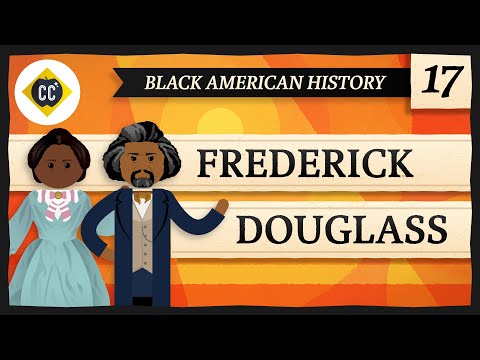
Douglass later retold his life in My Bondage and My Freedom (1855) and Life and Times of Frederick Douglass (1881, revised 1892), and the video on his life and writing covers the Narrative as testimony and argument. In this tradition testimony, writing that bears witness, is the purpose of the life story. Harriet Jacobs’s Incidents in the Life of a Slave Girl (1861) shows how the frame could also protect a writer: it was published under the name Linda Brent, with an introduction by the editor Lydia Maria Child.
 YouTube
Whose voice is it?
Garrison’s anxiety points to a practice that is now routine. Ghostwriting is writing a text that appears under someone else’s name, and most autobiographies of athletes, celebrities and politicians are ghostwritten or co-written. Some admit it on the cover with “as told to” or “with”. The Autobiography of Malcolm X (1965) was written by Alex Haley from many hours of interviews, and its title and first-person voice belong to Malcolm X while its shaping belongs to both men. Other books hide the hired writer entirely, which turns the autobiographical pact into a performance.
An analyst can read a voice closely without knowing who held the pen, but the question changes some claims: a celebrity’s “honest” style may be a professional writer’s skill. Seacole’s “W. J. S.” is a small example of the same uncertainty, since nobody knows how much the editor changed. The safest phrasing is the autobiography presents Seacole as …, which describes the text’s self without claiming to know how it was made.
Biography: someone else’s life
A biography tells another person’s life, and its conventions follow from that distance. The biographer gathers documents, letters and the memories of others, arranges them in order and interprets them. James Boswell’s Life of Samuel Johnson (1791), still one of the most read biographies in English, set out the biographer’s duty early in the book:
And he will be seen as he really was; for I profess to write, not his panegyrick, which must be all praise, but his Life; which, great and good as he was, must not be supposed to be entirely perfect.
James Boswell, The Life of Samuel Johnson, 1791
Boswell distinguishes two genres in one sentence. A panegyrick (the eighteenth-century spelling of panegyric, a speech of praise) “must be all praise”; a Life must show its subject “as he really was”. The capital L claims a higher form for the biography. Boswell had known Johnson for over twenty years and recorded his conversation in detail, so his authority is a friend’s and a witness’s at once. That double authority gives the book its intimacy, and it has led scholars to ask how much of Johnson’s talk Boswell reconstructed from memory.
Praise, control and consent
The danger Boswell names has its own term. Hagiography, from the lives of saints, is life writing that idealizes its subject and explains away every fault. Mason Locke Weems’s biography of George Washington is the classic case in American writing. The story of the boy who cannot tell a lie about his father’s cherry tree first appeared in an edition of 1806 with no evidence behind it, and it lasted because it suited a national hero. Campaign biographies often lean the same way.
An authorized biography is not necessarily hagiography. Walter Isaacson’s Steve Jobs (2011) was written at Jobs’s invitation, yet it includes harsh accounts of his treatment of colleagues. The term describes a relationship that shapes access and pressure; it does not decide how honest the book will be.
A life rewritten by later biographers
Seacole’s own life has passed through both kinds of writing. She was largely forgotten for a century after her death and rediscovered in the late twentieth century. A statue of her was unveiled in the grounds of St Thomas’ Hospital in London, with its link to Florence Nightingale, on 30 June 2016. Lynn McDonald, in Mary Seacole: The Making of the Myth (2014), argued that popular accounts had exaggerated Seacole’s importance as a nurse. The sculptor Martin Jennings, speaking of the opposition to the statue, suggested that race played a part. Each side reads the same 1857 autobiography as its main source, so any biography depends on how it interprets its subject’s own self-presentation.
The opening read closely
The conventions taught so far work together in the opening’s key lines. The annotated reading takes them in order, from the birth sentence to the London streets, and its notes name what each choice does for an autobiographer presenting herself to a British public in 1857.
I was born in the town of Kingston, in the island of Jamaicanote 1, some time in the present century. As a female, and a widow, I may be well excused giving the precise date of this important event.note 2
I am a Creole, and have good Scotch blood coursing in my veins.note 3 My father was a soldier, of an old Scotch family; and to him I often trace my affection for a camp-lifenote 4 …
… the reader, if he or she has the patience to get through this book, will seenote 5.
It is not my intention to dwell at any length upon the recollections of my childhood.note 6 … upon a great sufferer—my dollnote 7.
… I have had many medical triumphs in later days, and saved some valuable livesnote 8 …
… I am only a little brown—a few shades duskier than the brunettes whom you all admire so muchnote 9 …
The formula of origins. The type’s oldest opening places a Jamaican life in the same frame as the British lives readers knew.
Withholding as charm. The missing date becomes a joke that asks for the reader’s indulgence; “important event” mocks her own self-importance.
Identity claimed. Two belongings in one sentence: Caribbean birth and Scottish blood, each lending her a different authority.
Origins explain the adult. The father is made to account for the woman who went to war; the past is chosen for what it predicts.
The reader addressed. “He or she” imagines a mixed audience and challenges its patience, with confidence that the book will reward it.
Selection admitted. The autobiographer says openly that she will choose; the childhood that follows is short and pointed.
Vocation foreshadowed. The dash delays the joke, and the doll becomes the first patient of a future healer.
Retrospective voice. The narrating adult interrupts the child to claim later success, keeping the life’s direction in view.
Self-presentation by color. Second-person flattery moves Seacole toward her readers’ taste, at the cost of her darker companion.
Read in sequence, the notes describe an opening that does several jobs at once. It establishes origins, wins goodwill, claims authority from two traditions and points every childhood detail toward the woman of the Crimea. These jobs are carried by jokes, asides and the order of sentences, which is why an autobiography rewards the same close reading as a poem.
Variations and change
The life story is one of the oldest kinds of writing. Augustine’s Confessions (about 400 CE) is usually called the first Western autobiography, a life told as a journey toward faith. Benjamin Franklin’s Autobiography, begun in 1771, offered a model of worldly success, and Seacole’s book belongs to the nineteenth century’s market for lives of travel and adventure. The type now takes many forms. Celebrity autobiographies of performers and athletes, usually ghostwritten, sell a public persona and a promise of the private person behind it. Political memoirs justify decisions and claim a place in history (the page on memoir explains why most are called memoirs). The obituary is a biography of a few hundred words, and the biopic compresses decades into two hours and invents dialogue.
Brief biographies select even more sharply: the author’s note on a book jacket, a museum label, a profile on a professional website. Douglass’s title page of 1845 is one in thirteen words:
Narrative of the Life of Frederick Douglass, an American Slave.
Written by Himself.Title page of Douglass’s Narrative, Boston, 1845
The first phrase states his legal status, and the second overturns it, since slaveholders had tried to keep people like him from learning to read and write. An author’s note that lists prizes works the same way on a smaller scale: each chosen fact is part of a self offered for approval.
When a life story is literary
Autobiography and biography can be read as non-literary texts or as literary ones. Most are non-literary: written to inform, to record or to justify, by people whose fame lies elsewhere, for readers who want the facts of a known life. Some are read as literature, usually for three reasons. Their writer is a literary author, or writes with the methods of literature (scene, voice, imagery, a designed structure). Their purpose goes beyond the record to shaping an experience. And they are published, reviewed and taught as works in their own right.
Boswell’s Life of Johnson is read as literature for its scenes of conversation and its portrait of a character. Douglass’s Narrative is studied both as a historical document and as a masterpiece of American prose, because its design is as deliberate as a novel’s. Its turning point, the fight in which the young Douglass resists the man hired to break him, is introduced with a sentence built to be remembered:
You have seen how a man was made a slave; you shall see how a slave was made a man.
Frederick Douglass, Narrative of the Life of Frederick Douglass, 1845, chapter X
The sentence reverses its own terms, and the reversal is the book’s whole argument in miniature. It is one reason the Narrative is read as literature as well as history. Seacole’s book sits between the two. It was written to restore her finances and record her service, which points to a non-literary text. Its comic voice and its crafted self-portrait, which critics such as Poon now analyze, give it a claim to be read as literature.
The distinction matters most for the individual oral, which pairs one literary work with one non-literary body of work. An autobiography studied whole as a literary work, such as Douglass’s Narrative, can be the literary half of an oral. A set of short life writings from one source, such as a newspaper’s obituaries over a year or one politician’s official profiles, can form a non-literary body of work. Schools usually leave the classification of a borderline text to the teacher, and a student who chooses one should be ready to justify the side it falls on.
Writing about a life story
A paragraph about an autobiography connects what the writer says about herself to how the text says it, and to the audience it was written for. The paragraph that follows, as a strong student might write it, takes Seacole’s treatment of her childhood.
Seacole’s account of her childhood is brief by her own choice, and what she keeps is selected to make her later fame look like a vocation.note 1 She practices medicine first “upon a great sufferer—my doll”, and the dash holds back the patient for a joke that also shows a child’s seriousness about healing.note 2 The next sentence leaps forward to the adult’s “many medical triumphs in later days”, so the retrospective narrator interrupts the child to remind readers where the story is going.note 3 For a British public that knew “Mother Seacole” from the war, the effect is reassuring: the nurse they admired was born, not made by chance, and her book asks to be read as the story of a calling.note 4
Claim about selection. The topic sentence names a choice the autobiographer made, not an event in her life.
Quotation and detail. The dash is analyzed as a choice, with its double effect of humor and seriousness.
Convention named in use. Retrospective narration is identified through what it does in this sentence.
Audience and purpose. The analysis ends on the readers of 1857 and what the book wanted from them.
A weak and a strong sentence on the same lines show the difference between retelling a life and analyzing a text.
Weak: Mary Seacole was born in Jamaica and her mother was a doctress, so she wanted to be a doctor from a young age.note 1
Strong: By tracing her “yearning for medical knowledge” to a mother who was “an admirable doctress”, Seacole presents her skill as an inheritance, which answers in advance any doubt that a woman without training could heal.note 2
Biography, not analysis. The sentence reports facts of the life as if they were neutral and says nothing about the text.
Choice, effect, audience. The sentence quotes, names what the choice presents, and says what doubt in the audience it answers.
The strong sentence treats Seacole’s life as something the text constructs, the core skill for any life writing.
Applying it in Paper 1
An extract from an autobiography or biography in Paper 1 gives a student a constructed self to analyze. Seacole’s opening shows what such a text usually offers. There is an opening formula of origins and a narrating voice that looks back from later life. There are choices of what to tell and what to withhold, and an audience the writer addresses or flatters. Biography adds framing voices, quoted documents and the biographer’s judgments. A guiding question on a life story is likely to ask how the writer presents himself or herself, how the text shapes the reader’s view of its subject, or how the extract uses the relationship between past and present.
A model sentence of analysis follows. Seacole withholds her age twice, first as the indulgence due to “a female, and a widow” and then with “I had very nearly let my age slip then”. A fact that might have weakened her becomes a running joke that invites her audience’s goodwill. The commonest way to lose marks is to retell the life as a story of events. A second is to accept the writer’s self-image as fact, rather than analyzing how the text builds it.
Its conventions in brief
A real life told as true, by its subject (autobiography) or by another writer (biography).
Chronological order, from birth or origins toward the achievement the subject is known for.
Origins and parentage that explain the later life.
Retrospective narration: the later self comments on the earlier one.
Turning points and early signs of a vocation.
Selection and withholding that shape a self for an audience.
Framing voices: prefaces, introductions, endorsements and documents.
In biography, sources, testimony and the biographer’s judgments.
Autobiography leads to memoir, which takes one part of a life and asks what it meant, and to the concept of identity, where the self a text constructs becomes the central question.
Self-check
- To do:
I can explain what autobiography and biography are for, who writes them and for whom.
- To do:
I can identify the conventions of an autobiography’s opening and explain why it begins with origins.
- To do:
I can analyze how an autobiographer constructs a self for an audience, including what she withholds.
- To do:
I can explain how prefaces and other framing voices shape a life story, especially in the slave narrative.
- To do:
I can distinguish autobiography, memoir, authorized and unauthorized biography, ghostwriting and hagiography.
- To do:
I can explain what would make a life story literary and why it matters for the individual oral.
- To do:
I can write a paragraph that analyzes how a life story is told, not only what happened.
Key terms
Each is also in the Non-literary text types glossary for IB English A Lang & Lit, beside the other terms of its topic.
- Authorized biography
An authorized biography is a biography written with the cooperation or permission of its subject or the subject's family, usually with access to private papers and interviews; an unauthorized biography is written without that consent.
- Autobiography
An autobiography is the story of a life told by the person who lived it, usually in order from birth or childhood. It presents the writer's own account of what happened and what it meant.
- Biography
A biography is the story of a real person's life told by someone else, built from research, documents and the accounts of witnesses.
- Ghostwriting
Ghostwriting is writing a text that is published under another person's name, such as a celebrity's autobiography written in the first person by a hired professional writer.
- Hagiography
Hagiography is life writing that idealizes its subject, presenting a person as a model to admire and leaving out or explaining away faults. The word first named the lives of saints.
- Slave narrative
A slave narrative is an autobiography by a person who escaped or was freed from slavery, written to bear witness to slavery and to argue for its abolition. Many were published with prefaces by others vouching for their truth.
Practice questions on 6.21 Autobiography or biography
Augment’s own questions, written in the style of IB exam papers. Here is how a few of them start.
Practice all 6 questions on 6.21 Autobiography or biography
Free with an account. Write your answer, open the markscheme beside it and mark yourself. Augment keeps the ones you got wrong for another go.
More in 6 Non-literary text types
The whole topic is on its own page.
- 6.1Advertisement
- 6.2Appeal
- 6.3Blog
- 6.4Brochure or leaflet
- 6.5Cartoon
- 6.6Diagram
- 6.7Electronic text
- 6.8Encyclopaedia entry
- 6.9Film and television
- 6.10Guide book
- 6.11Infographic
- 6.12Interview
- 6.13Music video
- 6.14Photograph
- 6.15Radio broadcast
- 6.16Report
- 6.17Screenplay for TV or film
- 6.18Set of instructions
- 6.19Textbook
- 6.20Work of art
- 6.21Autobiography or biographyThis page
- 6.22Diary entry
- 6.23Essay
- 6.24Letter
- 6.25Magazine article
- 6.26Manifesto
- 6.27Memoir
- 6.28Opinion column
- 6.29Parody
- 6.30Pastiche
- 6.31Speech
- 6.32Travelogue
Carry on with 6.21 Autobiography or biography in Augment
With a free account, Augment remembers where you stopped in the notes and which questions you have marked.