4.3 Social engagement
Social engagement in Chinese-speaking places, from Taiwan’s community care stations and Tzu Chi to volunteer hours in Hangzhou: who organizes help, the debates, the words and how to invite others to take part.
- IB Mandarin B
- Part of 4 Social organization
- SL and HL
Notes on 4.3 Social engagement
Social engagement means giving time, money or skills to people outside one’s own family, through a club, a charity or a public program. In Chinese-speaking places it ranges from older residents who cook lunch for their neighbors to school students who must record volunteer hours. Who organizes this help, and what it means when it is required, are real questions in Tainan, Hualien and Hangzhou alike.
A feature on the student council web page of a high school in Tainan, Taiwan, describes what the school’s service club does every Saturday morning.
Lunch with grandparents who are not one’s own
The feature opens with a routine. Twelve students ride their bicycles “到学校附近的社区关怀据点” (paragraph 1: to the community care station near the school) at ten every Saturday. The writer then explains who goes there: people in their seventies and eighties whose children “在台北或国外工作” (work in Taipei or abroad) and who usually live alone. The reason the station exists is stated in one clause, without comment.
Such a place is a community care station (社区关怀据点), part of a Taiwan program begun in 2005 to keep older people well and in contact near home. Volunteers from the neighborhood run shared meals, phone calls, home visits and light exercise. The feature notes their scale in one sentence, “全台湾已经有几千个” (paragraph 1: there are already several thousand across Taiwan); 3,686 were counted by July 2019.
Paragraph 2 lists the students’ tasks as plainly as possible: “摆桌子、端饭菜、陪阿公阿嬷聊天” (setting tables, carrying food, chatting with the grandparents). The comma that looks like a small dot, 、, separates items in a list. Then one detail lifts the list. A student, 思妤, teaches a grandfather to make a video call to his grandson in the United States, and he laughs “像个孩子” (like a child). Her conclusion is the feature’s first idea: “陪伴也是一种服务” (paragraph 2: keeping someone company is also a kind of service).
以前我觉得做志工note 1就是搬东西、扫地,现在才note 2知道,陪伴note 3也是一种服务。
现在最大的问题不是note 4钱,而是note 4人。……年轻人不是不愿意note 5帮忙,而是note 5平日要上班、上课,很难每个星期都抽出时间note 6。
志工. A volunteer, the usual word in Taiwan; the mainland says 志愿者, and Hong Kong and Singapore often say 义工. All three are understood everywhere.
才. Only now: the realization came late, after some time at the station.
陪伴. To keep someone company, to be with them. It is a warm word, used for time given to children, older people and the sick.
不是……而是……. Not A but B: it sets aside the expected problem (money) and names the real one (people).
不是不愿意……而是……. It is not that they are unwilling, but that…: a double negative that defends young people before explaining the obstacle.
抽出时间. To find time, literally to pull time out of a busy schedule.
The third paragraph turns from the students to the problem. The person in charge, Ms. Meiyu, is 69 and has volunteered for ten years. Her joke carries the point, “常常是老人照顾老人” (paragraph 3: it is often old people looking after old people). The structure 不是……而是…… then names what the station lacks: not money but people. The writer does not blame young people; the next sentence defends them, since weekdays are taken by work and school.
The last two paragraphs move from report to appeal. 对我们来说 (for us) gives the students’ own view: three hours a week can make some older people “不那么孤单” (paragraph 4: less lonely). The feature then ends with a request and a practical detail, eight more students next term and where to sign up. A student council page informs and recruits at once, and its friendly 你 suits readers who are classmates.
Try it
Find the word in paragraph 4 that tells you how the station changes when students come, and explain why the writer quotes Ms. Meiyu rather than saying it herself.
热闹起来了 (became lively): with students there, the grandparents talk more and the whole station livens up. The writer reports it as Ms. Meiyu’s view, which makes the claim sound like an observation by someone who knows the station, not like students praising themselves.
Hours on a record in Hangzhou
On the mainland, much volunteer service (志愿服务) is now registered: volunteers sign up on official platforms, and the hours they give are recorded. For many secondary school students those hours also count toward school requirements. A column on 《绿色行动小组》, the public account of a student environmental club in Hangzhou, asks what happens to volunteering when it is counted.
The column opens with a number and a disappointment. A record forty-two people signed up for the monthly cleanup along the Grand Canal, but within half an hour more than ten had “在签到表上签了名,在运河边拍了两张照片,然后离开了” (paragraph 1: signed the attendance sheet, taken two photos by the canal and left). The three verbs in a row, sign, photograph, leave, show how little time the visit took. An angry member names the habit with a slang verb, 刷时长 (to rack up hours), and 刷 here means doing something quickly and repeatedly only to make a number go up.
Paragraph 2 gives the background. The school sets a number of volunteer hours each term, and the platform’s records go into the student’s comprehensive quality evaluation (综合素质评价), a school record of activities and conduct kept alongside grades. The club’s cleanup is a convenient way to meet the requirement. 于是 (so, as a result) introduces the members’ proposal: stop recording hours, and only those who want to come will come.
我理解这种生气,但是note 1我不同意这个建议。一方面note 2,时长的规定确实让一些人只为了数字而来;另一方面note 2,也正是因为note 3这个规定,很多原来从来不会参加环保活动的同学,第一次走到了运河边。
这个数字说明参与的人越来越多,然而note 4,它说明不了参与的质量。由此可见note 5,问题不在于note 6记不记时长,而在于note 6我们怎么记。与其note 7只记“来了几个小时”,不如note 7也记“做了什么”。
我理解……但是……. A concession first: the writer accepts the members’ anger before disagreeing with their plan.
一方面……另一方面……. Two effects of the same rule, one bad and one good, set side by side.
正是因为. Precisely because of. 正 points at one cause and gives it weight.
然而. However, in written style. The number shows quantity, but not quality.
由此可见. From this it can be seen: the conclusion follows from the evidence just given.
不在于……而在于……. The question lies not in A but in B. A formal relative of 不是……而是……, used to move an argument to its real point.
与其……不如……. Rather than A, better B. The writer’s proposal, put as a choice between two ways of counting.
The column’s argument rests on one person. 小周 first came “只是为了凑够时长” (paragraph 3: only to make up her hours), yet after the third cleanup she began reading on her own and now leads the group in testing the canal’s water. The writer draws the consequence with a conditional: if the club had shut the door at the start, “小周也许永远不会来” (Xiao Zhou might never have come). A single case is weak evidence on its own, but here it answers exactly the members’ claim that counted volunteers never care.
The proposal is practical and numbered, 第一 and 第二: sign in and out on site, so that people who leave early are credited only for the time they stayed, and write three sentences after each activity. The column ends on the word inside the word, “志愿服务里最重要的两个字是‘志愿’” (paragraph 6: the two most important characters in volunteer service are “volunteer”, that is, willing). 志愿 means one’s own wish, so the closing line asks hours to serve the wish rather than replace it.
Two answers to why people volunteer
The two texts look at the same activity from opposite ends. In Tainan the volunteers are old and few, and the students are welcome however they arrive; nobody records their hours. In Hangzhou volunteers are many because a rule brings them, and the question is whether the rule empties volunteering of meaning. One text worries about too few hands, the other about hands that do not stay.
以前我觉得做志工就是搬东西、扫地,现在才知道,陪伴也是一种服务。
星期六的午餐,我们和阿公阿嬷一起吃, paragraph 2
The Tainan student and Xiao Zhou in Hangzhou go through the same change. Each begins with a narrow idea of the task, carrying things or collecting hours, and comes to see a purpose in it: company for the lonely, a cleaner river. Read together, the texts suggest that what brings a volunteer in matters less than whether the work gives them a reason to stay.
The register of each text follows its readers. The Tainan feature is written for classmates by the student council, so it is warm and plain, uses Taiwan words such as 志工, 阿公阿嬷, 视讯 (video call) and 萤幕 (screen; 屏幕 on the mainland), and ends with an invitation. The Hangzhou column is an opinion piece by a club president to members who disagree with her, so it argues: it concedes, weighs, concludes with 由此可见 and proposes numbered changes. Both end by addressing readers directly, one to recruit and one to invite comments.
Try it
The Hangzhou column quotes a national figure in paragraph 4. What does the writer use it to show, and what does she say it cannot show?
The figure, more than 230 million registered volunteers by April 2024, supports the claim that “参与的人越来越多” (more and more people take part). She says it “说明不了参与的质量” (cannot show the quality of taking part). The figure supports her concession that rules bring people in, and its limit leads to her proposal to record what volunteers actually did.
Ideas to discuss
The two model texts raise the questions people argue about when they discuss social engagement in Chinese-speaking places. Who should organize volunteering, the state or citizens themselves? Does requiring it spoil it? Why are volunteers growing older? And can donors trust the charities that collect their money? The diagram separates three routes by which people come to volunteer.

The left column is the mainland’s registration system, the middle one the school rule in the Hangzhou column, the right one the neighbors and civic groups who run Taiwan’s care stations. The arrows end in examples from the two texts and from Taiwan’s best-known charity.
Should the state organize volunteering, or should citizens?
On the mainland, volunteering has grown fast under official organization. In April 2024 the general offices of the Communist Party’s Central Committee and the State Council issued guidelines for a “well-developed” volunteer service system by 2035, and reported 236 million registered volunteers (Xinhua, 22 April 2024). The Hangzhou column cites a figure of the same size. Supporters argue that registration brings protection, training and recognition, and that large events and emergencies need volunteers who can be called on quickly.
Taiwan’s largest charity grew the other way. Tzu Chi (慈济) was founded in 1966 in Hualien by a Buddhist nun, Cheng Yen, with thirty housewives who each saved a little money every day. It now has volunteers in more than sixty countries and regions, and runs disaster relief, hospitals in Taiwan and many recycling points. Its volunteers come through faith and neighbors, not through a register. Supporters of this route say that help offered freely is steadier and more personal; critics of large charities ask who holds them to account.
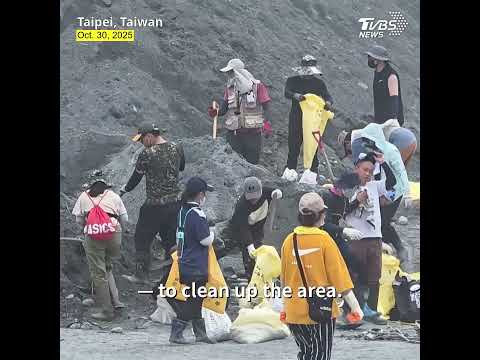
Tzu Chi has itself warned of a shortage of volunteers in Taiwan, a problem like the one Ms. Meiyu describes in Tainan. A TVBS World Taiwan report carries the warning.
 YouTube
The report and the Tainan feature raise the same problem at two scales: a large charity and a small care station both depend on volunteers who have time on weekdays. Ms. Meiyu’s phrase, “老人照顾老人” (paragraph 3: old people looking after old people), describes her own station, and the shortage that the charity reports suggests that it is not alone.
Does requiring volunteering spoil it?
Many schools in Chinese-speaking places require service: mainland schools record hours in students’ evaluations, as in the Hangzhou column, and schools elsewhere build service into their programs. Supporters say a requirement brings in students who would never have chosen it, as it brought Xiao Zhou. Critics say it teaches students to collect hours, which is the 刷时长 the Hangzhou members complain about. A related question, whether short trips to teach in village schools serve the children or the visitors, belongs to the debate about volunteer teaching and children’s rights.
The Hangzhou column offers a middle position: keep the requirement, but change what is measured. Its proposal, “与其只记‘来了几个小时’,不如也记‘做了什么’” (paragraph 4: rather than recording only how many hours someone came for, also record what they did), moves the argument from whether to count to what to count. That is a position a student can defend in writing without rejecting either side.
Can donors trust charities?
Giving money is another form of engagement, and it depends on trust. On the mainland, trust in charities fell after scandals around 2011, the best known involving the Red Cross Society of China after a young woman who claimed a link to it showed off a life of luxury online. The country’s first Charity Law (慈善法) followed in 2016, with rules on registration, public fundraising and the publication of accounts, and it was amended in December 2023. Supporters see the law as protection for donors; some critics note that it also tightens official control over which groups may raise money.
The words of this debate are 透明 (transparent), 信任 (trust) and 捐款 (to donate money). A donor who asks where money goes is not refusing to help; the question is part of taking part responsibly, and a student writing about charity can say so.
Weighing a required duty and a free choice (HL)
At HL, the question of whether volunteering should be required is weighed rather than answered with one view. Written Chinese has connectives for it: 诚然 (admittedly) grants a point, 但 answers it, 与此同时 (at the same time) adds a second factor, and 归根结底 (in the final analysis) states the judgment. A paragraph using both model texts might run as follows.
诚然note 1,杭州那篇文章里有十几个人签了名就走,说明规定会让一些人只为数字而来;但note 2小周的例子同样说明,规定也能把从不参加的人带到运河边。与此同时note 3,台南的据点没有任何时长要求,却面临“老人照顾老人”的困境。由此可见note 4,自愿和规定并不是非此即彼的。归根结底note 5,关键在于活动能不能让参加的人找到留下来的理由。
诚然. Admittedly: a written-style concession that grants the critics’ evidence first.
但. But, in its short written form, answering the concession with evidence from the same text.
与此同时. At the same time: it brings in the second text, where there is no rule and still too few volunteers.
由此可见 + 非此即彼. The conclusion that the two are not either-or. 非此即彼 (if not this, then that) is a fixed expression for a false choice.
归根结底. In the final analysis: the judgment, narrowed to one condition, a reason to stay.
The paragraph grants the opposing evidence, adds a case that complicates both views, and ends on a condition rather than a slogan. The same frame works for a question about donating, about school service programs or about civic groups abroad.
Words and phrases
The words that matter most for social engagement name the people who help, what they do and why. 志工 and 志愿者 are the same person in Taiwan and on the mainland; 服务 (service) and 陪伴 (company) name two kinds of help; 报名 (to sign up) and 签到 (to sign in) name the steps of taking part. The Hangzhou column adds the vocabulary of an argument, 规定, 质量, 建议, and one slang word, 刷, that students recognize at once.
Word or phrase | Meaning in context | Text and paragraph |
|---|---|---|
服务社 | a school service club | Tainan feature, 1 |
社区关怀据点 | a community care station for older people | Tainan feature, 1 |
子女 | sons and daughters, children (written) | Tainan feature, 1 |
端饭菜 | to carry food to the table | Tainan feature, 2 |
视讯 | to make a video call (Taiwan) | Tainan feature, 2 |
志工 | a volunteer (Taiwan) | Tainan feature, 2 |
陪伴 | to keep someone company | Tainan feature, 2 |
负责人 | the person in charge | Tainan feature, 3 |
平均年龄 | average age | Tainan feature, 3 |
抽出时间 | to find time (in a busy schedule) | Tainan feature, 3 |
孤单 | lonely | Tainan feature, 4 |
值得 | to be worth (doing) | Tainan feature, 4 |
报名 | to sign up | Tainan feature, 5 |
创纪录 | to set a record | Hangzhou column, 1 |
签到 / 签退 | to sign in / to sign out | Hangzhou column, 1 and 5 |
志愿服务 | volunteer service | Hangzhou column, 1 |
刷时长 | to rack up hours (slang) | Hangzhou column, 1 |
规定 | a rule; to stipulate | Hangzhou column, 2 |
综合素质评价 | the comprehensive quality evaluation (a school record) | Hangzhou column, 2 |
凑够 | to make up (a required amount) | Hangzhou column, 3 |
主动 | on one’s own initiative | Hangzhou column, 3 |
带领 | to lead (a group) | Hangzhou column, 3 |
注册 | to register | Hangzhou column, 4 |
参与 | to take part, participation | Hangzhou column, 4 |
质量 | quality | Hangzhou column, 4 |
在于 | to lie in | Hangzhou column, 4 |
中途 | halfway, in the middle | Hangzhou column, 5 |
代替 | to replace, take the place of | Hangzhou column, 6 |
Three pairs are worth keeping apart. 参加 is to attend or join an event, 参与 to take part in a process (参与社会, 参与决策). 帮忙 takes no object, 帮助 does (帮助老人). 志愿 is a wish freely chosen, while 自愿 means voluntarily, of one’s own accord: 自愿参加.
Say it yourself
These frames help you describe what you do for others, explain why it matters, answer an objection and invite others to join. They move from simple description to concession and proposal.
Frame | What it does |
|---|---|
我每个……都会去……帮忙。 | Describes a regular activity |
以前我觉得……,现在才知道……。 | Shows a change in understanding |
对……来说,……只是……,却能……。 | Weighs a small cost against a large benefit |
最大的问题不是……,而是……。 | Names the real problem |
……不是不愿意……,而是……。 | Defends a group before explaining an obstacle |
我理解……,但是我不同意……,因为……。 | Concedes, then disagrees with a reason |
一方面……;另一方面……。 | Sets two effects side by side |
问题不在于……,而在于……。 | Moves an argument to its real point |
与其……,不如……。 | Prefers one solution to another |
如果你……,欢迎……。 | Invites readers to take part |
A short paragraph that uses several of them, for a school magazine:
我每个月都会去note 1家附近的动物收容所帮忙。以前我觉得note 2做志愿服务就是打扫卫生,现在才知道note 2,陪小狗散步也很重要。对我来说note 3,一个月只是note 3花四个小时,却能note 3让几只狗更容易被领养。如果你note 4也喜欢动物,欢迎note 4下个周末跟我一起去。
都会去. A regular habit; 会 here means “will usually”, not ability.
以前我觉得……现在才知道……. A change in understanding, borrowed from the Tainan student’s line.
对我来说……只是……却能……. A small cost set against a real benefit, which makes the activity sound worth doing.
如果你……欢迎……. The invitation that turns a personal account into a call to readers.
Improving a paragraph
A weak paragraph about volunteering praises it in general words. The stronger version gives an example, answers an objection and proposes something.
志愿服务很有意义。我们应该多做志愿服务。志愿服务可以帮助别人,也可以帮助自己。note 1
有人说,学校规定的志愿时长让很多同学只是来“刷时长”。note 2我理解这种担心,但是我认为问题不在于规定本身,而在于活动有没有意义。note 3与其只记录时间,不如让每个人在活动以后写下自己做了什么、学到了什么。note 4
Weak. Three sentences that repeat 志愿服务 and say what everyone already agrees with. There is no situation, no other view and no proposal.
The other view. 有人说 states the objection fairly, in the words students actually use.
Concession and point. 我理解……但是 grants the worry; 不在于……而在于 moves to the real question.
A proposal. 与其……不如 offers a concrete change, taken from the Hangzhou column, that a reader could act on.
Applying it in Paper 1 and the oral
A Paper 1 task on social engagement gives you a situation, a purpose and an audience. You might be asked to report on a volunteer day for the school website, to write an appeal (倡议书) asking classmates to join a project, or to argue in the school magazine whether service hours should be required. The report informs in the third person with facts and results; the appeal calls on a group with 让我们 and numbered actions; the article argues with a concession and a view.
The commonest way to lose marks with social engagement is to praise volunteering in general and never show a single person, place or result. Both model texts work because they name one station, one canal and one student who changed. An appeal or an article that does the same reads as developed, and its call to action sounds earned.
Try it
A student ends an appeal with 谢谢大家的阅读。 Why is this a weak ending for an appeal, and what would be stronger?
An appeal exists to make readers act, so thanking them for reading ends it as if it were a speech or a report. A stronger ending repeats the call with a practical step: 本周五以前到学生会办公室报名,让我们每个星期六一起去陪伴老人!
The pages on the proposal and the appeal, the report and the article take these conventions further, and the grammar page on linking pairs practices 不是……而是…… and 与其……不如……. Community describes the neighborhoods where this help happens, and the page on the conversation in the individual oral shows how to talk about one’s own service without a script.
Self-check
- To do:
I can describe volunteering and the people who do it with 志愿者, 志工, 服务, 陪伴 and 参与.
- To do:
I can explain who organizes volunteering on the mainland and in Taiwan, and why volunteers are growing older.
- To do:
I can compare the Tainan feature and the Hangzhou column in content and register.
- To do:
I can answer an objection with 我理解……但是…… and move an argument with 不在于……而在于…….
- To do:
I can propose a change with 与其……不如…… and invite others to take part.
- To do:
I can weigh a required duty against a free choice with 诚然 and 归根结底 (HL).
- To do:
I can plan a report, an appeal or an article on social engagement for Paper 1.
Key terms
Each is also in the Social organization glossary for IB Mandarin B, beside the other terms of its topic.
- Charity Law
The mainland law, passed in 2016 and amended in 2023, that sets the rules for registering charities, raising money from the public and reporting how donations are spent. It matters because public trust in charities depends on knowing where money goes.
- community care station
A local center in Taiwan, run by a village office or civic group with neighborhood volunteers, where older people share meals, exercise and company. The stations, part of a program begun in 2005, aim to keep older people healthy and connected in their own neighborhood.
- comprehensive quality evaluation
A record kept by mainland secondary schools of each student's activities, service and conduct alongside exam results. Because volunteer hours can count toward it, it shapes how and why many students volunteer.
- volunteer service
Unpaid work for other people or for the community, chosen freely by the volunteer. On the mainland it is increasingly organized through official registration platforms that record each volunteer's hours, while in Taiwan much of it runs through neighborhood and religious groups.
More in 4 Social organization
The whole topic is on its own page.
- 4.1Social relationships
- 4.2Community
- 4.3Social engagementThis page
- 4.4Education
- 4.5The working world
- 4.6Law and order
Carry on with 4.3 Social engagement in Augment
With a free account, Augment remembers where you stopped in the notes and which questions you have marked.