6.5 Science, technology and the environment
The field of science, technology and the environment: nature as more than setting, pastoral and the sublime, imagined futures and the body, and how to narrow the field to a precise global issue in two works.
- IB English A: Literature
- Part of 6 Global issues
- SL and HL
Notes on 6.5 Science, technology and the environment
The field of science, technology and the environment asks how people live with the natural world and with the knowledge and machines they make. Literature enters it through people: a town that depends on a resource, a scientist responsible for a discovery, a family harmed by a decision taken far away. Henrik Ibsen’s An Enemy of the People (1882) is set in a small Norwegian coastal town whose new medicinal Baths have made it prosperous. Early in the first act, the town’s doctor brings his family and two newspapermen the results of a scientific test, in R. Farquharson Sharp’s translation of 1911.
A town, its Baths and the truth about them
The town has a language for its Baths before the doctor speaks, and it is the language of a living body. They have been called the “main artery of the town’s life-blood” and the “nerve-centre of our town” (line 18), and the editor Billing is proud of “The town’s pulsating heart” (line 19). The metaphors make the Baths the town itself: its health, its wealth and its pride. Dr. Stockmann admits that he wrote much of this praise himself, in the local newspaper and “in pamphlets” (line 16).
The discovery reverses the body metaphor. The Baths are “a pesthouse” (line 23), a place for the infectious sick, and then “a whited, poisoned sepulchre” (line 28). The second phrase is an allusion to the Gospel of Matthew, where hypocrites are compared to tombs painted white outside and full of bones within. The allusion turns the town’s praise into a coat of paint over corruption. The evidence is modern and exact: samples sent to “the University” (line 36) and a chemist’s letter proving “decomposing organic matter in the water” (line 38), the cause of the typhoid among visitors the year before.
Stockmann expects gratitude. He predicts “a nice upset in the town” (line 50) and imagines his doubters forced to admit that he was right: “these good folks shall see—they shall just see—!” (line 50). An audience that knows the play’s title hears a dramatic irony in his excitement. Hovstad’s half-finished question at the end of the scene, “All the conduit-pipes—?” (line 51), is the first sign of the cost that will turn the town against him.
Who pays for the truth
The rest of the play follows that cost. Stockmann’s brother, the mayor, refuses to act, because rebuilding the pipes would cost “fifteen or twenty thousand pounds” and close the Baths for at least two years. The newspaper that had promised to print the report turns against it, the householders who fear higher taxes side with the mayor, and in the fourth act a public meeting declares the doctor an enemy of the people. Stockmann answers with increasing contempt for the crowd, declaring that “The majority never has right on its side”, and the play ends with him announcing a second discovery: “the strongest man in the world is he who stands most alone.”
Ibsen does not make the scientist simply a hero. Stockmann is vain and naive in the passage, “rubbing his hands” (line 50) at the upset he will cause, and by the end his defense of the truth has become a scorn for democracy that many audiences find troubling. The play therefore holds two questions together: whether a community will hear unwelcome facts about the place it lives on, and whether the person who brings them can stay a member of it. Both questions recur in later disputes over polluted water, poisoned land and the industries that cause them.
What the field covers
The field covers four kinds of question. The first concerns the natural world and its exploitation: land, water, animals, forests and climate, and who profits from them. The second concerns scientific progress and its costs, as in Ibsen’s laboratory letter. The third concerns the body and medicine, including illness, doctors’ power over patients and the body treated as a resource. The fourth concerns technology and human relationships: how machines from the railway to the screen change the way people meet, work and live together.
Literature’s way into all four is the same. A play or novel rarely explains the science; it shows what the science, the machine or the damaged place does to people who have names. Ibsen never describes the bacteria in detail, but the audience knows the cost of the “gravest possible danger to the public health” (line 28) through the family, the newspaper and the meeting. The phrase is a doctor’s, formal and public, and its force comes from the people who hear it in the room. A reader of this field asks how a work presents a relation between people and the world they change, not whether its science is correct.
Nature as more than setting
Ibsen’s Baths are a setting that becomes the plot, and a whole way of reading starts from that move. In most analysis the natural world is setting: the background against which people act. Ecocriticism reads it as a subject in its own right. Cheryll Glotfelty, introducing The Ecocriticism Reader (1996), described the approach as the study of the relationship between literature and the physical environment. It asks how a text presents land, animals, weather and resources, whose interests the presentation serves, and what attitudes to nature a text takes for granted.
Gerard Manley Hopkins wrote “Binsey Poplars” in March 1879, after a row of poplars beside the river near Oxford had been cut down. The poem opens on the fact of the felling, “All felled, felled, are all felled” (line 3), the repeated word falling like the strokes of an axe. Its second stanza turns from mourning to argument:
To mend her we end her,
When we hew or delve:
After-comers cannot guess the beauty been.Gerard Manley Hopkins, “Binsey Poplars” (written 1879), Poems (1918), lines 17–19
The internal rhyme of “mend” and “end” carries the argument. The people who cut the trees meant to improve the land, and the improvement destroyed it, so good intention and damage share a sound. The last line names a loss that cannot even be measured, since later generations will not know what was there: “the beauty been” uses the past participle as a noun for a beauty that now exists only in the past. An ecocritical reading sees the poem as an early protest against the loss of a landscape that no record will preserve.
Where an ecocritical reading stops
Ecocriticism has limits that a careful reader respects. Hopkins was a Jesuit priest, and his grief for the trees is also religious: the “Strokes of havoc” that “unselve” the scene (line 21) rob it of the particular selfhood he believed God gave to every created thing. A reading that turns the poem into modern environmental campaigning misses that frame. The strongest ecocritical readings keep the text’s own beliefs in view and ask how they shape its picture of nature.
Pastoral, anti-pastoral and the sublime
Two old traditions shape how literature presents nature, and both invite argument. The first is the pastoral, which began with the Greek poet Theocritus and the Roman poet Virgil. Its shepherds sing of love in a countryside without labor, illness or debt, an image of simple life written for readers in cities and courts. George Crabbe, who grew up in a poor coastal town in Suffolk, answered the tradition in The Village (1783):
Yes, thus the Muses sing of happy swains,
Because the Muses never knew their pains.
They boast their peasants’ pipes; but peasants now
Resign their pipes and plod behind the plough;George Crabbe, The Village (1783), book I, lines 21–24
The rhyme of “swains” with “pains” sets the pastoral word for a shepherd against what shepherds actually suffer, and it blames the poets: the Muses praise country life because they have never lived it. The next couplet replaces the shepherd’s musical pipe with the plow. This is anti-pastoral writing, and it raises an issue that still matters: whether writing about the countryside serves those who work it or those who visit.
Awe and terror
The second tradition is the sublime, the feeling of awe mixed with fear before something vast. Edmund Burke gave it its classic theory in A Philosophical Enquiry into the Origin of Our Ideas of the Sublime and Beautiful (1757). For Burke, the source was terror itself:
Whatever is fitted in any sort to excite the ideas of pain and danger, that is to say, whatever is in any sort terrible, or is conversant about terrible objects, or operates in a manner analogous to terror, is a source of the sublime; that is, it is productive of the strongest emotion which the mind is capable of feeling.
Edmund Burke, A Philosophical Enquiry into the Origin of Our Ideas of the Sublime and Beautiful (1757), part I, section VII
Burke adds that danger gives delight only “at certain distances”, when the viewer is safe. Mary Shelley uses the idea in Frankenstein (1818). Grieving, Victor climbs to the glacier below Mont Blanc, remembering that it once “filled me with a sublime ecstacy that gave wings to the soul” (volume II, chapter 2). The view calms him, and at that moment the creature he made comes toward him across the ice. The sublime landscape, a place for one person’s awe, becomes the scene of a meeting with the consequence of his science.
The two traditions share a limit. The pastoral shrinks nature into a refuge for tired townspeople, and the sublime turns it into a backdrop for one viewer’s feelings. Ecocritics such as Lawrence Buell, in The Environmental Imagination (1995), have asked for writing in which the nonhuman world is more than either: in Buell’s account, an environmental text presents it as a presence, not only a framing device, and one whose history is bound up with human history.
Narrowing the field: a worked example
This field is so wide that narrowing matters more than usual. The issue an oral needs is a single question with wide reach, crossing borders and felt in daily life, and it must be visible in a work originally written in English, a work studied in translation, and a short extract from each. A first step chooses one area, scientific responsibility, which is still a topic because it asks nothing. The second step turns it into a question that societies argue about: “who is responsible when a technology harms people who did not choose it?”
The question passes the three tests. Industrial accidents, polluted rivers and nuclear disasters are its wide reach. It crosses borders, since a cloud of fallout or a poisoned river ignores them. It is local wherever a factory, a mine or a dam stands near homes whose owners were never asked. It can also be argued both ways, since the makers of a technology may point to its benefits, to the users who misused it or to the officials who approved it.
Testing the issue on two works
Mary Shelley’s Frankenstein (1818) is the founding story of a maker who will not answer for what he made. Victor Frankenstein spends two years building a living being, and the moment it opens its eyes he runs from it:
I had worked hard for nearly two years, for the sole purpose of infusing life into an inanimate body. For this I had deprived myself of rest and health. I had desired it with an ardour that far exceeded moderation; but now that I had finished, the beauty of the dream vanished, and breathless horror and disgust filled my heart.
Mary Shelley, Frankenstein (1818), volume I, chapter 4
The sentence turns on “but now that I had finished”. The clauses before it describe effort and desire, and the clauses after it describe revulsion. No clause considers what the new being will need. Victor judges his work by “the beauty of the dream” and abandons it when the dream fails. The creature, who never chose to exist, is left to learn language, love and rejection alone, and the people who later die, Victor’s brother William, the servant Justine, his friend Clerval and his bride Elizabeth, chose nothing either. The chapter on Gothic conventions reads how this scene moves terror from the castle to the laboratory; the issue asks instead who pays for the experiment.
Svetlana Alexievich’s Voices from Chernobyl (1997), read in Keith Gessen’s translation of 2005, presents the same question in prose non-fiction. Alexievich interviewed hundreds of people affected by the explosion at the Chernobyl nuclear plant in April 1986, and arranged their testimony as monologues with almost no commentary of her own. The book opens with the voice of Lyudmila Ignatenko, the young wife of a firefighter sent to the burning reactor that night. She describes, without a word of science, how she followed her husband to a Moscow hospital and stayed with him as the radiation destroyed his body over about two weeks, while she was pregnant with their child.
The diagram carries the narrowing to an extract from each work. Victor’s flight shows a maker refusing responsibility at the moment of creation, and Ignatenko’s monologue shows a person who made nothing paying for a technology she never chose.


What each work does with the issue
The two works answer the question from opposite ends. Frankenstein is told almost entirely by the maker, through a frame narrative of letters from the explorer Robert Walton, who has his own dangerous ambition to reach the North Pole. The reader hears responsibility being avoided from the inside, in Victor’s self-pity and his long delay in telling anyone the truth. Voices from Chernobyl gives the makers and the decision-makers almost no voice. The reader hears only those who paid, and the officials appear in their words as distant figures who gave orders and withheld information.
The table sets out who chose and who paid in each work. Read side by side, the two columns share an issue and differ in the method of presenting it.
Frankenstein (1818) | Voices from Chernobyl (1997, tr. 2005) | |
|---|---|---|
Who chose | Victor alone, in secret, for knowledge and fame | Planners and officials, unseen, who are almost never heard |
Who paid | The creature, and the innocent people around Victor | Firefighters, their families, evacuated villagers |
Whose voice tells it | The maker’s, inside an explorer’s letters | The victims’, in monologues the writer arranges |
Form | A Gothic novel with nested narrators | Oral history: a chorus of testimony |
An oral on this pairing would compare these choices of voice. Shelley keeps the reader inside a mind that evades responsibility. Alexievich leaves that mind out and gives the space to those who paid. Walton’s choice at the end of the novel, to turn his ship back when his crew asks, adds a third answer: an ambitious man who stops.
Imagined futures and the body
Victor’s story became the model for a whole genre because it imagines a scientific possibility and follows its human consequences. Telling his story to Walton, he turns his own life into a warning:
Learn from me, if not by my precepts, at least by my example, how dangerous is the acquirement of knowledge, and how much happier that man is who believes his native town to be the world, than he who aspires to become greater than his nature will allow.
Mary Shelley, Frankenstein (1818), volume I, chapter 3
The warning is less simple than it sounds. Victor prefers the man “who believes his native town to be the world”, yet he tells it to an explorer who has sailed to the Arctic precisely to leave such a town behind. The reader is left to judge whether the fault lies in knowledge itself or in Victor’s refusal to care for what his knowledge made. The British writer Brian Aldiss, in his history of the genre Billion Year Spree (1973), argued that Frankenstein is the first work of science fiction: fiction that imagines the consequences of science and technology for human lives.
Machines that divide people
Science fiction often presents technology through the relationships it changes. E. M. Forster’s story “The Machine Stops” (1909) imagines a future in which people live alone in cells under the earth, receive everything through a single Machine and speak to one another only through screens. A mother who has not left her room in years cannot understand why her son wants to see the surface of the earth with his own eyes. Written long before such screens existed, the story asks whether a technology built to connect people can leave them more alone than before. Many later works are dystopias in the same mold, using an imagined society to question the present.
The body as a resource
The body and medicine form a large part of the field. Kazuo Ishiguro’s Never Let Me Go (2005), read in the chapter on how literary texts affect readers for the empathy its restrained narrator builds, is also a novel about bodies treated as a supply. Its students at Hailsham are raised to donate their organs until they die, and the narrator, Kathy H., speaks of this future in the calm vocabulary the system has taught her. Leo Tolstoy’s The Death of Ivan Ilyich (1886), read in translation, presents medical power from the patient’s side: the dying judge recognizes in his doctor’s manner the same impersonal tone he used with the accused in his own court. In both works the issue appears through language, in the words an institution gives people for what it does to them.
Climate and the novel
Climate fiction, sometimes shortened to cli-fi, is fiction that deals with climate change and its effects on people and places. The Indian novelist Amitav Ghosh, in The Great Derangement (2016), asked why serious literary fiction had so rarely taken climate change as a subject. He suggested that the realist novel, built on probable events in ordinary lives, struggles to hold catastrophes that seem improbable until they happen. His own novel The Hungry Tide (2004) is set in the tidal forests of the Sundarbans in Bengal. It places a visiting scientist’s knowledge of river dolphins beside a local fisherman’s knowledge of the tides, and shows a conservation policy that protects tigers by removing people.
Other novelists have answered Ghosh’s challenge in different ways. Barbara Kingsolver’s Flight Behavior (2012) keeps the realist novel’s ordinary lives and brings the change into them, when millions of butterflies settle on a farm in Tennessee instead of in Mexico. Many writers working in Africa, Asia and the Americas have turned to imagined futures instead, which is where the following talk begins.
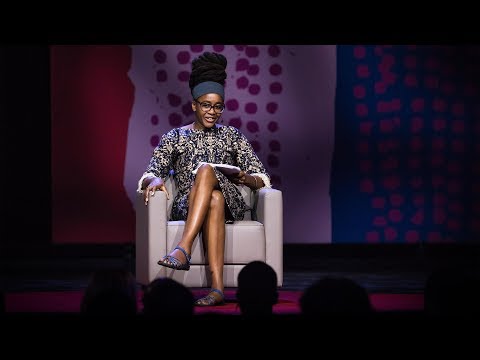 YouTube
The title of Okorafor’s talk places the genre in a part of the world that older science fiction rarely imagined as the center of the future. For this field, it is a reminder that an issue about technology looks different depending on where a work stands.
Try it
Victor tells his warning to Walton, an explorer in the Arctic. Why does it matter, for the issue of responsibility, that the novel puts this warning inside Walton’s letters?
The frame makes the warning a test case rather than a moral. Walton has the same ambition Victor had, and the reader watches to see whether he will learn from Victor’s example. When Walton turns his ship back at his crew’s request, the novel shows an ambitious man who accepts a limit, which Victor never did. The issue of responsibility is then presented through a choice the reader sees made, not through Victor’s words alone.
Issues from the field
Older works often hold this field’s issues in a single image. Emily Dickinson’s “The Railway Train”, read as a riddle in the chapter on why literature is studied, follows the train as it travels the country. In its second stanza the machine looks at the people it passes:
Around a pile of mountains,
And, supercilious, peer
In shanties by the sides of roads;
And then a quarry pareEmily Dickinson, “The Railway Train” (1891 text), lines 5–8
Supercilious means proud and scornful, and it gives the train the manner of a rich traveler glancing at the poor. The “shanties by the sides of roads” are homes the railway passes without serving, and in the next line it pares a quarry to fit its sides, cutting the land to its own shape. Read through this field, the lines present progress as something that looks down on the people beside its route. The table sets out this issue and four others as questions, each with a way a literary work might present it.
Issue, as a question | How a work might present it |
|---|---|
Who bears the cost when a place’s livelihood harms the place? | Ibsen’s town chooses its Baths over its health; Rachel Carson’s Silent Spring (1962) opens with a fable of a town whose birds have gone silent. |
Who is left behind by progress? | Dickinson’s train peers at roadside shanties; Crabbe’s villagers labor behind the plow while poets praise the pastoral. |
Can a human body be treated as a resource? | Ishiguro’s students are raised for their organs and taught a gentle vocabulary for it. |
Are animals moral subjects? | Anna Sewell’s Black Beauty (1877) is narrated by a working horse; Franz Kafka’s “A Report to an Academy” (1917, in translation) by an ape taught to imitate humans. |
Whose knowledge of the land counts? | Ghosh’s The Hungry Tide sets a scientist’s knowledge beside a fisherman’s, and both against a policy made in a distant city. |
Each question can be narrowed further to fit two extracts, as the worked example narrowed scientific responsibility. Several also leave room for disagreement that the works themselves stage: Ibsen’s town has real reasons to fear ruin, and Ghosh’s conservationists want to save a real species.
When an issue goes wrong
Issues in this field go wrong in recognizable ways, often because the subject is urgent and students want to argue about it. Each statement that follows starts from the case-study works, and the notes give the fault and a repair.
The environment.note 1
Victor Frankenstein’s laboratory.note 2
We must stop climate change before it is too late.note 3
The dangers of nuclear power.note 4
Too broad. A field-sized word gives no question. Repair: name who harms what and who pays, such as who bears the cost when a place’s livelihood harms the place.
Too narrow. A single place belongs to one work. Repair: ask what the laboratory stands for, a maker who abandons what he made, which a second work can also present.
A slogan. It is true or false before any work is read, and it invites a speech about policy. Repair: ask how communities respond to warnings they do not want to hear, which Ibsen dramatizes.
A science lecture waiting to happen. It points the talk at reactors instead of texts. Repair: ask who is responsible when a technology harms people who did not choose it, which keeps the talk on people and how the works present them.
Writing about an issue in a work
A paragraph on a science or environment issue must stay with the text, because the issue itself is so large. The two paragraphs that follow are about Victor’s flight in Frankenstein.
Weak: Victor is like scientists today who create dangerous things such as nuclear weapons without thinking about the consequences.note 1 Mary Shelley is warning us that science is dangerous and that we should be careful.note 2 This is still very relevant.
Strong: Shelley makes Victor judge his creation as an artwork rather than a life:note 3 when the work is finished, “the beauty of the dream vanished”, and the sentence moves straight from his effort to his “breathless horror and disgust” with no clause about the being he has made.note 4 The grammar enacts the abandonment. Because the reader hears the story only through Victor’s own account, inside Walton’s letters, his evasion of responsibility is presented from within,note 5 so the novel asks who answers for a technology by letting its maker fail to.
The world in place of the text. The comparison may be fair, but it analyzes nothing Shelley wrote.
A message, not a reading. A single moral flattens the novel; Victor’s own warning is complicated by its frame.
A claim about a choice. The paragraph opens with what Shelley does, in a sentence that could only be about this novel.
Syntax as evidence. The quotation is embedded, and the structure of Victor’s sentence becomes evidence for the issue.
Form tied to the issue. The narrative frame is linked to how the novel presents responsibility, which is the analysis the issue needs.
The strong paragraph never mentions modern technology. A comparison with the present can come later in an oral, in a sentence; the analysis comes first.
Applying it in the individual oral
In the individual oral a student explains, over ten minutes, how a global issue is presented in two extracts and in the works they come from, then answers the teacher’s questions for five. Issues from this field suit works in which a place, a discovery, a machine or a body is at stake in the plot or the imagery. The steps of choosing an issue, works and extracts, and of planning the talk, are set out with the internal assessment; the field supplies the questions.
A talk on the case-study pairing might state its issue and method together: “Both works ask who answers for a technology that harms people who never chose it. Shelley lets the reader hear the maker evade the question in his own voice. Alexievich leaves the makers silent and gives the whole book to those who paid.” The sentence names the issue, both works and a difference of method, which the rest of the talk can test on the two extracts.
Context earns a place only when it explains a choice. One sentence on what happened at Chernobyl in 1986 helps a listener follow Ignatenko’s monologue; three minutes on reactor design take time from the analysis that the criteria reward. The same discipline applies to scientific detail about Victor’s experiment, which Shelley deliberately withholds.
A science or environment issue can also give a Paper 2 essay its axis, when a question asks how works present a place, a change or a conflict between people and their world. The method is the same over two whole works: the issue opens the comparison, and the writers’ choices carry it.
The field meets the concepts of transformation, in what people do to places, and representation, in how a work stands for a landscape or a body. The pages on choosing a global issue and extracts take an issue from this field and test it against a student’s own reading list.
Self-check
- To do:
I can describe what the field of science, technology and the environment covers, using An Enemy of the People as an example.
- To do:
I can read nature in a text as more than setting, and explain what ecocriticism adds and where it stops.
- To do:
I can explain the pastoral, the anti-pastoral and the sublime with a quoted example of each.
- To do:
I can narrow the field step by step to a global issue and test it on a work written in English and a work in translation.
- To do:
I can compare how Frankenstein and Voices from Chernobyl present responsibility for a technology through their different narrative methods.
- To do:
I can explain science fiction and climate fiction and name works that present technology, the body or climate as an issue.
- To do:
I can state issues from the field as open questions and repair one that is too broad, too narrow, a slogan or a science lecture.
Key terms
Each is also in the Global issues glossary for IB English A Lit, beside the other terms of its topic.
- Climate fiction
Fiction that deals with climate change and its effects on people, places and societies, whether set in the present or in an imagined future.
- Ecocriticism
A way of reading literature for its relation to the natural world: how texts present land, animals, weather and resources, and what attitudes to the environment they take for granted or question.
- Pastoral
Writing that presents country life, originally the life of shepherds, as simple, peaceful and innocent, usually in contrast with the city or the court. Anti-pastoral writing answers it by showing rural poverty, labor and suffering.
- Science fiction
Fiction that imagines the human consequences of science and technology, often set in the future or in an altered world that follows rules of its own.
- The sublime
The feeling of awe mixed with fear before something vast, forceful or overwhelming, such as mountains, storms or the sea. It is felt as a kind of delight when the danger is seen from a safe distance.
Practice questions on 6.5 Science, technology and the environment
Augment’s own questions, written in the style of IB exam papers. Here is how a few of them start.
Practice all 18 questions on 6.5 Science, technology and the environment
Free with an account. Write your answer, open the markscheme beside it and mark yourself. Augment keeps the ones you got wrong for another go.
6.5 Science, technology and the environment questions by paper, with 6 in full
More in 6 Global issues
The whole topic is on its own page.
- 6.1Culture, identity and community
- 6.2Beliefs, values and education
- 6.3Politics, power and justice
- 6.4Art, creativity and the imagination
- 6.5Science, technology and the environmentThis page
Carry on with 6.5 Science, technology and the environment in Augment
With a free account, Augment remembers where you stopped in the notes and which questions you have marked.