3.2 How do conventions and systems of reference evolve over time?
How conventions and shared references change over time: a blog built from older types, public posters and leaflets, tragedy, realism and modernism, archetypes, fading allusions, archaism and the meme.
- IB English A: Language and Literature
- Part of 3 Intertextuality: connecting texts
- SL and HL
Notes on 3.2 How do conventions and systems of reference evolve over time?
Conventions change, but rarely by being invented from nothing. New text types are assembled from the conventions of older ones, and the stock of stories and references a writer can count on shifts with each generation, so that a text always speaks partly in borrowed forms. A blog post written in 2025 for the regular customers of a family oyster-omelette stall at the night markets of Penang, Malaysia, shows how many older types one short contemporary text can hold.
A new type built from old ones
Almost nothing in the Penang blog post was invented by blogs. Its date line, “Posted on Tuesday, 2 September 2025 by Mei” (paragraph 2), is the dated heading of a diary entry. Its fifth paragraph is a shop notice, the kind once taped to a stall’s cart: a day, a place, opening hours and a promise to stop “when the oysters are habis” (sold out, in Malay). Its eighth and ninth paragraphs, “Here is what stays the same” and “Here is what changes”, are the lists of a club or parish newsletter. Its signature, “– Mei, Papa and Ah Ma” (paragraph 12), closes it like a family letter.
Each borrowed convention brings its expectations with it. The diary’s date makes the post feel personal and of its moment. The shop notice gives it practical authority, so that customers can act on it. The newsletter’s lists promise an orderly account of what has changed, and the letter’s signature turns a business into three named people. The blog is a hybrid text because its job is mixed: it is a family story, an advertisement and a notice at once, and each job already had a type to borrow from.
Only the last part of the page is new. The tags line (paragraph 3) makes the post findable by search, and the comment thread (paragraphs 13 to 19) lets customers answer in public, on the same page, within hours. Even these have ancestors in the letters page of a newspaper and the noticeboard. No printed form, however, allowed a regular like Uncle Bala to write “Tell Ah Ma I miss her scolding already” (paragraph 14) directly under the notice he was answering.
In Remediation: Understanding New Media (1999), the American media scholars Jay David Bolter and Richard Grusin argued that every new medium works in this way. A new medium takes over the forms of older ones and reshapes them, as the web page took over the printed page’s headings, columns and captions. Older media answer in turn, as newspapers redesigned their pages to look more like websites. Bolter and Grusin called the process remediation. It explains why a blog post is recognizable even to someone who has never read a blog: its conventions are older than the medium.
The diagram traces one family of these borrowings, the texts by which a speaker addresses the public. A printed notice gave every later type its basic parts: a heading, the name of whoever speaks, a time and a place. The poster added an image and a few words to be read in passing; the leaflet added sections to be kept and reread. The blog post sits where the branches meet, which is why it can be a notice, an advertisement and a family story in under 700 words.


Public address across a century
The poster is one of the oldest branches of that family tree, and its conventions were fixed in the streets of Paris in the 1890s. Henri de Toulouse-Lautrec’s poster for the Moulin Rouge dance hall, printed in 1891, shows most of them at once. Across the top, the words MOULIN ROUGE are printed three times in red capitals, one line under another. Below them a dancer in a white petticoat kicks at the center, in front of a crowd drawn as one flat black silhouette of top hats. A tall gray figure in the foreground, cut off by the edge of the sheet, leans toward her. Further words below give the nights of the masked ball.

Every choice suits a text read in passing, by someone walking down a street. The name is repeated because a glance may catch only one line of it. The colors are flat and few, because the poster was printed by lithography in a handful of inks and had to be read from across a road. The crowd is a single dark shape, so that the one figure in white is the first thing the eye finds. These conventions, a single image, a few large words and a striking contrast, are still the poster’s conventions today.
Forty-five years later the Works Progress Administration used them for a different speaker. The WPA library poster from Chicago, made between 1936 and 1941, keeps the flat silkscreen colors, the single figure and the large lettering. Its slogan sits in a dark band at the foot:
In
MARCH
READ THE BOOKS YOU’VE
ALWAYS MEANT TO READWPA reading poster, Chicago, 1936–1941, slogan
What changed is who speaks and to whom. Lautrec’s poster sells an evening at a dance hall to whoever can pay. The WPA poster addresses every passer-by as a member of the public, in the imperative and the second person, on behalf of a government library program. The commercial poster’s conventions were taken over by the state, which kept their friendliness and their speed and gave them a civic purpose.
From the wall to the fridge
A public health leaflet of 2024 shows how far the conventions of public address have moved since. “Keeping cool in a heat wave”, from a community health service in Melbourne, Australia, keeps the imperative and the second person: “Drink water regularly, even if you don’t feel thirsty” (paragraph 10). It keeps the speaking institution’s name. But it is made to be taken home and kept, so it gives up the poster’s single image and slogan for headings and lists that can be scanned and reread. The leaflet’s last lines show conventions that no poster of the 1930s carried:
This leaflet is also in Arabic, Greek, Italian, Punjabi, Simplified Chinese and Vietnamese.
. . .
Kelverton Health acknowledges the Wurundjeri Woi-wurrung people of the Kulin Nation, the Traditional Owners of the land where we work, and pays respect to their Elders past and present.“Keeping cool in a heat wave”, paragraphs 38 and 40
Both lines record changes in who a public institution assumes its public to be. The WPA poster takes for granted a public that reads English and a list of European and American novelists. The leaflet names six other languages its public may need. It ends with an acknowledgment of the Aboriginal people on whose land the service works, a convention that Australian public bodies widely adopted in the decades around 2000. Neither line gives advice about heat. They are conventions of address, and they show that the conventions of a text type change when the values of its makers change.
Tragedy, realism and modernism
Literary conventions change in the same way, and the history of a form can be told as a series of arguments about its conventions. The oldest of these arguments concerns tragedy. In his Poetics, written in the fourth century BCE, Aristotle set out what tragedy is and does:
Tragedy, then, is an imitation of an action that is serious, complete, and of a certain magnitude; in language embellished with each kind of artistic ornament, the several kinds being found in separate parts of the play; in the form of action, not of narrative; through pity and fear effecting the proper purgation of these emotions.
Aristotle, Poetics, chapter VI, translated by S. H. Butcher (1895)
Aristotle added that the central figure should fall “not by vice or depravity, but by some error or frailty”, and that he should be “highly renowned and prosperous”, like Oedipus. That last condition shaped tragedy for centuries. Shakespeare’s tragic heroes are kings, princes and generals, from Lear and Macbeth to Hamlet and Othello, and their falls shake states as well as families. The magnitude Aristotle asked for was measured partly by rank: the higher the hero stood, the further he had to fall.
In 1949 Arthur Miller’s Death of a Salesman put a worn-out traveling salesman, Willy Loman, in the hero’s place. Some reviewers objected that a man so ordinary could not be tragic. Miller answered them the same year in an essay in The New York Times, “Tragedy and the Common Man”. He argued that ordinary people were as fit a subject for tragedy as kings had been, and that its force came from a person’s struggle to claim a rightful place, whatever their station. The convention of the high-born hero gave way. The convention of the fall through the hero’s own error, and the audience’s pity and fear, remained.
Realism: the ordinary as subject
Miller’s argument had a long background in the novel. Realism, the dominant mode of nineteenth-century fiction, made ordinary lives its subject and accuracy its aim. George Eliot paused Adam Bede (1859) in its seventeenth chapter to defend the method. Her narrator promises “a faithful account of men and things as they have mirrored themselves in my mind”, and praises Dutch paintings for their “faithful pictures of a monotonous homely existence”. The conventions that followed from this aim are familiar from almost any novel: detailed settings, probable events, a plot in time order, and a narrator who seems to report rather than invent.
Modernism: against the conventions of realism
By the early twentieth century those conventions themselves seemed false to some writers. In her essay “Modern Fiction”, collected in The Common Reader (1925), Virginia Woolf argued that a writer free to follow feeling would abandon them. If a novelist could “base his work upon his own feeling and not upon convention”, she wrote, “there would be no plot, no comedy, no tragedy, no love interest or catastrophe in the accepted style”. Her alternative was an image:
Life is not a series of gig lamps symmetrically arranged; . . . a luminous halo, a semi-transparent envelope surrounding us from the beginning of consciousness to the end.
Virginia Woolf, “Modern Fiction”, The Common Reader (New York: Harcourt, Brace, 1925)
Gig lamps were the paired lamps on either side of a carriage, so the image sets realism’s neat sequence of events against a glow without edges. The writers later grouped as modernism, among them Woolf, James Joyce and T. S. Eliot, followed the movement of a mind rather than a plot, broke up time, and made the form of a work part of its subject. Woolf’s own Mrs Dalloway, published the same year, covers one day in London through the thoughts of several characters. Its departures are now taught as conventions in their turn.
Tragedy (Aristotle to Shakespeare) | Realism (19th-century novel) | Modernism (about 1900–1940) | |
|---|---|---|---|
Central figure | High-born, “highly renowned and prosperous” | Ordinary people in ordinary places | A consciousness more than a character |
Shape | A fall through error, ending in suffering | A plot in time order, with probable events | Time broken up; little plot |
Telling | Action on stage, “not of narrative” | A narrator who seems to report | Thoughts followed from inside |
A named work | King Lear (about 1606) | Adam Bede (1859) | Mrs Dalloway (1925) |
The table sets the three side by side. Read down each column, it shows a set of conventions that fit together; read across, it shows each set being answered by the next. Miller’s Death of a Salesman draws on all three, since it keeps tragedy’s fall, takes realism’s ordinary hero and stages Willy’s memories breaking into the present in a modernist way. A text’s conventions often come from several periods at once, and naming which period each comes from is a precise way of describing what the text does.
Archetypes: patterns that outlast their forms
Some patterns survive every change of convention because they belong to stories rather than to any one form. The Penang blog post tells, in a single paragraph, how a recipe passed from grandmother to granddaughter:
She watched us burn eleven omelettes. On the twelfth she said “can”, which from Ah Ma is a gold medal.
“Same umbrella, new hands”, paragraph 7
The story is new, but its shape is ancient. A master will not explain, an apprentice fails again and again, and a single word of approval means more than praise because it is so rarely given. Folk tales, saints’ lives, martial arts films and sports stories all use it. A recurring character, situation or story pattern of this kind is an archetype, and it can be recognized from only a few details. The post needs two sentences to call up the whole pattern, and memory supplies the rest: the long nights of practice, the master’s hidden pride, the handing on of a craft.
The American scholar Joseph Campbell made the best-known claim about such patterns. In The Hero with a Thousand Faces (1949) he argued that myths from many cultures share one underlying story, the hero’s journey: a departure from home, a series of trials, and a return with something gained. The TED-Ed lesson that follows sets out Campbell’s stages. Later critics have questioned how far one pattern fits all, and the writer Maureen Murdock’s The Heroine’s Journey (1990) argued that Campbell’s model, built mostly on male heroes, misses the shape of many women’s stories. The debate matters for reading, because an archetype explains a text only where the text actually follows it.
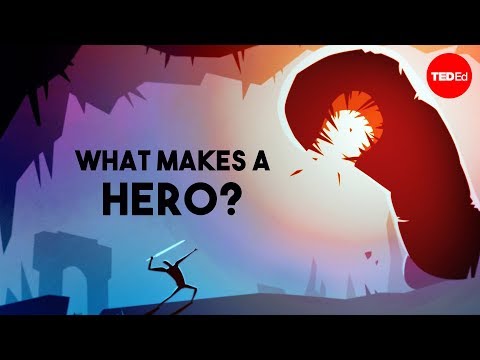 YouTube
The Penang post shows both the power and the limit of the archetype. The apprenticeship pattern gives a family business announcement the weight of a tale, and it explains why a word as small as “can” carries so much. But the post also bends the pattern. Ah Ma does not hand over a secret; she says “the recipe is in the wrist”, and the learning is done by watching and writing down. Her final comment still corrects the apprentice: “Don’t let her put too much starch” (paragraph 19). The old master never quite retires.
Frames of reference and the fading allusion
Every text assumes that its audience knows certain things, and the stock of knowledge it assumes is its frame of reference. The Penang post assumes a great deal. Its regular customers know where “stall 14, between Kak Ros and the durian lorry” (paragraph 5) is, who Uncle Bala is, and what “can” means in the mouth of a Penang grandmother. They also share a wider frame: the “gold medal” of paragraph 7 calls on the Olympic Games, a reference understood almost anywhere in the world. A text written for a small community and a global one at once mixes the two kinds of reference, and the comment thread suggests which audience came first.
An allusion is a reference that a text makes without explaining it, because it expects readers to recognize it. Toru Dutt, a Bengali poet who wrote in English, wrote “Our Casuarina Tree”, which appeared in a posthumous volume in 1882. In its last stanza she hopes that the tree of her childhood garden will be remembered among the famous trees of English poetry:
Mayst thou be numbered when my days are done
With deathless trees—like those in Borrowdale,
Under whose awful branches lingered pale
“Fear, trembling Hope, and Death, the skeleton,
And Time the shadow;”Toru Dutt, “Our Casuarina Tree” (1882), lines 49–53
The trees in Borrowdale are the yew trees of William Wordsworth’s poem “Yew-Trees”, and the words in quotation marks are his. For the English poetry public of 1882 the allusion needed no note: Wordsworth was among the most read poets of the century, and the Lake District was a place of pilgrimage. Dutt’s allusion makes an argument through that shared knowledge. It places an Indian tree beside the most famous trees in English verse and claims for her garden in Bengal the same right to be remembered.
Most readers today do not know “Yew-Trees”, and the allusion changes as its frame of reference fades. The quotation marks still signal that another text is speaking, but they no longer say whose, and the claim of equality loses its target. This is the usual fate of allusions, from the scriptural and classical references that every educated person once caught to the television catchphrases of a few years ago. A reading that restores the reference is not decoration. It recovers an argument the poem was making to its first readers.
Try it
The WPA library poster prints nine surnames on its flying books, among them DICKENS, TOLSTOI and ELIOT. What frame of reference does it assume, and how has that frame changed for a viewer today?
It assumes a public that knows these writers by surname alone, as the classics a library user ought to have read. The frame has moved since: the poster’s names are dated, as the chapter on how meaning and impact change over time shows. A viewer today may also wonder which Eliot is meant, George or T. S., which a 1930s list of novelists would not leave in doubt. The poster’s references still work, but they now need some of the explaining that an allusion is meant to do without.
Archaism: old words chosen on purpose
Dutt’s stanza holds a second way in which the past survives in a text. Its words were old-fashioned even in 1882: “Mayst thou” (line 49), and elsewhere in the poem “oft” (line 9), “mine eyes” (line 29), “haply” (line 33), “for aye” (line 47) and “fain” (line 54). None of these was everyday English in Victorian Calcutta or London. A word or form that has passed out of common use and is chosen deliberately in a later text is an archaism. In Dutt’s poem the archaisms belong to the tradition of English poetic language that she was claiming a place in.
Archaisms are a convention of their own, and their meaning changes with time. In 1800 Wordsworth had rejected this kind of poetic diction as a habit that cut poetry off from speech; some eighty years later Dutt used it to sound like the poetry she loved; today it can sound simply old. The chapter on creativity reads the same choice in Tagore’s Gitanjali, whose “thy” and “thee” bring the register of the English Bible into a Bengali prayer. In each case the old word works only because it is heard as old.
Archaism outside literature
Archaism is just as common in non-literary texts, where it usually sells a sense of history. Shop and pub signs in Britain and North America still use Ye Olde, as in “Ye Olde Tea Shoppe”. The Ye was never pronounced as the old pronoun. Medieval English wrote the with a letter called thorn (þ), which in some handwriting looked like a y, and early printers, whose type often came from the Continent without a thorn, set y in its place. The sign’s archaism is therefore a misreading of an old spelling, kept because it looks old. Its purpose is the same as Dutt’s, to borrow the authority of the past, and it is a reminder that a text’s idea of the past is itself a convention of its own time.
The meme: a format that carries its source
The newest system of reference works by format rather than by quotation. In 1939, as Britain prepared for war, its Ministry of Information printed some two and a half million copies of a poster with five words under a crown: KEEP CALM AND CARRY ON. The version now best known sets them in white capitals on a red ground. It was meant for the moment of crisis and was hardly displayed. In 2000 a copy turned up in a box of secondhand books at a bookshop in Alnwick, in the north of England. Once reproductions went on sale, the five words became one of the most copied phrases in the world.
KEEP CALM
AND
CARRY ONMinistry of Information poster, 1939
What spread was not the message but the template: a crown, a red ground and a five-word imperative in two halves, refilled with any content (keep calm and drink tea, keep calm and study on). Each version means something only to a viewer who knows the original, and part of its meaning is the distance between the original’s wartime gravity and the new version’s triviality. The biologist Richard Dawkins coined the word meme in The Selfish Gene (1976) for any idea that spreads by copying, as genes do. Its internet sense, a meme as a template that users fill with new content, describes exactly what happened to the poster.
The meme differs from the allusion in what it borrows. An allusion quotes or names its source; a meme reuses the source’s shape and leaves the words free. Both depend on a frame of reference, and both fade when the frame changes. A viewer who has never seen the 1939 poster reads “Keep calm and study on” as a plain instruction, and the joke is lost. The Imperial War Museums film that follows tells the poster’s history from its printing to its second life.
 YouTube
Where readers disagree: progress or loss
Changes in conventions are often judged as gains or losses, and the judgment has been argued in both directions. The American media critic Neil Postman made the case for loss in Amusing Ourselves to Death (1985). He argued that the shift from print to television changed the conventions of public discussion for the worse. A culture used to long printed arguments, read slowly and answered in kind, became a culture of short, entertaining images, in which serious matters had to be presented as shows. For Postman a medium’s conventions decide what can be said in it, and television’s conventions could not hold a sustained argument.
The British linguist David Crystal took the opposite view of a later change. In Txtng: The Gr8 Db8 (2008) he examined the panic that text messaging was ruining young people’s English. He found that abbreviations made up a small share of most messages, and that many of them had long histories in letters, telegrams and puzzles. He also pointed out that a person must already know how to spell a word before abbreviating it playfully. On his account, new conventions of writing added to what people could do with language and took nothing essential away.
Bolter and Grusin’s account of remediation suggests a third position: that new media neither replace nor degrade old ones but reshape them, and that the old forms live on inside the new. The Penang post supports this view and adds a gain that no older type allowed. A customer’s complaint and the owner’s answer now appear on the same page as the announcement:
RM11 for small?? Last time RM10 only. Next year RM12 is it?
. . .
Fair question, Jason. Oysters cost us almost double what they did five years ago, and we held the old price as long as we could.“Same umbrella, new hands”, paragraphs 17 and 18
A shop notice taped to a cart could not be answered in public, and a letter to the editor took a week to print. The comment thread lets a dissenting customer speak in his own variety of English, “is it?” and all, and obliges the business to give its reasons where every other customer can read them. That is a real gain for the people who use the text. Yet the fading allusion in Dutt’s poem records a real loss: as frames of reference change, older texts stop making some of their arguments unless a reader works to restore them.
The most defensible judgment is that the question of progress or loss cannot be answered of conventions in general, only of particular functions. Postman was right that a medium’s conventions shape what can be said in it, and Crystal was right that new conventions are usually extensions of old habits rather than ruins of them. Each change of convention gains some things, such as the public reply, and loses others, such as a shared stock of references. A strong reading names which functions a new convention serves better or worse than the old one, instead of praising or regretting change as such.
Writing about inherited conventions
A paragraph about conventions over time makes a claim about what a text does with something it has inherited. It names the older convention, shows it in the new text with a quotation, and explains what the old form brings to the new purpose. The paragraph that follows, as a strong student might write it, answers the question of how the Penang blog post adapts older conventions.
The Penang blog post persuades its customers by speaking in older forms they already trust, so that a business notice sounds like family news.note 1 Its practical heart is a shop notice, giving a day, a place and hours and promising to close “when the oysters are habis” (paragraph 5), the kind of message once taped to a stall’s cart.note 2 Around that notice the post sets a diary’s dated heading (“Posted on Tuesday, 2 September 2025 by Mei”, paragraph 2) and a letter’s signature (“– Mei, Papa and Ah Ma”, paragraph 12), so the stall speaks as three named people.note 3 Even the price rise of one ringgit arrives inside the newsletter’s plain list of “what changes” (paragraph 9), where it reads as one item of news among others rather than as a demand for money.note 4
A claim about inheritance. The topic sentence states what the borrowed forms do for the post’s purpose, not merely that they are there.
The older type named. The shop notice is identified and quoted, so the inheritance is shown rather than asserted.
Two borrowings, one effect. Diary and letter are quoted together because they do the same job: turning a business into a family.
Purpose and audience. The last sentence ties the inherited list to the most delicate piece of news, which is where the convention earns its place.
Every claim in the paragraph names an older type and quotes the new text, and every sentence explains what the inheritance does for the post’s readers. The commonest weakness in writing about change is to describe history instead of the text. The pair that follows sets that weakness beside its repair, on the 1939 poster that became a meme.
Weak: The Keep Calm and Carry On poster was made in the Second World War and became a famous meme in the 2000s.note 1 This shows how texts change over time.note 2
Strong: Versions such as “Keep calm and study on” keep the 1939 poster’s crown, its red ground and its imperative split into two halves, and change only the second half.note 3 The joke depends on that inherited frame: a reader who recognizes the wartime original hears a week of revision compared, in mock seriousness, to a nation waiting for bombs.note 4
History instead of analysis. The facts are accurate but describe the poster’s career, not anything in a text.
A conclusion with no claim. “Texts change over time” would be true of any text and needs no evidence.
The convention named exactly. The strong version lists what each variant keeps and what it changes.
Meaning from the frame of reference. The effect is explained through what the viewer must already know, which is the point of a meme.
Applying it in Paper 1
Paper 1 may set a text from the past, such as an old advertisement, a historic speech or a diary entry. It may also set a contemporary text that borrows from the past, such as a blog that sounds like a letter or an advertisement in the style of a vintage poster. A guiding question may ask how a text appeals to its audience or how its form shapes its message. Conventions over time open both. For an old text, they explain choices that look strange today; for a new text, they explain what it gains by borrowing an older form.
A model sentence on an unseen blog post might read: “By signing its announcement like a family letter, with three first names, the post turns a price rise into news shared among people who know each other, so that loyal customers read it as a confidence rather than a sales notice.” The commonest way to lose marks is to explain a historical text’s strangeness with a general remark, such as “people spoke like this back then”, instead of naming the convention and its purpose.
A comparison of an old and a new text of the same type, a 1930s poster beside a 2024 leaflet, is also a strong basis for the individual oral, where a non-literary body of work often spans years.
How a reader decides which features of two texts far apart in period, place and type are worth comparing is the next question in the area of Intertextuality. How meaning changes as the same text meets new readers is taken further by the question in Time and space on how the meaning and impact of a text change over time. The concept of transformation follows the same idea from inside a single text.
Self-check
- To do:
I can show how a contemporary text type is built from the conventions of older types, and define remediation.
- To do:
I can trace how the conventions of public address changed from the commercial poster to the public poster and the health leaflet.
- To do:
I can explain how the conventions of tragedy changed, and what realism and modernism did with the conventions of fiction.
- To do:
I can define frame of reference, allusion and archaism, and explain what happens to an allusion when shared knowledge fades.
- To do:
I can explain how an archetype or a meme carries an old pattern into a new text.
- To do:
I can set out the argument over whether changes in conventions are progress or loss, with a writer for each side, and reach a judgment.
- To do:
I can write a paragraph that names an inherited convention, quotes it and explains what it does for a text’s purpose.
Key terms
Each is also in the Intertextuality: connecting texts glossary for IB English A Lang & Lit, beside the other terms of its topic.
- Allusion
An allusion is a brief, unexplained reference to another text, person, event or story that the writer expects readers to recognize. It brings the meaning of the thing referred to into the new text, so its force depends on knowledge the writer and readers share.
- Archaism
An archaism is a word, spelling or grammatical form that was once current but has gone out of everyday use, chosen deliberately in a later text. It gives writing the sound of age, ceremony or tradition, and its effect depends on the reader hearing it as old.
- Archetype
An archetype is a character, situation or story pattern that recurs across the stories of many periods and cultures. Because readers recognize the pattern, a text can call up its expectations with only a few details.
- Frame of reference
A frame of reference is the shared stock of stories, texts, images, events and sayings that a writer can assume an audience knows. It decides which references a text can make without explaining them, and it differs between groups and changes over time.
- Meme
A meme is an idea, phrase, image or format that spreads from person to person and changes as it is copied. In its internet sense it is a template that users fill with new content, whose meaning depends on recognizing the original it varies.
- Modernism
Modernism is a movement in the arts of roughly 1900 to 1940 that broke with the conventions of nineteenth-century realism. Modernist writing often follows the movement of consciousness, breaks up time and plot, and makes its own form part of its subject.
- Realism
Realism is a way of writing, dominant in the nineteenth-century novel, that aims to represent ordinary people and everyday life accurately and without idealizing them. Its conventions include detailed settings, probable events, a plot in time order and a narrator who seems to report rather than invent.
- Remediation
Remediation is the process by which a new medium takes over and reshapes the forms and conventions of older media. The term also covers older media reshaping themselves in answer to new ones.
- Tragedy
Tragedy is a serious drama, or a story shaped like one, in which a central figure falls from good fortune to suffering, usually through an error or flaw of their own, in a way that moves the audience to pity and fear. Its conventions have changed over time, most of all in who may be its hero.
Practice questions on 3.2 How do conventions and systems of reference evolve over time?
Augment’s own questions, written in the style of IB exam papers. Here is how a few of them start.
Practice all 13 questions on 3.2 How do conventions and systems of reference evolve over time?
Free with an account. Write your answer, open the markscheme beside it and mark yourself. Augment keeps the ones you got wrong for another go.
3.2 How do conventions and systems of reference evolve over time? questions by paper, with 6 in full
More in 3 Intertextuality: connecting texts
The whole topic is on its own page.
- 3.1How do texts adhere to and deviate from conventions associated with literary forms or text types?
- 3.2How do conventions and systems of reference evolve over time?This page
- 3.3In what ways can diverse texts share points of similarity?
- 3.4How valid is the notion of a classic text?
- 3.5How can texts offer multiple perspectives of a single issue, topic or theme?
- 3.6In what ways can comparison and interpretation be transformative?
Carry on with 3.2 How do conventions and systems of reference evolve over time? in Augment
With a free account, Augment remembers where you stopped in the notes and which questions you have marked.