D.3 Motion in electromagnetic fields questions for IB Physics
83 questions on Motion in electromagnetic fields, written by Augment in the style of IB exam papers. Six of them are below in full, to answer on paper.
- IB Physics
- Part of D Fields
- SL and HL
Questions by paper and level
SL and HL questions are for students at either level. HL only questions cover what only HL students study.
| Paper | SL and HL | HL only | All |
|---|---|---|---|
| Paper 1A | 31 | 3 | 34 |
| Paper 1B | 5 | 0 | 5 |
| Paper 2 | 28 | 16 | 44 |
| Every paper | 64 | 19 | 83 |
Counted on
Questions to try
Written by Augment in the style of IB exams, not past papers. Answer them on paper, then check each one against its markscheme with a free account.
A cloud chamber is placed in a uniform magnetic field of strength 0.20 T. At one instant an alpha particle in the chamber moves with a speed of in a direction at 30° to the magnetic field. What is the magnitude of the magnetic force on the alpha particle?
A group of students use the magnetometer in a smartphone to investigate the magnetic field of a long, straight, vertical wire carrying a constant current . The phone lies flat on a horizontal bench. The students measure the distance from the centre of the wire to the edge of the phone. The sensor is at an unknown distance inside the edge of the phone.
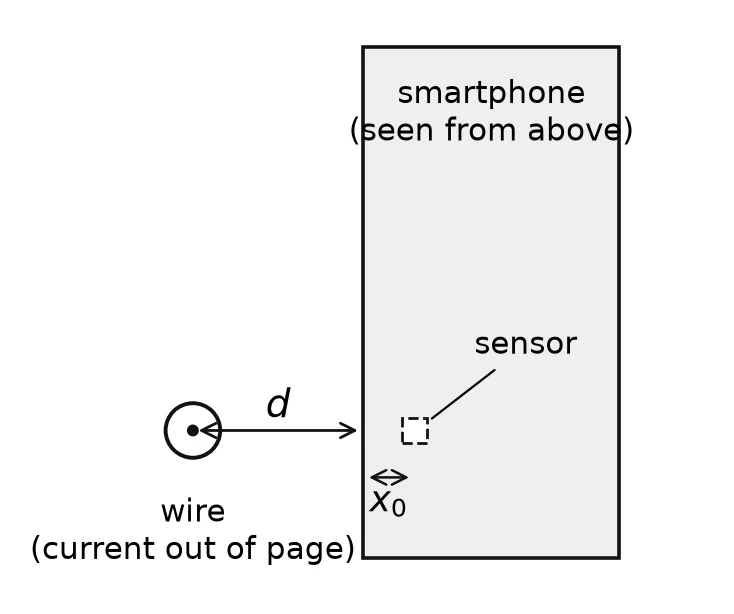
The magnetic field strength at a perpendicular distance from a long straight wire is .
The phone app displays the component of the magnetic field along one axis of the phone. Each reading has an uncertainty of ±0.5 μT. The students align this axis with the field of the wire. With the current switched off, the reading is . The students subtract this from every reading taken with the current on to obtain .
- (a)
Outline why the reading with the current switched off is subtracted from every reading.
1 mark
- (b)
State the shape of the magnetic field lines of the wire in the plane of the bench, and hence explain the direction in which the axis of the phone must point.
2 marks
- (c)
At the reading with the current on is . Calculate the fractional uncertainty in at this distance.
2 marks
- (d)
Explain why the students plot a graph of against , rather than a graph of against .
2 marks
- (e)
The graph shows the variation of with , with the line of best fit.
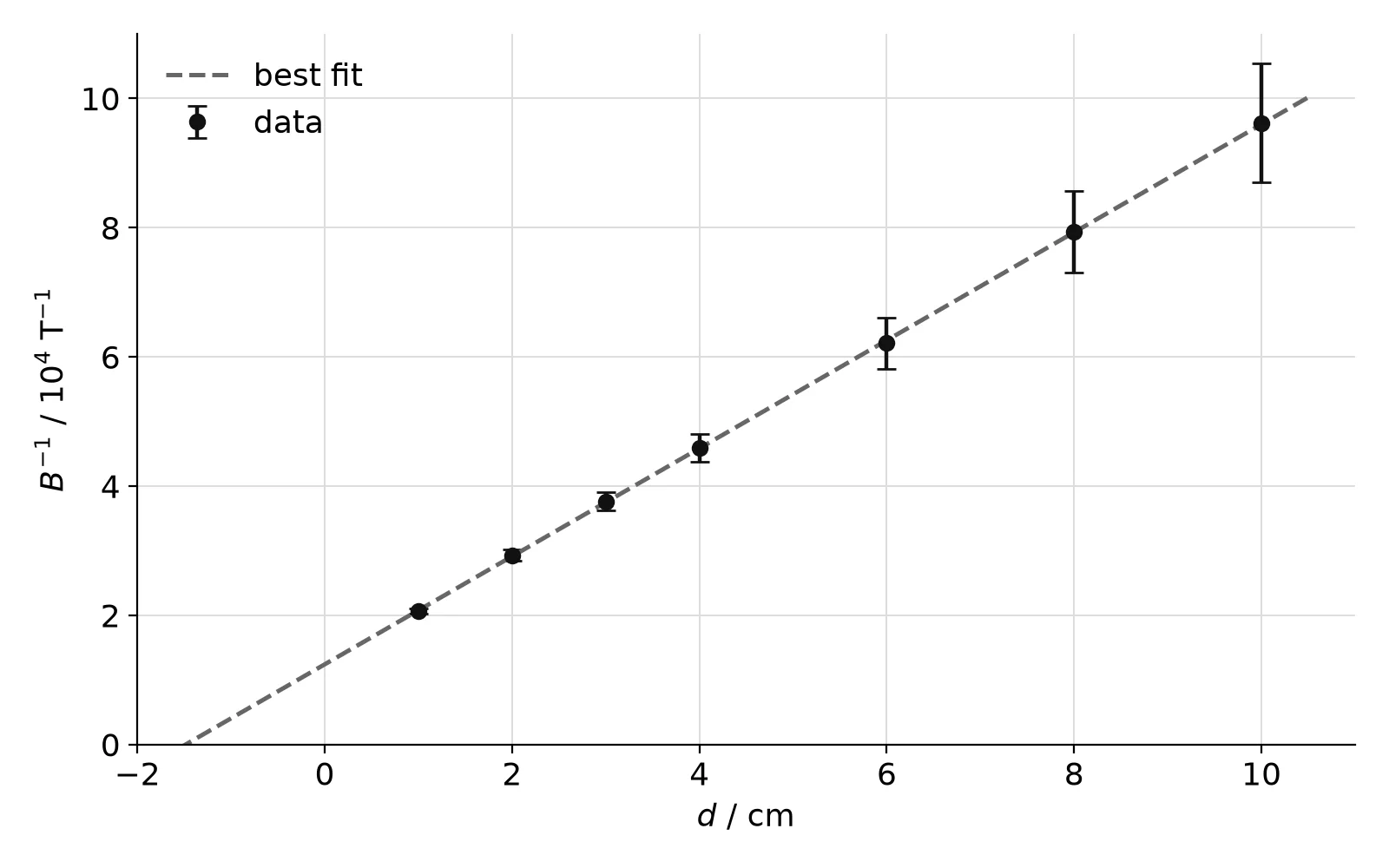
Determine, using the graph, a value for .
3 marks
- (f)
Determine .
2 marks
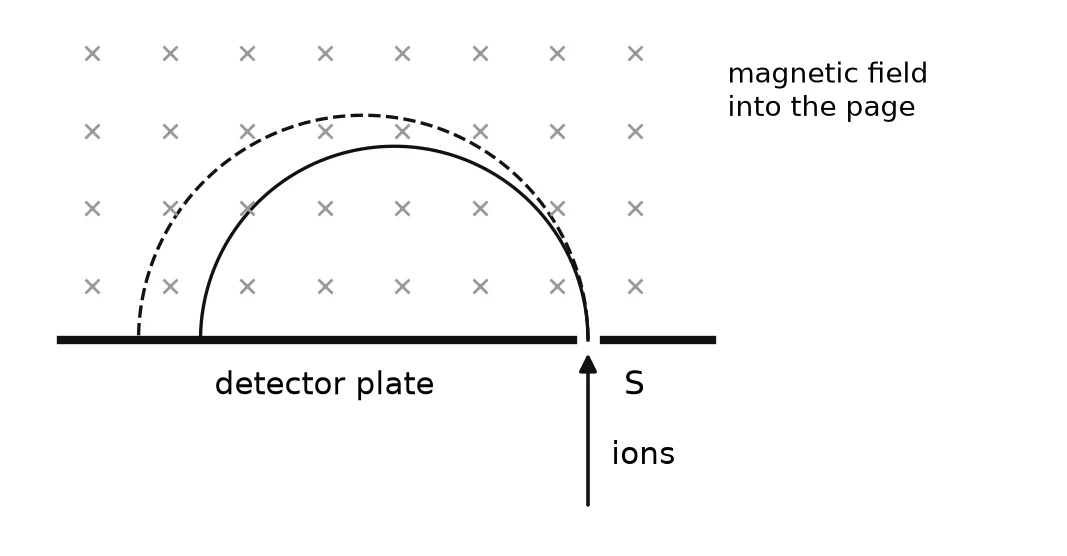
In a mass spectrometer, singly charged positive ions of neon-20 (mass 20 u) and neon-22 (mass 22 u) all move with a speed of m s. They enter a region of uniform magnetic field of strength 0.20 T through a slit S. The field is directed into the page. The ions travel in semicircles and strike a detector plate.
- (a)
Explain why the ions move in a circular path.
2 marks
- (b)
Outline why the kinetic energy of an ion does not change while it is in the field.
1 mark
- (c)
Show that the radius of the path of a neon-20 ion is about 6 cm.
2 marks
- (d)
Determine the distance between the points where the neon-20 and the neon-22 ions strike the detector plate.
2 marks
- (e)
Calculate the time that a neon-20 ion spends in the magnetic field. State, with a reason, whether a faster neon-20 ion would spend more time, less time or the same time in the field.
2 marks
- (f)
Calculate the centripetal acceleration of a neon-20 ion in the field.
1 mark
A beam of electrons in an evacuated tube travels to the right. It enters a region of uniform magnetic field directed into the page.
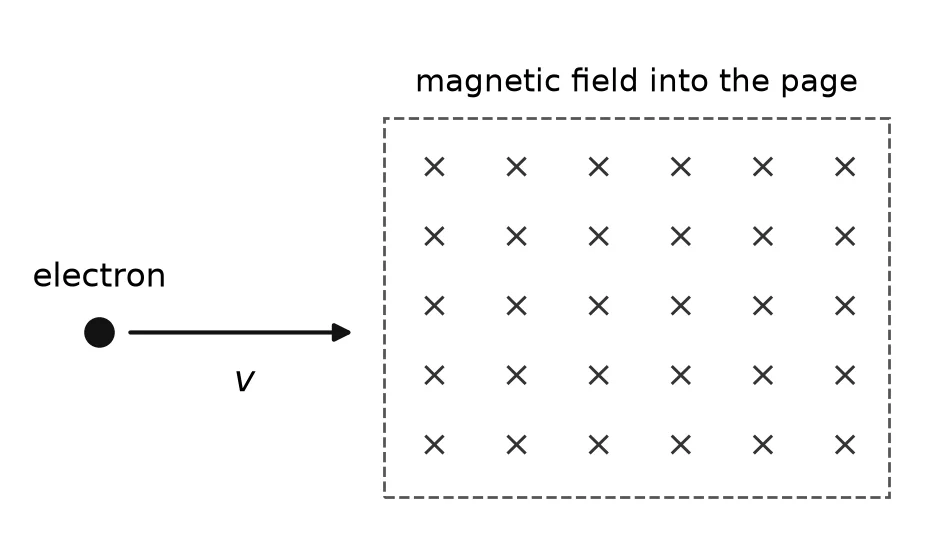
What is the direction of the magnetic force on an electron as it enters the field?
A group of students use a current balance to measure the magnetic flux density between the poles of a magnet. The magnet rests on a top-pan balance. A horizontal copper rod is held in a clamp so that it passes between the poles at right angles to the magnetic field without touching the magnet. The length of rod in the field is cm.
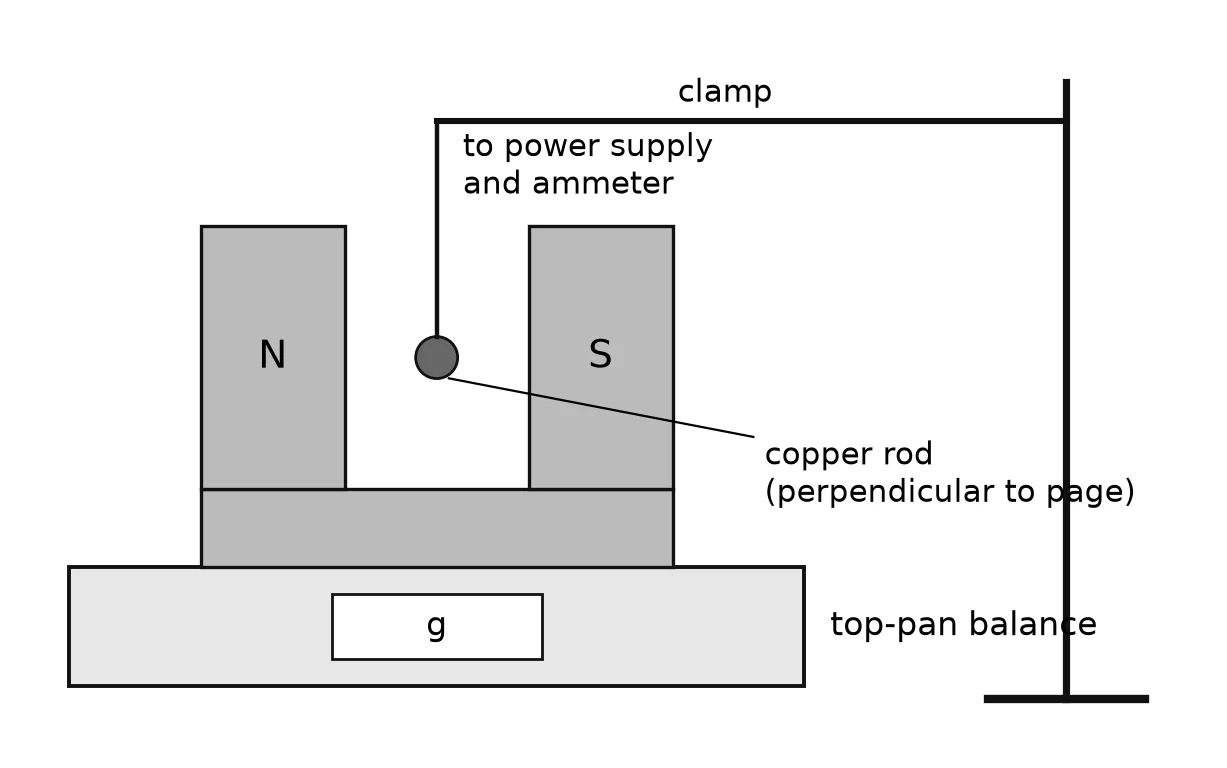
The students record the balance reading with no current in the rod. They then record the reading for different currents in the rod. The change in reading is .
- (a)
The balance reads to the nearest 0.01 g. State the absolute uncertainty in .
1 mark
- (b)
When there is a current in the rod, the balance reading increases. Explain the direction of the magnetic force on the rod.
2 marks
- (c)
The graph shows the variation of with , with the line of best fit.
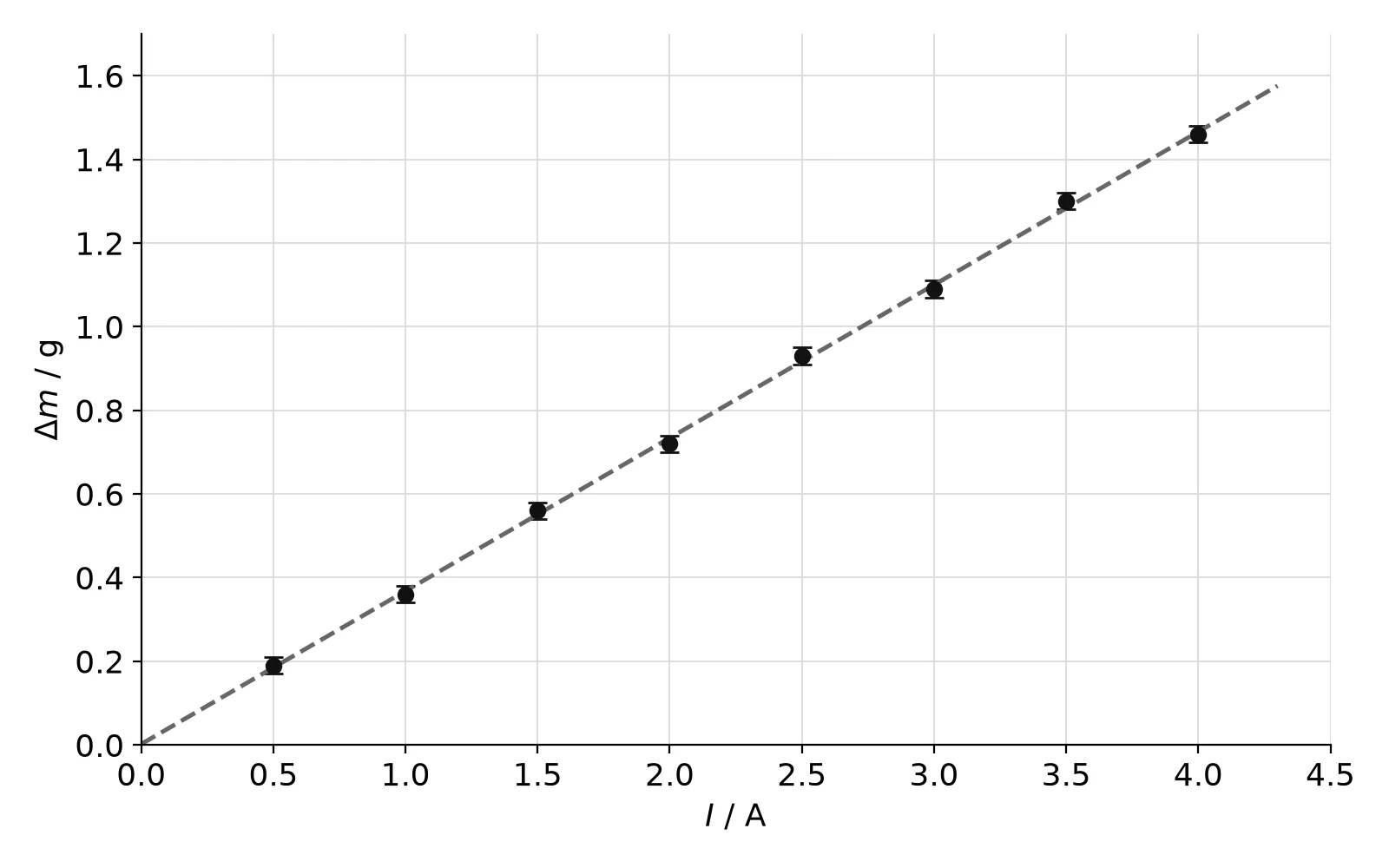
Outline whether the data support the hypothesis that is proportional to .
1 mark
- (d)
Determine, using the graph, the magnetic flux density between the poles.
3 marks
- (e)
The uncertainty in the gradient is 3 %. Determine the absolute uncertainty in the magnetic flux density.
2 marks
- (f)
The magnetic field extends a little beyond the edges of the poles. Explain the effect of this on the value of the magnetic flux density determined in (d).
2 marks
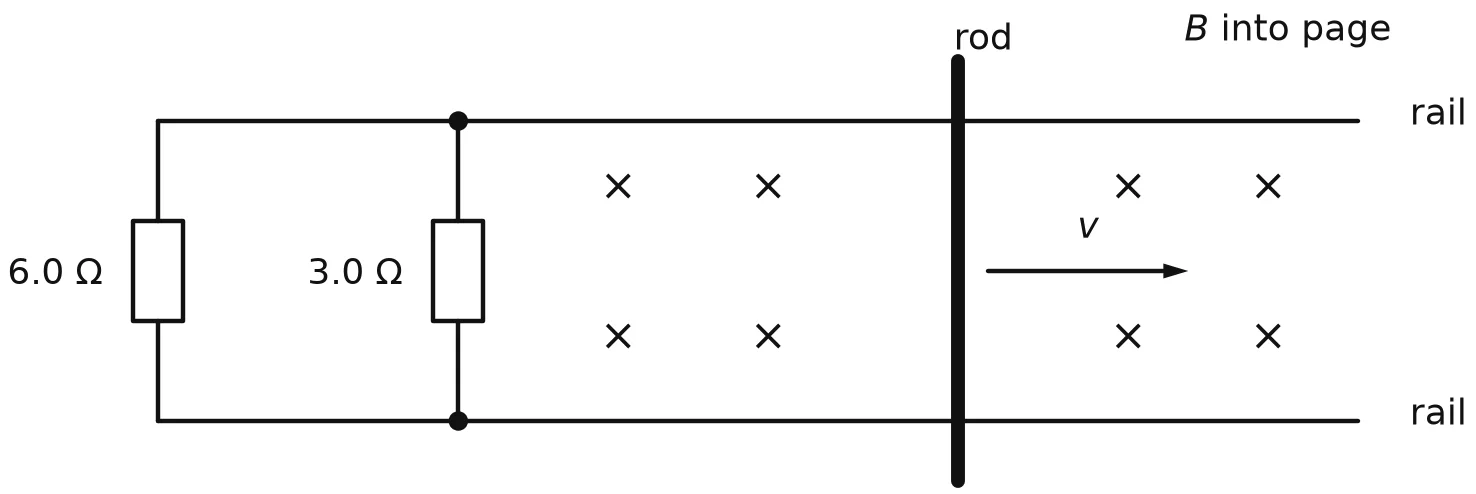
A metal rod rests across two horizontal conducting rails that are 0.25 m apart. The rails are connected at one end by a 3.0 Ω resistor and a 6.0 Ω resistor in parallel. A uniform magnetic field of flux density 0.60 T acts vertically, perpendicular to the plane of the rails. The rod has a resistance of 0.50 Ω. The resistance of the rails is negligible. The rod is pulled along the rails at a constant speed of 2.0 m s-1.
- (a)
Explain why an emf is induced across the rod.
2 marks
- (b)
Show that the induced emf is 0.30 V.
1 mark
- (c)
Determine the current in the rod.
2 marks
- (d)
Calculate the current in the 3.0 Ω resistor.
2 marks
- (e)
Determine the horizontal force needed to keep the rod moving at constant speed. Hence show that the rate at which work is done by this force equals the rate at which energy is dissipated in the circuit.
3 marks
- (f)
The 6.0 Ω resistor is disconnected while the rod continues at 2.0 m s-1. State and explain the change in the force needed to keep the rod moving.
2 marks
Practice all 83 in Augment
Free with an account. Every question has its markscheme, and Augment keeps the ones you got wrong so you can come back to them.
More questions in Fields
- D.1Gravitational fields
- D.2Electric and magnetic fields
- D.3Motion in electromagnetic fieldsThis page
- D.4InductionHL only
Check your answers in Augment
A free account opens all 83 questions on Motion in electromagnetic fields with their markschemes, and keeps a record of what you have marked.