1.4 Subcultures
How young people in Chinese-speaking places build subcultures around hanfu, idols, anime and games, and how they answer outsiders’ doubts, with a Xi’an hanfu club column and a Taipei newsletter profile.
- IB Mandarin B
- Part of 1 Identities
- SL and HL
Notes on 1.4 Subcultures
A subculture is a group inside a society that shares its own style, interests and values, and often its own words. In mainland China, Taiwan, Singapore and Hong Kong, young people build such groups around clothing, idols, anime and games, and older people often meet them with doubt. The arguments about them are arguments about identity: who decides what is normal, what counts as tradition, and how much a hobby may say about the person who has it.
A column from 《长安少年》, the online account of a high school hanfu club in Xi’an, answers some of those doubts. Its writer, a club member, describes a spring outing and the questions people asked.
A hanfu club answers its critics
The column opens with a scene that outsiders find strange. On the third day of the third lunar month, more than twenty students in hanfu go to a park below the city wall to celebrate “上巳节” (paragraph 1: the Shangsi festival, an old spring festival by the water). They shoot arrows, play 投壶 (pitch-pot, throwing arrows into a jar) and learn to bow. Then comes the question every reader of the column has heard: “你们是哪个剧组的?” (paragraph 1: which film crew is this?). The old man’s joke treats the students as actors, and the title of the column, 穿汉服,不是在演戏, is written to answer him.
Paragraph 2 lists the doubts in the school as well. Some classmates think the club members wear hanfu “为了出风头” (paragraph 2: to show off); others think they are just doing cosplay. The writer admits her own embarrassment first, sitting on a bus in a long skirt and feeling that everyone is looking. A defense of a subculture that begins by sharing an outsider’s feeling sounds more honest than one that simply calls the critics wrong.
The answer arrives in paragraph 3 with “对我来说,汉服不只是一件漂亮的衣服” (paragraph 3: for me, hanfu is not only a pretty piece of clothing). The writer lists what the outing taught: the history of the festival, how to tie a sash, how to bow. The structure 不但……而且…… adds the practical skill on top of the reading. Her last sentence links the clothes to history in a personal way, imagining the girls of Chang’an by the water in spring more than a thousand years ago. The scene is a real one: the Tang poet Du Fu opened his poem 《丽人行》 with the third day of the third month, when “长安水边多丽人” (there were many beautiful women by the water in Chang’an).
在学校里,也有同学觉得我们穿汉服是为了出风头note 1,或者只是在玩cosplay。
对我来说note 2,汉服不只是note 3一件漂亮的衣服。
除了衣服以外note 4,我们更在乎的是一起做事的感觉。
汉服应该让更多人喜欢传统文化,而不是把人分成“懂的”和“不懂的”note 5。
为了出风头. 出风头 means to show off or seek attention, and it is always critical. 为了 gives the motive that the critics suppose; the writer quotes their view in order to answer it.
对……来说. Limits the claim to the writer’s own point of view. A subculture is often defended this way, as a personal meaning rather than a rule for everyone.
不只是. Not only: it accepts that hanfu is pretty clothing, then makes room for more. It is softer than 不是, which would reject the critics’ description outright.
除了……以外. Apart from…: it sets the clothes aside to reach what the members value more, 一起做事的感觉 (the feeling of doing things together).
而不是. “Rather than”: the writer ends on what hanfu should not do. Dividing people into insiders who “understand” and outsiders who do not is the danger she sees inside her own group.
Paragraph 4 answers the second doubt, about money. Most members wear clothes costing “两三百块钱” (paragraph 4: two or three hundred yuan), bought online or left behind by older students who graduated. The detail is practical, and it suggests that the club has its own way of passing things on. The paragraph then names the real reason the writer stays: 归属感, a sense of belonging, though she never uses the word. She describes it instead: “大家因为同一个爱好走到了一起” (paragraph 4: everyone came together because of the same hobby).
In paragraph 5 the writer turns to a problem inside her own group. Some members care too much about “正不正宗” (paragraph 5: whether something is authentic) and criticize other people’s clothes online. A subculture that defines itself against outsiders can also divide its own members, and the writer chooses to say so publicly. Her closing invitation, “不穿汉服也没关系,穿校服来就行!” (paragraph 6: no hanfu needed; a school uniform will do), opens the group again.
The column as a text written for doubters
The column is written for readers who are not yet convinced, and its shape follows from that. Each paragraph after the first takes one doubt: that the members are acting, that they are showing off, that the clothes are too expensive, that hanfu fans are snobbish. The writer answers each with a detail from the club’s own life rather than with a general claim. The register is plain written Chinese close to speech, with 说实话 and 其实, as in a school publication where the writer is a classmate.
Try it
Read paragraphs 2 and 5 again. In paragraph 2 the writer admits a feeling; in paragraph 5 she admits a problem. Why does admitting each one make the column more persuasive?
Admitting that she was embarrassed on the bus (总觉得别人都在看我) proves that she understands how hanfu looks to outsiders, so readers who share that feeling are more willing to keep reading. Admitting that some members criticize others for not being authentic (正不正宗) makes clear that she is not simply praising her own group. Both make her sound fair, and a fair writer is easier to believe.
A cosplayer seen by her neighbors in Taipei
The hanfu column speaks from inside a group to people who doubt it. A subculture looks different when someone outside it does the describing, for readers of all ages. 《邻里之间》 is a community newsletter for residents of Da’an district in Taipei, and this profile introduces a sixteen-year-old neighbor who makes her own costumes.
The profile opens on the neighborhood before it reaches the hobby. At the Mid-Autumn party the children’s favorite is “不是抽奖,而是一位穿着银色盔甲、手拿长剑的‘女战士’” (paragraph 1: not the lucky draw but a “woman warrior” in silver armor with a long sword). Parents assume she is a hired performer, and only then does the writer say that she lives in the lane. This order fits the newsletter’s readers. Before they hear the word coser, they have already seen the girl giving pleasure to their own children.
Paragraph 2 explains the word for older readers, “也就是喜欢扮演动漫和游戏角色的年轻人” (paragraph 2: that is, young people who like to play characters from anime and games). The phrase 也就是 introduces a plain explanation of a term the readers may not know, which a profile for a mixed audience often needs. The rest of the paragraph is about work: armor cut from foam “一片一片” (piece by piece), glued, painted and aged, nearly two months of free time, and a helmet remade three times. Xiao Han’s own words then give the reason: “自己做出来的,才真的是我的角色” (paragraph 2: only what she makes herself is her own character). Here 才 means “only then”, so making the costume becomes the condition for owning the character.
她的盔甲不是买的,而是自己用泡棉一片一片剪出来、黏起来,再上色做旧的note 1。
让阿嬷改变看法的,是note 2去年冬天的一场动漫展。
在许多大人眼中note 3,“二次元”代表的是逃避现实……
她还透过网路note 4认识了来自日本和香港的朋友,大家用简单的英文和翻译软体note 4,交流做道具的方法。
也许,所谓的“次文化note 5”,离我们的生活并没有那么远。
不是……而是……. Sets aside the obvious guess (she bought it) and replaces it with the truth. The four verbs in a row, 剪, 黏, 上色, 做旧, make the labor visible.
让……的,是……. A cleft sentence, roughly: what made the grandmother change her mind was… It holds back the cause to the end of the sentence, so the convention gets the weight.
在……眼中. In the eyes of…: it marks a view as belonging to a group (许多大人), not to the writer. The newsletter reports the adults’ view before answering it.
透过, 网路, 软体. Taiwan’s words for “through”, “the internet” and “software”. On the mainland the usual words are 通过, 网络 and 软件.
次文化. The usual word for “subculture” in Taiwan. On the mainland 亚文化 is more common; both are correct, and a text keeps one.
The middle of the profile belongs to the grandmother. Her first reaction is fear, “我很担心她是不是学坏了” (paragraph 3: she worried whether the girl was going astray), the classic worry of an older generation about a hobby it does not understand. What changes her mind is something she sees for herself at a convention: a thousand young people queuing and greeting each other politely, “比我想象的有秩序多了” (paragraph 3: much more orderly than she had imagined). Her answer is an action, not a speech. She takes out her sewing machine and makes Xiao Han a cape.
Paragraph 4 sets out the outsiders’ case fairly before answering it. Many adults see 二次元 as “逃避现实” (paragraph 4: escaping reality), and Xiao Han does not deny that such people exist. Her own experience points the other way. In costume a quiet student “就敢站在大家面前” (paragraph 4: dares to stand in front of everyone), and her hobby has given her friends in Japan and Hong Kong. The profile does not claim that every fan is like her; the phrase 对多数同好来说 (for most fellow fans) keeps the claim modest.
What changes between the two texts
Both texts end up admitting the same problem inside their subcultures. The Xi’an writer worries about members who judge whether clothes are “正宗” (authentic); Xiao Han worries about people online who call others’ work “不像原作” (paragraph 5: not like the original) or mock their bodies. In both groups, the rules that hold members together can also push new members away.
她希望大家多一点包容:“每个人喜欢一个角色的方式都不一样。”
巷口那个会做盔甲的女孩, paragraph 5
The difference lies in who speaks and to whom. The column is written by a member, in the first person, to classmates who might join; it ends with an invitation. The profile is written by a neighbor, in the third person, to residents who might disapprove; it ends with a scene of children around Xiao Han and a gentle conclusion, “离我们的生活并没有那么远” (paragraph 6: not so far from our own lives). The word 所谓的 (so-called) in that last sentence keeps a little distance from the label 次文化, as if the writer doubts that the label fits a girl who crouches down to explain her armor to small children.
Ideas to discuss
Both model texts show a young person defending a hobby that outsiders read as strange. Behind that small conflict sit larger questions that newspapers, parents and fans in Chinese-speaking places argue about. Each question below has more than one serious answer, and real people hold each one.
Hanfu: fashion, heritage or something more?
The Xi’an column belongs to one of the largest youth subcultures on the mainland. Hanfu wearing as a public hobby is usually dated to 2003, when a young man in Zhengzhou wore a homemade robe in the street and newspapers and online forums took up the story. Early wearers sewed their own clothes and met on forums. The first hanfu shop opened in Chengdu in 2006, and clubs began to meet offline the following year.


The timeline shows how quickly a small group became a market. By 2018 there were about two million enthusiasts, an increase of 73% on the year before. Sales in 2019 reached about 1.4 billion yuan, according to the industry research firm iiMedia as reported by the news site Sixth Tone. The same survey asked why people bought hanfu: 47% said they loved hanfu culture, 40% said fashion, and 35% said promoting traditional culture. The answers overlap, which is the first point to make in any discussion. For most wearers, the clothes are heritage and fashion at once.
Wearers themselves disagree about what hanfu is for. The Sixth Tone essay of 2020, by a wearer, describes groups that insist on strict historical reconstruction, others who care mainly about looking beautiful, and “reformers” who adapt old styles for daily life. The Xi’an writer’s worry about members who argue over “正不正宗” (paragraph 5) is the same quarrel seen from inside a school club. The essayist argued that hanfu is better suited to fashion statements than to political ones.
That remark answers the sharpest criticism. Some scholars, such as Kevin Carrico of Macquarie University, have written that the movement mixes fashion with a narrow, ethnic idea of the nation, since 汉服 names one ethnic group among the 56 that the People’s Republic recognizes. Other observers disagree. The journalist Eric Fish, who has written about the clubs, reports that most enthusiasts are in it for the clothes and the community rather than for politics. Both views can be true of different people in the same movement, which is why a fair discussion names which wearers it means.

The photograph shows the side of hanfu clubs that pictures on social media rarely show. Members of a university club’s archery group stand in a line on a lawn, wide sleeves pinned back, drawing traditional bows. The activity is the same 射箭 that the Xi’an club does in paragraph 1 of the column. Clubs like these turn a style of dress into a set of skills to practice together, which is closer to a sports club than to a costume party.
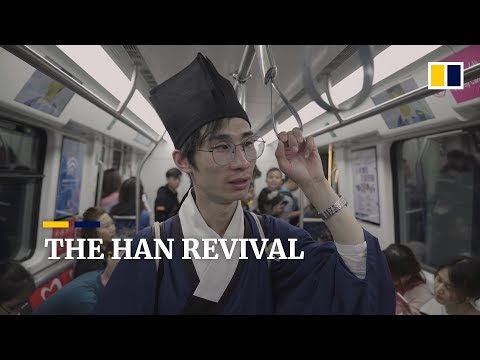 YouTube
Fan circles: belonging or harm?
A second kind of subculture is organized around a person rather than a style. A fan circle (饭圈) gathers the fans of one idol into groups with leaders, rules and tasks. Members vote in online polls, push the idol’s name up trending lists, buy albums and products in bulk and defend the idol against critics. The word 饭 is borrowed for its sound from the English “fan”, so 饭圈 means the circle of fans.
Supporters, many of them fans, describe fan circles as communities where young people learn real skills: editing video, writing publicity, organizing hundreds of volunteers, raising money for charity in an idol’s name. Critics point to what happened in the spring of 2021. Fans of contestants on the talent show 《青春有你3》 bought milk drinks in large numbers because each bottle cap carried a code worth a vote, and a video showed the milk being poured away unopened. On 4 May 2021 the Beijing radio and television authority ordered the show to stop before its final.
The national response came in August. On 25 August 2021 the Cyberspace Administration of China issued a notice on what it called the “chaos” of fan circles. It ordered platforms to remove popularity rankings of individual stars, banned minors from spending money to support idols or running fan groups, and stopped online shows from selling votes. Supporters of the rules said they protected teenagers’ money and time. Some fans answered that the rules punished a whole community for the actions of a few, and that the platforms and companies that profited from the voting had designed the system in the first place.
Anime and games: escape or expression?
The Taipei profile turns on a third subculture, the world of anime, comics, games and the fans who make costumes and art from them. Fans call it two-dimensional culture (二次元), because drawn characters live on a flat page or screen. Ordinary life, by contrast, is jokingly called 三次元, “three-dimensional”.
The grandmother’s first fear in the Taipei text is the commonest view among parents: that the hobby is “逃避现实” (paragraph 4: escaping reality) and takes time from school and friends. On the mainland the same worry about games led to legal limits on how long minors may play online, the anti-addiction rules that the page on entertainment examines. Fans answer that the hobby is creative work. Xiao Han spends two months making armor, learns to paint and age it, and swaps techniques with friends abroad in English. On this view, the costume is a craft project and the convention a place to show it.
Both sides agree on one point that the texts make clear: the hobby gives a quiet person a public role. In costume Xiao Han “就敢站在大家面前” (paragraph 4: dares to stand in front of everyone). Whether that confidence carries over into the rest of her life, or stays inside the costume, is the real question, and the profile honestly leaves it open.
When a subculture becomes mainstream
A subculture defines itself against the mainstream, so success creates a problem. The timeline of hanfu shows a hobby of homemade clothes turning into a business worth more than a billion yuan a year. Today photo studios near tourist sites in Xi’an and other cities rent hanfu for a photo session or a day to visitors who will never join a club. The Xi’an writer has to remind readers that club members are not actors, because so many people now wear the clothes for a photograph.
The British sociologist Dick Hebdige argued in 1979 that a subculture’s style usually begins as a challenge to the mainstream and loses that edge once shops sell it to everyone. Many hanfu wearers would reject the first half of his claim, since few of them see their clothes as a challenge. The second half still describes a real argument among them. Some welcome the rental shops because more people meet hanfu; others feel that the clothes have become a costume again, the same confusion of 古装 and 汉服 that the column complains about.
Official approval brings the same mixed result. In 2007 hanfu supporters proposed the clothing as the dress of China’s team at the 2008 Olympic Games, and the Chinese Olympic Committee rejected the proposal that April. When a subculture is adopted by a government, a school or a brand, it gains respect and loses some of its independence. The Taipei writer’s phrase “所谓的‘次文化’” (paragraph 6: the so-called subculture) points to the other end of this process: a hobby that once looked strange can become part of a neighborhood’s Mid-Autumn party.
我们不是想回到古代,只是想在今天的生活里,给传统留一个位置。
穿汉服,不是在演戏, paragraph 6
Weighing a group’s gains and costs (HL)
The strongest discussions of subcultures avoid two easy answers: that young people’s hobbies are harmless fun, and that they are a danger to study or to society. Hanfu clubs, fan circles and anime fans each have a better and a worse side, and the two texts show both. A useful test is to ask what a group asks of its members. The hanfu club asks for time and some reading; a fan circle at its worst asks for money, obedience to group rules and attacks on rival fans.
The HL paragraph uses 望而却步 (to be put off from even trying), a four-character expression that fits the newcomers who stop coming in both texts. It also moves the question away from what a subculture looks like toward what it does to its members, which is the move that gives a discussion depth.
Words and phrases
The words that matter most here describe how a hobby looks from inside and from outside. From inside, members speak of 爱好, 同好, 圈子 and 表达自己; from outside, people speak of 出风头, 学坏 and 逃避现实. A good answer about any subculture uses both sets and says whose view each one is. Two pairs need care. 亚文化 and 次文化 mean the same thing, the first more common on the mainland and the second in Taiwan. 扮演 (to play a role) is the usual verb for cosplay, while 演戏 (to act in a play or film) is what the Xi’an students are accused of.
Word or phrase | Meaning in context | Text and paragraph |
|---|---|---|
农历 | the lunar calendar | Xi’an column, 1 |
射箭 | to shoot arrows, archery | Xi’an column, 1 |
行礼 | to bow or salute in a formal way | Xi’an column, 1 |
剧组 | a film or TV crew | Xi’an column, 1 |
出风头 | to show off, to seek attention | Xi’an column, 2 |
不好意思 | embarrassed, shy | Xi’an column, 2 |
来历 | origin, history (of a custom or object) | Xi’an column, 3 |
朝代 | dynasty | Xi’an column, 3 |
在乎 | to care about, to mind | Xi’an column, 4 |
爱好 | hobby, interest | Xi’an column, 4 |
正宗 | authentic, the genuine article | Xi’an column, 5 |
传统文化 | traditional culture | Xi’an column, 5 |
好奇 | curious | Xi’an column, 6 |
扮演 | to play (a role or character) | Taipei profile, 2 |
角色 | character, role | Taipei profile, 2 |
现成的 | ready-made | Taipei profile, 2 |
课余时间 | free time outside class | Taipei profile, 2 |
接受 | to accept | Taipei profile, 3 |
学坏 | to go astray, to pick up bad habits | Taipei profile, 3 |
秩序 | order (people behaving in an orderly way) | Taipei profile, 3 |
主动 | on one’s own initiative | Taipei profile, 3 |
逃避现实 | to escape from reality | Taipei profile, 4 |
沉迷 | to be hooked on, to lose oneself in | Taipei profile, 4 |
同好 | people who share a hobby, fellow fans | Taipei profile, 4 |
表达自己 | to express oneself | Taipei profile, 4 |
圈子 | circle, community (of people with a shared interest) | Taipei profile, 5 |
嘲笑 | to mock, to laugh at | Taipei profile, 5 |
包容 | tolerance, to accept others’ differences | Taipei profile, 5 |
次文化 | subculture (Taiwan; 亚文化 on the mainland) | Taipei profile, 6 |
所谓的 | so-called | Taipei profile, 6 |
Say it yourself
These frames help you describe a group, report what outsiders think of it, answer that view and judge the group fairly. They move from simple to complex, and the later ones come from the two model texts.
Frame | What it does |
|---|---|
我对……很感兴趣,因为…… | Says what interests you and why |
……是一种……,也就是…… | Names a group or hobby and explains it for someone who does not know it |
对……来说,……不只是…… | Gives an insider’s meaning, beyond how a thing looks |
在很多人眼中,……;可是…… | Reports an outsider’s view, then answers it |
有人觉得……,其实…… | Corrects a common belief with a fact |
……不是……,而是…… | Replaces a wrong description with a better one |
除了……以外,……更在乎的是…… | Moves from the surface to what matters most to members |
让……改变看法的,是…… | Names the thing that changed someone’s mind |
虽然……,但是……应该……,而不是…… | Concedes a problem and says what a group should do |
判断一个……,不能只看……,而要看…… | States a test for judging a group fairly |
A paragraph a student might write for a school blog about a classmate’s hobby, using five of the frames:
我的同桌是一个汉服爱好者。在很多人眼中note 1,穿汉服只是为了拍照;可是note 1她每个月都跟社团去博物馆,学习不同朝代的衣服。对她来说note 2,汉服不只是note 2漂亮的衣服,而是note 2了解历史的一扇门。让我改变看法的,是note 3她给我讲的一个故事:唐朝的女孩子也会在春天去水边玩。虽然note 4有的爱好者太在意“正不正宗”,但是note 4我觉得一个爱好应该note 4让人更开放,而不是note 4更挑剔。
在很多人眼中……可是. The outsiders’ view first, then the writer’s answer, with evidence (monthly museum visits).
对她来说……不只是……而是. The insider’s meaning, set against the surface view in one sentence.
让我改变看法的,是. The cleft sentence from the Taipei profile holds the cause back to the end, so the story gets the weight.
虽然……但是……应该……而不是. A fair close: the writer admits a problem inside the group and proposes what the hobby should do.
Improving a paragraph
A weak paragraph about fan circles repeats one feeling and uses words that only insult. The stronger version keeps the writer’s worry, that fan circles can harm teenagers, and makes it precise with a concession, a real example and a judgment.
我觉得饭圈很不好。追星的人都很疯狂,他们浪费很多钱。追星没有意思。note 1
不少年轻人在饭圈里找到了朋友,也学会了剪视频、写文案,这一点我不否认。note 2然而,2021年有粉丝为了给选手投票,买了大量牛奶以后直接倒掉,note 3这说明当一个圈子只看排名的时候,粉丝很容易失去判断。note 4因此,我认为问题不在于喜欢偶像,而在于不能让排名和消费代替喜欢。note 5
Weak. 都很疯狂 judges every fan at once, 浪费很多钱 has no example, and the last sentence only repeats the first.
Concession. The writer grants what fans gain, 朋友 and two named skills, before criticizing.
Real example. The 2021 milk-voting case gives the worry a date and a fact.
Explanation. 这说明 turns the example into a reason: ranking systems push fans to act against their own judgment.
Judgment. 问题不在于……而在于…… moves the criticism from fans to the system, a more precise claim than a general attack on fan circles.
Applying it in the individual oral
At SL, a visual stimulus about subcultures might show young people in hanfu at a tourist site, a queue of fans outside a concert hall, or cosplayers at a convention. The photograph of the hanfu club’s archery group would work as one. Your presentation must do more than list what is in the picture. It should interpret the scene, link it to the theme Identities and to Chinese-speaking communities, and give your own view.
The follow-up discussion will ask you to go further than the picture. Expect questions such as 你觉得年轻人为什么喜欢加入这样的团体?, 父母应该担心孩子追星吗? or 你自己属于什么“圈子”吗?. Answer each with a view, a reason and an example; the frames for reporting a view and answering it suit this well.
The commonest way to lose marks with a subculture stimulus is to describe the clothes in detail and never reach an idea. A minute spent on sleeves, colors and bows earns little; the same minute spent on why young people want a group to belong to earns much more.
Try it
A teacher asks in the discussion: 你觉得汉服流行是好事还是坏事? Give a two-sentence answer that takes a side and concedes a point.
One possible answer: 我觉得基本上是好事,因为很多年轻人通过汉服开始对历史感兴趣。虽然有的人只是为了拍照,但是这也让更多人知道了传统文化。
The pages on the blog post and the article take these frames into Paper 1, and the page on the visual stimulus in the individual oral sets out the presentation in full. The topic of entertainment returns to games and short video, and the topic of artistic expressions to the question of how traditions are passed on.
Self-check
- To do:
I can explain what 汉服, 饭圈 and 二次元 are and why people argue about each.
- To do:
I can describe a subculture from the inside and report an outsider’s view of it.
- To do:
I can compare the Xi’an hanfu column with the Taipei newsletter profile, quoting both.
- To do:
I can use 对……来说, 不是……而是…… and 让……改变看法的,是…… in my own sentences.
- To do:
I can weigh whether a subculture loses its meaning when it becomes popular or commercial.
- To do:
I can present a photograph of a subculture in the oral, interpret it and link it to Chinese-speaking communities.
Key terms
Each is also in the Identities glossary for IB Mandarin B, beside the other terms of its topic.
- Fan circle
An organized online community of an idol's fans, with its own ranks, rules and shared tasks such as voting, buying products and promoting the idol. In mainland China its spending and online fights led the internet regulator to restrict it in 2021.
- Hanfu
Clothing modeled on the dress of the Han people in China's past dynasties, worn today mainly by young enthusiasts for outings, festivals and photographs. Its revival since the early 2000s is argued about as fashion, as heritage and, by some critics, as a form of nationalism.
- Subculture
A group within a society whose members share a style, interests or values that set them apart from the mainstream, often with their own words, places and events. Subcultures matter because they are one of the main ways young people build an identity apart from family and school.
- Two-dimensional culture
The world of anime, comics and games and of the fans who read, watch, play and remake them through cosplay, fan art and fan fiction. The name sets the drawn world against ordinary three-dimensional life.
More in 1 Identities
The whole topic is on its own page.
- 1.1Lifestyles
- 1.2Health and well-being
- 1.3Beliefs and values
- 1.4SubculturesThis page
- 1.5Language and identity
Carry on with 1.4 Subcultures in Augment
With a free account, Augment remembers where you stopped in the notes and which questions you have marked.