2.3 Life stories
Life stories in Chinese-speaking places, from a grandfather’s first bicycle to a former sent-down youth’s memoir and Tu Youyou’s path to a Nobel Prize: whose stories are told, the words and how to tell one.
- IB Mandarin B
- Part of 2 Experiences
- SL and HL
Notes on 2.3 Life stories
A life story turns a person’s years into an order: a beginning, turning points and what they meant. In Chinese-speaking places many older people lived through changes so large that their own lives tell the history of their country, yet those stories are often never asked for. Some schools now send students to collect them. A student in Suzhou wrote up his interview with his grandfather for a family oral-history column on his school’s public account.
A grandfather’s story, told to his grandson
The text opens with the task that made the story possible: a history teacher asks each student to “采访家里的一位老人” (paragraph 1: interview an older person in the family). The writer chooses his grandfather and admits a low expectation, using 本来以为 (I had assumed): a quiet man of seventy would have little to say. This is the gap that most family interviews close. The young person thinks the older one has no story, and the interview proves otherwise.
Paragraph 2 opens with 没想到 (to my surprise), and the grandfather “停不下来了” (cannot stop talking). His story then follows the usual order of a life story, with time words at each step: in his twenties he farmed, the family was poor and they could rarely afford meat, “一年到头吃不上几次肉” (paragraph 2: not many times a year). Then a date marks the turning point. In 1984 the village set up a small factory making parts for textile machines, and he became one of its first workers.
Factories like this one were part of a national change. From the late 1970s, under the policy known as reform and opening up (改革开放), farm families on the mainland were allowed to farm their own plots and sell what they grew. Villages, especially in southern Jiangsu around Suzhou, set up small factories of their own. For a young man who had only farmed, a factory job meant a wage. The grandfather’s comparison makes its value clear to a student today: “就像现在考上好大学一样” (paragraph 2: like getting into a good university now).
没想到,一note 1说起年轻的时候,爷爷就note 1停不下来了。
爷爷用第一年存下的钱,买了一辆自行车。……“那辆车我擦得比自己的脸还干净note 2。”后来,爷爷在工厂学会了note 3修机器,又note 4当上了车间主任。
我问爷爷,这一辈子最难忘的note 5是什么。
一……就……. As soon as…: one mention of his youth and the story starts. The structure shows how ready the grandfather was to be asked.
擦得比……还干净. A degree complement with a comparison: he polished the bike cleaner than his own face. 还 makes the comparison stronger and a little humorous.
学会了. Learned (successfully). 会 after 学 is a complement of result: the skill was mastered, not only studied.
又. And then also: a second step up in the same life, after the first. In a life story 又 and 后来 move the narrative forward.
最难忘的. The most unforgettable (thing). The question that turns a list of events into a story with a center.
The bicycle is the detail that makes the story memorable. The grandfather buys it with his first year’s savings, rides forty minutes each way, and says he cleaned it “比自己的脸还干净” (paragraph 3: cleaner than his own face). In the 1980s a bicycle was one of the most prized things a young worker could own, and the grandson chooses it for the title. A single object, cared for so closely, carries more of the period than a sentence about rising incomes could.
Paragraph 4 brings the turn that the writer did not expect. Asked for the most unforgettable moment, the grandfather does not choose his own promotion but the year his son, the writer’s father, got into university. His reason, “我自己只读了五年书” (paragraph 4: I myself only had five years of school), explains a hope that shaped the next generation. The detail of his eyes turning red, “眼睛有点红了”, shows his feeling without naming it.
Try it
In paragraph 4, the writer says 我以为他会说当上主任的那一天,可是他说,是我爸爸考上大学的那一年. Why does he report what he expected before giving the answer?
Setting the expected answer (his own promotion) against the real one (his son’s university place) shows what mattered most to the grandfather: his child’s education, not his own success. The contrast with 以为……可是…… makes the answer a surprise for readers as it was for the writer.
The last paragraph is the writer’s reflection, and it explains why such projects exist. In the textbook, reform and opening up was “四个字” (paragraph 5: four characters); for his grandfather it was a bicycle, a job and a letter of admission. The structure 不是……而是…… replaces an abstract word with three concrete things. The final sentence moves history from far away to the family table, “就在我们家的饭桌上” (right here at our family’s dinner table). The register suits a school account written for classmates, teachers and parents: plain sentences, the grandfather’s spoken words in quotation marks, and a signature giving only a year and a familiar name.
A memoir written for a granddaughter in Vancouver
Some people tell their own story instead of waiting to be asked, and some write it down for readers who may not yet read Chinese. A feature from the Chinese pages of a bilingual magazine for Chinese-Canadian families in Vancouver describes a retired doctor writing her memoir for her granddaughter.
The feature opens with a routine and a place: every Wednesday afternoon, 林阿姨 (Auntie Lin), aged 73, writes at the same table in the public library of Richmond, a city next to Vancouver with a large Chinese community. The second sentence uses 不是……而是…… to name what she writes, “不是日记,而是一本回忆录” (paragraph 1: not a diary but a memoir). The third gives its only reader, a twelve-year-old granddaughter born in Canada who speaks a little Chinese. In three sentences the reader learns who writes, what and for whom.
Paragraph 2 places Auntie Lin’s life inside a national movement. In 1969, at sixteen, she left Shanghai by train for a farm in Heilongjiang, in the far northeast. The feature names her generation: young people sent from cities to the countryside were called “知青” (paragraph 2: educated youth). The sent-down youth movement (上山下乡, literally up to the mountains and down to the villages) sent about 17 million urban secondary-school students to rural areas between 1968 and 1980; estimates vary with the years counted. The feature gives the figure without comment and lets her own sentence carry the feeling: the first sky that large, the first winter at thirty below zero.
The turning point comes in paragraph 3 and is a real event. In late 1977 the gaokao, the national university entrance test, was restored after more than ten years without it, and it was held in winter, between late November and December. About 5.7 million people took it, and about 273,000 were admitted (figures widely reported by Chinese official media). The feature gives these numbers so that readers understand how hard it was to be “其中的一个” (paragraph 3: one of them). Auntie Lin’s preparation, studying borrowed textbooks “每天干完活就复习到半夜” (revising until midnight after each day’s work), shows the cost.
最让她难受的不是note 1累,而是note 1不知道自己什么时候能回家。
“年轻的时候,我们觉得一切都是国家安排的;老了,反而note 2要自己学英语、学坐公交车、学用手机。”
我不想把那段日子写得太美note 3,也不想只写苦。那就是我们的青春,有遗憾,也有收获note 4。
为了note 5让外孙女看得懂,林阿姨每note 5写完一章,女儿就note 5帮她翻译成英文。
不是……而是……. Not A but B: the hardship she names is uncertainty, not tiredness. The structure corrects what a reader would expect.
反而. On the contrary: in old age, when people expect rest, she had to learn everything again. 反而 marks a result that goes against expectation.
把……写得太美. To make (those days) sound too beautiful in writing. 把 brings the object forward, and the degree complement 写得太美 says how she will not write about them.
有……,也有……. There was A, and there was also B: a balanced judgment of the past in two short parallel clauses.
为了……每……就……. A purpose, then a routine: every time a chapter is finished, the daughter translates it.
Paragraph 4 covers forty years in two sentences: thirty years as a doctor, then retirement and a move to Vancouver with her daughter’s family. Her own summary sets two halves of a life against each other with 反而: when young, “一切都是国家安排的” (paragraph 4: everything was arranged by the state); when old, she had to learn English, buses and phones by herself. The comparison is personal. It describes how much the world around her changed, and how late in life she had to change with it.
我不想把那段日子写得太美,也不想只写苦。那就是我们的青春,有遗憾,也有收获。
写给外孙女的回忆录, paragraph 5
Paragraph 5 is the center of the feature, and it raises the question of honesty. Some things she had never told her family, and her daughter worries both about her mother’s sadness and about “别人会怎么看” (paragraph 5: what other people will think). Auntie Lin chooses a middle way between two common ways of telling such a past, praising it as heroic youth or telling it only as suffering. Her phrase “有遗憾,也有收获” (there were regrets, and there were gains) is the balance she wants her granddaughter to inherit.
The ending is light and looks forward. The granddaughter’s favorite chapter is about a puppy on the farm, and she wants to know what happened to it. Auntie Lin answers that she should read it herself in Chinese when she is older. The memoir is a record of the past, and it is also a reason for the next generation to keep the language.
What changes between the two texts
Both texts record the life of a grandparent born in the 1950s, and both turn on a university place won through study. In Suzhou the life is told by a grandson in an interview for school, and the grandfather’s own words are short and spoken. In Vancouver the life is told first by the woman herself, in a memoir, and then by a journalist who writes about her writing it. The first story is gathered; the second is chosen and shaped by the person who lived it.
The two lives also show different sides of the same decades. The grandfather’s story is one of steady improvement from the 1980s: a factory job, a bicycle, a son at university. Auntie Lin’s story begins in the 1960s and includes years she would not choose again, and she worries about how to tell them. The language follows the form. The Suzhou text is plain and close to speech, while the Vancouver feature uses written-style phrases such as 被称为 (to be called), 其中的一个 and 并不容易 (not at all easy), and it sets figures beside quotations.
Ideas to discuss
Both model texts are invented, but the events their speakers live through are real. The timeline sets the two lives against those events: the movement that sent Auntie Lin to a farm, the restored gaokao that brought her back, and the reforms that gave the grandfather his factory job. Arguments about life stories are about which of these lives get told, by whom, and how honestly.


Whose life stories are recorded?
Official histories tend to follow leaders, battles and policies, while most people’s lives go unrecorded unless someone asks. Oral history (口述历史) is the practice of recording ordinary people’s spoken memories so that they can be kept and studied. The Suzhou assignment is a small example. A larger one is Singapore’s Oral History Centre, part of the National Archives, which has recorded interviews since 1979: by early 2024 it held more than 6,000 interviews and over 27,000 hours of recordings (National Archives of Singapore).
Supporters say that oral history corrects the official story with the voices of workers, migrants and women, and that it must be done before a generation is gone. Critics point out that memory changes with time, that people tell interviewers what they think will sound right, and that an interview at school may become a pleasant family story rather than an accurate one. The grandson’s account is warm and moving, and it includes no hard years, which may be what his grandfather chose to tell.
One life told three ways: Tu Youyou
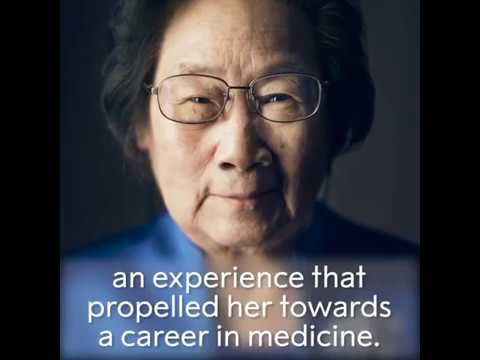
The life of a famous person is told by many people for many purposes, and the same facts can make different stories. Tu Youyou, a pharmacologist born in Ningbo, Zhejiang, in 1930, received the 2015 Nobel Prize in Physiology or Medicine for discovering a new therapy against malaria. The prize was shared with two scientists working on other diseases (Nobel Prize). The photograph shows her in Stockholm in the week of the ceremony, at 84. Her work on traditional medicine as evidence is discussed under Health and well-being; here the question is how her life is told.

The first story is a science story. In 1969 she joined a secret national research effort against malaria, known as Project 523 after the date it began, 23 May 1967. Her team searched old medical texts and tested hundreds of remedies. A line from 《肘后备急方》 (Emergency Prescriptions Kept Up One’s Sleeve), a book written by the scholar Ge Hong in the fourth century, told her to soak sweet wormwood in cold water rather than boil it. In 1971 an extract made at a low temperature cleared malaria parasites from infected mice.
青蒿一握,以水二升渍,绞取汁,尽服之。
葛洪《肘后备急方》, the line on sweet wormwood
The line gives a quantity (一握, a handful), a soaking (渍) in cold water and a pressing (绞取汁, wring out the juice), with no heating. Tu Youyou read the absence of heat as the clue, and changed her method to keep the temperature low. The science story is about reading an old text closely and testing it with modern methods.
 YouTube
The second story is about recognition. Chinese media often called her a “三无科学家” (a scientist with three “withouts”): no doctorate, no study abroad and no membership of the national academies, which made her prize a story about merit outside the usual paths. The third story is about credit. Project 523 brought together dozens of research units, and researchers in her own group and in other units isolated and studied the crystal, artemisinin, in 1972 and afterwards. Some of those researchers and their supporters have argued that the prize to one person hides the work of a team; others answer that her method was the key step. The prize itself names only her.
These three stories do not cancel each other out. A life told as national pride, a life told as patient science and a life told as one part of a team are all built from the same facts. A student telling the story chooses which details to keep, and that choice is a view of what the life means.
Who has the right to tell a family’s story?
A memoir or a school interview makes private memories public, and families disagree about what should be shared. In the Vancouver feature, the daughter worries “别人会怎么看” (paragraph 5: what others will think), while Auntie Lin insists on writing what happened. Some families hold that the old should decide what is told about them, out of respect; others feel that the young have a duty to record what their elders lived through, even the painful parts. The question becomes sharper when a writer publishes a parent’s story without asking, or when a life story is shared online.
Many life stories in Chinese are also stories of leaving. The feeling of missing a home place that cannot easily be returned to is called homesickness (乡愁), a word with a long literary history. The poet Yu Kwang-chung moved from the mainland to Taiwan as a young man. He wrote his short poem 《乡愁》 in Taipei in the early 1970s, and its first image is homesickness as “一枚小小的邮票” (a small postage stamp) between a child and his mother. Auntie Lin’s memoir, written in Vancouver for a granddaughter who reads Chinese only a little, carries some of the same feeling.
Weighing two ways of telling a hard past (HL)
At HL, a question such as whether a memoir should present a hard past honestly or kindly is weighed rather than answered with one view. Written-style connectives make the weighing visible: 固然……但…… grants a point before limiting it, 与此同时 adds a parallel consideration, 正因为如此 draws a consequence, and 换句话说 restates the conclusion. One paragraph can draw on both texts, as here.
固然note 1,一个温暖的家庭故事更容易让年轻人愿意听,苏州那位爷爷讲的自行车和录取通知书就让孙子觉得历史“就在饭桌上”,但note 1只讲好的一面,故事就不完整了。与此同时note 2,温哥华的林阿姨坚持“不想把那段日子写得太美,也不想只写苦”。正因为如此note 3,她的回忆录才可能让外孙女理解外婆真实的一生。换句话说note 4,讲述人生故事的价值,不在于它让人感动,而在于它让下一代知道真相。
固然……但……. Admittedly… but…: the strength of the warm story is granted, then its limit stated.
与此同时. At the same time: the second text is brought in as a parallel case.
正因为如此. Precisely because of this: the consequence of Auntie Lin’s choice.
换句话说. In other words: the conclusion restated as a general claim, with 不在于……而在于…… narrowing it to one value.
The paragraph grants the value of a warm story, sets the second text beside it and draws a conclusion that depends on both. The same frame works for the three stories of Tu Youyou, with national pride on one side and the team’s credit on the other.
Words and phrases
The words that matter most for life stories mark time, change and how a person looks back. 经历 (experience, to go through) is the word for what happens to a person over years, and 回忆 (to recall; a memory) and 回忆录 (a memoir) for looking back on it. 艰苦 (hard, harsh) describes conditions, not a single bad day. Two words carry the judgment at the end of a life story: 遗憾 (regret) and 收获 (gain, what one got out of something), a pair Auntie Lin puts side by side.
Word or phrase | Meaning in context | Text and paragraph |
|---|---|---|
布置作业 | to set homework, an assignment | Suzhou interview, 1 |
采访 | to interview | Suzhou interview, 1 |
本来以为 | had assumed (wrongly) | Suzhou interview, 1 |
种地 | to farm, work the land | Suzhou interview, 2 |
一年到头 | all year round | Suzhou interview, 2 |
工厂 | a factory | Suzhou interview, 2 |
第一批 | the first group, the first wave | Suzhou interview, 2 |
存钱(存下的钱) | to save money (the money saved) | Suzhou interview, 3 |
学会 | to learn (and master) a skill | Suzhou interview, 3 |
一辈子 | a whole lifetime | Suzhou interview, 4 |
难忘 | unforgettable | Suzhou interview, 4 |
改革开放 | reform and opening up | Suzhou interview, 5 |
录取通知书 | a letter of admission (to university) | Suzhou interview, 5 |
回忆录 | a memoir | Vancouver feature, 1 |
下乡 | to go to the countryside (as a sent-down youth) | Vancouver feature, 2 |
知青 | sent-down youth, educated youth | Vancouver feature, 2 |
被称为 | to be called, to be known as | Vancouver feature, 2 |
艰苦 | hard, harsh (conditions) | Vancouver feature, 3 |
难受 | painful, hard to bear (a feeling) | Vancouver feature, 3 |
恢复 | to restore, bring back | Vancouver feature, 3 |
复习 | to revise, go over what was studied | Vancouver feature, 3 |
录取 | to admit (to a university) | Vancouver feature, 3 |
退休 | to retire | Vancouver feature, 4 |
移民 | to emigrate; an immigrant | Vancouver feature, 4 |
经历 | experience; to go through | Vancouver feature, 5 |
坚持 | to insist on, keep doing | Vancouver feature, 5 |
遗憾 | regret | Vancouver feature, 5 |
收获 | gain, what one got out of something | Vancouver feature, 5 |
翻译 | to translate | Vancouver feature, 6 |
Two pairs are worth keeping apart. 回忆 is the act of remembering or a memory, while 记得 is the plain verb “to remember” (我记得那辆车). 难忘 means unforgettable and praises a memory, while 难受 means painful to bear and describes a feeling at the time.
Say it yourself
These frames help you tell a life story in order, mark its turning points and say what it means to you. They move from simple narration to reflection, comparison and judgment.
Frame | What it does |
|---|---|
……出生在……,小时候……。 | Opens a life story with place and childhood |
……年,……开始……。 | Marks a turning point with a date |
后来,……;又过了几年,……。 | Moves the story forward in time |
那时候,……就像现在……一样。 | Explains the past through a comparison with today |
我本来以为……,可是……。 | Sets the expected answer against the real one |
最让他难忘的,不是……,而是……。 | Names the center of a life story |
对……来说,……不是……,而是……。 | Turns an abstract word into concrete things |
虽然……很艰苦,但是……。 | Concedes hardship, then names what was gained |
他这一辈子有遗憾,也有收获:……。 | Gives a balanced judgment of a life |
听了……的故事,我才明白……。 | Reflects on what the story taught the listener |
A short paragraph that uses several of them, about a relative’s life:
我外婆1960年出生在note 1广东的一个小镇,小时候note 1家里有六个孩子,她是老大。十五岁那年note 2,她就开始在镇上的工厂做衣服,帮家里养弟弟妹妹。后来note 3,她自己开了一家小裁缝店,又过了二十年note 3,店里已经有了五个工人。我本来以为note 4她最骄傲的是那家店,可是note 4她说,最让她难忘的不是note 5赚到的钱,而是note 5弟弟妹妹都读完了中学。听了外婆的故事,我才明白note 6,一个人的成功,有时候是别人的机会。
Year and place. A life story opens with when and where, then childhood.
那年. A turning point fixed by age.
后来……又过了……. Two steps forward in time, each with a result.
本来以为……可是……. The expected answer set aside.
不是……而是……. The center of the story named.
我才明白. The listener’s reflection, which turns a story into a view.
Improving a paragraph
A weak paragraph about a grandparent gives facts with no order, no detail and no meaning. The stronger version keeps the same person and tells a story.
我的爷爷很老。他以前很穷。他工作很努力。他是一个很好的人。我很爱他。note 1
我爷爷二十多岁的时候一直在村里种地,一年到头吃不上几次肉。note 21984年,他成了村里工厂的第一批工人,note 3用第一年存下的钱买了一辆自行车,每天擦得干干净净。note 4对我来说,课本上的“改革开放”不再只是四个字,而是爷爷的那辆自行车。note 5
Weak. Five sentences with 他 as the subject and 很 + adjective as the comment: no time, no event, nothing a reader can picture.
Time and condition. The past is shown through a detail (meat a few times a year), not stated as 很穷.
A turning point with a date.
One object. The bicycle carries the change, and 擦得干干净净 shows care.
Meaning. 对我来说……不再只是……而是…… ties the life to history.
Applying it in Paper 1 and the oral
A Paper 1 task on life stories gives you a situation, a purpose and an audience. You might be asked to write an interview with an older person in your community for the school magazine, or a blog post about someone whose life has influenced yours. Another task could ask for an article on why young people should record their grandparents’ stories. The interview needs an introduction and labeled questions and answers, the blog post a personal voice and readers, and the article a view argued with examples.
The commonest way to lose marks with life stories is to list a person’s qualities (很努力, 很善良, 很伟大) without telling a single event that shows them. A task about a life usually asks for a story and its meaning, so a list of adjectives answers neither part. A response that tells one or two moments in order, with a detail and a reflection, reads as developed.
Try it
A classmate interviewing a grandmother asks five questions: 您叫什么名字?您几岁?您喜欢什么?您住在哪里?您快乐吗? Why is this a weak interview, and how could it be improved?
The questions are unconnected and could be answered in one word each, so the grandmother never tells a story. Better questions follow a life and build on the answers: 您小时候是在哪里长大的?那时候的生活是什么样的?您刚才说十五岁就开始工作,能讲讲那时候的事吗?您觉得自己这一辈子最难忘的是什么?
The pages on the interview, the blog post and the article take these openings and conventions further. The grammar pages on 了, on 过 and 着, and on time words practice telling events in order, and the page on presenting a visual stimulus shows how to interpret a portrait. Migration follows the life stories of people who move away, and Rites of passage the moments that mark each stage.
Self-check
- To do:
I can tell a life story in order with time words, 了 for single past events and words such as 经历, 回忆, 艰苦 and 难忘.
- To do:
I can explain what reform and opening up and the sent-down youth movement meant in ordinary people’s lives.
- To do:
I can compare the Suzhou interview and the Vancouver feature: who tells each story and how.
- To do:
I can discuss whose life stories are recorded, using oral history and the three ways Tu Youyou’s life is told.
- To do:
I can name the center of a story with 最让他难忘的不是……而是…… and judge a life with 遗憾 and 收获.
- To do:
I can weigh an honest and a kind way of telling a hard past with 固然……但…… and 正因为如此 (HL).
- To do:
I can plan an interview, a blog post or an article about a person’s life and interpret a portrait in the oral.
Key terms
Each is also in the Experiences glossary for IB Mandarin B, beside the other terms of its topic.
- Homesickness
The longing for a hometown or home country from which a person is separated by distance, time or politics. In Chinese writing it is a major theme of poems and life stories by people who have moved away.
- Oral history
The recording of people's spoken memories of their own lives and times, usually through interviews, so that they can be kept and studied. It gives a place in the historical record to people who would never write a memoir.
- Reform and opening up
The policy begun on the Chinese mainland in December 1978 that moved the economy toward markets, private enterprise and trade with the world. Many family life stories treat it as the line between a poor past and new chances for work, study and travel.
- Sent-down youth
The millions of urban secondary-school graduates on the Chinese mainland who were sent to live and work in the countryside in the 1960s and 1970s, most of them between 1968 and 1980. Their memories of those years, told in memoirs and family stories, differ widely.
More in 2 Experiences
The whole topic is on its own page.
- 2.1Leisure activities
- 2.2Holidays and travel
- 2.3Life storiesThis page
- 2.4Rites of passage
- 2.5Customs and traditions
- 2.6Migration
Carry on with 2.3 Life stories in Augment
With a free account, Augment remembers where you stopped in the notes and which questions you have marked.