2.4 How does the meaning and impact of a text change over time?
How later readers, new settings and new versions change what a text means and does, from a WPA library poster and Glaspell’s Trifles to a wartime factory poster and a film of Romeo and Juliet.
- IB English A: Language and Literature
- Part of 2 Time and space
- SL and HL
Notes on 2.4 How does the meaning and impact of a text change over time?
A text’s words are fixed once it is made, but its audiences, its uses and its settings keep changing, and its meaning and impact change with them. Some of the change comes from audiences who know more or expect different things. Some comes from moving a text to a new place, or remaking it in a new form. The WPA reading poster, a silkscreen made in Chicago between 1936 and 1941 to send people into public libraries, has outlived its program, its campaign and the borrowers it was made for.

A young woman strides into a strong wind, a red scarf streaming behind her and a large blue book held against her chest. Nine books tumble through the air around her, each marked with one surname: SCOTT, DUMAS, THACKERAY, DICKENS, AUSTEN, TOLSTOI, CLEMENS, HAWTHORNE and ELIOT. In a near-black band at the foot, a small script “In” sits beside a huge “MARCH”, and two lines of heavy cream capitals give the instruction. A line of tiny red capitals names the maker: the Illinois art project of the Works Progress Administration (WPA), a federal program that employed artists during the Great Depression.
The words stay, the meaning moves
Nothing on the poster has changed since it was printed. Its instruction reads the same now as it did in 1940:
READ THE BOOKS YOU’VE
ALWAYS MEANT TO READWPA reading poster, Chicago, 1936–1941, the slogan
When the poster was new, the imperative READ pointed somewhere. The poster was made for a statewide library project, so a viewer met it where books by the nine novelists could be borrowed for nothing, that week. The impact the makers wanted could be counted in loans. The joke of the March wind, which has blown the classics off the shelf and into the woman’s path, made a slightly guilty habit (meaning to read and never starting) feel light and brisk. For a Depression audience, free books in a public building were also a practical offer.
Today the same imperative has no shelf behind it. Most viewers meet the poster in the Library of Congress’s online collection, in a book about American design or as a reproduction print. The command has become an example of a command: viewers read it as evidence of how a New Deal agency spoke to its public. The words are identical, yet the speech act has changed. In 1940 the poster told a viewer to do something; now it shows a viewer what someone was once told to do.
The record of a text’s readers
Some readings change more quietly. The second line of the slogan, “ALWAYS MEANT TO READ”, fits the present remarkably well, in a time of reading lists, reading challenges and resolutions to finally start the classics. A viewer today can feel addressed by it almost as directly as a viewer in 1940. Other details have aged. TOLSTOI is now usually spelled Tolstoy, and CLEMENS gives the legal surname of the writer whose title pages said Mark Twain. One sentence of the poster has stayed current while two of its words have dated.
The changing set of readings that a text receives from its first audience onward is its reception history. A reception history treats each reading as evidence about the people who made it. It does not treat the later readings as mistakes or the first one as the only correct one. For the poster, the history has at least three stages, and the diagram sets them out. At each stage the same 30 words are read in a different place, by different viewers, and the imperative does a different job.


The middle stage is the least visible and the most important. A poster is made to be used up: it hangs for a season, fades and is replaced. The copy reproduced here survived because it was kept, and the date stamped on its back, 25 March 1941, belongs to the history of the object, not to its design. Whatever a text means later depends first on whether it is kept, by whom and where.
The distinction matters because the context of reception was set out with Douglass’s Fourth of July oration, as the situation in which one reader meets a text. Reception history adds time and sequence. It asks why the readings changed when they did, and what each change shows about the people and the period behind it.
What a first audience expects
Audiences never meet a text empty-handed. They bring expectations about its genre, its language and the values it will hold, and those expectations decide what it first does to them. Susan Glaspell’s Trifles was first performed on 8 August 1916 by the Provincetown Players, a small company working in a converted wharf in Provincetown, Massachusetts, with Glaspell herself playing Mrs. Hale. A play in which officials search a farmhouse after a killing calls up the expectations of a detective story. There will be an investigator, clues, and a solution announced at the end. The county attorney seems to promise exactly that when he plans the search:
COUNTY ATTORNEY: (Looking around) I guess we’ll go upstairs first—and then out to the barn and around there. (To sheriff) You’re convinced that there was nothing important here—nothing that would point to any motive?
SHERIFF: Nothing here but kitchen things.Susan Glaspell, Trifles, lines 25–26
An audience who knows the detective story expects the professionals to find the motive, and expects the motive to be somewhere important: upstairs, where the body lay, or in the barn. The sheriff’s answer places the kitchen outside the search. The rest of the play turns that expectation over. The men search the important places and find nothing, while the two women, who have only come to collect a few things for Mrs. Wright, find the motive among the “kitchen things” and keep it to themselves. The play ends with no announced solution, no arrest and no confession, so the convention the audience brought into the theater is broken twice.
The German critic Hans Robert Jauss gave this set of expectations a name in a lecture at the University of Konstanz in 1967, translated into English in 1970 as “Literary History as a Challenge to Literary Theory”. A text’s horizon of expectations is what the readers of a particular time assume about its form, language and values before they begin. Jauss argued that a text’s first effect depends on the distance between that horizon and the work. A text that only confirms what its audience expects is soon forgotten. A text that breaks the horizon can unsettle its first audience and still speak to later ones.
The second expectation the play breaks is about value, and its first audience shared it with the men on stage. When the frozen jars of fruit are found, the sheriff exclaims, “Well, can you beat the women! Held for murder and worrying about her preserves” (line 29). Hale’s reply gives the play its title: “women are used to worrying over trifles” (line 31). Then comes a stage direction that a reader sees and an audience only watches: “The two women move a little closer together”. The genre of the detective story and the assumption that housework is small are both at work in the same few lines, and the play needs its audience to hold both before it can overturn them.
A play rediscovered
A text’s reputation can rise and fall with the horizons of its readers. Glaspell was a well-known writer in her lifetime, and in 1931 she won the Pulitzer Prize for Drama for a later play, Alison’s House. After her death in 1948 her work was rarely performed or taught for several decades. In the 1970s feminist critics went back to her plays and stories, and Trifles became a regular choice in anthologies and classrooms. A lasting change of this kind in how highly a text is valued is a reappraisal.
The critic Annette Kolodny gave one of the clearest accounts of why the play had waited. In “A Map for Rereading” (New Literary History, 1980), she read the story version of Trifles alongside Charlotte Perkins Gilman’s “The Yellow Wallpaper” (1892). Kolodny argued that reading is learned: readers interpret well only the kinds of texts and signs they have been taught to read. In Glaspell’s story the men cannot read the kitchen because they have never learned its language, and Kolodny suggested that literary criticism had passed over much of women’s writing for the same reason. On her account the reappraisal of Trifles was a change in readers more than a discovery in the text.
Kolodny’s argument explains why the later reading feels so natural. The 1916 printing already contains every sign a feminist reading uses: the women who “move a little closer together” (line 31), Mrs. Hale’s “There’s a great deal of work to be done on a farm” (line 33), and Mrs. Peters’s quiet “She had bread set” (line 53). Glaspell wrote those lines, and her first audience could have read them in the same way. What changed by the 1970s was a horizon in which women’s work, women’s isolation and the limits of men’s law were things an audience came looking for. The text met that horizon so closely that it seemed to have been written for it.
Try it
In line 29 the sheriff exclaims, “Well, can you beat the women!” How might the phrase sound to an audience in 1916, and how to an audience that knows how the play ends?
In 1916, can you beat was an everyday expression of amused surprise, roughly “isn’t that just like them”, so the line sounds like a familiar joke at women’s expense. An audience that knows the ending hears the literal sense of beat as well: the women do beat the men, finding the motive the professionals miss and deciding what the law will learn. The words are the same; the second hearing turns a casual joke into an irony the sheriff cannot see.
A text moved to a new setting
A text can change its meaning without a single word being rewritten, simply by being moved. A poster painted by J. Howard Miller in 1943 shows a woman in a blue work shirt and a red headscarf with white dots, rolling up her sleeve and raising her fist so that the muscle of her arm shows. She looks straight at the viewer. A speech balloon over her head holds the only large words on the poster, and two lines of small print run along the foot:
We Can Do It!
POST FEB. 15 TO FEB. 28
WAR PRODUCTION CO-ORDINATING COMMITTEE“We Can Do It!”, poster by J. Howard Miller, 1943: the speech balloon and the small print at the foot
The small print records the poster’s first setting. Miller made it for the internal War Production Co-ordinating Committee of the Westinghouse electrical company. It was printed in a run of no more than 1,800 copies and put up in some of the company’s factories for two weeks in February 1943, as “POST FEB. 15 TO FEB. 28” instructs. Its viewers were women who already worked there, and its purpose was to keep up morale and output during the war. The balloon’s We meant the company’s own workforce, and It meant the production the war demanded. The speaker named at the foot is a committee of the firm.
In 1982 the poster was reproduced in The Washington Post Magazine, in an article about wartime posters held by the National Archives. Within a few years it had been taken up by the women’s movement, and its words were read in a new way. The balloon’s first word came to mean women in general, It meant whatever women had been told they could not do, and the raised fist read as strength and confidence rather than effort on a production line. Smithsonian magazine put the image on its cover in 1994, and in 1999 the United States Postal Service issued a stamp based on it. It has since appeared on mugs, T-shirts and protest placards, and is often called “Rosie the Riveter”, a name it never had in 1943.
Moving a text, or part of one, into a new setting, use or medium without remaking it is recontextualization. The poster shows why it works so powerfully on certain words. We and It have no fixed meaning of their own: they point to whatever the situation supplies. In a Westinghouse factory in 1943 the situation supplied a workforce and a war; on a placard decades later it supplies a movement and a cause. The diagram sets the two readings side by side, row by row.


The communication scholars James J. Kimble and Lester C. Olson traced the poster’s first use in an article of 2006 in Rhetoric & Public Affairs. They showed that the 1943 poster was an instruction to employees within one company, closer to a call for discipline than a call for liberation. The later story of a poster that recruited women into war work was, on their evidence, largely a myth. Defenders of the later reading answer that a recontextualized text is not wrong for having a new meaning. The direct gaze and the raised arm were in the image from the start, and a new audience found in them what it needed.
Both positions can be held at once, provided an analysis keeps them apart. The words and the image belong to 1943. The feminist meaning belongs to the 1980s and after, and it is now part of what the poster means for most viewers. The National Women’s History Museum’s short film traces how the image moved from the factory wall to its later fame, and how the name “Rosie” attached itself to it.
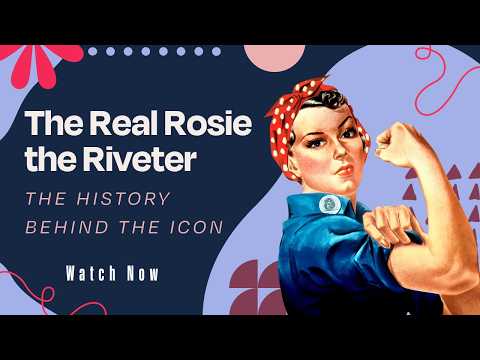 YouTube
A text remade for a new moment
Recontextualization moves a text and leaves it whole. Adaptation remakes it in a new form, medium or setting, and every change the adapter makes is a reading of the source. Glaspell was the first adapter of Trifles. The year after its first performance she rewrote it as a short story, “A Jury of Her Peers”, published in the magazine Every Week on 5 March 1917. The story follows the same search of the same kitchen, but its narration stays close to Martha Hale, so the reader follows her thoughts, which the play could only show in silences and stage directions.
The new title adds a meaning the play leaves unspoken. A defendant is entitled to be tried by a jury of her peers, and in 1917 women could not sit on juries in most American states. The only people in the story who are Mrs. Wright’s peers in this sense, farm women who know her work and her isolation, reach their verdict in her kitchen and hide the evidence. The play’s irony becomes a legal argument in four words. A reader today who takes women jurors for granted needs the history to hear how sharp the title was in 1917.
An adaptation as a reading of its time
Adaptations also show how a later period reads an older text. Baz Luhrmann’s film William Shakespeare’s Romeo + Juliet (1996) keeps Shakespeare’s language but sets the story in Verona Beach, a modern city of rival business dynasties, guns and television news. The opening Chorus is spoken by a news anchor on a television screen:
Two households, both alike in dignity,
In fair Verona, where we lay our scene,
From ancient grudge break to new mutiny,
Where civil blood makes civil hands unclean.William Shakespeare, Romeo and Juliet (about 1595), Prologue, lines 1–4
In the 1590s these lines were a chorus addressing a theater audience before a story of noble families. Spoken by a news anchor, “civil blood” sounds like a report of street violence in a modern city, and “where we lay our scene” sounds like the opening of a bulletin. The film keeps the words and changes the speaker, and that single change turns the Chorus into the media. Luhrmann’s gangs carry handguns stamped “Sword”, so that lines about drawing swords can still be spoken. Every one of these choices records how a director in the 1990s read the play: as a story of young people, violence and a world saturated by television.
Adaptations of Trifles show the same pattern. In 1980 the director Sally Heckel made a short film of “A Jury of Her Peers”, which was nominated for an Academy Award. It appeared in the same years as the critical rediscovery of Glaspell, and it belongs to the same horizon: a time when the women’s silent verdict was exactly what audiences came to see. An adaptation is therefore evidence twice over, about the source it reads and about the moment that reads it.
Whose meaning counts?
If a text means different things to different periods, a question follows: is one of those meanings the real one? Readers have answered it in two main ways, and Trifles gives a line on which to test them. When Mrs. Hale defends the dirty towels, the county attorney answers her like this:
COUNTY ATTORNEY: Ah, loyal to your sex, I see. But you and Mrs. Wright were neighbors. I suppose you were friends, too.
Susan Glaspell, Trifles, line 36
A 1916 audience could hear “loyal to your sex” as a gallant joke, the kind a young politician makes to keep a conversation pleasant. An audience after the 1970s tends to hear the phrase that names the whole play: the women will indeed be loyal to their sex, against the law he represents. The question is whether the second hearing is a discovery of what the line meant all along, or a meaning that later audiences have added.
Meaning and significance
The American critic E. D. Hirsch, in Validity in Interpretation (1967), argued for the first view. His case rests on authorial intention, whose standing as a test of meaning is argued in the chapter on where meaning is made; only its bearing on time matters here. For Hirsch the meaning of a text is what its author meant by its words, and it does not change. What changes is its significance: the relation between that fixed meaning and a later reader, situation or set of values. On this account the feminist reading of Trifles is a reading of significance, valid as a response but not a correction of the play’s meaning.
The opposing view comes from the German philosopher Hans-Georg Gadamer, whose Truth and Method (1960) influenced Jauss. Gadamer argued that every understanding takes place from the reader’s own place in history, so that a text’s meaning is realized afresh in each meeting with a reader and always goes beyond what its author intended. On this view, “loyal to your sex” does not have a single fixed sense waiting to be recovered. It means what it means in each meeting between the play and an audience.
Each position has a cost. Hirsch’s makes the first moment of a text the judge of every later one, although that moment is often the hardest to know. The “We Can Do It!” poster shows how little the later meaning depended on what its maker meant: Miller meant a morale poster, and his intention did not stop the image becoming an emblem of women’s rights. Gadamer’s position explains that change but makes it harder to say when a reading has simply got a text wrong. A reader who claims that Trifles celebrates the county attorney’s wit can point to no line that supports it.
The most useful answer keeps Hirsch’s distinction without his ranking. An analysis gains by saying which of its claims rest on the words in their first setting and which belong to later readers, and by valuing both. The feminist reading of line 36 is anchored in the text, since the plot that follows proves the attorney’s joke true. The feminist reading of the factory poster is anchored in its new setting, since nothing in 1943 supports it. Both are part of what the texts mean now; they are anchored in different places, and a strong essay says where.
Writing about change over time
A paragraph about change over time names two moments, quotes what stays the same, and explains what the difference between the moments does to the text’s meaning or impact. The paragraph that follows, as a strong student might write it, is about the WPA reading poster.
The WPA reading poster has kept its words and lost its addressee.note 1 In 1940 its imperative, “READ THE BOOKS YOU’VE ALWAYS MEANT TO READ”, was an offer that could be accepted that week: the credit line names a “STATEWIDE LIBRARY PROJECT”, and books by the nine novelists it names were waiting on shelves in Illinois libraries.note 2 A viewer of the poster in the Library of Congress’s online collection meets the same imperative with no library behind it, so the command becomes a record of how a New Deal agency spoke to its public.note 3 Yet the second line has gained an impact its makers could not plan: in a period of reading lists and resolutions, “ALWAYS MEANT TO READ” addresses a guilty modern reader as directly as it addressed a borrower in 1940.note 4
A claim about change. The topic sentence states what has stayed and what has moved, not just that the poster is old.
The first setting, from the text. The quotation and the credit line show the poster’s first purpose in its own words.
The later setting. One precise change (no library behind the command) explains how the impact has shifted.
What later readers add. The last sentence names a meaning the words support but the makers did not intend, and labels it as later.
The paragraph never says that the poster’s meaning is “different now”. It names two settings, keeps the quotation fixed, and shows how each setting gives the same words a different job. The pair that follows shows the same move on the factory poster, first in a weak version and then rewritten.
Weak: The “We Can Do It!” poster was a feminist poster that empowered women during the war, and it still empowers women today.note 1
Strong: “We Can Do It!” was made in 1943 to keep one company’s women employees at work, and its We meant that workforce; recontextualized in the 1980s, the same pronoun came to mean women in general, so that a poster of workplace discipline now reads as one of women’s strength.note 2
A later meaning stated as the first one. The sentence projects the 1980s reading back onto 1943 and gives no evidence for either period.
Two settings, one word. The rewrite fixes on the pronoun, places each meaning in its time, and names the process that joins them.
Applying it in Paper 1
Paper 1 texts are unseen and non-literary, and some of them come from the past: an old advertisement, a historic letter, a speech or a public notice. A guiding question about such a text usually asks how it persuades, informs or appeals to its audience. The audience in question is the first one. The strongest answers reconstruct that audience from evidence in the text (a date, a price, a form of address, a slogan’s assumptions) before they say anything about how the text reads now.
A comment on present-day reception can still strengthen an answer, provided it is short, labeled and anchored. A model sentence on the WPA poster might run: “For a borrower in 1940, the imperative was an invitation to a free library a few steps away; a viewer today, meeting the poster as a historical object, also notices that its nine classics are all nineteenth-century novels from Europe and North America.” The commonest way to lose marks is the opposite order, in which a modern judgment of the text replaces an analysis of how it worked on the people it was made for.
The same distinction between first and later readings can organize a longer piece of work on a single literary text.
How texts change those who read them, and are changed by them, is the subject of transformation, and what the poster’s nine names stand for is read in the chapter on representation. The question of why some texts keep being reread while others fade, and who decides, is taken further in the chapter on whether the notion of a classic text is valid.
Self-check
- To do:
I can explain how a text’s meaning and impact change while its words stay the same.
- To do:
I can trace the reception history of a poster through the places it was seen and the viewers who saw it.
- To do:
I can use the horizon of expectations to explain how a play broke what its first audience expected.
- To do:
I can explain reappraisal and give a reason why a neglected work was rediscovered.
- To do:
I can distinguish recontextualization from adaptation, with an example of each.
- To do:
I can weigh Hirsch’s distinction between meaning and significance against the view that meaning changes with each reader.
- To do:
I can write a paragraph that names two moments in a text’s life and explains the change between them.
Key terms
Each is also in the Time and space glossary for IB English A Lang & Lit, beside the other terms of its topic.
- Adaptation
Adaptation is the remaking of a text in a new form, medium or setting. An adaptation keeps enough of its source to be recognized and changes enough to show how its maker, at a later time, reads that source.
- Horizon of expectations
The horizon of expectations is the set of assumptions about form, genre, language and values that the readers of a particular time bring to a text. A text's first effect depends on whether it meets, stretches or breaks that horizon, and a later audience reads it from a different one.
- Reappraisal
Reappraisal is a lasting change in how highly a text or writer is valued, whether a neglected work is rediscovered or an admired one falls out of favor. It usually follows a change in what readers are looking for, more than a change in the text.
- Reception history
Reception history is the record of how a text has been read, valued and used by different audiences since it was made. It treats the changing meanings of a text as evidence about its readers and their times, not as mistakes to be corrected.
- Recontextualization
Recontextualization is the moving of a text, or a part of one, into a new setting, use or medium without remaking it. The words or image stay the same, but the new setting gives them a new audience, purpose and meaning.
Practice questions on 2.4 How does the meaning and impact of a text change over time?
Augment’s own questions, written in the style of IB exam papers. Here is how a few of them start.

Practice all 13 questions on 2.4 How does the meaning and impact of a text change over time?
Free with an account. Write your answer, open the markscheme beside it and mark yourself. Augment keeps the ones you got wrong for another go.
2.4 How does the meaning and impact of a text change over time? questions by paper, with 6 in full
More in 2 Time and space
The whole topic is on its own page.
- 2.1How important is cultural or historical context to the production and reception of a text?
- 2.2How do we approach texts from different times and cultures to our own?
- 2.3To what extent do texts offer insight into another culture?
- 2.4How does the meaning and impact of a text change over time?This page
- 2.5How do texts reflect, represent or form a part of cultural practices?
- 2.6How does language represent social distinctions and identities?
Carry on with 2.4 How does the meaning and impact of a text change over time? in Augment
With a free account, Augment remembers where you stopped in the notes and which questions you have marked.