5.2 Prose: non-fiction
How literary non-fiction works: the essay, life writing, letters, diaries, travel writing, speeches and testimony, the made “I”, truth and shaping, and how to read an unseen passage.
- IB English A: Literature
- Part of 5 Literary forms
- SL and HL
Notes on 5.2 Prose: non-fiction
Prose non-fiction is writing about the real world that rewards the same close reading as a poem or a novel: a real person thinking on the page, in a voice and a structure they have chosen. Virginia Woolf’s essay “Street Haunting: A London Adventure”, first published in 1927, begins with an errand to buy a pencil and becomes a study of what it means to walk through a city as no one in particular.
What makes non-fiction literary
The essay offers facts that could be checked: London, winter, an hour “between four and six”, a china bowl bought in Mantua, a kettle that burnt “a brown ring on the carpet” (paragraph 2). Its interest does not lie in them. A guidebook or a diary entry could report a walk; Woolf’s essay is about the walk as a way of being, and it is built so that the reader experiences that way of being in the sentences. The first sentence announces its method with a joke: “No one perhaps has ever felt passionately towards a lead pencil.” The pencil is a “pretext” (paragraph 1), and so is the essay’s subject. What it is after is the self that walking dissolves.
Three things make a piece of non-fiction literary rather than simply informative. It has a voice, here urbane, playful and exact. It has a shape, which in this essay follows a mind moving from a pretext to a memory to a new way of seeing. And its language does more than report: the walkers become a “vast republican army of anonymous trampers”, and the self that remains in the street is “a central oyster of perceptiveness, an enormous eye” (paragraph 3). A metaphor like that carries the essay’s claim in an image that is hard to forget.
A real “I”, and a made one
Non-fiction speaks with the authority of a real person. It asks to be read as a report: someone actually bought that bowl and leaned out of that hotel window, and that assumption gives the essay a weight that fiction has to earn in other ways. Yet Woolf never writes I. Her essay says “we” and “us” throughout: “we say, ‘Really I must buy a pencil’” (paragraph 1), “We are no longer quite ourselves” (paragraph 2). The plural draws its audience in, so that everyone who reads becomes one of the walkers.
The “we” is also a disguise. In the Mantua memory it turns particular: “the sinister old woman plucked at our skirts” (paragraph 2). Here the general “we” is suddenly one woman in skirts, traveling in Italy, being cheated and enjoying it. The essay keeps its writer half-hidden behind a voice that could belong to anyone, which is fitting for an essay about the pleasure of becoming anonymous. The “I” of non-fiction, even when it is a “we”, is always a voice the writer has made.
The claim to truth changes how a text is read. A novelist who invents a china bowl has made a choice; an essayist who remembers one “bought at Mantua on a windy day” is reporting, and the report is trusted. Much creative non-fiction works in the space between, using scenes and dialogue that no one recorded while asking to be believed. That space, between the truth of events and the shape a writer gives them, is where most of the form’s interest lies.
Thought in motion
The structure of “Street Haunting” is the structure of a mind. The second paragraph turns from the street to the room the walker leaves behind, and from the room to its objects, and from one object to a whole night in Italy:
That bowl on the mantelpiece, for instance, was bought at Mantua on a windy day.
“Street Haunting”, paragraph 2
“For instance” makes the memory an example, but it grows into a story of its own, with an old woman, a quarrel, vines and stars. Then a stain on the carpet calls up another scene, Mr. Cummings and his kettle. The essay has wandered a long way from the pencil, and it means to: these memories show the “oddity of our own temperaments” (paragraph 2) that the walker will escape by going out. The third paragraph opens with the turn the wandering prepared: “But when the door shuts on us, all that vanishes.” The essay moves by association, and its argument is carried by the order of the moves.
The essay: an attempt
Prose non-fiction is a family of kinds rather than one form. The diagram groups the main kinds into four branches, each with a work that shows it: the essay, life writing, reportage and public address. The branches overlap, since a travel book can be a memoir and a speech can be an essay spoken aloud, but each kind sets up different expectations about who is speaking and what is being claimed.


The oldest branch, and the one closest to literature’s center, is the essay. Its name comes from the French writer Michel de Montaigne, who retired to a tower on his estate in the 1570s and published his Essais in 1580. Essai means a trial or an attempt, and Montaigne meant it: each piece tries out a subject (friendship, cannibals, cruelty, the education of children) by testing his own thoughts on it. In John Florio’s English translation of 1603 he explains why he can only attempt and never conclude: “Were my minde setled, I would not essaye, but resolve my selfe” (Book III, chapter 2).
Digression as method
Montaigne’s essay “Of the Caniballes” begins with travelers’ tales and the legend of Atlantis before it reaches its subject, the Tupinambá people of Brazil. When it does, Florio’s translation marks the return:
Now (to returne to my purpose) I finde (as farre as I have beene informed) there is nothing in that nation, that is either barbarous or savage, unlesse men call that barbarisme which is not common to them.
Michel de Montaigne, “Of the Caniballes”, Essayes, Book I, chapter 30, tr. John Florio (1603)
The first bracket admits that the essay has wandered, and the second admits the limits of what Montaigne knows. Both are typical of the form. A digression in an essay is not a failure of planning; it is how the thinking gets done. The detour through travelers’ stories has shown how unreliable reports of other peoples are, and only then can Montaigne turn the word barbarous back on his own readers: it names whatever is “not common to them”. A few lines later he admits that Europeans judge truth only by “the opinions and customes of the countrie we live in”.
The argument is daring for 1580, and it has a limit. Montaigne praises the Tupinambá as a people with “no kinde of traffike, no knowledge of Letters” and no rich or poor, and in praising them he turns them into a mirror for Europe’s faults. They rarely speak for themselves in the essay. The same list of absences reappears in Shakespeare’s The Tempest (1611), where the old counselor Gonzalo imagines an ideal commonwealth in nearly the same words, which shows how quickly Montaigne’s thought experiment entered the imagination of other writers.
The personal essay
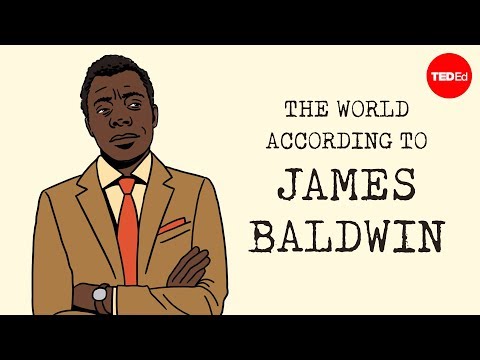
Montaigne wrote that he himself was the subject of his book: in Florio’s English, “myselfe am the groundworke of my booke”. The personal essay keeps that principle, grounding general reflection in a particular life. Charles Lamb and William Hazlitt made it a popular form in the magazines of 1820s London, and Woolf’s “Street Haunting” belongs to their tradition, moving between a private memory and a claim about everyone. James Baldwin’s “Notes of a Native Son” (1955) sets his father’s funeral beside the Harlem riot of 1943 and makes one day in one family into an argument about race in America. The TED-Ed lesson on Baldwin shows how his essays join the personal and the political.
 YouTube
The essay at its extremes
Some essayists compress thought to the length of a sentence. Francis Bacon’s Essays (first published in 1597 and enlarged in 1625) are short, dense and built from sentences designed to be remembered. “Of Truth” opens with a whole story told in one sentence: “What is truth? said jesting Pilate, and would not stay for an answer.” “Of Studies” turns advice about reading into a sentence that sounds like a law:
Some books are to be tasted, others to be swallowed, and some few to be chewed and digested
Francis Bacon, “Of Studies”, Essays (1625)
The sentence is an aphorism: a short statement of a general truth, shaped so that it can be lifted out and quoted. Its force comes from structure. Three verbs of eating rise from a quick taste to slow digestion, and the numbers fall from “some” to “some few”, so the sentence enacts the rarity of the books it praises. An epigram is an aphorism with a turn of wit, built to surprise as well as to instruct, and Oscar Wilde’s plays and essays are full of them. Bacon’s essays proceed from one aphorism to the next with little of Montaigne’s wandering. Read together, the two writers show the two poles of the form: the essay as a mind in motion, and the essay as a set of conclusions polished until they shine.
The lyric essay
At the other extreme, some contemporary essays work less like arguments and more like poems. The literary journal Seneca Review gave the lyric essay its name in 1997 for essays that proceed by fragments, images and juxtaposition rather than by reasoning. Maggie Nelson’s Bluets (2009) is made of 240 numbered propositions about the color blue, grief and love, and Claudia Rankine’s Citizen: An American Lyric (2014) sets prose passages beside images to record moments of everyday racism. In such work the white space between fragments carries meaning. Like Bacon’s aphorism, the lyric essay asks for slow reading, but it leaves the connections for the reader to make.
Life writing: autobiography, memoir and biography
The largest branch of non-fiction tells real lives. Its oldest convention is to begin at the beginning, and Mary Seacole’s Wonderful Adventures of Mrs. Seacole in Many Lands (1857) opens with her birth. Seacole was a Jamaican healer and businesswoman, the daughter of a Scottish soldier and a Creole mother, who traveled to the Crimean War to nurse British soldiers. Her book was written for the British public who had read of her there, and its first sentences show how a writer can play with a convention while obeying it:
I was born in the town of Kingston, in the island of Jamaica, some time in the present century. As a female, and a widow, I may be well excused giving the precise date of this important event.
Mary Seacole, Wonderful Adventures of Mrs. Seacole in Many Lands (1857), chapter 1
The convention says that an autobiography starts with a birth date. Seacole supplies the birth and withholds the date, with a joke about a woman’s right to hide her age. “This important event” is mock-grand, and the comedy does serious work. A Black Creole woman writing for Victorian readers who might doubt her needed a voice they would like and trust, and this one is confident, witty and in control. A few lines later she reports that people have called her “quite a female Ulysses”, and adds that from her experience of the Greeks she does not find it “a very flattering one”. The life she tells is inseparable from the self she presents.
Autobiography, memoir and the two selves
Autobiography usually covers a whole life, from childhood to the time of writing. A memoir takes a part of one: a period, a relationship, a place or a loss. Elie Wiesel’s Night (first published in French in 1958) is a memoir of the year he spent as a teenager in Auschwitz and Buchenwald. Joan Didion’s The Year of Magical Thinking (2005) is a memoir of the year after her husband’s sudden death. The narrower focus lets a memoir dwell on meaning rather than chronology.
Both kinds are told by an older self about a younger one, and the gap between them is where much of their meaning lives. Seacole describes how, as a small child, she practiced medicine on her doll, “a great sufferer”, and then steps forward in time to judge the memory:
I have had many medical triumphs in later days, and saved some valuable lives; but I really think that few have given me more real gratification than the rewarding glow of health which my fancy used to picture stealing over my patient’s waxen face after long and precarious illness.
Mary Seacole, Wonderful Adventures of Mrs. Seacole in Many Lands (1857), chapter 1
The sentence holds two selves at once. The experiencing self is a child imagining a doll’s recovery; the narrating self is a famous nurse who has saved real lives and can smile at that child while honoring her. This doubled perspective of a narrating self and an experiencing self is taught with narrative voice, and in life writing it carries the work’s judgment: what the older self understands, forgives or regrets about the younger.
A biography reverses the relation, since the writer stands outside the life. James Boswell’s The Life of Samuel Johnson (1791) built its portrait from years of notes on Johnson’s conversation, and modern biographers work from letters, documents and interviews. Biography is read as literature less often than autobiography and memoir, but it matters for reading them. When a memoir’s account can be checked against a biographer’s evidence, the reader learns how much the memoir shaped what it remembered.
Case study: “Shooting an Elephant”
George Orwell served in the Indian Imperial Police in Burma, then a province of British India, from 1922 to 1927. “Shooting an Elephant”, first published in 1936, tells of a day when a young police officer in the town of Moulmein was called out to deal with an elephant that had broken loose and killed a man. Its first sentence sets the tone of the whole essay:
In Moulmein, in lower Burma, I was hated by large numbers of people
George Orwell, “Shooting an Elephant” (1936), first sentence
The sentence goes on to call this “the only time in my life that I have been important enough for this to happen to me”. The joke is bitter and self-mocking, and it establishes the essay’s first convention: this “I” will not spare itself. The narrator admits that he hated the empire he served and also hated the Burmese who jeered at him, and he presents both feelings as the product of his position rather than as virtues or excuses.
An anecdote that carries an argument
The essay announces its own method. The incident, the narrator says, was “a tiny incident in itself”, but it gave him a better glimpse than before of “the real nature of imperialism”. An anecdote is a short account of a single incident told to make a point, and Orwell’s essay is an anecdote stretched to its limit: one afternoon, one animal, one decision. By the time the narrator arrives with a rifle, a crowd of “two thousand at the least” has gathered behind him, and he understands that he must shoot an animal that has already grown calm:
when the white man turns tyrant it is his own freedom that he destroys.
… He wears a mask, and his face grows to fit it.George Orwell, “Shooting an Elephant” (1936)
Here the anecdote becomes an argument. The officer who seems to hold power is controlled by the crowd’s expectation that he will act like a ruler. The second sentence is close to an aphorism, and its image of a face that grows to fit a mask makes the argument physical: the role of ruler deforms the man who plays it. The essay then describes the elephant’s slow death in painful detail, and later hearsay that “it took him half an hour to die”. The suffering animal becomes the cost of a performance of power.
The self-implicating “I”
The last sentence turns the argument back on the narrator. After the shooting, the narrator says, he was glad that the elephant had killed a man, because it put him legally in the right:
I often wondered whether any of the others grasped that I had done it solely to avoid looking a fool.
George Orwell, “Shooting an Elephant” (1936), last sentence
A conventional essay against empire might end by condemning the empire. This one ends by confessing a vanity in the essayist himself, which makes its case harder to dismiss. The reader cannot treat the narrator as a hero who saw through the system, because he did not act on what he saw. The confession is the essay’s most persuasive move, because the evidence against imperialism is the narrator’s own shame.
The confession depends on two selves. The diagram sets the officer in Burma beside the writer in England more than ten years later. The younger self acts; the older self understands, judges and tells. The narrator says that at the time he “did not even know that the British Empire is dying”, a sentence only the later self could write. That gap between the self who acted and the self who narrates is retrospective narration, and in this essay it is where the argument lives.


Truth and shaping
Did it happen? Orwell’s service in Burma is documented, but the shooting is not. His biographer Bernard Crick, in George Orwell: A Life (1980), doubted that the episode happened as the essay tells it. Peter Davison, the editor of Orwell’s Complete Works, printed the recollection of a fellow officer, George Stuart, that Orwell was transferred to a remote post after shooting an elephant. The question has not been settled, and it shows how much a reader of non-fiction relies on trust.
The French critic Philippe Lejeune named that trust in Le Pacte autobiographique (1975). In autobiography, he argued, the name on the cover, the narrator and the main character are the same real person, and the book offers itself as true. A reader who accepts this autobiographical pact reads differently from a reader of a novel, judging the writer’s honesty as well as the writing. The American critic Paul de Man answered in 1979 that autobiography is less a kind of book than a way of reading, and that the self any such text presents is partly made by its language. Both positions help. Lejeune explains why readers feel betrayed by a false memoir; de Man explains why even an honest one is a construction.
Every true account is shaped. Memory selects, and Woolf’s “Street Haunting” describes the process from inside:
The moment was stabilized, stamped like a coin indelibly, among a million that slipped by imperceptibly.
“Street Haunting”, paragraph 2
The coin image explains why memoirs are made of scenes. One night in Mantua is kept, sharp-edged and valuable, while a million others are lost, and the writer’s work begins with that selection. Beyond selection, memoirists compress months into a chapter, reconstruct conversations no one recorded, and sometimes merge several people into one or change names to protect them. Most readers accept these practices as part of the form, especially when the writer admits them.
The line falls at invention. James Frey’s A Million Little Pieces (2003) was sold as a memoir of addiction and recovery, and in 2006 reporters showed that key episodes had been invented or exaggerated. The publisher added a note of apology to later copies and offered refunds to readers. A novel with the same pages would have broken no rule, which shows how much of non-fiction’s meaning rests on its claim to be true.
The slave narrative and testimony
Some non-fiction exists to bear witness. The slave narrative, an autobiography by a person who had escaped or been freed from slavery, was widely read in the decades before the American Civil War. Its writers faced readers who doubted that a formerly enslaved person could write at all, and the form developed conventions to meet that doubt. The title page of Frederick Douglass’s Narrative of the Life of Frederick Douglass, an American Slave (1845) shows the first of them.

“Written by Himself” is a claim and a challenge. It answers in advance the charge that someone else wrote the book, and it makes the act of writing part of the evidence against slavery. The book then opens with two documents by white abolitionists, a preface by William Lloyd Garrison and a letter from Wendell Phillips, vouching for Douglass’s honesty. These authenticating documents were a convention of the form, and they show the pressure under which it was written: a Black writer’s truth had to be certified before it could be heard.
Conventions turned into meaning
The narrative itself begins like Seacole’s autobiography, with a birth. “I was born in Tuckahoe, near Hillsborough, and about twelve miles from Easton, in Talbot county, Maryland” (chapter 1). The next sentence breaks the convention: “I have no accurate knowledge of my age, never having seen any authentic record containing it.” Seacole withholds her birth date as a joke; Douglass cannot supply his because slavery denied it to him. The gap at the start of the life is the first piece of evidence the book offers.
Other conventions follow: the scene of learning to read against the master’s will, the turning point at which the narrator resists, and the escape. Douglass marks his turning point with a sentence built on chiasmus: “You have seen how a man was made a slave; you shall see how a slave was made a man” (chapter 10). When he reaches his escape, he refuses the convention altogether:
I now come to that part of my life during which I planned, and finally succeeded in making, my escape from slavery. But before narrating any of the peculiar circumstances, I deem it proper to make known my intention not to state all the facts connected with the transaction.
Frederick Douglass, Narrative of the Life of Frederick Douglass (1845), chapter 11
Readers expected the escape to be the climax, and Douglass withholds it, explaining that a full account would put others in danger and help slaveholders close the route. The silence is itself testimony: in 1845 slavery was still legal, and the story could not be fully told. A narrative that announces what it leaves out also admits that its truth has been shaped, openly and for a reason. Harriet Jacobs’s Incidents in the Life of a Slave Girl (1861) went further, publishing under a pseudonym, Linda Brent, and changing names throughout to protect the people in her story.
Testimony and witness
The slave narrative belongs to a wider kind, testimony: a first-person account offered as evidence of what the writer lived through or saw. Primo Levi’s If This Is a Man (1947), written soon after his return from Auschwitz, describes the camp with the restraint of the chemist he was, and lets the precision of the record carry the horror. The authority of testimony rests on the witness having been there, which is why doubts about accuracy matter so much in this kind.
The Latin American testimonio shows how sharp those doubts can become. I, Rigoberta Menchú (1983), the account of a K’iche’ Maya woman told to an anthropologist and edited from recorded interviews, brought the violence of Guatemala’s civil war to readers around the world. In 1999 the anthropologist David Stoll argued that parts of it did not match the evidence he had gathered. Defenders of the book answered that a testimonio speaks for a community’s experience rather than reporting one person’s life like a court record. The dispute turns on the same question as the autobiographical pact: what kind of truth a reader has been promised.
Letters, diaries and travel writing
Some non-fiction was never meant for the public at first, or was written for one reader. A letter is shaped by its addressee: what the writer can assume, what must be explained, what can be joked about. Writers’ letters are read as literature because they catch thinking before it hardens into a finished work. In December 1817 John Keats wrote to his brothers about a conversation with a friend, during which an idea came to him about what made a great writer:
I mean Negative Capability, that is, when a man is capable of being in uncertainties, mysteries, doubts, without any irritable reaching after fact and reason.
John Keats, letter to George and Tom Keats, December 1817, in Letters of John Keats to His Family and Friends, ed. Sidney Colvin (1891)
The sentence is casual (“I mean”) and the phrase is invented on the spot, which is why it has lasted: the reader watches a poet discover a principle in conversation with his brothers. “Irritable reaching” is a poet’s phrase, making the wish for certainty sound like an itch. Letters can also be written as a book from the start. Mary Wollstonecraft’s Letters Written During a Short Residence in Sweden, Norway, and Denmark (1796) addresses an unnamed correspondent while describing a journey, and its letter form lets private feeling and public observation share a page.
The diary
A diary is written close to the events it records, often daily, and its value as literature lies in that closeness. Samuel Pepys kept his diary in shorthand from 1660 to 1669, recording the plague and the Great Fire of London beside his dinners and quarrels, and it was not deciphered and published until 1825. A diary raises the question of its reader. Anne Frank addressed hers to an imagined friend, “Kitty”, while hiding in Amsterdam, and in 1944, after hearing a radio appeal for wartime diaries, she began to revise it for publication. The Diary of a Young Girl (1947) is therefore both a private record and a work its writer had begun to shape for readers she would never meet.
Travel writing
Travel writing describes journeys and the places and people met on them, and it always shows the traveler as much as the place. Matsuo Bashō’s The Narrow Road to the Deep North (published 1702) records a journey of 1689 through northern Japan in prose broken by haiku. The record of the road keeps stopping for a poem about one moment of it. Mary Kingsley’s Travels in West Africa (1897) shows a different kind of traveler. It begins with her reasons for going, told with comic self-mockery:
It was in 1893 that, for the first time in my life, I found myself in possession of five or six months which were not heavily forestalled, and feeling like a boy with a new half-crown, I lay about in my mind, as Mr. Bunyan would say, as to what to do with them.
Mary Kingsley, Travels in West Africa (1897), chapter 1
The simile of the boy with a new coin makes a Victorian woman’s freedom sound like a schoolboy’s treat, and the comedy disarms readers who might think a woman traveling alone absurd. A moment later “Science” itself speaks to her: “Go and learn your tropics”. The voice is likable, brave and funny, and it is also the voice of a traveler from the imperial center, whose West Africa is a field for collecting and trade. Travel writing’s history is bound up with empire, and the area of exploration that asks how far texts give insight into another culture reads such books for whose perspective they carry and whose they leave out.
Wollstonecraft’s Letters show the form turned inward. Traveling in Scandinavia with her baby daughter in 1795, she stays awake through a northern summer night:
Nothing, in fact, can equal the beauty of the northern summer’s evening and night; if night it may be called that only wants the glare of day, the full light, which frequently seems so impertinent; for I could write at midnight very well without a candle.
Mary Wollstonecraft, Letters Written During a Short Residence in Sweden, Norway, and Denmark (1796), Letter I
The sentence corrects itself as it goes (“if night it may be called”), and the daylight is “impertinent”, a word that gives the sky manners. Its last clause brings the description back to the writer, writing at midnight in the light. The place matters because of what it does to her: the letter soon asks “What are these imperious sympathies?”, and the journey becomes a study of her own feelings. Kingsley looks outward with confidence; Wollstonecraft looks inward with doubt, and both are travel writing.
Speeches, journalism and the graphic memoir
A speech is written for a room, a day and an audience, and oratory read on the page keeps the marks of that occasion. On 5 July 1852 Frederick Douglass addressed an audience in Corinthian Hall in Rochester, New York, who had invited him to speak about Independence Day. The speech was printed as a pamphlet the same year, and its questions still carry the pressure of a voice addressing listeners face to face:
Would you have me argue that man is entitled to liberty? that he is the rightful owner of his own body? You have already declared it.
Frederick Douglass, Oration, Delivered in Corinthian Hall, Rochester, July 5th, 1852
On the page the speech reads as a literary text with a built-in audience: “you” is the white citizens in the hall, and the reader overhears them being accused. The toolkit chapter on rhetoric follows Douglass’s appeals and pronouns in detail. What matters for the form is that a speech is shaped for listening, with repetition, questions and short units that a hall can follow, and that its meaning depends on its occasion. Swami Vivekananda’s address to the World’s Parliament of Religions in Chicago in 1893 opened by greeting its audience as “Sisters and Brothers of America”, an address that made a hall of strangers into a family before a single argument began.
Literary journalism
Literary journalism reports real events with the methods of fiction: scenes, a distinct narrating voice and a deliberate structure. In the 1960s American writers associated with the “New Journalism” put the reporter’s perception at the center of the story. Joan Didion’s Slouching Towards Bethlehem (1968) includes a long report on young people in San Francisco in 1967, built from fragments of scenes and overheard talk with little explanation. In the book’s preface Didion admits the ethical cost of her method: her quiet presence leads people to forget that it works against their interests, and she closes with the reminder that “writers are always selling somebody out”.
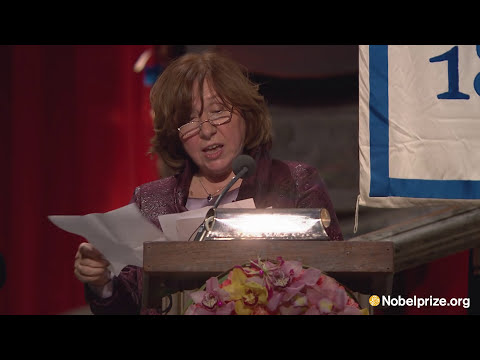
Literary journalism can also hand the narration to others. The Belarusian writer Svetlana Alexievich builds books from hundreds of interviews, arranged as a chorus of voices with her own almost silent. Voices from Chernobyl (1997) gathers the testimony of people who lived through the nuclear disaster of 1986, and in 2015 she received the Nobel Prize in Literature. In a short Nobel interview she describes what it means to write the voices of ordinary people.
 YouTube
The graphic memoir
The graphic memoir tells a life in drawn panels, so that the way people and places are drawn becomes part of the account. Marjane Satrapi’s Persepolis (published in French from 2000) tells her childhood in revolutionary Iran in stark black-and-white drawings, seen at the height of a child. Art Spiegelman’s Maus (1980–1991) records his father’s survival of the Holocaust and draws Jews as mice and Nazis as cats, an allegory that keeps reminding the reader that this is a representation of events, not a window onto them. Both books are often taught as non-fiction, though schools classify graphic works case by case. In each, a reader analyzes the frame, the gutter between panels and the drawn face as closely as the words.
Reading an unseen passage of non-fiction
An unseen passage of non-fiction raises one question before all others: what kind of “I” is speaking, and what is it claiming? The reading that follows takes the opening of “Street Haunting” from first impressions to a thesis, asking the questions in the order that suits the form.
First impressions
A first reading finds a playful, elegant voice describing the pleasure of a winter walk in London, with a long detour into memories of Italy and a strange image of the self as an eye. It is easy to enjoy and harder to pin down, because the passage seems to wander. That difficulty is worth noting at once, since an essay that wanders on purpose is telling the reader something about how it thinks.
Who speaks, from when, and with what claim
The speaker never says I. The essay speaks as “we”, in a general present tense: “The hour should be evening and the season winter” (paragraph 2). This voice speaks for everyone who has walked a city at dusk. Then, in the Mantua memory, the tense turns past and the “we” turns particular, a traveler with “skirts” and a hotel window. The essay’s claim, stated in paragraph 2, is that walking out at evening frees people from “the self our friends know us by”. It is a claim about experience rather than fact, so it can only be tested against the reader’s own.
How the thought moves
The passage has a clear shape once the wandering is seen as part of the argument. Paragraph 1 offers a pretext, the pencil. Paragraph 2 sets the conditions (evening, winter) and then turns back to the room the walker leaves, filling it with memories: the bowl, the old woman, the quarrel, the kettle. Those memories are the “oddity of our own temperaments” that the room keeps pressing on its owner. Paragraph 3 begins with the turn: “But when the door shuts on us, all that vanishes.”
The digression is the essay’s evidence. Woolf spends many lines on the bowl and the kettle so that their disappearance can be felt as a release. Then the essay qualifies its own pleasure. The walker is “only gliding smoothly on the surface”, and the eye “is not a miner, not a diver, not a seeker after buried treasure” (paragraph 3). Three negatives in a row set limits on what the eye can do. The essay admits that its freedom is shallow, and chooses it anyway.
The detail that holds it, and a thesis
The image that holds the passage together is the self reduced to “a central oyster of perceptiveness, an enormous eye” (paragraph 3). An oyster is soft, shut and hidden inside a shell, and the shell has just been broken; what is left can only perceive. The metaphor turns the essay’s argument into a body. A thesis can now join the voice, the movement and the image. In the opening of “Street Haunting”, Woolf builds an argument for anonymity out of a digression. The crowded memories of the walker’s room are told at length so that their vanishing feels like freedom, and the essay’s “we” performs the anonymity it praises.
Try it
In paragraph 1 the walker’s pretext is compared to the foxhunter who “hunts in order to preserve the breed of horses” and the golfer who “plays in order that open spaces may be preserved from the builders”. What do the two comparisons add to the essay’s first claim?
Both are mock-serious excuses: each sport claims a useful purpose to justify a pleasure. Setting the pencil beside them makes the errand comic and confesses, before the essay has started, that the real motive is pleasure. The comparisons also give the essay its tone of gentle irony toward its own reasons, which prepares for the admission in paragraph 3 that the walk only glides “on the surface”.
Where non-fiction’s edges blur
Non-fiction shapes its material, and some works shape it so far that they approach other forms. Henry David Thoreau’s Walden (1854) describes the two years he spent living in a cabin by a pond in Massachusetts. Early in the book he admits a structural choice:
The present was my next experiment of this kind, which I purpose to describe more at length; for convenience, putting the experience of two years into one.
Henry David Thoreau, Walden (1854), “Where I Lived, and What I Lived For”
“For convenience” is a modest phrase for a large decision. Folding two years into one lets Walden move through a single cycle of seasons and end in spring, so that the book’s shape enacts its hope of renewal. The facts are real; the year is a design. Works like this sit between memoir, essay and pastoral poem, and the reader’s task is to notice where the design is doing the arguing.
The edges blur in every direction. The non-fiction novel, such as Truman Capote’s In Cold Blood (1966), reports real crimes in scenes built like fiction. From the other side, autofiction tells a writer’s life in a novel. Annie Ernaux, who received the Nobel Prize in Literature in 2022, tells her own life in The Years (2008) through “she” and “we” rather than “I”, a choice that recalls Woolf’s collective voice. The essay-poem crosses into verse: Anne Carson’s “The Glass Essay” (1995) is a long poem about grief and Emily Brontë that calls itself an essay, and the lyric essay crosses the same border from the prose side. The useful question at each edge is what the writer gains by claiming one form while borrowing from another.
Writing about prose non-fiction
A strong paragraph on non-fiction analyzes the speaker and the shape of the thinking, not just the opinions. It asks how the text persuades or moves its audience, and it treats the “I” as a voice the writer has built. The paragraph that follows was written by a student on the opening of “Street Haunting”.
Woolf’s essay persuades by enacting its argument rather than stating it. Its speaker never says “I”: the essay’s “we” (“We are no longer quite ourselves”, paragraph 2) draws every reader into the crowd of “anonymous trampers” it describes.note 1 The long memory of Mantua then shows what the walker must escape, a room in which every object insists on “the memories of our own experience”.note 2 When the essay announces that “when the door shuts on us, all that vanishes” (paragraph 3), the short clause after so much remembered clutter makes the release audible. The reader feels the freedom the essay claims instead of being told about it.note 3
The voice analyzed. The student treats the pronoun as a choice and explains its effect on the audience, the first question for any non-fiction passage.
Digression read as evidence. The memory is not dismissed as wandering; the sentence explains what it contributes to the argument.
Structure and sound. The last sentences connect a change in sentence length to the essay’s claim, which is analysis of form rather than of content.
The commonest weakness in writing about non-fiction is reporting what the writer thinks, as if the text were a set of opinions to report. The pair that follows shows the difference on the essay’s first paragraph.
Weak: In this essay Woolf says that walking around London in winter is the greatest pleasure of town life. She talks about buying a pencil.note 1 She uses a lot of imagery and metaphors to make the essay interesting for the reader.note 2
Strong: Woolf calls the pencil a “pretext” and sets it beside the foxhunter’s and the golfer’s excuses,note 3 so the essay confesses from its first paragraph that its real subject is pleasure rather than purpose, and its irony toward its own reasons becomes the tone of everything that follows.note 4
Opinions reported. The sentences restate what the essay says, accurately, and analyze nothing about how it says it.
A feature named and left. “Imagery and metaphors” is not tied to any words, and “interesting for the reader” could describe any text.
Words of the text. The strong version quotes the essay’s own word for the errand and names the comparison that frames it.
Effect on the whole. It explains what the comparisons do to the essay’s tone, which is an interpretation a reader could test against the rest of the passage.
The strong version is shorter and does more. It chooses one feature of the opening, quotes it, and draws out its consequence for the essay as a whole.
Applying it in Paper 1
A prose non-fiction passage in Paper 1 is usually an extract from a memoir, an essay or a piece of travel writing, with a strong first-person voice. A guiding question on such a passage usually directs attention to the speaker, to the argument, to a place, or to a memory. For the opening of “Street Haunting”, a question might ask how the writer presents the experience of walking through the city, or how the speaker’s perspective shapes the passage.
The thesis built in the worked reading answers either question, because it names the voice, the movement and the claim. A body paragraph might open: “The essay’s collective ‘we’ is its first means of persuasion, since it makes the reader one of the walkers before any argument is offered.” The paragraph would go on to the shift into the particular memory of Mantua, and close by connecting the two voices to the essay’s praise of anonymity.
Marks are most often lost when an essay on non-fiction becomes a summary of the writer’s views, or an argument with them. Agreeing or disagreeing with Woolf about cities is not analysis. The question is always how the text presents its view, and with what effect.
The figures of persuasion that speeches and essays use are taken further in the toolkit chapter on rhetoric. The made “I” of memoir and essay connects with the narrator of fiction and the speaker of a poem, and the question of whose perspective a travel book carries is central to reading works from other cultures.
Self-check
- To do:
I can explain what makes a piece of non-fiction literary: voice, shape and language that do more than inform.
- To do:
I can distinguish the essay, autobiography, memoir, biography, diary, letter, travel writing, oratory, testimony and literary journalism, with an example of each.
- To do:
I can analyze how the “I” of a non-fiction text is made, including the gap between the narrating and the experiencing self.
- To do:
I can explain the autobiographical pact and discuss where shaping becomes invention.
- To do:
I can read digression and anecdote as methods of argument in an essay.
- To do:
I can read an unseen non-fiction passage from first impressions to a thesis, starting from the speaker and the claim.
- To do:
I can write about non-fiction without summarizing or debating the writer’s opinions.
Key terms
Each is also in the Literary forms glossary for IB English A Lit, beside the other terms of its topic.
- Anecdote
A short account of a single incident, told to illustrate a point, a character or an argument.
- Aphorism
A short, memorable sentence that states a general truth or judgment, often with balance or wit so that it can be remembered and quoted on its own.
- Autobiographical pact
The implied agreement in autobiography that the author, the narrator and the main character are the same real person and that the account is offered as true. The term comes from the French critic Philippe Lejeune (1975).
- Autobiography
A writer's account of their own life, usually covering its whole course from childhood and told by the person who lived it.
- Biography
An account of a real person's life written by someone else, built from evidence such as letters, documents and other people's memories.
- Creative non-fiction
Factual writing that uses the methods of fiction, such as scenes, dialogue, characterization and a shaped structure, while still claiming to tell the truth.
- Diary
A dated record of events and thoughts written close to the time they happen, usually for the writer alone or an imagined reader. Its immediacy, and the question of who it was written for, shape how it is read.
- Digression
A move away from the main subject or line of a text into another topic, story or memory. In the essay a digression is often deliberate, a way of thinking by association.
- Essay
A short prose work in which a writer tries out ideas on a subject from a personal angle. The word comes from the French for an attempt, and the form usually values the movement of thinking over a finished system.
- Graphic memoir
A memoir told in sequences of drawn panels combining images and words, so that how the writer draws people and places becomes part of the account.
- Letter
A text written to a named reader and shaped by that relationship. Letters by writers are read as literature for their voice and ideas, and the letter is also used as a literary form in its own right.
- Literary journalism
Reporting written with the methods of literature, such as scenes, a distinct narrating voice and deliberate structure, so that the account of real events is also a crafted text.
- Lyric essay
An essay that works more like a poem than an argument: by fragments, images, juxtaposition and white space, leaving the reader to make connections the writer does not state.
- Memoir
A work of life writing that focuses on one period, relationship, place or theme of the writer's life rather than the whole of it, and often reflects on the meaning of what is remembered.
- Oratory
The art of public speaking. Speeches written for a live audience are read as literature on the page for their structure, voice and rhythm, while keeping the marks of the occasion they were made for.
- Personal essay
An essay grounded in the writer's own experience, voice and memories, which moves between particular moments of a life and general reflection.
- Prose non-fiction
Prose about real people, events, places and ideas, offered as true, and read as literature for its voice, structure and language as well as for its information.
- Slave narrative
An autobiography by a person who escaped or was freed from slavery, written or dictated to bear witness against it. The form developed conventions of its own, such as prefaces vouching for the author and scenes of learning to read.
- Testimony
A first-person account offered as evidence of events the speaker lived through or saw, especially suffering or injustice. Its authority rests on the witness having been there.
- Travel writing
Non-fiction about journeys and the places and people met on them, shaped by the traveler's perspective, purpose and assumptions as much as by what is seen.
Practice questions on 5.2 Prose: non-fiction
Augment’s own questions, written in the style of IB exam papers. Here is how a few of them start.
Practice all 45 questions on 5.2 Prose: non-fiction
Free with an account. Write your answer, open the markscheme beside it and mark yourself. Augment keeps the ones you got wrong for another go.
More in 5 Literary forms
The whole topic is on its own page.
- 5.1Prose: fiction
- 5.2Prose: non-fictionThis page
- 5.3Poetry
- 5.4Drama
Carry on with 5.2 Prose: non-fiction in Augment
With a free account, Augment remembers where you stopped in the notes and which questions you have marked.