6.4 Stratospheric ozone
Explain how the ozone layer absorbs ultraviolet radiation in a steady-state equilibrium, how ozone-depleting substances created ozone holes, and evaluate the Montreal Protocol and its Kigali Amendment.
- IB Environmental Systems and Societies
- Part of 6 Atmosphere and climate change
- SL and HL
Key terms introduced here
Each is in the ESS glossary, with every other term in the subject.
- Cataract
A clouding of the lens of the eye that blurs vision and can lead to blindness; exposure to ultraviolet radiation, especially UVB, increases the risk.
- Chapman cycle
The set of natural reactions in which ultraviolet radiation splits oxygen molecules into atoms that form ozone, and ozone is broken down again, keeping stratospheric ozone in a steady state.
- Chlorofluorocarbons
Stable, non-toxic compounds of carbon, chlorine and fluorine once widely used as refrigerants, aerosol propellants, foam-blowing agents and solvents; they release chlorine that destroys stratospheric ozone.
- Dobson unit
The unit for the total amount of ozone in a column of atmosphere; 1 DU equals a layer of pure ozone 0.01 mm thick at standard temperature and pressure.
- Electromagnetic spectrum
The full range of electromagnetic radiation, from long-wavelength radio waves through microwaves, infrared, visible light and ultraviolet to short-wavelength X-rays and gamma rays.
- Free radical
An atom or molecule with an unpaired electron, such as a chlorine atom released from a CFC, which makes it highly reactive.
- Halogen
One of a group of reactive elements (fluorine, chlorine, bromine and iodine); chlorine and bromine released from ozone-depleting substances destroy stratospheric ozone.
- Hydrochlorofluorocarbons
Compounds of hydrogen, chlorine, fluorine and carbon used as transitional replacements for CFCs; they release less chlorine into the stratosphere but still deplete ozone and are being phased out.
- Hydrofluorocarbons
Compounds of hydrogen, fluorine and carbon that replaced CFCs and HCFCs in refrigeration, air conditioning, aerosols and foams; they do not deplete ozone but are powerful greenhouse gases.
- Kigali Amendment
The 2016 amendment to the Montreal Protocol that commits countries to cut the production and use of hydrofluorocarbons by 80–85% over the following decades because they are powerful greenhouse gases.
- Montreal Protocol
The international treaty, signed in 1987 and in force from 1989, that controls the production, use and trade of CFCs and other ozone-depleting substances; it has been ratified by every UN member state.
- Multilateral Fund
The fund set up under the Montreal Protocol, financed by developed countries, that pays the extra costs developing countries face in phasing out ozone-depleting substances.
- Ozone depletion
The reduction in stratospheric ozone caused mainly by chlorine and bromine from human-made ozone-depleting substances, which allows more UVB radiation to reach the Earth’s surface.
- Ozone hole
A region of severe seasonal ozone depletion over a pole in spring, usually defined as the area where total ozone falls below 220 Dobson units.
- Ozone-depleting substance
A human-made chemical, such as a CFC, halon, carbon tetrachloride, methyl bromide or HCFC, that reaches the stratosphere and releases chlorine or bromine that destroys ozone.
- Polar stratospheric cloud
A cloud of ice or nitric acid particles that forms in the polar stratosphere at about −80 °C or colder; reactions on its surfaces release chlorine that destroys ozone when sunlight returns in spring.
- Polar vortex
A large ring of strong winds that circles a pole in the stratosphere during winter, isolating very cold air inside it and allowing polar stratospheric clouds to form.
- Refrigerant
A fluid that absorbs heat as it evaporates and releases it as it condenses, used in refrigerators and air conditioners; CFCs, HCFCs and HFCs have all been used as refrigerants.
- Stratospheric ozone
Ozone in the stratosphere, mostly between about 15 km and 35 km (the ozone layer), which absorbs all incoming UVC and most UVB and so protects life at the surface.
- Ultraviolet radiation
Electromagnetic radiation with wavelengths of about 100–400 nm, shorter than visible light, divided into UVA, UVB and UVC; its high energy can damage DNA and living cells.
- UVA
Ultraviolet radiation with wavelengths of 315–400 nm; the lowest-energy ultraviolet band, most of which reaches the surface, where it causes skin ageing and contributes to skin cancer.
- UVB
Ultraviolet radiation with wavelengths of 280–315 nm, mostly absorbed by stratospheric ozone; the part that reaches the surface causes sunburn, DNA damage, skin cancer and cataracts.
- UVC
Ultraviolet radiation with wavelengths of 100–280 nm; the highest-energy and most damaging ultraviolet band, completely absorbed by ozone and oxygen in the upper atmosphere.
Notes on 6.4 Stratospheric ozone
Learning objectives
Outline the range of electromagnetic radiation emitted by the Sun and the roles of infrared, visible and ultraviolet radiation in the biosphere.
Explain why shorter-wavelength ultraviolet radiation is more dangerous to living things, and distinguish UVA, UVB and UVC.
Describe how stratospheric ozone absorbs ultraviolet radiation and protects living organisms.
Outline the effects of ultraviolet radiation on phytoplankton, DNA and human health, using data.
Explain the ozone layer as a steady-state equilibrium between formation and destruction, and how ozone-depleting substances tip it.
Distinguish ozone depletion from the enhanced greenhouse effect.
Describe the formation of ozone holes over the poles in spring and the impacts of increased UVB.
Evaluate the Montreal Protocol as an example of international cooperation, and use ozone-hole data to judge whether the planetary boundary for ozone has been crossed.
State the chemical equations for the formation and destruction of ozone, including destruction by chlorine. (HL)
Explain the chemical and atmospheric conditions that cause polar ozone depletion in spring. (HL)
Evaluate the replacement of CFCs by HFCs, the Kigali Amendment and alternatives to air conditioning. (HL)
Introduction
Stratospheric ozone is a thin layer of ozone (O₃) gas, mostly between about 15 km and 35 km above the surface, that absorbs most of the Sun’s harmful ultraviolet radiation. Its thinning by human-made chemicals in the late twentieth century, and the international response to it, are among the clearest examples of how human activity can alter a global system and how cooperation can reverse the damage.
The ozone layer can be studied as a storage maintained by a balance of flows: ozone is constantly made and destroyed, and its amount depends on the rates of the two processes. Chemicals released at the surface by people in some countries damaged a layer that protects everyone, which raises questions of perspectives, environmental justice and international law.
Radiation from the Sun
The Sun emits energy as electromagnetic radiation: waves of electric and magnetic fields that travel through space at the speed of light. The full range of this radiation, from low-frequency radio waves to high-frequency gamma rays, is the electromagnetic spectrum. The different types differ in wavelength (the distance between one wave crest and the next) and frequency (the number of waves passing a point each second). The shorter the wavelength, the higher the frequency and the more energy each packet of radiation (photon) carries.
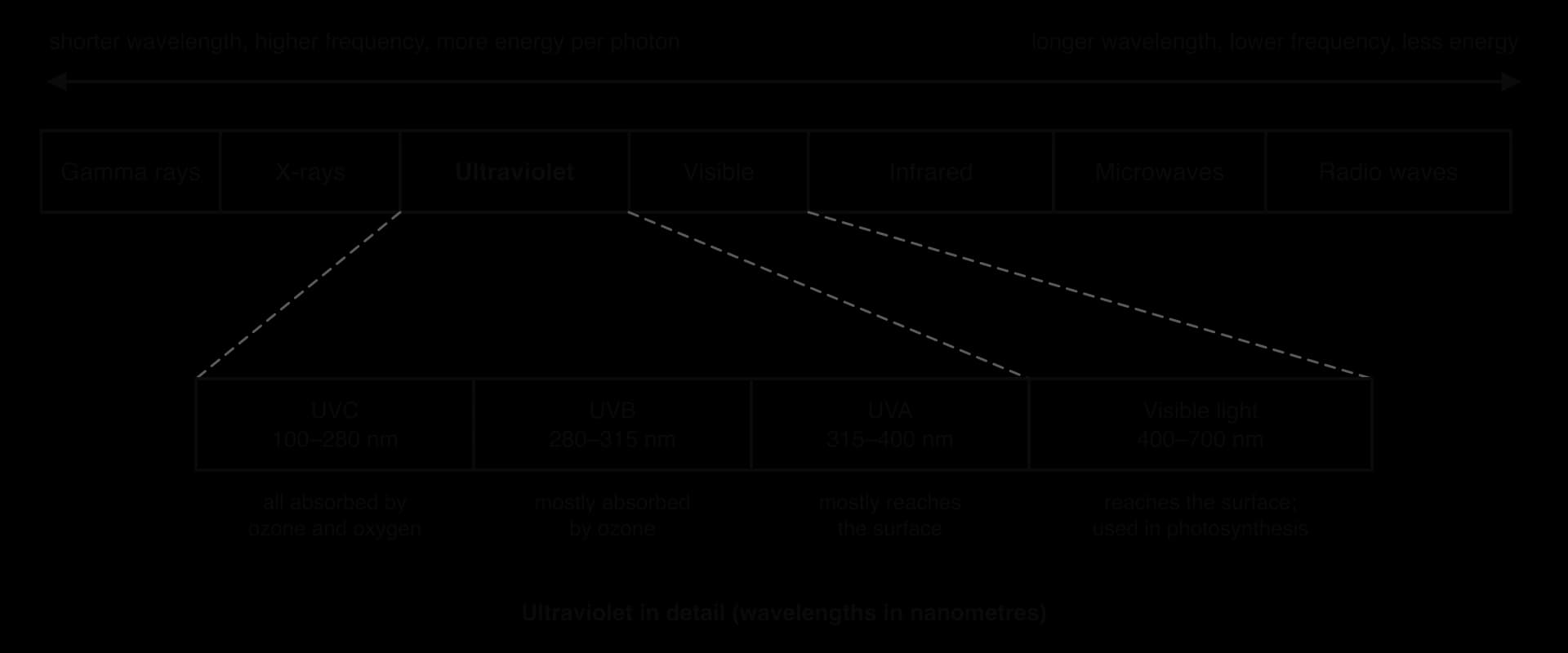
Most of the Sun’s energy arrives as infrared, visible light and ultraviolet. At the top of the atmosphere, sunlight is about 50% infrared, 40% visible light and 10% ultraviolet by energy. Each part has a different role in the biosphere:
Type of radiation | Approximate wavelength | Role in the biosphere |
|---|---|---|
Infrared | Longer than 700 nm | Warms the air, land and oceans; drives evaporation and the water cycle; long-wave infrared emitted by the Earth is absorbed by greenhouse gases |
Visible light | 400–700 nm | Used by producers in photosynthesis; allows animals to see; sets daily and seasonal rhythms of plants and animals |
Ultraviolet (UV) | 100–400 nm | Small amounts allow human skin to make vitamin D; larger amounts damage DNA, proteins and cells; absorbed by ozone in the stratosphere |
Gamma rays and X-rays from the Sun are absorbed high in the atmosphere and do not reach the surface. Infrared and visible light pass through largely unchanged. The ultraviolet part of sunlight is the part most affected by the ozone layer.
Ultraviolet radiation and its three bands
Ultraviolet radiation has wavelengths shorter than violet light. It is divided into three bands by wavelength, which differ in the energy they carry, the damage they do and how much of them reaches the ground.
Band | Wavelength | Energy and danger | How much reaches the surface |
|---|---|---|---|
UVC | 100–280 nm | Highest energy; most damaging; used in lamps to kill microorganisms | None: all absorbed by ozone and oxygen in the upper atmosphere |
UVB | 280–315 nm | High energy; causes sunburn, DNA damage, skin cancer and cataracts | A small fraction; most is absorbed by stratospheric ozone |
UVA | 315–400 nm | Lowest energy of the three; penetrates deep into skin and causes skin ageing; contributes to skin cancer | Most of it; over 95% of the UV reaching the surface is UVA |
Sources: Wikipedia, “Ultraviolet” and “Ozone layer” (2026), using the ISO 21348 band definitions.
Shorter wavelengths are more dangerous because each photon carries more energy. A UVB or UVC photon carries enough energy to break or rearrange chemical bonds in DNA and proteins, while a photon of visible light does not. This is why UVB, although only a small part of the sunlight reaching the surface, does most of the biological damage.
How stratospheric ozone protects life
Ozone is a molecule of three oxygen atoms (O₃). About 90% of the atmosphere’s ozone is in the stratosphere, most of it between 15 km and 35 km. Even there it is a trace gas: at its peak, ozone makes up only about 8–15 parts per million of the air. If all the ozone above a point were brought down to the surface at sea-level pressure and temperature, it would form a layer only about 3 mm thick.
When an ozone molecule absorbs a UV photon, the energy breaks it apart into an oxygen molecule and an oxygen atom, and the absorbed energy is converted into heat. The UV photon is used up in the process and never reaches the ground. This is why the stratosphere is warmer at the top than at the bottom, and why the ozone layer reduces the amount of UV reaching the surface.
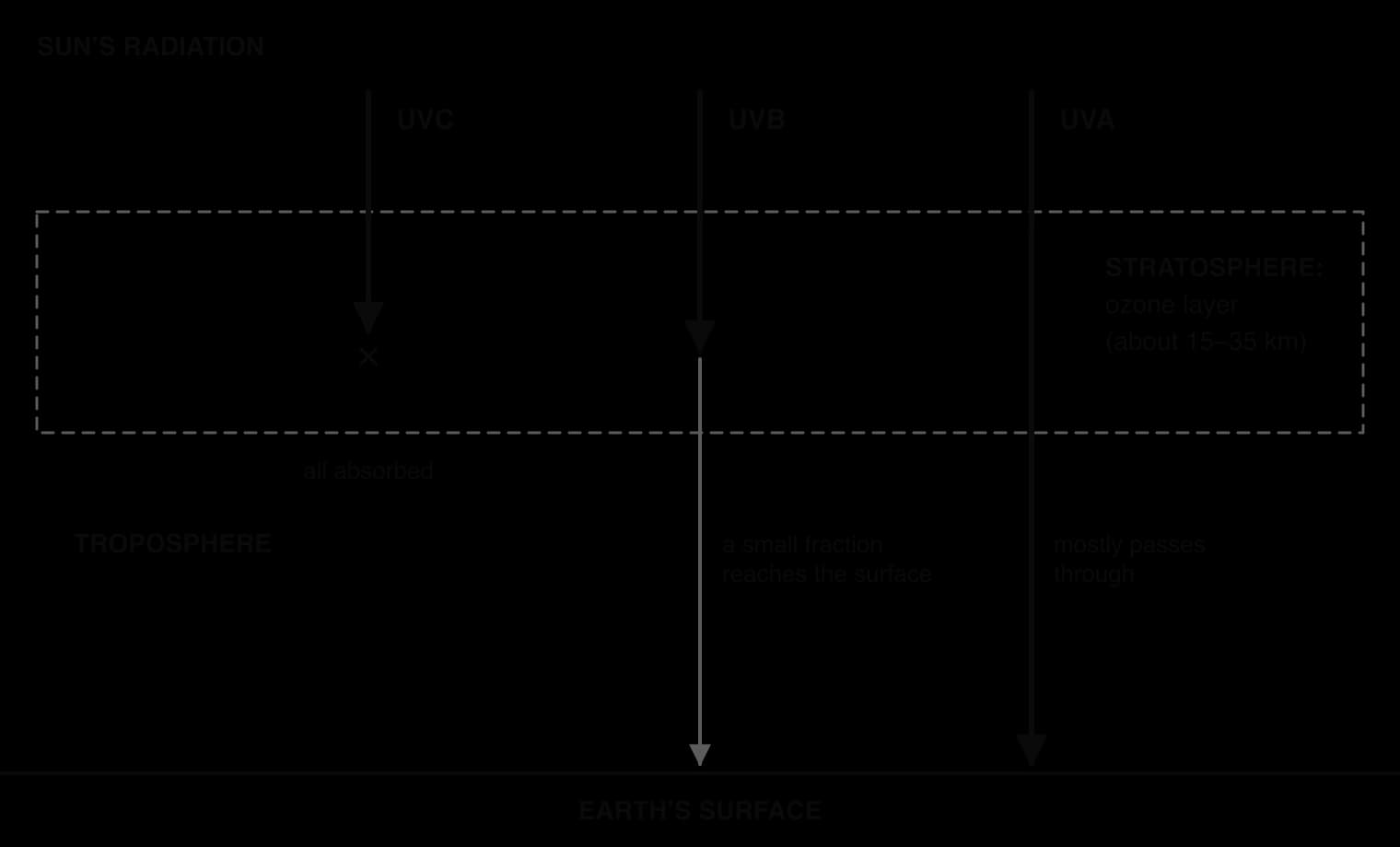
The amount of ozone in a column of air is measured in Dobson units (DU). A typical global average is about 300 DU, equivalent to the 3 mm layer of pure ozone. The amount varies with latitude and season: ozone is made mainly over the tropics, where sunlight is strongest, and carried towards the poles by slow stratospheric winds, so the layer is generally thinner near the equator and thicker at middle and high latitudes.
The effects of ultraviolet radiation on living things
Living things have evolved under a shield that keeps out most UV, so increases in UVB can harm them. UV damages the large molecules on which cells depend, especially DNA. When UVB is absorbed by DNA, neighbouring bases can bond to each other instead of to the bases on the opposite strand, which distorts the molecule. Cells can repair most of this damage, but errors that escape repair become mutations. Some of these mutations make cells divide uncontrollably, which causes cancer.
Effects on human health
Sunburn: UVB damages skin cells, causing redness, pain and peeling a few hours after exposure.
Skin cancer: repeated exposure to UV, and especially severe sunburn, raises the risk of skin cancers, including melanoma, the most dangerous form, and the more common basal cell and squamous cell carcinomas.
Premature ageing of the skin: UVA penetrates deep into the skin and damages collagen, causing wrinkles and loss of elasticity.
Cataracts: UV damages proteins in the lens of the eye, which becomes cloudy and blurs vision; cataracts are a leading cause of blindness worldwide.
Weakening of the immune system: UV exposure can suppress parts of the immune response in the skin.
Estimates of the effect of ozone loss show how sensitive health is to small changes. Each 1% long-term decrease in ozone is estimated to raise the incidence of basal and squamous cell carcinomas by about 2%. In Punta Arenas, a city in southern Chile that lies under the edge of the Antarctic ozone hole in spring, rates of melanoma rose by 56% and other skin cancers by 46% over seven years.
Sources: Wikipedia, “Ozone depletion” (2026), citing studies of UV and skin cancer incidence.
Small doses of UVB are also beneficial, because the skin uses UVB to make vitamin D, which is needed for healthy bones. People with darker skin have more melanin, which absorbs UV and protects them from sunburn but also slows vitamin D production. The health effects of UV therefore depend on skin type, latitude, season, behaviour and the state of the ozone layer.
Public health campaigns try to reduce exposure. In Australia, which has one of the highest rates of skin cancer in the world, the “Slip! Slop! Slap!” campaign launched by Cancer Council Victoria in 1981 urged people to slip on a shirt, slop on sunscreen and slap on a hat. Since then the incidence of basal and squamous cell carcinomas has fallen, and melanoma rates among younger Australians have dropped steadily since the late 1990s.
Effects on ecosystems
UVB can penetrate several metres into clear water, where it reduces photosynthesis by phytoplankton, the microscopic producers at the base of most marine food chains. In the Southern Ocean, a study at the edge of the sea ice in the Bellingshausen Sea during the spring of 1990 found that UVB inhibition of photosynthesis increased as the ozone layer thinned, and estimated a fall in primary productivity of at least 6–12% linked to ozone depletion. A fall in phytoplankton growth reduces the energy available to krill, fish, seabirds, seals and whales, and reduces the amount of carbon dioxide that the ocean takes up.
Sources: Smith et al., Science (1992); Wikipedia, “Ozone depletion” (2026).
UVB also damages the eggs and larvae of fish and amphibians in shallow water, reduces the growth of some crop plants, and harms the DNA of many land plants and animals. Increased UVB is estimated to reduce terrestrial plant productivity, and so carbon storage, by about 6% in areas with substantial ozone depletion.
The ozone layer as a steady-state equilibrium
Ozone in the stratosphere is not a permanent store that was made once and then kept. Individual ozone molecules are constantly being formed and destroyed, many times each second across the stratosphere. The amount of ozone has nevertheless stayed roughly constant over long periods, because the two processes have run at the same rate.
Formation: ultraviolet radiation from the Sun splits oxygen molecules (O₂) into single oxygen atoms. Each free oxygen atom quickly joins an O₂ molecule to form ozone (O₃).
Natural destruction: ozone absorbs UV and splits back into O₂ and an oxygen atom, and ozone also reacts with free oxygen atoms to form two O₂ molecules. Small amounts of natural nitrogen, hydrogen and chlorine compounds also break ozone down.
When the rate of formation equals the rate of destruction, the amount of ozone stays the same even though its molecules are continually replaced. This is a steady-state equilibrium: an open system in which inputs and outputs continue but balance each other. The process also turns UV energy into heat, which is how the ozone layer protects the surface.
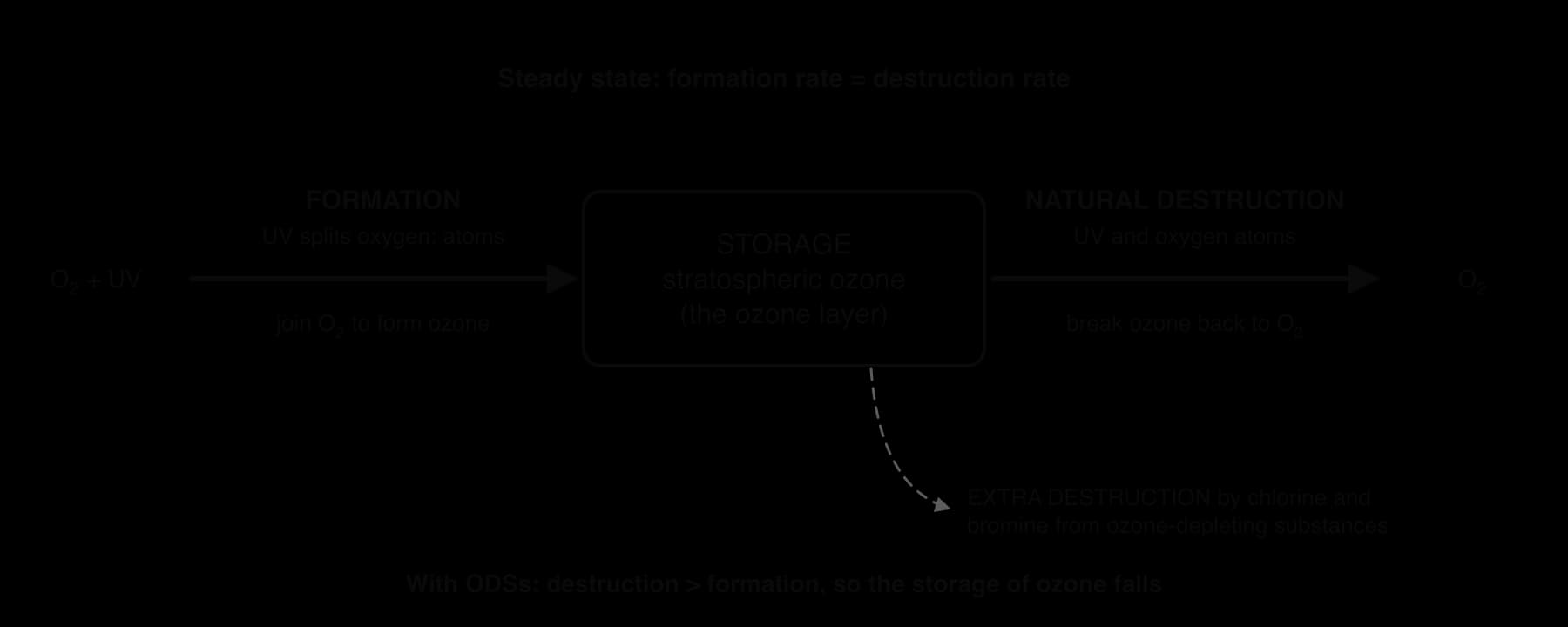
The equilibrium is also self-regulating to some extent. If the ozone layer thins, more UV penetrates deeper into the stratosphere, where it splits more O₂ and forms more ozone lower down. This negative feedback partly offsets a loss, but it cannot keep up with a large, continuous increase in the rate of destruction.
Ozone-depleting substances
Ozone-depleting substances (ODSs) are human-made chemicals that release chlorine or bromine atoms in the stratosphere, where those atoms destroy ozone. They add to the natural breakdown of ozone, so the rate of destruction rises above the rate of formation and the equilibrium tips towards less ozone.
The most important ODSs were the chlorofluorocarbons (CFCs), compounds of carbon, chlorine and fluorine. They were developed in the late 1920s and became very widely used because they are non-toxic, non-flammable and chemically stable:
Refrigerants in refrigerators, freezers and air conditioners.
Propellants in aerosol spray cans.
Blowing agents for making foam insulation and packaging.
Solvents for cleaning electronic components.
Other ODSs include halons, bromine compounds used in fire extinguishers; carbon tetrachloride and methyl chloroform, used as solvents; methyl bromide, a pesticide used to fumigate soil and stored crops; and hydrochlorofluorocarbons (HCFCs), which were introduced as less damaging replacements for CFCs.
Why stability made CFCs so damaging
The chemical stability that made CFCs so useful is the reason they damage the ozone layer. They are not broken down by rain, sunlight or reactions in the troposphere, so almost all the CFCs released at the surface survive long enough to be mixed upwards into the stratosphere over several years. CFC-11 lasts about 52 years in the atmosphere and CFC-12 about 100 years. Only in the stratosphere is UV energetic enough to break them apart and release their chlorine.
Each chlorine atom released acts as a catalyst: it destroys an ozone molecule but is regenerated by the reaction that follows, so it can go on to destroy another. A single chlorine atom can destroy about 100,000 ozone molecules before it is removed into a less reactive form. This is why CFC production, which reached about a million tonnes a year at its peak, could damage a layer of the atmosphere around the whole planet.
Sources: Wikipedia, “Ozone depletion”, “Chlorofluorocarbon” and “Global warming potential” (2026).
Ozone depletion is not a cause of global warming
Ozone depletion and the enhanced greenhouse effect are different problems, although they are often confused. They involve different radiation, different parts of the atmosphere and different main chemicals.
Ozone depletion | Enhanced greenhouse effect | |
|---|---|---|
Part of the atmosphere | Stratosphere (ozone layer) | Mainly the troposphere and surface |
Radiation involved | Incoming short-wave ultraviolet from the Sun | Outgoing long-wave infrared from the Earth |
Main cause | Chlorine and bromine from CFCs, halons and other ODSs | CO₂, methane, nitrous oxide and fluorinated gases from human activities |
Main consequence | More UVB reaches the surface: skin cancer, cataracts, damage to phytoplankton and crops | Global warming and climate change |
Main international agreement | Montreal Protocol (1987) | UNFCCC (1992), Kyoto Protocol (1997), Paris Agreement (2015) |
A thinner ozone layer does not let in “more heat”. The extra UVB that passes through is a tiny amount of energy compared with the visible and infrared sunlight that warms the planet. The two issues do overlap in one important way: CFCs, HCFCs and HFCs are all powerful greenhouse gases, so phasing out CFCs also slowed global warming. Ozone loss in the stratosphere actually has a small cooling effect on the surface, because ozone is itself a greenhouse gas.
Ozone depletion and ozone holes
Ozone depletion has affected the stratosphere over the whole Earth. Between 1980 and the mid-1990s, total ozone fell below its pre-1980 levels at middle latitudes in both hemispheres. The loss was small in most places, a few per cent, but it was enough to let measurably more UVB reach the surface.
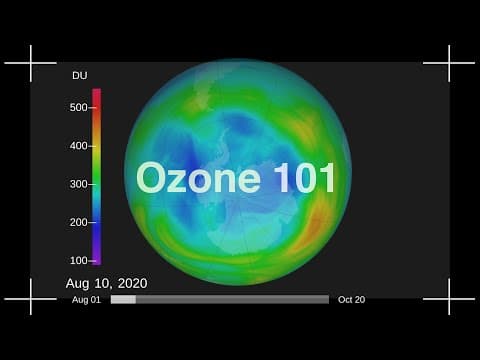
Over the poles, the loss is far greater and strongly seasonal. Every spring over Antarctica, between late August and November, ozone in a large region falls to very low values and then recovers as summer arrives. This region of severe seasonal depletion is called the ozone hole. It is usually defined as the area where total ozone falls below 220 Dobson units; in 1979 the lowest value measured over Antarctica was still about 225 DU. The ozone hole is not a hole in the atmosphere, and ozone does not fall to zero: it is a large area of greatly thinned ozone.
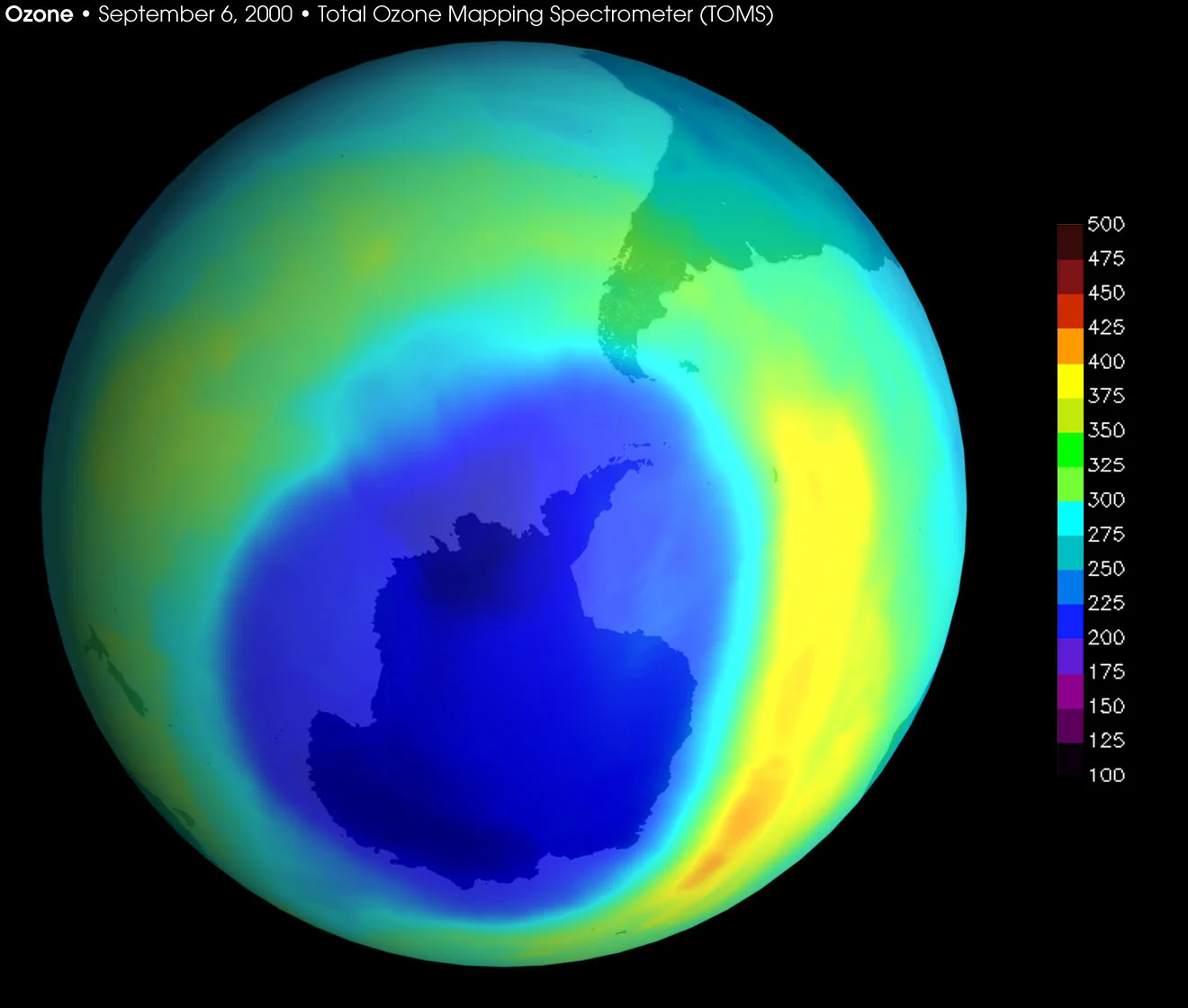
The Antarctic hole forms in spring because of a combination of chlorine and bromine from ODSs and the special weather of the polar winter. During the long, dark winter, strong winds circle the pole and isolate an extremely cold mass of air in which clouds form high in the stratosphere. Reactions on these clouds prepare chlorine for attack, and when sunlight returns in spring, ozone is destroyed very quickly. When the circling winds weaken in late spring, ozone-rich air from lower latitudes flows in and the hole closes.
Ozone loss over the Arctic is usually smaller, because the Arctic stratosphere is warmer and its winds are more variable, so fewer stratospheric clouds form. In unusually cold winters, however, large losses occur. In March 2020, after the coldest Arctic stratospheric winter since records began in 1979, balloon measurements showed that about 90% of the ozone at the height of the layer had been destroyed in places.
Sources: Wikipedia, “Ozone depletion” (2026); NASA Ozone Watch (2025).
Impacts of increased UVB
Where ozone is depleted, more UVB reaches the surface, raising the risks of sunburn, skin cancer and cataracts and reducing the productivity of phytoplankton and crops. The impacts are greatest where the population is exposed and the depletion is severe: in southern South America, southern Australia and New Zealand when the Antarctic hole drifts over them in spring, and in the waters of the Southern Ocean beneath the hole, where phytoplankton and the krill that feed on them are exposed.
Case study: the Antarctic ozone hole and the Montreal Protocol
Context
The ozone layer is a global commons: no country owns it, every country benefits from it, and chemicals released anywhere damage it everywhere. World production of CFCs grew for decades and eventually exceeded a million tonnes a year, most of it made and used in industrialised countries. The damage they did fell on everyone, including people in countries that had used very few of them.
The issue: from hypothesis to discovery
In 1974 the chemists Mario Molina and F. Sherwood Rowland proposed that CFCs released at the surface would drift into the stratosphere, be broken apart by UV and release chlorine that would destroy ozone. Many in the chemical industry argued that the evidence was too uncertain to justify regulation. Molina, Rowland and Paul Crutzen, who had shown how nitrogen oxides destroy ozone, later shared the 1995 Nobel Prize in Chemistry for their work on stratospheric ozone.
In May 1985, the British Antarctic Survey scientists Joseph Farman, Brian Gardiner and Jonathan Shanklin reported that springtime ozone over their station at Halley Bay in Antarctica had fallen far more than anyone had predicted. Later measurements showed losses of up to 70% of the ozone column over Antarctica in spring. Satellite data soon confirmed that the loss covered almost the whole of the continent. The discovery of a dramatic, visible “hole” turned a scientific hypothesis into a public concern and gave negotiators a strong reason to act.
Data
NASA has calculated the average area of the Antarctic ozone hole every spring since 1979, from satellite measurements of the area with less than 220 DU of ozone between 7 September and 13 October.
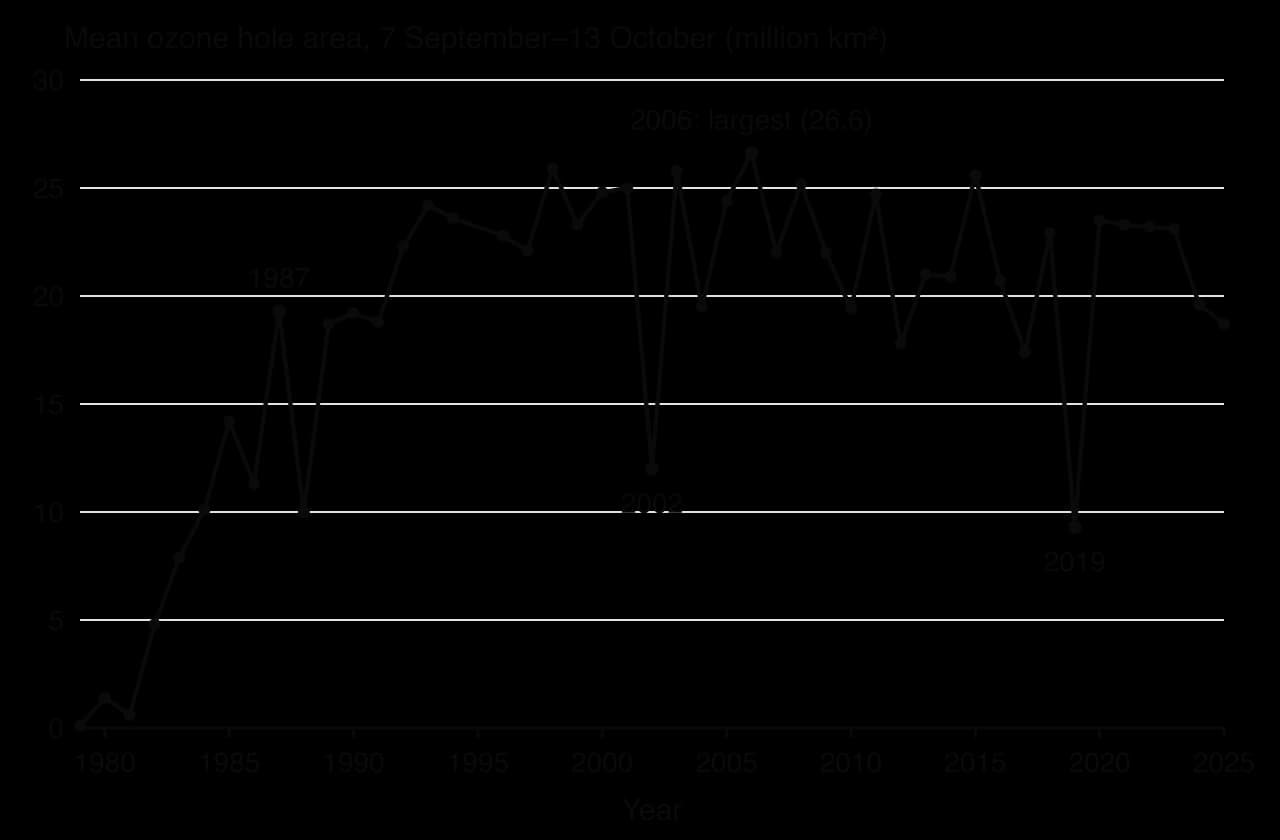
Year | 1979 | 1985 | 1990 | 2000 | 2006 | 2015 | 2019 | 2024 | 2025 |
|---|---|---|---|---|---|---|---|---|---|
Mean hole area (million km²) | 0.1 | 14.2 | 19.2 | 24.8 | 26.6 | 25.6 | 9.3 | 19.6 | 18.7 |
Minimum ozone (DU) | 225.0 | 146.5 | 124.2 | 98.7 | 98.4 | 117.2 | 167.0 | 121.0 | 138.3 |
Sources: NASA Ozone Watch, annual Antarctic ozone hole statistics (2025).
The data show three phases. From 1979 to the early 1990s the hole grew quickly as chlorine and bromine accumulated. From the mid-1990s to the mid-2000s it stayed large, because ODS concentrations in the stratosphere peaked around the end of the century even though production had been cut. Since then the trend has been slowly downward, with large year-to-year variation caused by differences in stratospheric temperature and winds: in 2002 and 2019, unusual warming of the polar stratosphere weakened the polar winds and kept the hole small.
Management and responses
Governments responded quickly. The Vienna Convention for the Protection of the Ozone Layer (1985) set up a framework for cooperation and research. Two years later, before the link between CFCs and the Antarctic hole had been fully proven, the Montreal Protocol on Substances that Deplete the Ozone Layer was signed on 16 September 1987. It entered into force on 1 January 1989.
The original Protocol cut CFC production by half, but it was designed to be strengthened as the science improved. Through amendments and adjustments agreed at regular meetings of the parties (London 1990, Copenhagen 1992 and later), the controls were extended to more chemicals and the timetables brought forward:
Group of substances | Developed countries | Developing countries |
|---|---|---|
CFCs | Production and use phased out by 1996 | Frozen at 1995–97 levels, phased out by 2010 |
Halons | Phased out by 1994 | Phased out by 2010 |
HCFCs (transitional replacements) | Reductions from 2004; phased out by 2020 | Frozen in 2013; phase-out by 2030 |
HFCs under the Kigali Amendment of 2016 | Phase-down of 85% from 2011–13 levels by 2036 | Phase-down of 80% by 2045 or 85% by 2047, depending on the group |
Sources: Wikipedia, “Montreal Protocol” (2026).
Developing countries were given about ten extra years to comply, recognising that they had contributed least to the problem and needed time and money to change technology. The Multilateral Fund, managed with UNEP, UNDP, UNIDO and the World Bank, pays the extra costs of switching to substitutes in developing countries; pledges for 1991–2005 alone totalled US$3.1 billion. Parties also agreed to restrict trade in controlled substances with countries outside the Protocol, which gave every country an incentive to join.
 YouTube
Monitoring has also caught cheating. In 2018 scientists reported that global emissions of CFC-11, which should have kept falling, had risen since about 2013, and later work traced much of the increase to unreported production in eastern China after the global phase-out. After the findings were published and industry and government in China acted, emissions from eastern China fell back to pre-2013 levels by 2019, and global CFC-11 emissions fell by about a quarter between 2018 and 2019.
Sources: Park et al. and Montzka et al., Nature (2021); Wikipedia, “Ozone depletion” (2026).
Evaluation
The Montreal Protocol is regarded as the most successful example of international cooperation on a major environmental problem. Nearly 99% of the controlled ODSs have been phased out, chlorine in the stratosphere is declining, and the 2022 scientific assessment for WMO and UNEP projected that ozone will return to its 1980 values around 2040 for most of the world, around 2045 over the Arctic and around 2066 over Antarctica. The United States Environmental Protection Agency estimated that the Protocol will prevent about 280 million cases of skin cancer, 1.5 million skin cancer deaths and 45 million cataracts in the United States alone.
Perhaps the single most successful international agreement to date has been the Montreal Protocol.
— Kofi Annan, UN Secretary-General (1997–2006), quoted by the Environmental Investigation Agency (2017) and in Wikipedia, “Montreal Protocol” (2026)
Several features explain this success:
Clear science and a visible problem: the chemistry was well understood, the ozone hole gave dramatic evidence, and the health risk of skin cancer was easy for the public to understand.
The precautionary principle: the first controls were agreed before the science was complete, which is an application of the precautionary principle.
A small number of chemicals and producers: CFCs were made by a relatively small number of large chemical companies, so controls were easy to target and check.
Available substitutes: industry was able to develop alternatives (HCFCs, then HFCs and other chemicals), so the costs of phasing out CFCs were moderate; some manufacturers came to support controls once they had substitutes to sell.
Fairness and finance: different timetables and the Multilateral Fund persuaded developing countries such as China and India to join.
Trade restrictions and flexibility: restrictions on trade with non-parties discouraged free-riding, and the Protocol could be tightened as new evidence emerged.
The Protocol also has limitations. The ozone layer will take decades more to recover because ODSs persist in the atmosphere and in old equipment. The HFCs that replaced CFCs and HCFCs do not harm ozone but are powerful greenhouse gases, which required a further amendment. Illegal production, such as the CFC-11 case, shows that monitoring and enforcement remain necessary.
Stakeholder or perspective | Position and how it changed |
|---|---|
Chemical manufacturers | At first argued that the science was uncertain and controls would be costly; later supported international controls once substitutes were available and a level playing field was assured |
Developed countries (major producers) | Accepted earlier and stricter phase-out dates and agreed to pay into the Multilateral Fund |
Developing countries | Joined once they received a grace period and funding, framing the issue as one of fairness: those who caused the problem should pay to solve it |
Scientists | Provided the evidence, continue to monitor the layer and detected illegal emissions |
Ecocentric and technocentric views | Ecocentrists stress the precautionary principle and the risk of meddling with global systems; technocentrists point to the role of substitute chemicals and monitoring technology in the success |
The planetary boundary for stratospheric ozone
Stratospheric ozone depletion is one of the nine planetary boundaries. Its boundary is a fall of no more than 5% below the pre-industrial level of about 290 DU, which gives a global average of about 277 DU. The current global average of about 285.7 DU is above it, so this boundary has not been crossed, although it is regularly exceeded over Antarctica each spring. Most assessments credit the Montreal Protocol with preventing a crossing: ozone loss stopped growing in the late 1990s, when the Protocol’s cuts began to reduce chlorine in the stratosphere.
The ozone-hole data support this conclusion in several ways: the area of the hole stopped growing at about the time stratospheric chlorine peaked, minimum ozone values have risen since the early 2000s, and a NASA model of a “world without the Protocol” projected ozone below 220 DU across the whole globe by about 2040 and a two-thirds fall from 1970s levels by 2065. It remains one of the few planetary boundaries that humanity has pulled back from rather than moved further beyond.
Sources: Wikipedia, “Planetary boundaries” and “Montreal Protocol” (2026); WMO/UNEP Scientific Assessment of Ozone Depletion (2022); NASA Earth Observatory, “The World We Avoided by Protecting the Ozone Layer”.
Lessons for other environmental problems
The Protocol is often held up as a model for climate change and other global problems, but the comparison has limits.
Feature | Ozone depletion | Climate change |
|---|---|---|
Sources | A limited group of chemicals made by a relatively small number of companies | Fossil fuels, agriculture and land use across every sector of every economy |
Substitutes | Available at moderate cost | Available for many uses (renewable electricity) but costly or immature for others (steel, cement, aviation) |
Economic stakes | A small part of the world economy | Energy underpins the whole world economy |
Visibility of harm | A dramatic ozone hole and a clear health risk (skin cancer) | Gradual and spread across many impacts, though extreme events are increasingly visible |
Features that could be copied include finance for developing countries, differentiated timetables, trade measures against non-participants, and treaties designed to tighten as evidence grows. The Kigali Amendment already uses the Protocol’s machinery to tackle a group of greenhouse gases.
What it shows
The ozone hole shows how a human input can tip a steady-state equilibrium in a global system, why the most damaging pollutants are often those that persist, and how the costs of an activity can fall on people far from where it takes place. The Montreal Protocol shows that a global commons can be managed successfully when science is clear, substitutes exist, the burden is shared fairly and agreements can be strengthened over time. Its success also depended on monitoring, which continues to detect new threats to the layer.
The chemistry of ozone formation and destruction (HL only)
The natural cycle
The natural formation and destruction of ozone was first described by the physicist Sydney Chapman in 1930, and the set of reactions is known as the Chapman cycle. Ultraviolet radiation with wavelengths shorter than about 240 nm has enough energy to split an oxygen molecule into two oxygen atoms:
Each oxygen atom is highly reactive and quickly combines with an oxygen molecule to form ozone:
Ozone is destroyed when it absorbs UV (including UVB), which splits it back into an oxygen molecule and an oxygen atom. This is the reaction that removes UVB before it reaches the ground:
Ozone is also destroyed when it collides with a free oxygen atom:
In the steady state, formation (the first two reactions) and destruction (the last two) proceed at equal rates. The absorption of UV by O₂ and O₃ in these reactions converts the radiation into heat, which warms the stratosphere.
Halogens and catalytic destruction of ozone (HL only)
The halogens are a group of reactive elements that includes fluorine, chlorine, bromine and iodine. Ozone-depleting substances are carbon compounds that contain chlorine or bromine. In the stratosphere, UV radiation breaks the bond between carbon and chlorine (or bromine), releasing a single, highly reactive atom. For CFC-11 (CCl₃F):
The dot shows that the chlorine atom is a free radical: it has an unpaired electron, which makes it extremely reactive. The chlorine atom then destroys ozone in a two-step cycle:
Adding the two steps gives the overall reaction O₃ + O → 2O₂, with the chlorine atom unchanged at the end. Chlorine is a catalyst: it speeds up the destruction of ozone without being used up, so each atom can repeat the cycle many thousands of times, about 100,000 on average, before it is locked away in a less reactive “reservoir” compound such as hydrogen chloride (HCl) or chlorine nitrate (ClONO₂) and eventually carried back down to the troposphere and washed out.
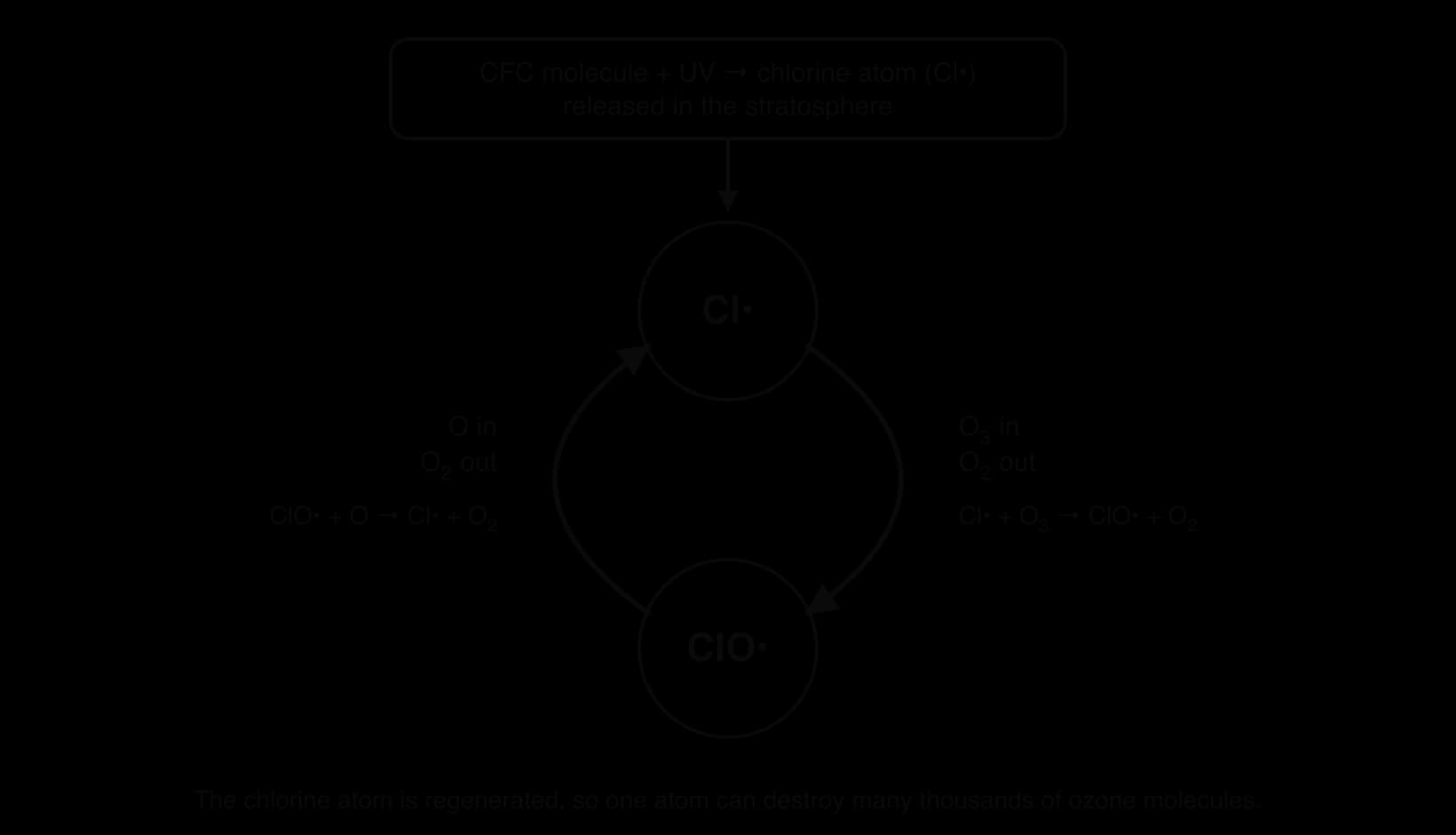
Halogens are reactive because their atoms readily gain an electron. In the stratosphere, chlorine and bromine atoms react with ozone, while fluorine forms a stable compound and takes no significant part in ozone destruction.
Bromine destroys ozone by a similar cycle and is more destructive per atom than chlorine, though there is far less of it in the atmosphere. Its main human sources are halons from fire extinguishers and methyl bromide used as a pesticide.
Why ozone holes form over the poles in spring (HL only)
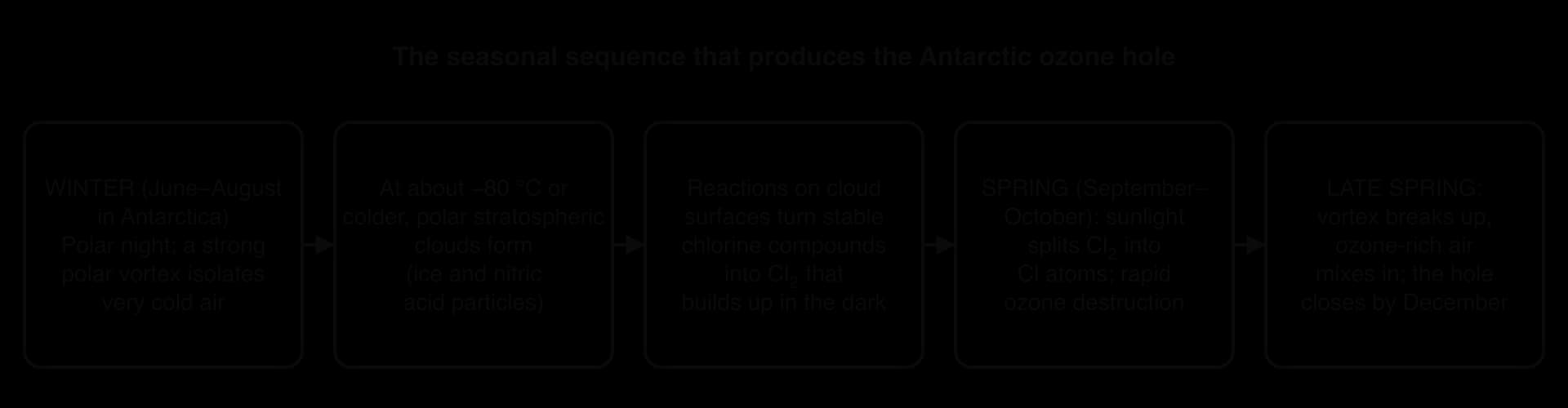
Chlorine released from CFCs is usually held in harmless reservoir compounds, HCl and ClONO₂, which do not destroy ozone. Over Antarctica, the conditions of the polar winter release it in huge quantities just as the Sun returns. Several conditions must come together:
The polar vortex: in the long winter night, the air over Antarctica cools strongly and a ring of strong westerly winds, the polar vortex, forms around the continent. It isolates the polar air from warmer, ozone-rich air at lower latitudes.
Extreme cold and polar stratospheric clouds: inside the vortex, stratospheric temperatures fall to about −80 °C or lower, cold enough for polar stratospheric clouds of ice and nitric acid particles to form, even though the stratosphere is very dry.
Active surfaces: chemical reactions on the surfaces of these cloud particles convert the reservoir compounds into chlorine gas (Cl₂), which builds up in the dark. The clouds also remove nitrogen compounds that would otherwise lock chlorine away again.
Spring sunlight: when the Sun returns in September, UV splits Cl₂ into chlorine atoms, and the catalytic cycles destroy ozone rapidly, removing over half of the ozone in the lower stratosphere within a few weeks.
Break-up of the vortex: as the stratosphere warms in November and December, the vortex weakens and breaks down, ozone-rich air mixes in, and the hole closes until the next spring.
Volcanic eruptions can make the depletion worse. Sulfate aerosols from large eruptions provide extra surfaces on which the same reactions take place: after Mount Pinatubo erupted in 1991, ozone loss increased, and the Antarctic hole of 1992 was the largest measured up to then. The underwater eruption of Hunga Tonga–Hunga Ha’apai in 2022 injected a very large amount of water vapour into the stratosphere, and scientists have studied whether it contributed to the large Antarctic hole of 2023.
The Arctic rarely develops a full ozone hole because the land and mountains of the Northern Hemisphere disturb the atmosphere, so the Arctic vortex is weaker and warmer, fewer polar stratospheric clouds form, and the vortex usually breaks up before much sunlight returns.
 YouTube
Sources: Wikipedia, “Ozone depletion” (2026); NASA Ozone Watch (2025).
HFCs and the Kigali Amendment (HL only)
Industry replaced CFCs in two stages. Hydrochlorofluorocarbons (HCFCs), such as HCFC-22, contain hydrogen, so they are partly broken down in the troposphere and release much less chlorine into the stratosphere; they were used as transitional substitutes and are now being phased out. Hydrofluorocarbons (HFCs), such as HFC-134a, contain no chlorine or bromine and so cause almost no ozone depletion. They can be used in the same ways as CFCs: as coolants in refrigerators and air conditioners, as aerosol propellants and in foams.
The problem is that HFCs are powerful greenhouse gases. HFC-134a, a common refrigerant in car air conditioners and refrigerators, has a global warming potential of about 1,500 over 100 years. As demand for cooling grew, especially in fast-growing economies, HFC emissions were rising quickly. Like CFCs, HFCs escape when equipment leaks or when old refrigerators and air conditioners are scrapped without collecting the gas.
In October 2016, the parties to the Montreal Protocol adopted the Kigali Amendment in Kigali, Rwanda. It entered into force on 1 January 2019 and had more than 170 parties by 2026. It commits countries to phase down HFC production and consumption by 80–85% over roughly 30 years:
Group of countries | Baseline | Target |
|---|---|---|
Most developed countries | 2011–2013 average | 85% cut by 2036, with steps starting in 2019 |
Most developing countries, including China, Brazil and South Africa | 2020–2022 average | Freeze in 2024; 80% cut by 2045 |
India and some others, including Pakistan, Iran, Iraq and Gulf states | 2024–2026 average | Freeze in 2028; 85% cut by 2047 |
The phase-down is projected to avoid about 0.3–0.5 °C of warming by 2100, a large contribution from a single agreement. It shows how an ozone treaty has become a climate treaty, and it uses the Protocol’s tested tools: different timetables, the Multilateral Fund and trade restrictions with non-parties. Replacement refrigerants include hydrofluoroolefins (HFOs), which break down within days, and natural refrigerants such as ammonia, carbon dioxide and hydrocarbons like propane. Each has drawbacks: ammonia is toxic, hydrocarbons are flammable and carbon dioxide systems work at high pressure.
Sources: Wikipedia, “Montreal Protocol”, “Kigali Amendment” and “Global warming potential” (2026); WMO/UNEP Scientific Assessment of Ozone Depletion (2022).
Air conditioning and its alternatives (HL only)
Air conditioning links ozone depletion and climate change. Air conditioners traditionally used CFCs and then HCFCs as refrigerants, and many still use HFCs. They are also energy-intensive: air conditioners and electric fans use about a fifth of all the electricity used in buildings worldwide, about 10% of all global electricity. Where that electricity comes from coal or gas, cooling adds to carbon dioxide emissions, and peak demand on hot afternoons can overload power grids.
The number of air conditioners is growing rapidly. In 2018 there were about 1.6 billion in buildings worldwide, and the International Energy Agency projected 5.6 billion by 2050, with energy demand from air conditioners tripling unless efficiency improves. Ownership varies greatly between societies.
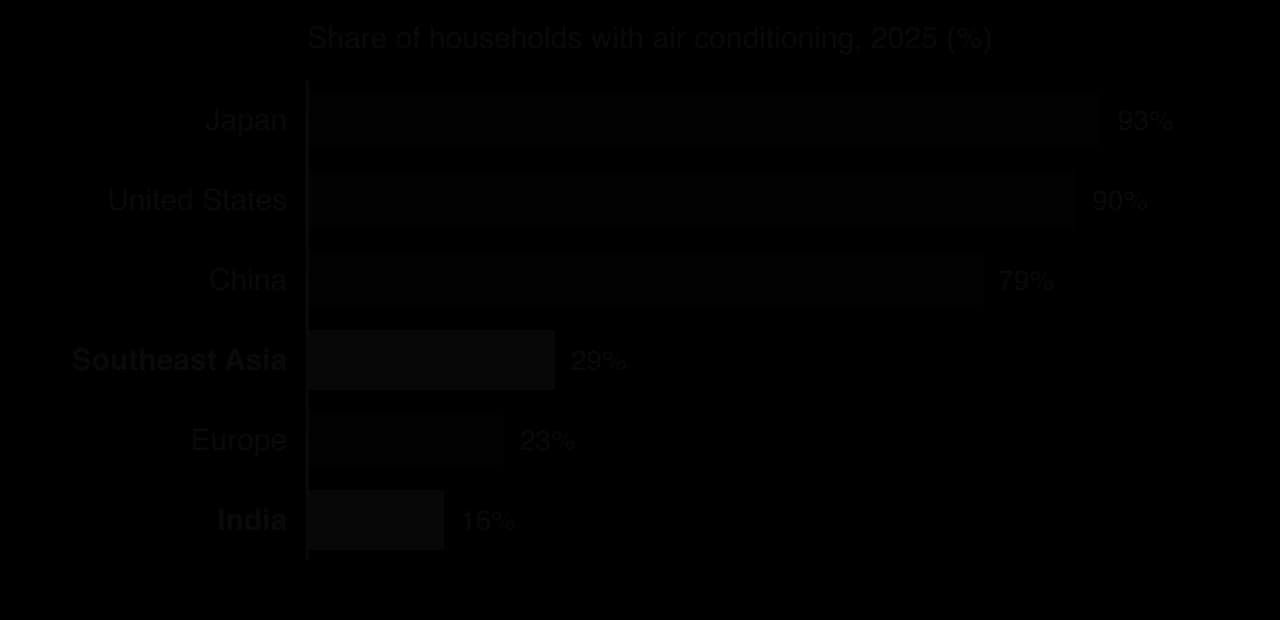
The differences reflect several factors: income (an air conditioner and the electricity to run it are expensive), climate (how many hot days there are and how humid they are), access to reliable electricity, building design and housing type, and cultural expectations of indoor comfort.
Ownership is rising fastest in countries that are both hot and growing richer: in China it rose from 53% of households in 2015 to 79% in 2025, and in India from 5% to 16%. The 2.8 billion people living in the hottest parts of the world had the lowest rates, with only about 8% owning an air conditioner in 2018, which raises questions of equity as heatwaves become more frequent.
Sources: IEA, The Future of Cooling (2018) and later data, via Our World in Data (2026).
Alternatives to air conditioning
Alternative | How it reduces the need for air conditioning | Limitations |
|---|---|---|
Efficient air conditioners with low-GWP refrigerants | The most efficient units use far less electricity than average models; refrigerants such as propane or HFOs cut warming from leaks | Higher purchase price; still uses electricity; flammable or new refrigerants need safe handling |
Improved building design | Shading, insulation, light-coloured or reflective roofs, thick walls and cross-ventilation keep buildings cool passively | Hard to apply to existing buildings; design must suit the local climate |
Traditional cooling | Wind towers in the Gulf and Iran catch breezes and draw cool air through buildings; courtyards and thick earth walls store coolness | Less effective in humid heat; requires space and skills |
Greening and rewilding cities | Trees, parks, green roofs and green walls shade surfaces and cool the air by transpiration, reducing the urban heat island | Needs space, water and maintenance; benefits are local |
Fans and behaviour change | Fans use a small fraction of the electricity of air conditioners; adjusting clothing, timing and thermostat settings reduces demand | Fans alone are not enough in extreme humid heat |
Singapore, a hot and humid city-state, has added greenery to rooftops, building walls and streets, so that vegetation shades buildings and lowers temperatures nearby. Such measures do not remove the need for air conditioning in a tropical city, but they reduce the load and the heat released by the units themselves.
Different perspectives value these options differently. A technocentric view favours more efficient air conditioners and better refrigerants; an ecocentric view favours rewilding cities and lower consumption; an anthropocentric view stresses that cooling protects human health in heatwaves and that access to it is a matter of justice. Many cities combine all three approaches.
Exam practice
Questions on stratospheric ozone test precise use of terms (UVA, UVB and UVC; steady state; ozone-depleting substance; ozone hole), the explanation of the steady-state equilibrium, the distinction between ozone depletion and global warming, and evaluation of the Montreal Protocol with evidence. Ozone-hole data are well suited to Paper 1 and data-based Section A questions.
Paper 2 Section A-style questions
A 4-mark “explain” needs both the balance (formation equals destruction) and the change (extra destruction from ODSs). Chemical equations are not needed at SL, but correct ones earn the same credit as words.
Paper 1-style data question
Resource (real data): mean area of the Antarctic ozone hole (7 September–13 October) and minimum ozone, selected years.
Year | 1980 | 1987 | 1993 | 1998 | 2006 | 2012 | 2019 | 2022 | 2025 |
|---|---|---|---|---|---|---|---|---|---|
Area (million km²) | 1.4 | 19.3 | 24.2 | 25.9 | 26.6 | 17.8 | 9.3 | 23.2 | 18.7 |
Minimum ozone (DU) | 203.0 | 123.0 | 112.6 | 98.8 | 98.4 | 139.3 | 167.0 | 112.5 | 138.3 |
Source: NASA Ozone Watch (2025).
Paper 2 Section B-style structured essay
HL practice
Summary
The Sun emits electromagnetic radiation from radio waves to gamma rays; infrared warms the Earth, visible light drives photosynthesis, and ultraviolet can damage living cells.
Shorter wavelengths carry more energy: UVC (100–280 nm) is all absorbed, most UVB (280–315 nm) is absorbed by ozone, and most UVA (315–400 nm) reaches the surface.
Stratospheric ozone (mostly 15–35 km) absorbs UV and protects life; it is measured in Dobson units (about 300 DU on average).
UV damages DNA, causing mutations and skin cancer, and causes sunburn, skin ageing and cataracts; it reduces photosynthesis by phytoplankton.
Ozone is maintained by a steady-state equilibrium between formation and destruction; ODSs such as CFCs release chlorine and bromine that tip it towards less ozone.
Ozone depletion is not a cause of global warming: it concerns incoming UV, whereas global warming concerns outgoing infrared and greenhouse gases.
Ozone holes (below 220 DU) form over Antarctica every spring, and occasionally over the Arctic, letting more UVB reach the surface.
The Montreal Protocol (1987), ratified by all 198 parties, phased out CFCs and halons; with the Multilateral Fund, differentiated timetables and trade measures, it is the most successful international environmental agreement.
Ozone-hole data show growth until the 2000s and a slow decline since; the planetary boundary for ozone has not been crossed, and recovery is projected by about 2066 over Antarctica.
Ozone forms when UV splits O₂ (O₂ + UV → 2O; O + O₂ → O₃), and chlorine destroys it catalytically (Cl• + O₃ → ClO• + O₂; ClO• + O → Cl• + O₂). (HL)
The polar vortex, polar stratospheric clouds and spring sunlight cause rapid polar ozone loss. (HL)
HFCs replaced CFCs but are powerful greenhouse gases, now phased down by the Kigali Amendment (2016); air conditioning links ozone, energy use and climate, and has alternatives in design and urban greening. (HL)
Self-check
- To do:
I can outline the types of solar radiation and their roles in the biosphere.
- To do:
I can distinguish UVA, UVB and UVC and explain why shorter wavelengths are more dangerous.
- To do:
I can describe how stratospheric ozone protects life and outline the effects of UV on people and ecosystems.
- To do:
I can explain the ozone layer as a steady-state equilibrium and how ODSs tip it.
- To do:
I can explain why ozone depletion is not a cause of global warming.
- To do:
I can describe how and when ozone holes form and interpret ozone-hole data.
- To do:
I can evaluate the Montreal Protocol and explain why the planetary boundary for ozone has not been crossed.
- To do:
I can write equations for the formation and destruction of ozone, including the chlorine cycle. (HL)
- To do:
I can explain the conditions that cause polar ozone depletion in spring. (HL)
- To do:
I can evaluate HFCs, the Kigali Amendment and alternatives to air conditioning. (HL)
Flashcards for 6.4
The official deck for this part of the syllabus.
6.4 Stratospheric ozone · front
What is electromagnetic radiation?
6.4 Stratospheric ozone · front
What is the electromagnetic spectrum?
- 6.4 Stratospheric ozone189 cards
Carry on with 6.4 in Augment
With a free account, Augment remembers where you stopped and what you have practiced.