Notes on 7.1 Natural resources—uses and management
Learning objectives
Define natural resources, natural capital and natural income, and outline local examples of three types of natural capital.
Distinguish between goods and services as forms of natural income, and outline the four categories of ecosystem services.
Explain how a reed bed buffer zone removes nutrients from agricultural run-off.
Discuss the implications of describing nature as “capital”, “services” and “resources”.
Distinguish between renewable and non-renewable resources, and explain how a renewable resource can become non-renewable.
Outline the nine types of value of natural capital and explain why the value of a resource changes over time.
Explain the two conditions for using natural capital sustainably, with examples of overharvesting and polluting wastes.
Compare and contrast the resource security of two named societies.
Analyse the factors affecting a society’s choice to use a named natural resource.
Evaluate management and intervention strategies, including environmental impact assessments, for sustainable resource use. (HL)
Examine how resource insecurity, critical minerals and globalisation create geopolitical tension. (HL)
Introduction
Every human society depends on materials and energy taken from the Earth: water to drink, soil to grow food, timber, metals, fossil fuels and the sunlight that powers photosynthesis. Global use of materials grew from about 30 billion tonnes in 1970 to about 106 billion tonnes a year by the early 2020s, so how these resources are valued, used and managed is one of the central questions of environmental science.
Resource use links all three foundation ideas of the course. Ecosystems and mineral deposits can be studied as systems with storages and flows; whether their use is sustainable depends on the balance between those flows; and the words people use for nature, such as “capital” and “resources”, reflect a particular perspective. Natural resources also connect to water supplies, soils and food production, climate change, energy, waste and the growth of cities.
Sources: UNEP International Resource Panel, Global Resources Outlook 2024 (2024).
Natural resources
A natural resource is anything provided by the Earth that people use. It includes energy sources such as sunlight, wind and fossil fuels; materials such as rocks, metal ores, sand and timber; and the air, water, land, ecosystems and living organisms on which all life depends. Some resources are used directly (drinking water, firewood), while others are processed before use (iron ore into steel, crude oil into plastics and fuels).
Resources are often grouped by what they are: biotic resources come from living or recently living organisms (fish, crops, forests), and abiotic resources come from non-living parts of the Earth (water, minerals, fossil fuels). A more useful grouping for sustainability is by how quickly they are replaced, which divides resources into renewable and non-renewable types.
Something becomes a resource only when people have the knowledge, technology and demand to use it. Uranium was a curiosity until nuclear fission was developed in the twentieth century, and lithium was a minor industrial chemical before rechargeable batteries. The idea of a resource is therefore partly a human, cultural one, and it changes as technology and society change.
Natural capital and natural income
Economists describe money in a bank as capital, and the interest it earns each year as income. If only the interest is spent, the capital stays the same and keeps producing income for ever. If the capital itself is spent, the income shrinks and eventually stops. The same logic can be applied to nature.
Natural capital is the stock of natural resources on Earth: forests, fish populations, soils, aquifers, mineral deposits, the atmosphere and the ecosystems that hold them. The capital produces a yield, called natural income, in the form of goods and services. A forest is natural capital; the timber, fruit and honey harvested from it, and the flood control and carbon storage it provides, are its natural income.
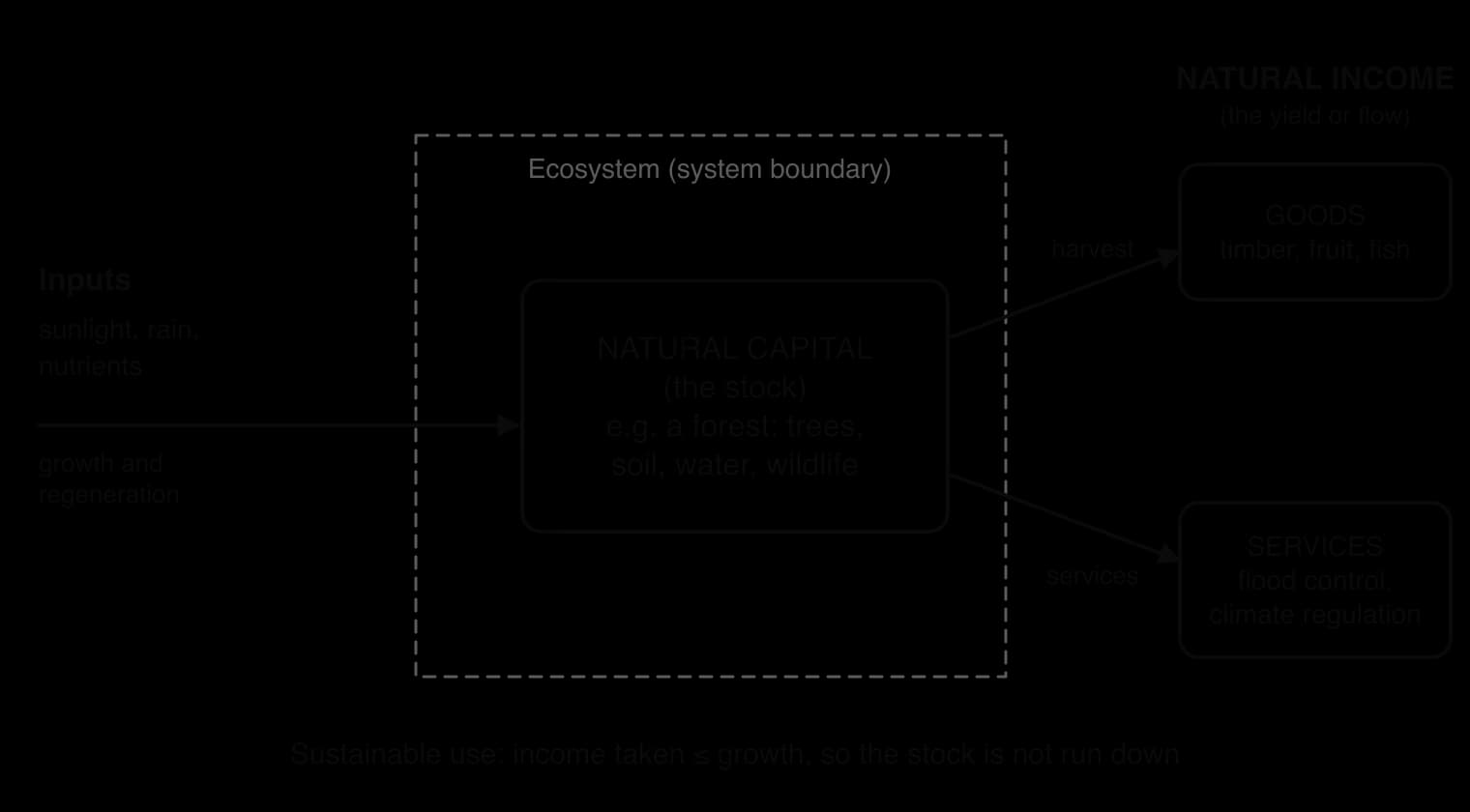
Seen as a system, natural capital is a storage and natural income is an output flow. Inputs of sunlight, rain and nutrients allow the stock to grow. The sustainable level of use is the natural income that can be taken without reducing the size of the stock, which for a living resource is close to its net growth, or sustainable yield.
Goods and services
Natural income comes in two forms. Goods are material products that can be harvested, counted and usually sold: timber, fish, fruit, fibres, medicinal plants, freshwater and mineral ores. Services are benefits provided by ecosystems that are not removed as objects: a mangrove forest reduces the height of storm waves, a forested hillside slows run-off and so reduces flooding, and oceans and forests regulate the climate by absorbing carbon dioxide.
Natural capital (stock) | Goods (natural income) | Services (natural income) |
|---|---|---|
A tropical forest | Timber, fruit, nuts, rubber, medicinal plants | Climate regulation by carbon storage, rainfall recycling, soil protection, habitat |
A fish stock in a coastal sea | Fish and shellfish | Nutrient cycling, food for seabirds and marine mammals, recreation |
An aquifer | Groundwater for drinking and irrigation | Base flow that keeps rivers and wetlands flowing in dry seasons |
A wetland or reed bed | Reeds for thatching, fish, wildfowl | Flood storage, removal of nutrients and sediment, habitat for birds |
Fertile soil | Crops grown in it | Water storage, nutrient cycling, carbon storage |
Three types of natural capital in one local area
Natural capital can be identified in any place, including a city. A useful way to organise local examples is by type: a living (biotic) renewable stock, a non-living renewable stock and a non-renewable stock. A student in the south of England, for example, might choose a beech woodland (living, renewable: timber, recreation, carbon storage), the chalk aquifer beneath it (non-living, renewable if recharge keeps pace: drinking water) and a gravel pit (non-renewable: aggregate for building).
Ecosystem services
Ecosystem services are the benefits that people obtain from ecosystems. The term covers both the goods and the services that make up natural income, which is why ecosystem services are usually grouped into four categories. The grouping was popularised by the Millennium Ecosystem Assessment, published in 2005, and is still widely used.
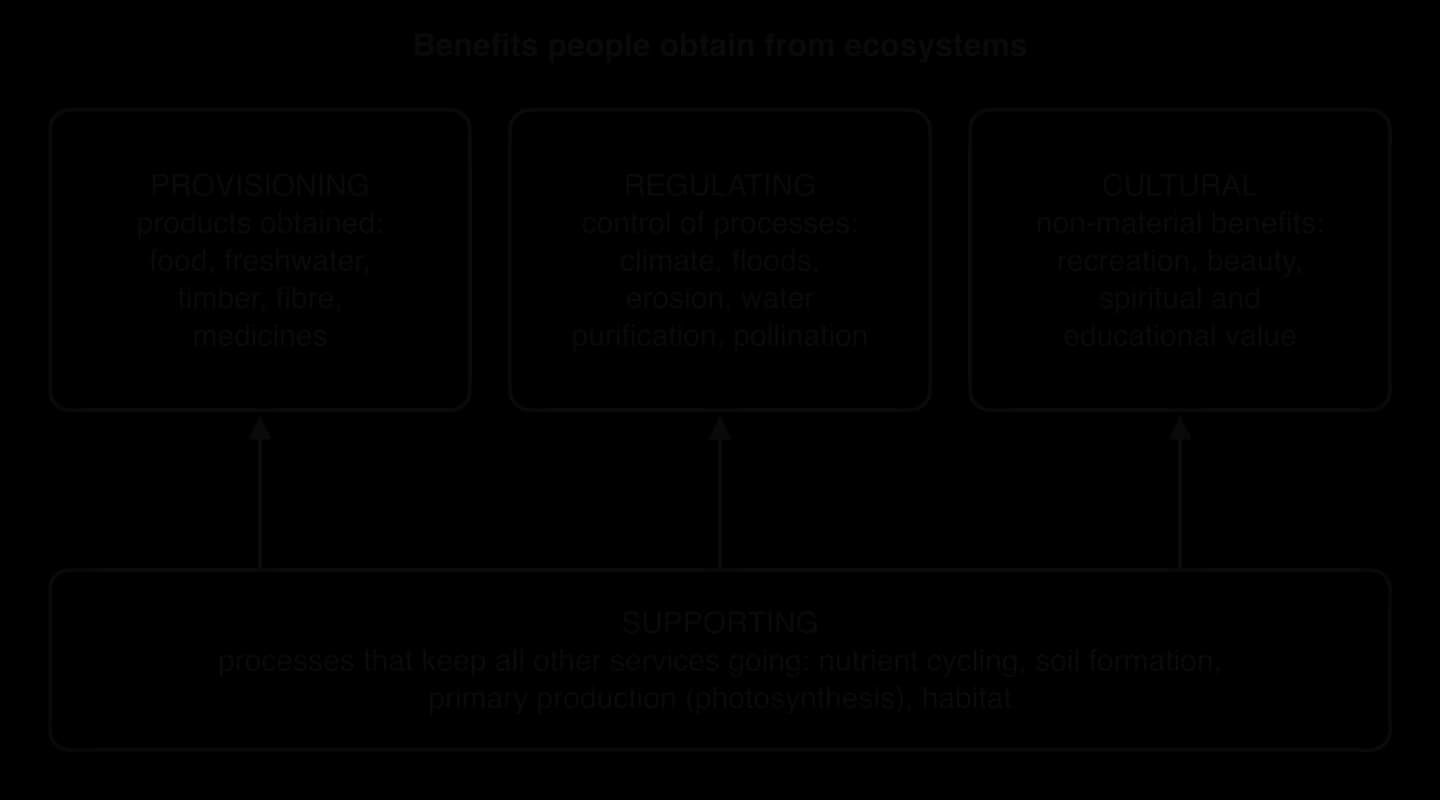
Category | What it means | Examples |
|---|---|---|
Provisioning services | Products obtained from ecosystems | Food, freshwater, timber, fibre, fuelwood, medicines, genetic resources |
Regulating services | Benefits from the control of natural processes | Climate regulation by carbon sequestration, flood and erosion protection, water purification, pollination, pest control |
Cultural services | Non-material benefits | Recreation, tourism, beauty, spiritual and religious meaning, education and research |
Supporting services | Processes needed for all other services | Nutrient cycling, soil formation, primary production by photosynthesis, provision of habitat |
Ecosystem services are life-supporting. Wetlands and forest soils replenish groundwater by slowing run-off and letting water soak in. Vegetation on slopes binds soil and reduces erosion and floods downstream. Forests, grasslands, peatlands and the oceans take carbon dioxide out of the atmosphere and store it. Insects pollinate a large share of the world’s food crops. These services support all living things, humans included, and most of them cannot be replaced by technology at any affordable cost.
The value of these services becomes clear when they are lost or when a city has to pay to replace them. New York City chose to protect the forests and farmland of its Catskill watershed, which purify its drinking water naturally, at an estimated cost of US$1–1.5 billion, rather than build a filtration plant estimated at US$6–8 billion plus about US$300 million a year to run. Costa Rica pays landowners to keep forest standing, putting a price on the services the forest provides.
Sources: Wikipedia, “Ecosystem service” (accessed 2026).
Pollution mitigation: reed bed buffer zones
Some ecosystems remove pollutants from water before it reaches rivers, lakes and the sea. A reed bed is a wetland dominated by tall grasses such as the common reed, Phragmites australis. A strip of reed bed between farmland and a river, called a buffer zone, intercepts run-off that carries nitrate and phosphate from fertilisers before it can cause eutrophication downstream.
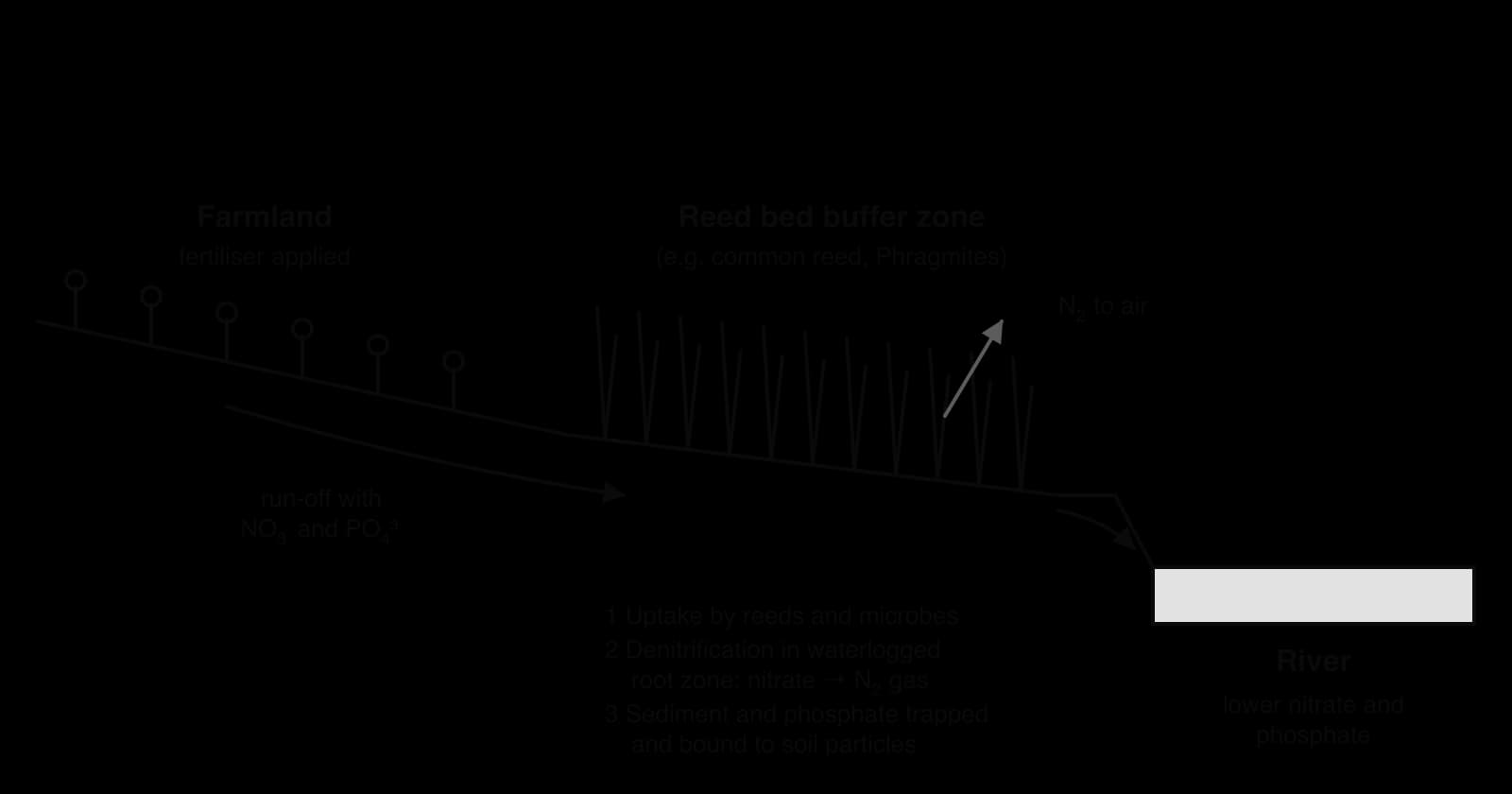
The reeds slow the flow of water, so suspended sediment settles out, and phosphate, which binds to soil particles and to iron, calcium and aluminium compounds, is held in the bed. Nitrate is removed in two steps. The reeds take some up as they grow, and the waterlogged, oxygen-poor soil between the roots is home to bacteria that carry out denitrification, converting nitrate into nitrogen gas that escapes to the atmosphere. Each root is surrounded by a thin film of oxygen leaking from the plant, so aerobic and anaerobic bacteria live side by side, which makes the root zone unusually good at processing nitrogen.
Reed beds are cheap to build and run compared with chemical treatment, and they add habitat for birds and insects. They do have limits. They need space that could otherwise be farmed, they work best when flow is slow and steady, and a bed can become saturated with phosphate after some years unless the reeds are cut and removed.
Sources: Wikipedia, “Constructed wetland” (accessed 2026).
 YouTube
Nature as capital: a particular perspective
The words “natural capital”, “natural income”, “ecosystem services” and “natural resources” all describe nature by what it does for people. They borrow the language of economics and treat forests, rivers and species as assets on a balance sheet. This way of speaking reflects an anthropocentric perspective, in which nature’s worth lies mainly in its instrumental value to humans.
Critics, many of them holding an ecocentric worldview, argue that this language is contentious. It can suggest that nature exists to be exploited, that anything natural can be bought or replaced if the price is right, and that a species or a sacred river with no measurable use has no value. Many Indigenous peoples do not separate “people” from “nature” at all, and describe rivers, mountains and forests as relatives or ancestors rather than resources. For them, calling a mountain “capital” misdescribes the relationship.
Supporters reply that the capital model is one of the most effective tools available for sustainable use. It makes the difference between living off the interest and spending the capital easy to understand, and it lets the value of services such as flood control or pollination be counted in decisions that are otherwise made in money. Valuation can protect a wetland that would otherwise be drained, by showing that its flood protection saves more money than the land would earn if it were built on.
Perspective | How it sees “natural capital” | Likely response to a plan to drain a wetland for housing |
|---|---|---|
Technocentric | Capital that can often be replaced by manufactured capital and technology | Accept the plan if engineered flood defences and water treatment can replace the wetland’s services |
Anthropocentric (managerial) | A useful model for managing nature for long-term human benefit | Compare the value of the wetland’s services with the value of the housing; protect it if the services are worth more |
Ecocentric | A misleading metaphor: nature has intrinsic value whatever its use | Reject the plan; the wetland and its species have a right to exist regardless of the money involved |
Renewable and non-renewable resources
All resources are finite: there is a limited amount of every one of them on Earth at any moment. What differs is how quickly a resource is replaced after it has been used. That rate of replacement, compared with the rate of use, decides whether a resource can be used indefinitely.
The distinction depends on timescale: both kinds are finite at any moment, but only renewable resources are replaced within a human lifetime.
Renewable resources include living resources that grow and reproduce (forests, fish stocks, crops, grazing land) and non-living ones that are renewed by Earth processes (freshwater in rivers and lakes, which is replaced by precipitation; ozone in the stratosphere, which is constantly formed by ultraviolet light). Non-renewable resources include coal, oil, natural gas and uranium, metal ores such as copper and iron, and phosphate rock. These formed over millions of years, so the stock available to people only goes down.
When a renewable resource becomes non-renewable
A renewable resource is renewable only as long as it is used no faster than it regenerates. If a forest is cut faster than it regrows, or a fish population is caught faster than it reproduces, the stock shrinks. The smaller stock then produces less new growth, so the same harvest takes an even larger share of it. This depletion feeds on itself. Pushed far enough, the resource collapses and, for practical purposes, has become non-renewable.
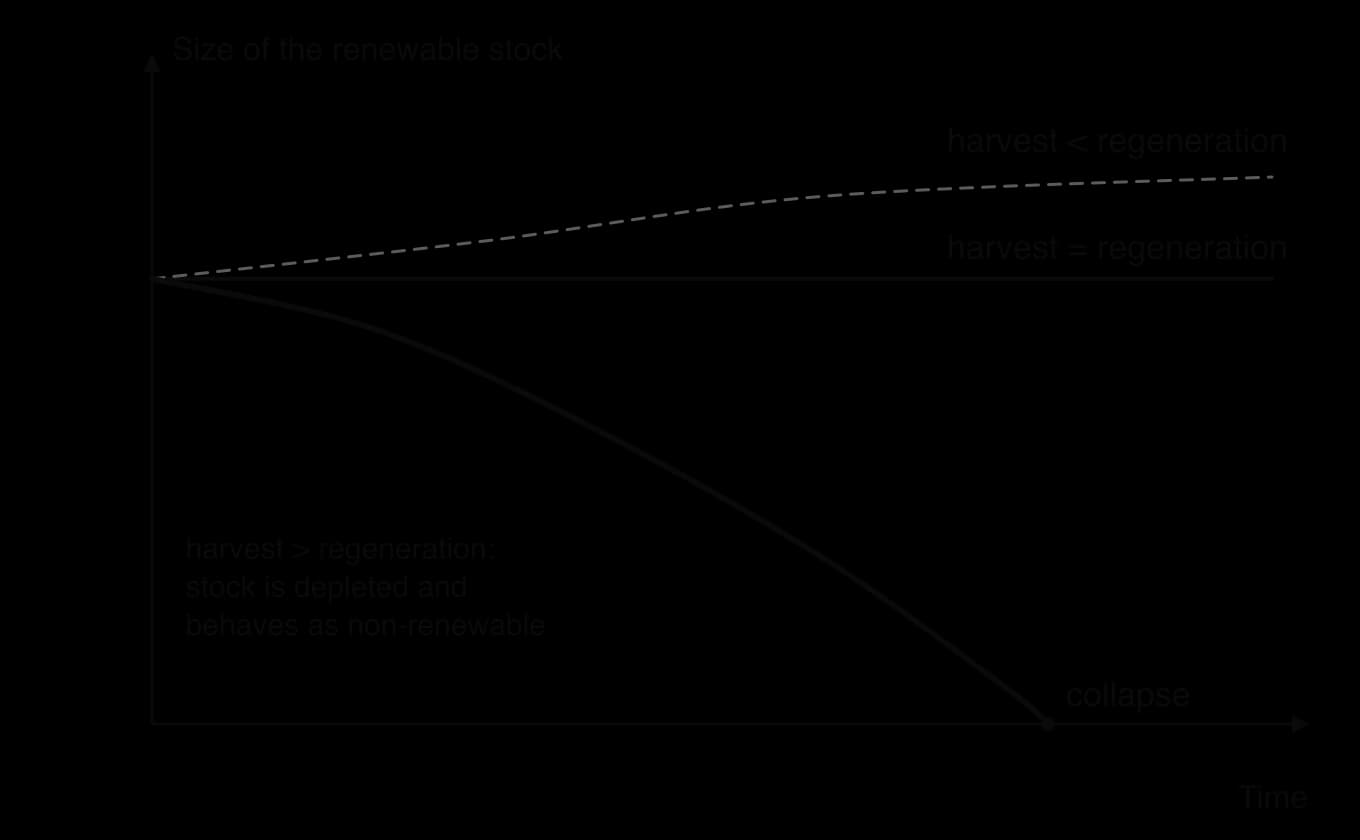
Groundwater shows the same pattern. Water in an aquifer is renewed by recharge from rain soaking into the ground, but in dry regions recharge may take thousands of years, and water pumped out faster than that is effectively being mined. River water can be overused in the same way: the Aral Sea in Central Asia shrank dramatically once the rivers feeding it were diverted for irrigation, turning a renewable flow into a resource that, in practice, was no longer renewed.
The value of natural capital
People value natural capital for many different reasons, and only some of them can be measured in money. The same river can be worth something to a hydropower company (electricity), a farmer (irrigation), a fisher (food and income), an angler (recreation), a religious community (a sacred place) and an ecologist (a habitat for rare species). Recognising these different values helps to explain why decisions about resources are so often contested.
Type of value | What it means | Example |
|---|---|---|
Aesthetic value | Beauty and the pleasure of looking at or experiencing nature | The lakes and fells of the English Lake District, visited for their scenery |
Cultural value | Importance to the identity, traditions and history of a group | Cork harvesting in Portugal’s montado, a skilled craft passed down through generations |
Economic value | Value that can be traded or measured in money | Timber, fish, minerals and farmland sold on markets |
Environmental value | Importance to the functioning of ecosystems and Earth systems | A wetland that stores floodwater and recharges groundwater |
Health value | Benefits to physical and mental health | The Madagascar periwinkle, Catharanthus roseus, source of the anticancer drugs vinblastine and vincristine; green space that reduces stress |
Intrinsic value | Worth in itself, whatever its use to people | A rare beetle species with no known use |
Social value | Benefits to communities and relationships between people | A city park used as a meeting place and for community events |
Spiritual value | Religious or sacred meaning | Uluru, sacred to the Aṉangu people of central Australia |
Technological value | Use as a model or source of materials for new technology | Genetic material of wild crop relatives used to breed disease-resistant varieties; designs copied from nature |
Uluru shows how several values can clash. The sandstone rock in Australia’s Northern Territory is sacred to its Aṉangu traditional owners, who asked visitors not to climb it. For decades climbing was a major tourist attraction with economic value. Ownership was returned to the Aṉangu in 1985, the park board voted in 2017 to end climbing, and the climb was closed on 26 October 2019. The decision put spiritual and cultural value above the economic value of the climb.
Sources: Wikipedia, “Uluru” and “Catharanthus roseus” (accessed 2026).
Surveying the values a community places on ecosystem services
The values people hold can be measured with a values survey or questionnaire. A typical survey asks respondents to rate the importance of different ecosystem services on a Likert scale (for example, 1 = not important to 5 = very important), with a few open questions to explore reasons. Responses can then be compared between groups, such as students and staff, or people who use a green space and people who do not.
Why the value of natural capital changes over time
The value of a natural resource is not fixed. It rises and falls as technology, demand, supply, culture and law change. A resource can become valuable once a use is found for it, and lose value when a substitute replaces it, when it runs short, or when a society decides it is too damaging to use.
Value tends to rise when… | Value tends to fall when… |
|---|---|
a new technology creates a use for it (lithium for batteries) | a cheaper substitute is found (kerosene replacing whale oil) |
demand grows with population and wealth | demand falls as tastes or cultures change |
supply becomes scarce, or is concentrated in a few countries | new deposits or new producers increase supply |
people come to value its services more (forests for carbon storage) | laws restrict its use because of harm (coal and climate policy) |
Whale oil
In the eighteenth and nineteenth centuries, oil rendered from whale blubber was one of the most valuable natural resources in the world. It was burned in lamps, because it gave a brighter, less smoky light than the alternatives, and used to lubricate machinery. American whaling reached its peak around the 1860s. In the same decade, mineral oils from the new petroleum industry entered the market, and by 1870 kerosene had become the dominant lighting fuel.
Whale oil kept some industrial uses, including margarine making after hydrogenation was invented in the early twentieth century, but the International Whaling Commission declared a moratorium on commercial whaling in 1986, and whale oil today has almost no market value.
Sources: Wikipedia, “Whale oil” (accessed 2026).
Lithium
Lithium shows how fast value can change today. About 87% of lithium is now used in batteries, for electric vehicles, phones and grid storage. As electric vehicle sales grew, demand outran supply, and the average price of battery-grade lithium carbonate rose fivefold between 2021 and 2022. New mines and processing capacity then came online in Australia, Chile, China, Argentina and Zimbabwe, and weaker-than-expected vehicle sales in early 2024 left a surplus. In 2024 the average price was 66% lower than in 2023.
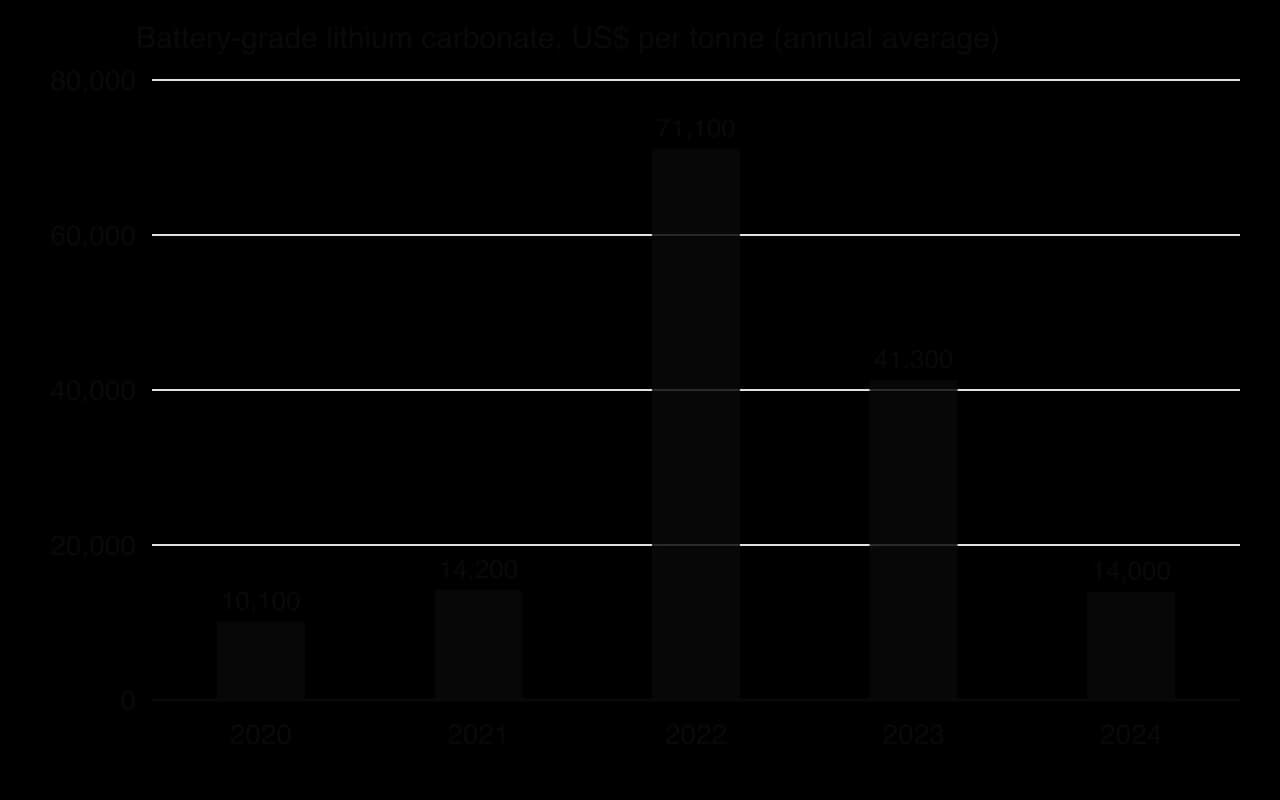
Changes of this size affect whole economies, and many lithium projects worldwide were postponed or cancelled when prices fell in 2024. They also affect the environment, because high prices encourage new mines in places such as the salt flats of northern Chile, where brine extraction uses scarce water in one of the driest places on Earth.
Sources: USGS, Mineral Commodity Summaries: Lithium (2025).
Cork
Cork is the bark of the cork oak, Quercus suber, stripped from living trees about every nine years without cutting them down. Portugal produces about half of the world’s cork and Spain about 30%. Natural cork stoppers were long the standard closure for wine bottles, and stoppers still make up about 60% of cork production. From the mid-1990s many wine brands switched to plastic stoppers and aluminium screw caps, and cork’s share of wine closures fell.
Because the cork oak woodlands of Portugal (the montado) are kept only because their cork is valuable, falling demand threatens a habitat that shelters many species, including endangered ones, and helps to prevent desertification. Producers now promote cork as a low-carbon material: a life-cycle study commissioned by the industry found that 1,000 cork stoppers produce about 1.5 kg of CO₂, compared with about 37 kg for 1,000 aluminium screw caps.
Sources: Wikipedia, “Cork (material)” (accessed 2026).
Managing natural capital sustainably
The long-term well-being of any society depends on the natural capital it uses. Applying the capital and income model gives two conditions for sustainable use, one about the resources taken from ecosystems and one about the wastes returned to them.
Harvest no faster than regeneration. Renewable resources must not be used faster than they are replaced, so that only the natural income is taken and the natural capital is kept intact.
Release wastes no faster than they can be absorbed. Wastes must not be released faster than ecosystems can break them down, transform them into harmless substances or store them safely.
For non-renewable resources, any use reduces the stock, so strict sustainability is impossible. Their use can be made more sustainable by using them efficiently, by recycling them so the same atoms are used many times, and by investing the income they earn in renewable alternatives or in other forms of capital. Whether that last option counts as sustainability is debated: weak sustainability accepts that natural capital can be swapped for manufactured or financial capital, while strong sustainability holds that critical natural capital cannot be replaced.
Harm from excessive harvesting
Overexploitation happens when a renewable resource is harvested faster than it regenerates. The northern cod off Newfoundland was fished far beyond its regeneration rate until the stock collapsed in 1992. Forests show the same pattern: when timber is cut faster than trees regrow, the forest’s natural income of timber and services such as rainfall recycling and soil protection both fall, and the land can be degraded beyond the point of natural recovery.
Harm from polluting wastes
Pollution is the addition of substances or energy to the environment faster than they can be dispersed, broken down or stored. Carbon dioxide from burning fossil fuels is the largest example: oceans and land ecosystems absorb a large share of each year’s emissions, but emissions exceed what these sinks can take up, so CO₂ accumulates in the atmosphere and drives climate change. Most plastics break down so slowly that they persist in the environment for decades or centuries, fragmenting into microplastics.
Resource security
Resource security is the ability of a society to ensure the long-term availability of enough resources to meet its demand. It applies to food (food security), water (water security), energy and minerals. A society is secure when the supply it can rely on, from its own territory or through reliable trade, matches what it needs, now and in the future, at a price it can afford.
Security depends on more than physical abundance. A country with little water of its own can be water secure if it is wealthy and technologically advanced, and a country with more rainfall can be insecure if it lacks the money and infrastructure to deliver that water to people. Security also depends on stable trade relations, political stability and resilience to shocks such as drought, war or price spikes.
Two contrasting societies: water in Singapore and Ethiopia
Singapore is a city-state of about 735 km² with no large rivers or aquifers. Its renewable internal freshwater is only about 106 m³ per person per year, among the lowest of any country. Yet 100% of its population has used at least a basic drinking water service throughout the period from 2000 to 2024.
It combines four sources of supply: rain collected in local catchments, water imported from neighbouring Malaysia, wastewater purified to drinking standard (NEWater) and desalinated seawater. This security has been bought with wealth, technology and long-term planning.
Ethiopia has nearly ten times as much renewable internal freshwater per person, about 970 m³ per year, and is the source of the Blue Nile. However, rainfall is highly seasonal and variable, most farming is rain-fed, and the infrastructure to store, treat and pipe water is limited. In 2024 only 55.6% of Ethiopians used at least a basic drinking water service, 83% in towns and cities but 47% in rural areas. Access has more than doubled since 2000, when it was 18.8%, but many households still collect water from unprotected sources.

Factor | Singapore | Ethiopia |
|---|---|---|
Renewable internal freshwater per person (2022) | About 106 m³ | About 973 m³ |
Population with at least basic drinking water (2024) | 100% | 55.6% (rural 47.0%, urban 83.5%) |
GDP per capita (2024, current US$) | About 94,900 | About 1,130 |
Main sources of security | Technology (NEWater, desalination), imports, catchment management, strong planning | Rivers and groundwater, rainfall; expanding wells and piped supplies |
Main risks | Reliance on imports and on energy-intensive treatment | Drought, seasonal shortages, limited infrastructure, rapid population growth |
Sources: World Bank World Development Indicators (2026): FAO AQUASTAT; WHO/UNICEF Joint Monitoring Programme; Wikipedia, “NEWater” (accessed 2026).
The comparison shows that resource security is a socio-economic outcome as much as a physical one. Singapore’s approach is largely technocentric: it uses energy-intensive treatment to manufacture water. Ethiopia’s progress has come mainly from expanding basic infrastructure such as protected wells and standpipes. Both face future risks, Singapore from the energy demands of its treatment plants and its dependence on a neighbour, and Ethiopia from climate change and a growing population.
Factors affecting choices about resource use
A society’s choice of which resources to use, and how, is shaped by many interacting factors. The same resource can be welcomed in one place and rejected in another, depending on the balance between these factors and the perspectives of the people involved.
Factor | How it can affect the choice |
|---|---|
Economic | Cost of extraction and processing, jobs, export income, world prices |
Sociocultural | Traditions, religious or spiritual values, public attitudes, consumer preferences |
Political | Government policy, international agreements, lobbying, relations with trading partners |
Environmental | Pollution, habitat loss, greenhouse gas emissions, water use |
Geographical | Where the resource lies, climate, distance from markets, transport links |
Technological | Whether extraction is possible, efficiency, availability of substitutes |
Historical | Past industries, colonial history, existing infrastructure and skills |
International agreements to reduce greenhouse gas emissions, especially the commitments to reach net zero under the Paris Agreement, have changed these priorities. Fossil fuel reserves that would once have been developed without question now face political and legal challenges, and governments and investors weigh the risk that coal, oil and gas assets will lose value as climate policy tightens.
A named resource: coking coal at Whitehaven, Cumbria
West Cumbria Mining proposed the Woodhouse Colliery near Whitehaven in north-west England, a deep mine that planned to extract about 2.7–3 million tonnes of coking coal a year for steelmaking, with about 85% exported. Each factor pulled in a different direction.
Historical and geographical: West Cumbria has a long history of coal mining, and the mine head was to be built on the site of a former chemical works near an old colliery.
Economic: the company projected 500 jobs and a 50-year mine life in an area with high deprivation, and supporters argued that the coal would replace imports (the UK imported about 6 million tonnes of coal a year).
Environmental: opponents estimated that burning the coal would release about 8.4 million tonnes of CO₂ a year, more than the projected annual emissions of all open UK coal mines to 2050.
Political: Cumbria County Council approved the mine three times between 2019 and 2020; the national government approved it in December 2022, then a new government in 2024 accepted that the approval had not properly considered emissions.
Technological: steel can increasingly be made in electric arc furnaces using scrap, or with hydrogen, so coking coal may not be needed in the long term.
In September 2024 the High Court quashed the approval because the emissions from burning the coal had not been assessed, and in March 2025 the company withdrew its application. The case shows how a net-zero commitment and the law can override strong local economic arguments.
Sources: Wikipedia, “Woodhouse Colliery” (accessed 2026).
Case study: phosphate mining on Nauru
Context
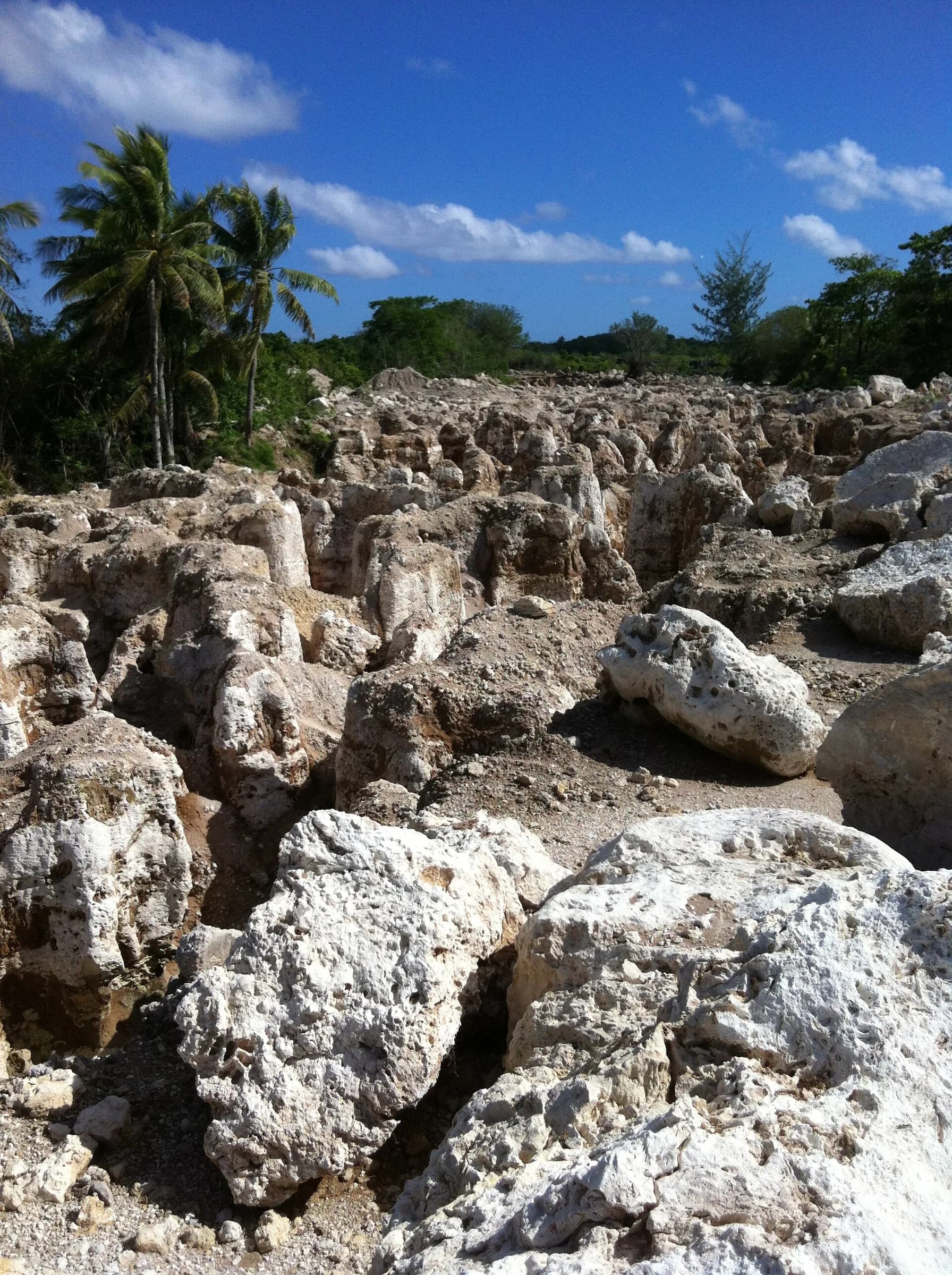
Nauru is a raised coral island of 21 km² in the central Pacific Ocean, with a population of 11,680 at the 2021 census. A narrow coastal ring of land surrounds a central plateau, known locally as Topside. Over millions of years, phosphate-rich deposits accumulated on this plateau between pinnacles of coral limestone, forming some of the richest phosphate rock ever found. Phosphate is a key ingredient of agricultural fertiliser, and phosphate rock is a non-renewable resource.
What happened
The phosphate was identified in 1899–1900. Under German administration, the Pacific Phosphate Company obtained the mining rights in 1906 and began exporting phosphate in 1907. After the First World War, Britain, Australia and New Zealand took over mining through the British Phosphate Commissioners and shipped the rock to fertilise farmland in Australia and New Zealand. Nauruans received a tiny share of the income: in 1948, only about 2% of revenue went to them.
Nauru became independent on 31 January 1968. It bought the assets of the British Phosphate Commissioners, and from 1970 the industry was run by the locally owned Nauru Phosphate Corporation. Income after independence was about A$100–120 million a year. To provide for the time when the phosphate would run out, the government invested much of it in the Nauru Phosphate Royalties Trust. Mining stripped about 80% of the island’s land area, leaving a wasteland of limestone pinnacles. Viable reserves were exhausted in the 1990s, although small-scale secondary mining of remaining deposits continues.
Data
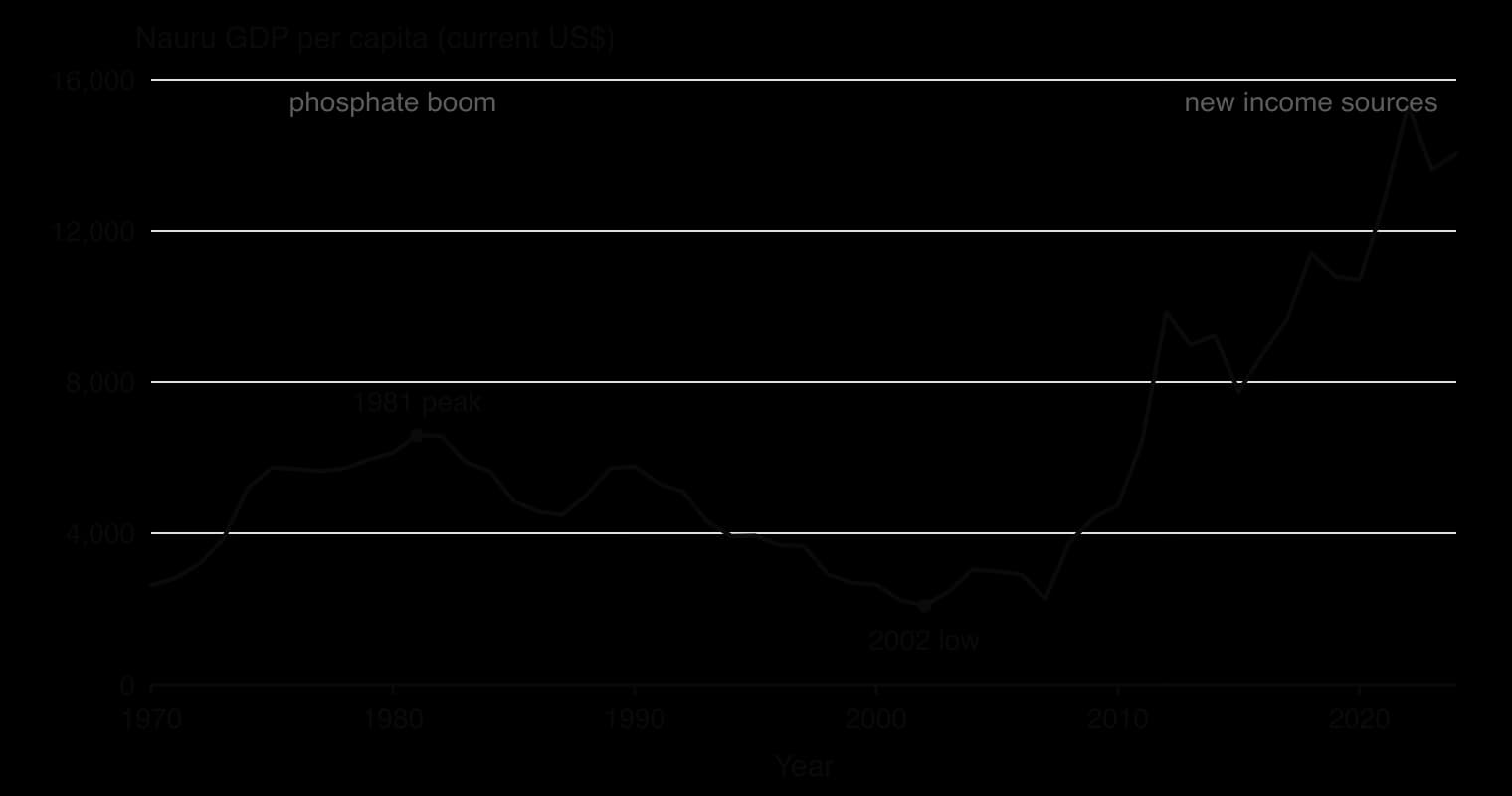
For a time, Nauruans had one of the highest incomes per person in the world. GDP per capita peaked in 1981, then fell by more than two-thirds by 2002 as phosphate output declined and the Royalties Trust lost most of its value through poor investments and mismanagement, falling from A$1.3 billion in 1991 to A$138 million in 2002. Recovery since about 2008 has come from new sources, notably an Australian-funded centre for processing asylum seekers, which made up 35% of GDP in 2017.
Indicator | Value |
|---|---|
Land area / share stripped by mining | 21 km² / about 80% |
Gross phosphate production, 1968 to exhaustion | About 43 million tons (a rough estimate) |
Royalties Trust value | A$1.3 billion (1991) → A$138 million (2002) |
Adult obesity (2012) | 71.7% |
People with type 2 diabetes | More than 40% |
Freshwater supply per person | 32 litres a day (WHO recommends 50) |
Impacts on resource security, health and society
Mining destroyed most of the island’s fertile land and its forest. The coastal ring has shallow, alkaline soil, and in 2011 only 13% of households kept a garden or grew crops, so nearly all food is imported, much of it processed rice and sugar. These changes are linked to very high rates of obesity and type 2 diabetes. Nauru has no rivers; water comes from rooftop catchment and imported supplies, and groundwater has been contaminated by mining run-off and waste. The island’s food and water security therefore depend entirely on income to pay for imports.
Management and responses
Different groups saw the phosphate from very different perspectives. For the colonial administrations and the farmers of Australia and New Zealand, it was a cheap input that made their pastures and crops more productive. For Nauruan landowners, it brought royalties but cost them their land, gardens and the forest their families had used for generations. After independence, the government tried to turn non-renewable natural capital into lasting financial capital through the Royalties Trust, an approach consistent with weak sustainability.
In 1989 Nauru took Australia to the International Court of Justice over the damage done before independence (Certain Phosphate Lands in Nauru). The case was settled out of court, with Australia agreeing to help rehabilitate mined-out land. Rehabilitation has been slow, because the soil has gone and the pinnacles must be crushed or removed before land can be used; some researchers doubt that the soil will regenerate even after mining ends.
Evaluation
From a sustainability point of view, phosphate mining on Nauru failed on both conditions. A non-renewable resource was extracted at a rate that exhausted it within a century, and the land and water were damaged faster than they could recover. The attempt at weak sustainability also failed: the financial capital meant to replace the phosphate was lost, leaving neither the natural capital nor its replacement. An ecocentric critic would add that no amount of money could have replaced the island’s ecosystems, while an anthropocentric economist might argue that the plan was sound and failed only through mismanagement.
There are also questions of environmental justice and intergenerational equity. For most of the mining period, the benefits flowed to colonial powers and distant farmers, while the costs stayed on the island and will be borne by future generations of Nauruans.
What it shows
Nauru shows the difference between natural capital and natural income in its starkest form. A non-renewable resource provided a large but temporary income; once the stock was gone, the income stopped, and the damage to land left the island less resource secure than before mining began. The case links economic choices, colonial history, health and the ethics of who benefits from resource use.
Sources: Wikipedia, “Nauru” and “Phosphate mining in Banaba and Nauru” (accessed 2026); World Bank World Development Indicators (2026).
Management and intervention strategies (HL only)
Left to markets alone, natural capital tends to be overused, because many of its costs (pollution, lost ecosystem services, harm to future generations) are not paid by the people who use it. Governments and other groups therefore intervene to steer resource use. Their strategies either discourage harmful use, by making it more expensive or forbidding it, or encourage better alternatives, by making them cheaper, better known or more available.

Government management
Many governments organise their resource policy around national plans. Countries report their progress towards the Sustainable Development Goals in voluntary national reviews to the United Nations, and many have national action plans that set targets for energy, water, waste and biodiversity. Laws set the framework within which every other intervention works: who owns a resource, who may extract it, and what limits apply.
Discouraging interventions
Taxes raise the price of a harmful resource or activity so that people use less of it. A carbon tax raises the price of fossil fuels in proportion to the CO₂ they release.
Fines and penalties punish breaches of the rules, such as dumping waste or logging without a permit.
Legislation and regulation limit or ban activities outright: emission limits for power stations, catch quotas in fisheries, bans on single-use plastics or on new coal mines.
Removing subsidies for fossil fuels or for overfishing ends the support that keeps harmful activities profitable.
Encouraging interventions
Subsidies and grants lower the cost of sustainable options, such as solar panels, electric vehicles or home insulation.
Research funding supports new technologies that use less natural capital or replace damaging processes.
Education and publicity change behaviour by informing people: product labels, school programmes and public campaigns to save water or energy.
Legislation can also encourage, for example by requiring a minimum share of recycled material in new products.
Research has produced several technologies that reduce the use of natural capital. CarbonCure, a company founded in Nova Scotia, Canada, in 2012, injects captured CO₂ into fresh concrete, where it is mineralised and permanently stored, allowing producers to use less carbon-intensive cement.
Wind turbine blades are made of glass or carbon fibre set in epoxy resin, which cannot be remoulded, so old blades have been hard to recycle; Vestas has developed a process that separates the fibres from the resin so that both can be reused. Researchers are also investigating biological and electrochemical ways of producing ammonia for fertiliser that could replace the energy-intensive Haber process, which runs on fossil fuels.
Sources: Wikipedia, “CarbonCure Technologies” and “Wind turbine” (accessed 2026).
NGOs, communities and social movements
Non-governmental organizations (NGOs), local communities and social movements influence resource use without the power of law. They run campaigns and boycotts, use social media to spread information quickly, take legal action, monitor companies and governments, and lead by example, for instance through community recycling, repair cafés or local energy cooperatives. Campaign groups opposed the Woodhouse Colliery and brought the legal challenges that led to its approval being quashed.
Strategy | Strengths | Limitations |
|---|---|---|
Taxes | Use the market; raise revenue that can fund alternatives; firms choose the cheapest way to cut use | Can fall hardest on poorer households; politically unpopular; the right rate is hard to set |
Legislation and fines | Clear and certain; can ban the most harmful activities outright | Needs enforcement; fines may be too small to deter large firms |
Subsidies | Popular; speed up the spread of new technology | Expensive for governments; may support firms that would have changed anyway |
Education and publicity | Cheap; can change long-term attitudes and social norms | Slow; knowledge does not always change behaviour |
NGO and community action | Can act where governments will not; local knowledge; holds powerful actors to account | No legal power; limited funding; may be dismissed as unrepresentative |
The SDGs as a framework for resource management (HL only)
The 17 Sustainable Development Goals, adopted by all members of the United Nations in 2015 for the period to 2030, give every country the same set of goals and targets. They frame resource management as a global partnership: richer countries are meant to support poorer ones with finance and technology, and progress is measured with common indicators. Two goals deal directly with natural resources.
SDG 7, Affordable and clean energy, aims for universal access to modern energy, a substantial increase in the share of renewable energy and faster improvement in energy efficiency. It links resource security (access to energy) with sustainability (shifting away from fossil fuels).
SDG 12, Responsible consumption and production, includes a target for the sustainable management and efficient use of natural resources, measured by indicators such as each country’s material footprint, and targets to halve food waste and reduce waste generation.
The scale of the challenge under SDG 12 is large. Global material extraction grew from about 30 billion tonnes in 1970 to about 106 billion tonnes, and on current trends could rise by almost 60% between 2020 and 2060. Extraction and processing of resources account for over 60% of planet-warming emissions. The framework is useful because it sets shared targets and makes progress comparable, but the goals are voluntary, some conflict with each other (economic growth under SDG 8 tends to increase resource use under SDG 12), and many countries are not on track to meet them by 2030.
Sources: UNEP International Resource Panel, Global Resources Outlook 2024 (press release, 2024).
Environmental impact assessment (HL only)
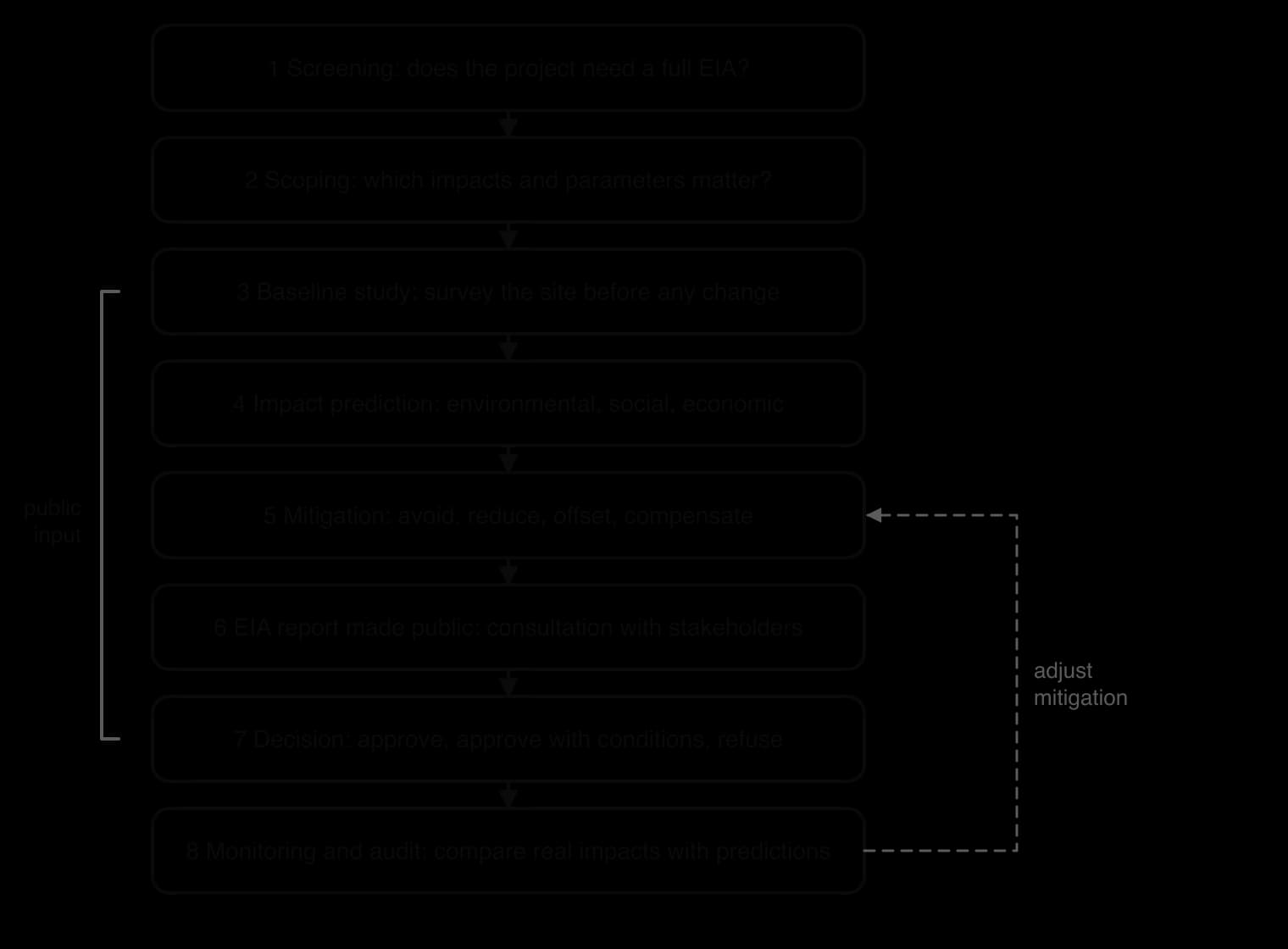
Large development projects such as dams, mines, motorways, airports and wind farms change the use of natural capital for decades. An environmental impact assessment (EIA) is a process for identifying, predicting, evaluating and reducing the effects of a proposed project before a decision is made to go ahead. It covers environmental, social and economic impacts, and judges whether the project can be carried out sustainably.
Baseline studies
A baseline study records the state of the environment and the community at the site before the project begins. It provides the reference point against which impacts are predicted and later measured. Without a baseline, there is no way of knowing afterwards whether a river has become more polluted or a species less common because of the project.
The parameters a baseline study measures depend on the project. They usually include abiotic factors (air and water quality, noise, soil, hydrology, climate), biotic factors (habitats, species lists, abundance of key and protected species, biodiversity indices) and human factors (population, land use, livelihoods, health, cultural heritage, traffic). Surveys should cover different seasons, since many species and water conditions vary through the year.
Different guidance in different countries
EIA began in the United States with the National Environmental Policy Act, which came into force in 1970. The European Union introduced its EIA Directive in 1985, later codified in 2011, which requires member states to assess projects likely to have significant effects. Australia’s Environment Protection and Biodiversity Conservation Act 1999 requires assessment of projects that affect nine “matters of national environmental significance”, and Canada’s federal law has been revised several times.
Rules differ in which projects need an EIA, who carries it out, how long the public has to respond, whether the decision-maker must follow its findings, and what penalties apply. In some countries an EIA is a formality carried out by consultants paid by the developer, which weakens its independence.
Making EIAs public
When an EIA is published, local citizens can act as stakeholders in the decision: they can check its findings, add local knowledge, object, and in some systems challenge the decision in court. The Aarhus Convention, signed in Aarhus, Denmark, in 1998 and in force since 2001, gives the public in its member countries rights of access to environmental information, public participation in decision-making and access to justice.
Merits of engaging all stakeholders | Difficulties |
|---|---|
Local and Indigenous knowledge improves the baseline and predictions | Consultation takes time and money, and can delay projects |
Decisions are seen as fairer and more legitimate, reducing later conflict | Powerful groups may dominate; poorer or less educated people may not take part |
Errors or bias in the developer’s report are more likely to be found | Technical reports can be hard for non-specialists to understand |
Communities can negotiate mitigation or compensation | Opposition to any local change (“not in my back yard”) can block projects with wide benefits |
Strengths and limitations of EIAs
EIAs bring environmental and social impacts into decisions before damage is done, require developers to look for less harmful alternatives, and create a public record. Their limitations are also significant. An EIA informs a decision but does not make it, so a project with severe predicted impacts can still be approved.
Assessments often focus on direct, on-site effects and miss indirect, cumulative and long-term ones, such as the emissions from burning coal once it has been mined, which was the legal flaw in the approval of the Woodhouse Colliery. Predictions are uncertain, and follow-up audits often show that real impacts differ from those predicted. Had an EIA been applied to phosphate mining on Nauru, its baseline and rehabilitation requirements would at least have made the loss of land and its cost to future generations visible before mining began.
Sources: Wikipedia, “Environmental impact assessment” and “Aarhus Convention” (accessed 2026).
 YouTube
Renewable resources used unsustainably (HL only)
Calling a resource renewable says nothing about how it is obtained. Timber can come from clear-felled old-growth forest; fish can be caught with bottom trawls that destroy the seabed; and hydropower, which uses a renewable flow of water, can require dams that flood valleys, displace people and block rivers.
The Three Gorges Dam on the Yangtze River in Hubei, China, is a hydroelectric power station with an installed capacity of 22,500 MW, the largest of any power station, and generated about 101.6 TWh of electricity in 2018. The operator estimated that its output from 2003 to 2007 saved the equivalent of 84 million tonnes of standard coal.
The costs were also large. Between about 1.13 and 1.4 million people were displaced, and planning estimates expected 13 cities, 140 towns and 1,350 villages to be partly or wholly flooded. The reservoir, about 660 km long, flooded 632 km² of land along with many archaeological sites. It traps much of the sediment the river used to carry, which some hydrologists fear could leave Shanghai, more than 1,600 km downstream, more vulnerable to flooding. Landslides around the reservoir have increased, and some scholars link the dam to the extinction of the baiji, the Yangtze river dolphin.
Sources: Wikipedia, “Three Gorges Dam” (accessed 2026).
Whether the dam is sustainable depends on perspective. A technocentric view stresses the low-carbon electricity and flood control. An ecocentric view stresses the loss of river ecosystems and species. A social justice view asks whether the people displaced, mostly rural, received fair compensation for bearing the costs of electricity used mainly in distant cities.
Short-term interests and long-term sustainability (HL only)
Businesses, governments and individuals usually value money now more highly than money in the future, a principle economists call discounting. Debts must be repaid, shareholders expect profits this year, and politicians face elections in a few years. If a resource grows slowly, the income from harvesting it sustainably can be smaller than the income from harvesting it all now and investing the money elsewhere. In that case, depleting the resource can look rational to an individual firm, even though it destroys a source of income that could have lasted indefinitely.
Blue whales show the result. In the first half of the twentieth century, about 350,000–360,000 blue whales were killed in the Antarctic alone, with a peak of about 30,000 in the single season of 1930–31. Blue whales breed slowly, so the population could not keep pace.
Whalers moved on to smaller species as each one became scarce, and the International Whaling Commission banned all hunting of blue whales only in 1966. The IUCN estimates that there are now 10,000–25,000 blue whales in total, and the species is listed as Endangered. The northern cod off Newfoundland followed a similar path in the twentieth century, as fishing continued at levels the stock could not sustain until it collapsed.
Sources: Wikipedia, “Blue whale” (accessed 2026).
Short-termism is also linked to the tragedy of the commons: when a resource is shared, each user gains the full benefit of taking more but bears only part of the cost of depletion. Solutions include secure long-term rights to the resource, quotas based on scientific advice, and international agreements that bind all users at once.
Resource insecurity and geopolitics (HL only)
When a society cannot secure the resources it needs, the effects spread beyond the environment. Shortages of food, water or energy raise prices, slow economic development and deepen poverty. They can push people to overuse local resources, for example cutting forests for fuel, and they can create tension or conflict between countries that compete for the same supplies.
Oil and OPEC
Power over resources is concentrated where the resources are. The Organization of the Petroleum Exporting Countries (OPEC) was founded in Baghdad in 1960 by Iran, Iraq, Kuwait, Saudi Arabia and Venezuela. Its members produced about 38% of the world’s oil in 2022 and hold most of its proven reserves. In 1973, Arab oil exporters cut production and placed an embargo on countries that supported Israel in the Yom Kippur War, and the price of oil rose from about US$3 to US$12 a barrel. The shock caused recessions in importing countries and pushed many of them to diversify their energy supplies.
Critical minerals
The shift to low-carbon energy is moving power towards the countries that mine and process the minerals needed for batteries, wind turbines and electric motors. These are often called critical minerals. Most of the world’s lithium is mined in Australia, Chile and China; most cobalt comes from the Democratic Republic of the Congo; and most rare earth elements are mined in China. Processing is even more concentrated: China is the leading refiner of 19 of 20 energy-related minerals, with an average share of around 70%.

This concentration has already caused tension. In September 2010, after a collision between a Chinese fishing boat and Japanese coastguard vessels near disputed islands, China placed informal limits on exports of rare earth metals to Japan, although whether the two were linked is still debated. Japanese companies responded by investing in rare earth mining in other countries. Between December 2024 and early 2025, China restricted exports of gallium, germanium and antimony to the United States, and then of tungsten, several other metals and seven heavy rare earth elements. Importing countries have responded with stockpiles, recycling and support for new mines and refineries elsewhere.
Sources: USGS (2025); IEA, Global Critical Minerals Outlook 2025; Wikipedia, “OPEC” and “2010 Senkaku boat collision incident” (accessed 2026).
Routes to resource security (HL only)
Security improves when the gap between demand and reliable supply narrows. That can be done in three ways: reducing demand through efficiency and conservation, increasing supply from domestic or diversified sources, or changing technology so that a scarce or imported resource is no longer needed.
Resource | Reduce demand | Increase supply | Change technology |
|---|---|---|---|
Water | Metering, pricing and campaigns to cut household use | Desalination; reuse of treated wastewater; new reservoirs | Low-water crop varieties; leak detection in supply networks |
Energy | Insulation, efficient appliances, less heating and travel | Domestic renewables; new import routes such as liquefied natural gas | Heat pumps and electric vehicles replace imported gas and oil |
Food | Cutting food waste; diets lower in meat | Expanding irrigated land; importing from several suppliers | High-yielding and drought-tolerant crop varieties; vertical farming |
Israel combines all three routes for water. With very little natural freshwater, it has become largely water secure by cutting household demand, adding desalinated seawater and reusing treated wastewater on farms. Desalination uses large amounts of energy, so Israel’s water security now depends on a reliable energy supply.
Globalisation and resource security (HL only)
Economic globalization is the growing integration of national economies through trade, investment and supply chains. It lets a country obtain food, water (embedded in imported crops), energy and minerals from anywhere in the world, so supply is larger, more varied and often cheaper than domestic production could provide. At the same time, it creates dependence on other countries and on long transport routes, so a war, a trade dispute or a price spike far away can quickly threaten supplies at home.
Energy: in 2021, Russia supplied 45% of the European Union’s natural gas imports. After the invasion of Ukraine in 2022, Russian pipeline gas to Europe fell from 155 billion m³ in 2021 to about 28 billion m³ in 2023, gas prices exceeded €200 per MWh during 2022, and countries had to find new suppliers and cut demand at short notice.
Food: Nauru imports nearly all its food. Globalisation provides a reliable supply in normal times, but the island has no means of feeding itself if imports are interrupted.
Water: countries that import much of their food, such as Singapore, are also importing the water used to grow it, which reduces pressure on their own scarce water but ties their water security to farmers and rainfall elsewhere.
Sources: Wikipedia, “2022–2023 Russia–European Union gas dispute” (accessed 2026).
Comparing a named resource in two societies
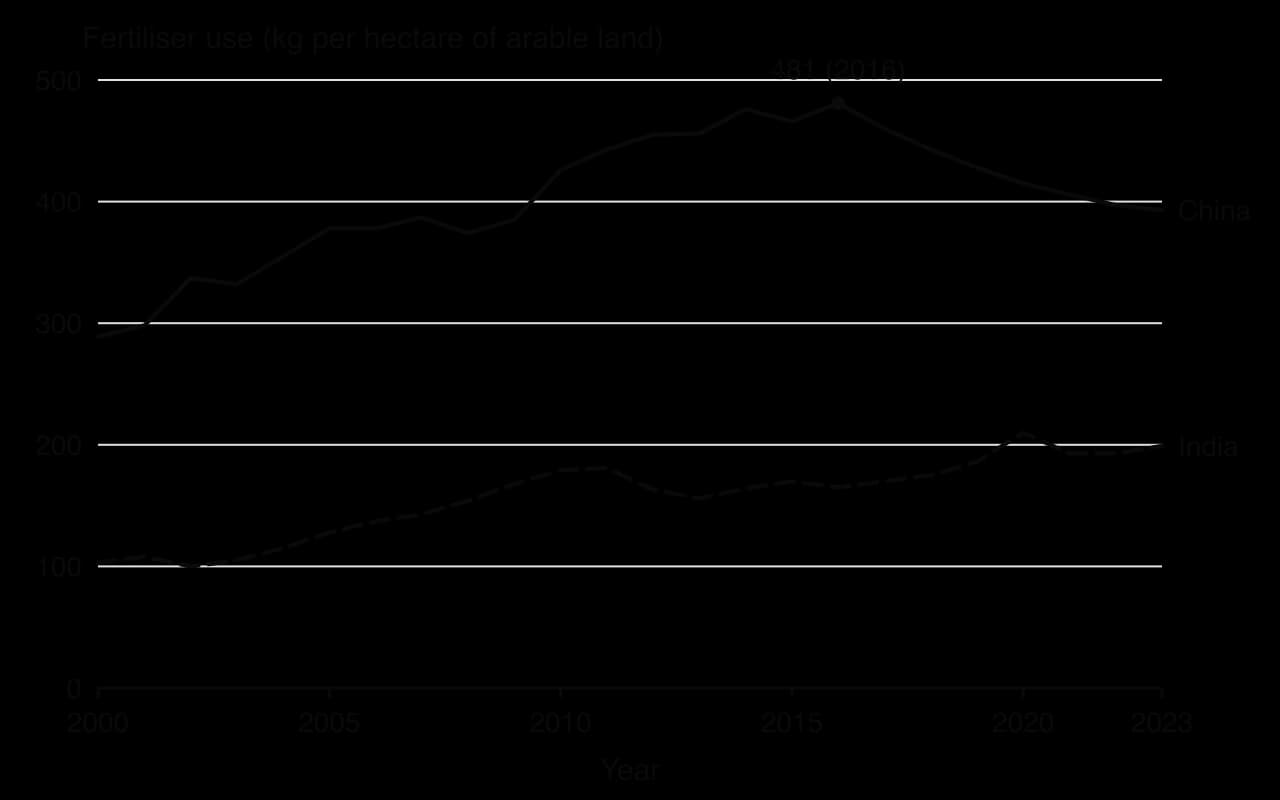
Databases such as Our World in Data, Gapminder and the World Bank allow the use of a resource to be compared between societies over time. Synthetic fertiliser is a useful example, because it is made with fossil fuels and phosphate rock and is traded globally.
Exam practice
Natural resources appear in every part of the external assessment. Paper 2 Section A tends to ask for definitions, classifications and short explanations (natural capital and income, renewable and non-renewable resources, value types, ecosystem services). Paper 1 resource booklets often describe a place whose economy depends on one resource, with data on production, prices or access to water and food. Section B essays ask you to evaluate how sustainably resources are used, or to weigh the factors and perspectives behind resource choices.
Paper 2 Section A-style questions
Questions on renewability usually reward a chain of cause and effect, from harvest rate to stock size to collapse, ending with a named example.
Paper 1-style data question
Resource (hypothetical data). An island in the Indian Ocean depends on two resources: a reef fishery and a deposit of sand mined for building. The table gives data for 2015 and 2025.
2015 | 2025 | |
|---|---|---|
Reef fish catch (tonnes per year) | 1,200 | 700 |
Estimated growth of the fish stock (tonnes per year) | 900 | 600 |
Sand extracted (thousand tonnes per year) | 50 | 120 |
Price of imported building sand (US$ per tonne) | 18 | 31 |
Households with a basic drinking water service (%) | 78 | 84 |
Paper 2 Section B-style essay
HL item
Summary
Natural resources are the raw materials and sources of energy used by society; natural capital is their stock, and natural income is the yield of goods and services from it.
Ecosystem services are provisioning, regulating, cultural and supporting; they include water replenishment, flood and erosion protection, pollution mitigation by reed beds and carbon sequestration.
Describing nature as capital reflects an anthropocentric perspective that is contested, but it is a powerful model for sustainable use.
Renewable resources are replaced as fast as they are used; overuse can make them behave as non-renewable. Non-renewable resources are replaced only over geological time.
Natural capital has aesthetic, cultural, economic, environmental, health, intrinsic, social, spiritual and technological value, and its value changes with technology, demand, supply, culture and law (whale oil, lithium, cork).
Sustainable use means harvesting no faster than regeneration and releasing wastes no faster than they can be absorbed.
Resource security depends on wealth, technology and planning as well as physical supply, as the contrast between Singapore and Ethiopia shows.
Resource choices reflect economic, sociocultural, political, environmental, geographical, technological and historical factors, now reshaped by net-zero commitments.
Governments discourage harmful use (taxes, fines, laws) and encourage sustainable use (subsidies, research, education); NGOs and communities add pressure; the SDGs provide a shared framework. (HL)
EIAs, with baseline studies, public consultation and monitoring, aim to make development projects sustainable, though rules and effectiveness differ between countries. (HL)
Renewable resources can still be exploited unsustainably (Three Gorges Dam), and short-term economic interests have depleted resources such as blue whales. (HL)
Concentrated supply of oil and critical minerals creates geopolitical tension; security can be improved by reducing demand, increasing supply or changing technology, while globalisation raises both supply and interdependence. (HL)
Self-check
- To do:
I can define natural resources, natural capital and natural income, and give local examples of three types of natural capital.
- To do:
I can distinguish goods from services and outline the four categories of ecosystem services.
- To do:
I can explain how a reed bed buffer zone removes nutrients from run-off.
- To do:
I can discuss the implications of describing nature as capital from different perspectives.
- To do:
I can distinguish renewable from non-renewable resources and explain how overuse makes a renewable resource non-renewable.
- To do:
I can outline the nine types of value of natural capital and explain why values change over time, using two named resources.
- To do:
I can explain the two conditions for sustainable use of natural capital, with examples of overharvesting and polluting wastes.
- To do:
I can compare and contrast the resource security of two named societies.
- To do:
I can analyse the factors affecting the choice to use a named resource.
- To do:
I can evaluate intervention strategies and the role of EIAs, baseline studies and public participation. (HL)
- To do:
I can examine how short-term interests, resource insecurity, critical minerals and globalisation affect sustainability and security. (HL)