Explain how childhood experiences shape the developing self, from adverse childhood experiences and institutional deprivation to poverty, war and resilience, and evaluate the evidence through causality, measurement and responsibility.
Each is in the Psychology glossary, with every other term in the subject.
Potentially traumatic events or conditions in the first 18 years of life, such as abuse, neglect or household dysfunction, that are associated with poorer health and well-being later in life.
The placement and upbringing of children in residential institutions such as orphanages, and the effects of that care, which can include delayed development and attachment difficulties.
A characteristic of a person, family or community that reduces the likelihood of a negative outcome in the presence of risk or adversity, such as a caring adult.
Positive adaptation and development despite serious adversity or risk, arising from the interaction of individual qualities with supportive relationships and environments.
Strong, frequent or prolonged activation of a child’s stress response without the buffering support of a caring adult, which can disrupt brain development and later health.
Explain why childhood experiences are thought to have a lasting effect on the development of self.
Describe adverse childhood experiences and explain the evidence linking them to later health and well-being.
Explain how toxic stress links early adversity to brain development and later outcomes.
Describe and evaluate the English and Romanian Adoptees study of early institutional deprivation.
Discuss the effects of poverty and war on children’s development, using research from different cultures.
Explain resilience and protective factors, with reference to longitudinal research.
Evaluate research on childhood experiences with reference to causality, measurement and responsibility.
Childhood experiences, both harmful ones such as neglect, abuse, poverty and war and positive ones such as a stable, caring relationship, are thought to shape the kind of person a child becomes. Research in this area asks how far early experience affects later self-esteem, identity, relationships and health, through which mechanisms, and whether its effects can be reversed.
Explanations draw on all three approaches. Biological research links early stress to the developing brain and stress system through neuroplasticity; cognitive research shows how experience shapes beliefs about the self and the world; and sociocultural research shows how family, community and culture create or reduce adversity. The area raises difficult questions of causality, because adversity cannot be assigned at random, and of responsibility, because research involves vulnerable children and its findings can stigmatise them.
With a free account, Augment remembers where you stopped and what you have practiced.
Scope: An area of study in the human development context (development of self), studied at SL and HL. Questions can ask about the role of childhood experiences in the development of self, applied to scenarios or evaluated through any of the six concepts.
Several lines of reasoning suggest that experiences in childhood have unusually lasting effects. The brain is developing rapidly, so experience shapes its structure as well as its content. Early relationships provide the first models of what the self is worth and what others can be relied on for, through internal working models. And early experiences set young people on paths, such as school success or failure, that create further experiences of the same kind.
A sensitive period is a time in development when particular experiences have a stronger effect than at other times. The brain expects certain experiences, such as patterned light, language and a responsive carer, to be present in early life, and it uses them to organise its circuits. When these expected experiences are missing, as in severe neglect, development can be disrupted in ways that are harder to reverse later. Other experiences, such as learning a skill or a set of cultural norms, shape the brain throughout life.
The idea of sensitive periods means that the timing of adversity matters, not only its severity. It also implies that recovery is most likely when a child’s circumstances improve early. Research on children adopted from institutions at different ages is the clearest test of this claim.
Childhood experience does not fix the adult self. Effects are probabilistic: early adversity increases the risk of later difficulties, but many children who experience it develop well, and later experiences can repair or worsen the effects of early ones. A useful way to think about the role of childhood experiences is as a chain of linked risks and opportunities rather than a single cause.
The term adverse childhood experiences (ACEs) comes from a large American study of the link between childhood adversity and adult health. It now refers to a set of experiences, usually counted as a score, that are associated with poorer outcomes across life.
Felitti et al. (1998) mailed a questionnaire about childhood experiences to 13,494 adults who had attended a standard health assessment at Kaiser Permanente, a large health organisation in San Diego; 9,508 (70.5%) replied. The questionnaire asked about seven categories of experience: psychological, physical and sexual abuse, violence against the mother, and living with someone who misused substances, was mentally ill or suicidal, or had been imprisoned. Each person’s ACE score was the number of categories they reported, and it was compared with their adult health and health behaviour.
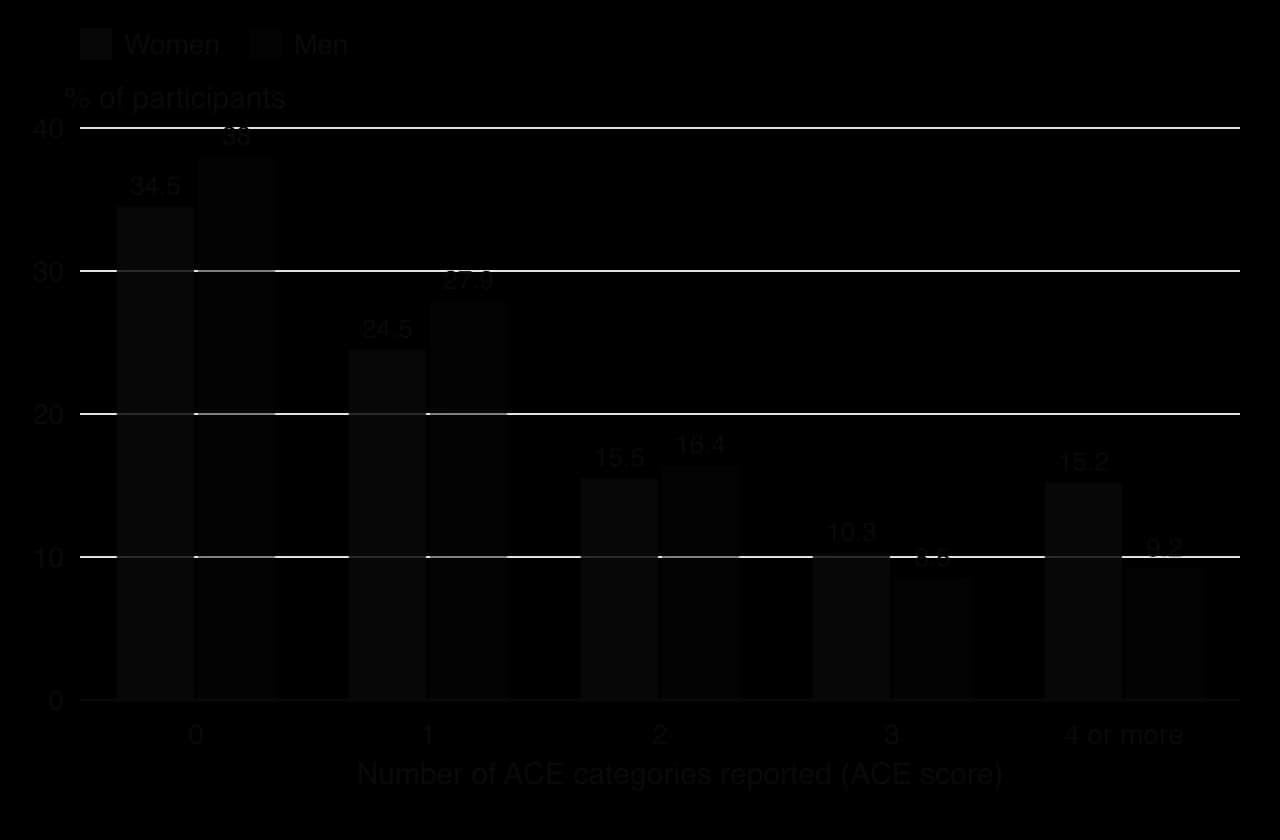
More than half of respondents reported at least one category, and a quarter reported two or more. The relationship between the ACE score and adult outcomes was graded: the more categories, the higher the risk. Compared with people who reported none, people with four or more had a 4- to 12-fold increase in the risk of alcoholism, drug misuse, depression and suicide attempts, a 2- to 4-fold increase in smoking and poor self-rated health, and higher rates of heart disease, cancer, chronic lung disease and liver disease.
Later waves of the study, which added emotional and physical neglect, recorded the distribution of ACE scores across more than 17,000 participants.
A graded increase in risk with increasing exposure is called a dose–response relationship. It strengthens the case that adversity contributes to poor outcomes, because a third variable would have to rise in step with the number of adversities to explain the pattern. It does not prove causation: the ACEs tend to occur together, alongside poverty and parental difficulties, and these may be the real causes.
Hughes et al. (2017) combined 37 studies with a total of 253,719 adult participants from general populations in a meta-analysis. People with at least four ACEs were at greater risk of every outcome studied. The associations were weak for physical inactivity, overweight and diabetes, moderate for smoking, heavy drinking, cancer and heart disease, strong for mental ill health and problem drinking, and strongest, with odds more than seven times higher, for problem drug use and for violence against others or the self. The results varied a great deal between studies.
The outcomes most strongly linked to ACEs, violence, mental illness and substance misuse, are themselves ACEs for the next generation. A parent who misuses substances or is violent creates adversity for their own children, which suggests a cycle across generations that prevention could break.
Retrospective self-report. Adults recall childhood events decades later, and current mood affects recall. Baldwin et al. (2019) combined 16 studies that measured maltreatment both prospectively (at the time) and retrospectively (in adulthood): agreement was poor (κ = 0.19), so the two methods identify largely different people.
A crude count. The ACE score treats each category as equal and ignores severity, duration, age and the child’s relationships. One brief incident and years of abuse count the same.
Missing experiences. The original list did not include poverty, community violence, discrimination, bullying or war, which are common sources of adversity in many parts of the world.
A specific sample. The original participants were mostly white, middle-class Americans with health insurance, and childhood experiences were reported at the same time as adult health was measured, so current health may have coloured what people recalled.
 YouTube
Stress is a normal part of childhood, and a manageable amount helps children learn to cope. The Center on the Developing Child at Harvard distinguishes positive stress (brief and mild), tolerable stress (more serious but buffered by supportive relationships) and toxic stress, in which the stress response is activated strongly, often or for long periods without the protection of a caring adult.
The proposed mechanism runs through the HPA axis and the hormone cortisol. Repeated or chronic stress keeps cortisol high, which can affect the development of brain regions that are rich in cortisol receptors and still maturing, such as the hippocampus, the amygdala and the prefrontal cortex. Animal research supports this pathway: in rats, the amount of maternal care a pup receives alters the expression of genes involved in the stress response through epigenetics. In humans, the evidence is mostly correlational, but it fits the pattern of effects on memory, emotional regulation and self-control seen after early adversity.
The most important feature of the concept is the buffer. The same event can be tolerable for a child with a responsive carer and toxic for a child without one, because a caring adult helps the child’s stress response return to normal. This links research on adversity to research on attachment: secure relationships are not only good for the self, they also protect the developing stress system.
Millions of children worldwide grow up in residential institutions such as orphanages. Even when food and shelter are adequate, institutional care usually means many changing carers, rigid routines and little individual attention, so children may never form a selective attachment. In Rutter’s terms this is privation, not just separation, and it removes several experiences the developing brain expects at once.
Hodges and Tizard (1989) followed children who had lived in London residential nurseries with many changing caregivers until at least the age of two. Some were later adopted and some were returned to their biological parents. At 16, many of the adopted children had formed strong, lasting attachments to their adoptive parents, much more often than those restored to their birth families. However, both groups were more oriented towards adult attention, had more difficulties with peers and had fewer close relationships than matched comparison adolescents.
The study shows two things about childhood experience and the self. Early privation did not prevent close bonds forming later when the family environment was good, which argues against a strict critical period. But some effects on relationships outside the family persisted, which suggests that early experience leaves lasting traces even after recovery.
Because adoption is not random, children adopted early may differ from those adopted late. The Bucharest Early Intervention Project addressed this by randomly assigning young children living in Romanian institutions either to high-quality foster care or to remain in institutional care. Children placed in foster care did better in cognitive development and attachment than those who stayed, so the benefits of family care cannot be explained by which children happened to be chosen for adoption. The design gives the strongest causal evidence in the field, but randomising vulnerable children to remain in institutions raised serious ethical questions.
 YouTube
In Romania under Nicolae Ceaușescu, very large numbers of children were placed in state institutions where conditions were often extremely poor. After the regime fell in 1989, many of these children were adopted by families abroad, including in the United Kingdom. The English and Romanian Adoptees (ERA) study, led by Michael Rutter, followed a group of these children from adoption into adulthood. It is a natural experiment: the researchers did not cause the deprivation, but the sudden change from extreme deprivation to loving family homes, at different ages, allowed them to study its effects.
The study aimed to find out how far children could recover from severe early deprivation once placed in good adoptive homes, whether the length of deprivation affected recovery, and whether any effects persisted into adulthood.
The first report, Rutter et al. (1998), assessed 111 Romanian children who had entered the UK before the age of two, comparing them at age 4 with 52 children born in the UK and adopted before six months of age, who had not experienced institutional deprivation. Measures included height, weight, head circumference and cognitive development, using the McCarthy Scales. The sample was later extended to 165 Romanian adoptees, and the children were assessed again at 6, 11 and 15 years and in young adulthood, at 22–25.
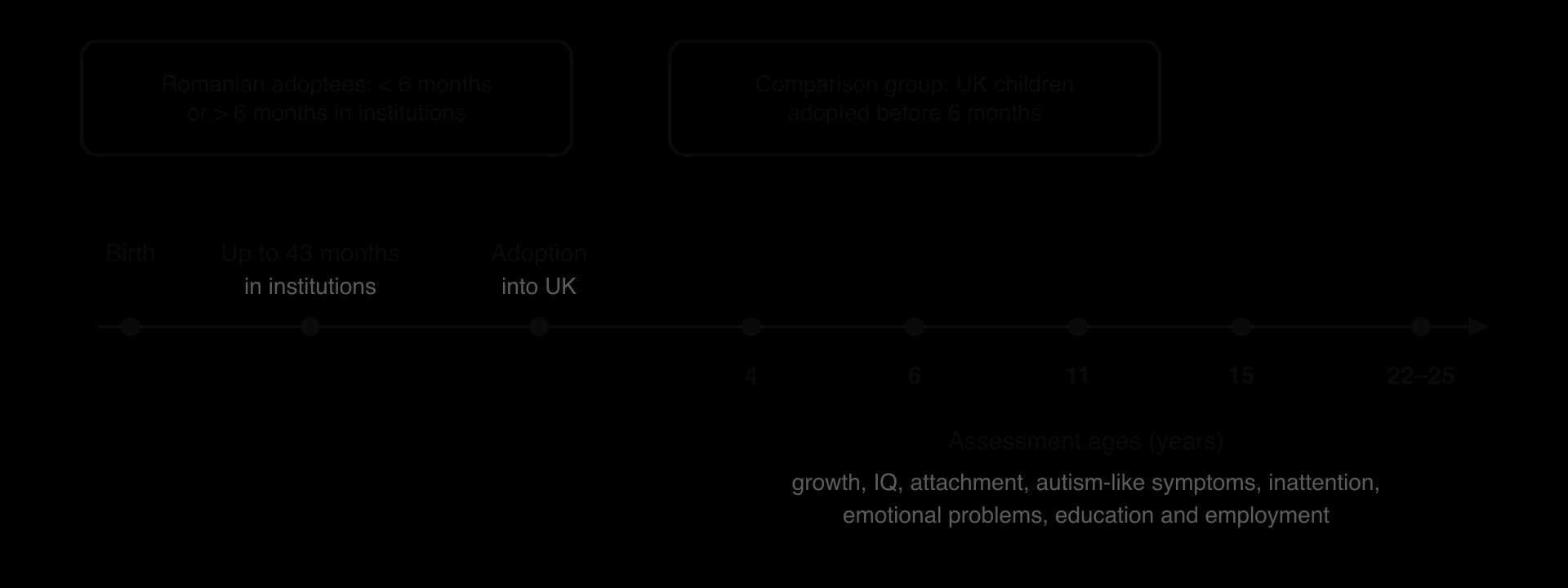
For analysis, the Romanian adoptees were divided by how long they had spent in institutions: less than six months or more than six months. Outcomes measured over the years included IQ, symptoms of autism, disinhibited social engagement (indiscriminate friendliness with strangers), inattention and overactivity, emotional and conduct problems, educational achievement, employment and use of mental health services. Information came from standardised questionnaires, interviews with parents and adoptees, and direct cognitive testing.
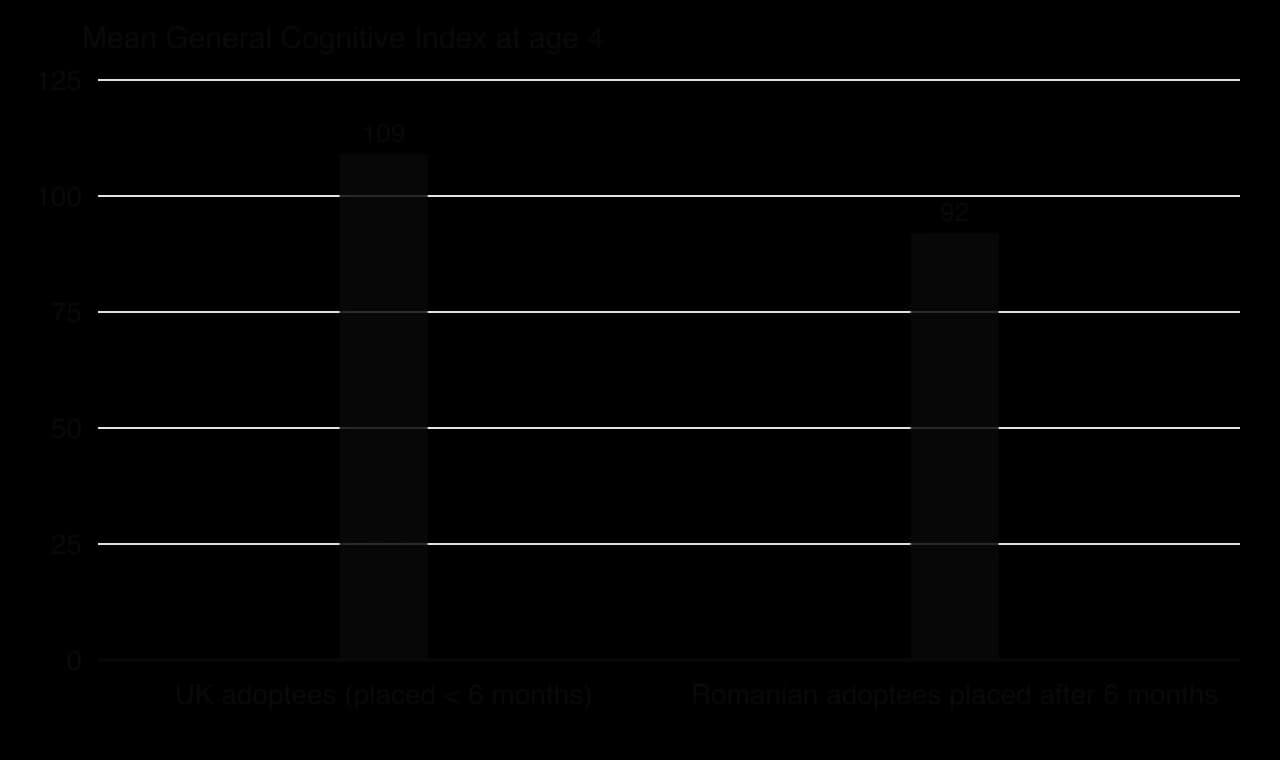
When they arrived in the UK, the Romanian children were severely impaired: about half were below the third percentile for height, weight, head circumference and developmental level, and many had chronic infections. By age 4, children who had arrived before six months of age had caught up almost completely. Those placed after six months had made remarkable progress but still lagged behind: their mean cognitive score was 92, compared with 109 for the UK adoptees. Age at entry to the UK was the strongest predictor of cognitive level.
The young-adult follow-up, Sonuga-Barke et al. (2017), compared 50 adoptees who had spent less than six months in institutions, 72 who had spent more than six months, and 39 UK adoptees. The findings were:
Adoptees with less than six months of deprivation had low levels of difficulties at every age, similar to the UK adoptees.
Adoptees with more than six months of deprivation had persistently higher rates of autism-like symptoms, disinhibited social engagement and inattention and overactivity, from childhood into young adulthood.
Cognitive impairment in this group, which was high at ages 6 and 11, had recovered to normal levels by young adulthood.
Emotional problems such as anxiety and depression appeared late: there were few differences at 11 and 15, but marked increases by young adulthood.
This group had higher rates of low educational achievement, unemployment and mental health service use.
A fifth of those with more than six months of deprivation (15 people) had no problems at any assessment.
The study concluded that recovery from severe early deprivation is substantial, especially when it ends before about six months of age, which suggests a sensitive period. But extended deprivation was linked to long-term difficulties in social behaviour, attention and emotional well-being that years of loving family care did not remove. The 1998 report concluded that psychological privation, the lack of individual care and stimulation, was probably more important than poor nutrition in explaining the remaining deficit.
The sudden end of deprivation at different ages is a strong design for studying timing. However, children were not randomly assigned to be adopted early or late. Children adopted later may have differed from the start, for example in health or temperament, or institutions may have released the healthier children first. The clear dose–response pattern by length of deprivation and the comparison with UK adoptees strengthen the causal claim, and the randomised Bucharest project found similar timing effects.
Unlike ACE research, ERA measured outcomes prospectively, at the time, rather than relying on adult recall, and it combined direct testing, parent reports and self-reports. Some measures changed with age, and constructs such as “autism-like symptoms” after deprivation may not be the same as autism, so interpretation of some categories is debated.
Romanian institutions in the 1980s were extreme, and the adoptive families in the UK were generally well-off and committed. The findings show what happens after very severe deprivation followed by unusually good care, and they may not generalise to institutions with better conditions or to children who remain in difficult circumstances. Attrition over 20 years also reduced the sample, from 165 to about 122 Romanian adoptees in young adulthood.
The research involved children and families with traumatic histories, and findings about lasting problems could add to stigma for adoptees. The researchers emphasised that many individuals had no difficulties, and the findings have been used to argue for ending institutional care in favour of family placement, an example of research contributing to policy.
Sources: Rutter, M. & the ERA Study Team (1998). Developmental catch-up, and deficit, following adoption after severe global early privation. _Journal of Child Psychology and Psychiatry, 39(4), 465–476. Sonuga-Barke, E. J. S. et al. (2017). Child-to-adult neurodevelopmental and mental health trajectories after early life deprivation. The Lancet, 389(10078), 1539–1548._
Poverty is the most widespread form of childhood adversity. It brings material hardship but also stress for parents, crowded or unsafe housing, fewer learning opportunities and exposure to other adversities. Noble et al. (2015) found that family income was associated with the surface area of the cerebral cortex in more than 1,000 children and young people in the United States, most strongly among the poorest families.
The study is correlational, so it cannot show whether income itself, the stress and limited stimulation that come with low income, or other factors linked to income explain the differences. Natural experiments help with this problem. When a casino opened on Cherokee land in North Carolina and payments raised some families out of poverty, Costello et al. (2003) found that the children’s behavioural symptoms fell, although anxiety and depression did not, which suggests that poverty itself contributes to some outcomes. Brain differences linked to poverty are also not fixed, because the developing brain remains plastic.
Children affected by war experience violence, loss of family members, displacement and disrupted schooling, often together. Research with former child soldiers in Sierra Leone shows how both the experiences of war and what happens afterwards shape development. Betancourt et al. (2010) followed 260 former child soldiers, aged 10–17 at the start, who had been registered by a non-governmental organisation after the civil war, through 2008. Having killed or injured others during the war and experiencing stigma afterwards were associated with increases in externalising problems such as hostility and aggression, and having been raped was associated with higher initial levels of internalising problems such as anxiety and depression.
Post-war factors also mattered. Increases in community acceptance were associated with decreases in both aggressive behaviour and anxiety and depression, and social support and being in school were associated with more prosocial behaviour. The study shows that the effects of even extreme childhood adversity depend partly on how the community responds after it ends. It also shows the value of research outside Western contexts, where the forms of adversity and the sources of protection may differ.
In every study of childhood adversity, many exposed children develop well. Early researchers described such children as “invulnerable”, as if they had a rare inner strength. Later research changed this view: resilience turned out to be common, and to depend largely on ordinary resources such as relationships with caring adults.
Emmy Werner and Ruth Smith followed all 698 children born in 1955 on the island of Kauai, Hawaii, from before birth into middle adulthood, a prospective study of an entire birth cohort in a multi-ethnic community. About a third of the children were classed as high-risk, having experienced several risk factors such as birth complications, poverty, family conflict and parental mental illness by the age of two. Most of these children developed learning or behaviour problems, but about a third of them grew into competent, caring and confident adults.
The protective factors that distinguished the resilient children included an easy temperament, a close bond with at least one caring adult, who was not necessarily a parent (a grandparent, aunt, teacher or neighbour), and support from community groups such as a church or youth organisation. Werner and Smith also found that some people who struggled in adolescence recovered in adulthood, through education, military service, marriage or religious faith, which shows that later experiences can change the course set in childhood.
Ann Masten (2001) reviewed decades of research and concluded that the most surprising finding about resilience is how ordinary it is. Resilience usually arises from basic human adaptive systems: attachment relationships, the developing brain’s capacity for learning and self-regulation, motivation to master the environment, and support from families, schools and communities. The greatest threats to development are adversities that damage these systems themselves, such as the loss of caregivers or severe neglect. Masten called this view of resilience “ordinary magic”.
Where the factor lies | Protective factors | Example of evidence |
|---|---|---|
Individual | Easy temperament; good self-regulation; problem-solving skills; positive self-view | Kauai resilient children; childhood self-control in the Dunedin study |
Family | At least one stable, caring relationship; sensitive parenting; family cohesion | Kauai: bond with a caring adult; caregivers as stress buffers |
Community | Supportive school and teachers; community acceptance; faith or youth groups | Sierra Leone: community acceptance and schooling; Kauai: church and youth groups |
Childhood self-control is one individual factor with strong evidence. In the Dunedin study, which has followed about 1,000 people born in one New Zealand city in 1972–73 from birth, Moffitt et al. (2011) found that children with lower self-control between the ages of 3 and 11 had worse physical health, more substance dependence, poorer finances and more criminal convictions at 32, along a gradient.
The link held after taking intelligence and social class into account, and in a second cohort of about 500 British sibling pairs, the sibling with lower self-control had poorer outcomes despite sharing the same family. Self-control can be improved, which makes it a target for early intervention.
Some children may be more affected by their environment in both directions. The idea of differential susceptibility proposes that children who are most harmed by poor environments may also benefit most from good ones. If so, protective factors and interventions may make the biggest difference for the children who appear most vulnerable.
The effects of childhood experience on the self run through biological, cognitive and sociocultural pathways at the same time, and protective factors act on all of them.
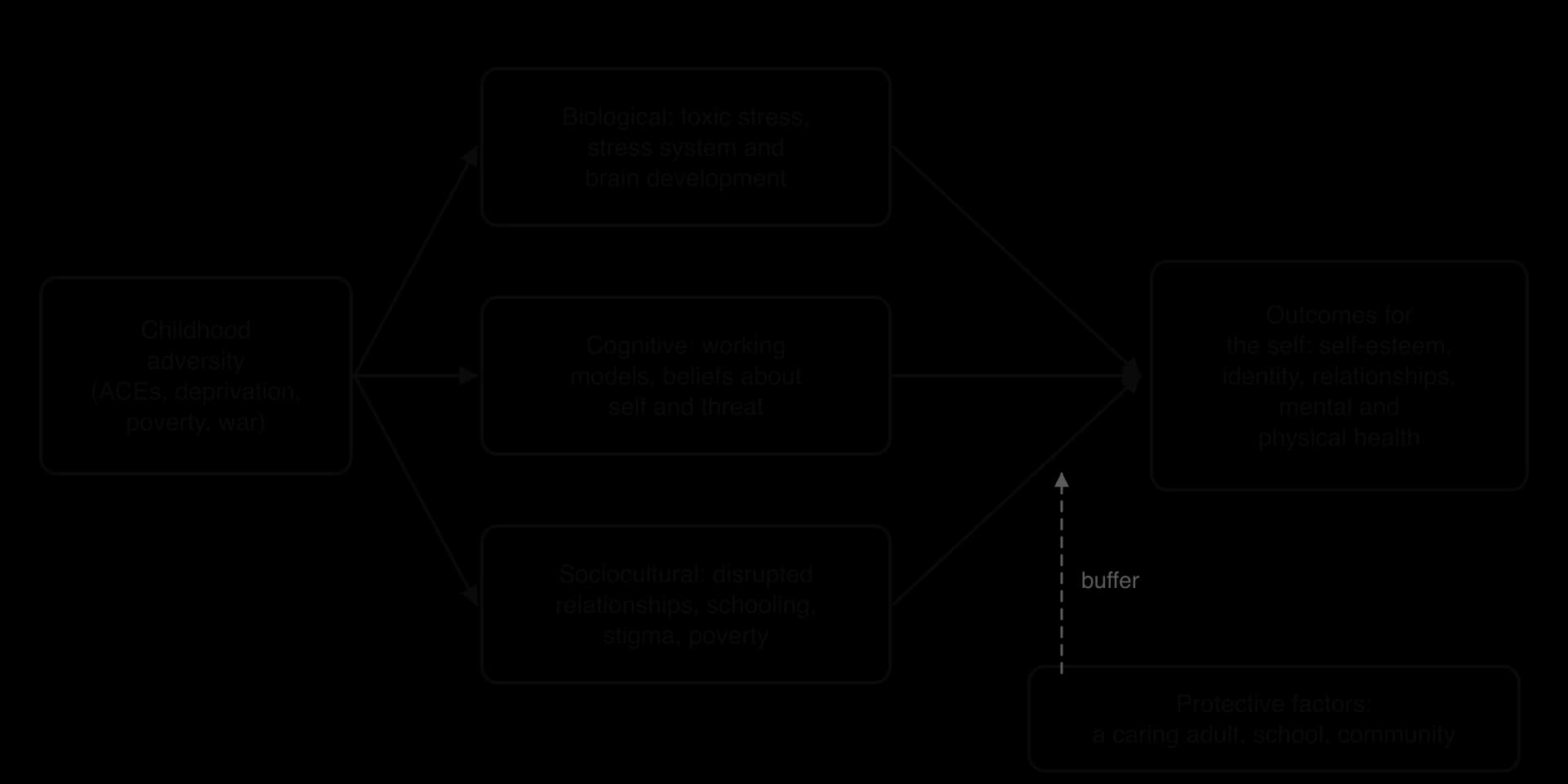
Biological: toxic stress affects the developing stress system and brain regions involved in memory, emotion and self-control; poverty is associated with differences in cortical surface area; epigenetic changes may link early care to stress responses.
Cognitive: experiences shape internal working models and beliefs about the self (“I am unlovable”, “the world is dangerous”), which affect self-esteem, attention to threat and expectations of others.
Sociocultural: adversity disrupts relationships, schooling and community belonging; stigma, poverty and culture shape what counts as adversity and which supports are available.
These pathways interact. A child exposed to violence at home (sociocultural) has a chronically activated stress response (biological), which makes it harder to concentrate at school (cognitive), leading to poor grades and a view of themselves as “stupid” (cognitive) and to exclusion from peer groups (sociocultural). A caring teacher can interrupt the cycle at several points at once. Explaining the outcome through one pathway alone is reductionist.
Researchers cannot assign children to adversity, so most evidence is correlational or comes from natural experiments. Adversities tend to occur together, so the effect of one is hard to separate from the others, and shared genes may contribute to both a parent’s difficulties and a child’s later problems. Several kinds of evidence together make a stronger case: dose–response relationships (ACEs), changes in outcomes when adversity ends at different ages (ERA), random assignment to better care (the Bucharest project), and animal research that manipulates early care directly. Even then, the most defensible conclusion is that adversity is one cause among several, interacting with genes, protective factors and later experience.
Retrospective studies, which ask adults to recall childhood, are cheap and can study large samples, but recall is affected by memory, current mood and willingness to disclose; the poor agreement between prospective and retrospective measures (κ = 0.19) shows that they capture different groups. Prospective longitudinal designs such as Kauai, Dunedin and ERA measure experiences at the time and follow the same people, but they are expensive, lose participants over decades and reflect the conditions of the time when they began.
Research on adversity involves vulnerable children and sensitive information, so consent, confidentiality and the duty to act if a child is at risk must be balanced. Findings also carry a responsibility in communication. Describing deprived or traumatised children as “damaged” can become a self-fulfilling label, and screening individuals for ACE scores risks stigma without clear benefit. Responsible use of the research emphasises risk across groups, the importance of protective factors and the possibility of recovery.
The research has clear implications for change. Removing children from damaging environments early, as in family-based alternatives to institutions, improves outcomes; supporting caregivers and communities builds the protective factors that make resilience possible; and preventing ACEs in one generation may reduce them in the next. The evidence that recovery continues into adolescence and adulthood, as in Werner and Smith’s later-blooming participants, shows that some kinds of change remain possible in adulthood.
Much of the research uses samples from the United States and Western Europe, and definitions of adversity and good parenting reflect those cultures. Kauai, Sierra Leone and the multi-country ACE studies widen the base, but forms of adversity such as war, displacement and extreme poverty are concentrated in places where less research is done, and protective factors such as extended family and religious community may matter more there than Western research suggests.
Childhood experiences can appear in Paper 1 Section B as a scenario about a child or young person who has experienced adversity, asking you to explain its effects on development or how its effects could be reduced. In Section C it can be combined with any concept; causality, measurement, responsibility and change all fit well.
Childhood experiences may have lasting effects because the brain is developing rapidly, early relationships shape working models of the self, and early paths create later experiences.
The ACE study found a graded, dose–response relationship between the number of adverse childhood experiences and adult mental and physical ill health.
ACE research relies on retrospective self-report, which agrees poorly with prospective measures, and the ACE score ignores severity, timing and protective factors.
Toxic stress, prolonged stress without a supportive adult, is the proposed mechanism linking adversity to the developing brain and later health.
In the ERA study, children adopted from Romanian institutions before six months largely recovered; longer deprivation was linked to lasting social, attention and emotional difficulties, although IQ recovered.
Poverty is associated with differences in brain structure, especially in the poorest families, and natural experiments suggest income itself matters.
Among former child soldiers in Sierra Leone, community acceptance and schooling after the war were linked to better outcomes.
Resilience is common “ordinary magic”: about a third of high-risk Kauai children became competent adults, helped by caring adults and community support.
Research is evaluated through causality (correlational, natural and randomised designs), measurement (prospective vs retrospective), responsibility (labelling and vulnerable participants) and change.
I can explain why childhood experiences may have lasting effects on the development of self.
I can describe adverse childhood experiences and evaluate the ACE research.
I can explain toxic stress and the role of a caring adult as a buffer.
I can describe and evaluate the English and Romanian Adoptees study.
I can discuss the effects of poverty and war on children, using research from different cultures.
I can explain resilience and protective factors with reference to longitudinal studies.
I can evaluate research on childhood experiences with reference to causality, measurement and responsibility.