Explain how antidepressants and other biological treatments act on major depressive disorder, and evaluate their effectiveness using trials, meta-analyses and the placebo debate, side effects, relapse and combined treatment.
Each is in the Psychology glossary, with every other term in the subject.
A drug used to treat depression that alters neurotransmission, mainly by increasing the activity of serotonin, noradrenaline or both at the synapse.
A treatment of a mental health disorder that acts directly on the body, for example by changing neurotransmission with drugs or brain activity with electrical or magnetic stimulation.
The use of a biological treatment, such as an antidepressant, together with a psychological treatment, such as cognitive behavioural therapy, for the same disorder.
Physical and psychological symptoms, such as dizziness, anxiety and sleep disturbance, that can occur when an antidepressant is reduced or stopped, especially suddenly.
A biological treatment in which a brief electrical current is passed through the brain of an anaesthetised patient to produce a controlled seizure; used mainly for severe or treatment-resistant depression.
A clinician-rated scale, usually of 17 items scored after an interview, used to measure the severity of depression in treatment research; higher scores mean more severe depression.
An anaesthetic drug that blocks NMDA glutamate receptors and, at low doses, can reduce depressive symptoms within hours in treatment-resistant depression, although the effect is short-lived.
Describe the main classes of antidepressant and explain how a selective serotonin reuptake inhibitor acts at the synapse.
Explain why antidepressants take several weeks to improve mood, and what this suggests about how they work.
Describe how the effectiveness of a biological treatment is tested in a double-blind, placebo-controlled randomised controlled trial.
Analyse the evidence on the effectiveness of antidepressants from trials and meta-analyses, including the role of baseline severity and the placebo response.
Explain the side effects of antidepressants, the problem of adherence and the risk of relapse when treatment stops.
Describe electroconvulsive therapy, repetitive transcranial magnetic stimulation and ketamine, and evaluate the evidence for each.
Compare and contrast biological treatment with psychological and combined treatment of depression.
Evaluate biological treatments of depression with reference to causality, measurement, bias, change, perspective and responsibility.
A biological treatment tries to reduce the symptoms of a mental health disorder by changing the body, usually the chemistry or activity of the brain. For major depressive disorder, the most common biological treatment is antidepressant medication, which is among the most widely prescribed groups of medicines in the world. Other biological treatments act on the brain directly with electricity or magnetic fields, or use newer drugs such as ketamine.
Biological treatments draw on the approach terms of neurotransmission and chemical messengers, and on biological explanations of depression such as the
With a free account, Augment remembers where you stopped and what you have practiced.
An antidepressant that blocks monoamine oxidase, the enzyme that breaks down serotonin, noradrenaline and dopamine, so that more of these neurotransmitters is available for release.
The return of the symptoms of a disorder after a period of improvement, during or soon after treatment, before the person has fully recovered.
The point at which a person’s symptoms have fallen below the threshold for the disorder, usually defined as a score below a cut-off on a rating scale.
An antidepressant that blocks the serotonin transporter on the presynaptic neuron, so that less serotonin is reabsorbed after release and more remains in the synaptic gap.
An antidepressant that blocks the reuptake of both serotonin and noradrenaline, so that more of each remains in the synaptic gap.
A biological treatment in which a magnetic coil on the scalp induces electrical currents in a targeted area of the cortex; repeated daily sessions (rTMS) are used to treat depression.
The extent to which a person follows a treatment as prescribed, such as taking medication at the right dose and for the recommended length of time.
Major depressive disorder that has not improved after at least two adequate courses of different antidepressant treatments.
An older class of antidepressant, named after its three-ring chemical structure, that blocks the reuptake of serotonin and noradrenaline and also acts on many other receptors, causing more side effects.
Every treatment of a mental health disorder rests on an idea of what has gone wrong. A biological treatment assumes that the symptoms are linked to a change in the brain or body, and that altering it will reduce them. The treatment does not have to correct the original cause: a drug can relieve symptoms through a process that has nothing to do with how the disorder began.
Three groups of biological treatment are used for depression. Drug treatments (antidepressants, and sometimes other drugs added to them) change neurotransmitter activity. Brain stimulation treatments change the electrical activity of the brain, either by inducing a brief seizure under anaesthetic or by stimulating the surface of the cortex with a magnetic field. Newer rapid-acting drugs, such as ketamine, act on other chemical systems and are used when standard treatments have failed.
Psychological treatments, such as cognitive behavioural therapy, work in the opposite direction: they change thoughts, behaviour and relationships, and any change in the brain follows from that. The two kinds of treatment are often combined, and comparing them is one of the main ways of judging what each one adds.
Major depressive disorder is diagnosed when a person has at least five of nine symptoms, including depressed mood or a loss of interest or pleasure, for at least two weeks. Because depression often recurs, a treatment has to be judged both on how well it ends an episode and on how well it prevents the next one.
The severity of depression is usually measured with rating scales. The most widely used in drug trials is the Hamilton Rating Scale for Depression (HRSD), a 17-item scale scored by a trained clinician after an interview, on which higher scores mean more severe depression. Self-report questionnaires, such as the Beck Depression Inventory, are also common. Most claims about treatment rest on changes of a few points on these scales.
An antidepressant is a drug that is used to treat depression and acts on neurotransmission, mainly of the monoamine neurotransmitters serotonin, noradrenaline and dopamine. Antidepressants are grouped by how they act. The older classes were discovered by chance in the 1950s; the newer ones were designed to act more selectively, mainly to reduce side effects.
Class | Examples | How it acts | Main points |
|---|---|---|---|
Selective serotonin reuptake inhibitors (SSRIs) | fluoxetine, sertraline, citalopram, escitalopram, paroxetine | Block the transporter that takes serotonin back into the presynaptic neuron | Usually the first drug tried; safer in overdose than older drugs; common side effects include nausea, sleep problems and sexual difficulties |
Serotonin–noradrenaline reuptake inhibitors (SNRIs) | venlafaxine, duloxetine | Block the reuptake of both serotonin and noradrenaline | Often used when an SSRI has not helped |
Tricyclic antidepressants | amitriptyline, imipramine, clomipramine | Block the reuptake of serotonin and noradrenaline, and also act on many other receptors | Effective but with more side effects (dry mouth, drowsiness, weight gain) and dangerous in overdose |
Monoamine oxidase inhibitors (MAOIs) | phenelzine, tranylcypromine | Block monoamine oxidase, the enzyme that breaks down monoamines | Rarely used: dangerous interactions with some foods (such as aged cheese) and other drugs |
Other (atypical) antidepressants | mirtazapine, bupropion, agomelatine, vortioxetine | Various: blocking particular receptors, acting on dopamine and noradrenaline, or on melatonin receptors | Chosen to suit a person’s symptoms or to avoid particular side effects |
The table shows that most antidepressants, including the selective serotonin reuptake inhibitors prescribed most often, share one effect: they increase the amount of a monoamine available at the synapse. They do it in different ways, by blocking reuptake or by blocking the enzyme that breaks the neurotransmitter down. The differences between classes lie mainly in their side effects and safety, not in large differences in how well they work.
Two other classes are often named in research. A tricyclic antidepressant is an older antidepressant named after its three-ring chemical structure, and an SNRI blocks the reuptake of two monoamines rather than one. MAOIs work differently from all the others, by stopping the breakdown of monoamines inside the neuron.
When a serotonin-releasing neuron fires, serotonin is released from vesicles into the synaptic gap and binds to receptors on the next neuron. The signal is ended mainly by reuptake: a transporter protein in the membrane of the presynaptic neuron carries serotonin back inside, where it is stored again or broken down. An SSRI binds to this transporter and blocks it, so serotonin stays in the gap for longer and at a higher concentration.
In the terms used for drug action, an SSRI is an indirect agonist of serotonin: it does not act on serotonin receptors itself, but it increases the effect of the serotonin that the neuron releases. This action begins within hours of the first dose, while the changes that follow it take weeks.
The neuron fires and releases serotonin into the synaptic gap.
Serotonin binds to receptors on the postsynaptic neuron and changes its activity.
Normally the serotonin transporter carries serotonin back into the presynaptic neuron (reuptake).
The SSRI blocks the transporter, so more serotonin remains in the gap.
Over the following weeks, the brain adapts to the higher serotonin levels.
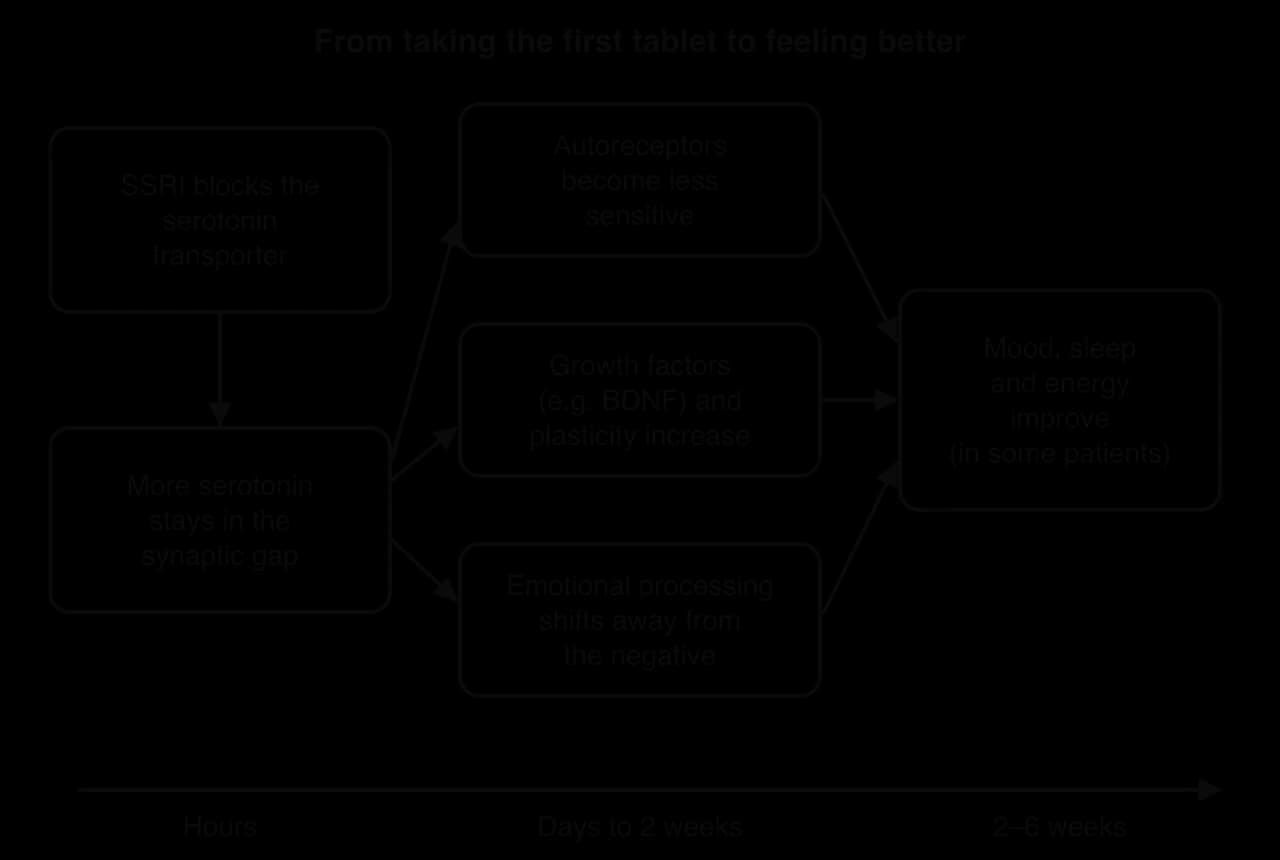
SSRIs block reuptake within hours, but most people notice an improvement in mood only after two to six weeks. If depression were caused simply by too little serotonin, mood should lift as soon as serotonin levels rise. The delay is one reason the monoamine hypothesis is now treated as an incomplete explanation of depression, together with the finding of Moncrieff et al. (2022) that there is no consistent evidence that depression is caused by low serotonin.
The three explanations in the figure are not mutually exclusive: several of these changes may happen together.
Serotonin neurons have autoreceptors that detect serotonin in the gap and reduce further release when levels are high. When an SSRI first raises serotonin, these autoreceptors act as a brake. Over several weeks they become less sensitive, so the brake weakens and the neuron releases more serotonin than before. This account explains the delay but, like the monoamine hypothesis, still assumes that more serotonin is what helps.
A second account links antidepressants to neuroplasticity. Chronic stress and depression are associated with reduced levels of brain-derived neurotrophic factor (BDNF), a protein that supports the growth and survival of neurons, and with a smaller hippocampus in some patients. In animal studies, antidepressants given over weeks increase BDNF and the formation of new neurons in the hippocampus (neurogenesis). On this view antidepressants work by helping the brain rebuild connections that stress has weakened, which takes time.
A third account focuses on how people process emotional information. Harmer et al. (2004) randomly allocated 42 healthy volunteers to seven days of the SSRI citalopram, the noradrenaline reuptake inhibitor reboxetine or a placebo, under double-blind conditions. Both drugs reduced the recognition of angry and fearful faces and increased the recall of positive words relative to negative ones, before there was any change in the volunteers’ mood. This suggests that antidepressants shift attention and memory away from negative information within days, and that mood improves later as the person experiences their world differently.
This account is important because it links a biological treatment to a cognitive explanation of depression. The negative biases in attention and memory that cognitive models describe may be one route through which the drug works, so the biological and cognitive approaches describe the same change at different levels.
 YouTube
People with depression often improve without a specific treatment. Episodes end on their own over time (spontaneous remission), people tend to enter trials when their symptoms are at their worst, so their scores are likely to fall on the next measurement anyway (regression to the mean), and the attention, hope and routine of being treated help many people. A drug is effective only if it produces more improvement than all of these together, so the evidence has to come from comparing treated patients with a control group.
The standard test is the randomised controlled trial (RCT). Patients who meet the diagnostic criteria are measured at the start, then assigned by random allocation either to the drug or to a placebo, an inactive tablet made to look identical. Random allocation spreads participant variables, such as severity, age and life circumstances, evenly between the groups, so any difference at the end can be attributed to the drug.
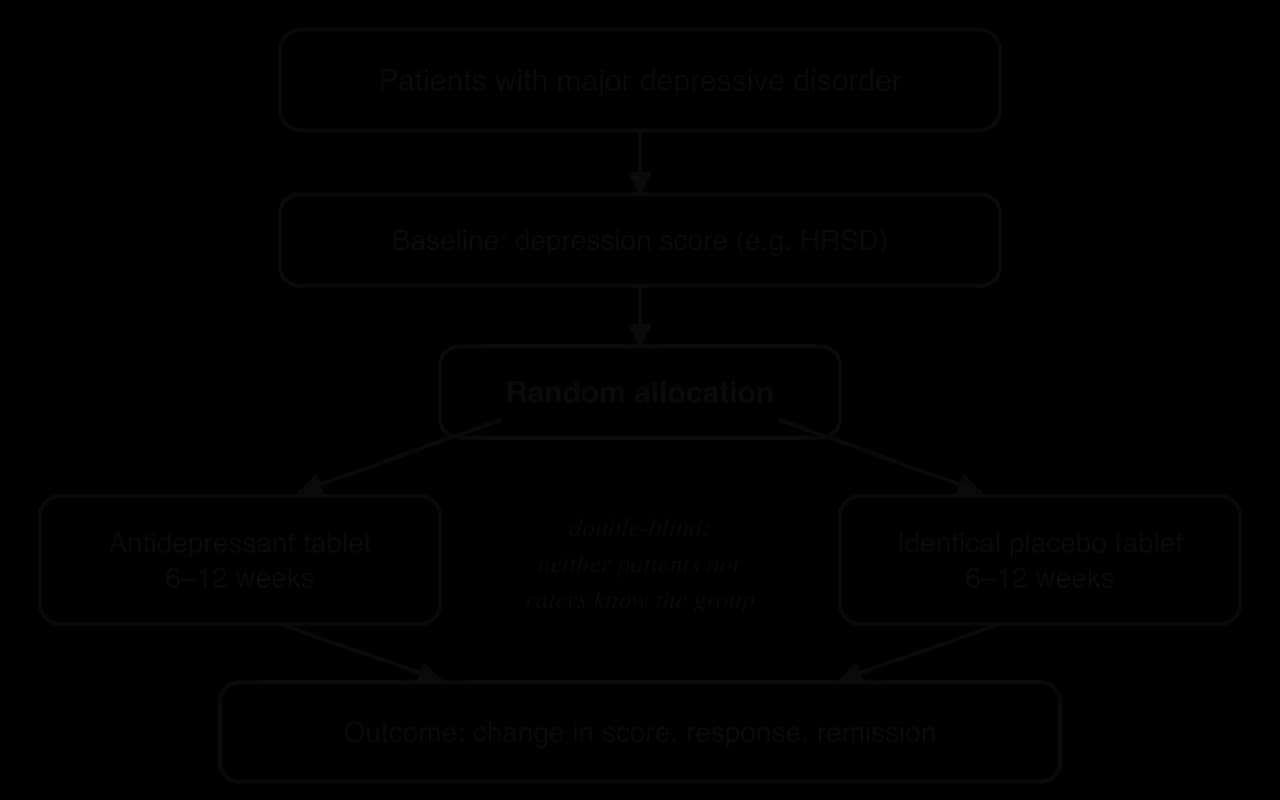
The trial is run as a double-blind design: neither the patients nor the clinicians rating their symptoms know who receives the drug. Blinding controls the expectancy effect in patients, who might report feeling better because they believe they are on the drug, and researcher bias in raters, who might score the drug group more favourably. Antidepressant trials usually last six to twelve weeks.
Trials report outcomes in three ways. Mean change is the average fall in HRSD score in each group. Response usually means at least a 50% fall in a person’s score. Remission means that the score has fallen below a cut-off for depression (for example, 7 or less on the 17-item HRSD), so that the person is no longer clinically depressed.
The same data can look different depending on which measure is reported. A small average difference between drug and placebo can produce a noticeably larger difference in the percentage of people classed as “responders”, because a cut-off turns a continuous scale into two categories. Some patients whose scores change by a point or two are moved from “non-responder” to “responder”, which makes the gap between groups look larger. This is a problem of measurement: the conclusion depends partly on how “working” is operationalised.
A drug–placebo difference can be statistically significant, meaning that it is unlikely to be due to chance, without being large enough to matter to patients. In a trial of thousands of people, a difference of one point on the HRSD can be statistically significant. Whether a difference is large enough to make a real difference to a person’s life is called clinical, or practical significance. The UK’s National Institute for Health and Care Excellence (NICE) once used a drug–placebo difference of 3 HRSD points, or an effect size (d) of 0.5, as its criterion for a clinically significant benefit; that criterion is central to the debate about antidepressants.
In antidepressant trials the placebo group usually improves a great deal. The improvement on placebo includes spontaneous remission and regression to the mean, but it also includes a genuine response to expectation and care. Leuchter et al. (2002) recorded the brain activity of 51 depressed patients with quantitative EEG during two nine-week double-blind trials of fluoxetine or venlafaxine against placebo. Patients who improved on placebo showed an increase in activity in the prefrontal cortex early in treatment, a change not seen in those who improved on the drug.
The placebo response is therefore a biological change as well as a psychological one, but a different change from the drug response. This matters for evaluation: the improvement a patient experiences on an antidepressant in everyday treatment is a combination of the drug’s chemistry, the placebo response and natural recovery, and an RCT is the only way to separate them.
Kirsch, Deacon, Huedo-Medina, Scoboria, Moore and Johnson (2008) aimed to estimate how much more improvement newer antidepressants produce than placebo, using all the trial data that drug companies had submitted to the US Food and Drug Administration (FDA), whether or not the trials had been published. They also aimed to test whether the drug–placebo difference depends on how severely depressed patients are at the start of treatment.
The study was a meta-analysis: a statistical combination of the results of many trials. Drug companies must send the FDA the results of every trial they use to apply for a licence, so the FDA files include trials that were never published. The researchers obtained these files through the US Freedom of Information Act for four antidepressants licensed between 1987 and 1999: fluoxetine, venlafaxine, nefazodone and paroxetine. All were double-blind, placebo-controlled RCTs.
Trials without the necessary data on mean HRSD change, including those for two other antidepressants (sertraline and citalopram), were excluded, leaving 35 trials. These included 5,133 patients: 3,292 on a drug and 1,841 on placebo. For each trial the researchers calculated the mean improvement in HRSD score in the drug and placebo groups. They then tested whether the difference between them changed with the mean baseline severity of the patients in each trial (a technique called meta-regression), and compared the results with the NICE criterion for clinical significance.
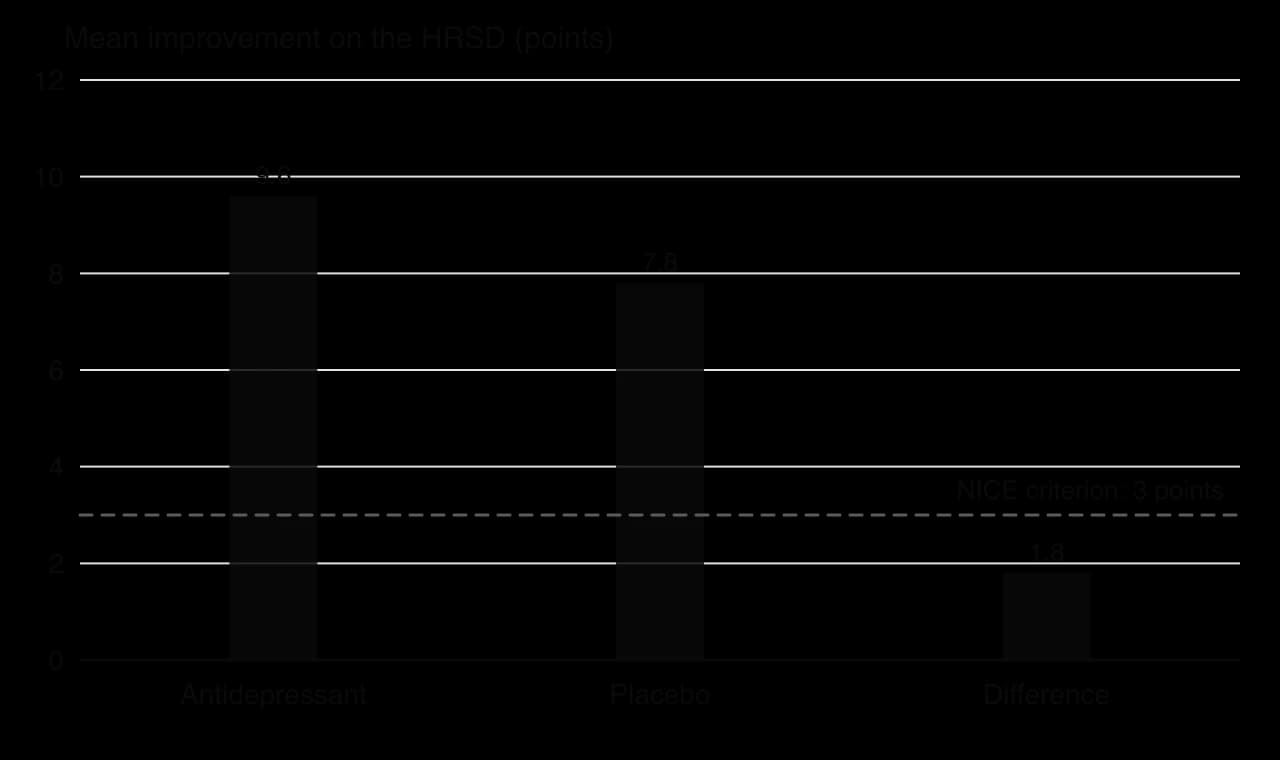
Patients on antidepressants improved by an average of 9.60 HRSD points and patients on placebo by 7.80 points, a difference of 1.80 points.
As an effect size, the drug–placebo difference was d = 0.32, below the NICE criterion of 3 points or d = 0.50.
The placebo response was large: it matched more than 80% of the improvement in the drug groups.
The drug–placebo difference grew as baseline severity increased, and passed the NICE criterion only in trials whose patients had a mean baseline HRSD score above about 28, which is very severe depression.
The growing difference at high severity came mainly from a smaller placebo response in very severely depressed patients, rather than from a larger drug response.

The schematic shows that the gap opens up at high severity because the placebo response becomes smaller, while the drug response stays about the same. Most of the trials included patients who were already severely depressed by HRSD standards, so the analysis says little about mild depression. Within the range studied, the drugs added little to the placebo response on average, except at the very severe end.
Kirsch and colleagues concluded that the overall effect of newer antidepressants was below accepted criteria for clinical significance. The difference between drug and placebo increased with baseline severity and became clinically significant only for patients with very severe depression, mainly because these patients responded less to placebo. They argued that there was little reason to prescribe newer antidepressants to any but the most severely depressed patients, unless alternative treatments had failed.
Sources: Kirsch, I., Deacon, B. J., Huedo-Medina, T. B., Scoboria, A., Moore, T. J. and Johnson, B. T. (2008). Initial severity and antidepressant benefits: a meta-analysis of data submitted to the Food and Drug Administration. _PLoS Medicine, 5(2), e45._
The study’s main strength is its data source. Trials that find a drug effective are more likely to be published than trials that do not, which is publication bias. By using the FDA files, which include every trial submitted for licensing, Kirsch and colleagues avoided the inflated estimate that published studies give. Turner et al. (2008) showed how large this inflation was for antidepressants, with published trials making the drugs look about a third more effective than the full FDA data did.
However, the data are not free of bias. The trials were designed and run by the drug companies, for licensing purposes, and trials without usable data were left out of the analysis. Kirsch has also been a long-standing critic of antidepressants, so his interpretation may reflect his own perspective. Other researchers, using similar data, interpret the same effect size as modest but clinically worthwhile.
A mean difference of 1.8 points describes the average patient, not every patient. If some people respond strongly to the drug and others not at all, the average can be small even though the drug is very effective for some. The NICE criterion of 3 points is also a convention, not a natural boundary. Some researchers argue that the HRSD is a poor measure for this purpose because several of its items (on sleep, appetite and anxiety) are affected by side effects as well as by depression.
A further problem is that blinding may not hold. Antidepressants have noticeable side effects, such as dry mouth and nausea, so many patients can guess that they are on the drug. If guessing raises their expectations, part of the drug group’s advantage may itself be a placebo effect, which would mean the true drug effect is even smaller than 1.8 points.
The trials lasted only four to eight weeks (most of them six) and tested four drugs, one of which (nefazodone) was later withdrawn in many countries because of rare liver damage. The patients were selected for drug trials, which usually exclude people with other illnesses, suicidal thoughts or substance use. The results show the short-term benefit of acute treatment in these samples; they say little about long-term use, relapse prevention or patients in everyday care.
The study received worldwide media coverage, often summarised as “antidepressants don’t work”, although it found that the drugs were better than placebo by a small average amount. Researchers have a responsibility to communicate results like these carefully, because patients who stop medication suddenly because of a headline risk discontinuation symptoms and relapse. At the same time, patients have a right to know how much of the benefit they can expect comes from the drug itself, which is part of informed consent.
Cipriani et al. (2018) carried out the largest analysis of antidepressant trials to date: a network meta-analysis of 522 double-blind RCTs with 116,477 adults, including unpublished data from drug companies and regulators. The outcome was response (at least a 50% fall in symptoms) over about eight weeks. Every one of the 21 drugs was more effective than placebo, with odds ratios ranging from 1.37 for reboxetine to 2.13 for amitriptyline: patients on the drug were somewhat more likely to respond than patients on placebo.
The drugs differed more in how well they were tolerated than in how well they worked. Agomelatine and fluoxetine had fewer dropouts than placebo, while clomipramine had more. Only 18% of the trials were rated at low risk of bias, and the certainty of the evidence was rated moderate to very low. The authors concluded that antidepressants are more effective than placebo for adults with major depressive disorder; the effects were modest, but real.
Kirsch’s and Cipriani’s analyses largely agree about the size of the effect and differ in how they interpret it. Cipriani’s team emphasised that every drug beat placebo, while Kirsch emphasised how small the advantage is, which shows how perspective shapes the interpretation of similar data.
Kirsch and colleagues used average scores for each trial. Fournier et al. (2010) obtained the data for each individual patient from six trials (718 patients) and found the same pattern more precisely. For patients with baseline HRSD scores below 23, the effect size for drug over placebo was less than 0.20, a small effect. The benefit of medication increased with severity and passed the NICE criterion at a baseline score of about 25, so that for very severe depression the benefit over placebo was substantial.
A small average effect could mean a small benefit for everyone, or a large benefit for some patients and none for others. Stone et al. (2022), a team that included FDA researchers and Kirsch, analysed individual data from 232 placebo-controlled trials submitted to the FDA between 1979 and 2016, with 73,388 participants. The average drug–placebo difference was 1.75 HRSD points, almost identical to Kirsch’s estimate.
Improvement scores fell into three groups: a large response (about 16 points), a moderate “non-specific” response (about 9 points) and a minimal response (about 2 points). Participants on a drug were more likely than those on placebo to have a large response and less likely to have a minimal one. The authors estimated that about 15% of participants had a substantial benefit beyond the placebo effect.
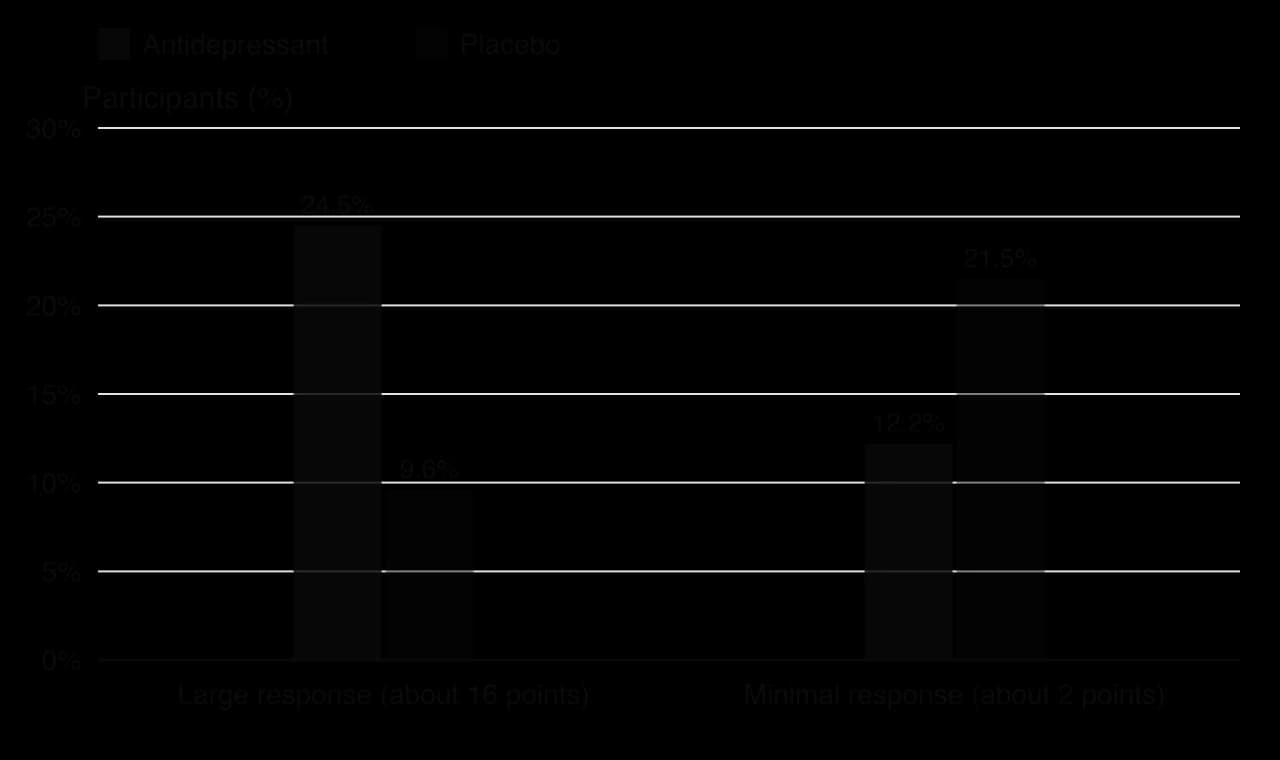
This finding helps to reconcile the two sides of the debate. A minority of patients appear to gain a large, specific benefit from the drug, while many improve to a similar degree on placebo. The practical problem is that there is no reliable way to tell in advance who will be in the minority, which is one reason for the trial-and-error approach to prescribing.
Trials for licensing exclude many real patients. The Sequenced Treatment Alternatives to Relieve Depression study (STAR*D), reported by Rush et al. (2006), recruited about 4,000 adult outpatients seeking care at US primary care and psychiatric clinics, including many with other medical and psychiatric conditions. Everyone started on the SSRI citalopram; those who did not remit could move through up to three further steps, such as switching drugs, adding a drug or trying cognitive therapy.
Rush et al. reported remission rates of 36.8% at the first step, then 30.6%, 13.7% and 13.0% at later steps, and a cumulative remission rate of 67% after up to four steps. People who needed more steps were also more likely to relapse during the 12-month follow-up. STAR*D had no placebo group, so it cannot show how much of this improvement the drugs caused.
The headline figure has been challenged. Pigott et al. (2023) reanalysed the patient data using the outcome measure named in the original protocol, the blinded HRSD, and excluded patients who already scored as remitted when they entered the study or a new treatment step. They estimated a cumulative remission rate of 35.0%, about half of the figure that had been reported. The dispute shows why pre-registration of outcome measures matters: choices made after the data are collected can change a conclusion.
A treatment’s value depends on its costs as well as its benefits. Antidepressants act on neurotransmitter systems throughout the brain and body, not only on the circuits involved in mood, so side effects are common. They affect whether people keep taking the drug, and so how well it works outside a trial.
Class | Common side effects | Serious risks |
|---|---|---|
SSRIs and SNRIs | Nausea, headache, sleep problems, sexual difficulties, feeling emotionally numb or “flat”; SNRIs can raise blood pressure | Rarely, agitation and an increase in suicidal thoughts early in treatment in young people |
Tricyclics | Dry mouth, constipation, drowsiness, dizziness, weight gain | Dangerous heart effects in overdose |
MAOIs | Dizziness, sleep problems | Dangerously high blood pressure if combined with foods rich in tyramine or with some other drugs |
Trials record side effects, but they do not always ask about emotional ones. Read, Cartwright and Gibson (2014) surveyed 1,829 adults in New Zealand who had been prescribed antidepressants in the previous five years. The most frequently reported adverse effects were sexual difficulties (62%) and feeling emotionally numb (60%); 52% reported “not feeling like myself” and 55% reported withdrawal effects. The sample was self-selected through an online questionnaire, so people with bad experiences may have been more likely to take part, but the study shows that some effects matter to patients and are often missed.
Antidepressants carry a warning about suicidal thoughts in young people. Hammad, Laughren and Racoosin (2006), working at the FDA, analysed 24 placebo-controlled trials with 4,582 children and adolescents. There were no suicides, but suicidal thoughts or behaviour were more common on antidepressants than on placebo (risk ratio 1.95 across all drugs and conditions, an absolute difference of about 2 percentage points). Stone et al. (2009) found in 99,231 adults in 372 trials that the risk depended strongly on age: it was raised in adults under 25, roughly neutral from 25 to 64, and lower than on placebo in those aged 65 and over.
These findings led to warnings and closer monitoring of young people in the first weeks of treatment. They do not show that antidepressants increase suicide in the population, and untreated depression is itself a major risk factor for suicide, so the decision is a balance of risks for each patient.
A drug can only work if it is taken. Treatment adherence means following a treatment as prescribed. Sansone and Sansone (2012), reviewing research from the previous decade, reported that about half of patients in both psychiatric and primary care stop taking antidepressants within six months of starting. Reasons include side effects, the delay before any benefit, fears of addiction, the belief that a tablet cannot solve personal problems, and too little explanation or follow-up from the prescriber.
Poor adherence is one reason why antidepressants work less well in everyday care than in trials, where patients are monitored closely. It also links biological treatment to cognitive and sociocultural factors: whether a person keeps taking a drug depends on their beliefs about depression and medication, on stigma, and on their relationship with the doctor.
Stopping an antidepressant, especially suddenly, can cause discontinuation symptoms such as dizziness, “electric shock” sensations, anxiety, irritability, sleep disturbance and flu-like symptoms. Guidelines in the UK and the USA used to describe these as mild and lasting one to two weeks. Davies and Read (2019) reviewed 24 studies and estimated that, on average, 56% of people who stop antidepressants experience withdrawal effects; nearly half of those who did rated them as severe, and for a significant proportion they lasted more than two weeks, sometimes months.
The review was itself criticised for combining very different studies, including online surveys of people with bad experiences, and its estimates are debated. The UK’s NICE nevertheless updated its guidance in 2019 to say that withdrawal symptoms can be severe and long-lasting for some people. Discontinuation symptoms also cause a measurement problem in relapse studies: symptoms of withdrawal can be mistaken for a return of depression.
Depression often returns after an episode has ended. A relapse is the return of symptoms after a period of improvement, before full recovery is established. Antidepressants are therefore usually continued for at least six months after a person feels better, and longer for people who have had several episodes.
Geddes et al. (2003) combined 31 randomised trials with 4,410 patients who had responded to antidepressants and were then randomly allocated either to continue the drug or to switch to placebo. Over the following months, 41% of those switched to placebo relapsed, compared with 18% of those who continued, a reduction in the odds of relapse of about 70%. Most trials lasted 12 months, so the evidence for longer use is weaker.

The chart shows both a strength and a limitation. Continuing medication protects people from relapse, but the protection appears to depend on continuing it. Part of the higher relapse rate on placebo may also reflect discontinuation symptoms in people whose drug was stopped, which would exaggerate the benefit of staying on it. Psychological treatments are often compared with antidepressants on exactly this point: whether their benefit lasts after treatment ends.
Antidepressants help many patients, but a substantial minority do not respond to several drugs. Depression that has not improved after at least two adequate courses of different antidepressants is usually called treatment-resistant depression. Three other biological treatments are used mainly for this group, and each acts on the brain in a way that does not depend mainly on serotonin.
Electroconvulsive therapy (ECT) is the oldest of these treatments, one of the most effective in the short term for severe depression, and the most controversial. The patient is given a general anaesthetic and a muscle relaxant, and a brief electrical current is passed through the brain through electrodes on the scalp, producing a controlled seizure that lasts less than a minute. A course is usually two or three sessions a week for several weeks.
The UK ECT Review Group (2003) carried out a meta-analysis of randomised trials. Real ECT was significantly more effective than simulated (sham) ECT, in which patients received the anaesthetic but no current, with a large effect size (six trials, 256 patients). ECT was also more effective than drug treatment in the short term (18 trials, 1,144 participants), bilateral ECT was more effective than unilateral ECT, and higher doses were more effective than lower doses. The main side effect is memory loss, especially for events around the time of treatment, and relapse is common after a course ends unless treatment is continued.
How ECT works is not known: suggested mechanisms include changes in neurotransmitter receptors, increased neuroplasticity and changes in the connections between brain networks. Its history includes use without anaesthetic or consent, and it is still stigmatised. Today it is used mainly when depression is severe, life-threatening (for example, when a person has stopped eating or drinking) or has not responded to other treatments, and it requires informed consent where the person is able to give it.
Repetitive transcranial magnetic stimulation (rTMS) uses a magnetic coil held against the scalp to induce small electrical currents in the cortex beneath it, usually the left dorsolateral prefrontal cortex, which is often underactive in depression. Patients are awake, need no anaesthetic and can return to normal activities after each session.
George et al. (2010) ran a sham-controlled RCT at four US university hospitals with 199 depressed outpatients who were not taking antidepressants. The sham coil looked and sounded the same, and electrodes on the scalp copied the sensation of stimulation, so that patients, treaters and raters were effectively blind. After three weeks of daily weekday sessions, 14.1% of patients on active rTMS had remitted, compared with 5.1% on sham, and the odds of remission were 4.2 times higher. The effect was statistically significant and side effects were minimal, but most patients did not remit, and remitters tended to be those with low treatment resistance.
Ketamine is an anaesthetic that blocks NMDA receptors, a type of receptor for the excitatory neurotransmitter glutamate. Zarate et al. (2006) gave 18 patients with treatment-resistant depression an intravenous infusion of ketamine or placebo, one week apart, in a double-blind crossover design. Depression improved significantly within 110 minutes of ketamine; the day after the infusion 71% of patients met the criterion for response and 29% for remission, but only 35% still met it a week later.
A related drug, esketamine, was approved in the USA in 2019 as a nasal spray for treatment-resistant depression, used alongside an oral antidepressant and given only under supervision in a clinic. Its side effects include dissociation (feeling detached from oneself or one’s surroundings), dizziness, sedation and raised blood pressure, and ketamine can be misused. Blinding is very difficult because patients can usually tell they have received an active drug, and the effects of a single dose fade within days to weeks.
 YouTube
Ketamine is important for theory as well as practice. A drug acting on glutamate, which improves mood within hours rather than weeks, does not fit the monoamine hypothesis, and supports the view that depression involves wider changes in brain circuits and plasticity.
Treatment | What it acts on | Speed | Best evidence | Main limitations |
|---|---|---|---|---|
SSRIs and other antidepressants | Monoamine reuptake or breakdown | 2–6 weeks | Cipriani et al. (2018): all 21 drugs better than placebo, modestly | Small average benefit over placebo; side effects; discontinuation symptoms; relapse after stopping |
ECT | Whole-brain seizure; mechanism unclear | 1–3 weeks | UK ECT Review Group (2003): more effective than sham ECT and than drugs in the short term | Memory loss; anaesthesia; relapse; stigma |
rTMS | Prefrontal cortex activity | 3–6 weeks | George et al. (2010): 14.1% vs 5.1% remission against sham | Most patients do not remit; daily clinic visits; cost |
Ketamine / esketamine | Glutamate (NMDA receptors) | Hours | Zarate et al. (2006): 71% response the day after one infusion | Short-lived effect; dissociation; misuse; hard to blind |
Biological treatments are rarely the only option. For mild depression, guidelines in many countries recommend psychological treatments or guided self-help first; for moderate and severe depression, an antidepressant, a psychological treatment or both are recommended. Combined treatment means giving a drug and a psychological treatment together.
Keller et al. (2000) randomly allocated 681 adults with chronic depression to 12 weeks of the antidepressant nefazodone, a structured form of cognitive behavioural psychotherapy, or both, with raters blind to the treatment. Response rates were 48% for the drug alone and 48% for the psychotherapy alone, but 73% for the combination. A meta-analysis by Cuijpers et al. (2014) of 52 studies with 3,623 patients with depressive or anxiety disorders found that adding psychotherapy to medication produced a moderately large additional benefit (g = 0.43), with clear evidence for major depression, and that the effects of the two treatments appeared to be largely independent and to last for up to two years.
Antidepressants | Psychological treatment (such as CBT) | |
|---|---|---|
What it changes | Neurotransmission and plasticity; emotional processing may follow | Thoughts, behaviour and relationships; brain changes may follow |
Short-term effectiveness | Better than placebo, modestly; clearer benefit in very severe depression | About as effective as drugs for most patients when delivered well |
After treatment stops | Relapse risk rises when the drug is stopped | Some evidence of a lasting protective effect |
Costs to the patient | Physical side effects; discontinuation symptoms | Time and effort; can be emotionally demanding |
Access | Cheap and available in primary care almost everywhere | Needs trained therapists; waiting lists |
Testing | Pill placebo and double-blinding possible | No true placebo; therapists and clients cannot be blind |
The comparison shows why the two are often combined. Drugs are cheap, widely available and can lift severe symptoms enough for a person to engage with therapy; psychological treatments teach skills that may protect against relapse after treatment ends. The success of both also argues against a purely biological or purely cognitive account of depression and supports the biopsychosocial model.
The same drugs are used for several other disorders, and the same evaluation issues apply. SSRIs are first-line drug treatments for many anxiety disorders and for obsessive-compulsive disorder, where higher doses and a slower response are typical, and some are used for post-traumatic stress disorder. For eating disorders, fluoxetine reduces binge eating and purging in bulimia nervosa, but no drug has been shown to treat the core symptoms of anorexia nervosa effectively.
For schizophrenia, the main biological treatment is antipsychotic medication, which blocks dopamine receptors and reduces hallucinations and delusions in many patients, with side effects that include movement problems and weight gain. Across disorders, the questions are the same: how much more than placebo the drug adds, for whom, at what cost, and what happens when it is stopped.
Most antidepressant trials have been run in North America and Europe with mainly white participants, so their results may not transfer straightforwardly. People differ in how quickly their liver enzymes break antidepressants down, and the genetic variants that cause this differ in frequency between populations, which means that the same dose can produce different blood levels and side effects in different people.
Culture also shapes whether biological treatment is acceptable. Where depression is commonly expressed through bodily complaints, such as tiredness, pain or poor sleep (somatisation), people may seek medical help but not accept a psychiatric diagnosis. In some communities taking psychiatric medication carries strong stigma; in others a tablet is more acceptable than talking about personal problems with a stranger. Antidepressants are cheap and fluoxetine is on the World Health Organization’s list of essential medicines, which makes drug treatment available where trained therapists are scarce, but supply, cost and follow-up remain barriers in many low-income countries.
Explanations of depression also affect how people view treatment. In the experiment by Kemp, Lickel and Deacon (2014), people told by a fake test that their depression was caused by a chemical imbalance rated drug treatment as more credible than psychotherapy, so a biological treatment is delivered within beliefs that can shape adherence and outcome.
Research on antidepressants and other biological treatments raises all six concepts, and their main strengths and limitations can be organised concept by concept.
The double-blind, placebo-controlled RCT is the strongest design psychology has for a causal claim, and antidepressant research uses it more than almost any other area. Random allocation and a placebo control mean that the drug–placebo difference can be attributed to the drug, which is why the conclusion that antidepressants have a real, if modest, effect is secure. ECT and rTMS have been tested against sham versions of the procedure, which allows the same kind of causal conclusion.
There are two limits. Side effects can partly break the blind, so some of the drug’s advantage may come from expectation. A trial also shows only that a treatment reduces symptoms, and says nothing about why the disorder began; the rapid effect of ketamine on glutamate shows that very different chemical routes can lead to improvement.
The same trials can be reported as a mean difference of 1.8 HRSD points, as an effect size of about 0.3, as response odds ratios of 1.4 to 2.1, or as a difference in the share of large responders. Each figure is accurate, but they leave different impressions. HRSD items on sleep, appetite and anxiety are affected directly by some drugs, and most trials last six to twelve weeks, which is short compared with a disorder that often recurs over years.
Most licensing trials are funded and designed by the companies that make the drugs, and selective publication made antidepressants look more effective than they are. Meta-analyses that include unpublished regulatory data reduce this bias, and trial registration and pre-registration now make it harder to hide unfavourable results. The STAR*D dispute shows that bias can also enter through the choice of outcome after the data are collected.
Trial samples are a further source of bias. Licensing trials exclude people with other illnesses, substance use or suicidal thoughts, and most participants have been from Western countries, so results may overestimate effectiveness in everyday care and may not transfer to other populations.
Biological treatments can produce change quickly. ECT and ketamine can lift severe depression within days or hours, which matters when a person is at risk. For many patients, however, the change lasts only while the treatment continues: relapse is more common when antidepressants are stopped, ECT is often followed by relapse without continuation treatment, and the effect of a single dose of ketamine fades within days to weeks. This is a strong argument for combining biological treatment with a psychological treatment that teaches lasting skills.
Biological treatment reflects the biological approach, which locates depression in the brain. It is supported by the evidence that changing the brain can reduce symptoms, but Leuchter et al. (2002) showed that expectation and care also change brain activity, and Harmer et al. (2004) found that drugs may act partly through cognitive change. Treating depression only with medication can be a form of biological reductionism: it ignores the life events, thinking patterns and relationships that help to cause and maintain the disorder.
Biological treatments raise ethical issues for practitioners and researchers. Placebo-controlled trials withhold an active treatment from depressed people for weeks, which is justified only if participants give informed consent and are monitored closely, with a way out if they become worse. Patients have a right to accurate information about benefits, side effects and discontinuation symptoms; the earlier description of withdrawal as mild and brief may have led doctors and patients to underestimate it.
Drug companies have a responsibility to publish all trial results, and researchers and journalists to avoid inaccurate messages such as “depression is a chemical imbalance” or “antidepressants don’t work”, which can encourage fatalism or prompt people to stop treatment suddenly. ECT and esketamine raise particular questions of consent, because they are often used with severely ill patients whose capacity to decide may be reduced.
Concept | Strength of biological treatment or its research | Limitation |
|---|---|---|
Causality | Double-blind placebo- and sham-controlled RCTs show a real treatment effect | Side effects can break the blind; a treatment’s success does not show the cause of depression |
Measurement | Standardised scales and large meta-analyses give precise estimates | Results depend on the outcome chosen (mean, response, remission); short trials; HRSD items affected by side effects |
Bias | Analyses of unpublished FDA data reduce publication bias | Industry funding; selective publication; outcome switching; selected Western samples |
Change | Fast relief for severe depression (ECT, ketamine); maintenance prevents relapse while taken | Relapse is common after stopping; benefit depends on continued treatment |
Perspective | Shows that changing the brain can change mood | Reductionist if used alone; placebo and cognitive effects show other factors at work |
Responsibility | Cheap, widely available treatment where therapists are scarce | Consent, side effects and withdrawal; risks in young people; how results are communicated |
Biological treatments act directly on the body; for major depressive disorder the main one is antidepressant medication, with ECT, rTMS and ketamine for severe or treatment-resistant depression.
SSRIs block the serotonin transporter so serotonin stays longer in the synapse; MAOIs block its breakdown; SNRIs and tricyclics also act on noradrenaline.
Reuptake is blocked within hours, but mood improves only after two to six weeks, which suggests the benefit comes from slower changes such as receptor adaptation, plasticity and shifts in emotional processing.
Double-blind, placebo-controlled RCTs and meta-analyses show that antidepressants are more effective than placebo, but the average difference is small (1.8 HRSD points in Kirsch et al., 2008) and larger in very severe depression.
Much of the improvement on a drug is also seen on placebo, and the placebo response is itself a measurable change in brain activity.
Side effects, delays and beliefs about medication reduce adherence; stopping can cause discontinuation symptoms; continuing treatment roughly halves the risk of relapse while it lasts.
ECT is more effective than sham ECT in the short term but causes memory loss; rTMS and ketamine help some treatment-resistant patients through mechanisms that do not depend on serotonin.
Combined drug and psychological treatment is more effective than medication alone, and biological treatment is best evaluated as part of a biopsychosocial approach to depression.
I can describe the main classes of antidepressant and explain how an SSRI acts at the synapse.
I can explain why antidepressants take weeks to work and what this suggests about how they work.
I can describe how a double-blind, placebo-controlled RCT tests a drug, and explain response, remission and clinical significance.
I can describe the aim, method, results and conclusions of Kirsch et al. (2008) and evaluate it through bias and measurement.
I can use evidence from Cipriani, Fournier, Stone and STAR*D to discuss how effective antidepressants are, and for whom.
I can explain the side effects of antidepressants, the problem of adherence, discontinuation symptoms and relapse.
I can describe and evaluate ECT, rTMS and ketamine as alternative biological treatments.
I can compare and contrast biological, psychological and combined treatment of depression.
I can evaluate biological treatments with reference to causality, measurement, bias, change, perspective and responsibility.