Notes on 5.2 Changing identities and cultures
Learning objectives
Define culture, cultural traits, ethnicity and identity, and explain why identities are multiple and change over time.
Describe the global spectrum of cultural diversity and how it can be measured, including with a diversity index.
Examine how cultural diversity is widening in some places and narrowing in others, and why the answer depends on scale.
Explain how cultural traits diffuse through migration, trade, media, tourism and the internet.
Evaluate the idea of cultural imperialism, using evidence of adoption, adaptation, resistance and two-way cultural flows.
Explain how branded commodities are glocalised and how cultural hybridity creates new cultural forms.
Analyse how global interactions change the cultural landscape of the built environment.
Examine how diasporas influence cultural diversity and identity at the global and local scales, with the Indian diaspora as a case study.
Introduction
Global interactions move ideas, music, food, beliefs and people as well as goods and money. As a result, the culture of almost every place now contains traits that began somewhere else, from K-pop in Mexico City to Diwali lights in Leicester. Whether this makes the world’s cultures more alike or more varied is one of the most debated questions in human geography.
Two concepts are central to the study of changing cultures, place and diversity: how the character of places changes as cultures meet, and whether the variety of cultures grows or shrinks. It also shows that global interaction is a two-way process. Cultural traits are adopted, adapted or resisted, and flows run from India, Nigeria and South Korea to Europe and North America as well as the other way. The movement of people links the topic closely to migration and to the flows of remittances that migrants send home.
Culture, identity and ethnicity
Culture is the whole way of life of a group of people. It includes what they believe and value, how they behave and celebrate, the languages they speak and the things they make, from food and clothing to buildings. Culture is learned, not inherited biologically, and it is passed on between generations and between groups, so it is always changing.
Geographers study culture through its separate elements. Each cultural trait can be mapped, traced to a place of origin and followed as it spreads.
Type of trait | Examples | How easily it spreads |
|---|---|---|
Language | English, Spanish, Swahili, Hindi | Slowly; learned over years, often for work or schooling |
Religion and belief | Christianity, Islam, Hinduism, Buddhism, Sikhism | Slowly; carried mainly by migration and missionaries |
Food | Pizza, sushi, curry, tacos, fast food | Quickly; adopted by consumers, often adapted to local tastes |
Dress | Jeans, saris, hijabs, football shirts | Quickly through media and trade |
Music and media | Hip-hop, K-pop, Afrobeats, Bollywood films | Very quickly through streaming and social media |
Customs and festivals | Diwali, Christmas, Lunar New Year, Halloween | With migrant communities and commercial promotion |
Two further concepts describe how people see themselves and others. Ethnicity refers to a group that shares, or believes it shares, a common ancestry, history and culture: Punjabis, Yoruba, Kurds or Māori, for example. Identity is wider and more personal: it is how a person or group understands who they are, built from ethnicity, nationality, religion, language, gender, class and place.
Ethnicity is one ingredient of a wider sense of self.
Identities are multiple: a young woman born in Leicester to parents from Gujarat may think of herself as British, Indian, Gujarati, Hindu, a Leicester City supporter and a student, and stress different parts in different settings. They are also changing: second and third generations of migrants often keep some traits (food, festivals, religion) while losing others (the parents’ language). Nationality, the legal status of being a citizen of a state, is only one part of identity, and the two need not match.
The global spectrum of cultural diversity
Cultural diversity describes the variety of cultures found in a place. It exists at every scale: between the world’s regions, within countries such as India (with 22 languages recognised in its constitution) or Nigeria (with more than 250 ethnic groups), within cities such as London or Toronto, and even within a single street.
Measuring diversity
Diversity is hard to measure, because cultures overlap and people belong to several groups at once. Geographers use several proxies, each with strengths and weaknesses:
Number of languages: Ethnologue, the main reference catalogue, listed 7,170 living languages in 2026. Language is the trait counted most systematically, but the line between a language and a dialect is partly political, and the total has risen as governments have recognised varieties as separate languages.
Endangered languages: UNESCO’s Atlas of the World’s Languages in Danger classifies 2,473 endangered languages by their level of endangerment, about a third of the world’s total. Most have few speakers and are spoken by Indigenous peoples.
Ethnic or linguistic fractionalisation: the probability that two people chosen at random from a country belong to different groups. Countries such as Uganda and the DRC score very high; Japan and South Korea very low.
Census categories: national censuses count people by ethnic group, religion, language or country of birth, but each country chooses its own categories, so figures cannot be compared directly between countries.
The fractionalisation idea can be calculated for any place with census data, using a version of Simpson’s diversity index. If p is each group’s share of the population, written as a proportion between 0 and 1, the index is
A value of 0 means everyone belongs to one group; the value rises towards 1 as the population is spread across more groups of more equal size.
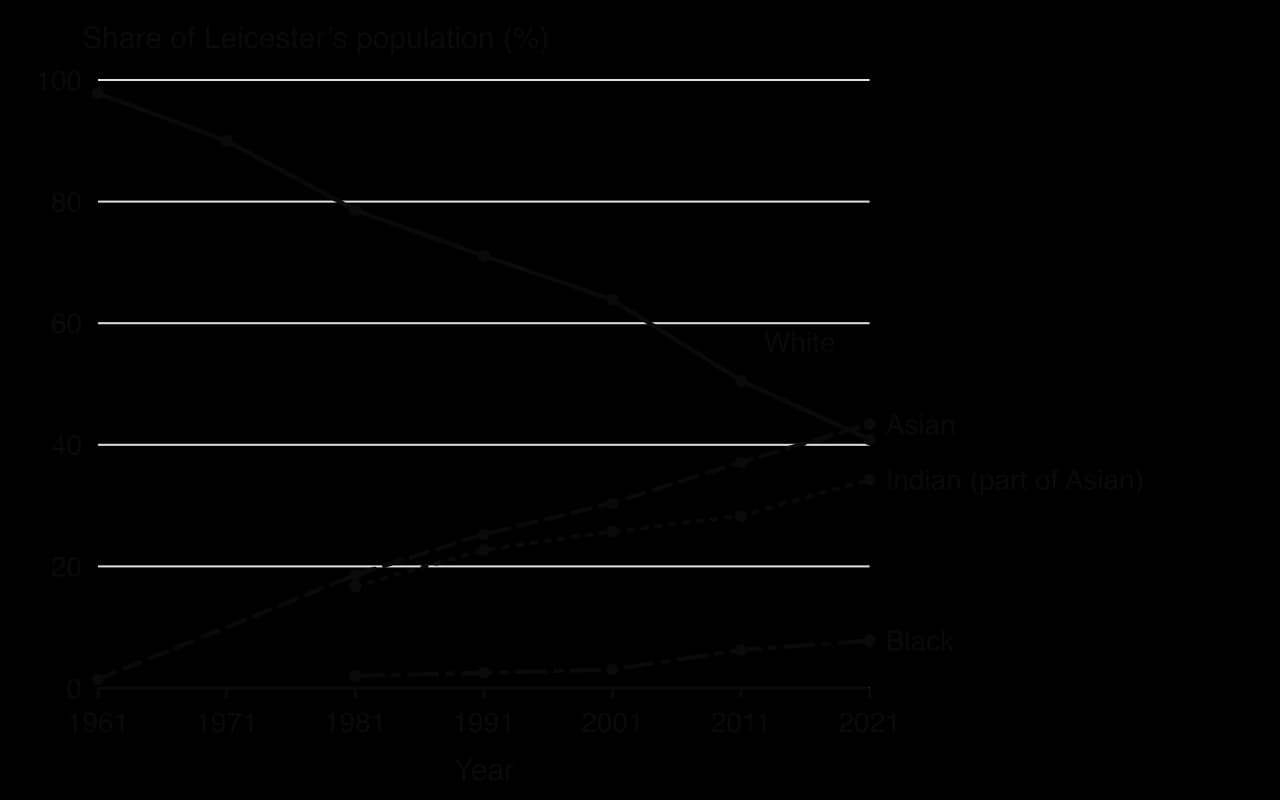
Sources: Office for National Statistics, censuses of 1991 and 2021, via Wikipedia, “Demographics of Leicester”, 2026; Ethnologue and UNESCO via Wikipedia, “Ethnologue” and “Endangered language”, 2026.
The same formula applied to mother tongues gives Greenberg’s linguistic diversity index: the probability that two people chosen at random from a country have different first languages. The index varies enormously between countries. Papua New Guinea, with more than 800 languages among about 10 million people, scores close to 1, and most countries of tropical Africa and South and Southeast Asia score above 0.8. Countries where one language has spread through schooling, media and nation-building, such as Japan, South Korea and Brazil, score close to 0.
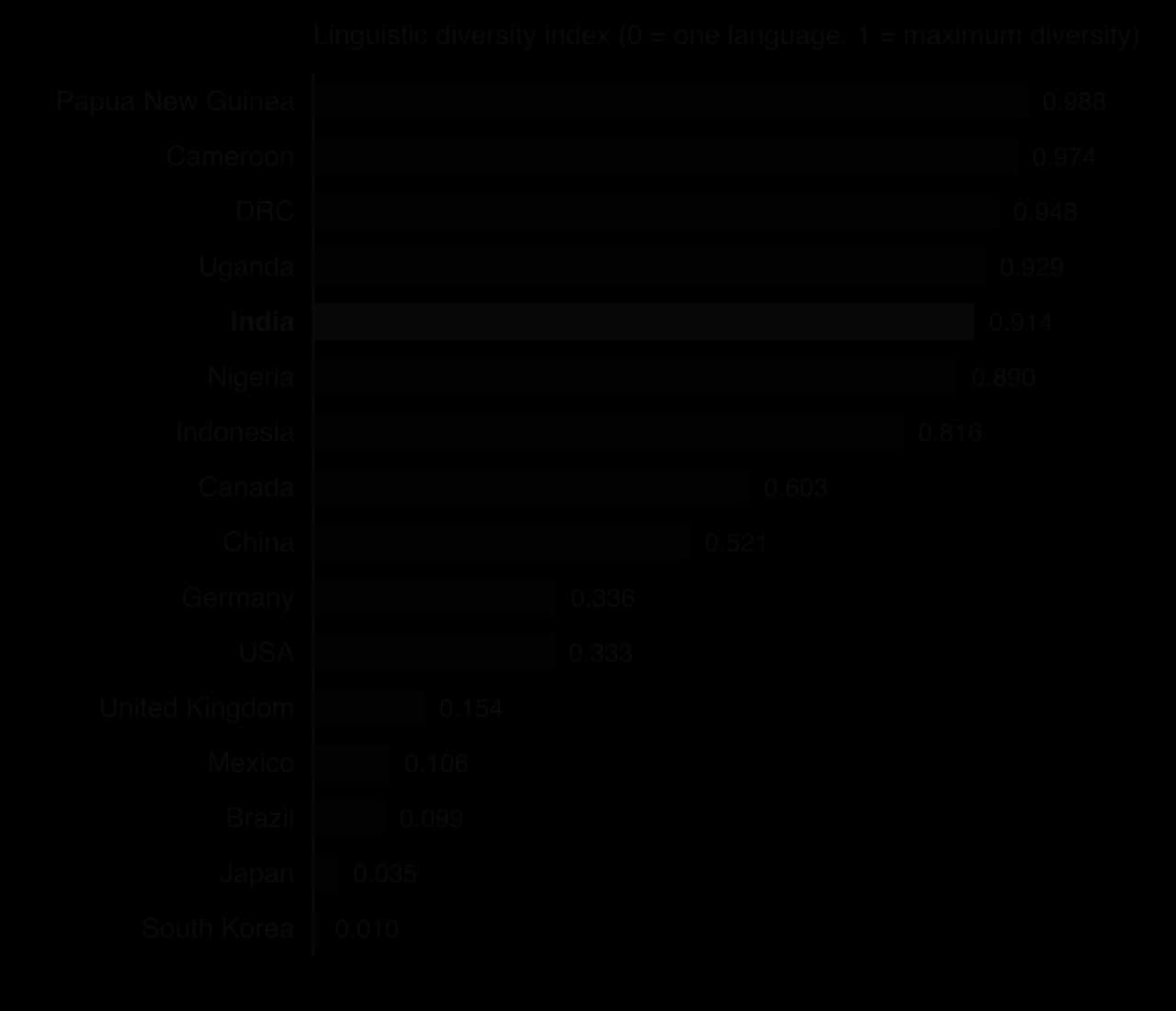
The pattern reflects history as well as geography. Long settlement by many small farming and foraging groups in rugged or forested terrain, as in New Guinea or the Cameroon highlands, produced many languages; colonial settlement and strong nation states, as in the Americas and East Asia, replaced or absorbed them. Migration adds a newer layer: Canada scores 0.603, partly because English and French are joined by the languages of large immigrant communities.
Forces narrowing diversity
Several processes make places and cultures more alike, a process called homogenisation. Language loss is the clearest measure. The 20 most widely spoken languages, each with more than 50 million speakers, are spoken by half of the world’s population, while most of the remaining languages have small numbers of speakers. When parents stop passing on a minority language because a national or global language offers better jobs and status, it can disappear within two or three generations.
Global brands and chains selling the same products in every city reduce the visible difference between places. Standardised media, especially films, series and music produced by a few large companies, spread the same stories and styles. Urbanisation draws rural people, who often keep distinct customs and languages, into cities where they adopt the national culture.
Forces widening diversity
Other processes add variety. International migration has made many cities far more diverse: Leicester’s White population fell from 97.8% in 1961 to 40.9% in 2021 as people arrived from South Asia, East Africa and elsewhere. Language revitalisation has slowed or reversed the decline of some minority languages. Online communities let small groups keep in touch across great distances and share niche interests and languages. Hybrid cultures combine traits from different sources into new forms, so the number of distinct forms can grow even as some old ones are lost.
Language revitalisation shows how deliberate policy can widen diversity again. Two examples show both its potential and its limits.
Welsh (Wales, United Kingdom) | Māori (te reo Māori, New Zealand) | |
|---|---|---|
Legal status | Welsh Language Act 1993; official status in Wales under the Welsh Language (Wales) Measure 2011 | Official language under the Māori Language Act 1987 |
Main methods | Welsh-medium schools, the television channel S4C, bilingual public services and signs | Kōhanga Reo (“language nest”) preschools from 1982, Māori-medium schools, broadcasting |
Recent position | 538,300 people aged 3 and over (17.8%) able to speak Welsh in 2021, a lower share than in 2011 | About 190,000 people (4%) could hold an everyday conversation in Māori in the 2018 census |
Target or trend | Government target of one million speakers by 2050 | Fewer than 20% of Māori were native speakers by the 1980s; learning in schools has since spread widely |
Both cases show that revitalisation can stop a language from disappearing but rarely restores it to everyday use across a whole society, because the dominant language (English in both cases) remains essential for work, media and the internet. Their success depends on the power of minority communities to win official status and funding from national governments.
Sources: Wikipedia, “Welsh language” (2021 census) and “Māori language” (2018 census), 2026.
Why scale changes the answer
Diversity can be widening at one scale while it narrows at another. The table summarises the evidence at three scales.
Scale | Evidence that diversity is widening | Evidence that diversity is narrowing |
|---|---|---|
Local (a city or neighbourhood) | Migration makes cities such as Leicester, London and Toronto far more diverse; new restaurants, places of worship and festivals | Chain stores and global brands make high streets and malls look alike; gentrification can push out migrant businesses |
National | Minority languages gain official status (Welsh, Māori); migrant communities add new religions and languages | National media and schooling spread one language; rural customs fade with urbanisation |
Global | Flows now run from many centres (South Korea, India, Nigeria, Japan); hybrid forms multiply | About a third of the world’s 7,170 languages are endangered; the same brands, platforms and films reach every country |
A city can therefore become more diverse at the same time as the world becomes less so. When a Gujarati family moves to Leicester, the city gains diversity; but if the grandchildren grow up speaking only English, the world loses a little of Gujarati’s use. The question of whether diversity is increasing has no single answer: it depends on the scale, the trait measured and the time period chosen.
The diffusion of cultural traits
Cultural diffusion is the spread of cultural traits from the place where they began, their hearth, to other places and peoples. Christianity spread from the eastern Mediterranean, rice-growing from southern China, jazz from New Orleans and K-pop from Seoul. The same types of diffusion that geographers use to explain the spread of diseases and innovations apply to culture.
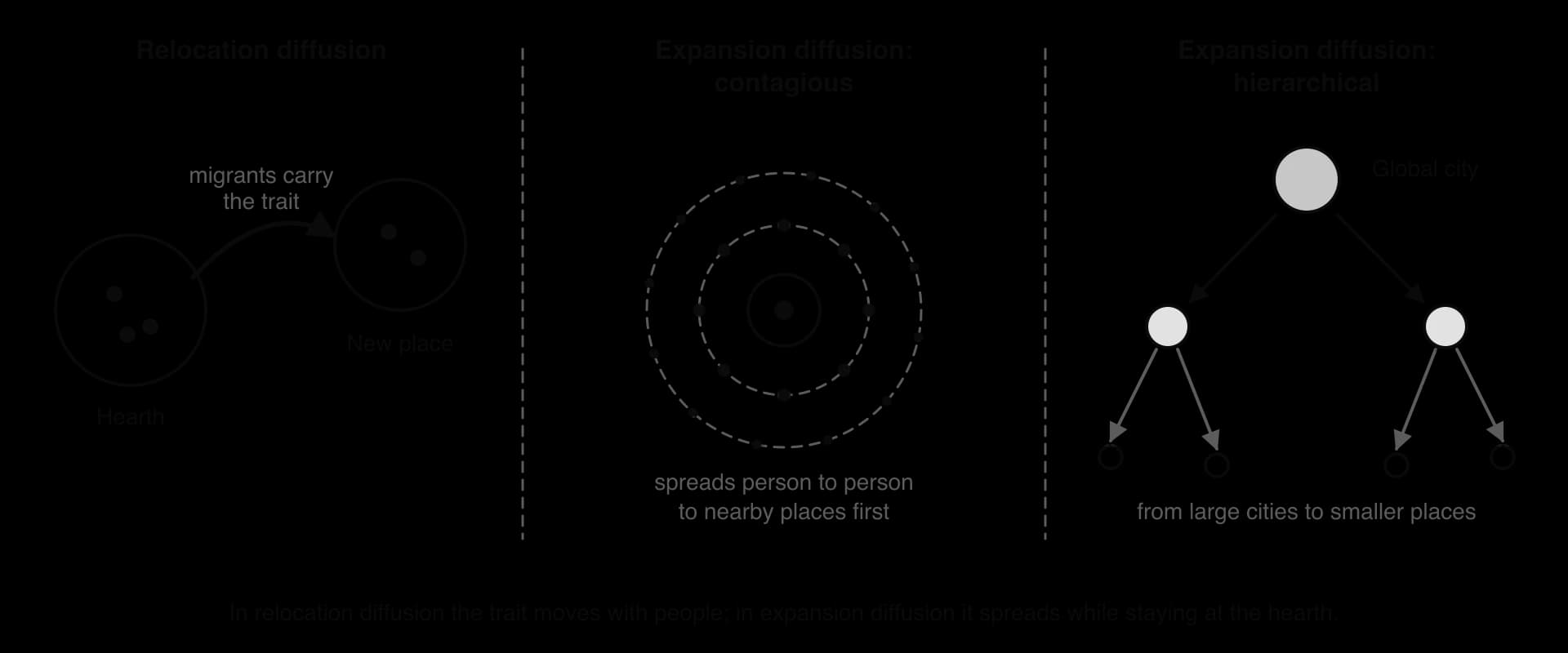
In relocation diffusion a trait moves because the people who carry it move: Indian migrants took Diwali, Hindu temples and Gujarati food to East Africa and then to Leicester. In expansion diffusion the trait spreads outwards while remaining strong in its hearth, in two main ways. In contagious diffusion it passes from person to person, reaching nearby people first, as a dance craze spreads through a school. In hierarchical diffusion it moves down an urban or social hierarchy, from global cities and elites to smaller places, as fashion brands open first in London, Paris and Tokyo and only later in provincial towns.
The channels of diffusion
Channel | How it spreads culture | Example |
|---|---|---|
Migration | Migrants carry language, religion, food and festivals; relocation diffusion | Indian food and festivals in the United Kingdom; Turkish döner kebab in Germany |
Trade and TNCs | Branded goods and the habits around them spread with markets | Coca-Cola, McDonald’s and IKEA in most countries |
Film, television and streaming | Stories, styles and languages reach global audiences | Hollywood films; Netflix series made in South Korea and Spain |
Tourism | Visitors take home tastes and souvenirs; hosts adapt to visitors | Thai cooking classes; yoga retreats in India |
The internet and social media | Traits spread almost instantly, often from peer to peer | Viral dances on TikTok; online language learning |
Technology has changed the speed and shape of diffusion. Distance once slowed the spread of traits, because contagious diffusion needed physical contact; in the shrinking world created by air travel and information and communications technology (ICT), a song can reach every continent within days. Barriers still matter, however: languages, laws, censorship, religious beliefs and the cost of internet access all slow or block some flows.
Cultural imperialism and its critics
Many observers argue that diffusion is not an equal exchange. Cultural imperialism is the idea that the culture of economically and politically powerful countries spreads and dominates others, weakening or replacing local cultures. The term became widely used in the 1960s and 1970s; the media scholar Herbert Schiller argued that American media companies promoted an American way of life across the world without any similar influence flowing back.
Because the United States has dominated global film, music, fast food and the internet since the mid-20th century, the process is often called Americanisation. Critics sometimes use “Coca-colonisation” for the same idea, after the soft drink sold in almost every country.
The sociologist George Ritzer described a related process in his book The McDonaldization of Society (1993). He argued that the principles of the fast-food restaurant are spreading to ever more parts of life and of the world: efficiency (the fastest route to a goal), calculability (quantity measured rather than quality), predictability (the same product everywhere) and control (standardised work and technology). Universities, hospitals and holidays organised in standard packages show McDonaldisation as much as burger chains do.
Evidence for cultural imperialism
Hollywood studios and a few US-based streaming platforms earn a large share of world box office and subscription revenue, and their films are dubbed or subtitled for almost every market.
English is the main language of science, aviation, international business and much of the internet, so learning it brings jobs and status while minority languages decline.
The same brands, from Apple and Nike to Starbucks, appear on high streets and in malls from São Paulo to Shanghai, and global advertising promotes similar ideas of a good life.
Platforms such as Google, YouTube and Instagram, owned by US companies, shape what billions of people see.
Evidence against: two-way and reverse flows
Cultural flows now run in many directions, and some of the strongest come from outside the West. The spread of South Korean popular culture, called Hallyu (the Korean Wave), is the best-known example. The term was coined by Chinese journalists in 1999, when Korean television dramas became popular across East Asia; by 2008 South Korea’s cultural exports exceeded its cultural imports for the first time.
Hallyu’s successes include the K-pop groups BTS and Blackpink, the film Parasite (2019), which won the Oscar for best picture, and the Netflix series Squid Game (2021–2025). The South Korean government treats Hallyu as a source of soft power, the ability to attract and influence others through culture and values rather than force.
Other flows run from the Global South to the North. India produced 1,986 feature films in 2017, more than any other country, 364 of them in Hindi, the language of the Mumbai industry known as Bollywood; Indian films reach large audiences across South Asia, the Gulf, East Africa and the diaspora.
Nigeria’s film industry, Nollywood, grew from the video-film boom that followed Living in Bondage (1992) into one of the largest in the world by the number of films made. Japanese anime and manga, yoga from India and sushi from Japan have become part of everyday life in Europe and North America, and the Chinese-owned app TikTok has spread new forms of entertainment worldwide.
Adopt, adapt or resist
Societies respond to incoming cultural traits in three broad ways. They adopt some largely unchanged, adapt others to fit local tastes, laws or beliefs, and resist others by limiting, banning or replacing them with local forms. The same society may do all three with different traits.
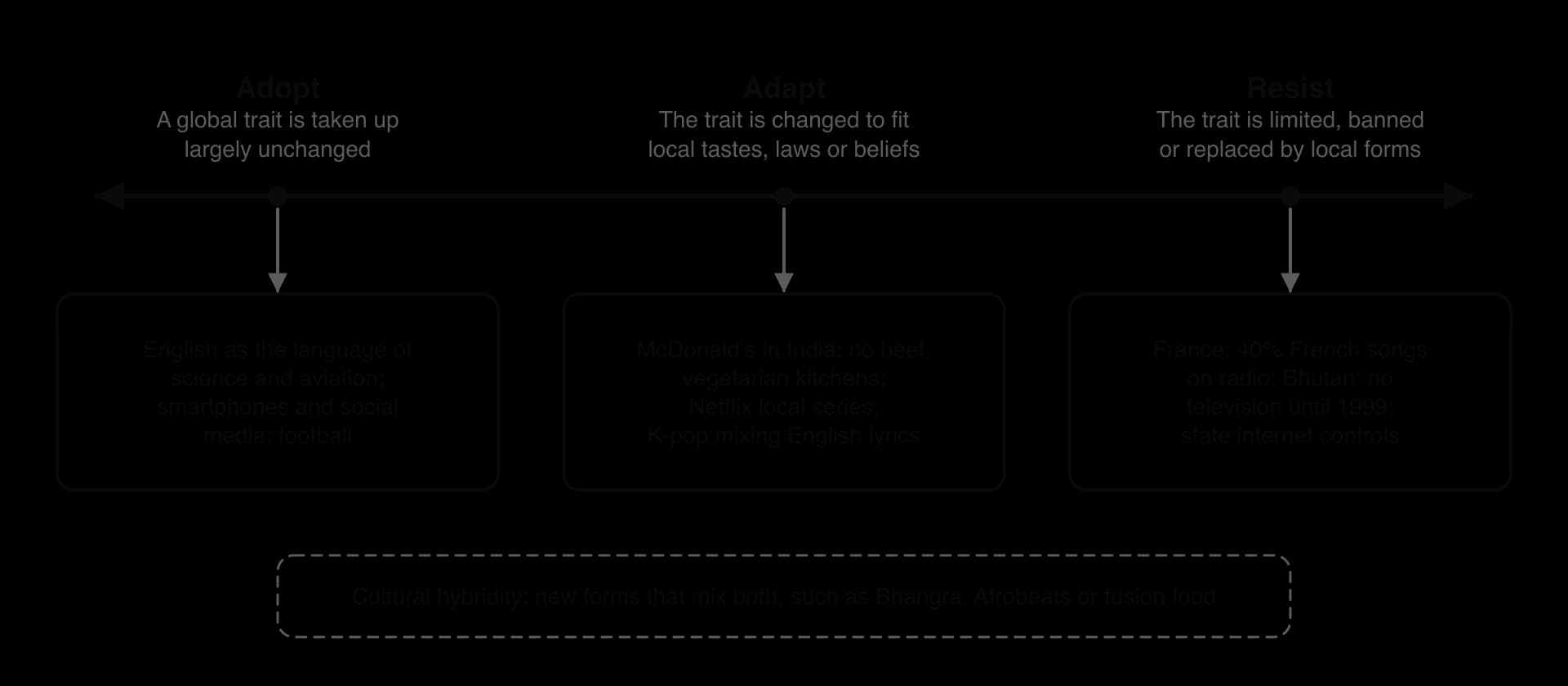
Resistance usually involves the power of governments. France introduced the idea of the “cultural exception” in world trade negotiations in 1993, arguing that films and music should not be treated like other goods; it subsidises French cinema, and its audiovisual law requires radio stations to play 40% French-language songs, a fifth of them by new artists. Bhutan only introduced television in 1999, after a 1989 ruling had banned the ownership of television sets, as part of a policy of protecting its culture. Other states restrict foreign media and internet platforms for political reasons, a form of resistance to global interaction in its own right.
Evaluating the cultural imperialism thesis
Arguments that cultural imperialism is real | Arguments that it is overstated |
|---|---|
A few US-based companies dominate film, streaming and digital platforms | Reverse flows from South Korea, India, Japan and Nigeria are large and growing |
English dominates science and business; about a third of languages are endangered | Many languages decline because of national languages (Mandarin, Hindi, Spanish), not English |
Global brands and chain stores homogenise high streets | Brands are glocalised, and consumers mix them with local products |
Advertising spreads Western ideals of consumption and beauty | Audiences interpret media in their own ways and often prefer local content |
Weaker states lack the resources to subsidise their own media | Governments resist through quotas, subsidies and bans (France, Bhutan) |
The evidence supports a more complex picture than either side alone. Economic and technological power does give some countries, and especially some companies, far more influence over global culture than others, but people in every society adopt, adapt and resist what arrives. Cultural imperialism describes the direction of the strongest flows; it does not describe the outcome in most places, where cultures are mixed rather than replaced.
Glocalisation and cultural hybridity
Glocalisation of branded commodities
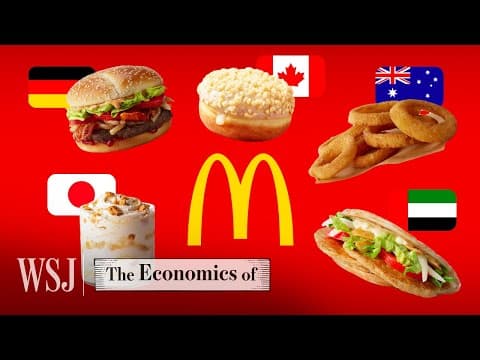
Global companies rarely sell exactly the same product everywhere. Glocalisation is the adaptation of a global product or service to local tastes, laws, religions and languages; the idea, summed up as “think globally, act locally”, comes from the Japanese business term dochakuka and was popularised in English by the sociologist Roland Robertson in the 1990s. For a TNC it is a market strategy: products that fit local culture sell better.
McDonald’s in India is the classic example. Its first restaurants opened in 1996 in Delhi and Mumbai, in a country where most Hindus do not eat beef and many Muslims do not eat pork. The Indian menu therefore has no beef: the Maharaja Mac is made with chicken, the McAloo Tikki is a spiced potato burger, kitchens keep vegetarian and non-vegetarian food separate, and in 2012 the company opened vegetarian-only restaurants, starting in Amritsar, near the Golden Temple. Elsewhere it sells McRice in Indonesia and a prawn burger in Japan and Singapore.
Glocalisation also responds to religious law and local values. McDonald’s, KFC and other fast-food chains serve only halal-certified meat in countries with Muslim majorities such as Malaysia, Indonesia and the Gulf states. Streaming platforms commission local-language series to win national audiences: Netflix’s first Indian original series, Sacred Games (2018), was made in Hindi. Adaptation has limits, however: in 2012 IKEA apologised after images of women were removed from its Saudi Arabian catalogue, because the change conflicted with the company’s own stated values in its home country, Sweden.
 YouTube
Cultural hybridity
When cultures meet over a long period, new forms emerge that belong fully to neither. Cultural hybridity is the creation of these new forms by mixing traits from two or more cultures. Hybridity is especially strong in diaspora communities and in global cities, where people from many backgrounds share the same streets, schools and media.
Hybrid form | What was mixed | Where and when |
|---|---|---|
Bhangra (modern) | Traditional Punjabi folk dance and music with Western pop, disco and electronic styles | Punjabi diaspora in the United Kingdom, from the 1980s; now Canada, the USA and India |
Afrobeats | West African rhythms with hip-hop, dancehall and electronic pop | Nigeria, Ghana and the United Kingdom, 2000s–2010s; Spotify streams grew by 550% between 2017 and 2022 |
Chicken tikka masala | South Asian spices and tandoori cooking with a creamy tomato sauce for British tastes | Probably Glasgow; described in 2001 by the UK Foreign Secretary as “a true British national dish” |
Spanglish | Spanish and English mixed in speech | Hispanic communities in the United States and Puerto Rico |
K-pop | Korean lyrics and idols with US hip-hop, R&B and Japanese pop industry methods | South Korea from the 1990s, now global |
Hybridity complicates the debate about whether diversity is increasing. If hybrid forms count as new cultural traits, globalisation creates diversity as well as destroying it. Critics reply that hybrids often mix a dominant global culture with a local one, so that the global element spreads further each time, and that commercial hybrids may be designed for global markets rather than local communities.
Sources: Wikipedia, “Korean Wave”, “Bollywood”, “Nollywood”, “Cultural exception”, “Television in Bhutan”, “McDonaldization”, “Glocalization”, “McDonald’s”, “Afrobeats”, “Bhangra (music)”, “Chicken tikka masala” and “Spanglish”, 2026.
Cultural landscapes and the built environment
Culture is visible in places. A cultural landscape is a landscape shaped by the people who live in it: its buildings, street signs, shop fronts, places of worship, markets and land uses show who lives there and what they value. The built environment, the human-made surroundings of buildings, streets and public spaces, is where global interactions leave their most visible marks.
The cultural landscape is read mainly from the built environment.
Global architecture and homogenised centres
Global cities compete for investment and tourists with iconic skylines designed by international architects. Dubai’s skyline, topped by the Burj Khalifa (828 m, opened in 2010), and Shanghai’s Pudong district, developed from farmland and warehouses since the 1990s, both use glass towers of a kind found in every major business district. In many central business districts the same international hotel brands, coffee chains and fashion stores line the streets, so that the centres of cities on different continents look more alike than their older neighbourhoods do. This is homogenisation in the built environment.
Ethnic enclaves and migrant landscapes
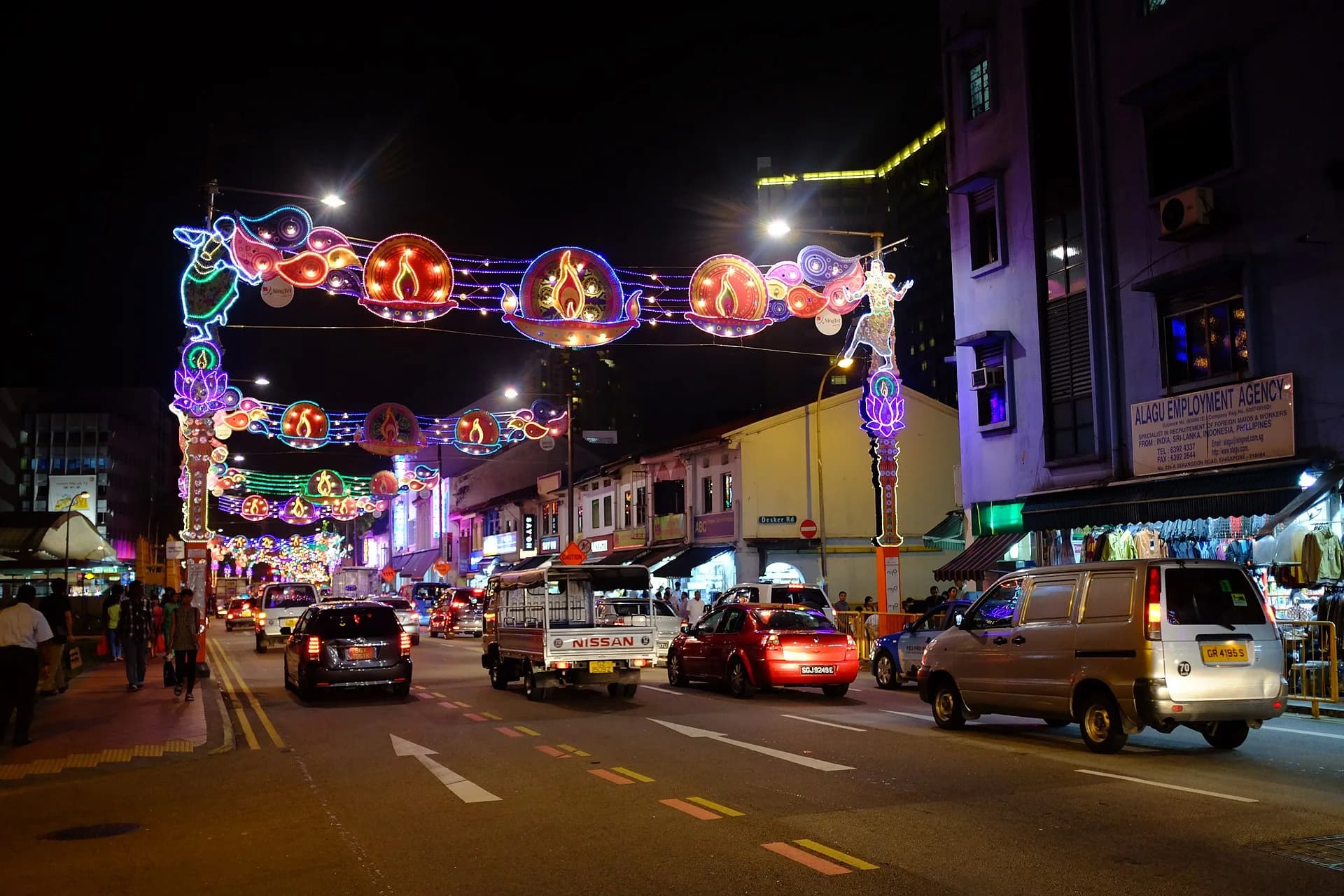
Migration also creates distinctive landscapes. An ethnic enclave is a district where a migrant or minority group is concentrated, with its own shops, restaurants, places of worship and community organisations. The Chinatown of San Francisco, centred on Grant Avenue, is the oldest in North America. Little India in Singapore, around Serangoon Road, is the historic centre of the city’s Tamil and wider Indian community, with temples, gold shops, spice traders and, at Deepavali, street lights and arches.
Some buildings record several waves of migration. In Brick Lane in east London, a building constructed in 1742 as a chapel for French Protestant (Huguenot) refugees was used from 1809 by Wesleyan missionaries, became the Spitalfields Great Synagogue in 1898 for Jewish migrants from eastern Europe, and in 1976 the London Jamme Masjid (Great London Mosque) for the Bangladeshi community that now dominates the area, which the council branded “Banglatown” in 1997. The building’s changing use is a record of the changing cultural landscape.
Migrant communities also build new landmarks. The BAPS Shri Swaminarayan Mandir in Neasden, north-west London, completed in 1995, is described as Europe’s first traditional Hindu stone temple: its Bulgarian limestone and Italian marble were carved by craftsmen in India and assembled in London. Gurdwaras, mosques and temples built in this way mark the permanence of a diaspora in its host city, in contrast to the converted houses, shops and chapels that first generations often used.
Cultural landscapes are also protected. UNESCO World Heritage Sites and national heritage laws protect historic districts from redevelopment, but listing can itself change places by attracting tourists, raising rents and turning living neighbourhoods into heritage displays. The Old Town of Lijiang in Yunnan, China, inscribed in 1997, shows this: tourism grew rapidly after listing, and most of the Naxi families who lived there have since moved out and rented their houses as guesthouses, shops and restaurants, so the townscape survives while its everyday culture has largely gone.
Sources: Wikipedia, “Chinatown, San Francisco”, “Little India, Singapore”, “Brick Lane”, “BAPS Shri Swaminarayan Mandir London” and “Old Town of Lijiang”, 2026.
Diasporas, culture and identity
A diaspora is a population that lives away from its ancestral homeland but keeps a sense of connection to it, through family, language, religion, festivals, money and politics. The word comes from the Greek for “scattering” and was first used for the Jewish people; it is now used for many groups, including the Indian, Chinese, Irish, Filipino, Armenian, Lebanese and African diasporas. Members of a diaspora may be migrants themselves or the children and grandchildren of migrants.
The sociologist Robin Cohen, in Global Diasporas (1997), classified diasporas by the main cause of their dispersal: victim diasporas formed by persecution or forced migration (the Armenian and African diasporas), labour diasporas formed by the search for work (indentured Indians, Turkish workers in Germany), trade diasporas built around commercial networks (Lebanese and Chinese merchants), and imperial diasporas formed by colonial settlement (the British in Australia and Kenya). Most real diasporas combine several types over time.
How diasporas shape their destinations
Diasporas are the main agents of relocation diffusion. They bring and maintain religions, languages, food, music, dress and festivals, and over time these spread to the host population: curry houses in Britain, Chinese New Year celebrations in San Francisco and Sydney, Turkish döner kebab shops across Germany. Diasporas also found businesses, places of worship and community organisations, change the cultural landscape through enclaves and religious buildings, and enter politics: by 2023 people of Indian origin led the governments of the United Kingdom and Ireland.
How far a diaspora keeps its distinct culture depends partly on the host society. In assimilation, migrants and their children adopt the majority’s language, customs and values and lose much of their own culture. In multiculturalism, several groups live side by side and keep their distinct identities, often supported by policies such as funding for community languages, festivals and faith schools. Most societies lie somewhere between the two, and the balance is a matter of political debate.
The opposite model accepts and protects difference.
How diasporas shape their homelands
Diasporas send home money, ideas and skills. Remittances pay for schooling, housing, health care and small businesses, and in some countries they are larger than all foreign investment and aid together. Diasporas invest in businesses at home, pass on technology and ways of working, influence politics through donations, campaigns and lobbying in host countries, and sometimes return. Their culture also flows back: diaspora fashion, music and ways of life are watched and copied in the homeland, so the influence is two-way.
Many migrants live their lives across borders, a condition called transnationalism. Cheap flights, mobile phones, video calls and money-transfer apps let them work in one country while staying in daily contact with family, politics and media in another. Transnational migrants often hold multiple identities, feeling, for example, both Filipino and Canadian, and their children may move between cultures several times a day.
Some migrants go back. Return migration may be temporary (for retirement, family or a job) or permanent, and returnees bring savings, skills and new ideas, a “brain gain” that can partly offset the “brain drain” of their departure. Others keep a legal link to both countries through dual citizenship, which allows them to vote, own property and work in both. Some states, including India, do not allow full dual citizenship and instead offer a special status to people of their origin abroad.
A legal link to both countries is the other way of keeping a foot in each.
Diaspora diplomacy
Governments increasingly treat their diasporas as a resource for development and influence. India holds Pravasi Bharatiya Divas (Overseas Indians Day) on 9 January, marking Gandhi’s return from South Africa in 1915, every year or two since 2003, and gives people of Indian origin an Overseas Citizenship of India (OCI) card that allows lifelong visa-free entry, residence and work. China courts the overseas Chinese through investment links, cultural centres and student associations, and South Korea adopted a diaspora-engagement policy in 1997. These policies use diasporas as channels of soft power, but they can also raise concerns in host countries about divided loyalties and foreign political influence.
Case study: the Indian diaspora
Size and distribution
The Indian diaspora is the world’s largest. India’s Ministry of External Affairs (MEA) counted 35.4 million Non-Resident Indians (NRIs, Indian citizens living abroad) and People of Indian Origin (PIOs, people of Indian descent with other citizenships) in November 2024, and about 2.5 million Indians emigrate each year, the highest annual number of any country. The diaspora is spread over every continent, but four groups of destinations stand out: the Gulf states, North America, the United Kingdom, and the former plantation colonies of the Indian Ocean, Africa, the Caribbean and the Pacific.
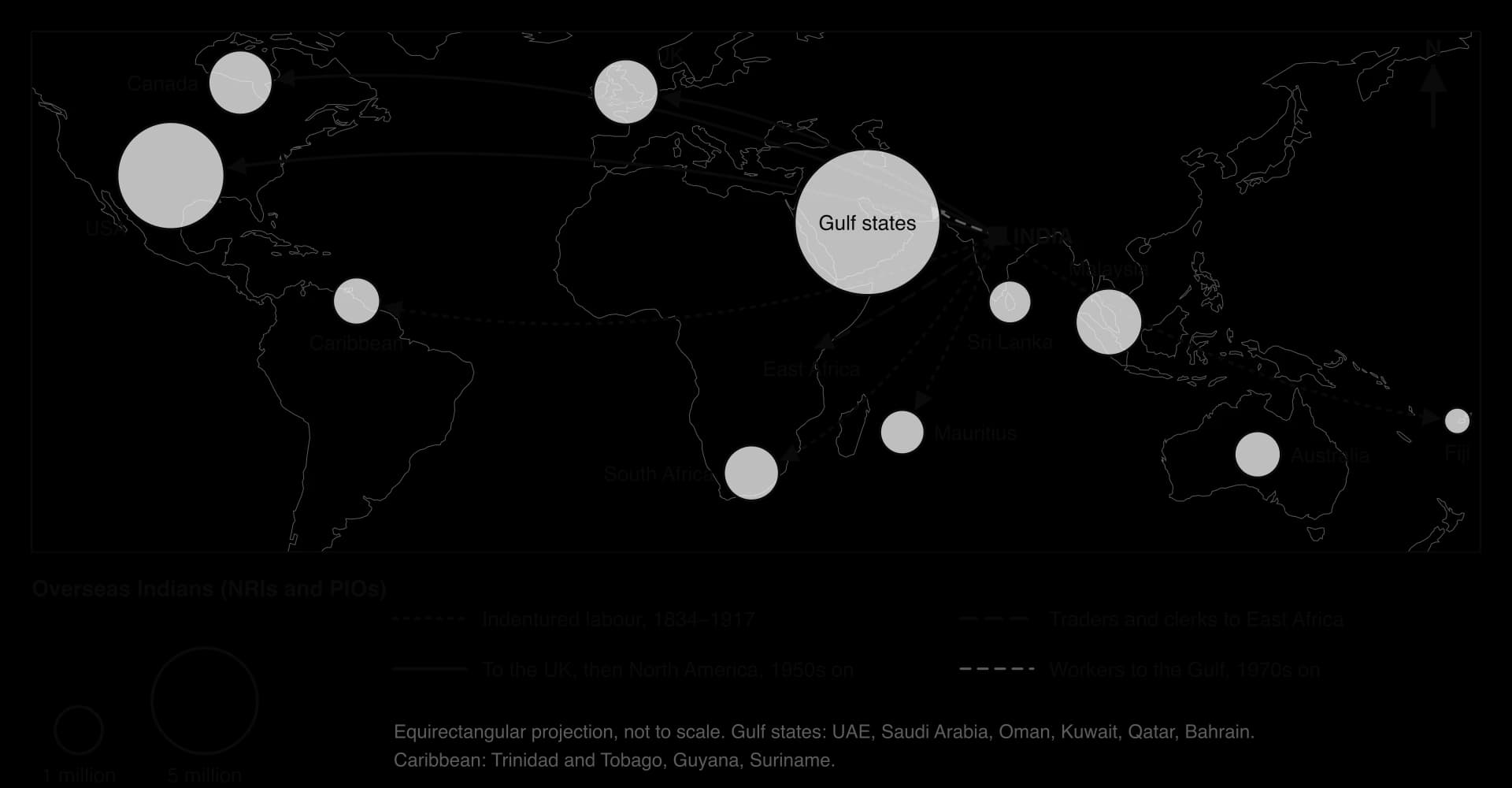
Destination | Overseas Indians (latest estimate) | Share of host population | Main wave |
|---|---|---|---|
USA | 5,160,203 | about 1.5% | Professionals and students since 1965; IT workers since the 1990s |
UAE | 3.4–4.4 million | about 36% | Construction, service and professional workers since the 1970s |
Saudi Arabia | 1.9–2.6 million | about 7.6% | Contract workers since the 1970s |
Malaysia | about 2.0 million | 6.2% | Plantation and colonial-era labour, mostly Tamil |
United Kingdom | 1,927,150 (2021 census) | about 3% | Post-war workers, East African Asians in the 1960s–70s |
Canada | 1,858,755 (2021 census) | 5.1% | Punjabi and later skilled migration |
South Africa | about 1.4 million | 2.5% | Indentured labour from 1860; traders |
Mauritius | about 0.9 million | 68.5% | Indentured labour from 1834 |
Trinidad and Tobago | 468,524 | 31.0% | Indentured labour, 1845–1917 |
Fiji | 315,198 |
Sources: Ministry of External Affairs, Government of India (26 November 2024), national censuses and US American Community Survey (2023), via Wikipedia, “Indian diaspora”, 2026. Estimates differ between sources and years.
The estimates differ widely between sources. The MEA’s figures for the Gulf come from consular registration, which misses many workers; census figures in the United Kingdom and Canada count self-identified ethnicity, which includes people born in the host country; and some estimates for Myanmar and Pakistan include groups whose links to India are many generations old. A figure for “the diaspora” is therefore an estimate that depends on who is counted as Indian.
Waves of emigration
The diaspora was built in four main waves, each linked to a different global interaction. Indentured labour came first: after the abolition of slavery in the British Empire, plantation owners needed new workers, and from 1834 to 1917 large numbers of Indians, many from Bihar and eastern Uttar Pradesh, signed contracts to work on sugar estates in Mauritius, the Caribbean (over half a million between 1838 and 1917), Natal in South Africa and Fiji (1879–1916). Their descendants, sometimes called Girmitiyas after the “agreement” they signed, now form large shares of those countries’ populations.
Traders and clerks, especially Gujaratis, followed British colonial expansion into East Africa in the late 19th and early 20th centuries. When Uganda’s ruler Idi Amin expelled the country’s roughly 80,000 people of South Asian descent at 90 days’ notice in August 1972, about 27,200 moved to the United Kingdom, and about 6,000 settled in Leicester.
Post-war migrants came to Britain from Punjab and Gujarat to work in factories and transport from the 1950s, and after the United States reformed its immigration laws in 1965 a professional diaspora of doctors, engineers and, from the 1990s, IT workers grew in North America. Contract workers have gone to the Gulf since the oil boom of the 1970s, mostly on temporary visas tied to an employer under the kafala system, so that the Gulf diaspora is large but rarely settles permanently.
Influence on host places: Leicester
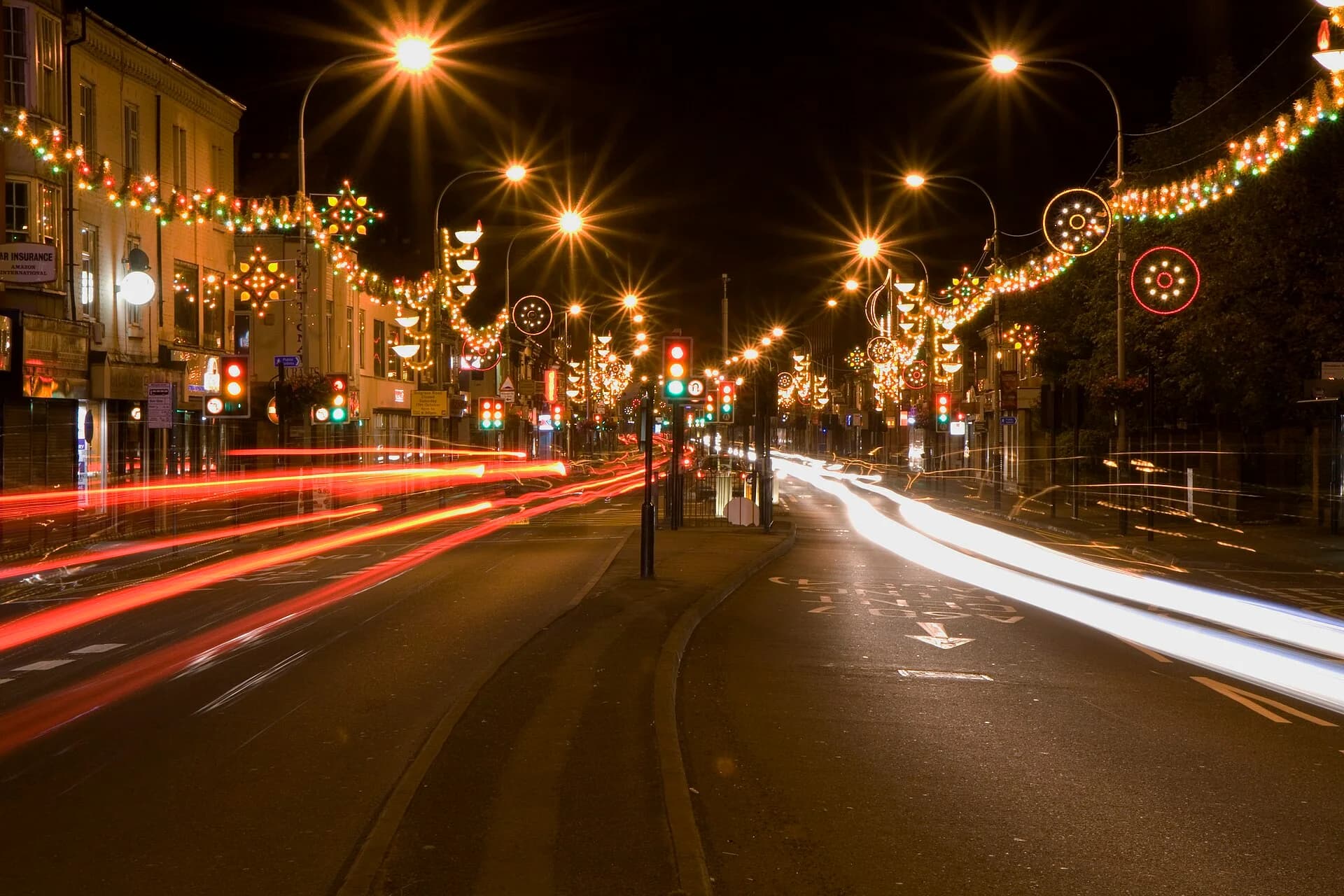
Leicester in the English Midlands shows how a diaspora reshapes a city. In the 2021 census 126,421 residents, 34.3% of the city’s population, identified as Indian, one of the highest shares of any local authority in the United Kingdom; many came via East Africa. Belgrave Road, known as the Golden Mile, is lined with sari shops, jewellers, sweet shops and restaurants, and the city’s Diwali celebrations, centred there, are described as the largest outside the Indian subcontinent.
The diaspora has also brought tension as well as exchange. Leicester City Council placed advertisements in Ugandan newspapers in 1972 advising refugees not to move there, citing a lack of housing and jobs; they had little effect, and within two decades the city promoted itself as a model of multiculturalism.
In August and September 2022 the city saw unrest between groups of young British Hindus and British Muslims of South Asian origin, in which misinformation on social media and tensions linked to politics in South Asia played a part. The episode showed that diasporas can carry homeland disputes into host cities, and that local identities in a diverse city remain contested.
Influence on India: remittances, investment and return
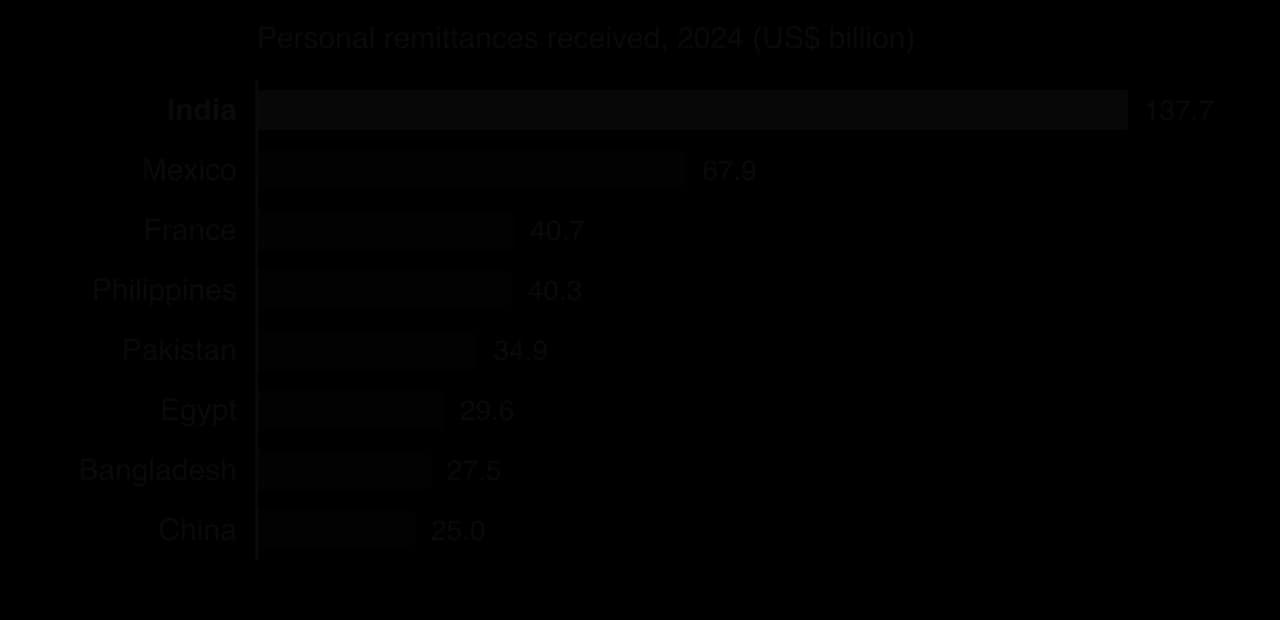
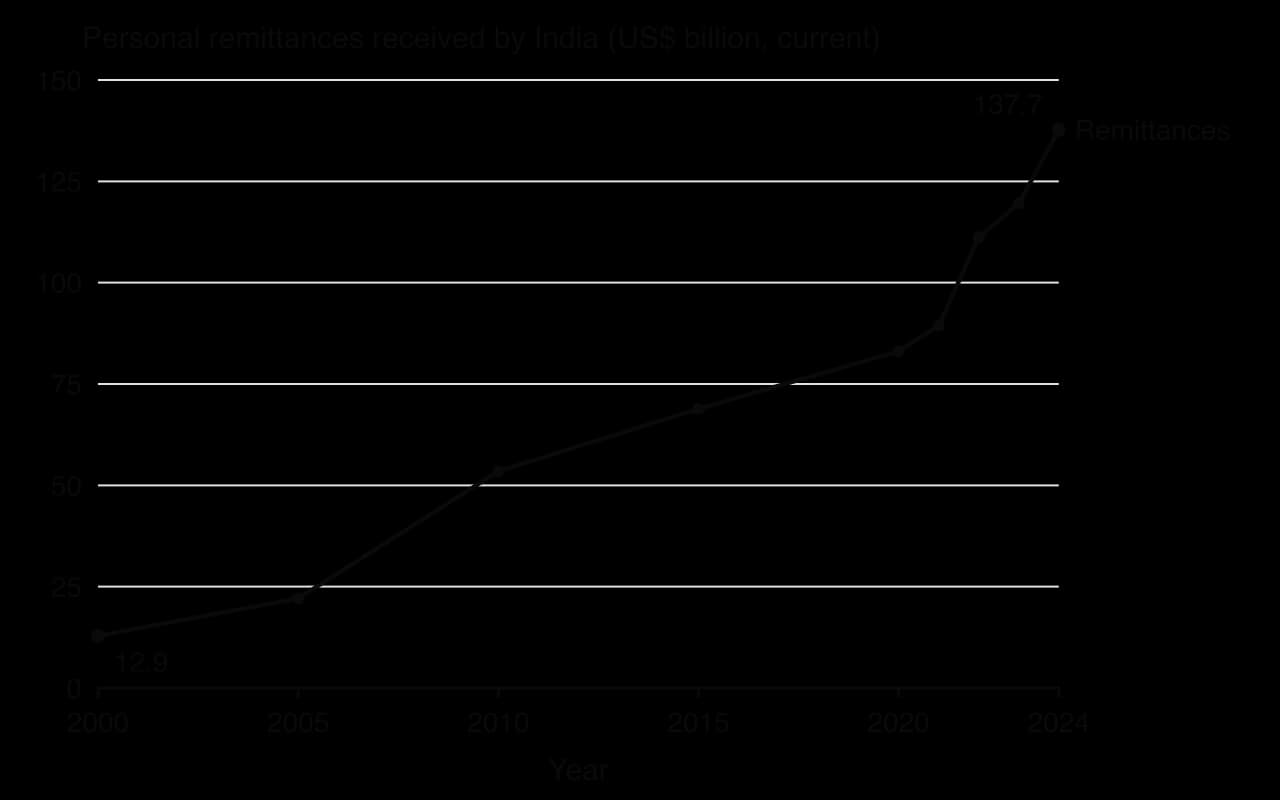
Remittances are the diaspora’s largest economic link with India. India received US$137.7 billion in personal remittances in 2024, equal to about 3.7% of its GDP and more than five times its net inflows of foreign direct investment (US$27.1 billion). The money comes mainly from the Gulf and North America and reaches millions of households; in Kerala, decades of Gulf remittances have paid for houses, private schooling and hospitals. Remittances have grown more than tenfold since 2000.
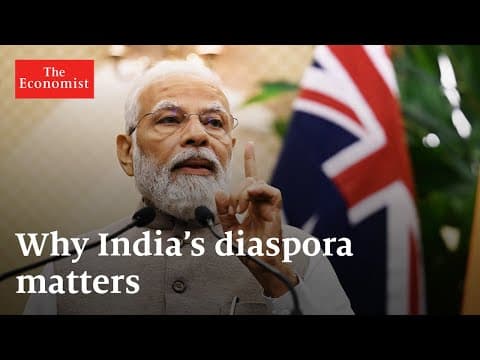
Knowledge and influence also flow back. Diaspora entrepreneurs and engineers in Silicon Valley helped build India’s information technology industry by bringing contracts, capital and methods to Bengaluru and Hyderabad; Indian Americans have the highest median household income of any ethnic group in the United States, and people of Indian origin have led companies such as Microsoft and Alphabet. Return migrants from the Gulf and the West have started businesses, and the Indian government courts the diaspora through Pravasi Bharatiya Divas and the OCI card, which India offers instead of dual citizenship.
 YouTube
Cultures of the diaspora
Indian diaspora cultures are hybrids that differ from each other and from India itself. In Trinidad, Guyana and Suriname, descendants of indentured labourers developed chutney music, which mixes Bhojpuri folk songs with calypso and soca, and Trinidadian roti and doubles, which differ from any Indian dish. In Britain, Punjabi migrants created modern Bhangra and the curry house, whose dishes, such as chicken tikka masala, are adapted to British tastes. Bollywood films reach audiences across the diaspora, and diaspora stories are now told in Indian, British and American films and series, which then flow back to India.
Diaspora identities also bring difficulties. Indo-Fijians, who made up a majority of about 52% of Fiji’s population in the late 20th century but about a third by 2017, saw the 1987 military coups and later political tension prompt large-scale emigration to Australia, New Zealand and Canada; the Ugandan expulsion of 1972 shows how a minority identified with commerce can be scapegoated; and in the Gulf, temporary contracts and the kafala system leave most Indian workers without a path to settlement or citizenship.
What the case shows
Concept | How the Indian diaspora shows it |
|---|---|
Place | The same diaspora produces very different cultures in Leicester, Trinidad, Dubai and California, because each host place and wave of migration differs |
Process | Relocation diffusion, hybridisation and transnationalism: traits carried by migrants are adapted and then flow back to India |
Power | The Indian state uses the diaspora as soft power and capital; host states decide who may settle (open in Canada, closed in the Gulf) |
Diversity | The diaspora has made host cities more diverse, while second and third generations often lose Indian languages |
The Indian diaspora shows that global interactions do not simply make the world’s cultures more alike. Migration has added Indian traits to the cultural landscapes of cities across the world and created new hybrid forms, while money, skills and culture flowing back have changed India itself. The diaspora’s experience also varies with the power of host states, from citizenship and political leadership in the United Kingdom to temporary, tied work in the Gulf.
Explain why the Indian diaspora in the Gulf differs in its culture and legal status from the diaspora in the United Kingdom.
Examine the evidence that the Indian diaspora has made Leicester more culturally diverse, and the limits of that evidence.
To what extent do remittances show that India gains more than it loses from emigration?
Sources: Ministry of External Affairs (2024) and national censuses via Wikipedia, “Indian diaspora”, “Indo-Caribbeans”, “Indo-Fijians”, “Indian Americans”, “Expulsion of Asians from Uganda”, “Demographics of Leicester”, “Leicester” and “2022 Leicester unrest”, 2026; World Bank WDI (remittances, FDI), 2026.
Exam practice
Changing identities and cultures is one of the three subtopics behind the Unit 5 question in Paper 3. The question has a part (a) for 12 marks and a part (b) for 16 marks on the same unit, and both are marked with holistic markbands.
Part (b) is worth more marks and needs a wider argument, built from several units of the course and weighed with evidence of different strength.
A second part (a) question on the same topic might focus on the diaspora case study. It is best organised by mechanism rather than by country.
Summary
Culture is the shared, learned way of life of a group; cultural traits are its separate elements; ethnicity is shared ancestry and culture; identity is multiple and changing.
Cultural diversity can be measured by languages (7,170 in 2026, about a third endangered), fractionalisation or diversity indices and census categories, each with limits.
Diversity is widening in many cities through migration and revitalisation but narrowing globally through language loss and homogenisation; the answer depends on scale and measure.
Traits diffuse by relocation (with migrants) and expansion (contagious or hierarchical), through migration, trade, media, tourism and the internet.
Cultural imperialism, Americanisation and McDonaldisation describe the dominance of powerful cultures, but reverse flows such as Hallyu, Bollywood and Nollywood make cultural interaction two-way.
Societies adopt, adapt or resist global traits: McDonald’s adapts its menu in India; France and Bhutan have resisted foreign media.
Glocalisation adapts global products to local cultures; cultural hybridity creates new forms such as Bhangra, Afrobeats and Spanglish.
Global interactions change cultural landscapes through homogenised CBDs, ethnic enclaves and layered buildings such as the Brick Lane mosque.
Diasporas shape host places and homelands through relocation diffusion, transnationalism, remittances, return migration and diaspora diplomacy.
The Indian diaspora (35.4 million in 2024) shows four waves of emigration, hybrid cultures from Trinidad to Leicester, and US$137.7 billion of remittances to India in 2024.
Self-check
- To do:
I can define culture, cultural trait, ethnicity and identity, and explain why identities are multiple and change.
- To do:
I can describe the global spectrum of cultural diversity and determine a diversity index from census data.
- To do:
I can examine how diversity is widening or narrowing at the local, national and global scales.
- To do:
I can explain relocation, contagious and hierarchical diffusion of cultural traits, with examples.
- To do:
I can evaluate cultural imperialism using evidence of adoption, adaptation, resistance and reverse flows.
- To do:
I can explain glocalisation and cultural hybridity with named examples.
- To do:
I can analyse how global interactions change cultural landscapes in the built environment.
- To do:
I can examine how the Indian diaspora influences cultural diversity and identity in host countries and in India.