Evaluate solutions to food insecurity including waste reduction, new food technologies, and prevention and treatment of disease, and examine how pandemics are managed, using Brazil’s Fome Zero and COVID-19.
Each is in the Geography glossary, with every other term in the subject.
The ability of bacteria, viruses, fungi or parasites to survive drugs that once killed them, so that infections become harder or impossible to treat.
The average number of people to whom one infected person passes a disease in a population where nobody is immune and no control measures are taken.
The breeding of food crops, by conventional methods or genetic engineering, so that they contain more vitamins or minerals as they grow.
A genetically modified crop containing a gene from the bacterium Bacillus thuringiensis that makes it produce a protein toxic to certain insect pests, such as bollworms in cotton.
The proportion of people diagnosed with a disease who die from it, usually expressed as a percentage.
A member of a community, given basic training, who provides health education, preventive care, simple treatment and referrals in that community, often where doctors are scarce.
An international initiative led by Gavi, CEPI and the WHO, with UNICEF, to buy and distribute COVID-19 vaccines fairly to all countries, especially low- and middle-income countries.
Measures that stop a disease from occurring or spreading, such as vaccination, clean water and sanitation, bednets, health education, screening and the regulation of tobacco and food.
Explain possible solutions to food insecurity, classified by the dimension of food security they target.
Distinguish food loss from food waste, and evaluate ways of reducing them in high- and low-income countries.
Evaluate an attempt to tackle food insecurity, using Brazil’s Fome Zero and Bolsa Família.
Discuss the advantages and disadvantages of genetically modified organisms, vertical farming and in vitro meat.
Evaluate the merits of prevention and treatment in managing disease, including social marginalisation, government priorities, means of infection and scientific intervention.
Explain how the epidemiology of a disease, prior awareness, international action and the media affect the management of a pandemic.
Examine the COVID-19 pandemic and the lessons it holds for managing future pandemics.
Feeding a growing population sustainably and protecting it from disease are two of the largest challenges of the coming decades. The world produces enough food for everyone, yet hundreds of millions of people are undernourished while about a fifth of the food available to consumers is wasted, and new diseases can spread around the globe within weeks, as COVID-19 did in 2020.
The key concept is possibility: the different futures that technologies, policies and international cooperation could bring, and how certain they are. Each possible solution has its own geography of power and equity, because some help the rural smallholders most at risk of hunger while others mainly serve wealthy urban consumers. Sustainability links the topic to the core, where the debate between Malthusian pessimism and Boserup’s optimism frames whether food production can keep pace with demand.
81 exam-style questions on this subtopic, written in the style of the IB papers. The first has its markscheme open. Counted on
Examine the health consequences of the nutrition transition for different groups of people in one or more named countries.
10 marks
Marks should be allocated according to the markbands.
The nutrition transition is the shift from traditional diets based on staple cereals, pulses and vegetables towards diets higher in fat, sugar, salt, animal products and processed food, together with less physical activity. Health consequences include rising overweight and obesity, type 2 diabetes, cardiovascular disease and some cancers, as well as benefits such as reduced undernutrition. Groups may be defined by age, gender, income, ethnicity, or urban or rural location.
Possible applied themes (AO2) demonstrating knowledge and understanding (AO1):
Rising obesity and diabetes: China has the largest number of adults with diabetes in the world (over 100 million); India also has a very large and rising number; Mexico has among the highest adult obesity and diabetes rates in Latin America.
Children: rising childhood obesity in urban China and Mexico, linked to sugary drinks and snack foods, with lifelong health risks.
Low-income groups: in many countries cheap processed foods are the most affordable calories, so the poor may suffer both undernutrition and obesity (the double burden), sometimes in the same household (eg a stunted child and an overweight mother).
Urban–rural contrasts: urban residents usually show higher obesity rates than rural residents in lower-middle-income countries, while rural areas retain more undernutrition.
Ethnic and indigenous groups: Pacific Islanders and some indigenous peoples in high-income countries (eg Indigenous communities in Canada, the USA and Australia) have very high rates of type 2 diabetes after rapid dietary change.
Women: in some countries (eg Egypt and parts of the Middle East) female obesity rates are much higher than male rates, linked to cultural restrictions on physical activity.
With a free account, Augment remembers where you stopped and what you have practiced.
Medical care that cures or controls a disease after a person has become ill, such as drugs, oral rehydration, surgery and hospital care.
The number of deaths from all causes in a period above the number expected from previous years, used to estimate the full death toll of a crisis.
The decrease in the quantity or quality of food between harvest and the retail stage, for example through pests, spoilage in storage or damage in transport.
Food that is discarded or left uneaten at the retail, food service or household stage, even though it was fit to eat.
The addition of vitamins or minerals, such as iodine, iron, folic acid or vitamin A, to food during processing to prevent micronutrient deficiencies.
A technique, such as CRISPR, that changes an organism’s DNA at a precise location, usually by altering or switching off existing genes rather than adding genes from another species.
A plant, animal or micro-organism whose genetic material has been altered by genetic engineering, for example by inserting a gene from another species, to give it a new trait.
A variety of rice genetically modified to produce beta-carotene, a source of vitamin A, intended to reduce vitamin A deficiency where rice is the staple food.
Indirect protection from an infectious disease that occurs when a large enough share of a population is immune, through vaccination or previous infection, that the disease cannot spread easily.
A method of growing plants without soil, with their roots in water containing dissolved mineral nutrients.
Meat produced by growing animal cells in a nutrient medium in bioreactors instead of raising and slaughtering animals; also called cultivated or cultured meat.
The time between a person being infected with a pathogen and the appearance of the first symptoms of the disease.
An overabundance of information, both accurate and false, that spreads rapidly during an epidemic or other crisis and makes it difficult for people to find trustworthy guidance.
An epidemic of an infectious disease that has spread across a large region, such as several countries or continents, and affects a large number of people.
Ethiopia’s social protection programme, begun in 2005, that gives cash or food to chronically food-insecure households in return for work on public projects, with unconditional support for those unable to work.
A formal declaration by the WHO, under the International Health Regulations, that an extraordinary disease event is a risk to other states through international spread and may need a coordinated response.
Negative attitudes and discrimination directed at a person or group because of a characteristic, such as an illness, which can stop people seeking prevention or treatment.
Increasing food production from existing farmland while reducing its environmental impacts, for example through better soil and water management, improved varieties and integrated pest management.
The giving of a vaccine, a preparation of a weakened, killed or partial pathogen or its genetic code, to stimulate the immune system to protect a person against a disease.
A policy in which governments secure vaccines for their own populations first, for example by buying most early supplies or restricting exports, at the expense of fair access for other countries.
The growing of crops indoors in vertically stacked layers under artificial light, with controlled temperature, humidity and nutrients, usually using hydroponics or aeroponics.
Food security exists when all people, at all times, have physical and economic access to sufficient, safe and nutritious food for an active and healthy life. It has four dimensions: availability (enough food is produced or imported), access (people can afford or otherwise obtain it), utilisation (the body can make use of the food, which depends on diet quality, clean water, sanitation and health) and stability (the other three hold over time, through droughts, price spikes and conflicts). Solutions are best classified by the dimension they target, because a policy that raises output does nothing for a family that cannot afford to buy food.
Dimension | Possible solutions | Real examples |
|---|---|---|
Availability | Sustainable intensification; irrigation and water harvesting; drought- and flood-tolerant varieties; agroforestry and conservation agriculture; extension services; closing the gender gap in farming | Drought-tolerant maize; FAO technical support; women’s access to land and credit |
Access | Cash transfers and food rations; school meals; public works paying cash or food; better roads and markets; fair trade and price stabilisation | Brazil’s Bolsa Família; Ethiopia’s Productive Safety Net Programme; India’s Public Distribution System |
Utilisation | Biofortification and fortification; nutrition education; clean water and sanitation; health care | Iodised salt; orange-fleshed sweet potato; vitamin A supplements |
Stability | Grain reserves; crop and livestock insurance; early warning systems; climate adaptation; peace and humanitarian access | FEWS NET; strategic grain stores; ceasefires that reopen supply routes |
The global framework for these efforts is SDG 2, "Zero Hunger", one of the Sustainable Development Goals agreed in 2015, which aims to end hunger and all forms of malnutrition by 2030 and to double the productivity and incomes of small-scale food producers. The debate about whether this is possible goes back to Malthusian theory, which predicts that population growth will outrun food supply, and Boserup’s theory, which argues that population pressure stimulates the innovations that raise output.
Sustainable intensification means producing more food from the same area of land while reducing the environmental harm of farming. It differs from the industrial intensification of the Green Revolution, which raised yields with large inputs of fertiliser, pesticides and irrigation water, at the cost of soil degradation, water depletion and pollution.
Methods include conservation agriculture (minimal ploughing, permanent soil cover and crop rotation), agroforestry (trees grown with crops or livestock to protect soil and add nitrogen), integrated pest management, precise use of fertiliser, water harvesting and drip irrigation, and improved crop varieties bred for drought, flooding or salinity. Because most of the world’s food-insecure people are smallholder farmers, raising their yields can improve both availability and access at once: a farmer who grows more has more food to eat and more to sell.
Hunger is usually caused by poverty rather than an absolute lack of food, so many of the most effective solutions put money or food into the hands of poor households. Ethiopia’s Productive Safety Net Programme (PSNP), set up in 2005, is the second-largest social safety net in Africa after South Africa’s.
The PSNP gives cash or food to chronically food-insecure households in return for work on public projects that build community assets, such as roads, terraces and water harvesting, while households without labour, such as older people or pregnant women, receive unconditional support. In 2015 more than seven million people benefited, and evaluations by the International Food Policy Research Institute found that it was well targeted and improved household food security.
The PSNP shows the logic of linking short-term relief with long-term development. Payments arrive every year rather than only after a disaster has been declared, so families do not need to sell livestock or tools to survive a poor harvest, and the terraces and roads they build reduce future risk. It also shows the limits: it depends on donor funding, and, like any safety net, it cannot protect people when armed conflict disrupts the whole system.
Sources: Wikipedia, "Productive Safety Net Programme", citing IFPRI evaluations, 2026.
People can eat enough calories and still suffer from micronutrient deficiency, the "hidden hunger" of too little iron, iodine, zinc or vitamin A. Two approaches add nutrients to food. Fortification adds vitamins or minerals to food during processing. Iodised salt is the best-known example: iodine deficiency affects about two billion people worldwide and is the leading preventable cause of intellectual and developmental disabilities, and the share of households using iodised salt rose from 25% in 1990 to 66% in 2006.
Biofortification breeds crops that are richer in nutrients as they grow, either by conventional breeding or by genetic engineering. It reaches rural families who grow their own food and rarely buy fortified processed foods. HarvestPlus, the leading organisation in this field, uses mainly conventional breeding; examples include orange-fleshed sweet potato and maize rich in vitamin A, and iron-rich beans and pearl millet. A barrier is acceptance: vitamin A-rich crops are orange or yellow, and in parts of Africa, where white maize is the staple, yellow maize is associated with animal feed or food aid.
Sources: Wikipedia, "Iodized salt" and "Biofortification", citing WHO and HarvestPlus, 2026.
Stability depends on preventing shocks from becoming crises. Grain reserves can be released when prices spike, crop and livestock insurance can pay out after a drought, and early warning systems such as FEWS NET give governments months of notice. Adapting farming to climate change, through drought-tolerant varieties, irrigation and diversified incomes, reduces the risk of repeated harvest failures. Stability also depends on peace, because armed conflict is now the main cause of the world’s most severe food crises.
In 2003 President Luiz Inácio Lula da Silva launched Fome Zero ("Zero Hunger"), a national strategy to guarantee the right to food in Brazil, a middle-income country where millions of people, especially in the semi-arid north-east and in urban favelas, could not afford an adequate diet. Fome Zero built on earlier school stipends, the Bolsa Escola programme of 1995, and joined several programmes together: Bolsa Família, a conditional cash transfer paid to poor families, mostly through mothers, on condition that children attend school and are vaccinated; water cisterns in the semi-arid north-east; low-cost public restaurants; support for family farming; nutrition education; and microcredit.
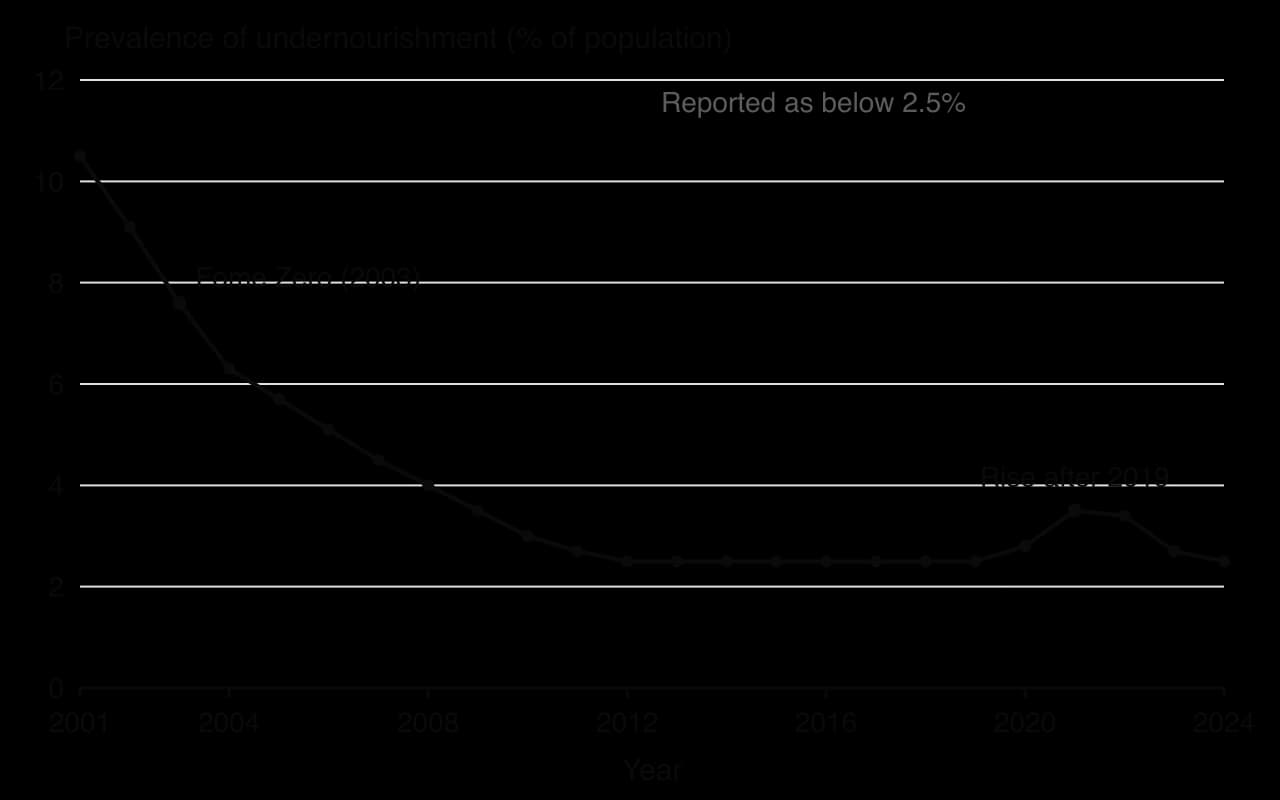
The prevalence of undernourishment fell from 10.5% in 2001 to below 2.5% by 2012, and in 2014 Brazil was removed from the FAO Hunger Map, which lists countries where more than 2.5% of people are undernourished. The progress reversed after 2018: economic recession, cuts to social programmes and the COVID-19 pandemic pushed undernourishment back up to 3.5% in 2021 and returned Brazil to the Hunger Map.
After social programmes were expanded again from 2023, severe food insecurity fell from 8% of the population in 2022 to 1.2% in 2023 according to government data, and the FAO’s report of July 2025 found Brazil below the threshold again, with undernourishment of 2.4% in 2022–2024.
Strengths | Limitations |
|---|---|
Targeted the poor: over 80% of Bolsa Família benefits went to families in poverty | Depends on political will and budgets: progress reversed after 2018 |
Combined access (cash), availability (family farming) and utilisation (water, nutrition education) | Measures hunger, not diet quality: adult obesity rose from 13.6% in 2003 to 28.2% in 2022 |
Payments to mothers increased women’s control over household food spending | Conditions on school and vaccination exclude some of the poorest families who cannot meet them |
Cheap relative to its reach and copied by other countries | Millions of Brazilians still face moderate food insecurity |
Brazil’s experience shows that hunger in a middle-income country can be reduced rapidly when a government chooses to make it a priority, and that it can return quickly when that priority changes. It supports the view that hunger is mainly a problem of access and power, not of national food supply: Brazil was one of the world’s largest food producers throughout the period.
Sources: Wikipedia, "Fome Zero", "Bolsa Família" and "Hunger in Brazil", citing IBGE, UNDP and the Brazilian government, 2026; FAO, The State of Food Security and Nutrition in the World 2025; World Bank, World Development Indicators, 2026; WHO Global Health Observatory (obesity), 2026.
No single solution works everywhere. Technical solutions that raise yields address availability, but most hungry people live in countries that produce or can import enough food, so access is usually the bigger problem. Social protection works well where states are stable and markets function, as in Brazil and Ethiopia before 2020, but it cannot reach people in war zones. Solutions also operate at different scales: a hermetic storage bag protects one household’s grain, a national safety net protects millions, and global trade rules and climate agreements shape food prices for everyone.
Approach | Strengths | Limitations |
|---|---|---|
Raising production (sustainable intensification, new varieties) | Increases food and income for smallholders; reduces pressure to clear new land | Does little for the landless and urban poor; benefits may go to richer farmers first |
Social protection (cash transfers, safety nets) | Targets the poorest directly; quick to scale; builds assets | Needs functioning markets, stable government and long-term funding |
Nutrition (fortification, biofortification) | Cheap per person; reaches whole populations through staple foods | Fortification reaches mainly people who buy processed foods; consumer acceptance |
Stability (reserves, insurance, early warning) | Prevents shocks from becoming crises | Warnings must be acted on; insurance is unaffordable for many smallholders |
The most successful national cases combine several dimensions at once: social protection for access, support for small farmers for availability, and health and nutrition programmes for utilisation. The choice of solutions therefore depends on which dimension of food security is failing in a particular place, and on whether governments and donors are willing to fund them for many years.
About one-third of the food produced for people is never eaten. Reducing this loss and waste is one of the few solutions that improves food security and reduces environmental harm at the same time, because every tonne of food not eaten has already used land, water, energy and fertiliser.
The distinction follows the FAO and UNEP, which measure the two with separate indicators for SDG target 12.3: the Food Loss Index and the Food Waste Index.
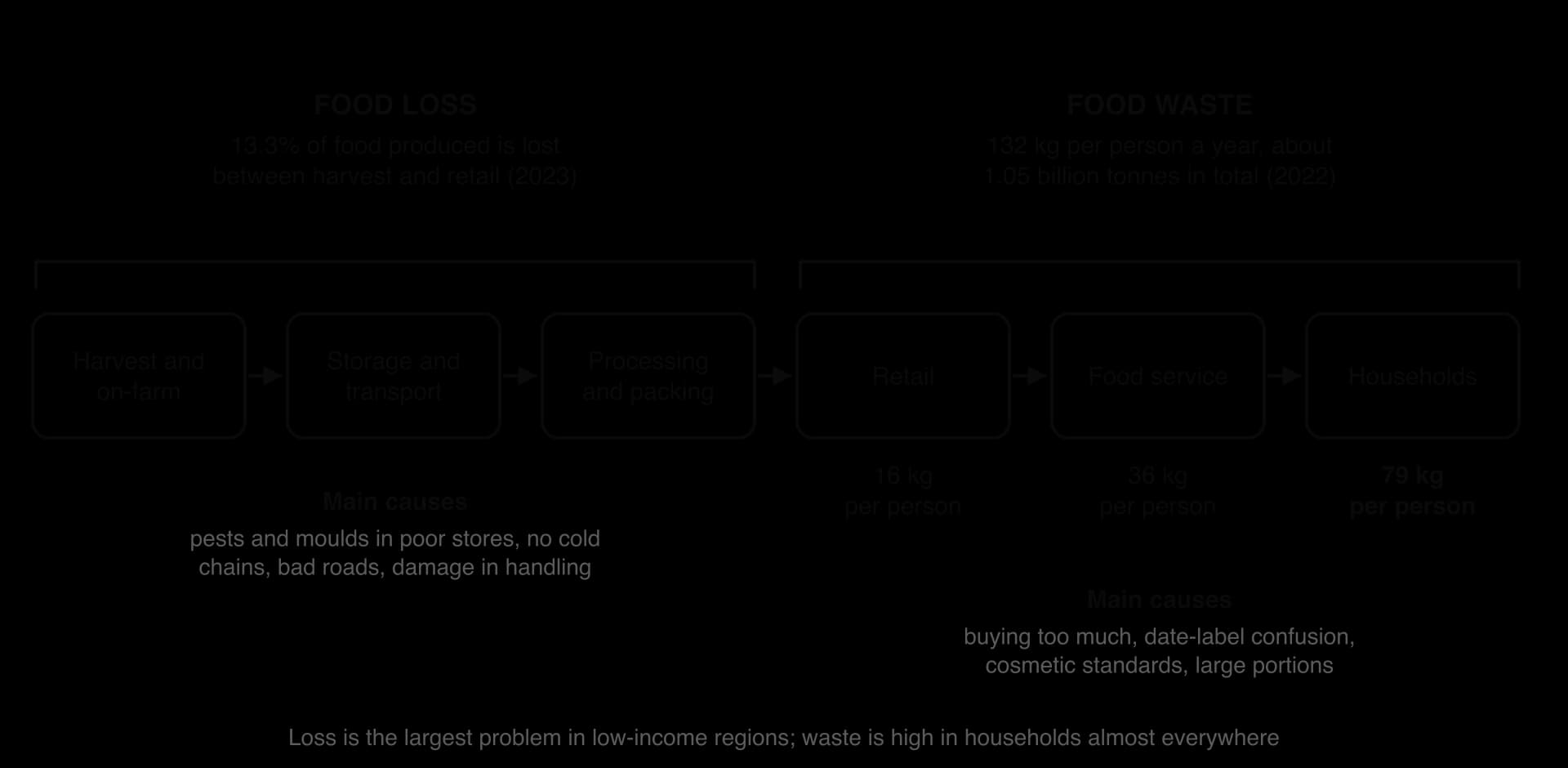
The supply chain shows where each problem arises. Food loss is measured as a share of production, because it happens before food is sold; food waste is measured in kilograms per person, because it depends on how much people and businesses buy and throw away.
The FAO estimates that 13.3% of the world’s food was lost between harvest and the retail level in 2023, almost the same share as its first estimate of about 14% for 2016. The UNEP Food Waste Index estimates that each person wasted about 132 kg of food in 2022: 79 kg in households, 36 kg in food service and 16 kg in retail. Multiplied by a world population of about 7.95 billion, this is about 1.05 billion tonnes, roughly a fifth of the food available to consumers, of which households account for about 60%. Food loss and waste together produce about 3.3 billion tonnes of CO₂-equivalent emissions a year.
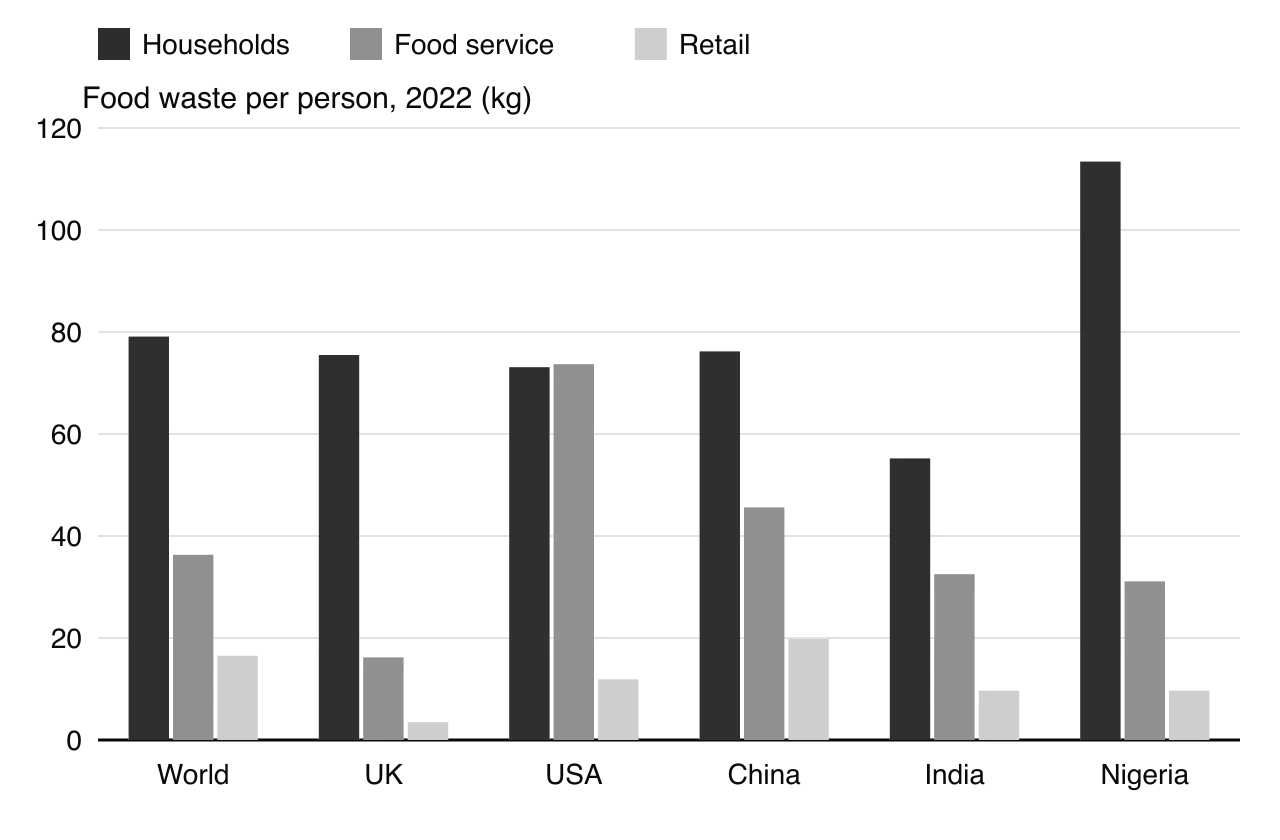
Household food waste is high in many middle- and low-income countries as well as in rich ones. Household waste per person in Nigeria (113 kg) is higher than in the United Kingdom (76 kg), partly because fresh food spoils quickly in hot climates without refrigeration and partly because the figure includes inedible parts such as peel and bones. The United States wastes as much food in restaurants and other food services (74 kg per person) as in homes.
Mainly in low-income countries: food loss | Mainly in high-income countries: food waste | |
|---|---|---|
Where | On farms, in storage, in transport and in markets | In households, restaurants and supermarkets |
Causes | Pests and moulds in poor storage; no cold chains; bad roads; poor packaging; harvesting at the wrong time | Buying too much; confusion over "best before" and "use by" dates; cosmetic standards for fruit and vegetables; large portions |
Solutions | Hermetic (airtight) storage bags and metal silos; solar-powered cold rooms; better roads and market facilities; training in handling | Date-label reform; donation of surplus food; apps; charging households by weight of food waste; education campaigns |
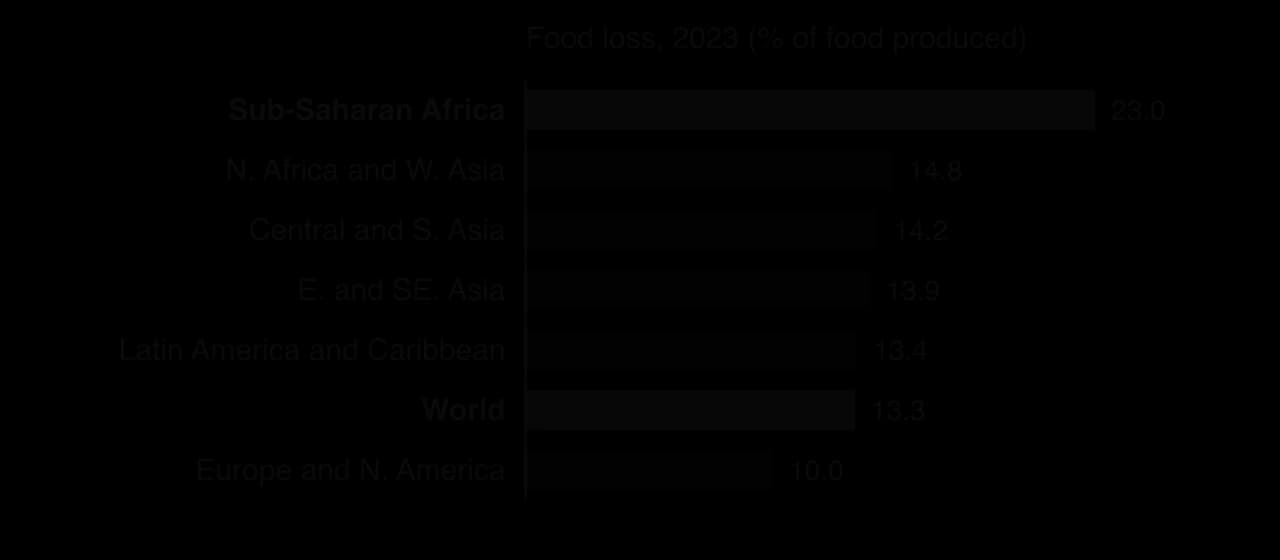
Food loss is highest where farms are small, storage is basic and roads are poor. In sub-Saharan Africa 23% of food was lost before reaching retail in 2023, compared with 10% in Europe and Northern America, so reducing loss there would add directly to the food available to the households most at risk of hunger.
France: in 2016 France became the first country to pass a law banning supermarkets from throwing away or destroying unsold food that is still edible; they must donate it to charities and food banks instead.
South Korea: since 2013 households must put food waste in special bags or bins and pay according to its weight, measured in many apartment blocks by bins that read residents’ identity cards. The food waste recycling rate rose from 2% in 1995 to about 95%.
Apps and businesses: Too Good To Go, which connects customers with shops and restaurants selling surplus food cheaply, claimed 62 million users and 155 million bags of food saved by August 2023.
Retailers and date labels: removing "best before" dates from fresh produce and selling misshapen fruit and vegetables reduce waste at the shop and at home.
Sources: Wikipedia, "Food loss and waste", citing FAO (2019) and UNEP Food Waste Index; "Food waste in South Korea"; "Too Good To Go", 2026.
 YouTube
Reducing waste has clear benefits. It saves money for households and businesses, cuts emissions and saves the water and land used to produce the food (the water footprint of a wasted kilogram of beef is wasted with it). Reducing loss in low-income countries directly raises the food available to farming families and their incomes.
Its effect on hunger is less direct. Food saved in a household in France does not automatically reach a hungry family in Sudan, because hunger is mainly a problem of access and conflict. Donating surplus food helps food banks, but it can also let governments rely on charity rather than raise incomes. The most direct benefit for food security comes from reducing losses on farms and in storage in low-income countries, where the food saved is eaten by the people who grow it.
New technologies promise to produce more food, more nutritious food or food with a smaller environmental footprint. Three are especially debated: genetically modified crops, vertical farming and meat grown from animal cells. Each has supporters and critics among farmers, companies, governments, scientists and consumers, and each raises the question of who benefits.
A genetically modified organism (GMO) is an organism whose DNA has been altered by genetic engineering, often by inserting a gene from another species. Genetic modification is faster and more precise than conventional breeding, which mixes thousands of genes at once and can only combine traits from related plants. GM crops were first grown commercially in 1996, and their area grew from 1.7 million hectares that year to 185.1 million hectares in 2016, about 12% of the world’s cropland, mainly soya, maize, cotton and canola in the Americas and Asia.
Gene editing is a newer, related technique. Tools such as CRISPR-Cas9 cut the DNA at a chosen point to switch off or alter a plant’s own genes, usually without adding genes from another species. Some countries regulate gene-edited crops less strictly than GMOs for this reason.
The two most common traits are herbicide tolerance, which lets farmers spray weedkillers such as glyphosate without harming the crop, and insect resistance. A Bt crop contains a gene from the soil bacterium Bacillus thuringiensis that makes a protein toxic to certain insect pests. Bt cotton was introduced to India in 2002 by a joint venture of Monsanto and the Indian company Mahyco; by 2014, 95% of India’s cotton was genetically modified, and India had become the world’s largest cotton producer. Studies estimate that its spread reduced pesticide poisonings among Indian farmers by millions of cases.
The Bt cotton story also shows a key risk. Because Bt cotton covered about 90% of India’s cotton area by 2011 and few refuge areas of non-Bt cotton were planted, the pink bollworm evolved resistance, and farmers had to return to spraying pesticides. Herbicide-tolerant crops have similarly encouraged weeds resistant to glyphosate.
Sources: Wikipedia, "Genetically modified crops" and "Bt cotton", citing ISAAA and Klümper and Qaim (2014), 2026.
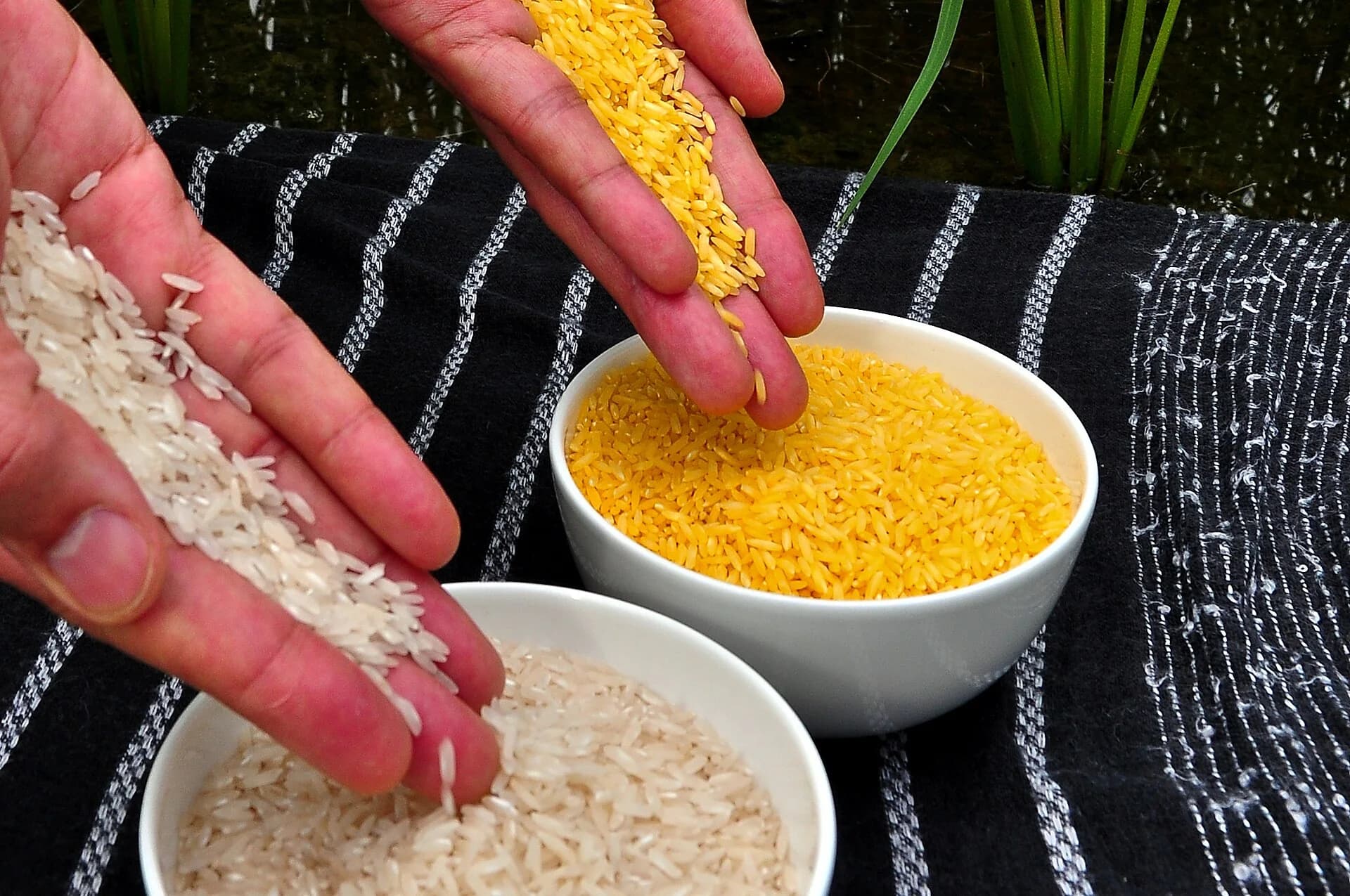
Golden Rice is rice genetically modified to produce beta-carotene, which the body converts into vitamin A. It was developed to reduce vitamin A deficiency, a cause of blindness and child deaths in countries where rice is the staple food. On 21 July 2021 the Philippines became the first country to approve it for commercial planting. On 17 April 2024, after a petition by Greenpeace Southeast Asia and other groups, the Philippine Court of Appeals ordered a halt to its commercial propagation, citing a lack of "full scientific certainty" about its health and environmental effects.
Advantages | Disadvantages |
|---|---|
Higher yields: a 2014 meta-analysis found GM crops raised yields by 22% on average and farmer profits by 68% | Corporate control: a few firms hold patents on GM seed; farmers must usually buy new seed each year rather than save it |
Less insecticide: the same study found a 37% fall in chemical pesticide use | Resistance: pests (pink bollworm in India) and weeds (glyphosate-resistant) evolve, reducing the benefits |
Nutritional improvement: Golden Rice, biofortified crops | Gene flow to wild relatives and loss of crop diversity where one variety dominates |
Tolerance to drought, salinity or flooding as the climate changes | Consumer and cultural opposition; labelling and trade restrictions (strict rules in the EU) |
Lower labour and pesticide costs for smallholders growing Bt cotton | High seed costs and risk of debt for small farmers when harvests fail |
There is a broad scientific consensus that GM foods currently on the market are no greater risk to human health than conventional foods, although each new product needs testing case by case. Most of the debate is therefore about economics, power and the environment rather than food safety. Perspectives differ sharply: TNCs such as Bayer present GM seed as essential for feeding a growing population; many farmers value higher yields and lower spraying costs; NGOs such as Greenpeace oppose GM crops on environmental and corporate-control grounds; and governments range from strong support (the USA, Brazil, Argentina) to strict restriction (much of the European Union).
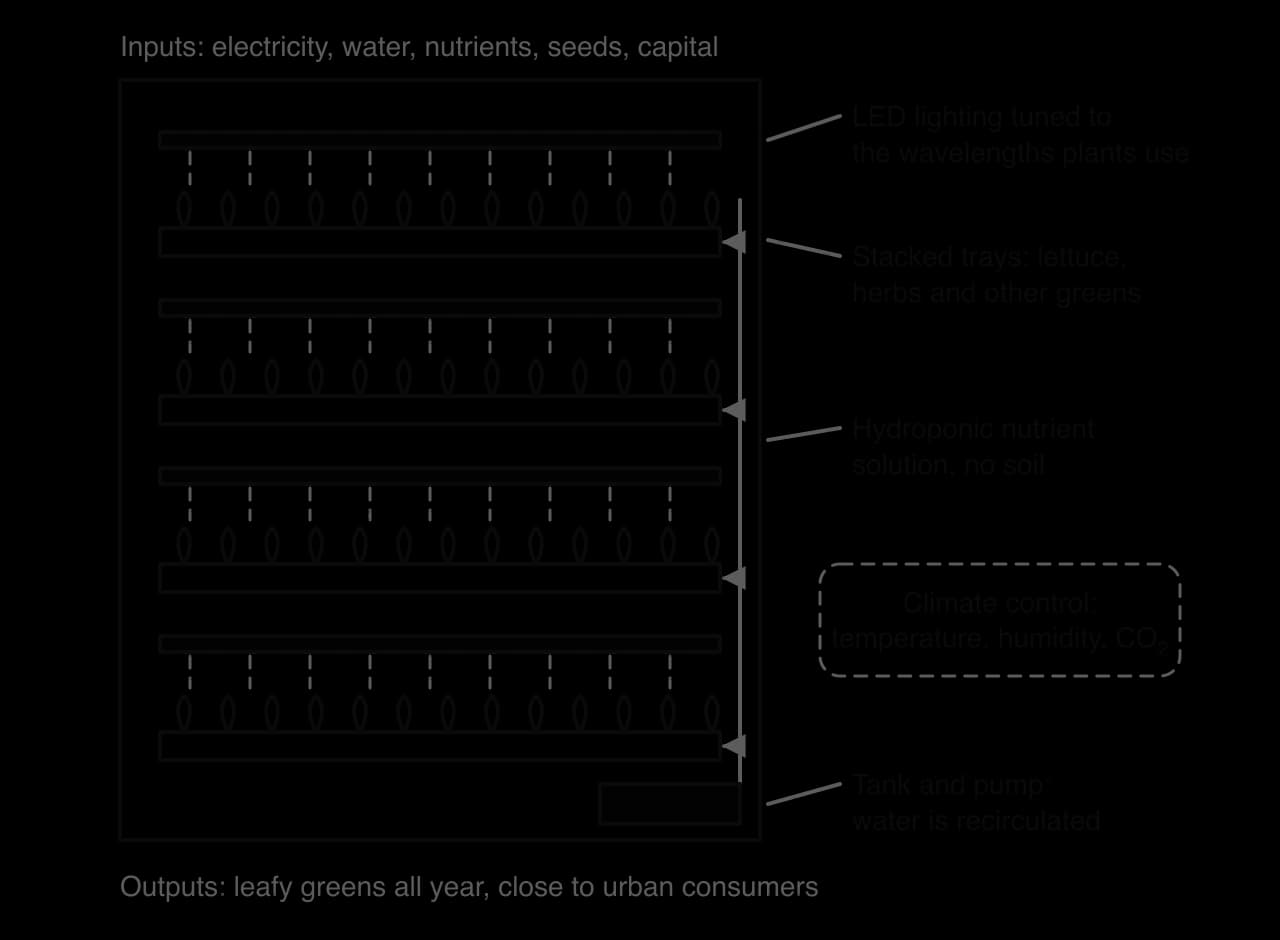
Vertical farming grows crops indoors in stacked layers, usually in warehouses or shipping containers in or near cities. Plants grow under LED lights in a controlled environment, usually by hydroponics, in which their roots sit in a nutrient solution rather than soil, or by aeroponics, in which the roots are sprayed with a nutrient mist. The modern idea was popularised in 1999 by Dickson Despommier of Columbia University, who proposed skyscraper farms.
Hydroponics is the key technique that makes stacked growing possible, because trays of water are far lighter and cleaner than soil.
Singapore, which imports most of its food and has very little farmland, set a "30 by 30" goal in March 2019 to produce 30% of its nutritional needs locally by 2030, relying partly on vertical and high-tech farms.
Progress was slow: in 2024 only about 8% of the fibre (vegetables and similar foods) and 26% of the protein that Singaporeans consumed was produced locally, and in late 2025 the government replaced the goal with new targets of 20% of fibre and 30% of protein by 2035. In the United States, AeroFarms, which had opened what it described as the world’s largest indoor vertical farm in Newark, New Jersey, in 2016, filed for bankruptcy protection in June 2023 before restructuring around a single farm.
Advantages | Disadvantages |
|---|---|
Very high yield per square metre; harvests all year, unaffected by weather, drought or floods | High energy use for lighting and climate control: LEDs were only about 28% efficient in 2018 |
Little water, because it is recirculated; no soil erosion and little or no pesticide | High start-up and running costs; several firms have failed, such as AeroFarms in 2023 |
Food grown close to urban consumers, cutting transport and food miles | Suited mainly to leafy greens and herbs, not to staple grains, which supply most calories |
Uses land unsuitable for farming, such as warehouses and rooftops | Mainly serves wealthier urban consumers; little benefit for rural smallholders |
Sources: Wikipedia, "Vertical farming", "AeroFarms" and "Agriculture in Singapore", citing the Singapore Food Agency, 2026.
In vitro meat, also called cultivated or cultured meat (and, informally, lab-grown meat), is real animal meat produced by growing animal cells in bioreactors rather than by raising and slaughtering animals. A small sample of cells is taken from an animal and fed a nutrient-rich growth medium, so that the cells multiply and form muscle and fat tissue. The first cultured beef burger, made by Mark Post at Maastricht University in 2013, cost over US$325,000 and took two years to produce.
On 2 December 2020 Singapore became the first country to approve cultivated meat for sale, when its food agency approved chicken bites made by Eat Just. The United States approved cultivated chicken from Upside Foods and Good Meat in June 2023. Other governments moved the other way: Italy banned the production and sale of cultivated meat in November 2023, saying it wished to protect its food heritage, and the US states of Florida and Alabama banned it in 2024.
Advantages | Disadvantages |
|---|---|
Potentially much lower land use and emissions: one study estimated up to 92% fewer greenhouse gas emissions than beef if renewable energy is used, 95% less land and 78% less water | Emissions depend on the energy used; with fossil-fuel electricity, the benefits shrink |
No slaughter, so fewer animal welfare concerns | Very high costs and difficulty scaling up production; growth media are expensive |
Controlled, sterile production can reduce food-borne disease and the use of antibiotics in livestock | Consumer distrust and cultural resistance; bans in Italy and some US states |
Less pressure to clear forests for pasture and feed crops | Threatens livestock farmers’ livelihoods; benefits mainly HIC consumers in the short term |
Plant-based meat alternatives, made from soya, peas or wheat protein, are a cheaper and already widespread alternative with similar environmental advantages, which is one reason investors have become more cautious about cultivated meat.
Sources: Wikipedia, "Cultured meat", citing CE Delft, the Singapore Food Agency and the USDA, 2026.
The three technologies differ in who they are likely to help. Most of the world’s food-insecure people are rural smallholders and landless workers in low-income countries, who need cheap seeds, water, credit, roads and secure incomes. GM crops can help them if seed is affordable and suited to local conditions, as Bt cotton was for many Indian farmers, but corporate control of seed and the risk of debt can leave them worse off. Vertical farming and in vitro meat are technologies of rich, urban, land-scarce places such as Singapore, the Netherlands and the United States; they may reduce the environmental cost of feeding cities but do little for rural hunger.
GMOs | Vertical farming | In vitro meat | |
|---|---|---|---|
Main contribution | Availability (yields), utilisation (Golden Rice) | Availability in land-scarce cities | Sustainability of meat supply |
Who benefits most | Large commercial farmers and seed TNCs; some smallholders | Urban consumers in HICs and rich MICs | HIC consumers and investors |
Scale today | Large: about 12% of world cropland | Small, mostly leafy greens | Very small, a few approved products |
Main risk | Corporate control, resistance | Energy cost, business failure | Cost, energy, consumer rejection |
On their own, the new technologies do not guarantee better food security. Whether they improve it depends on the political and economic choices around them: who owns the patents, who can afford the products, and whether they are combined with the access-based solutions that reach the poorest.
Societies manage disease in two broad ways. Disease prevention stops people from becoming ill in the first place; disease treatment cures or controls illness once it has developed. Most health systems use both, but the balance between them, and the money spent on each, varies greatly between places and diseases.
Prevention works at several levels: stopping infection (vaccines, bednets, condoms, clean water), detecting disease early before symptoms become serious (screening for cancer or diabetes), and changing the conditions that cause ill health (taxes on tobacco and sugary drinks, safer roads, cleaner air).
Prevention | Treatment | |
|---|---|---|
Examples | Vaccines; insecticide-treated bednets; sanitation; health education; screening; sugar and tobacco taxes; vector control | Antiretroviral drugs for HIV; artemisinin-based combination therapy for malaria; oral rehydration salts; antibiotics; surgery |
Cost | Usually low per person; often the most cost-effective spending in health | Often high per person, especially for chronic and hospital care |
Who benefits | Whole populations, including people who never become ill | People who are already sick and can reach care |
Visibility | Benefits are invisible and delayed (illness that does not happen) | Benefits are visible and immediate, so politically popular |
Limits | Needs high coverage and trust; some diseases have no vaccine | Does not stop new infections; drug resistance; access is unequal |
The merits of each depend on four sets of factors: social marginalisation, government priorities, the means of infection and scientific intervention.
Socially marginalised groups are pushed to the edge of society by poverty, discrimination or legal status: people in informal settlements, refugees and undocumented migrants, ethnic minorities such as the Roma in Europe, Indigenous peoples, sex workers, people who inject drugs, and men who have sex with men in countries where this is criminalised. Marginalisation weakens both prevention and treatment, because these groups are often missed by vaccination campaigns, lack documents to register at clinics, and fear arrest or discrimination if they seek care.
Stigma is a central problem. Since HIV was recognised in the early 1980s, people living with it have faced rejection, discrimination, compulsory testing without consent and violence. Fear of stigma discourages people from being tested, from collecting drugs at a local clinic where they might be recognised, and from disclosing their status to partners, so infections continue to spread.
One of the most effective responses is to bring care to people through trusted members of their own community. A community health worker is a local person given basic training to provide health education, vaccinations, first-line treatment and referrals in their own community. The WHO estimates that there are over 1.3 million worldwide. In Brazil, the Family Health Program of the 1990s used large numbers of community health agents, and infant mortality fell from about 50 per 1,000 live births in 1990 to 29.2 in 2002. Liberia launched a National Community Health Assistant Program in 2016 to reach remote communities after the Ebola epidemic.
Sources: Wikipedia, "HIV/AIDS" and "Community health worker", citing WHO and UNAIDS, 2026.
Governments decide how much to spend on health, and whether to spend it on hospitals or on primary care and prevention. In the Abuja Declaration of 2001, African Union governments pledged to spend at least 15% of their budgets on health. Most have not reached the target.

Health competes with debt repayments, defence, education and infrastructure, and spending tends to favour urban hospitals, which are visible and used by politically powerful groups, over rural clinics and prevention. Where governments spend little, households pay for care out of their own pockets, which pushes poor families further into poverty or leads them to go without care.
The way money is spent matters as well as the total. Cuba spent about US$1,200 per person on health in 2020, less than a tenth of the United States’ US$11,650, yet its life expectancy in 2023 (78.1 years) was almost the same as that of the United States (78.4).
Cuba’s system is built on primary care and prevention: family doctor-and-nurse teams live in the neighbourhoods they serve, and the country had about 9.5 doctors per 1,000 people in 2021, the highest rate in the world, compared with 3.6 in the United States. Critics point out that Cuban doctors are poorly paid, facilities and medicines are often short, and the statistics come from a one-party state, so comparisons need care.
Sources: World Bank, World Development Indicators (SH.XPD.CHEX.PC.CD, SP.DYN.LE00.IN, SH.MED.PHYS.ZS), 2026; Wikipedia, "Healthcare in Cuba", 2026.
How a disease spreads determines which kind of prevention works. Airborne diseases such as measles, tuberculosis and influenza spread through the air, so vaccination, ventilation and isolating cases matter most. Vector-borne diseases such as malaria and dengue need control of the vector (bednets, spraying, removing standing water) as well as treatment. Water-borne diseases such as cholera are prevented by clean water and sanitation. Sexually transmitted and blood-borne infections such as HIV are prevented by condoms, clean needles, screening blood and preventive drugs. Non-communicable diseases, which have no infection at all, are prevented by changing risk factors such as smoking, diet and air pollution.
Means of infection | Examples | Most effective prevention | Main treatment |
|---|---|---|---|
Airborne | Measles, TB, influenza, COVID-19 | Vaccination, ventilation, masks, isolation | Antibiotics (TB), antivirals, hospital care |
Vector-borne | Malaria, dengue | Bednets, insecticides, removing breeding sites, vaccines | Artemisinin-based combination therapy (malaria) |
Water-borne | Cholera, typhoid | Clean water, sanitation, hygiene, oral vaccines | Oral rehydration salts, antibiotics |
Sexual and blood-borne | HIV, hepatitis B | Condoms, PrEP, safe blood, needle exchange | Antiretroviral therapy |
Non-communicable (no infection) | Heart disease, type 2 diabetes | Tobacco and sugar taxes, diet, exercise, screening | Long-term drugs, surgery |
Vaccination trains the immune system to recognise a pathogen without causing the disease. When enough people are immune, an infected person meets too few susceptible people to pass the infection on, so the disease cannot spread and even unvaccinated people are protected. This is herd immunity.
The share of the population that must be immune depends on how infectious the disease is, measured by the basic reproduction number (R₀): the average number of people that one infected person infects in a population with no immunity. The herd immunity threshold is approximately:
Science has transformed what is possible. Smallpox, which killed about 2 million people a year as late as the 1960s, was eradicated by vaccination and case-finding: it was certified eradicated in December 1979 and declared eradicated by the World Health Assembly in May 1980. Polio cases have fallen by 99% since 1988. Two malaria vaccines are now recommended by the WHO: RTS,S, endorsed for broad use in children in October 2021, and R21/Matrix-M, which showed 77% efficacy in early trials and was first approved in Ghana in April 2023. Malaria still caused an estimated 282 million cases and 610,000 deaths in 2024, most of them among children in sub-Saharan Africa.
Scientific interventions also change the balance between prevention and treatment. Antiretroviral drugs turned HIV from a death sentence into a manageable chronic condition, and a person whose treatment keeps the virus undetectable has effectively no risk of passing it on sexually, so treatment has become prevention as well ("treatment as prevention"). Pre-exposure prophylaxis (PrEP), first approved in 2012, protects HIV-negative people; in June 2025 the US approved lenacapavir, an injection needed only twice a year. In 2025, about 41.0 million people were living with HIV and 32.1 million were receiving antiretroviral therapy. Other interventions target vectors, such as releasing mosquitoes carrying Wolbachia bacteria, which reduce their ability to transmit dengue.
Scientific progress has limits. New drugs and vaccines are often expensive, patented and slow to reach low-income countries, and they need cold chains, clinics and trained staff to deliver them. Overuse and misuse of drugs create antimicrobial resistance (AMR), in which bacteria, viruses, fungi or parasites stop responding to the drugs designed to kill them. Bacterial AMR was directly responsible for an estimated 1.27 million deaths in 2019 and associated with about 4.95 million; the World Bank estimates that it could add US$1 trillion to health care costs by 2050. Malaria parasites have developed resistance to drugs repeatedly, which is one reason why prevention by bednets and vaccines remains essential.
Sources: Wikipedia, "World Health Organization", "Malaria vaccine", "HIV/AIDS", "Pre-exposure prophylaxis for HIV prevention" and "Antimicrobial resistance", citing WHO, UNAIDS and the World Bank; WHO, World malaria report 2025; UNAIDS, Global HIV & AIDS statistics fact sheet, 2026.
HIV | Malaria | |
|---|---|---|
Prevention | Condoms, PrEP, testing, preventing mother-to-child transmission (92–99% effective), needle exchange | Insecticide-treated bednets, indoor spraying, removing breeding sites, RTS,S and R21 vaccines |
Treatment | Lifelong antiretroviral therapy, which also prevents onward transmission | Rapid diagnostic tests and artemisinin-based combination therapy |
Social and political factors | Stigma and criminalisation of key populations; cost of lifelong drugs | Poverty, poor housing, weak rural health systems; drug and insecticide resistance |
Balance | Treatment and prevention have merged: treatment is prevention | Prevention reduces cases; fast treatment prevents deaths; both needed |
The comparison shows that prevention and treatment are complementary rather than alternatives. Prevention is usually cheaper per life saved and protects whole populations, but it cannot help people who are already ill, and some prevention, such as vaccines, depends on treatment-style health systems to deliver it. Treatment saves lives now but cannot by itself stop epidemics. The best mix depends on the disease (its means of infection and whether a vaccine exists), the place (wealth, health system, climate) and the people (whether marginalised groups can be reached), and governments’ priorities decide how far that mix is achieved.
A pandemic is an epidemic that has spread across several countries or continents and affects a large number of people. It differs from an epidemic, a rise in cases well above normal levels in one community or region, and from an endemic disease, which is constantly present in a population at a fairly steady level. The 1918–1920 influenza pandemic infected about 500 million people, a third of the world’s population; HIV/AIDS, first recognised in 1981, is a continuing pandemic; and COVID-19 became the defining pandemic of the 2020s.
Pandemics are a problem of spatial interactions and scale. A new pathogen usually emerges in one place, often where people live close to animals, and then spreads through the global network of flights, trade and migration by hierarchical diffusion, from major hubs to smaller cities, and by contagious diffusion within communities. Managing one depends on four factors: the epidemiology of the disease, prior local and global awareness, international action and the role of the media.
 YouTube
Epidemiology is the study of how diseases are distributed in populations and why. The characteristics of a pathogen decide how hard a pandemic is to control:
Means of transmission: airborne pathogens such as SARS-CoV-2 and influenza spread more easily than those passed by blood or close contact, such as Ebola.
Basic reproduction number (R₀): the more people each case infects, the faster the epidemic grows and the higher the share that must be immune to stop it.
Incubation period and pre-symptomatic spread: a long incubation period lets infected people travel before they feel ill, and if people can infect others before symptoms appear, or without symptoms at all, isolating the sick is not enough.
Severity: the case fatality rate measures the share of diagnosed cases who die. Because many mild cases are never diagnosed, the infection fatality rate, the share of all infected people who die, is lower. For COVID-19, estimates of the infection fatality rate in 2020 mostly fell between about 0.2% and 1.5%, rising steeply with age.
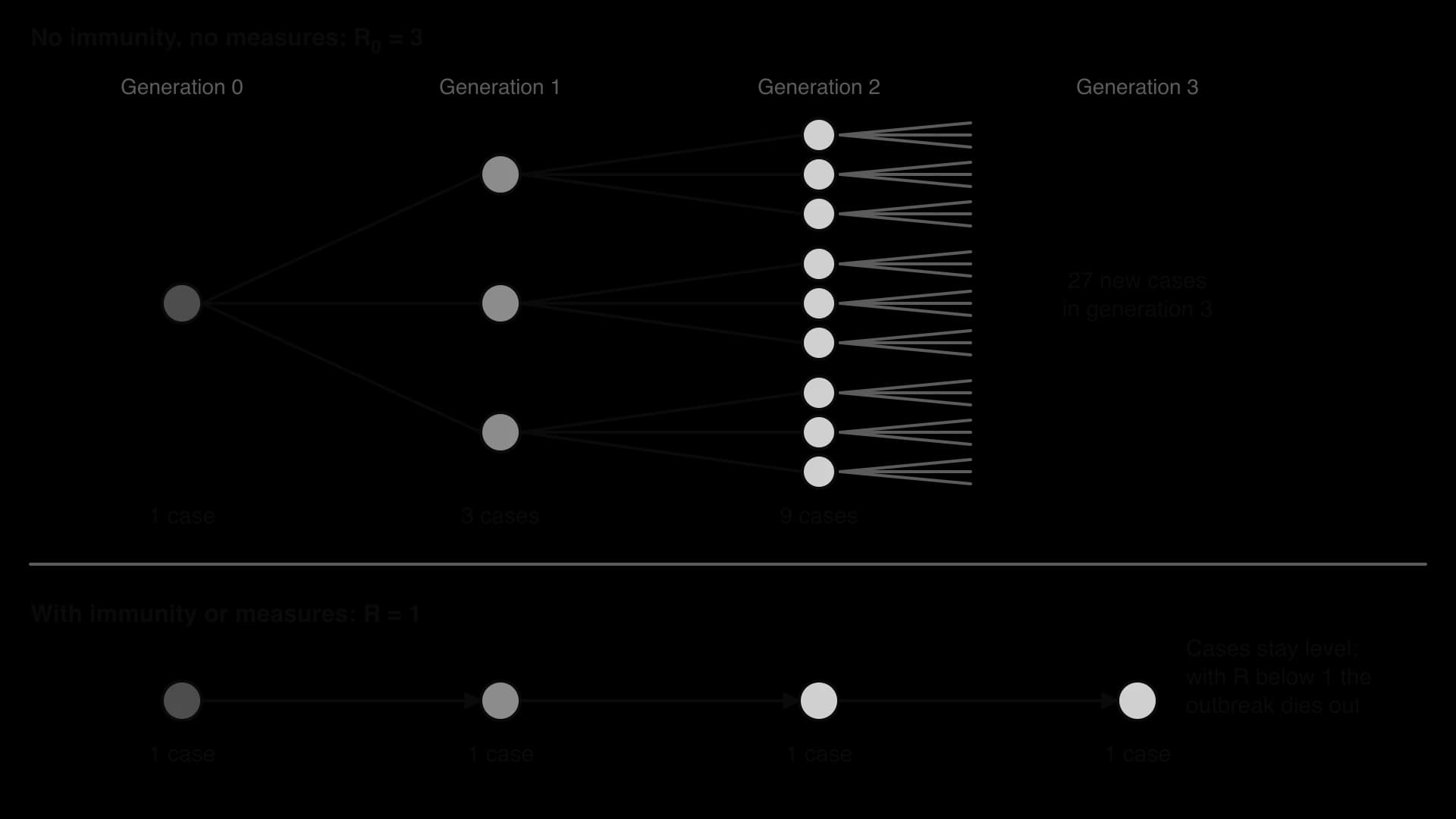
Growth in an epidemic is exponential while R stays above 1. If R₀ is 3 and a generation of infection lasts five days (hypothetical values), one case can lead to 27 new cases in 15 days and 243 in 25 days. Measures that cut contact, and immunity from vaccination or earlier infection, lower the effective reproduction number R, the average number of people each case infects at a given time.
The incubation period is the time between infection and the first symptoms. It decides how long people must be quarantined after contact with a case and how far a disease can travel undetected.
The case fatality rate is calculated as:
An epidemic curve plots new cases over time. Without measures, a highly infectious disease produces a tall, early peak; if that peak exceeds the number of patients hospitals can treat, deaths rise from lack of care as well as from the disease. Measures that reduce contact, such as testing and isolation, masks, distancing, closing large gatherings and lockdowns, lower R and "flatten the curve", spreading cases over a longer period and buying time to develop treatments and vaccines.

Places that had faced earlier epidemics often responded faster. Hong Kong, Taiwan, Singapore and South Korea had been hit by SARS in 2003, and South Korea by MERS in 2015, when a shortage of test kits allowed the disease to spread in hospitals. Afterwards, South Korea changed its rules so that diagnostic tests could be approved rapidly in an emergency. These lessons shaped their rapid responses in early 2020.
Preparedness on paper did not always predict performance. The Global Health Security Index, first published in 2019, ranked the United States first and the United Kingdom second for pandemic preparedness, yet both had higher excess death rates than many lower-ranked countries during COVID-19. The index measured plans, laboratories and capacities, but not political leadership, public trust, inequality or how quickly governments acted.
Under the International Health Regulations, states must report outbreaks that could spread internationally, and the WHO’s Director-General can declare a Public Health Emergency of International Concern (PHEIC) on the advice of an emergency committee of experts. A PHEIC is a formal warning that an outbreak is a risk to other countries and needs a coordinated international response. There have been nine since 2005, including H1N1 influenza (2009), Ebola in West Africa (2014), Zika (2016), COVID-19 (2020), mpox (2022 and 2024) and Ebola (Bundibugyo virus) in Uganda and Ituri Province, DR Congo, declared in May 2026.
International action includes sharing genetic sequences and data, coordinating research on tests, treatments and vaccines, supplying protective equipment and funding vaccines for poorer countries. COVAX was the global initiative, led by Gavi, the Coalition for Epidemic Preparedness Innovations (CEPI) and the WHO, with UNICEF as the main delivery partner, to give every country fair access to COVID-19 vaccines. By October 2020, 184 countries had joined.
COVAX was undermined by vaccine nationalism: high-income countries bought up most early vaccine supplies for their own populations, often ordering more doses than they needed. COVAX began delivering vaccines in February 2021 but reached its goal of 100 million doses only on 6 July 2021, not by the end of March as promised, and by mid-August 2021 had delivered 200 million doses to nearly 140 countries rather than the 600 million projected. Shortages were blamed on vaccine nationalism by richer nations and on the diversion of 400 million Oxford–AstraZeneca doses, made under licence by the Serum Institute of India, for domestic use in India.
Sources: Wikipedia, "Public health emergency of international concern", "COVAX" and "Global Health Security Index", 2026.
The pandemic also led to new international rules. On 20 May 2025 the World Health Assembly adopted the WHO Pandemic Agreement, with 124 member states in favour, 11 abstaining and the United States, which was leaving the WHO, not taking part. It aims to improve prevention, surveillance, research and the fair sharing of vaccines and medicines, but it states explicitly that the WHO has no authority to order countries to take specific actions, and an annex on sharing pathogen samples and benefits still had to be agreed before it could come into force.
The media is essential to managing a pandemic because measures such as masks, testing, isolation and vaccination depend on millions of individual decisions. Public broadcasters, government briefings and online dashboards of cases and deaths spread information quickly and helped people judge risk. At the same time, false and misleading claims about cures, the origin of the virus and the safety of vaccines spread rapidly through social media.
An infodemic is a flood of information, accurate and inaccurate, during a crisis that makes it hard for people to find trustworthy guidance. The term was first used in 2003 during the SARS outbreak and became widely used in 2020. Misinformation contributed to vaccine hesitancy in both high- and low-income countries, and its effects outlasted the pandemic: mistrust of public health officials reduced routine childhood vaccination in several countries, including some in Africa.
Positive roles of the media | Negative roles of the media |
|---|---|
Rapid public information on symptoms, testing and vaccination | Misinformation and conspiracy theories spread on social media |
Data dashboards that let people and journalists track the epidemic | Mixed political messages that confuse the public and reduce trust |
Investigative reporting that holds governments to account | Sensational coverage that causes panic buying or stigma towards groups blamed for the disease |
Campaigns that change behaviour, such as mask-wearing and handwashing | Vaccine hesitancy, which lowers coverage below herd immunity levels |
COVID-19 is caused by the coronavirus SARS-CoV-2. The first known outbreak began in Wuhan, a city of about 11 million people and a major rail and air hub in central China, in December 2019; many early cases were linked to the Huanan Seafood Wholesale Market. By late September 2026, about 7.1 million deaths had been officially attributed to the disease worldwide, but the WHO estimated that the true toll in 2020 and 2021 alone, measured as excess deaths, was about 14.9 million.
SARS-CoV-2 spreads mainly through airborne particles, can be passed on before symptoms appear or by people with no symptoms, and early estimates of R₀ ranged from 1.4 to 2.5, with later estimates for the original strain as high as 5.7. New variants such as Delta and Omicron were more infectious still. In the first weeks the number of cases doubled about every seven and a half days, and the virus spread to other Chinese provinces with the mass travel of the Chinese New Year holiday in January 2020.
Diffusion then followed the hierarchy of global air links. Cases appeared first in major hubs with direct flights to China, then spread to Europe, where Italy overtook China as the country with the most reported deaths on 19 March, and from Europe to the Americas: genomic analysis showed that most early infections in New York came from Europe rather than directly from Asia. By 26 March 2020 the United States had more confirmed infections than any other country. The WHO declared a PHEIC on 30 January 2020 and characterised the outbreak as a pandemic on 11 March 2020; the emergency was ended on 5 May 2023.
South Korea confirmed its first case on 20 January 2020. On 18 February a member of the Shincheonji religious group in Daegu, "Patient 31", tested positive after attending crowded services while ill, and cases linked to the church rose into the thousands within weeks. Drawing on the lessons of MERS in 2015, South Korea approved test kits rapidly, ran aggressive mass testing, isolated cases and traced their contacts using interviews, credit-card records and CCTV, and controlled the outbreak without a national lockdown. Its estimated excess death rate at the end of 2021 was about 15 per 100,000 people.
New Zealand, an island state with few entry points, closed its borders to non-citizens and non-residents on 19 March 2020 and introduced a four-level alert system two days later, aiming to eliminate the virus rather than slow it. It had recorded only 25 deaths by the end of 2020 and ended 2021 with fewer deaths than expected in a normal year (about −49 excess deaths per 100,000). It abandoned the elimination strategy after the Delta variant spread in Auckland in August 2021.
The United States, ranked the best-prepared country in the world by the Global Health Security Index in 2019, had about 300 excess deaths per 100,000 by the end of 2021, above the world estimate of 197. Responses varied between states, and messages from political leaders often conflicted with those of health officials. Peru had the highest excess death rate in Latin America, about 558 per 100,000 (several countries in eastern Europe, led by Bulgaria, were higher still), despite one of the earliest strict national lockdowns in Latin America, from 16 March 2020; in early 2021 the health minister reported a daily shortage of 110 tonnes of medical oxygen.
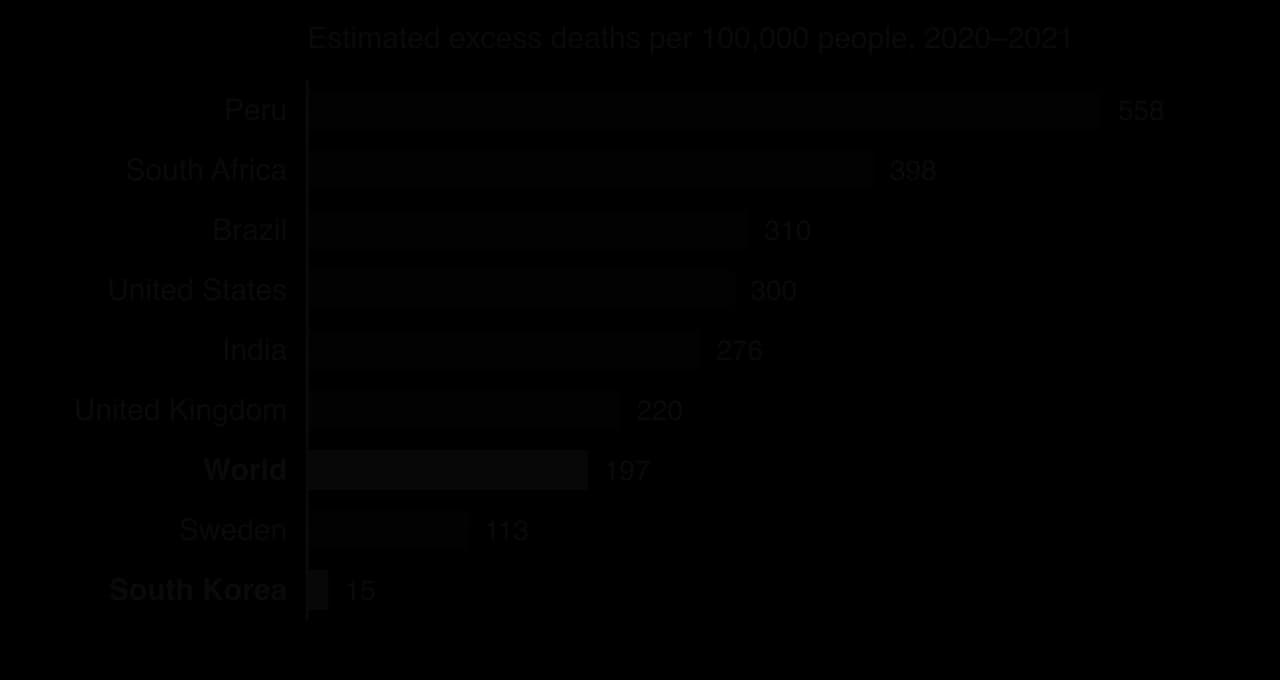
COVID-19 vaccines were developed in less than a year, a scientific achievement built on decades of research, and deployed from December 2020. A June 2022 study estimated that they prevented 14.4 to 19.8 million deaths in their first year. Their distribution was very unequal. At the end of 2021, 72% of people in high-income countries had received at least one dose, compared with 8% in low-income countries.
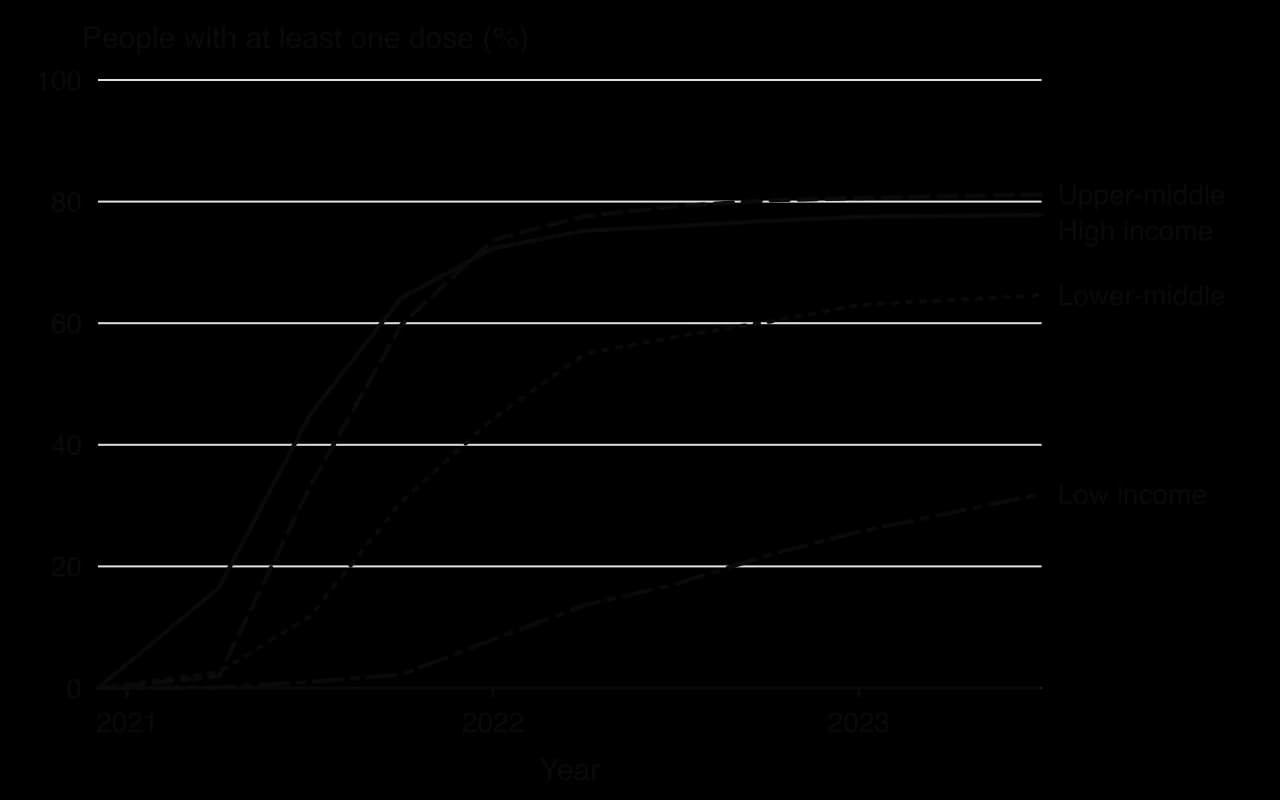
The gap was a result of power: wealthy countries signed advance contracts with manufacturers, paid more and in some cases restricted exports, while COVAX delivered doses months later than planned. Low-income countries also faced problems of delivery, such as cold chains for vaccines that had to be stored at very low temperatures, shortages of health workers, and vaccine hesitancy fuelled by the infodemic.
Group or place | Impacts |
|---|---|
Older people | The infection fatality rate rose steeply with age, so most deaths were among older people, especially in care homes |
Low-income workers and the informal sector | Could not work from home or afford to isolate; lost incomes during lockdowns; high exposure in crowded housing and transport |
Low-income countries | Late access to vaccines; weak health systems; lost remittances and food price rises worsened food insecurity |
Children | School closures; millions missed routine vaccinations, as health services focused on COVID-19 |
Women | More unpaid care work during school closures; women make up most health and care workers on the front line |
The pandemic also hit food security. Lost incomes, lost remittances and disrupted supply chains reduced access to food, and Brazil’s undernourishment, for example, rose from below 2.5% to 3.5% in 2021. In this way a health crisis also became a food crisis for the poorest households.
Speed matters more than plans: South Korea and New Zealand acted within weeks; countries with strong plans on paper but slow, divided responses suffered more.
Prior experience builds capacity: the legacy of SARS and MERS in East Asia shows the value of practising testing, tracing and public communication before a crisis.
Health systems and social protection are pandemic defences: paid sick leave, health insurance and cash transfers let people isolate; primary care and community health workers deliver vaccines.
Global equity is in every country’s interest: while large populations remain unvaccinated, new variants can emerge and spread, so vaccine nationalism prolongs a pandemic for everyone.
Trust and information: clear, consistent communication and action against misinformation matter as much as medical tools.
International rules need commitment: the WHO Pandemic Agreement of May 2025 aims to share vaccines and data more fairly, but it has no power to compel states, and the United States’ withdrawal from the WHO in January 2026 weakened global cooperation.
Key concept | How COVID-19 shows it |
|---|---|
Place | Outcomes depended on each place’s health system, trust, inequality and geography, such as New Zealand’s island borders and Peru’s informal economy |
Process | Hierarchical diffusion through global air hubs, then contagious diffusion within communities |
Power | Rich countries secured vaccines first; the WHO could advise but not enforce |
Possibility | Vaccines developed in under a year, and a new Pandemic Agreement, show what cooperation can achieve; whether the lessons are applied is uncertain |
Explain why South Korea’s excess death rate was much lower than that of the United States.
Examine how far vaccine inequity was a result of power rather than of production capacity.
To what extent is the world better prepared for the next pandemic than it was in 2019?
Sources: Wikipedia, "COVID-19 pandemic", "COVID-19 pandemic in South Korea", "COVID-19 pandemic in New Zealand", "COVAX", "WHO Pandemic Agreement" and "Global Health Security Index", 2026; WHO news release on excess mortality, 5 May 2022; WHO COVID-19 dashboard data, 2026; Our World in Data, 2026.
Questions on future health and food security appear in Paper 1 as a 10-mark structured question on a stimulus, such as a graph of vaccination coverage, a table of food waste or a diagram of a new technology, and as 10-mark extended questions on solutions to food insecurity, new food technologies, prevention and treatment, or pandemic management.
The table shows the percentage of people who had received at least one dose of a COVID-19 vaccine, by country income group.
Income group | End of June 2021 (%) | End of December 2021 (%) | End of June 2023 (%) |
|---|---|---|---|
High-income countries | 45.0 | 72.3 | 77.8 |
Upper-middle-income countries | 33.2 | 73.7 | 81.2 |
Lower-middle-income countries | 11.8 | 44.3 | 64.6 |
Low-income countries | 1.0 | 8.0 | 31.9 |
Sources: Our World in Data, COVID-19 vaccinations, 2026.
Extended questions often ask you to evaluate the management of a contemporary pandemic, to discuss whether new technologies can solve food insecurity, or to examine the merits of prevention and treatment, for example: "To what extent can contemporary approaches to food production solve the problem of food insecurity?"
Solutions to food insecurity are best classified by the dimension they target: availability (sustainable intensification), access (cash transfers, safety nets such as Ethiopia’s PSNP), utilisation (fortification, biofortification) and stability (reserves, insurance, early warning, peace).
Food loss occurs between harvest and retail, mainly in low-income countries; food waste occurs in retail, food service and homes. About 1.05 billion tonnes of food were wasted in 2022, 60% of it in households. France’s 2016 law and South Korea’s pay-by-weight system reduce waste.
Brazil’s Fome Zero and Bolsa Família cut undernourishment from 10.5% in 2001 to below 2.5% by 2012; it rose again after 2018 and fell back by 2024, showing the role of political priorities.
GMOs can raise yields and cut insecticide use, but raise issues of corporate control, resistance and acceptance; vertical farming suits land-scarce cities but uses much energy; in vitro meat could cut emissions and land use but is costly and contested.
Prevention is usually cheaper and protects whole populations, treatment helps the sick now; the best mix depends on social marginalisation, government priorities, the means of infection and scientific intervention.
Herd immunity requires a share of the population immune of about 1 − 1/R₀; more infectious diseases need higher coverage.
Pandemic management depends on the epidemiology of the disease, prior awareness, international action (the IHR, PHEICs, COVAX, the Pandemic Agreement) and the media (information and the infodemic).
COVID-19 caused about 14.9 million excess deaths in 2020–21; responses and outcomes varied widely, and vaccine nationalism left low-income countries far behind.
I can classify solutions to food insecurity by the dimension of food security they target, with examples.
I can distinguish food loss from food waste and evaluate ways of reducing each.
I can evaluate Brazil’s Fome Zero and Bolsa Família with data.
I can discuss the advantages and disadvantages of GMOs, vertical farming and in vitro meat, with located examples.
I can evaluate prevention and treatment using social marginalisation, government priorities, means of infection and scientific intervention.
I can determine a herd immunity threshold from R₀.
I can explain how epidemiology, prior awareness, international action and the media affect pandemic management.
I can examine COVID-19 and its lessons, comparing at least two countries.
Positive consequences: the transition has reduced famine and some micronutrient deficiencies, and improved child growth in many places (eg falling stunting in China).
Good answers may be well structured (AO4) and may additionally offer a critical evaluation (AO3) which weighs positive and negative consequences, recognizes that the burden falls unequally between groups (equity), and considers time: some consequences, such as diabetes and heart disease, appear decades after dietary change. Another approach might be to consider how far the costs to health systems differ between countries at different levels of development.
For 5–6 marks, expect some weakly-evidenced outlining of health consequences of the nutrition transition.
For 7–8 marks, expect a structured account which includes:
either well-evidenced explanation of consequences for different groups, with located examples
or a discursive conclusion (or ongoing evaluation) grounded in geographical concepts and/or perspectives.
For 9–10 marks, expect both of these traits.
NB. Maximum [5] if the answer does not distinguish between different groups of people.
Marks | Level descriptor |
|---|---|
0 | The response does not reach a standard described by the descriptors below. |
1–2 | Too brief, lists unconnected information, not focused on the question and lacks structure. Knowledge is very general, with large gaps or errors; examples or case studies are missing or only listed. No analysis; terminology is missing or used incorrectly. |
3–4 | Too general, lacks detail, not focused on the question and largely unstructured. Outlines examples, statistics and facts, both relevant and irrelevant, with links to the question only listed. Basic terminology is used, with errors or inconsistently. No critical evaluation of evidence; any conclusion is irrelevant. |
5–6 | Partially addresses the question, with a narrow argument, an unsubstantiated conclusion and limited evaluation. Describes relevant supporting evidence (examples, case studies) and outlines links to the question. The argument repeats one point or covers only part of the question. Other perspectives, or strengths and weaknesses of evidence, are listed. |
7–8 | Addresses the whole question; the analysis is evaluated and the conclusion is relevant but lacks balance. Relevant evidence is described correctly and covers all the main points. The argument is clear but one-sided or unbalanced. Complex terminology is used correctly but not consistently. Other perspectives, or strengths and weaknesses of evidence, are described. |
9–10 | In-depth and specific to the question (topic and command term). Correct, relevant examples, statistics and detail are integrated and their link to the question explained. The argument is balanced, explaining complexity, exceptions and comparisons. Evaluation of evidence and perspectives is well developed, and the conclusion is balanced and aligned with the evidence. Logically structured and easy to follow. |
Evaluate the usefulness of a systems approach for comparing the sustainability of food production in different places.
10 marks
To what extent are water footprints a reliable way of comparing the sustainability of food production in different places?
10 marks