Notes on HL.c Environmental ethics
Learning objectives
Define ethics and environmental ethics, and outline why environmental ethics developed in the 1960s and 1970s.
Explain how different beliefs about the relationship between humans and nature lead to different ethical frameworks.
Distinguish between instrumental value and intrinsic value, and explain why they are not exclusive.
Explain what moral standing is and discuss which entities, including future generations, may have it.
Outline Aldo Leopold’s land ethic and evaluate it as a basis for environmental decisions.
Compare and contrast virtue ethics, consequentialist ethics and rights-based ethics.
Apply the three ethical frameworks to a real environmental decision.
Explain the appeal to nature fallacy and evaluate arguments that rely on it.
Discuss how environmental and social justice movements have developed and why their goals increasingly overlap.
Apply the ethical lens to issues from every topic of the course.
Introduction
Environmental ethics asks what is right and wrong in the way humans treat the natural world: whether animals, plants, rivers and future people matter morally, and what duties humans have towards them. Every environmental decision, from culling an invasive species to setting a carbon budget, involves a judgement about values that science alone cannot settle.
The ethical lens runs through the three foundation ideas of the course. It explains why perspectives differ: two people may accept the same scientific evidence about a declining fish stock and still disagree about what should be done, because they hold different moral beliefs. It asks which parts of a system count, and for whom it should be sustained. And sustainability itself is an ethical commitment, a duty to leave future generations with a world that can meet their needs.
What ethics is
Ethics is the branch of philosophy that studies moral principles: what makes behaviour right or wrong, good or bad, and how people ought to act. Ethics differs from law, which states what a society enforces, and from science, which describes how the world is. A law may permit an action that many people judge to be wrong, and science can predict the consequences of an action but cannot say whether those consequences are good.
Every culture has ethical traditions, and many speak directly about nature. Māori kaitiakitanga is the practice of guardianship of the natural environment, based on a worldview in which people trace their ancestry to the Earth and the sky. Buddhist and Jain traditions teach ahimsa, non-harm to living beings. Christian and Islamic traditions describe humans as stewards or trustees of a creation that belongs to God.
The African philosophy of ubuntu stresses that a person is a person through relationships with others, which some writers extend to the wider community of life. These traditions show that environmental ethics is not a single Western invention, even though the academic field developed mainly in Europe and North America.
In New Zealand, kaitiakitanga has been written into law. The Resource Management Act 1991 requires everyone managing the use, development and protection of natural resources to have particular regard to it, and defines it as “the exercise of guardianship” including “the ethic of stewardship”. This is one example of an ethical idea becoming a legal duty.
Sources: Wikipedia, Kaitiakitanga (2026).
The rise of environmental ethics
Environmental ethics is the branch of ethical philosophy that deals with environmental issues and with the moral relationship between humans and the natural world. It arose as an academic field in the 1960s and 1970s, when pollution, pesticides, the loss of wildlife and rapid population growth made environmental problems more visible.
Philosophers at the time were concerned that the main Western ethical traditions focused on how people treat each other. They had little to say about the moral status of animals, plants, species, ecosystems or non-living things such as rivers and mountains. If only humans matter morally, then destroying a forest is wrong only if it harms people; environmental ethics asked whether that is enough.

Several works shaped the new field. Aldo Leopold’s essay “The Land Ethic”, published in A Sand County Almanac in 1949, was republished before the first Earth Day in 1970 and became widely read. In 1967 the historian Lynn White argued in the journal Science that the roots of the ecological crisis lay partly in a Western religious tradition that saw humans as separate from and above nature. The first US journal devoted to the field, Environmental Ethics, was founded in 1979.
In 1973 the Norwegian philosopher Arne Næss distinguished “shallow” ecology, concerned with pollution and resources for the sake of people in rich countries, from deep ecology, which holds that all life has value in itself. An eight-point platform summarised by Bill Devall and George Sessions in 1985 states that the well-being of human and non-human life has intrinsic value irrespective of its usefulness to humans, that humans have no right to reduce the diversity of life except to satisfy vital needs, and that human interference with nature is already excessive and worsening. Critics reply that the line between “vital” and other needs cannot be drawn precisely.
Sources: Wikipedia, Environmental ethics; Land ethic; Lynn Townsend White Jr.; Deep ecology; Arne Næss (2026).
Beliefs about humans and nature
Ethical frameworks for the environment, and the conflicts between them, grow from different fundamental beliefs about how humans relate to the rest of nature. An ethical framework is a structured set of principles used to decide what is right or wrong. Three broad beliefs lead to three broad families of framework.

Belief about humans and nature | Ethical position it tends to support | Link to environmental value systems | Example |
|---|---|---|---|
Humans are of no significant difference from the rest of nature | All components of nature have intrinsic and equal rights; decisions are judged by their effect on the whole of nature | Ecocentric | Deep ecology: Næss argued that the well-being of non-human life has value in itself, irrespective of its usefulness to humans |
Humans are part of nature but have a special responsibility to care for it | Humans should act as compassionate, respectful, good stewards | Between ecocentric and anthropocentric | Pope Francis’s encyclical Laudato si’ (2015), subtitled “on care for our common home”; Māori kaitiakitanga |
Nature is separate from humans and exists to serve human needs | Decisions should bring the greatest good to the greatest number of people | Anthropocentric or technocentric | Valuing a forest only for its timber, water supply and carbon storage |
Sources: Wikipedia, Deep ecology; Laudato si’ (2026).
These beliefs map onto the ecocentric, anthropocentric and technocentric value systems, but they add a philosophical reason for each position. An ecocentrist does not only prefer nature reserves; the ethical claim behind the preference is that nature has value of its own, which creates duties for humans. The middle position, stewardship, is the most widely held in religious and Indigenous traditions, and has many forms, from managing a resource carefully for later use to a relationship of reciprocity with the land.
Robin Wall Kimmerer, a botanist and member of the Citizen Potawatomi Nation, describes this kind of relationship in Braiding Sweetgrass (2013). She presents Indigenous knowledge and Western science as two powerful ways of knowing, and argues for reciprocal relationships in which people receive the gifts of the Earth and give care in return. Reciprocity differs from both ownership and simple protection: humans are participants in nature, with obligations, rather than outside observers.
Sources: Wikipedia, Braiding Sweetgrass (2026).
Instrumental and intrinsic value
Two kinds of value underlie most ethical arguments about nature. Instrumental value is the usefulness of something to humans, the value it has as a means to an end. Intrinsic value is the value something has simply for what it is, as an end in itself, regardless of its use. Both terms are introduced with perspectives; the ethical lens asks where intrinsic value comes from and what follows from it.
Instrumental value
Nature provides three broad kinds of instrumental value. It supplies goods, such as food, water, timber and medicines. It provides services, such as decomposers processing waste, wetlands filtering water and bees pollinating crops. And it offers opportunities for human development, such as scientific knowledge, recreation and creative inspiration. Economics tries to put a money value on many of these, which is one reason why instrumental value plays a large part in policy.
Intrinsic value
Arguments for intrinsic value take two main forms. Non-living things such as wild places, mountains and rivers may be valued because they are wild, culturally significant or beautiful. Living organisms may be valued because, like humans, they have parts, processes and behaviours organised to accomplish survival and reproduction: each organism pursues its own good, so its continued existence and well-being deserve respect. This second argument is the basis of biocentrism, the view that every living thing has moral worth.
Value that is both
Instrumental and intrinsic value are not exclusive: the same entity can have both. Whales are a clear example. Many people value them intrinsically, for their intelligence, their beauty and their existence, and they also have instrumental value as the basis of whale-watching tourism and, in some places, as food. A sacred river may supply water and fish while also being valued as an ancestor or a living being.

The overlap matters in practice. Campaigns to protect whales or rainforests often combine both arguments, appealing to tourism income and to intrinsic worth. The difficulty comes when the two point in different directions, for example when a species has no known use and protecting it costs money or jobs. Only intrinsic value then gives a reason to protect it.
Moral standing
An entity has moral standing if it should be morally considered in decisions about how to act towards it. To ask whether something has moral standing is to ask whether it should be taken into account, and whether it can make a claim on others. A stone used to build a wall is not usually thought to be wronged; a person forced to build the wall is. The question for environmental ethics is where the line falls between these two cases.

Who or what has moral standing?
Different answers draw the line in different places. A strictly anthropocentric view gives moral standing only to human beings. The Australian philosopher Peter Singer, in Animal Liberation (1975), argued that any being that can suffer has interests that deserve equal consideration; the capacity to suffer, or sentience, is the test. He popularised the term “speciesism”, coined by the British writer Richard Ryder, for discrimination on the basis of species, comparing it with discrimination on the basis of skin colour.
The American philosopher Tom Regan, in The Case for Animal Rights (1983), argued that animals are “subjects-of-a-life”, like humans, and so have rights that must not be violated, whatever the benefits. Biocentrists extend moral standing to all living organisms, including plants. Ecocentrists go further, giving standing to species, ecosystems and even non-living parts of nature such as rivers, rocks and wild places.
Sources: Wikipedia, Animal Liberation (book); Peter Singer; Tom Regan (2026).
Leopold’s land ethic
Aldo Leopold, an American forester and ecologist, set out the best-known ecocentric principle. He argued that ethics had expanded over history from individuals to society, and that its next step was to include “the land”: soils, waters, plants and animals, which together form the biotic community. Humans should see themselves as “plain members and citizens” of this community, not its conquerors.
A thing is right when it tends to preserve the integrity, stability, and beauty of the biotic community. It is wrong when it tends otherwise.
— Aldo Leopold, “The Land Ethic”, A Sand County Almanac (1949)
The land ethic judges actions by their effect on the whole community, not on individual organisms. This makes it holistic: culling deer that are overgrazing a forest can be right under the land ethic, because it protects the integrity of the ecosystem, even though it harms individual animals. Critics point out two difficulties. Taken strictly, it might forbid clearing any land for homes or farms; and ecosystems change naturally, so it is not clear which “stability” should be preserved.
Sources: Wikipedia, Land ethic (2026).
Rivers and non-living nature
In the Māori worldview of the Whanganui iwi, the Whanganui River is an ancestor and a living whole, expressed in the saying “Ko au te awa, ko te awa ko au” (I am the River and the River is me). Moral standing here does not come from sentience or from being alive in a biological sense, but from a relationship of kinship and identity between people and place. In 2017 New Zealand law recognised the river as a legal person, giving this ethical relationship legal form.
Future generations
Moral standing can also be extended across time. Future people do not yet exist, so they cannot complain, vote or bargain, yet the choices made today will shape the climate, biodiversity and resources they inherit. The question is whether people alive now have obligations to future people irrespective of any benefit to themselves. The German philosopher Hans Jonas argued in The Imperative of Responsibility (1979) that technology gives humanity the power to affect the far future, and so creates a new responsibility to care for the planet and its future.
This idea underlies intergenerational equity and the definition of sustainable development. It has also reached the courts: the plaintiffs in the Juliana climate case in the United States included the climatologist James Hansen as a “guardian for future generations”. Philosophers disagree on how much weight future people should receive, and economic methods that discount future costs and benefits give them less weight than present people.
Sources: Wikipedia, Hans Jonas; Juliana v. United States (2026).
 YouTube
Three approaches to ethics
Traditional ethics offers three major approaches to judging what is right. They differ in what they focus on: the character of the person acting (virtue ethics), the consequences of the action (consequentialist ethics), or the rights of those affected (rights-based, or deontological, ethics). Each can be applied to environmental decisions, and each can lead to a different answer.

Virtue ethics
Virtue ethics focuses on the character of the person doing the action. It assumes that good people do good actions and bad people do bad ones, so the central question is “What would a good person do?” rather than “What rule applies?” or “What will happen?”. The tradition goes back to the ancient Greek philosopher Aristotle, who described virtues as good habits of character developed through practice.
For the environment, respect, compassion, humility, moderation and responsibility might be judged virtuous approaches to the natural world. Greed, wastefulness and indifference to suffering would be vices. A virtue approach explains why many people feel that wasting food or buying far more than they need is wrong, even when no single act causes measurable harm. Its weakness is vagueness: two people may agree that a good steward is responsible, but disagree about what responsibility requires in a particular case.
Consequentialist ethics
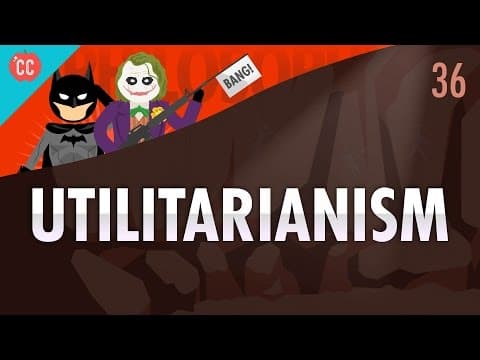
Consequentialist ethics holds that the consequences of an action determine its morality. Actions with good consequences are good, and actions with bad consequences are bad; the intention behind the action does not affect its morality. The most common form is utilitarianism, which judges as right the action that produces the greatest good, often stated as the greatest happiness for the greatest number.
Much environmental policy is consequentialist, because it weighs costs and benefits. A cost–benefit analysis of a new dam, for instance, compares electricity and flood control against lost farmland, fisheries and displaced people. Singer’s argument is utilitarian too: the suffering of animals is a bad consequence that must be counted. The difficulties are measuring and comparing very different consequences (how many kilowatt-hours equal one extinct species?), predicting long-term effects, and the risk that the interests of a minority are sacrificed for the majority.
 YouTube
Rights-based ethics
Rights-based ethics, also called deontological ethics, focuses on actions themselves and asks whether they conflict with the rights of others or with moral duties. Some actions are wrong even if they produce good consequences, because they violate a right. What these rights are is debated. If a person believes that ethical rules come from a religious text, and the text states that killing animals is wrong, then killing animals for food is wrong because it conflicts with the animals’ rights, however many people it feeds.
Rights-based arguments are central to animal rights, to Indigenous rights to land and water, to the human right to a healthy environment, and to the rights of nature written into some constitutions and laws. They also protect individuals from being sacrificed for the majority: the coercive enforcement of China’s population policies, which included 324 million IUD insertions and 108 million sterilisations between 1980 and 2014, is criticised on rights-based grounds even by those who accept that slower population growth had benefits. The main difficulty is conflict between rights, for example between a community’s right to develop and a forest’s right to exist.
Sources: Wikipedia, One-child policy; Tom Regan (2026).
Virtue ethics | Consequentialist ethics | Rights-based ethics | |
|---|---|---|---|
Focus | The character of the person acting | The outcomes of the action | The action itself and the rights it affects |
Key question | What would a good, caring person do? | Which option produces the greatest overall good? | Does this violate anyone’s (or anything’s) rights? |
Environmental strength | Encourages lasting habits of care and moderation | Matches policy tools such as cost–benefit analysis; can count non-human suffering | Protects vulnerable groups, species or ecosystems from being traded away |
Weakness | Vague in hard cases; virtues differ between cultures | Hard to measure and compare outcomes; may sacrifice minorities; long-term effects uncertain | Rights conflict; it is debated who holds rights and what they are |
Example | A farmer who protects hedgerows out of respect for wildlife, though no law requires it | Culling an invasive predator because many more native birds will survive | Opposing a pipeline because it crosses land and water that a treaty gives to an Indigenous nation |
The appeal to nature fallacy
Some people hold that whatever is natural is right or good, and whatever is unnatural is bad. This position is contentious. The appeal to nature fallacy is the mistake of concluding that something is good simply because it is natural, or bad because it is not. It is a fallacy because “natural” describes how something came about, not whether it is good: there is no factual reason to assume that what is natural is better.
Diseases are natural, but few people think they are good. Malaria, carried by Anopheles mosquitoes, kills hundreds of thousands of people each year, most of them young children in Africa. Is it right to protect mosquitoes because they are part of nature, despite the disease they spread? The research consortium Target Malaria is developing genetically modified mosquitoes, including a gene drive that would spread a trait reducing the fertility of malaria-carrying mosquitoes through a population. Supporters point to the lives that could be saved; opponents raise the irreversibility of releasing a self-spreading modification and the precautionary principle.
Sources: Wikipedia, Target Malaria; Gene drive; Appeal to nature (2026).
The fallacy works in both directions. Calling a gene drive “unnatural” does not show that it is wrong, and calling a species “native” does not show that every action to protect it is right. Equally, recognising the fallacy does not mean that nature has no value: the point is that the reasons for valuing something must be stated, such as its intrinsic value, its role in an ecosystem or its benefits to people, rather than relying on the word “natural”.
Environmental justice and social justice
Environmental movements and social justice movements developed from separate histories. Early conservation movements in Europe and North America focused on protecting wilderness, scenery and wildlife. Social justice movements focused on civil rights, labour rights, the rights of women and of colonised peoples. For much of the twentieth century the two had different leaders, goals and supporters.
The two movements increasingly seek common goals: equitable and just societies in which the costs and benefits of using the environment are shared fairly. A turning point came in 1982 in Warren County, North Carolina, a mainly African American and poor rural county, when the state chose it as the site of a landfill for soil contaminated with polychlorinated biphenyls (PCBs). Residents and supporters lay in front of the trucks; the six weeks of protest led to over 550 arrests and are often described as the start of the environmental justice movement. The protest led to the first national study linking the location of waste facilities to the make-up of nearby communities, which found race to be the strongest predictor of where hazardous waste facilities were sited in the United States, stronger than poverty or land values.
Sources: Wikipedia, Warren County PCB Landfill (2026).
Indigenous movements have joined the two strands. From April 2016 to February 2017, members of the Standing Rock Sioux Tribe and thousands of supporters protested against the Dakota Access Pipeline, which passes under Lake Oahe near the reservation, arguing that it threatened their water supply and sacred sites. Calling themselves “water protectors”, they joined a defence of the environment with Indigenous sovereignty, treaty rights and cultural survival. The pipeline began operating in May 2017. In Nigeria, the writer Ken Saro-Wiwa led the Movement for the Survival of the Ogoni People, whose Ogoni Bill of Rights joined demands for the clean-up of oil pollution in Ogoniland with demands for political autonomy and a fair share of oil revenue; he and eight other activists were executed on 10 November 1995.
Sources: Wikipedia, Dakota Access Pipeline protests; Ken Saro-Wiwa (2026).
Many writers see a parallel between the human domination of nature and other forms of exploitation. The same reasoning that treats nature as a resource to be used up has been used to treat some groups of people as less important: the rights of disenfranchised social groups, sexism and racism all involve one group placing its interests above another’s. Equity with future generations extends the same idea through time. This is why environmental justice and climate justice now combine environmental protection with fairness between rich and poor, between countries, and between generations.
Case study: Predator Free 2050 in Aotearoa New Zealand
Context
New Zealand separated from the rest of the ancient continent of Gondwana about 85 million years ago, and its wildlife evolved without land mammals apart from two species of bat. Many native birds, such as the kiwi and the kākāpō, nest on the ground, cannot fly or are slow to breed, because there were no mammal predators to escape. When people brought rats, stoats, possums, cats and other mammals, these birds, along with native lizards, frogs and insects, had no defences against them.
The losses continue today. In 2025 the Department of Conservation reported that feral cats had killed more than 100 short-tailed bats in a single week near Ohakune, and that predators had pushed the southern dotterel on Rakiura / Stewart Island close to extinction. The introduced brushtail possum also eats native forest and spreads bovine tuberculosis to farmed cattle and deer. The problem is a direct result of human action: the predators are invasive species that people introduced, deliberately or by accident.
Sources: Department of Conservation, Feral cats to be added to Predator Free 2050 (21 November 2025); Wikipedia, 1080 usage in New Zealand (2026).
The plan
In July 2016 the New Zealand government announced the goal of eradicating possums, rats and stoats from the whole country by 2050. It put NZ$28 million into a joint-venture company, Predator Free 2050 Ltd, which would add NZ$1 for every NZ$2 raised from councils, philanthropists and others. Prime Minister John Key said at the time that current methods were not enough and that a major scientific breakthrough would be needed. More than 2,000 community groups take part in trapping and monitoring, alongside government agencies and iwi.
The main tools are trapping and poison. The Department of Conservation spreads the poison sodium fluoroacetate, known as 1080, from the air over about 440,000 ha of conservation land each year; one aerial application can kill 98% of possums and more than 90% of rats in the treated area.
Research continues into new tools, including genetic methods and fertility control. In May 2025 the government announced that Predator Free 2050 Ltd would be disestablished and its work moved to the Department of Conservation, On 21 November 2025 the Conservation Minister confirmed that feral cats would be added to the list of target species, the first change to the list since 2016, after earlier opposition from cat owners had kept them off it. Pet cats are not targets.
Sources: Wikipedia, Predator Free 2050; 1080 usage in New Zealand (2026); Department of Conservation (21 November 2025).
Data: progress against the 2025 goals
Goal for 2025 | Status in 2025 | Evidence |
|---|---|---|
Increase by 1 million ha the mainland area where predators are suppressed (from 2016) | Achieved in 2021 | Over 2.5 million ha under sustained suppression by June 2025 |
Show that predators can be eradicated from at least 20,000 ha of mainland without fences | Achievable, but not by 2025 | Initial assessments suggest elimination on at least 20,000 ha in South Westland; independent verification under way |
Eradicate all mammalian predators from uninhabited offshore islands | Achievable, but not by 2025 | Effort focused on Auckland Island, the largest offshore island, whose completion would more than double the pest-free island area |
Develop a breakthrough science solution able to eradicate at least one small mammal predator | Achievable, but not by 2025 | Research on genetics and fertility control is advancing |
At least five eradication projects led by whānau, hapū and iwi | Achievable, but not by 2025 | Four hapū- and iwi-led projects under way |
Eradicate possums or mustelids from at least one city | Achievable, but not by 2025 | Possums, rats and mustelids eliminated from Te Motu Kairangi / Miramar Peninsula, Wellington |
Effective tools and knowledge for eradication on farmland | Achieved | Elimination achieved on farmland at varying scales |
Sources: Department of Conservation, Review of progress against the Predator Free 2025 goals (2026).
Two of the seven interim goals were met, and the rest were judged achievable but late. The pattern supports the 2016 view that existing tools can suppress predators over large areas but that eradication across a whole country will need new technology, which is where the hardest ethical questions arise.
The ethical issue
Predator Free 2050 aims to kill very large numbers of sentient animals, deliberately and permanently, to protect other animals and whole ecosystems. The three frameworks, and different views of moral standing, give different answers about whether this is right.
Approach | How it judges Predator Free 2050 | Verdict it tends to support |
|---|---|---|
Consequentialist (ecosystem and species level) | Weighs the deaths of predators against the native birds, bats, lizards and insects they kill and the possible extinction of species found nowhere else | Supports eradication, if it works and if suffering is minimised |
Consequentialist (animal welfare, as in Singer’s view) | Counts the suffering of every sentient animal; poisons such as 1080 and some traps cause suffering, and non-target animals can be killed | Supports protecting birds but demands the most humane methods, and questions methods that cause prolonged suffering |
Rights-based (animal rights, as in Regan’s view) | Each rat, stoat and possum is a subject-of-a-life with a right not to be killed for the benefit of others | Opposes lethal control, whatever the benefits |
Rights-based (rights of nature, species or Indigenous peoples) | Native species and ecosystems have a right to exist; iwi have rights to protect taonga species and to be consulted about poison in food-gathering areas | Supports eradication, carried out with consent and partnership |
Virtue ethics | Asks what a responsible, compassionate kaitiaki would do: protect the birds while minimising cruelty and acting with humility about new technology | Supports careful, humane, community-led action |
Land ethic (ecocentric) | Judges by the integrity, stability and beauty of the biotic community, not by individual animals | Strongly supports eradication of introduced predators |
Perspectives and conflicts
Conservationists and most livestock farmers support the programme and the use of 1080, which the Parliamentary Commissioner for the Environment called “effective and safe” in a 2011 report. Hunting organisations such as the New Zealand Deerstalkers Association, animal-rights groups and some local communities have opposed aerial 1080, raising concerns about animal suffering and about animals killed by the poison that were not its targets. The Māori Party dropped its call to ban 1080 after the 2011 report, but iwi views vary, and many iwi lead their own projects as an expression of kaitiakitanga.
Feral cats show how values shape what counts as a pest. They kill native wildlife, yet they were left off the target list until November 2025 because many people value cats as pets. Deer and pigs, also introduced mammals, are valued by hunters and are not targets. These choices are not purely scientific; they reflect which animals people care about.
Sources: Wikipedia, 1080 usage in New Zealand; Predator Free 2050 (2026).
Evaluation and the appeal to nature
The strongest arguments for Predator Free 2050 are consequentialist and ecocentric: the programme could prevent extinctions that are irreversible, and it repairs damage that humans caused. The strongest arguments against are rights-based and welfare-based: it kills millions of sentient animals that did not choose to be introduced. A virtue approach does not settle the question but shapes how it is done, favouring humane methods, honest consultation and caution with genetic tools whose effects might spread beyond New Zealand.
The programme also raises the appeal to nature. Supporters sometimes argue that native species belong and introduced ones do not, as though “native” were automatically good. That argument on its own commits the fallacy, because being introduced does not by itself make an animal harmful or its killing right.
A sounder case rests on stated reasons, such as the intrinsic value of species found nowhere else, the irreversibility of extinction, the ecological roles of native birds, and the responsibility of humans to repair harm they caused. Critics can likewise not rely on “gene drives are unnatural”; they need to show real risks, such as the spread of modified animals to other countries where the same species are native.
What it shows
Predator Free 2050 shows that the same scientific facts can support different ethical conclusions. The frameworks give conflicting verdicts because they focus on different things: overall outcomes, the rights of individual animals, the integrity of ecosystems or the character of those acting. It also shows how moral standing is drawn in practice, with some introduced mammals targeted and others protected, and how Indigenous ethics such as kaitiakitanga shape both the goals and the methods. A justified decision has to state which values it puts first and why.
Sources: Department of Conservation (2025, 2026); Wikipedia, Predator Free 2050; 1080 usage in New Zealand (2026).
The ethical lens across the course
Ethical questions arise in every topic. The table gives short applications for understandings that carry an ethical link: the issue, the ethical question it raises, and the framework or concept that helps to answer it.
Topic | Issue | Ethical angle |
|---|---|---|
1 Foundation | Perspectives, value systems and the environmental movement; sustainable development; environmental justice | Value systems rest on beliefs about humans and nature; sustainable development is a duty to future generations; justice asks who bears environmental costs. |
2 Ecology | Diet and trophic level; feeding the world | Eating lower in the food chain feeds more people from the same land (consequentialist), and reduces animal suffering (Singer). |
3 Biodiversity | Extinction; conservation; Indigenous land management; displacement of people for conservation | Do species have intrinsic value and moral standing? Is it right to remove people from land to create protected areas (rights-based)? |
4 Water | Access to water; whaling and sealing; Indigenous hunting | Water as a human right; the Faroese grindadráp and Inuit narwhal hunts raise rights of animals against cultural rights and subsistence. |
5 Land | Food choices; land rights; farming methods | Factory farming and animal welfare; land rights of marginalised groups; duties to future soil users. |
6 Atmosphere and climate | Who should cut emissions; adaptation; geoengineering | Climate justice between rich and poor and between generations; is it right to alter the whole climate system deliberately? |
7 Natural resources | Valuing natural capital; resource extraction and Indigenous lands | Is pricing nature compatible with its intrinsic value? Whose consent is needed before a mine is opened? |
8 Population and urban systems | Population policies; environmental migration; unequal access to green space | Coercive population policies violate rights; duties to people displaced by climate change; fairness in cities. |
Exam practice
Ethics appears in Paper 2 and, at HL, in Paper 1 questions that ask you to discuss stakeholders’ views. Section A items may ask you to define a term (moral standing, intrinsic value) or to distinguish two frameworks. In Section B, the 9-mark markbands reward “HL lenses content”, and the top band asks for a balanced analysis with “explicit judgements… including some critical reflection”. Ethical frameworks are the clearest way to show balance and critical reflection, because they let you weigh one argument against another on stated grounds.
How to bring the ethical lens into an essay
Spot the value question. Behind most “should” or “to what extent” questions is a disagreement about values, not only facts.
Name whose interests count. Present people, future generations, sentient animals, species, ecosystems: this is moral standing.
Apply two or three frameworks. What do consequentialist, rights-based and virtue approaches say about this case?
Use precise terms. Intrinsic and instrumental value, moral standing, land ethic, appeal to nature, intergenerational equity, environmental justice.
Link to the other lenses. Ethics often explains why a law exists (rights of nature) or what an economic valuation leaves out (non-use and intrinsic value).
Reach a reasoned judgement. Say which considerations should weigh most and why.
Paper 2 Section A-style questions
Comparison items need a point about each framework in every sentence, not two separate descriptions.
An “explain” item on the appeal to nature needs both the reason it is a fallacy and an example.
Paper 1-style data question
Resource (hypothetical data, invented for practice). A survey of 400 residents near a proposed wind farm on a hill sacred to a local Indigenous community asked which statement was closest to their view.
Statement | Indigenous residents (n = 100) | Other residents (n = 300) |
|---|---|---|
A. The wind farm is right because it cuts emissions for everyone. | 18 | 159 |
B. The wind farm is wrong because the hill must not be harmed, whatever the benefits. | 64 | 42 |
C. It depends on whether the community is respected and agrees. | 18 | 99 |
Paper 2 Section B-style essay
Summary
Ethics is the branch of philosophy concerned with moral principles; environmental ethics applies it to the relationship between humans and nature.
Environmental ethics arose in the 1960s and 1970s because Western ethics focused on relations between people and said little about animals, ecosystems or non-living nature.
Beliefs about humans and nature lead to different frameworks: humans as no different from nature (ecocentric), as stewards (care and responsibility), or as separate from nature (anthropocentric or technocentric).
Instrumental value is usefulness to humans (goods, services, opportunities); intrinsic value is value in itself; the two are not exclusive, as whales show.
Moral standing means being morally considered; it can be extended to sentient animals, all living things, ecosystems, rivers and future generations.
Leopold’s land ethic judges an action right when it tends to preserve the integrity, stability and beauty of the biotic community.
Virtue ethics focuses on character, consequentialist ethics on outcomes, and rights-based (deontological) ethics on rights and duties; they can reach different verdicts on the same decision.
The appeal to nature fallacy is the mistaken claim that something is good because it is natural; diseases such as malaria are natural but not good.
Environmental and social justice movements had separate histories but increasingly share goals of equitable and just societies, as Warren County and Standing Rock show.
Predator Free 2050 shows how the three frameworks, views of moral standing and Indigenous ethics lead to different judgements about killing introduced predators.
Self-check
- To do:
I can define ethics and environmental ethics and explain why environmental ethics developed in the 1960s and 1970s.
- To do:
I can explain how beliefs about humans and nature lead to ecocentric, stewardship and anthropocentric frameworks.
- To do:
I can distinguish instrumental from intrinsic value and give an example of something that has both.
- To do:
I can explain moral standing and discuss whether animals, ecosystems, rivers and future generations have it.
- To do:
I can state Leopold’s land ethic and evaluate it.
- To do:
I can compare and contrast virtue, consequentialist and rights-based ethics.
- To do:
I can apply the three frameworks to a real decision such as Predator Free 2050.
- To do:
I can explain the appeal to nature fallacy with an example.
- To do:
I can discuss how environmental and social justice movements came to share goals.
- To do:
I can apply the ethical lens to an issue from any topic in an extended answer.