 YouTube
Explain how an active lifestyle supports health through energy balance, muscle and immune function and lower disease risk, interpret global activity data and, at HL, prescribe exercise for target groups.
Each is in the SEHS glossary, with every other term in the subject.
The build-up of fatty plaques of lipid, cholesterol, immune cells and fibrous tissue in the walls of arteries, which narrows them, reduces their elasticity and can lead to a blocking blood clot.
The minimum rate of energy expenditure needed to maintain essential body functions at complete rest, measured lying down, awake, after fasting and in a comfortable temperature.
Body mass in kilograms divided by the square of height in metres, used to classify adults as underweight, healthy, overweight (25–29.9) or obese (30 or more); it does not distinguish fat from muscle.
The amount of mineral, mainly calcium, per unit area or volume of bone, measured by a DXA scan and used as an index of bone strength.
Any disease of the heart or blood vessels, including coronary heart disease, stroke, peripheral arterial disease and heart failure; most is caused by atherosclerosis.
Disease of the heart caused by atherosclerosis of the coronary arteries, which reduces the blood supply to the heart muscle and can cause angina and myocardial infarction.
The relationship between energy intake and energy expenditure; when the two are equal, body energy stores and body mass stay stable.
Distinguish between physical activity, exercise, sport and sedentary behaviour, and use METs to describe exercise intensity.
Outline the recommended levels of physical activity for different age groups and explain why healthy levels vary with age and sex differences.
Describe the components of energy balance and calculate the effect of a positive or negative energy balance.
Explain how physical activity affects muscular function and immune function, including the J-shaped curve.
Explain how an active lifestyle reduces the risk of osteoporosis, obesity, hypertension, cardiovascular diseases and type 2 diabetes.
Interpret data on global physical activity levels and on the effects of exercise interventions.
Outline the steps of exercise prescription and explain how exercise intensity is progressed safely (HL).
Discuss the appropriateness of exercise for children and adolescents, older adults and pregnant individuals, for physical and mental health (HL).
Regular physical activity is one of the most effective ways to protect health. It lowers the risk of the main non-communicable diseases, including heart disease, type 2 diabetes and some cancers, and it improves mental health, sleep and physical function at every age. People who are insufficiently active have a 20–30% higher risk of death than people who are sufficiently active.
Sources: WHO physical activity fact sheet, 2024.
The same physiology that drives training adaptations in athletes also drives these health benefits. Stronger muscles, a more efficient heart, better control of blood glucose and denser bones help a sprinter perform, and they help an older adult climb stairs, avoid a fall and stay independent. The difference between the health and performance lenses is mainly one of dose: health needs a moderate amount of regular activity, while elite performance needs far more, and very large doses bring their own risks.
With a free account, Augment remembers where you stopped and what you have practiced.
The total energy used by the body over a period, made up of basal metabolic rate, the thermic effect of food and the energy used in physical activity.
The total chemical energy taken into the body in food and drink over a period, from carbohydrate, protein, fat and alcohol, usually in kJ or kcal per day.
Physical activity that is planned, structured and repetitive, done to improve or maintain one or more components of fitness or health.
The planning of an individualised exercise programme, specifying frequency, intensity, time and type of exercise and how they progress, based on a person's health, fitness, goals and preferences.
A resting blood pressure that is persistently at or above 140/90 mmHg in WHO and many European guidelines, or 130/80 mmHg in the 2017 American guideline; also called high blood pressure.
The ability of the immune system to detect and destroy pathogens and abnormal cells, through physical barriers, white blood cells and antibodies.
A reduced response of muscle, liver and fat cells to insulin, so that more insulin is needed to lower blood glucose; insulin sensitivity is the opposite.
A model of the relationship between exercise load and the risk of upper respiratory tract infection: risk is lower with regular moderate exercise than with inactivity, but higher with very prolonged, intense exercise.
A unit of exercise intensity expressing energy use as a multiple of resting metabolic rate; 1 MET is about 3.5 mL of oxygen per kilogram of body mass per minute.
Physical activity at an intensity of about 3 METs or more, the range in which most of the health benefits of activity are gained.
The energy used in everyday physical activity that is not planned exercise, such as walking, standing, fidgeting and household tasks; it varies greatly between people.
An excess of body fat that impairs health; in adults it is commonly defined as a body mass index of 30 kg per square metre or more.
A disease in which bone mineral density and bone quality are reduced, so that bones become porous and fragile and fracture easily; defined by a bone density T-score of −2.5 or lower.
Any bodily movement produced by skeletal muscles that results in energy expenditure above resting levels, including activity at work, at home, for transport and in leisure time.
The process of identifying, before a person starts an exercise programme, any medical conditions or risk factors that require medical clearance or a modified programme, often using the PAR-Q+.
The progressive loss of skeletal muscle mass, strength and function with ageing, which increases the risk of falls, frailty and disability.
Any waking behaviour with very low energy expenditure, at or below about 1.5 METs, while sitting, reclining or lying, such as screen time, desk work and driving.
A simple method of judging exercise intensity by the ability to speak: at moderate intensity a person can talk but not sing, and at vigorous intensity they can say only a few words without pausing.
A population group, such as children and adolescents, older adults or pregnant individuals, whose physiological, psychological or social characteristics require exercise to be adapted.
The increase in energy expenditure above the resting level caused by digesting, absorbing and storing food, about 10% of daily energy expenditure.
A chronic disease in which blood glucose is persistently high because of insulin resistance and, later, insufficient insulin production by the pancreas; strongly linked to inactivity and excess body fat.
A measurement of the circumference of the abdomen, used as an index of abdominal (visceral) fat; values above about 102 cm in men and 88 cm in women indicate high health risk.
The terms physical activity, exercise and sport are often used as if they mean the same thing, but they describe different levels of organisation. Physical activity is the broadest. It includes any movement that uses energy, such as walking to school, gardening, carrying shopping and playing.
Exercise is a subset of physical activity that is planned and done with a purpose, usually to improve or maintain fitness or health. A 30-minute jog, a weights session and a yoga class are exercise; cycling to work is physical activity but not usually called exercise. Sport is a further subset: organised, competitive activity with rules, such as football or tennis.
Sedentary behaviour is not simply the absence of exercise. It describes time spent sitting or lying while awake with very low energy use, such as watching screens, driving or sitting at a desk. A person can meet the activity guidelines by running every morning and still be highly sedentary for the rest of the day, and high sedentary time is linked to poorer health even in people who exercise.
Intensity can be described with the metabolic equivalent (MET). One MET is the rate of energy use of a person sitting quietly, equal to an oxygen uptake of about 3.5 mL kg⁻¹ min⁻¹, or roughly 1 kcal per kilogram of body mass per hour. An activity of 4 METs uses about four times as much energy per minute as sitting still.
Intensity | METs | Examples | Talk and breathing |
|---|---|---|---|
Sedentary | 1.0–1.5 | Sitting, lying, watching a screen | Normal |
Light | About 1.5–3 | Slow walking, standing work, light housework | Can sing |
Moderate | About 3–6 | Brisk walking, easy cycling, doubles tennis | Can talk but not sing |
Vigorous | 6 or more | Running, fast cycling, swimming laps, football | Can say only a few words without a breath |
Moderate and vigorous activity together are known as moderate-to-vigorous physical activity (MVPA), and most guidelines are written in terms of MVPA. Because a vigorous minute counts for about two moderate minutes, 75 minutes of vigorous activity provides roughly the same benefit as 150 minutes of moderate activity.
The World Health Organization (WHO) publishes guidelines on the amount of physical activity needed for health, based on systematic reviews of the evidence. The 2020 guidelines apply to everyone, of every sex and ability, but the amount and type of activity recommended change with age.
Group | Aerobic activity | Muscle and bone strengthening | Other advice |
|---|---|---|---|
Children and adolescents (5–17 years) | An average of at least 60 min per day of MVPA across the week, mostly aerobic | Vigorous activity and activities that strengthen muscle and bone on at least 3 days a week | Limit sedentary time, especially recreational screen time |
Adults (18–64 years) | 150–300 min of moderate, or 75–150 min of vigorous, activity per week, or an equivalent mix | Muscle-strengthening activities at moderate or greater intensity, involving all major muscle groups, on 2 or more days a week | Limit sedentary time and replace it with activity of any intensity |
Older adults (65+ years) | As for adults | As for adults, plus varied multicomponent activity emphasising balance and strength training at moderate or greater intensity on 3 or more days a week | Activity to improve function and prevent falls |
Pregnant and postpartum women | At least 150 min of moderate activity per week | Aerobic and muscle-strengthening activities; gentle stretching may help | Avoid heat, contact sports and fall risks; limit sedentary time |
Sources: Bull et al., British Journal of Sports Medicine, 2020 (WHO 2020 guidelines on physical activity and sedentary behaviour).
The guidelines state that some activity is better than none and that more is better, up to a point. They also set no safe maximum for sitting, because the evidence was not strong enough to give a number, but recommend that sitting time be reduced and broken up across all ages.
Children need more daily activity than adults because they are growing. Weight-bearing and high-impact play builds bone mass and develops motor skills, and the guidelines therefore ask for vigorous activity and bone-strengthening on several days a week. Adults need enough activity to maintain cardiorespiratory fitness, muscle mass and a healthy body composition. Older adults need balance and strength training in addition, because the loss of muscle and balance with age is the main cause of falls.
The guideline amounts are the same for men and women, but sex differences affect what an appropriate programme looks like. On average, women have lower bone mass and lose bone faster after the menopause, so impact and resistance exercise are especially important for them. Pregnancy changes the type of activity that is suitable. Men, on average, develop cardiovascular disease earlier in life. Across almost every country and age group, women and girls are less active than men and boys, so promoting activity among women is a major public health goal.
YouTubeThe body obeys the law of conservation of energy. Energy taken in as food and drink must either be used or stored. Energy balance describes the relationship between energy taken in and energy used.
Energy intake is the chemical energy in food and drink, provided by carbohydrate, protein, fat and alcohol. It is measured in kilojoules (kJ) or kilocalories (kcal), where 1 kcal = 4.18 kJ. The energy content of each macronutrient is considered with carbohydrate, protein and fat in nutrition.
Energy expenditure is the total energy used by the body. It has three main components.
Basal metabolic rate (BMR): the energy needed to keep the body alive at complete rest (breathing, circulation, maintaining body temperature, cell repair). It is usually the largest component, about 60–70% of daily expenditure in a sedentary person. It is higher in people with more fat-free mass, so muscle is metabolically "expensive" tissue, and it falls slowly with age.
Thermic effect of food: the energy used to digest, absorb and store food, about 10% of daily expenditure.
Physical activity: the most variable component, from about 15% of daily expenditure in a very sedentary person to more than half in an endurance athlete in heavy training. It includes planned exercise and non-exercise activity thermogenesis (NEAT), the energy used in everyday movement such as walking, standing, fidgeting and household tasks.
Energy that is not used immediately is stored. A small amount is stored as glycogen in the liver and muscles, which is quickly available for exercise but limited in size. Most stored energy is held as triglyceride in adipose tissue. Even a lean adult carries enough energy in fat to fuel many days of walking, whereas glycogen stores can be largely used up in a couple of hours of hard exercise.
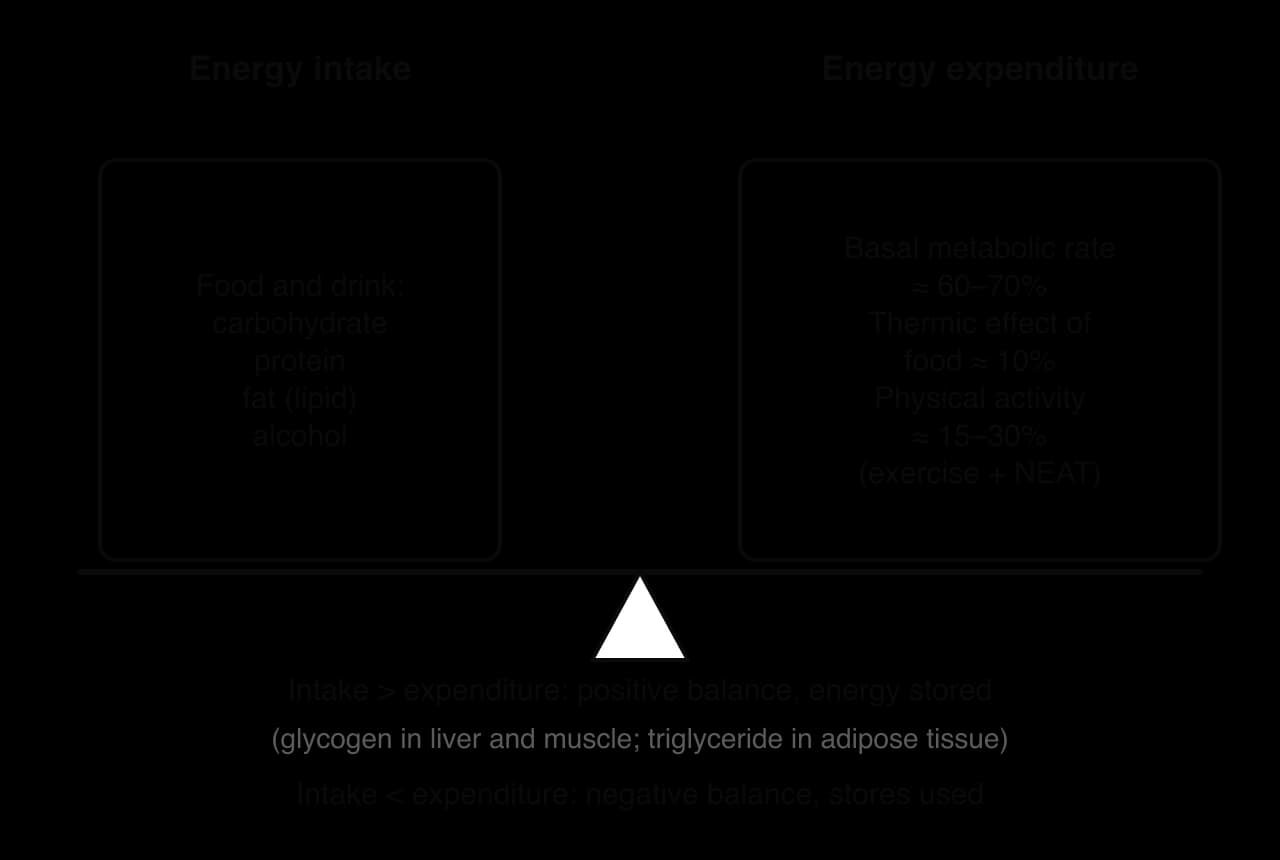
When intake is greater than expenditure, the body is in positive energy balance and the extra energy is stored, mainly as fat, so body mass tends to increase. When expenditure is greater than intake, the body is in negative energy balance, energy stores are used and body mass tends to fall. Growth in children, pregnancy and muscle building in training all need a small positive balance.
Energy balance is always true as a law of physics, but it does not mean that body mass changes predictably whenever intake or exercise changes. The two sides of the balance affect each other. Exercise can increase appetite, and some people compensate by eating more or by moving less during the rest of the day. Eating less lowers BMR and NEAT slightly, because the body adapts to conserve energy.
People also differ greatly in how much NEAT they produce. In a classic overfeeding study, 16 non-obese volunteers ate 1,000 kcal per day more than they needed for 8 weeks. Fat gain varied ten-fold between individuals, and the changes in NEAT were the strongest predictor of who stayed lean. Hormones, sleep, stress, medication and genetics all influence both appetite and expenditure, so the management of body mass is more complex than a simple calculation suggests.
Sources: Levine, Eberhardt and Jensen, Science, 1999.
Skeletal muscle adapts to the demands placed on it. Regular resistance exercise increases muscle size (hypertrophy) and strength, partly through larger muscle fibres and partly through better recruitment of motor units by the nervous system. Endurance activity increases the number of mitochondria and capillaries in muscle, so the muscle can use oxygen and fat more effectively and resists fatigue for longer.
These adaptations matter for health as much as for sport. Muscle is the largest site of glucose uptake after a meal. Muscle contraction moves glucose transporters (GLUT4) to the cell membrane, so glucose enters the muscle even without insulin, and regular exercise makes muscle more sensitive to insulin for up to a day or two after each session. Stronger muscles also support the joints, improve posture and balance, and make everyday tasks less tiring.
From about the fourth decade of life, muscle mass and strength decline slowly, and the decline speeds up in older age. When this loss is large enough to affect function, it is called sarcopenia. Sarcopenia makes it harder to rise from a chair, climb stairs or recover balance, and it is a major cause of falls, frailty and loss of independence.
Inactivity accelerates the loss: even a few weeks of bed rest or limb immobilisation can cause large reductions in muscle mass and strength, especially in older adults. Resistance training is the most effective way to slow or partly reverse sarcopenia, and older adults who train can gain strength at any age. Adequate protein intake supports this effect.
Physical activity can also harm muscular function when the load is too high or increases too quickly. Excessive training without enough recovery can lead to persistent fatigue, muscle damage and overuse injury. These risks are managed by gradual progression and by matching training to the individual, which links the health benefits of activity to the training principles of progressive overload and recovery.
The immune system defends the body against infection by bacteria and viruses and removes damaged cells. Immune function describes how well this system works. Physical activity can improve or temporarily disturb immune function, depending on the amount and intensity of the activity.
The relationship between exercise and the risk of upper respiratory tract infections (URTIs), such as colds, has been described by the J-shaped curve. People who exercise regularly at a moderate level have a lower risk than sedentary people, but the risk rises again, above that of sedentary people, with very high volumes of intense exercise, such as marathon racing and heavy training.
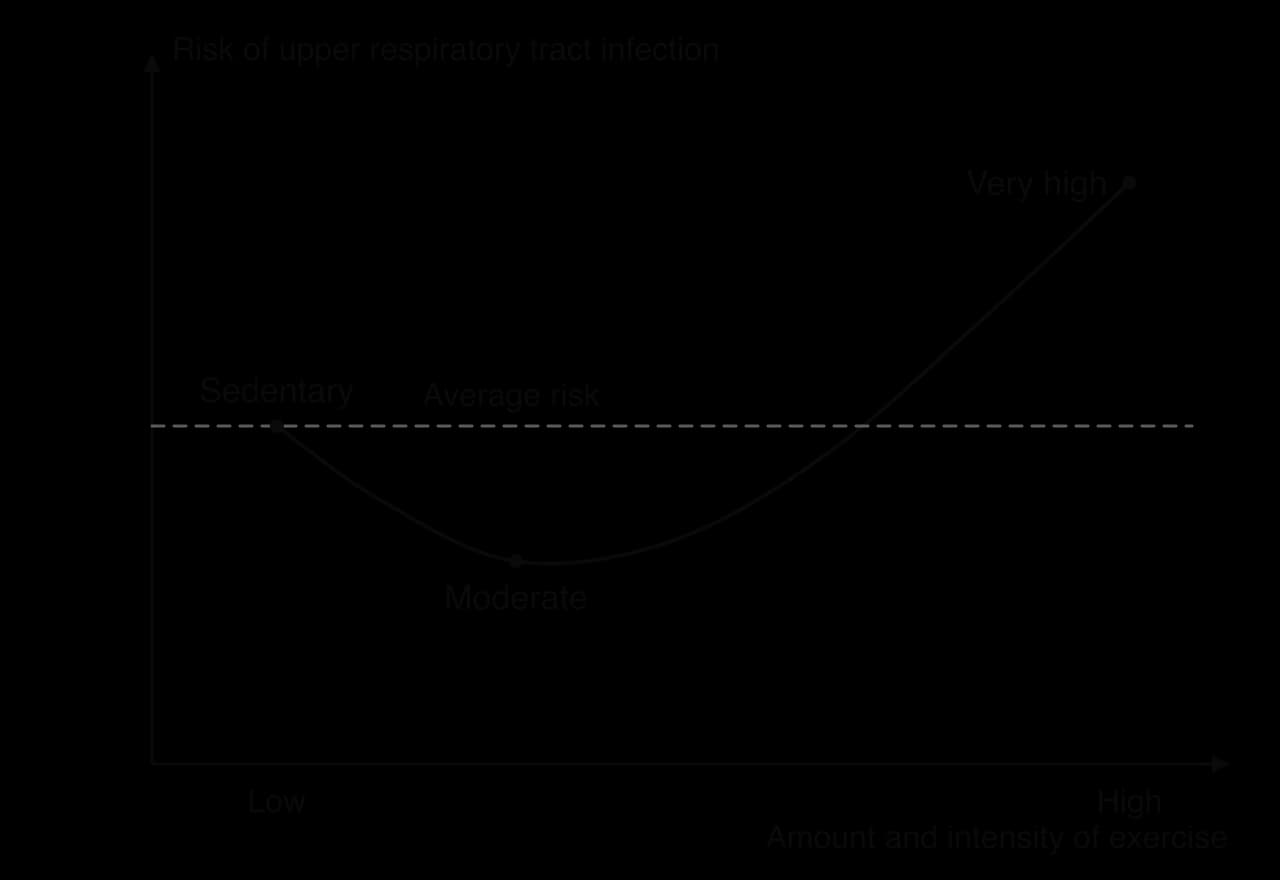
The model came largely from studies of endurance runners. In a survey of runners who had applied to run the Los Angeles Marathon, 12.9% of those who ran reported an infection in the week after the race, compared with 2.2% of similarly trained runners who did not take part. Runners training 97 km or more a week had about twice the odds of reporting an infection in the two months before the race as those training less than 32 km.
Sources: Nieman et al., Journal of Sports Medicine and Physical Fitness, 1990.
Moderate exercise is thought to help immune function by temporarily increasing the circulation of immune cells, which improves surveillance of the body, and by reducing chronic inflammation, body fat and stress. Regular activity is also linked to better responses to vaccination and to a slower decline of immune function with age.
In the hours after a long, intense session, the number of some white blood cells (lymphocytes) in the blood falls sharply. This observation led to the "open window" hypothesis, which proposed that hard exercise temporarily suppresses immunity and lets infections take hold.
More recent research challenges this view. The lymphocytes that leave the blood after exercise appear to move into tissues such as the lungs and gut, where infections start, rather than being destroyed, which could be a state of heightened surveillance. Many of the infection studies relied on self-reported symptoms, which may not be caused by infection at all; a sore throat after a marathon can result from breathing dry air or from airway inflammation. Other factors that often accompany races, such as crowds, travel, poor sleep, psychological stress and low energy intake, also raise infection risk.
Non-communicable diseases, such as cardiovascular disease, type 2 diabetes and many cancers, are the leading causes of death worldwide. They develop slowly over many years, and several risk factors are shared between them: inactivity, excess body fat, high blood pressure, poor blood lipid profile, smoking and an unhealthy diet. Because physical activity improves several of these risk factors at once, it lowers the risk of many diseases together.
Condition | What it is | How activity reduces the risk | Example of evidence |
|---|---|---|---|
Osteoporosis | Low bone mineral density and fragile bones | Weight-bearing and impact loading stimulate bone; builds peak bone mass, slows loss | High-intensity resistance and impact training raised spinal BMD in postmenopausal women |
Obesity | Excess body fat that impairs health | Increases energy expenditure; preserves muscle; improves appetite regulation | Activity helps prevent weight gain and maintain weight loss |
Hypertension | Resting blood pressure persistently raised | Lower peripheral resistance; better endothelial function; lower sympathetic activity | Endurance training lowered BP by about 8/5 mmHg in people with hypertension |
Cardiovascular disease | Disease of the heart and blood vessels, mostly caused by atherosclerosis | Better lipids (higher HDL, lower triglycerides), lower BP, less inflammation, healthier artery lining | Large cohort studies show fewer cardiovascular events in more active people, with a dose–response relationship |
Type 2 diabetes | High blood glucose caused by insulin resistance | Muscle glucose uptake independent of insulin; improved insulin sensitivity; less visceral fat | Lifestyle programme reduced diabetes incidence by 58% |
Bone is living tissue that is constantly broken down and rebuilt. Bone mineral density (BMD), the mass of mineral (mainly calcium phosphate) in a given volume of bone, is the main measure of bone strength. It is usually measured with a low-dose X-ray scan (DXA) of the hip and lower spine.
BMD rises through childhood and adolescence to a peak in early adulthood, at about 25–30 years, and then declines slowly. In women the decline speeds up for several years after the menopause, because oestrogen helps to protect bone. Osteoporosis develops when BMD falls so low that bones become fragile and break easily, often at the hip, spine or wrist after a minor fall.
Bone responds to mechanical load: when it is bent or compressed by forces larger or faster than usual, it becomes denser and stronger. Activities that load the skeleton with high forces applied quickly, such as jumping, running, racket sports, gymnastics and heavy resistance training, are the most effective. Swimming and cycling are excellent for the heart but have little effect on bone, because the body weight is supported.
Activity protects against osteoporosis in two ways. In childhood and adolescence, impact activity builds a higher peak bone mass, so there is more bone to lose later. In adulthood and older age, resistance and impact exercise slow the loss of bone and, together with balance training, reduce falls, which cause most fractures. In one trial, postmenopausal women with low bone mass who did 8 months of supervised, high-intensity resistance and impact training twice a week increased the BMD of the lumbar spine, while a low-intensity home programme group lost bone.
Sources: Watson et al., Journal of Bone and Mineral Research, 2018.
Obesity is excess body fat to a degree that harms health. It increases the risk of type 2 diabetes, hypertension, cardiovascular disease, some cancers, joint problems and sleep apnoea. Obesity develops from a long-term positive energy balance, influenced by diet, inactivity, genetics, sleep, environment and income.
The most common measure is the body mass index (BMI), the ratio of body mass to height squared.
BMI is quick, cheap and useful for comparing populations, but it has clear limits for individuals. It does not distinguish fat from muscle or bone, it does not show where fat is stored, and the same BMI carries different risks in different ethnic groups, ages and sexes. Waist circumference adds information about abdominal (visceral) fat, which is most closely linked to cardiovascular disease and type 2 diabetes. Commonly used thresholds for high risk are above about 102 cm for men and 88 cm for women of European origin.
Physical activity helps prevent obesity by increasing energy expenditure and by preserving muscle, which keeps BMR higher. Exercise alone usually produces modest weight loss unless the volume is large, because of compensation, but it is strongly linked to keeping weight off after weight loss and it reduces visceral fat and improves health even when body mass changes little.
Blood pressure is the force exerted by blood on the walls of the arteries, recorded as systolic over diastolic pressure in mmHg. Hypertension is a persistently raised resting blood pressure. It often has no symptoms, but over many years it damages artery walls and strains the heart, increasing the risk of stroke, heart attack, heart failure and kidney disease.
Regular aerobic exercise lowers resting blood pressure by several mechanisms. It reduces activity of the sympathetic nervous system at rest, improves the ability of the artery lining (endothelium) to release nitric oxide, which dilates blood vessels, makes arteries less stiff, and reduces body fat. Together these lower the resistance to blood flow in the arterioles, so pressure falls for the same cardiac output.
Type of training (adults) | Change in systolic BP (mmHg) | Change in diastolic BP (mmHg) |
|---|---|---|
Endurance training, all participants | −3.5 | −2.5 |
Endurance training, participants with hypertension | −8.3 | −5.2 |
Dynamic resistance training | −1.8 | −3.2 |
Isometric resistance training (few studies) | −10.9 | −6.2 |
Sources: Cornelissen and Smart, Journal of the American Heart Association, 2013 (meta-analysis of 93 randomised controlled trials, 5,223 participants).
The table shows that the effect of endurance training is largest in people who already have hypertension, with a fall of about 8/5 mmHg. In people with normal blood pressure, the effect was small. Isometric training produced the largest falls, but this result came from only a few small studies, so it is less certain.
Cardiovascular disease (CVD) includes all diseases of the heart and blood vessels. The most important are coronary heart disease and stroke. Most cardiovascular disease is caused by atherosclerosis, a slow build-up of fatty material in the walls of the arteries.
Atherosclerosis begins when the inner lining of an artery is damaged, for example by high blood pressure, smoking or high blood glucose. Low-density lipoprotein (LDL) cholesterol enters the damaged wall, and white blood cells move in to remove it. Over years, a plaque of lipid, cholesterol, immune cells and fibrous tissue grows in the wall and narrows the lumen. If a plaque ruptures, a blood clot forms on it and can block the artery completely.

When atherosclerosis affects the coronary arteries, which supply the heart muscle itself, the result is coronary heart disease. A partly blocked coronary artery can cause chest pain (angina) during exertion, when the heart muscle needs more oxygen than the narrowed artery can supply. A complete blockage causes a heart attack (myocardial infarction), in which part of the heart muscle dies.
Regular physical activity slows atherosclerosis and reduces the risk of a cardiovascular event in several ways:
It raises high-density lipoprotein (HDL) cholesterol, which carries cholesterol away from the arteries to the liver, and lowers blood triglycerides.
It lowers resting blood pressure, reducing damage to the artery lining.
It improves the function of the endothelium and reduces chronic inflammation.
It improves insulin sensitivity and blood glucose control, and reduces visceral fat.
It reduces the tendency of the blood to clot and improves the heart's efficiency, with a lower resting heart rate and a larger stroke volume.
Type 2 diabetes is a disorder in which blood glucose stays too high because the body does not respond properly to insulin, and later because the pancreas cannot produce enough insulin to overcome the resistance. Over time, high blood glucose damages blood vessels and nerves, leading to heart disease, kidney failure, blindness and poor wound healing.
The underlying problem is insulin resistance. Normally, insulin released after a meal binds to receptors on muscle, liver and fat cells and causes glucose transporters to move to the cell membrane, so glucose leaves the blood. In insulin resistance, the same amount of insulin produces a smaller response, so blood glucose stays higher and the pancreas must release more insulin.
Physical activity acts directly on this problem. During exercise, muscle contraction moves glucose transporters to the cell membrane by a pathway that does not need insulin, so glucose uptake rises even in people with insulin resistance. After exercise, insulin sensitivity stays raised for one to two days while muscle glycogen is replaced. With training, muscles develop more glucose transporters and more mitochondria, and visceral fat, which releases substances that worsen insulin resistance, is reduced. The control of blood glucose by insulin and glucagon is described under blood glucose regulation.
The strongest evidence comes from randomised controlled trials. In the Diabetes Prevention Program in the United States, 3,234 adults with raised blood glucose were randomly assigned to a placebo, the drug metformin, or a lifestyle programme with goals of at least 150 minutes of physical activity a week and a 7% weight loss. They were followed for an average of 2.8 years.
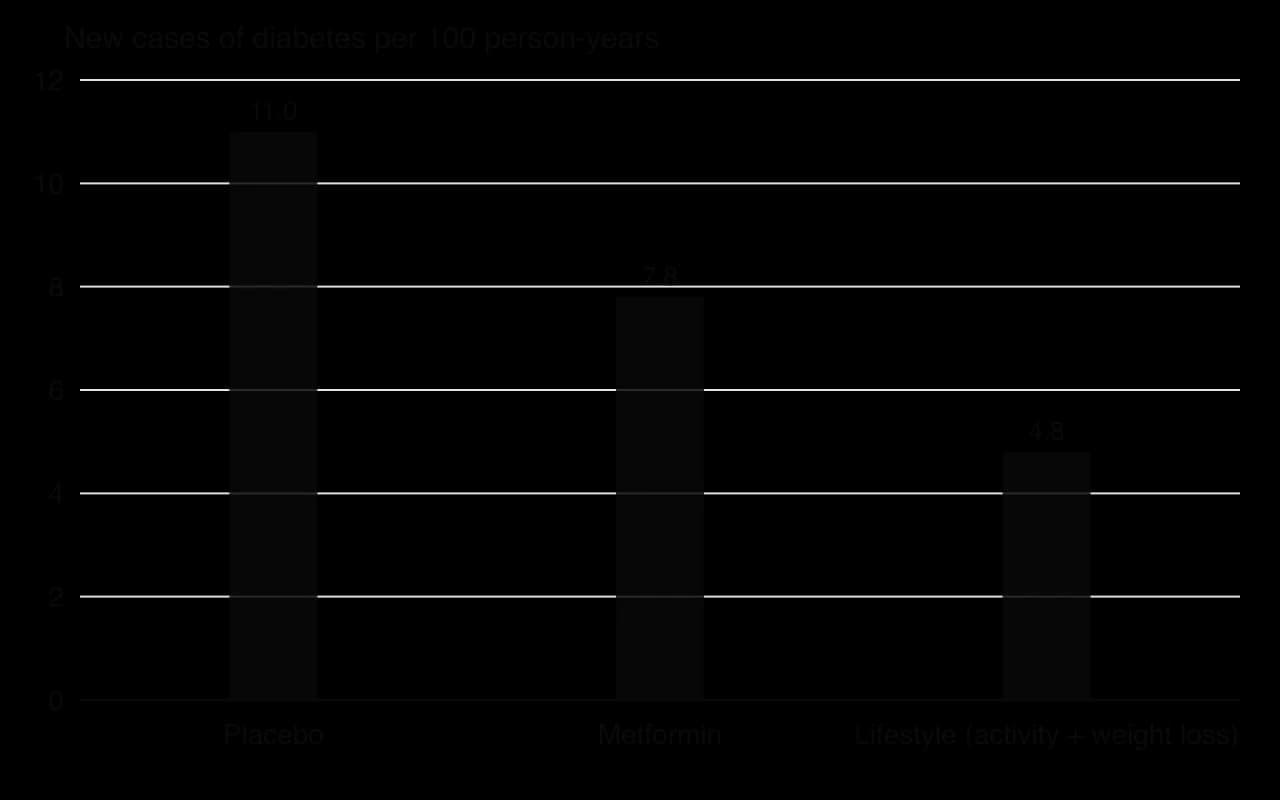
The lifestyle intervention reduced the incidence of diabetes by 58% compared with placebo, and metformin by 31%. To prevent one case of diabetes over three years, about 7 people needed to follow the lifestyle programme, compared with about 14 who needed to take metformin. Because the programme combined activity with diet and weight loss, the trial cannot show how much of the effect was due to activity alone.
Much of the evidence linking activity to lower disease risk comes from large observational studies that follow thousands of people for many years. These show consistent, dose-related links: the more active people are, up to a point, the lower their risk. However, observational studies cannot fully rule out reverse causation (people who are already unwell may be less active) or confounding (active people may also eat better and smoke less).
Randomised controlled trials, such as the Diabetes Prevention Program and the blood pressure trials, give stronger evidence of cause, but they usually last months or a few years, not decades, and often combine activity with other changes. The overall case for activity is strong because the observational studies, the trials and the known physiological mechanisms all point in the same direction.
Knowing that activity is good for health does not tell an individual what to do. Exercise prescription is the process of designing an exercise programme for a specific person, based on their health, fitness, goals and preferences, so that the programme is safe, effective and likely to be followed.
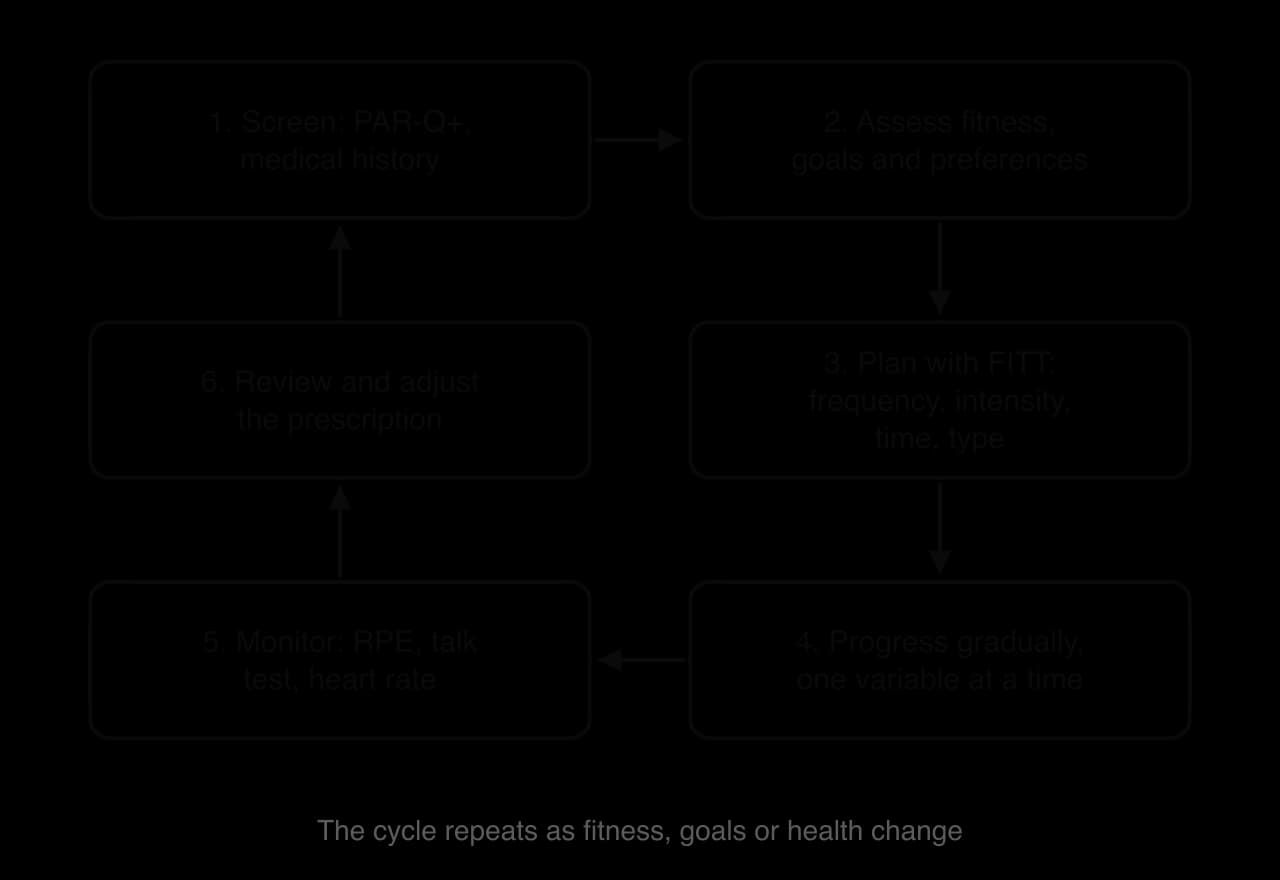
Before a person starts or greatly increases an exercise programme, pre-participation screening identifies anyone for whom exercise could be risky without medical advice. The most widely used tool is the Physical Activity Readiness Questionnaire for Everyone (PAR-Q+). It starts with seven general questions, for example about heart conditions, chest pain, dizziness, chronic medical conditions and medication. A person who answers "no" to all of them can usually start; a "yes" leads to follow-up questions and, if needed, referral to a doctor or qualified exercise professional.
Screening is designed to catch the small number of people at real risk without creating barriers for the majority. Very strict screening can stop people from becoming active, which is itself a health risk. Modern guidance therefore encourages most people to start with light to moderate activity and progress gradually.
A baseline assessment records the person's current fitness, activity history, health and goals. It may include resting heart rate and blood pressure, a submaximal aerobic test, simple strength and flexibility tests and, for older adults, balance and functional tests such as rising from a chair. The results set the starting level and allow progress to be measured.
The programme is planned with the FITT principle: frequency (sessions per week), intensity (how hard), time (duration of each session) and type (mode of exercise). The type should match the goal (for example, weight-bearing exercise for bone health, aerobic exercise for blood pressure) and the person's preferences, because enjoyment strongly affects adherence.
FITT element | Example: inactive adult with raised blood pressure | Example: club athlete preparing for a 10 km race |
|---|---|---|
Frequency | Start with 3 days per week, build to 5 | 5–6 sessions per week |
Intensity | Moderate: RPE 11–13, able to talk | Mixed: mostly easy, plus intervals near race pace |
Time | 10–20 min at first, build to 30 min | 30–90 min |
Type | Brisk walking, cycling, plus resistance exercise twice a week | Running, strength and mobility work |
The same planning framework applies to performance. For an athlete, prescription is driven by the training principles of specificity, progressive overload, recovery and periodisation, with the target event setting the type and intensity of training.
Progression is needed for continued improvement, but increasing the load too quickly is a common cause of injury and drop-out. The cardiovascular system adapts within weeks, whereas tendons, ligaments and bones adapt more slowly, over months. A beginner may therefore feel fit enough to do more before their connective tissues are ready, which leads to overuse injuries such as tendinopathy and stress fracture.
Increase one FITT variable at a time, usually duration or frequency before intensity.
Start below the person's capacity and build gradually ("start low, go slow"), especially for inactive and older people.
Use rest days and lighter weeks to allow recovery and adaptation.
Warning signs include persistent pain, unusual fatigue, poor sleep or a falling interest in exercise.
A widely quoted rule is to increase weekly training volume by no more than 10% per week. The 10% rule is a reasonable heuristic, but it has limited direct evidence. In a randomised trial of 532 novice runners preparing for a 4-mile race, a graded 13-week programme based on the 10% rule produced the same injury rate (20.8%) as a standard 8-week programme (20.3%). Individual factors such as previous injury, body mass, footwear, running surface and sudden spikes in load may matter more than any single percentage.
Sources: Buist et al., American Journal of Sports Medicine, 2008.
Intensity can be monitored in several simple ways. The rating of perceived exertion (RPE) uses a scale such as Borg's 6–20 scale, on which moderate exercise is about 11–13 ("fairly light" to "somewhat hard"). Heart rate can be used with a percentage of maximum or of heart rate reserve. The talk test is the simplest: during moderate activity a person can talk but not sing; during vigorous activity they can say only a few words without pausing for breath.
These methods suit different people. Heart rate is unreliable for people taking medicines that slow the heart, such as beta blockers, and during pregnancy, when resting heart rate rises; RPE and the talk test work in both cases. Wearable devices make monitoring easy, but their heart rate and energy estimates vary in accuracy.
A target group is a group of people who share characteristics that change what type and amount of exercise is appropriate and safe. The three groups considered here benefit greatly from activity, but each needs specific adjustments.
Regular activity in childhood improves cardiorespiratory and muscular fitness, builds bone, helps control body fat, and supports cognitive development, concentration and mental health. Activity habits formed in childhood also tend to continue into adult life. Yet, worldwide, most adolescents do not meet the guideline of 60 minutes of MVPA per day.
Growth plates: the growth plates near the ends of long bones are weaker than the surrounding bone and tendon attachments during growth spurts. Repetitive high loads (for example, many hours of a single sport) can cause overuse injuries at these sites, so variety and limits on repetitive loading are advised.
Resistance training: properly supervised resistance training with good technique and progressive loads is safe and beneficial for children and adolescents; the risks come mainly from poor supervision and excessive loads.
Thermoregulation: children have a larger surface area relative to their mass and sweat less than adults, so they can gain heat quickly in hot environments; frequent breaks, shade and drinks are needed.
Approach: activity should be varied and play-based, with an emphasis on fun, fundamental movement skills and participation rather than early specialisation in one sport.
Mental health: activity is linked to better self-esteem and mood and lower symptoms of depression and anxiety, especially when the climate is supportive rather than focused on winning.
Activity in older age preserves the ability to live independently. Resistance training slows sarcopenia and maintains strength for daily tasks; weight-bearing exercise slows bone loss; aerobic activity maintains cardiorespiratory fitness and reduces the risk of cardiovascular disease and type 2 diabetes. Activity is also linked to better cognitive function and a lower risk of dementia, and group exercise reduces loneliness.
Falls are a major cause of injury and loss of independence in older adults, and balance training is the key prevention. A large review of 108 randomised trials with 23,407 participants found that exercise reduced the rate of falls in older people living in the community by 23%; balance and functional exercises alone reduced it by 24%.
Sources: Sherrington et al., Cochrane Database of Systematic Reviews, 2019.
Screen for chronic conditions and medication, and progress slowly.
Include balance, strength and flexibility as well as aerobic activity, on 3 or more days a week.
Use longer warm-ups, stable surfaces and supervision at first; chairs and rails can support balance work.
Choose activities that are enjoyable and social to support adherence.
For people with an uncomplicated pregnancy, regular activity is safe and beneficial. It lowers the risk of gestational diabetes, pre-eclampsia, gestational hypertension, excessive weight gain, delivery complications and postpartum depression, and it does not harm birth weight or increase the risk of stillbirth. Guidelines recommend at least 150 minutes of moderate activity a week, with aerobic and muscle-strengthening activities.
Continue rather than start: people who were active before pregnancy can usually continue their usual activities, including vigorous ones, while those who were inactive should start gently and build up.
Avoid lying flat on the back for long periods after the first trimester: the weight of the uterus can compress the large vein returning blood to the heart (the inferior vena cava), reducing venous return and causing dizziness.
Avoid contact sports and activities with a high risk of falls or blows to the abdomen, scuba diving, and exercise in excessive heat, especially with high humidity.
Pelvic floor training can be done daily during and after pregnancy to reduce the risk of urinary incontinence.
Intensity: use the talk test or RPE rather than heart rate, because resting heart rate rises in pregnancy.
Stop and seek advice with warning signs such as vaginal bleeding, chest pain, dizziness, regular painful contractions or fluid loss.
After birth: return to activity gradually, starting with walking and pelvic floor exercises, and build up according to recovery, especially after a caesarean delivery.
Sources: Bull et al., British Journal of Sports Medicine, 2020; WHO physical activity fact sheet, 2024; NHS, Exercise in pregnancy.
Activity benefits mental health in every target group. An umbrella review of 97 reviews, covering 1,039 trials and 128,119 adults, found that physical activity had medium-sized effects in reducing symptoms of depression, anxiety and psychological distress compared with usual care. The largest benefits were seen in people with depression, in pregnant and postpartum women, in people with HIV and kidney disease, and in healthy individuals, and higher-intensity activity was linked to greater improvements.
Sources: Singh et al., British Journal of Sports Medicine, 2023.
Several mechanisms probably act together: changes in brain chemicals and growth factors, better sleep, reduced inflammation, a sense of mastery and self-efficacy, distraction from negative thoughts, and social contact in group activities. Exercise can therefore be part of a coping strategy for stress, for example for a pregnant or menopausal athlete managing changes in training and mood. Many of the reviews included were of low methodological quality, so the size of the effect is less certain than its direction.
Target group | Main benefits | Main considerations |
|---|---|---|
Children and adolescents | Fitness, bone mass, motor skills, healthy body fat, cognition, mental health, lifelong habits | Growth plates and overuse; supervised resistance training; heat; fun, variety, no early specialisation |
Older adults | Strength and function, slower sarcopenia and bone loss, fewer falls, cognition, social contact | Chronic conditions and medication; balance training; slow progression; supervision |
Pregnant individuals | Lower risk of gestational diabetes and hypertension, healthy weight gain, mood, easier recovery | No prolonged supine exercise after the first trimester; avoid contact, falls, heat, scuba; pelvic floor; talk test; warning signs |
Tailored prescription increases safety and adherence, and the evidence for benefit in all three groups is strong, coming from large reviews and randomised trials. However, guidelines are written for typical members of each group, and individuals vary: an active 75-year-old marathon runner and a frail 75-year-old need very different programmes, and an elite athlete who becomes pregnant may safely do far more than a previously inactive person. Much of the research on pregnancy and on older adults has excluded people with complications, so advice for them relies more on expert judgement. The best prescription combines the guideline with screening, individual assessment and regular review.
The WHO tracks physical inactivity because it is one of the main risk factors for non-communicable disease. In 2018 the WHO set a global target of a 15% relative reduction in the prevalence of insufficient physical activity by 2030, compared with 2010. The most complete analysis of progress so far pooled 507 population-based surveys from 163 countries and territories, covering 2000 to 2022.
Adults were counted as insufficiently active if they did not meet the guideline of 150 minutes of moderate activity, 75 minutes of vigorous activity, or an equivalent combination each week. The researchers used a statistical model to estimate the prevalence for every country, year, age and sex, including countries with few surveys.
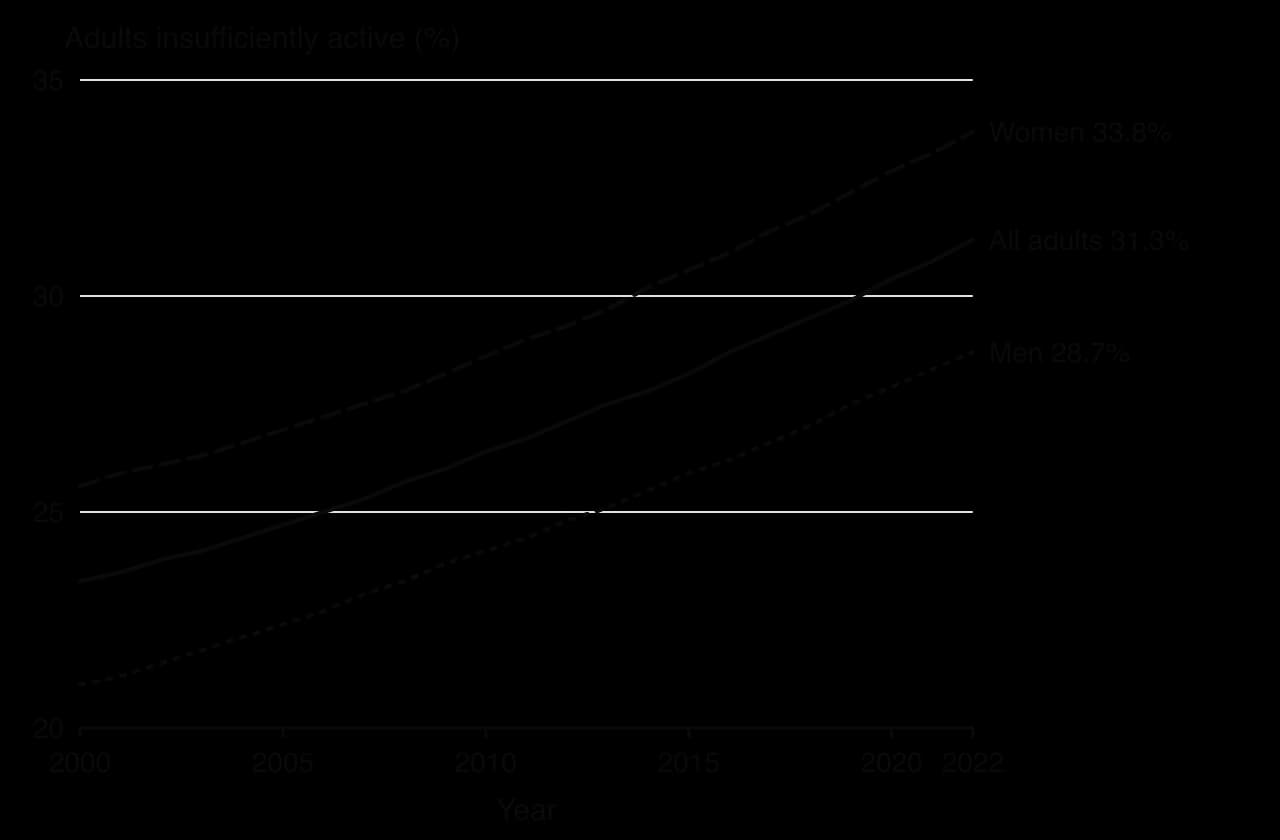
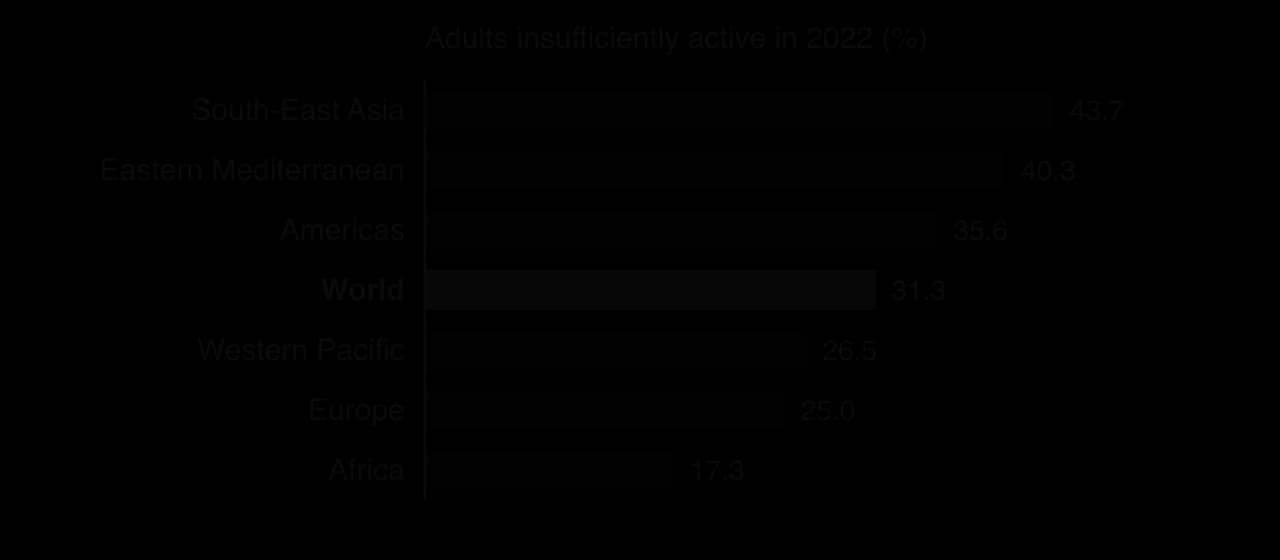
Globally, the age-standardised prevalence of insufficient activity rose from 23.4% in 2000 to 26.4% in 2010 and 31.3% in 2022, about 1.8 billion adults. Women were less active than men in every year (33.8% insufficiently active in 2022, against 28.7% of men). Inactivity increased in people aged 60 and over in all regions. Prevalence was rising in 103 of 197 countries and territories, and if the 2010–2022 trend continues, about 35% of adults will be insufficiently active by 2030, far from the target of about 22%.
Among adolescents, the picture is worse. A separate analysis of 1.6 million school students aged 11–17 in 146 countries found that 81% did not meet the guideline of 60 minutes of MVPA per day in 2016: 77.6% of boys and 84.7% of girls. Between 2001 and 2016, inactivity fell slightly in boys but did not change in girls.
 YouTube
The rise in inactivity reflects changes in how people live rather than in individual willpower. As countries become wealthier and more urban, work becomes more sedentary, cars and motorised transport replace walking and cycling, and screen-based leisure grows. These changes help explain why inactivity is lowest in sub-Saharan Africa, where more people do physically demanding work and walk for transport, and why it has risen fastest in regions undergoing rapid economic change.
The sex gap has several causes, including caring responsibilities, cultural expectations, safety concerns, fewer opportunities for girls and women in sport, and less time for leisure. The rise in older adults matters because inactivity speeds up sarcopenia, bone loss and loss of function in exactly the group that is growing fastest in many countries.
Through the health lens, the data predict more cardiovascular disease, type 2 diabetes, falls and poor mental health, and higher health-care costs; the WHO estimates that inactivity could cost public health systems about US$27 billion a year if levels do not fall. Through the performance lens, a less active population also means fewer children developing fundamental movement skills and a smaller base from which sporting talent can emerge.
Most surveys used self-report questionnaires, which tend to overestimate activity and may be understood differently in different languages and cultures.
Some countries had few or no surveys, so their estimates depend more on the statistical model, with wide uncertainty intervals.
The measure counts only whether a threshold is met; it does not show how much sedentary time people have or how far below the threshold they are.
The data show trends and associations; they do not show which policies would reverse them.
Sources: Strain et al., Lancet Global Health, 2024; WHO Global Health Observatory (NCD_PAA), 2024; WHO physical activity fact sheet, 2024; Guthold et al., Lancet Child and Adolescent Health, 2020.
Calculate the percentage increase in the global prevalence of insufficient activity between 2000 and 2022.
Suggest two reasons why inactivity is higher among women than men in most regions.
Evaluate the use of self-report questionnaires to compare physical activity between countries.
Questions on the health benefits of activity ask for definitions, guideline values, energy balance and BMI calculations, the mechanisms by which activity reduces disease risk, and the interpretation of data from population surveys and trials.
Calculations on activity and health are short, but units and rounding matter.
The next question tests the mechanism of exercise and glucose control.
Data in Paper 1A are often given as a short calculation.
Postmenopausal women with low bone mass were randomly assigned to 8 months of either supervised high-intensity resistance and impact training (HiRIT; twice a week, 30 minutes, 5 sets of 5 repetitions above 85% of one-repetition maximum, plus jumping) or a home-based low-intensity exercise programme (control). Bone mineral density was measured by DXA before and after.
Outcome | HiRIT group (n = 49) | Control group (n = 52) | p-value |
|---|---|---|---|
Change in lumbar spine BMD (%) | +2.9 ± 2.8 | −1.2 ± 2.8 | < 0.001 |
Change in femoral neck BMD (%) | +0.3 ± 2.6 | −1.9 ± 2.6 | 0.004 |
Change in height (cm) | +0.2 ± 0.5 | −0.2 ± 0.5 | 0.004 |
Sources: Watson et al., Journal of Bone and Mineral Research, 2018 (LIFTMOR trial; values are mean ± SD; participants aged 65 ± 5 years).
Structured questions often begin with a definition and end with an explanation.
Explanation questions on disease reward a chain of cause and effect.
Sketch questions on immune function need labelled axes and a correctly shaped curve.
Prescription questions at HL often name a person and ask for a reasoned programme.
Physical activity is any movement that uses energy; exercise is planned, structured activity; sedentary behaviour is sitting or lying while awake at about 1.5 METs or less.
The WHO 2020 guidelines recommend an average of 60 minutes per day of MVPA for children and adolescents, and 150–300 minutes of moderate or 75–150 minutes of vigorous activity per week, plus muscle strengthening twice a week, for adults; older adults add balance training.
Energy balance compares energy intake with energy expenditure (BMR, thermic effect of food and physical activity); surplus energy is stored as glycogen and fat.
"Energy in, energy out" is always true, but compensation, NEAT and adaptation make changes in body mass hard to predict.
Activity increases muscle strength, mitochondria and insulin sensitivity and slows sarcopenia; moderate activity supports immune function, while the risk from very heavy exercise (the J-shaped curve) is debated.
Activity reduces the risk of osteoporosis (impact loading), obesity (energy expenditure), hypertension (lower peripheral resistance), cardiovascular disease (better lipids, blood pressure and endothelium) and type 2 diabetes (insulin-independent glucose uptake, better insulin sensitivity).
Global inactivity rose from 23.4% of adults in 2000 to 31.3% in 2022, with women about 5 percentage points less active than men.
Exercise prescription involves screening, assessment, FITT planning, gradual progression and monitoring with RPE, the talk test or heart rate (HL).
Children and adolescents, older adults and pregnant individuals all benefit from activity, but each needs specific precautions; activity also improves mental health (HL).
I can distinguish physical activity, exercise, sport and sedentary behaviour, and use METs to describe intensity.
I can outline the WHO recommendations for each age group and explain why they differ with age and sex differences.
I can describe the components of energy balance and calculate a positive or negative balance.
I can explain the effects of activity on muscular function, including sarcopenia and insulin sensitivity.
I can explain and sketch the J-shaped curve and evaluate the evidence behind it.
I can explain how activity reduces the risk of osteoporosis, obesity, hypertension, cardiovascular diseases and type 2 diabetes, and calculate BMI.
I can interpret data on global inactivity and on exercise trials.
I can outline the steps of exercise prescription and explain how to progress intensity safely (HL).
I can discuss exercise for children and adolescents, older adults and pregnant individuals, including mental health benefits (HL).