Explain and evaluate strategies to prevent and treat obesity and tobacco addiction, from campaigns, nudges, taxes and incentives to lifestyle programmes, medication and surgery, and judge how effective they are.
Each is in the Psychology glossary, with every other term in the subject.
A persuasive message that tries to change behaviour by arousing fear of the harmful consequences of not following its recommendation, such as graphic warnings on cigarette packets.
A payment, voucher or other reward made conditional on a health-related behaviour or outcome, such as biochemically verified abstinence from smoking.
A cognitive model proposing that health behaviour depends on perceived susceptibility to and severity of a health problem, the perceived benefits of and barriers to action, cues to action and self-efficacy.
The process of enabling people and communities to increase control over and improve their health, through education, campaigns, and changes to policies and environments.
A treatment for tobacco addiction that supplies nicotine through patches, gum, lozenges or sprays without tobacco smoke, reducing withdrawal and cravings while the person stops smoking.
A change to the way choices are presented (choice architecture) that steers people towards a particular option, such as a healthier food, without forbidding alternatives or significantly changing their cost.
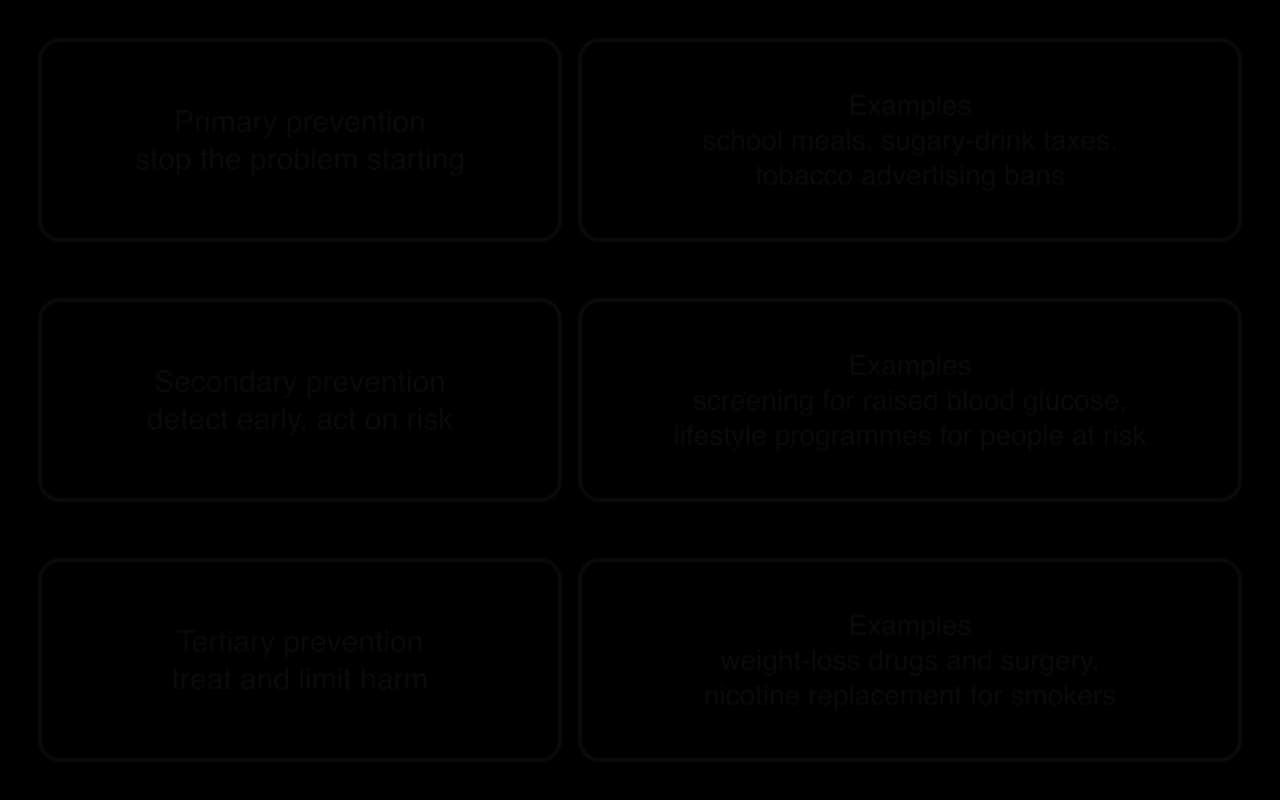
Any strategy that aims to stop a health problem developing (primary prevention), to detect and act on it early (secondary) or to reduce its harm once established (tertiary).
Describe primary, secondary and tertiary prevention, and the difference between prevention and treatment of a health problem.
Explain how models of health behaviour, such as the health belief model, the theory of planned behaviour and the transtheoretical model, are used to design interventions.
Explain and evaluate population-level strategies: health promotion campaigns, fear appeals, social norms messages, nudges, taxes and financial incentives.
Explain and evaluate individual-level treatments of obesity and tobacco addiction, including behavioural, pharmacological and surgical treatments.
Describe and evaluate the Diabetes Prevention Program as evidence of the effectiveness of a lifestyle intervention.
Discuss barriers to change and how culture affects the effectiveness of strategies.
Evaluate research on prevention and treatment with reference to change, measurement, causality and responsibility.
Prevention and treatment strategies try to reduce the harm caused by health problems such as obesity and tobacco addiction, either by stopping the problem developing or by helping people who already have it. Because these problems are closely linked to behaviour, psychology contributes both theories of why people change, or fail to change, and methods for testing whether a strategy works.
Effectiveness is the central question. A strategy is effective when a well-controlled study shows that it changes behaviour or health outcomes, by a meaningful amount, for long enough to matter, in the people it is meant to help. Every strategy is an intervention, and judging treatment effectiveness is the main task of research in this area. This makes the area a clear application of the concept of
With a free account, Augment remembers where you stopped and what you have practiced.
A prevention strategy that reduces unhealthy behaviour by giving people accurate information about the healthier behaviour of their peers, correcting overestimates of how common the unhealthy behaviour is.
A model in which attitudes, subjective norms and perceived behavioural control predict intention, and intention, together with perceived control, predicts behaviour.
A stage model of behaviour change in which people move through precontemplation, contemplation, preparation, action and maintenance, with relapse possible, and interventions are matched to the stage.
Prevention aims to stop a health problem from developing or getting worse. It is usually divided into three levels, according to when it acts. Primary prevention acts before the problem appears, for everyone or for whole groups: school meal standards, taxes on sugary drinks and bans on tobacco advertising are examples. Secondary prevention identifies people at high risk or in the early stages and acts before serious harm occurs, such as screening adults for raised blood glucose and offering them a lifestyle programme. Tertiary prevention reduces the harm of an established problem, which overlaps with treatment: weight-loss medication for obesity or nicotine replacement for dependent smokers.
Strategies can also be classified by whom they target. Individual strategies, such as a weight-loss programme or nicotine patches, help people who seek them out and can produce large changes in those people. Population strategies, such as taxes, food labelling or smoke-free laws, change the environment for everyone and usually produce small changes per person.
The epidemiologist Geoffrey Rose argued in 1985 that small changes across a whole population often prevent more illness than large changes in a few high-risk individuals, because most cases of a common problem come from the large number of people at moderate risk. This prevention paradox explains why governments use policies whose effect on any one person is small. It also links to research on the obesogenic environment: if obesity is mainly a response to the environment, changing the environment should be more effective than asking individuals to resist it.
Most strategies rest, explicitly or not, on a cognitive model of why people do or do not act to protect their health. Three models are widely used to design and evaluate interventions.
The health belief model was developed in the 1950s by social psychologists in the US Public Health Service, including Irwin Rosenstock, to explain why people did not take up free health screening. It proposes that people act to protect their health when they believe they are susceptible to a problem, that it would be severe, that the recommended action has benefits and that the barriers to it, such as cost, time and discomfort, are not too great. Cues to action, such as a doctor’s advice or a friend’s illness, trigger behaviour, and later versions added self-efficacy, a person’s belief that they can carry out the action.
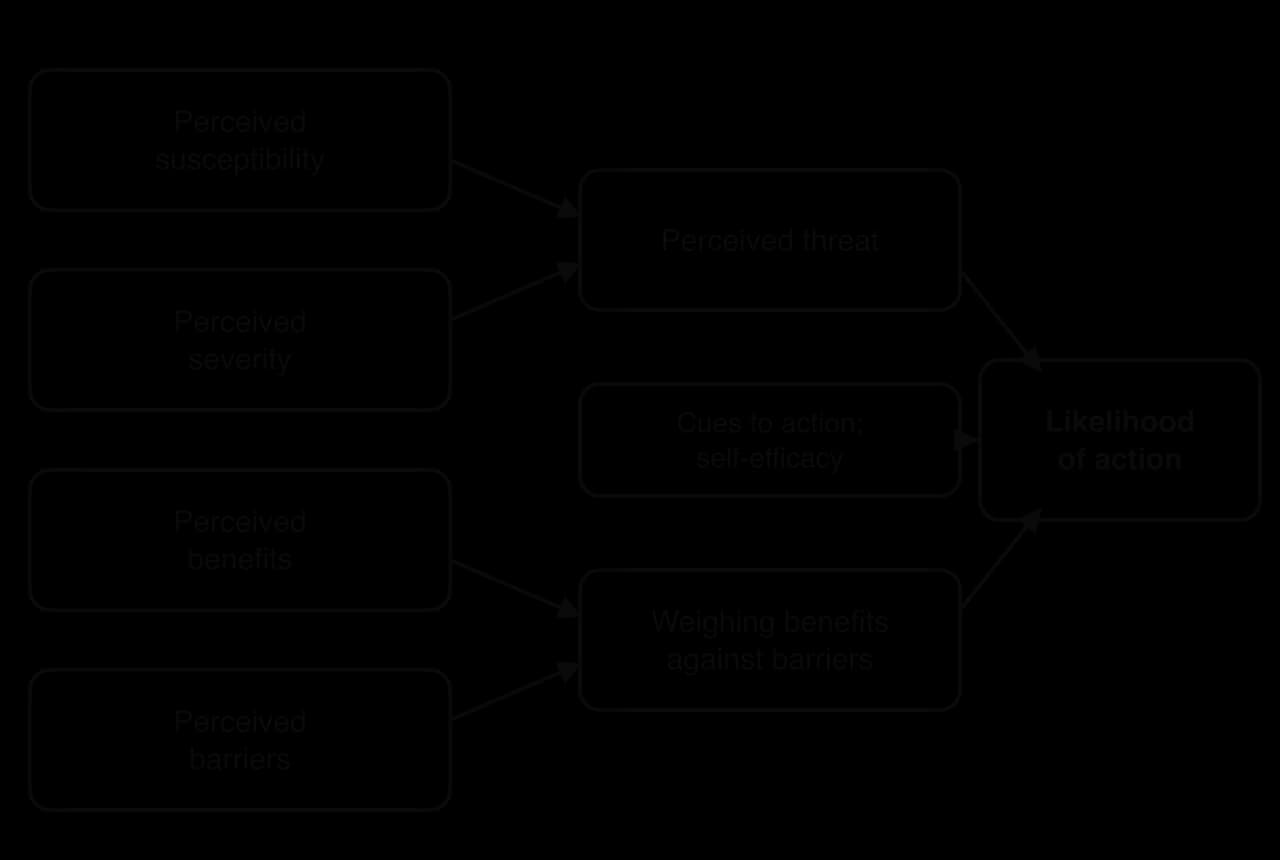
The model suggests what campaigns should target. A smoker who does not believe smoking will harm them has low perceived susceptibility; a person who wants to lose weight but cannot afford healthy food faces a high barrier. Carpenter (2010) combined 18 longitudinal studies in a meta-analysis and found that perceived benefits and barriers were the strongest predictors of later behaviour, while susceptibility and severity were weak predictors. This finding questions campaigns that rely mainly on warning people of danger.
The theory of planned behaviour, proposed by Icek Ajzen in 1991, holds that the best predictor of behaviour is intention. Intention depends on three factors: attitude towards the behaviour (whether the person sees it as good or bad), subjective norms (whether important others approve of it, a form of social norm) and perceived behavioural control (how easy or difficult the person thinks it will be). Perceived control can also affect behaviour directly, because people who believe a behaviour is hard often fail even when they intend it.
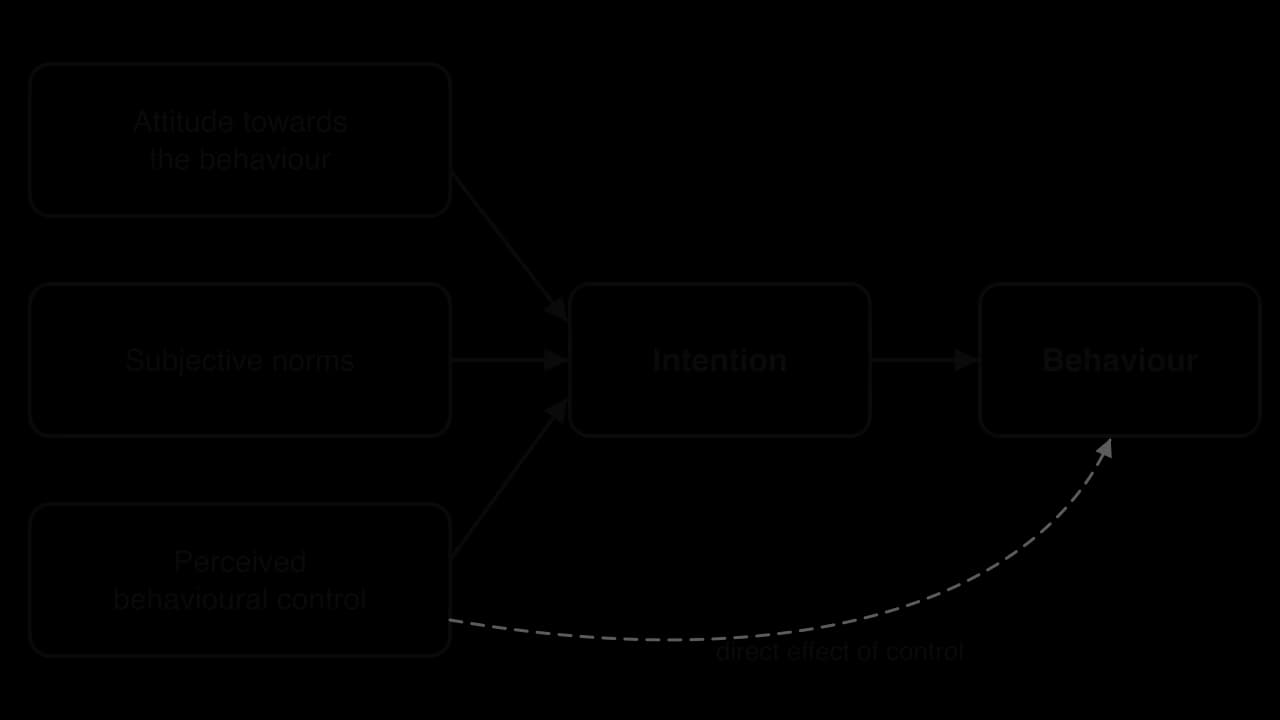
Armitage and Conner (2001) reviewed 185 studies and found that the theory explained about 39% of the variation in intentions and 27% of the variation in behaviour. It predicted self-reported behaviour better than objectively measured behaviour, which suggests that part of its success reflects people answering consistently on questionnaires. The gap between intention and behaviour is the main weakness: many people intend to eat better or stop smoking but do not, because habits, cravings and environmental cues act outside deliberate intention.
The transtheoretical model, developed by Prochaska and DiClemente from research on smokers in the early 1980s, proposes that people move through stages of change: precontemplation (no intention to change), contemplation (thinking about change), preparation (planning to act soon), action (changed behaviour for less than six months) and maintenance (sustained change). Relapse is common, and people may cycle through the stages several times before changing for good. The practical implication is that interventions should be matched to the person’s stage: information for those in precontemplation, practical help for those preparing to act.
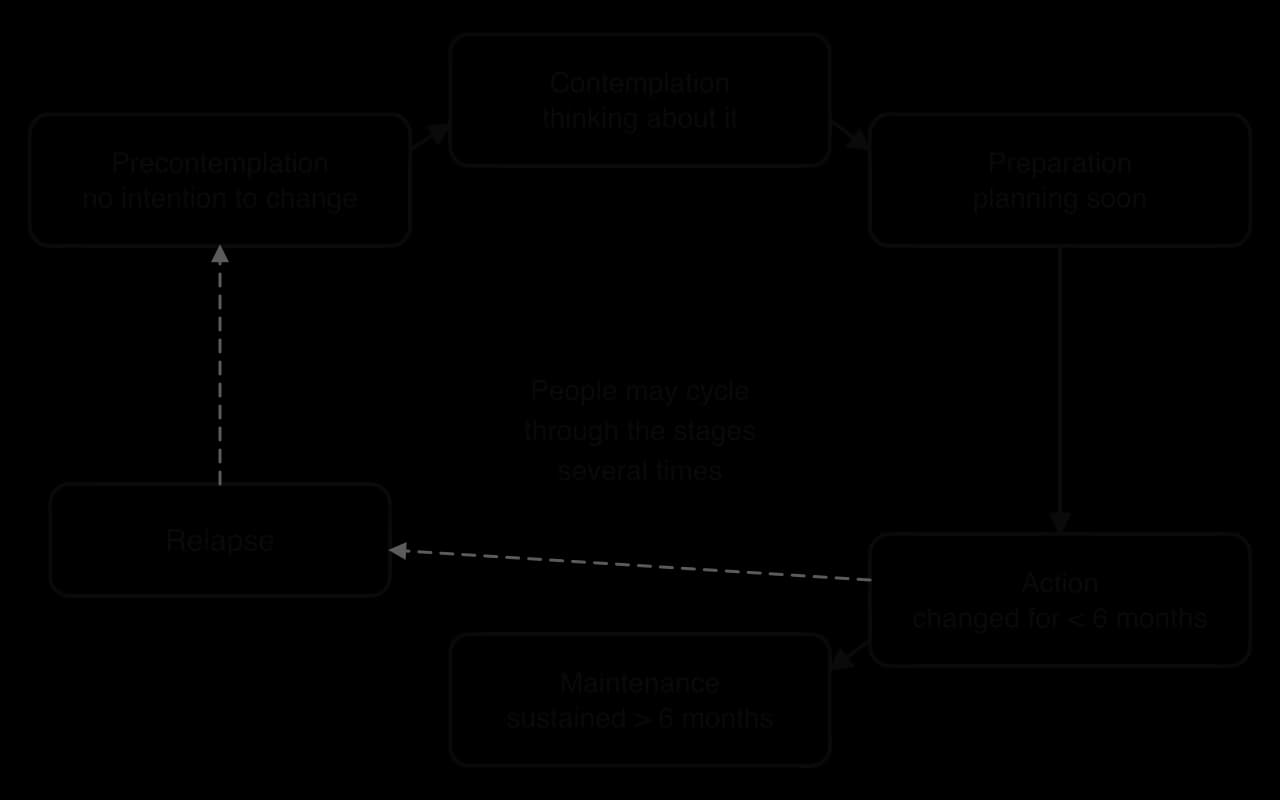
The model is popular with practitioners and recognises that people differ in readiness to change. However, West (2005) argued that it should be abandoned: the stages are arbitrary divisions of a continuous process, the six-month cut-off has no clear basis, and trials of stage-matched interventions for smoking have generally not outperformed non-matched ones. Many quit attempts are also unplanned, which a stage model cannot easily explain.
All three models assume that health behaviour is the result of conscious, rational decisions. This is their main limitation. Much eating and smoking is habitual and cued by the environment, the kind of fast, automatic processing described by dual processing theory. The models also focus on the individual and can neglect social and economic barriers, such as the cost of healthy food. They are most useful for designing messages and identifying beliefs to target, and least useful for explaining why people who fully intend to change do not.
Model | Key idea | Use in interventions | Main limitation |
|---|---|---|---|
Health belief model | action follows perceived threat and a favourable balance of benefits and barriers | campaigns that raise perceived risk and reduce barriers | threat beliefs are weak predictors; ignores habit and emotion |
Theory of planned behaviour | intention, shaped by attitude, norms and control, predicts behaviour | messages that change attitudes and norms; skills that raise control | the intention–behaviour gap |
Transtheoretical model | people pass through stages of readiness | stage-matched advice and support | arbitrary stages; matched interventions rarely outperform others |
Health promotion is the process of enabling people to increase control over and improve their health, through education, campaigns and changes to policy and the environment. Mass media campaigns are its most visible form. Wakefield, Loken and Hornik (2010) reviewed campaigns on tobacco, alcohol, diet, physical activity and other behaviours and concluded that they can produce positive changes across large populations, but their effects are usually modest. Campaigns work best when they are sustained, when services and products are available to act on the message, and when policies support the change; a campaign urging people to eat more fruit does little where fruit is expensive.
A fear appeal is a message that tries to change behaviour by arousing fear of the consequences of not changing, such as graphic images of diseased lungs on cigarette packets. Witte and Allen (2000) combined studies of fear appeals in a meta-analysis. Strong fear appeals increased perceived severity and susceptibility and were more persuasive than weak ones, but only when combined with high-efficacy messages that told people what to do and convinced them they could do it. Strong fear with low efficacy produced the most defensive reactions, such as avoiding the message or denying the risk.
The finding links to the health belief model: fear raises perceived threat, but threat leads to action only if benefits and self-efficacy are high. A cigarette warning is therefore more likely to work when it includes a quitline number and a message that quitting is possible.
People conform to what they believe others do, and they often overestimate how common unhealthy behaviour is. Perkins and Berkowitz (1986) surveyed 1,116 US college students and found that most held moderate attitudes to alcohol but believed their peers were much more permissive. The social norms approach corrects such misperceptions with accurate information, such as “most students here have fewer than four drinks when they go out”, on the assumption that people will then conform to the real, healthier norm. This applies normative social influence to health.
The effects are real but small. A Cochrane review by Foxcroft et al. (2015) of 70 studies with university students found only very small reductions in drinking, too small to matter much in practice. Social norms messages can also backfire: people who already behave better than the norm may move towards it. Effective campaigns therefore often combine the descriptive norm (what most people do) with an approving message for those who already behave well.
A nudge is a change in the way choices are presented, the choice architecture, that makes the healthy option easier or more automatic without removing other options or changing their price. The idea was popularised by Thaler and Sunstein in 2008. Examples include placing fruit at eye level and sweets out of reach, making smaller portions the default and serving food on smaller plates. Nudges work on fast, automatic System 1 processing rather than on deliberate reasoning, which is exactly where the cognitive models of health behaviour are weakest.
Some nudges have strong evidence. Hollands et al. (2015) reviewed 58 randomised studies in a Cochrane review, a form of meta-analysis, and found that people consistently ate more when offered larger portions, packages or tableware, a small-to-moderate effect. Reducing default portion sizes could therefore reduce energy intake across a population. However, almost all the studies were short and were carried out in high-income countries, mostly in the United States, so it is not known how far the effect lasts or transfers to other food cultures.
 YouTube
Governments can change behaviour more directly through prices and rules. Tobacco taxes, smoke-free laws and advertising bans are among the main reasons for the fall in smoking prevalence in many countries.
For obesity, taxes on sugar-sweetened drinks are the best-studied example. Mexico introduced a tax on sugary drinks in 2014, creating a natural experiment; Colchero et al. (2016) analysed purchases by 6,253 households and found that, compared with the trend expected without the tax, purchases of taxed drinks fell by an average of 6% in the first year, and by an average of 9% in low-income households, which also have the highest rates of diet-related disease. Purchases of untaxed drinks, mainly bottled water, rose.
Taxes raise questions of responsibility and fairness. Supporters argue that they target the environment that causes obesity and benefit poorer groups most; critics argue that they take a larger share of poorer people’s income and limit free choice. A fall in purchases is also not the same as a fall in obesity, and the long-term effect on weight is harder to measure.
A financial incentive is a payment or reward given for achieving a health behaviour, such as quitting smoking or attending a weight-loss programme. Incentives apply the principles of operant conditioning: an immediate, concrete reward is made contingent on the healthy behaviour, which helps counter the fact that the benefits of quitting are delayed while the costs are immediate.
Volpp et al. (2009) showed that employees offered up to US$750 for completing a programme and staying abstinent were about three times more likely to quit than those given information alone, although the effect shrank after the rewards stopped. Halpern et al. (2015) compared four designs in 2,538 participants. Reward programmes were accepted by 90% of those offered them, but programmes in which participants first had to pay a refundable deposit of $150 were accepted by only 13.7%. All four incentive programmes produced higher sustained abstinence at six months (9.4–16.0%) than usual care (6.0%).
Across everyone offered a programme, rewards produced more quitters (15.7% against 10.2%) because so many more people accepted them. Among the minority willing to accept either type, however, deposit programmes were more effective, consistent with loss aversion: people work harder to avoid losing their own money than to gain the same amount. The study shows that the most powerful design on paper may help fewer people in practice if few are willing to take part.
Incentives raise ethical and practical questions. Some argue that paying people to do what is good for them is unfair to those who behave well without payment, or that it treats health as a transaction. Others point out that incentives are among the most effective strategies available for groups, such as pregnant smokers, for whom other approaches work poorly. There is also a concern from research on intrinsic motivation that external rewards may undermine a person’s own reasons for changing once the rewards end.
Schools are a setting for primary prevention because they reach almost all children, and eating habits formed in childhood tend to last. The Food Dudes programme, which combines peer modelling with small rewards for eating fruit and vegetables, is one of the best-known school strategies. Horne et al. (2004) compared one intervention school with one control school in inner-city London (749 children aged 5–11); the control school was offered the same fruit and vegetables without the programme.
Consumption at lunchtime rose substantially in the intervention school, especially among children who had eaten very little at the start, and the increase was still present at a four-month follow-up. As prevention, the programme draws on modelling from social learning theory and on operant reinforcement.
Like many school programmes, Food Dudes was evaluated with only two schools, so differences between the schools could explain part of the effect, and fruit and vegetable intake is not the same as preventing obesity. Reviews of school-based obesity prevention generally find small effects on weight, larger effects on diet and activity, and better results when programmes involve families and change the school food environment rather than relying on lessons alone.
Treatment of obesity aims to reduce weight and, more importantly, the health risks that come with it. There are three broad approaches, which differ greatly in how much weight people lose, how long it lasts and what they cost.
Behavioural programmes, which treat obesity as the result of learned habits within an obesogenic environment, combine a calorie-reduced diet and increased physical activity with psychological techniques: self-monitoring of food and weight, goal setting, problem solving, stimulus control (changing the home environment to reduce food cues) and relapse prevention. They typically produce an average weight loss of a few per cent of body weight, enough to reduce the risk of type 2 diabetes substantially, as the Diabetes Prevention Program showed. The main problem is maintenance: most people regain much of the weight within a few years once support ends.
 YouTube
Newer drugs called GLP-1 receptor agonists act on appetite signals in the brain and slow the emptying of the stomach, so people feel full sooner. In the STEP 1 trial, Wilding et al. (2021) randomly assigned 1,961 adults with obesity or overweight to weekly injections of semaglutide or placebo, both with lifestyle support, for 68 weeks. Mean weight change was −14.9% with semaglutide and −2.4% with placebo, and about half of the semaglutide group lost at least 15% of their body weight. The trial was double-blind and placebo-controlled, which gives strong evidence of causation.
The drugs have important limitations. Gastrointestinal side effects are common, weight tends to return when treatment stops, they are expensive, and the trial was funded by the manufacturer. They also change the psychology of obesity treatment: if appetite can be reduced chemically, obesity appears less a matter of willpower and more a biological condition, which may reduce stigma but may also distract attention from the environment that causes it.
For severe obesity, bariatric surgery reduces the size of the stomach or bypasses part of the gut. The Swedish Obese Subjects study, reported by Sjöström et al. (2007), followed 2,010 people who had surgery and 2,037 matched controls who received conventional treatment for an average of 10.9 years. Ten years after surgery, weight losses had stabilised at 14–25% depending on the procedure, while the control group’s weight changed by less than 2%.
There were 101 deaths in the surgery group and 129 in the control group, a reduction in overall mortality of about 29% after adjustment for risk factors. Because patients chose surgery rather than being randomly assigned, the groups may have differed in motivation and health, although they were matched on many characteristics.
Treatment | Typical weight loss | Strength of evidence | Main limitations |
|---|---|---|---|
Behavioural programme | a few per cent of body weight | many RCTs, including the DPP | weight regain once support ends; demanding for participants |
GLP-1 medication (semaglutide) | about 15% over 68 weeks (STEP 1) | double-blind RCTs | side effects; regain after stopping; cost; manufacturer funding |
Bariatric surgery | 14–25% after ten years (SOS) | large matched cohort, not randomised | surgical risk; only for severe obesity; self-selection |
Treatments for tobacco addiction combine pharmacological help with nicotine withdrawal and behavioural support. Nicotine replacement therapy (NRT), in the form of patches, gum, lozenges, sprays and inhalers, supplies nicotine without the other harmful substances in tobacco smoke, so withdrawal symptoms and cravings are reduced while the person learns to live without cigarettes. Hartmann-Boyce et al. (2018) reviewed 133 randomised trials with 64,640 participants in a Cochrane review and found that NRT increased the chance of long-term quitting by about 55% compared with placebo or no NRT. Because baseline quit rates are low, this means that most people who use NRT still do not quit at the first attempt.
Behavioural support, through stop-smoking services, counselling or telephone quitlines, adds to the effect of medication by building self-efficacy and teaching people to cope with cues and stress. Newer products have also been tested. Hajek et al. (2019) randomly assigned 886 smokers attending UK stop-smoking services to e-cigarettes or NRT products of their choice, with weekly behavioural support in both groups. Biochemically verified abstinence at one year was 18.0% with e-cigarettes and 9.9% with NRT. However, 80% of successful quitters in the e-cigarette group were still using e-cigarettes at one year, so they had replaced one source of nicotine with a less harmful one rather than ending nicotine use.
Treatment of tobacco addiction connects to stress. Many smokers believe smoking relieves stress, so quitting feels threatening, and some people who quit turn to stress-related eating instead; explaining that withdrawal causes much of the tension, and teaching other ways of coping, is part of behavioural support. Relapse is common: most successful ex-smokers have made several attempts, which fits the cyclical view of change in the transtheoretical model, even if the stages themselves are disputed.
Even effective strategies fail when barriers to change are not addressed. Barriers can be individual (low self-efficacy, cravings, habits, stress), social (friends and family who smoke or eat in the same way, weight stigma that discourages people from seeking help) or structural (the cost of healthy food, long working hours, unsafe streets, aggressive marketing). Strategies that address only individual beliefs leave the social and structural barriers in place, which is one reason why individual programmes often lead to relapse when participants return to the same environment.
Culture affects both the barriers and the solutions. Food carries social meaning, such as hospitality and family identity, so advice to change diet can conflict with cultural norms. Strategies developed in one culture therefore need adaptation.
The Da Qing study in China, reported by Pan et al. (1997), screened 110,660 adults and randomised 577 with impaired glucose tolerance, by clinic, to a control group or to diet, exercise or diet-plus-exercise programmes delivered through local health clinics. Over six years, the cumulative incidence of diabetes was 67.7% in the control group and between 41% and 46% in the intervention groups, reductions in risk of 31–46% after adjustment. The interventions worked in lean as well as overweight participants, which suggests that lifestyle prevention can transfer across very different cultures and body types when delivered through familiar local services.
Culturally adapted programmes for Indigenous communities often go further, building on traditional foods, activities and community leadership rather than individual advice. Where communities shape the programme themselves, it addresses barriers that outside experts may not recognise, such as mistrust of health services rooted in colonial history.
The Diabetes Prevention Program (DPP) Research Group aimed to find out whether an intensive lifestyle intervention or the drug metformin could prevent or delay type 2 diabetes in adults at high risk, most of whom were overweight or had obesity, and which was more effective.
The study was a randomised controlled trial at 27 centres in the United States. Participants were 3,234 adults without diabetes but with raised blood glucose levels, a strong risk factor for type 2 diabetes. Their mean age was 51 and their mean BMI was 34.0; 68% were women and 45% were from minority ethnic groups, including African American, Hispanic, Asian American and American Indian participants.
Participants were randomly allocated to one of three groups. The placebo and metformin groups took pills twice a day under double-blind conditions and received standard written advice on diet and exercise. The lifestyle group took part in an intensive programme with two goals: losing at least 7% of body weight and doing at least 150 minutes of moderate physical activity, such as brisk walking, each week. It began with a 16-session curriculum taught one-to-one by case managers, covering diet, exercise and behaviour change techniques such as self-monitoring, goal setting and problem solving, followed by regular contact to maintain the changes. The main dependent variable was new diagnoses of diabetes, measured with standard blood glucose tests.
Participants were followed for an average of 2.8 years. The incidence of diabetes was 11.0 cases per 100 person-years in the placebo group, 7.8 in the metformin group and 4.8 in the lifestyle group. Compared with placebo, the lifestyle intervention reduced incidence by 58% and metformin by 31%, and the lifestyle intervention was significantly more effective than metformin. To prevent one case of diabetes over three years, about 7 people would need to take part in the lifestyle programme, compared with about 14 taking metformin.
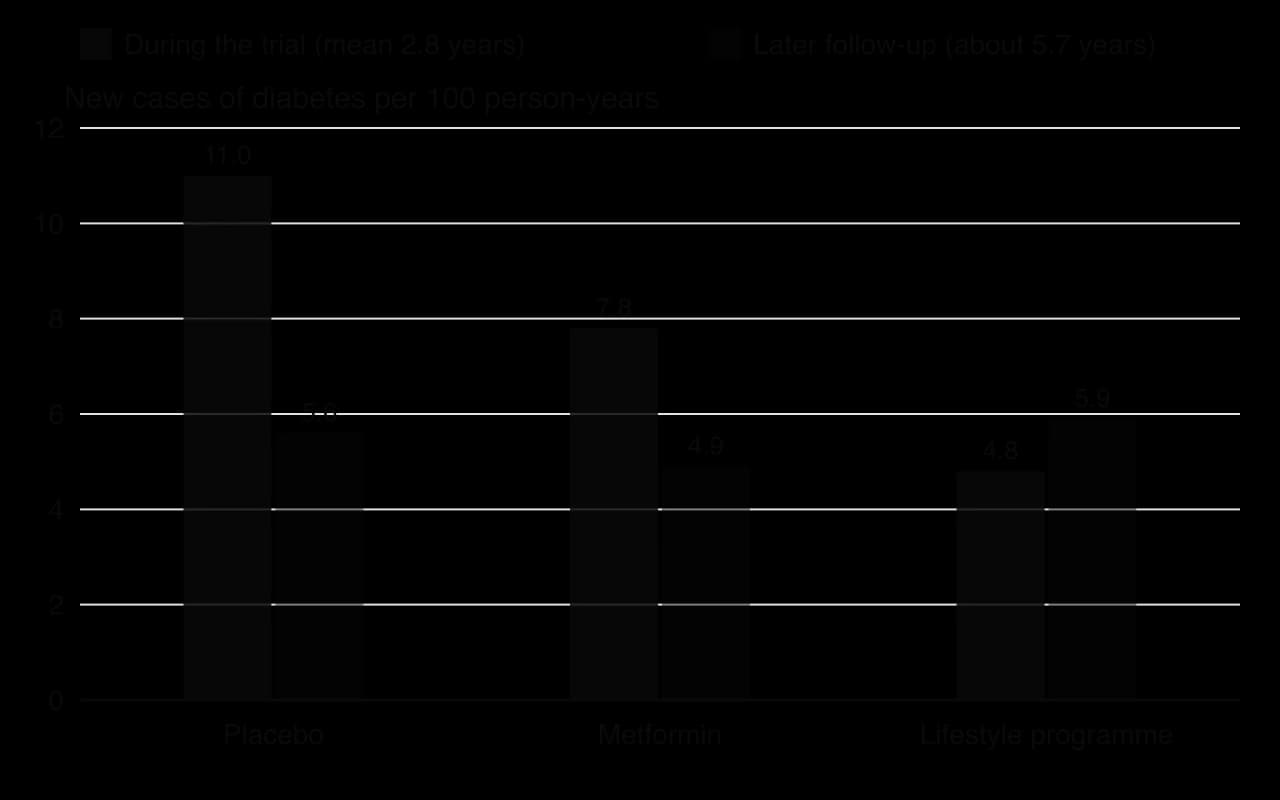
A follow-up study, the Diabetes Prevention Program Outcomes Study, continued for about 5.7 more years with 2,766 of the participants. Because the lifestyle programme had worked, all three groups were offered a group version of it. During this period, diabetes incidence was similar in all three groups: 5.9 new cases per 100 person-years in the original lifestyle group, 4.9 in the metformin group and 5.6 in the placebo group. Over the whole ten years since randomisation, diabetes incidence was still 34% lower in the original lifestyle group and 18% lower in the metformin group than in the original placebo group. The lifestyle group had lost weight and then partly regained it.
Sources: Knowler, W. C., et al., Diabetes Prevention Program Research Group (2002). Reduction in the incidence of type 2 diabetes with lifestyle intervention or metformin. _New England Journal of Medicine, 346(6), 393–403; Diabetes Prevention Program Research Group (2009). 10-year follow-up of diabetes incidence and weight loss in the Diabetes Prevention Program Outcomes Study. The Lancet, 374(9702), 1677–1686._
A behavioural programme that produces modest weight loss and more physical activity can prevent or delay type 2 diabetes in people at high risk, and is more effective than a drug. The benefit is partly maintained over ten years, but the gap between groups narrows as weight is regained and as the other groups receive lifestyle support themselves.
The DPP is strong evidence that deliberate behaviour change can alter health outcomes, which is why its programme has been adopted by health services in several countries, including the US National Diabetes Prevention Program. The follow-up shows the limits of change: weight regain is common, and maintaining change needs continuing support. The groups converged in the follow-up mainly because the placebo and metformin groups were also offered the lifestyle programme.
Random allocation of a large sample makes it very likely that the differences between groups were caused by the interventions rather than by participant variables. The outcome was measured objectively by standard blood tests, not by self-report. However, the lifestyle group could not be blinded, and participants knew they were receiving special attention, so part of the effect may come from expectations or from the extra contact with staff rather than from diet and exercise as such.
The sample was diverse in ethnicity and age, which supports generalisation within the United States, but participants were volunteers motivated enough to join a demanding trial, so generalisability to less motivated people is uncertain, and the one-to-one programme was intensive and expensive. Community versions delivered in groups cost less but tend to produce smaller weight losses. Responsibility questions follow: an effective programme only reduces inequality in health if it reaches people with the least time and money, and the Da Qing study shows that lifestyle prevention can work through local clinics in a very different setting.
Judging effectiveness depends on what is measured and for how long. Self-reported data on quitting overestimate success, so the best smoking trials verify abstinence biochemically, through carbon monoxide in the breath or cotinine in saliva, and count people lost to follow-up as still smoking. For obesity, measured weight is more trustworthy than self-report, but weight loss is only an operationalisation of what matters, such as fewer cases of diabetes or longer life; the DPP and the Swedish Obese Subjects study are valuable because they measured disease and death. Follow-up length matters too: many strategies look effective at six months and much less so after two years.
Randomised controlled trials such as the DPP, STEP 1 and Hajek et al. (2019) give the strongest evidence that a strategy causes change. Many population strategies cannot be randomised, so evidence comes from natural experiments and before-and-after comparisons, as in the Mexican drinks tax study, which compared purchases with the trend expected without the tax. Such designs can be confounded by other changes happening at the same time, such as campaigns or economic shifts. Equally, a strategy that works in a trial may work less well in the real world, where participants are less motivated and support is less intensive.
Individual strategies reflect a cognitive perspective, focused on beliefs and coping, in which people change when their beliefs and intentions change. Population strategies reflect a sociocultural and environmental perspective, in which behaviour follows the environment. Evidence that obesity rose through changes in the environment, and that individual treatments often end in relapse when people return to the same environment, supports combining the two: individual help for people who already have the problem, and environmental change to reduce new cases.
Prevention strategies raise questions about who is responsible for health. Campaigns and individual programmes place responsibility on the person; taxes and regulation place it on governments and industry, and are sometimes criticised as paternalistic. Fear appeals and weight-focused messages can increase stigma, which itself harms health and discourages people from seeking help. Incentives raise questions of fairness, and new drugs raise questions of cost and equal access. Strategies that work best for the advantaged, such as intensive programmes that need time and money, can widen health inequalities even while improving average health.
Strategy | Evidence of effectiveness | Main limitation |
|---|---|---|
Mass media campaigns | Wakefield et al. (2010): modest population effects | need sustained funding and supportive policies |
Fear appeals | Witte & Allen (2000): persuasive with high efficacy | defensive avoidance without efficacy; stigma |
Social norms messages | Foxcroft et al. (2015): very small effects on drinking | possible boomerang effect |
Nudges (portion size) | Hollands et al. (2015): consistent small-to-moderate effects on intake | short studies in high-income countries |
Sugary-drink tax | Colchero et al. (2016): purchases fell 6% on average, more in poorer households | purchases are not weight; fairness debates |
Financial incentives | Volpp et al. (2009) and Halpern et al. (2015): higher verified quit rates | effects fade when rewards end; acceptability |
Lifestyle programme | 58% fewer diabetes cases (DPP) | intensive; weight regain |
Medication and surgery | large weight losses (STEP 1; SOS) | cost, side effects, regain after stopping drugs |
NRT and e-cigarettes | NRT raises quitting by about 55%; e-cigarettes about twice NRT in one trial | most attempts still fail; continued nicotine use |
Prevention can be primary (stop problems starting), secondary (detect and act early) or tertiary (reduce harm, overlapping with treatment); strategies can target individuals or whole populations.
The health belief model, the theory of planned behaviour and the transtheoretical model guide interventions, but all assume deliberate decisions and struggle with habit and the intention–behaviour gap.
Fear appeals work only with high-efficacy messages; social norms messages have small effects; nudges such as smaller portions consistently reduce intake.
Taxes and regulation change the environment: Mexico’s sugary-drink tax reduced purchases, most in low-income households.
Financial incentives increase verified quitting, but their design affects acceptance, and effects fade when rewards end.
The Diabetes Prevention Program showed that a lifestyle programme cut diabetes incidence by 58%, more than metformin, with benefits partly maintained over ten years.
Obesity treatments range from behavioural programmes to GLP-1 medication and bariatric surgery; tobacco treatment uses NRT, e-cigarettes and behavioural support.
Effectiveness is evaluated through measurement (verified outcomes, long follow-up), causality (RCTs vs natural experiments), barriers to change, culture and responsibility.
I can describe primary, secondary and tertiary prevention with an example of each.
I can explain the health belief model, the theory of planned behaviour and the transtheoretical model, and evaluate them.
I can evaluate campaigns, fear appeals, social norms messages, nudges, taxes and financial incentives using evidence.
I can explain and evaluate treatments for obesity and tobacco addiction.
I can describe and evaluate the Diabetes Prevention Program.
I can discuss barriers to change and how culture affects the effectiveness of strategies.
I can evaluate prevention and treatment research with reference to change, measurement, causality and responsibility.