Explain the diathesis-stress model and gene–environment interaction, describe and evaluate research such as Caspi et al. (2003), and apply the model to mental health and other behaviour.
Each is in the Psychology glossary, with every other term in the subject.
A predisposition or vulnerability to a disorder, which may be genetic, biological, cognitive or psychosocial, and which increases the risk of the disorder without causing it on its own.
A model proposing that a disorder or behaviour develops when an underlying vulnerability (the diathesis) interacts with environmental stress, so that neither alone is sufficient to produce it.
The hypothesis that individuals differ in how strongly they are affected by their environment, so that the most susceptible people do worst in adverse environments and best in supportive ones.
A situation in which the effect of an environmental factor on a behaviour or disorder depends on a person’s genotype, or the effect of a genotype depends on the environment.
The hypothesis that a first episode of depression usually follows a major stressor, but later episodes are triggered by less and less stress as vulnerability increases.
A gene (5-HTT) coding for the protein that carries serotonin back into the neuron that released it; its short allele was proposed as a genetic vulnerability to depression under stress.
Describe the diathesis-stress model, including the kinds of diathesis and stress it proposes.
Explain how genes and environmental factors interact to influence behaviour, using the idea of gene–environment interaction.
Describe the aim, method, results and conclusions of Caspi et al. (2003).
Evaluate the evidence for gene–environment interaction, including the replication failures of candidate-gene studies.
Explain how epigenetics may explain how stressful experience affects the biology of a vulnerable person.
Compare and contrast the diathesis-stress model with the differential susceptibility hypothesis.
Apply the diathesis-stress model to examples of behaviour in more than one context.
The diathesis-stress model explains why two people who go through the same difficult experience can react very differently: one recovers, while the other develops a mental health disorder. According to the model, a disorder develops when a personal vulnerability, the diathesis, meets environmental stress that is severe enough to trigger it.
The model is one of the clearest examples of interactionism in psychology. It joins the biological approach (genes and brain chemistry as sources of vulnerability) with cognitive and sociocultural factors (how people think, and the stressful events and social conditions they face). Research testing it raises questions of causality, because the cause of a disorder is the combination of two factors rather than either one alone, and of measurement, because both vulnerability and stress are difficult to measure.
With a free account, Augment remembers where you stopped and what you have practiced.
Scope: An approach term in the biological approach, about the interaction of environmental factors and genetics in behaviour. Questions can ask for it with any example, and it supports explanations in the contexts, especially biological explanations of mental health disorders and the role of childhood experiences.
The word “diathesis” comes from the Greek for a disposition. A diathesis is a characteristic that makes a person more likely to develop a disorder, but it does not cause the disorder on its own. Stress is any environmental demand or adverse experience, such as the death of a parent, a divorce, unemployment, poverty or abuse, that places pressure on the person. In the model, neither factor is enough by itself: the disorder appears when the two combine.
Zubin and Spring (1977) proposed one of the first versions, the vulnerability-stress model of schizophrenia. They argued that everyone has some degree of vulnerability to schizophrenia, and that an episode occurs when stressful events push a person beyond their personal threshold. This explained why schizophrenia often begins after a period of stress, why episodes come and go, and why many people with an affected relative stay well.
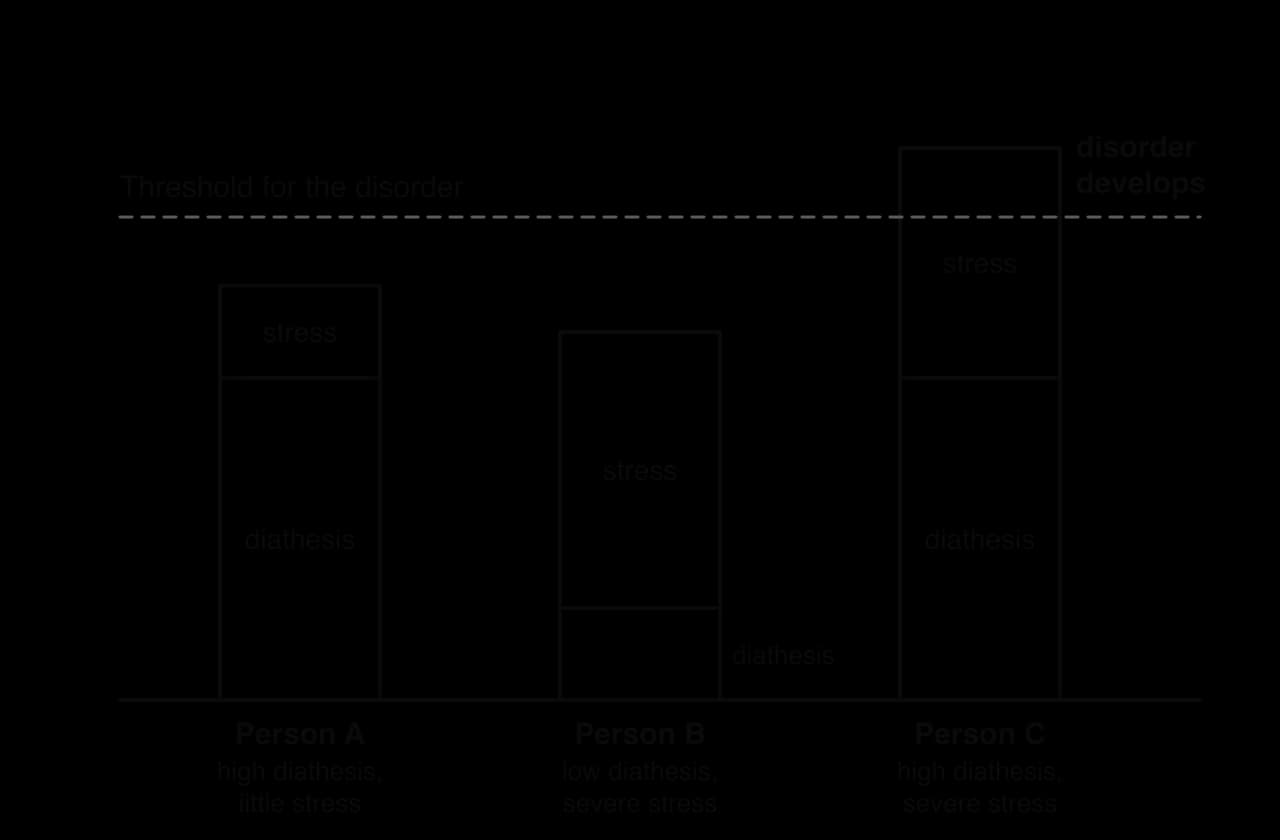
In its simplest form, the model can be drawn as a threshold. Each person carries a certain amount of vulnerability and is exposed to a certain amount of stress. When the two together pass a threshold, the disorder develops. A person with a high diathesis needs only moderate stress to cross the threshold; a person with a low diathesis may cope with severe stress without developing the disorder.
The figure shows why the model explains individual differences. Person A carries a strong genetic or cognitive vulnerability but has a stable life, so no disorder appears. Person B experiences severe stress but has little vulnerability and copes. Only Person C has both, and only Person C crosses the threshold.
 YouTube
The diathesis does not have to be genetic. Four broad kinds are studied.
Kind of diathesis | Example | Approach |
|---|---|---|
Genetic | Inherited variants that increase vulnerability, shown by twin and family studies of genetic inheritance | Biological |
Other biological | A highly reactive stress-hormone system, or a smaller hippocampus | Biological |
Cognitive | Negative beliefs about the self, such as “I am worthless unless everyone approves of me” | Cognitive |
Psychosocial | Lack of a close, confiding relationship; loss of a parent in childhood | Sociocultural |
Brown and Harris (1978) identified a psychosocial diathesis in their study of depression in women in Camberwell, London. They found that severe life events triggered depression mainly in women who also had “vulnerability factors”, such as having no confiding relationship with a partner, having lost their mother before the age of 11, having three or more children under 14 at home, or having no job outside the home. The vulnerability factors did not cause depression on their own, but they made women much more likely to become depressed when a severe event occurred.
The “stress” in the model includes acute stressful life events (a bereavement, an assault, losing a job), chronic difficulties (long-term poverty, caring for a sick relative, discrimination) and early adversity such as childhood maltreatment. Researchers measure these with checklists of life events, interviews that rate how threatening an event was in context, or records such as child-protection files.
Researchers distinguish two ways the factors could combine. In an additive pattern, vulnerability and stress each raise risk by a fixed amount, and the effects simply add up. In an interactive pattern, the effect of stress is much larger in vulnerable people than in others: the same event raises risk a little in people with a low diathesis and a lot in people with a high one. The diathesis-stress model predicts the interactive pattern.
The model is also dynamic. Early stress, such as childhood maltreatment, can itself create a diathesis by changing how the stress-hormone system and the brain respond later in life. Post (1992) proposed in the kindling hypothesis that the first episode of depression usually follows a major stressor, but that later episodes need less and less stress to trigger them, as if the threshold becomes lower each time.
When the diathesis is genetic, the model predicts a gene-environment interaction: the effect of an environmental factor on behaviour depends on a person’s genotype, and the effect of the genotype depends on the environment. Genes can then be thought of as controlling a person’s sensitivity to their environment.
Kendler et al. (1995) followed 2,164 women from a population-based register of female twins in Virginia, USA, and recorded stressful life events and onsets of major depression month by month over a year. Genetic risk was estimated from the twin’s zygosity (monozygotic or dizygotic) and whether her co-twin had had depression: the highest risk was an MZ twin whose co-twin had been depressed, the lowest an MZ twin whose co-twin had not.
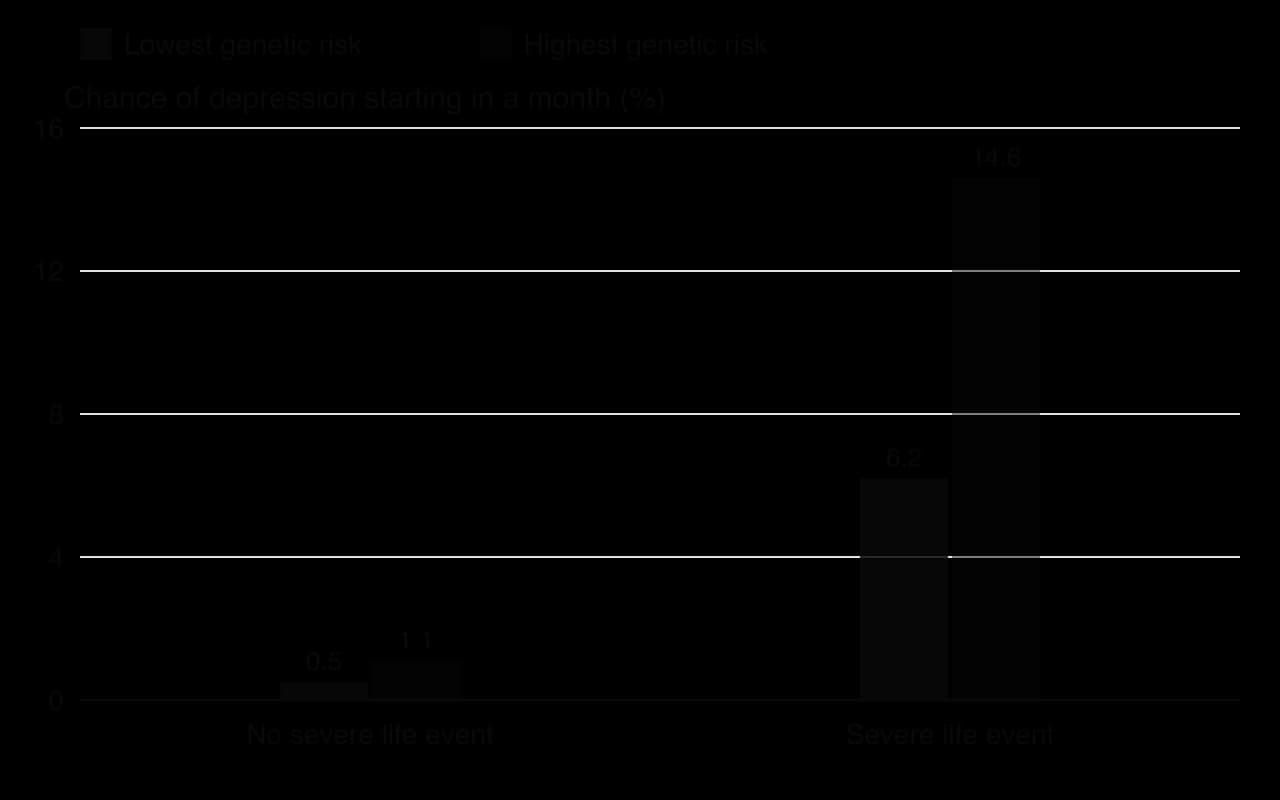
Severe events (the death of a close relative, assault, serious marital problems and divorce or break-up) greatly increased the chance of depression starting in the month they happened. The increase was much larger in women at high genetic risk: their monthly risk rose from 1.1% to 14.6%, while the risk of women at lowest genetic risk rose from 0.5% to 6.2%. Kendler and colleagues concluded that genes influence depression partly by changing a person’s sensitivity to the depressing effect of stressful events, exactly as the diathesis-stress model predicts.
Twin studies like this one show that some unknown genetic risk interacts with stress, but they do not identify the genes involved. In the early 2000s, molecular genetics made it possible to measure specific genes and test whether a known variant interacts with stress. The best-known attempt was a study of the serotonin transporter gene in a New Zealand birth cohort.
Caspi et al. (2003) aimed to find out why stressful experiences lead to depression in some people but not in others, by testing whether a variant of the serotonin transporter gene (5-HTT) moderates the effect of stressful life events on depression.
The 5-HTT gene was chosen because the serotonin transporter is the protein that SSRI antidepressants block. Its promoter region exists in a short (s) and a long (l) version; the short allele produces less transporter protein. The hypothesis was that people with one or two short alleles would be more likely to become depressed under stress.
The study used the Dunedin Multidisciplinary Health and Development Study, a longitudinal design that has followed a representative birth cohort of about 1,000 people born in Dunedin, New Zealand, in 1972–73. The analysis included 847 Caucasian (European-ancestry) members who were assessed at intervals from birth into adulthood. It is a prospective design: data on each person’s childhood were collected during childhood, not recalled later.
Participants were genotyped from DNA samples: 17% had two short alleles (s/s), 51% one short and one long allele (s/l) and 31% two long alleles (l/l). At age 26, they reported stressful life events from the previous five years (from age 21), such as problems with employment, money, housing, health or relationships. Thirty per cent reported no events, 25% one, 20% two, 11% three and 15% four or more.
The dependent variables were depressive symptoms, a diagnosis of major depression in the past year (from a structured psychiatric interview), suicidal thoughts and attempts, and informant reports from someone who knew the participant well. A separate analysis tested childhood maltreatment before age 10, recorded prospectively during childhood, as the stressor.
Seventeen per cent of the sample had had a major depressive episode in the past year. Stressful life events predicted depression, but the size of the effect depended on genotype. Among people with four or more stressful events, 33% of those with at least one short allele developed depression, compared with 17% of those with two long alleles; among people with two short alleles the figure was 43%. In people with few or no events, genotype made little difference to depression.
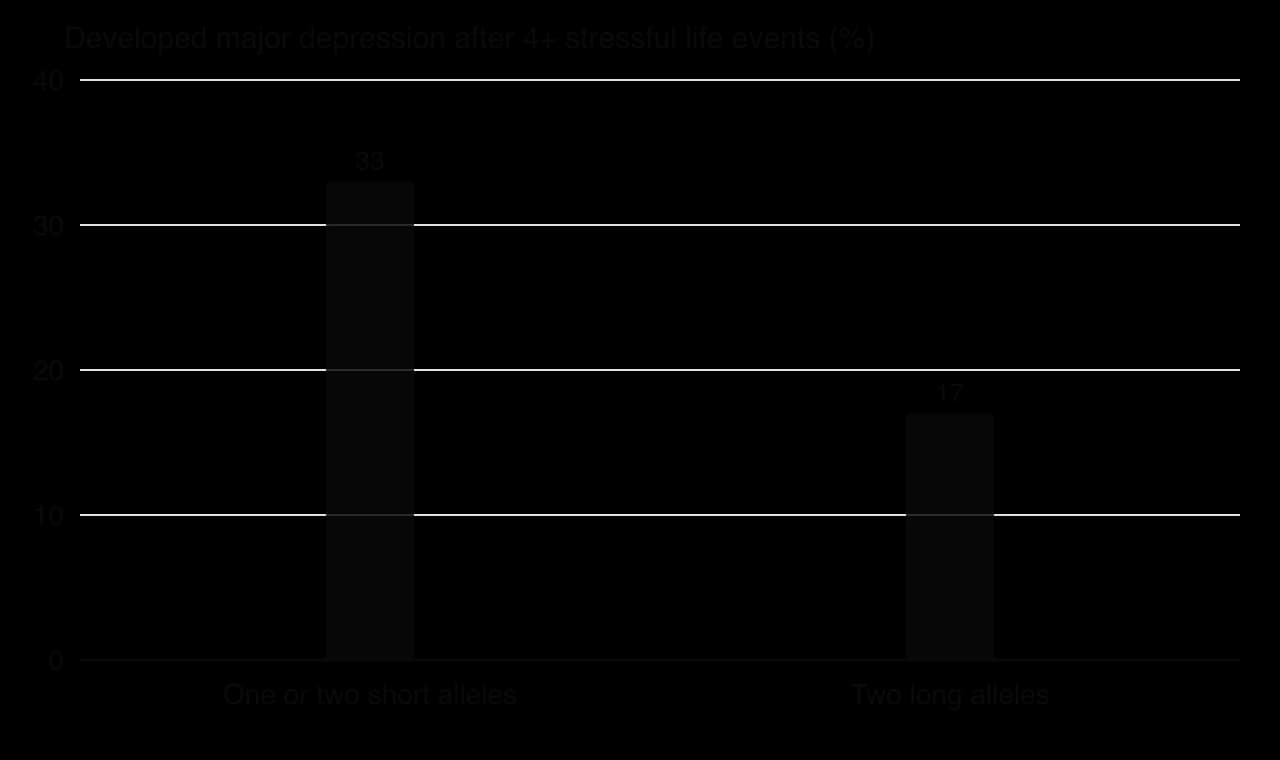
Short-allele carriers with four or more events made up only about 10% of the sample but accounted for nearly a quarter of the 133 cases of depression. Childhood maltreatment before age 10, recorded during childhood, showed a similar pattern: its link with depression in adulthood was stronger in short-allele carriers than in people with two long alleles.
Sources: Caspi, A., Sugden, K., Moffitt, T. E., Taylor, A., Craig, I. W., Harrington, H., McClay, J., Mill, J., Martin, J., Braithwaite, A. and Poulton, R. (2003). Influence of life stress on depression: moderation by a polymorphism in the 5-HTT gene. _Science, 301(5631), 386–389._
Caspi and colleagues concluded that the 5-HTT gene moderates the effect of stressful life events on depression: people with a short allele are more sensitive to stress. This is a gene–environment interaction, in which a person’s response to adverse experience depends on their genetic make-up. The study appeared to give the diathesis-stress model a precise biological form, with a measurable gene as the diathesis and measurable life events as the stress.
The study had strengths that most research in this area lacks: a representative birth cohort, very low drop-out, depression diagnosed by structured interview and confirmed by informants, and maltreatment recorded prospectively in childhood. Its main weakness was the measurement of adult life events by self-report at age 26. People who are depressed may remember or interpret more events as stressful, so the direction between events and depression is not certain. Life-event checklists also treat very different events (losing a job and a relationship ending) as equal units.
The finding became one of the most cited in psychiatry and inspired hundreds of studies, but it did not replicate reliably. Risch et al. (2009) carried out a meta-analysis of 14 studies with 14,250 participants. Stressful life events strongly predicted depression (odds ratio 1.41), but there was no effect of genotype (odds ratio 1.05) and no interaction (odds ratio 1.01). Karg et al. (2011) included 54 studies with a broader method and did find support, especially for childhood maltreatment, which shows that the conclusion depended on which studies were included.
Two later projects were designed to settle the question. Culverhouse et al. (2018) ran the same pre-planned analysis on 31 data sets with 38,802 participants and found no significant interaction under any definition of stress or depression. Border et al. (2019), with samples of up to 443,264 people, found no support for this or any other historical candidate-gene interaction for depression. The original result was most likely a false positive, made possible by small samples and publication bias in favour of striking findings.
The Dunedin study was unusually well designed, the gene was biologically plausible because it codes for the protein that antidepressants target, and the result fitted a popular theory. Early replications were small, and studies that found the interaction were more likely to be published than those that did not. Later research showed that the genetic effects of single variants on depression are tiny, so a sample of 847 had very little power to detect a real interaction and a high chance of producing a false positive.
Results like this can be misused: a genetic test for “stress sensitivity” could be sold to the public or used by employers or insurers, although the effect is not reliable. Labelling people as genetically vulnerable could also increase stigma and fatalism. Communicating the uncertainty of single-gene findings to the public is part of a researcher’s responsibility.
Tienari et al. (2004) compared Finnish adoptees whose biological mothers had a schizophrenia-spectrum disorder (high genetic risk) with adoptees whose biological mothers did not (low genetic risk). The adoptive families were rated on how well they functioned from extended observation of family life, and the adoptees were re-diagnosed by researchers who did not know their genetic risk after a median of 12 years, with register follow-up after 21 years.
Among high-risk adoptees, a disturbed adoptive family environment significantly predicted schizophrenia-spectrum disorders; among low-risk adoptees, family functioning made no significant difference. The pattern suggests that a healthy family environment can protect genetically vulnerable children. The adoption design separates the genetic diathesis (from the biological mother) from the environmental stress (the adoptive family), which makes this some of the strongest evidence for the model.
Caspi et al. (2002) studied boys in the Dunedin cohort and found that a variant of the gene for monoamine oxidase A (MAOA), an enzyme that breaks down neurotransmitters such as serotonin and dopamine, moderated the effect of childhood maltreatment. Maltreated boys with the genotype producing high levels of MAOA were less likely to develop antisocial behaviour as adults than maltreated boys with the low-activity genotype. The study helps explain why most maltreated children do not go on to harm others. Later meta-analyses have found some support for this interaction in males, although the effect is small and, like other candidate-gene findings, it should be treated with caution.
Context | Diathesis | Stress | Outcome |
|---|---|---|---|
Health and well-being | Genetic risk for depression; negative self-schemas | Bereavement, divorce, job loss | Major depressive disorder |
Health and well-being | Genetic risk for schizophrenia | Disturbed family environment; stressful events | Schizophrenia-spectrum disorder |
Human development | Low-activity MAOA genotype | Childhood maltreatment | Antisocial behaviour in adulthood |
Human relationships | Lack of a confiding relationship | A severe life event | Depression in women, as found by Brown and Harris (1978) |
Learning and cognition | Beliefs that self-worth depends on success | Failing an important test | Hopelessness and loss of motivation to study |
Across these examples, the same logic applies: an enduring characteristic of the person makes a negative outcome more likely, but the outcome appears only when environmental demands are high. The diathesis can come from genes, from early experience or from beliefs, and the stress can be a single event or a long-term condition.
If genes and stress interact, there must be a biological route by which an experience changes how a vulnerable body and brain work. Epigenetics offers one. Experiences such as early adversity can attach chemical marks, such as methyl groups, to DNA and change how much a gene is expressed, without changing the gene itself.
McGowan et al. (2009) examined brain tissue from people who had died by suicide. Those who had been abused in childhood had more methylation of a gene for the glucocorticoid receptor in the hippocampus, and lower expression of the receptor, than people who had died by suicide without a history of abuse or people who had died suddenly from other causes. Fewer of these receptors make it harder for the brain to switch off the release of cortisol after stress, so the person’s stress response stays active for longer.
This suggests a way in which early stress can create a biological diathesis: maltreatment changes gene expression in the stress system, which then makes the person more reactive to later stressors. The evidence is correlational and post-mortem, so it cannot show that the abuse caused the methylation, but it links the diathesis-stress model to a plausible mechanism.
 YouTube
Belsky and Pluess (2009) challenged one assumption of the diathesis-stress model. The model treats the diathesis as purely negative: vulnerable people do worse in bad environments and no better than anyone else in good ones. Belsky and Pluess reviewed evidence that some “vulnerability” characteristics, including temperament and some genetic variants, work more like plasticity factors. People who carry them are more affected by their environment in both directions: they do worse in adverse environments, but better than others in supportive and enriching ones.
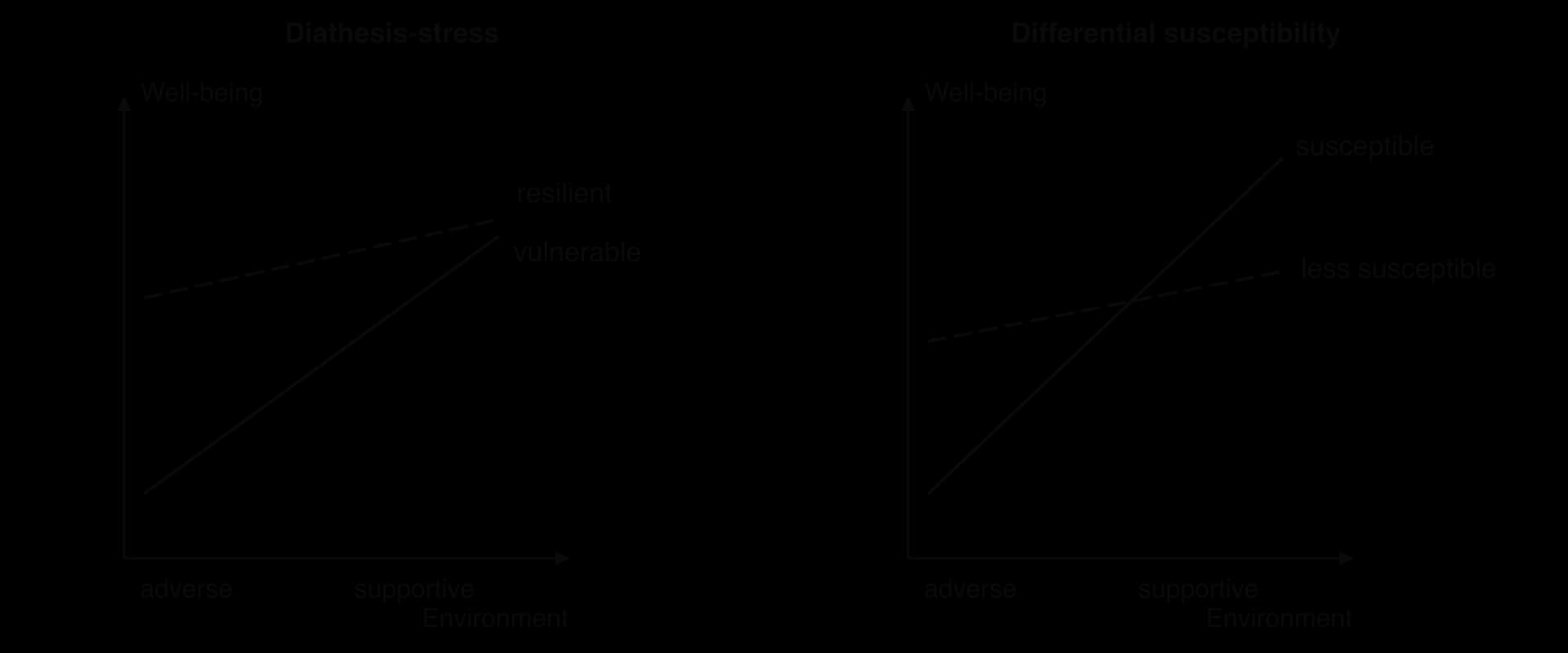
The two models make the same prediction in harsh environments, so research that studies only adversity cannot tell them apart. They differ at the supportive end of the environment. The hypothesis is sometimes summarised with a metaphor: most children are like dandelions, which grow reasonably well almost anywhere, while a minority are like orchids, which wither if neglected but flourish with good care.
Diathesis-stress model | Differential susceptibility | |
|---|---|---|
The person’s characteristic is… | A vulnerability (a risk factor) | A sensitivity to the environment (a plasticity factor) |
In an adverse environment | Vulnerable people do worse | Susceptible people do worse |
In a supportive environment | Vulnerable people do about as well as others | Susceptible people do better than others |
Implication for intervention | Protect vulnerable people from stress | Susceptible people may benefit most from good support |
Differential susceptibility does not replace the diathesis-stress model; it extends it. It has a hopeful implication for prevention: the children who are most at risk in harsh conditions may also be the ones who gain most from a supportive intervention. Its evidence base is smaller, however, and many studies are too small to show the crossover pattern reliably.
The stress part of the model is shaped by culture. What counts as a severe event, how much social support a person can draw on, and how distress is expressed all vary between societies. A diathesis may therefore lead to a disorder in one cultural setting and not in another.
Chiao and Blizinsky (2010) compared 29 nations and found that the short allele of the 5-HTT gene was more common in collectivistic cultures, such as East Asian societies, yet these cultures had a lower prevalence of anxiety and mood disorders. They proposed that collectivistic values, with their emphasis on social harmony and support, buffer genetically vulnerable populations against stress.
The study is correlational and works at the level of whole nations, so it cannot show that culture protects any individual, a problem known as the ecological fallacy. Differences in how disorders are diagnosed in different countries may also explain part of the pattern. The study still shows that the environment in the model includes culture as well as individual life events.
The model’s main strength is that it combines the approaches. Biological, cognitive and sociocultural factors each fit into it as diatheses or stressors, so it avoids the biological reductionism of explaining a disorder only by genes or brain chemistry, and the environmental determinism of explaining it only by life events. This matches the overall evidence that mental health disorders have many interacting causes.
The model accounts for findings that single-cause explanations cannot. Twin studies show that genetically identical people often differ in whether they develop a disorder; life-event research shows that most people who experience a severe event do not become depressed. Kendler et al. (1995) and Tienari et al. (2004) both found the interactive pattern the model predicts, using twin and adoption designs that separate genes from environment.
Because the model identifies two kinds of factor, it suggests two kinds of intervention: reducing exposure to stress (for example, support for families under strain) and reducing vulnerability (for example, teaching people at risk to challenge negative thinking, as in cognitive therapy). Tienari et al. (2004) suggest that a healthy family environment can protect children at genetic risk.
The model is only as good as the measures of its two parts. Genetic diatheses are usually inferred from family history rather than measured directly, because no single gene has a reliable effect. Stress is often measured with self-report checklists, which treat events as equal units and depend on memory. When a disorder appears, it is tempting to conclude afterwards that the person must have had a diathesis, an argument that is circular unless the diathesis was measured before the disorder began.
Much of the excitement about the model in the 2000s came from candidate-gene studies with small samples. Large, pre-registered analyses such as Culverhouse et al. (2018) and Border et al. (2019) did not support them, which suggests that publication bias and false positives inflated the evidence. The general idea of gene–environment interaction remains plausible, especially from twin and adoption studies, but no specific gene–stress interaction for depression is now firmly established.
The model is very flexible. Almost any outcome can be explained after the event by adjusting the size of the diathesis or the stress, which makes the model hard to falsify. Testing it properly requires prospective designs that measure vulnerability before the stress occurs and then follow people over time, as the Dunedin study did.
Most research on the model has used Western, often European-ancestry, samples, and the most studied gene variants differ in frequency between populations. As Chiao and Blizinsky (2010) suggest, the same diathesis may have different consequences in different cultural environments, so findings from one population cannot be assumed to apply elsewhere.
Concept | Strength or limitation of the diathesis-stress model |
|---|---|
Perspective | Strength: integrates biological, cognitive and sociocultural factors; avoids reductionism |
Causality | Strength: explains why only some people exposed to stress develop disorders. Limitation: flexible, so hard to falsify |
Measurement | Limitation: diatheses are often inferred; life events measured by retrospective self-report |
Bias | Limitation: candidate-gene findings inflated by small samples and publication bias |
Change | Strength: suggests two routes to prevention, reducing stress and reducing vulnerability |
Responsibility | Labelling people as “vulnerable” risks stigma and fatalism; uncertainty must be communicated |
The diathesis-stress model is also central to concept-based essays on biological explanations of mental health disorders, where it is the clearest way to argue that one perspective is not enough. Evaluation questions on a single study practise the reasoning such essays need.
The diathesis-stress model proposes that a disorder develops when a vulnerability (diathesis) interacts with environmental stress; neither alone is sufficient.
Diatheses can be genetic, other biological, cognitive or psychosocial; stress includes life events, chronic difficulties and childhood adversity.
The model predicts an interactive pattern: stress has a much larger effect in vulnerable people than in others.
Kendler et al. (1995) found that a severe event raised monthly depression risk from 1.1% to 14.6% at high genetic risk, but only from 0.5% to 6.2% at low genetic risk.
Caspi et al. (2003) found that short 5-HTT allele carriers were more likely to become depressed after stressful events (33% vs 17% after four or more events).
Large studies by Risch et al. (2009), Culverhouse et al. (2018) and Border et al. (2019) did not replicate the 5-HTT × stress interaction.
Tienari et al. (2004) found that a disturbed adoptive family predicted schizophrenia-spectrum disorders only in adoptees at high genetic risk.
Epigenetic changes, such as methylation of stress-hormone receptor genes, may be a mechanism by which early stress creates a biological diathesis.
Differential susceptibility proposes that sensitive individuals do worse in adverse and better in supportive environments.
The model integrates the approaches and guides prevention, but diathesis and stress are hard to measure and the model is hard to falsify.
I can describe the diathesis-stress model and give examples of different kinds of diathesis and stress.
I can explain the difference between an additive and an interactive effect of genes and environment.
I can describe the aim, method, results and conclusions of Caspi et al. (2003).
I can evaluate gene–environment interaction research, including the replication failures of candidate-gene studies.
I can explain how epigenetics may link early stress to later vulnerability.
I can compare and contrast the diathesis-stress model with differential susceptibility.
I can apply the diathesis-stress model to a scenario in more than one context.