 YouTube
Explain why psychologists study animals to understand human behaviour, judge how well an animal model stands for a human condition, and evaluate the ethics of animal research using the 3Rs and cost–benefit analysis.
Each is in the Psychology glossary, with every other term in the subject.
A non-human species, or a condition produced in it, that is used to stand in for a human behaviour or disorder so that its causes and treatments can be studied under controlled conditions.
Research that uses non-human animals as participants, either to understand their own behaviour or, more often, to draw conclusions about human behaviour and biology.
The tendency to describe animals' behaviour in terms of human thoughts, feelings or motives, such as calling a floating rat 'despairing'.
Applying findings from one group or species to another that was not studied, such as using results from rats to draw conclusions about humans.
The extent to which a measure or model appears to show what it claims to, for example how closely an animal's behaviour resembles the human symptom it stands for.
A state of passivity in which an animal or person stops trying to escape or avoid harm after repeated exposure to unpleasant events it could not control.
The extent to which a measure or model correctly predicts later outcomes, for example whether drugs that work in an animal model also work in humans.
Describe what animal research and animal models are, and why particular species are chosen.
Explain the value of animal research for understanding human behaviour, with examples from several contexts.
Explain how the face, construct and predictive validity of an animal model are judged.
Evaluate the extent to which findings from animals can be extrapolated to humans.
Discuss the ethical considerations in animal research, including the 3Rs, cost–benefit analysis and regulation.
Describe and evaluate learned helplessness research as an animal model of depression.
Apply knowledge of animal models to an unfamiliar research scenario.
Animal research is research that uses non-human animals to learn about behaviour and its biological basis. Much of what psychologists know about stress, memory, attachment, learning and the effects of drugs on the brain began with studies of rats, mice, monkeys and dogs, and those findings still shape treatments for people.
Animal research belongs mainly to the biological approach, because it gives direct access to the brain, hormones and genes. It raises two linked questions that run through the whole topic. The first concerns measurement and generalisability: how far a rat in a laboratory cage can stand for a human being. The second concerns responsibility: when, if ever, it is acceptable to harm an animal to gain knowledge that may help people.
With a free account, Augment remembers where you stopped and what you have practiced.
Psychologists study animals for two different reasons. In comparative psychology, the behaviour of a species is interesting in itself, for example how bees communicate or how crows use tools. More often, animals are studied as a stand-in for humans, because they share much of human biology and can be studied in ways that people cannot.
When an animal is used to stand for a human behaviour or disorder, it becomes an animal model. The model may be a whole species chosen because it resembles humans in a relevant way, or a condition that researchers produce in the animal, such as chronic stress, a brain lesion or a change to one gene. Researchers then study the causes and possible treatments of that condition under controlled conditions.
An animal model is an argument by analogy. Humans share an evolutionary history with other mammals, so many of their biological systems have the same origin and work in similar ways. Rats and humans use the same main neurotransmitters, both have a hippocampus that supports spatial memory, and both respond to stress through the HPA axis, which releases a stress hormone (corticosterone in rats, cortisol in humans).
If a mechanism is shared, what is learned by manipulating it in a rat may hold in a human. The analogy is strongest for basic biological processes, such as how a drug acts at a synapse or how stress hormones affect the hippocampus. It is weakest for capacities that are largely human: language, culture, reflection on the self and planning for the distant future.
Researchers choose a species for a reason, matching it to the question. The table shows the species most often used in psychological research and what each is used for.
Species | Why it is chosen | Typical use |
|---|---|---|
Rats and mice | Mammals with similar brain organisation and stress hormones; breed quickly and live two to three years; mice can be genetically modified | Memory and learning in mazes, stress, drug effects, neuroplasticity, epigenetics |
Rhesus and cynomolgus macaques | Closest brain structure and social life to humans among common laboratory animals; long infancy and strong mother–infant bond | Attachment and early deprivation, social stress, the prefrontal cortex, models of developmental disorders |
Prairie and montane voles | Two closely related species, one forming lasting pair bonds and one not, so they can be compared | Pair bonding and the hormones oxytocin and vasopressin |
Dogs and pigeons | Easy to train and respond reliably to reinforcement | Classical and operant conditioning; early learned helplessness research |
Sea slugs (Aplysia) | A small nervous system with large neurons that can be identified one by one | The cellular basis of learning, such as habituation |
The value of animal research comes from four things it allows that human research does not: experimental control, direct access to the brain, manipulations that would be unethical in people, and the study of whole lifespans and generations. Each of these lets researchers test a cause-and-effect claim that would otherwise remain a correlation.
Laboratory animals can be raised from the same genetic strain, on the same diet, with the same light cycle and the same cage. This removes many participant variables and confounding variables that complicate human research. When the researcher then manipulates one independent variable, such as the amount of maternal care, the quality of the environment or a drug dose, a change in the dependent variable can be attributed to it with confidence.
This makes animal research one of the main routes to causality in the biological approach. Most human research on early adversity, for example, is correlational, because children cannot be assigned to neglectful homes. In animals, the same question can be studied with a true experiment that uses random allocation to conditions.
Rosenzweig, Bennett and Diamond (1972) showed what this control allows. Rats raised in large cages with other rats and changing toys developed a heavier, thicker cortex than rats raised alone in small, bare cages. Because littermates of the same strain were split between the conditions, the difference in the brain could be traced to the environment, which is evidence for neuroplasticity that no study of children could produce in the same way.
Brain imaging in humans measures the brain indirectly, through blood flow or electrical signals at the scalp. In animals, researchers can record from single neurons, inject a drug into one small structure, remove or inactivate an area, or examine brain tissue under a microscope after death. These methods give a direct measurement of what changes in the brain, such as the number of receptors, the thickness of the cortex or chemical marks on a gene.
Weaver et al. (2004) used this access in a study of rat mothers. Pups of mothers who licked and groomed them a lot developed fewer methyl groups on the promoter of the glucocorticoid receptor gene in the hippocampus, and as adults they had calmer stress responses. When pups were swapped at birth (cross-fostering), the pattern followed the mother who raised them, not the mother who gave birth to them, which showed that care changed gene expression through epigenetics.
A pup raised by its own mother receives both her genes and her care, so any similarity between them could come from either. When pups are moved at birth to a different mother, their genes come from the birth mother and their care from the foster mother. If adult stress responses match the foster mother’s level of licking and grooming, care rather than inherited genes must explain the difference.
Separating infants from their mothers, exposing them to uncontrollable stress or changing their genes cannot be done to human participants. Animal research is sometimes the only way to test such causal hypotheses directly. Harlow (1958) separated infant rhesus monkeys from their mothers and raised them with two artificial “mothers”: one made of wire that held a feeding bottle and one covered in soft cloth that gave no milk. The infants spent most of their time clinging to the cloth mother and ran to it when frightened, which challenged the view that infants become attached to whoever feeds them and supported the importance of contact comfort in attachment.
The same research also shows the cost. Monkeys reared in isolation showed severe and lasting problems in social behaviour and later as mothers. These studies are now a standard example in debates about the ethics of animal research.
YouTubeA rat is adult at about three months and lives two to three years. This means the long-term effects of early experience, and even effects passed from parent to offspring, can be studied within a few years. Comparable human studies, such as birth cohorts followed into adulthood, take decades.
Animals can be bred selectively, cross-fostered to separate genes from rearing, or genetically modified. Liu et al. (2016), at the Chinese Academy of Sciences in Shanghai, created cynomolgus monkeys carrying extra copies of the human MECP2 gene, which is duplicated in a rare developmental disorder with features of autism. The monkeys showed more repetitive circling, stronger stress responses and less social interaction than ordinary monkeys, and their offspring, bred from one of these monkeys, also showed reduced social interaction.
Studies like this show both the strength and the difficulty of animal models. A primate model may resemble human social behaviour more closely than a mouse, but creating animals designed to show a disorder raises serious welfare questions. Because primates are so similar to humans in their social and emotional lives, many people judge their suffering to be harder to justify than that of rodents.
The most convincing animal research does not stop with animals. It produces a hypothesis that is then tested in humans, using whatever methods are ethical there. McGowan et al. (2009) followed up the rat research on maternal care by examining brain tissue donated after death. People who had died by suicide and had been abused as children showed more methylation of the glucocorticoid receptor gene in the hippocampus than people who had died by suicide without such a history or from other causes.
This sequence, from a controlled animal experiment to a correlational human study that finds the same mechanism, is how animal models are meant to work. The rat experiment shows cause and effect in rats. The human study shows that the same mechanism is present in people, but on its own it cannot show cause and effect, so each study needs the other.
Context | Animal research example | What it contributed to understanding human behaviour |
|---|---|---|
Health and well-being | Learned helplessness in dogs and rats; maternal care and stress genes in rats | A model of depression and a mechanism linking early care to adult stress responses |
Human development | Harlow’s monkeys; enriched and impoverished environments in rats | Contact comfort in attachment; experience changes the developing brain |
Human relationships | Prairie and montane voles | The hormones oxytocin and vasopressin in pair bonding |
Learning and cognition | Rats in mazes; pigeons and dogs in conditioning studies | Principles of classical and operant conditioning; the hippocampus in spatial memory |
Animal research contributes in every context, as the table shows. In human relationships, for example, Young and Wang (2004) reviewed research showing that monogamous prairie voles and non-monogamous montane voles differ in where receptors for oxytocin and vasopressin are found in the brain’s reward areas. Comparing two closely related species allowed researchers to link hormones to pair bonding, a question that is far harder to study in people.
An animal model is only useful if it resembles the human condition in ways that matter. Willner (1984) proposed three criteria for judging animal models of depression, and they are now used for animal models of many disorders. Each criterion asks a different question, and a model can meet one while failing another.
A model has face validity when the animal’s behaviour looks like the human symptom: a rat that stops seeking a sugar reward resembles a person who has lost interest in things they used to enjoy. A model has construct validity when the cause or mechanism is the same as in humans: if human depression often follows uncontrollable stress, a model in which uncontrollable stress produces the behaviour has some construct validity. A model has predictive validity when it predicts what will happen in humans, most often whether a drug that works in the animal also works in people.
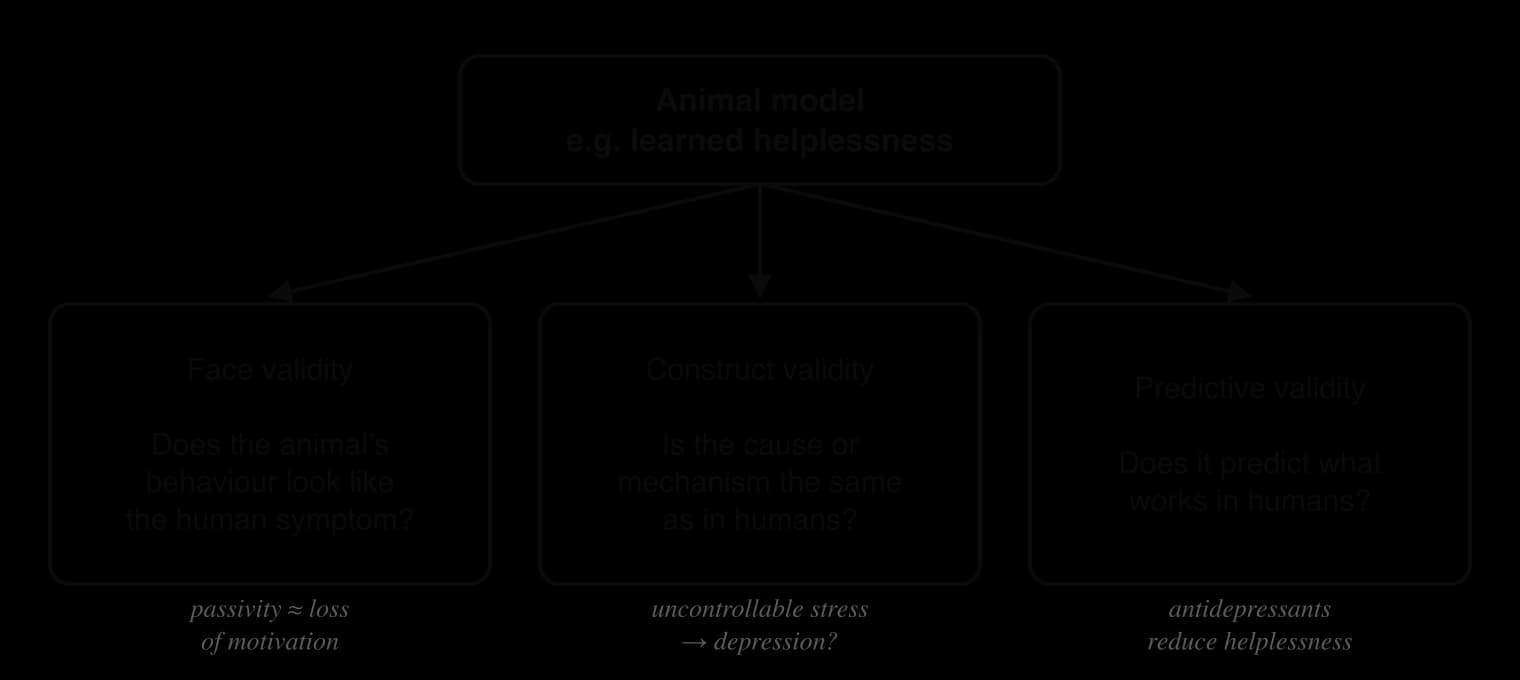
Learned helplessness meets the criteria better than most models. Its passivity resembles the low motivation of depression, it is produced by uncontrollable stress, which is a known risk factor for human depression, and Sherman, Sacquitne and Petty (1982) found that several kinds of antidepressant treatment reversed helplessness in rats, while anxiety-reducing drugs, stimulants and sedatives did not.
Porsolt, Le Pichon and Jalfre (1977) placed rats in a cylinder of water from which they could not escape. After a period of swimming and climbing, the rats began to float with only small movements, and drugs that treat depression in humans reduced the time spent floating. For decades the test was used to screen new antidepressants, and floating was often described as “behavioural despair”.
Molendijk and de Kloet (2019) argued that this interpretation is wrong. Floating saves energy and is a sensible way of coping with an inescapable situation, so it may show adaptive learning rather than despair. Their analysis of recent studies using the test found that most researchers still described floating as “depressive-like”, although a growing number now interpreted it as a coping strategy. The test may still have predictive validity for some drugs, but its face and construct validity as a model of depression are weak.
Every conclusion from an animal model rests on extrapolation: applying findings from the species studied to a species that was not studied. Extrapolation is a form of generalisation across species, and it can fail for reasons of biology, psychology and setting.
Shared systems are not identical systems. Rats and humans differ in the size and organisation of the prefrontal cortex, in how quickly they break down drugs and in the details of their hormone systems. Many drugs that work well in animal models later fail in human trials, which shows that predictive validity cannot be assumed even when the biology looks similar.
Some of the most important features of human behaviour have no clear animal equivalent. Human depression involves thoughts of worthlessness and hopelessness, and Maier and Seligman (2016) noted that laboratory helplessness could reproduce most symptoms of depression but not suicidal thinking. Language, culture, religion, social identity and beliefs about the self all shape human behaviour, and none of them can be modelled in a rat.
This matters most when a human problem is shaped by social conditions. Poverty, discrimination, migration and loneliness are major factors in human mental health, and an animal model can only approximate them, for example through social isolation of a rat. Explanations that rest mainly on animal research therefore tend towards a biological perspective and can underestimate cognitive and sociocultural causes.
Laboratory animals are bred for generations in standard cages, often without the space, company or variety of their natural environment. Their stress systems and behaviour may differ from those of wild animals, and the handling and testing procedures can themselves change hormone levels. Findings may therefore apply to laboratory rats rather than to rats in general, let alone to humans.
Who is studied matters in animals as in humans. For many years, a large share of rodent research used only males, on the grounds that female hormone cycles made results more variable. This produced a sampling bias: findings about stress and drugs were extrapolated to women from studies of male animals. In 2016 the United States National Institutes of Health began asking researchers it funds to consider sex as a biological variable in animal studies.
Animal research raises an ethical question that human research does not. Human participants can give informed consent, withdraw and be debriefed; animals can do none of these things. The researcher therefore carries full responsibility for whether an animal is used at all and for how much it suffers.
Most mammals, and many other animals, can feel pain and distress. The philosopher Peter Singer argued in Animal Liberation (1975) that giving less weight to an animal’s suffering only because it belongs to another species is a prejudice, known as “speciesism”, comparable to racism or sexism. On this view, the pain caused in an experiment counts morally in the same way as similar pain caused to a human.
Other positions give humans a special moral status, because of capacities such as language, reasoning and moral responsibility, while still holding that animal suffering must be minimised. Most research regulation today follows a middle position: animal research can be justified, but only when its likely benefits outweigh its costs to the animals and no alternative exists. This is a judgement of responsibility, and it can change over time as views about animals and the available alternatives change.
Russell and Burch (1959) proposed the 3Rs as a practical framework for humane research. They are now written into research law and guidance in many countries.
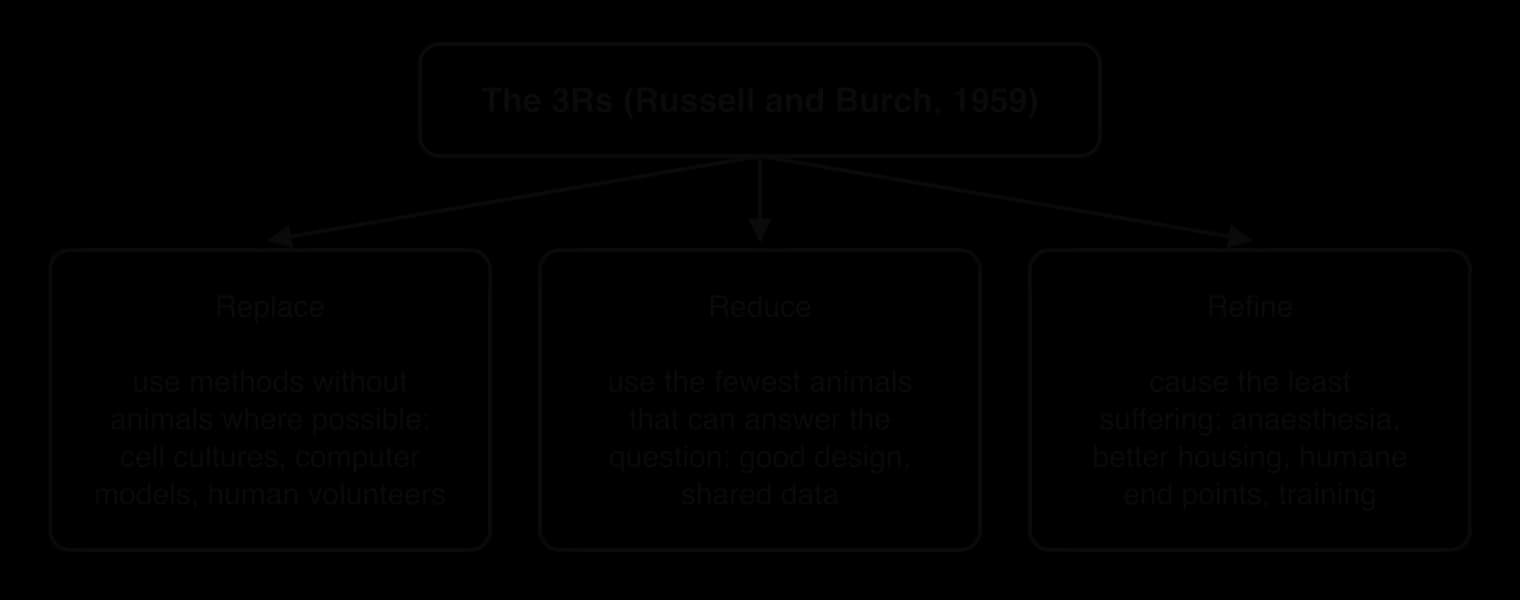
Replace: use methods that do not involve animals wherever they can answer the question, such as cell cultures, computer simulations, brain imaging of human volunteers or studies of human tissue donated after death (as McGowan et al. did).
Reduce: use the smallest number of animals that can give a reliable answer, through careful experimental design, appropriate statistics and sharing of data between laboratories.
Refine: change procedures to cause the least pain and distress, for example through anaesthesia and pain relief, better housing with company and enrichment, training animals to cooperate with procedures, and “humane end points” at which an animal is removed from a study before it suffers severely.
 YouTube
Deciding whether a study should go ahead is a cost–benefit analysis: the expected scientific and medical benefits are weighed against the harm to the animals. Bateson (1986) represented the decision as a cube with three dimensions: the degree of animal suffering, the quality of the research and the likelihood that it will lead to a medical or practical benefit.
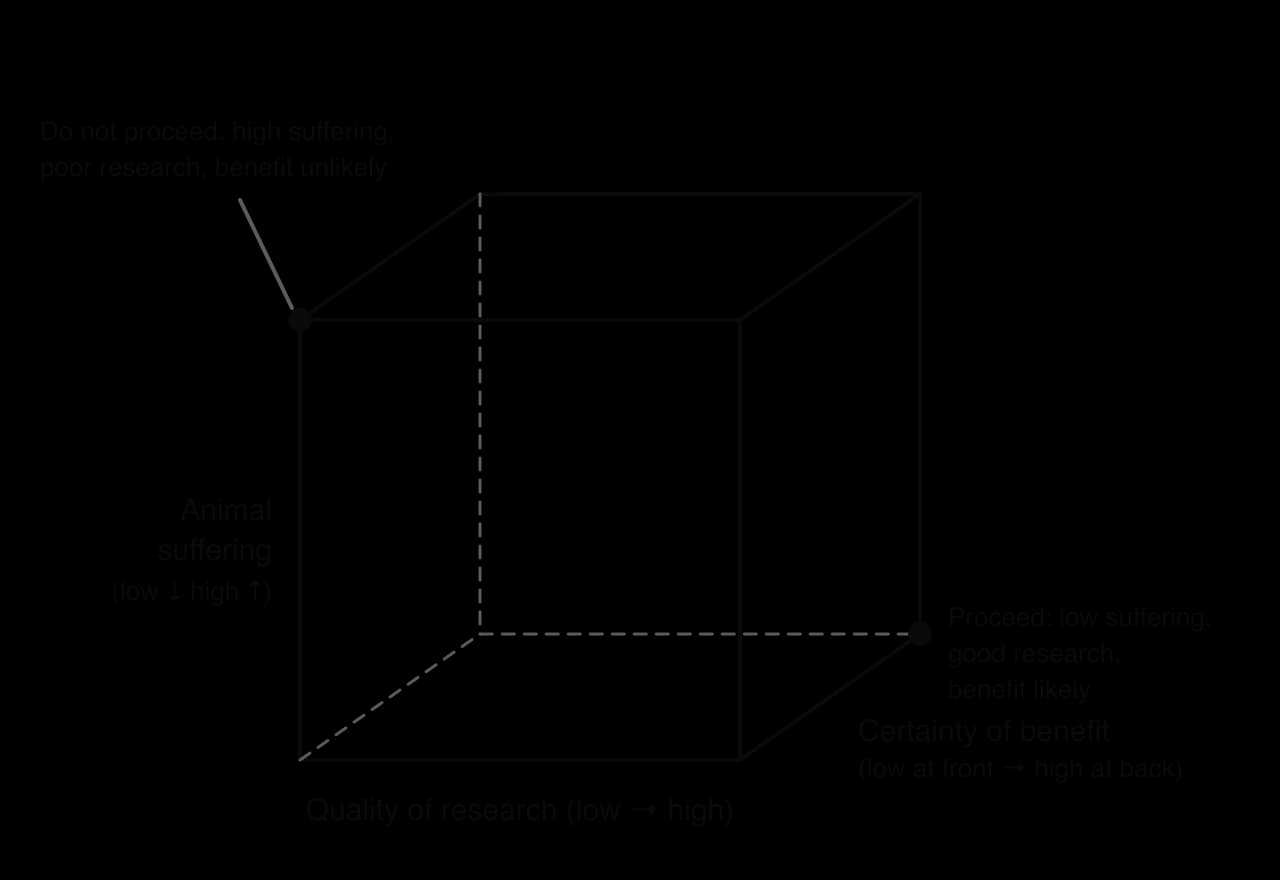
The cube also shows that the quality of the research matters in its own right. Poor-quality research is hard to justify even when the suffering is mild, because it is unlikely to produce reliable knowledge. Bateson’s model also shows why the judgement is difficult: the benefits of basic research are often uncertain at the start, while the suffering is certain.
In the United Kingdom, the Animals (Scientific Procedures) Act 1986 requires every establishment, project and researcher using animals to be licensed by the government. Each project goes through a harm–benefit assessment and is reviewed by a local animal welfare and ethical review body, which is a kind of ethics committee. The European Union applies similar rules through Directive 2010/63/EU, and many other countries have laws or national guidelines built around the 3Rs, although the strength of regulation and inspection differs between countries.
Regulation also produces public data. In Great Britain in 2023, 2.68 million scientific procedures were carried out on living animals: about 1.47 million experimental procedures and 1.21 million procedures to create and breed genetically altered animals. Mice were used in 60% of experimental procedures, fish in 14% and rats in about 10%, while dogs, cats, horses and non-human primates together made up about 1.2%. About 3% of experimental procedures were classed as severe.

These figures cover all scientific uses of animals, mostly in biology and medicine, and psychological research is only a small part of them. They show that a large majority of procedures cause little suffering, but also that tens of thousands each year are classed as severe, which is the category that the cost–benefit judgement finds hardest to justify.
Many of the best-known animal studies in psychology were carried out before the 3Rs were widely applied. Harlow’s isolation of infant monkeys and the inescapable shocks given to dogs in early learned helplessness research would face strict ethical review today and might not be approved in the same form. Defenders point to their influence on understanding attachment and depression; critics argue that the suffering was severe and that much of the knowledge could have been gained in other ways.
Applying today’s standards to past research is itself a judgement. Ethical standards change, and part of the responsibility of psychologists is to keep reviewing what is acceptable as alternatives develop, for example as human brain imaging and genetic studies of donated tissue replace some animal procedures.
The learned helplessness research of Martin Seligman and Steven Maier is one of the longest-running animal models in psychology. It shows what an animal model can do, how its interpretation can change over fifty years, and the ethical price of the evidence.
Earlier work at the University of Pennsylvania had found that dogs given shocks they could not escape often failed, a day later, to learn a simple escape response. Seligman and Maier (1967) aimed to find out whether this failure was caused by the shocks themselves or by the dogs’ lack of control over them.
The study was a laboratory experiment with dogs and an independent samples design with three groups, now called the triadic design. On the first day, dogs were held in a hammock-like harness. In the escapable group, each shock ended when the dog pressed a panel with its nose. In the yoked group, each dog received the same shocks for the same length of time, but nothing it did had any effect on them. A third group received no shock.
Twenty-four hours later, every dog was placed in a shuttle box: a box with two compartments separated by a low barrier. A shock came through the floor, and jumping the barrier ended it. The dependent variable was whether, and how quickly, each dog learned to escape. Because the escapable and yoked groups received physically identical shocks, any difference between them could be attributed to control alone.
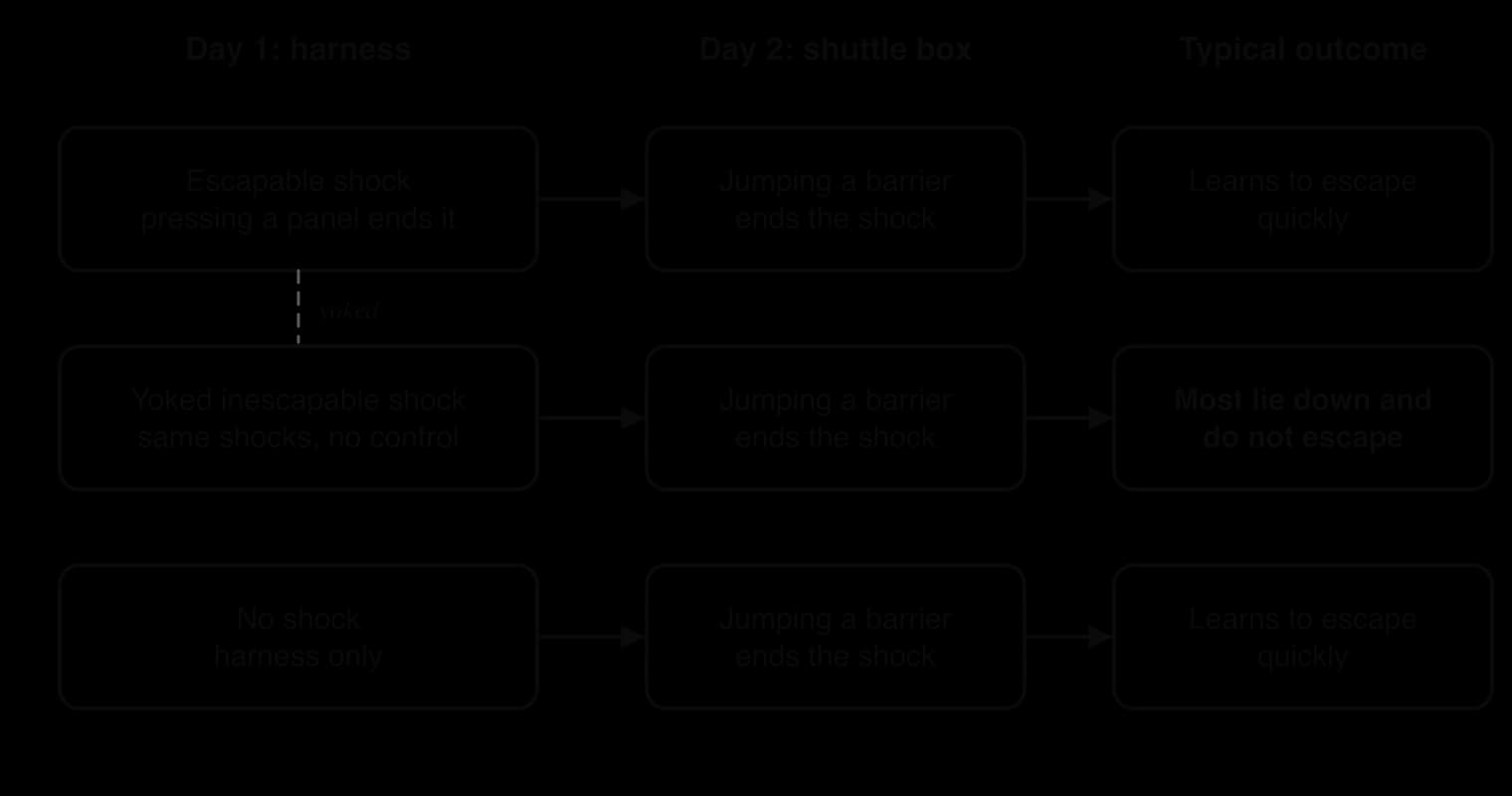
Most dogs in the escapable and no-shock groups quickly learned to jump the barrier. Most dogs in the yoked group did not: they ran about briefly, then lay down and whined, taking the shock until it ended. Maier and Seligman (2016) summarised the well-replicated result of this design as about two-thirds of inescapably shocked animals failing to learn to escape, against about 90% of escapable and unshocked animals learning easily. The escapable group did not differ from the no-shock group.
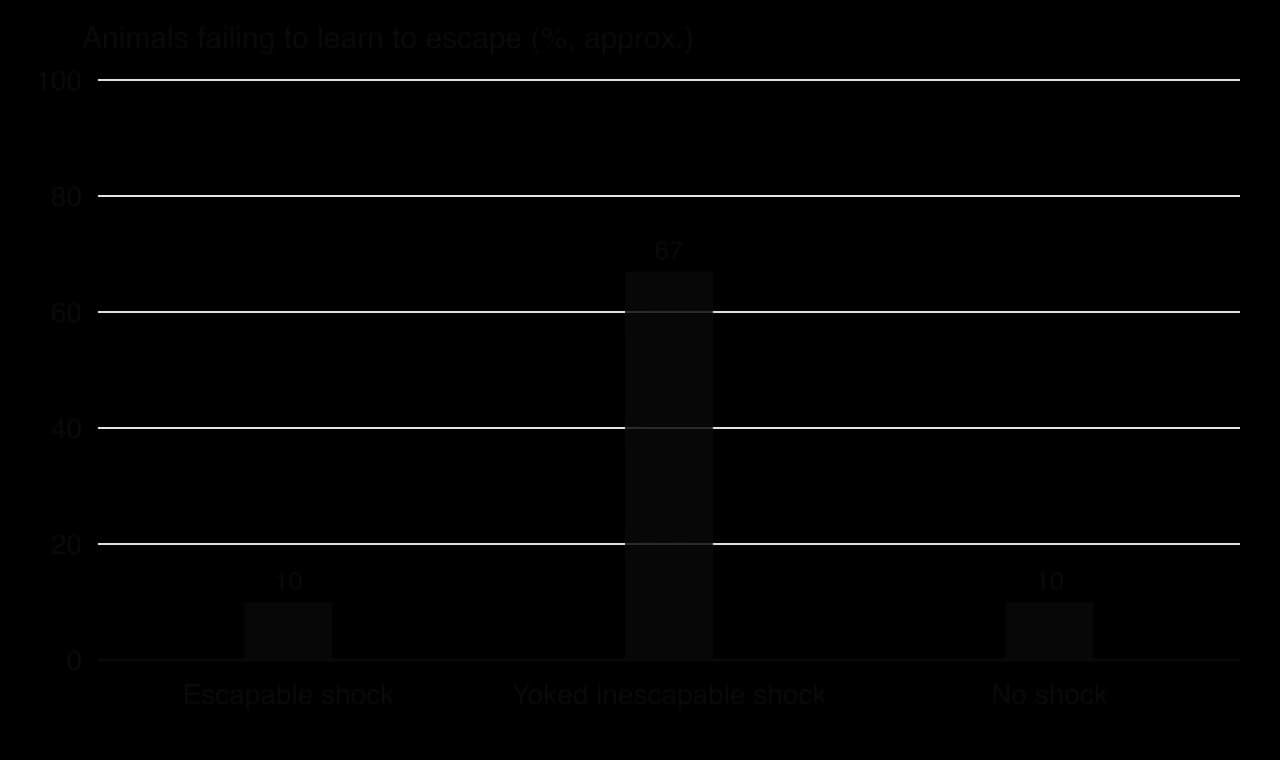
Seligman and Maier concluded that the yoked dogs had learned that the shock’s ending did not depend on their behaviour, and that this expectation undermined their attempts to escape in a new situation. They called this learned helplessness and proposed it as an animal model of major depressive disorder, which also involves passivity, low motivation and a sense that one’s actions make no difference.
Hiroto and Seligman (1975) adapted the triadic design for college students, using loud noise that could or could not be turned off by pressing a button, or solvable and unsolvable anagrams. Most students in the yoked condition then failed to escape noise in a new task, in which moving a hand from one side of a box to the other turned it off, which suggested the effect was not limited to dogs. Later human research moved towards the explanations people give for uncontrollable events, an approach developed in cognitive models of depression.
In a review of fifty years of research, mostly with rats, Maier and Seligman (2016) concluded that “the original theory got it backwards”. Passivity is not learned: it is the default, unlearned response to prolonged aversive events, produced by serotonin-releasing neurons in a brainstem area called the dorsal raphe nucleus. What animals learn is control. When an animal’s behaviour ends the stressor, an area of the medial prefrontal cortex detects this control and inhibits the dorsal raphe nucleus, which protects the animal against later passivity.
The authors suggested that this has implications for treating depression: if passivity is the default response, therapy might work best by building up the experience and expectation of control rather than by trying to remove helplessness directly. These are hypotheses about humans that still need testing with human participants.
The yoked design is the study’s main strength. Because the escapable and yoked groups receive the same shocks, the experiment separates the effect of control from the effect of stress, a separation that is hard to achieve in correlational research on human depression. The finding has been replicated many times in dogs, rats and other species. One limitation is that yoking can be imperfect: animals differ in how strongly they react to the same shock, so some of the difference between groups could come from individual differences that the yoking does not control.
Helplessness was operationalised as failure to jump a barrier, a clear and reliable behavioural measure. As a model of depression, it has some face validity (passivity), some construct validity (uncontrollable stress is a risk factor for human depression) and some predictive validity (antidepressants reverse it in rats). It cannot capture low mood, guilt or suicidal thinking, and the 2016 reversal shows that even the mechanism originally proposed was wrong.
The dogs received electric shocks that they could not escape, chosen to cause distress, which places the research near the high-suffering corner of Bateson’s cube. Supporters argue that the benefits were large: the research shaped cognitive theories of depression and later research on resilience. Critics argue that the suffering was severe and that much of the human knowledge came from later studies with people, which raises the question of whether the original research would be justified under the 3Rs today.
The model began as a cognitive explanation (an expectation that responses do not matter) and became a neural one (default passivity inhibited by a prefrontal circuit). The change shows how animal research can generate theories over decades, and how the explanation chosen can depend on the methods available at the time.
Sources: Seligman, M. E. P. and Maier, S. F. (1967). Failure to escape traumatic shock. _Journal of Experimental Psychology, 74(1), 1–9. Maier, S. F. and Seligman, M. E. P. (2016). Learned helplessness at fifty: insights from neuroscience. Psychological Review, 123(4), 349–367._
Animal research appears in arguments about every concept in the course. The table summarises the main links, which are useful as starting points for evaluation.
Concept | How it applies to animal research |
|---|---|
Causality | Control and random allocation allow true experiments on causes, such as maternal care or uncontrollable stress, that can only be studied by correlation in humans. |
Measurement | Behaviour must be operationalised (floating, failing to escape) and interpreted; face, construct and predictive validity judge how well it stands for the human condition. Direct measures of the brain are possible. |
Perspective | Animal models favour a biological perspective and cannot capture culture, language or social identity, so explanations built on them risk being reductionist. |
Bias | Anthropomorphism in interpreting behaviour; sampling bias when only male animals are studied. |
Responsibility | Animals cannot consent; the 3Rs, cost–benefit analysis and licensing aim to minimise suffering. |
Change | Animal models are used to test treatments, such as antidepressants, before human trials; views on what is ethically acceptable also change over time. |
Animal research and animal models are approach terms, so they can appear in Paper 1 Section A (explain the term with an example) and in Paper 1 Section B (apply it to an unseen scenario in any of the four contexts). Ethical considerations and the validity of animal models also make strong material for concept-based essays on responsibility, measurement or perspective, and for evaluating an unseen animal study in Paper 2.
A Section B question gives a short scenario and asks how the approach term applies to it. The answer has to use the details of the scenario throughout, not only describe animal research in general.
Animal research uses non-human animals to study behaviour; an animal model is a species or condition used to stand in for a human behaviour or disorder.
Animal research allows experimental control, direct access to the brain, manipulations that would be unethical in humans and the study of whole lifespans and generations.
Examples come from every context: maternal care and stress genes in rats, contact comfort in Harlow’s monkeys, pair bonding in voles and enriched environments in rats.
An animal model is judged on face validity (looks like the symptom), construct validity (same cause) and predictive validity (predicts what works in humans).
Extrapolation to humans is limited by biological differences, the absence of language and culture in animals, laboratory conditions and sampling bias.
Learned helplessness showed that uncontrollable stress, not stress itself, produced passivity; fifty years later the mechanism was reversed: passivity is the default and control is learned.
Animals cannot consent, so researchers carry full responsibility; the 3Rs (replace, reduce, refine), cost–benefit analysis and licensing guide decisions.
In Great Britain in 2023, 2.68 million procedures were carried out on animals, most of them mild, but tens of thousands were classed as severe.
I can describe what animal research and animal models are, and why particular species are chosen.
I can explain the value of animal research for understanding human behaviour, with examples from several contexts.
I can explain the face, construct and predictive validity of an animal model, using learned helplessness or the forced swim test.
I can evaluate how far findings from animals can be extrapolated to humans.
I can discuss the ethics of animal research using the 3Rs, cost–benefit analysis and regulation.
I can describe and evaluate the learned helplessness research, including its reversal in 2016.
I can apply knowledge of animal models to an unfamiliar research scenario.