5.3 Sustainable development
Explain how digital systems both add to and help address climate change, resource use, pollution and waste, then classify and evaluate real interventions and recommend steps for future action.
- IB Digital Society
- Part of 5 HL extension: challenges and interventions
- HL only
Key terms introduced here
Each is in the Digital Society glossary, with every other term in the subject.
- carbon-aware computing
Scheduling computing work for times and places where the electricity supply has lower carbon emissions, so that the same work causes fewer emissions.
- climate adaptation
Actions that reduce the harm caused by climate change that is already happening or expected, such as flood defences, heat-resistant crops and early warning systems.
- climate change
Long-term change in average temperatures and weather patterns; the current warming is caused mainly by human emissions of greenhouse gases from burning fossil fuels, farming and deforestation.
- climate mitigation
Actions that reduce the causes of climate change, by cutting greenhouse gas emissions or increasing the removal of greenhouse gases from the atmosphere.
- demand response
Changes that electricity customers make to when or how much they use power, in response to prices, payments or signals from the grid operator, so that demand better matches available supply.
- digital product passport
A digital record linked to a physical product, often through a QR code, that stores information about its materials, origin, environmental footprint, repair and recycling, so that consumers, repairers and recyclers can use it.
- greenhouse gas emissions
Releases of gases such as carbon dioxide, methane and nitrous oxide that trap heat in the atmosphere; they are usually measured in tonnes of carbon dioxide equivalent (CO2e) so that different gases can be compared.
- greenwashing
Making misleading or unsupported claims about the environmental benefits of a product, service or organisation, so that it appears more sustainable than it is.
- life-cycle assessment
A method for measuring the environmental impacts of a product or service across every stage of its life, from extracting raw materials through manufacturing, transport and use to disposal or recycling.
- modular design
Designing a product as a set of separate, standardised parts (modules) that can be removed, replaced or upgraded individually, so that a fault in one part does not end the life of the whole product.
- Paris Agreement
The 2015 international climate treaty under which countries set their own emissions targets (nationally determined contributions), report on progress and review collective progress every five years, with the aim of keeping global warming well below 2 °C.
- pollution monitoring
Measuring and recording the amount, type and location of pollutants or waste over time, for example with sensors, satellites or reporting systems, so that sources can be identified and action taken.
- rebound effect
The situation in which efficiency gains from a technology are partly or fully cancelled out because the lower cost or greater convenience leads people to use more of it.
- responsible consumption and production
Using goods, services and resources in ways that meet people's needs while reducing waste, pollution and the use of raw materials across a product's life; the aim of SDG 12.
- shared infrastructure
Physical systems used in common by many people and organisations, such as electricity grids, transport networks, water supply and public buildings, whose capacity is limited and costly to expand.
- smart grid
An electricity network that uses sensors, smart meters, two-way communication and software to monitor and balance supply and demand in real time, making it easier to integrate renewable energy and use existing capacity efficiently.
- sustainable development
Development that meets the needs of the present without compromising the ability of future generations to meet their own needs; it balances economic, social and environmental goals.
- Sustainable Development Goals
17 global goals adopted by the United Nations in 2015, with targets for 2030, that cover poverty, health, education, inequality, climate, consumption, cities and ecosystems.
- waste prevention
Measures taken before a product, material or substance becomes waste, such as designing products to last longer, reusing them or avoiding surplus production, so that waste is never created.
- waste reduction
Lowering the quantity or harmfulness of waste that is generated, for example through recycling, composting, charging by weight or treating hazardous substances.
Notes on 5.3 Sustainable development
Learning objectives
Define sustainable development, climate mitigation and adaptation, responsible consumption and production, and waste prevention and reduction.
Explain how digital systems contribute to the challenge of sustainable development through energy use, emissions, resource extraction and e-waste, at local and global levels.
Describe global, national, regional and local efforts to address climate change, and identify digital interventions within them.
Analyse how digital systems are designed to support responsible consumption, production and distribution, and responsible use of shared infrastructures such as energy, transport and buildings.
Distinguish between monitoring, prevention and reduction of pollution and waste, with a digital intervention for each.
Evaluate interventions for climate action, responsible use of resources and managing pollution and waste against the most relevant criteria.
Evaluate Fairphone as an intervention for responsible use of resources.
Recommend justified steps for future action that take account of trade-offs between criteria.
Introduction
Sustainable development is development that meets the needs of people today without reducing the ability of future generations to meet their own needs. Digital systems sit on both sides of this challenge: they consume electricity, minerals and water and create e-waste, yet they also measure emissions, manage power grids and help people use products for longer.
Sustainable development is the third challenge of the HL extension. It draws heavily on the environmental context (4.3), which describes the resources, energy and waste involved in digital systems, and on the economic context (4.2), since production and consumption are economic activities. Content areas such as data (3.1), networks (3.4) and artificial intelligence (3.6) supply the tools of most interventions. The concepts of change, power, systems, and values and ethics give the most insight, because sustainability is about long-term change, about who bears the costs, and about whose needs count.
The challenge of sustainable development
What sustainable development means
The idea of sustainable development became widely known through Our Common Future (1987), the report of the UN World Commission on Environment and Development, often called the Brundtland Report. Its definition joins two concerns that can pull against each other: meeting present needs, especially those of the world's poor, and keeping the planet able to support future generations.
The three goals are often called the pillars of sustainability. An economy can grow by burning more coal, but at an environmental cost; a conservation rule can protect a forest, but at a social cost to families who depend on it. Sustainable development looks for paths that serve all three, and where that is impossible it asks who should bear the trade-off.
In 2015 all UN member states adopted the Sustainable Development Goals (SDGs) as part of the 2030 Agenda. The 17 goals and 169 targets range from ending poverty to protecting oceans. Three goals map most directly onto this challenge topic: SDG 13 (climate action), SDG 12 (responsible consumption and production) and SDG 7 (affordable and clean energy), with SDGs 6, 11, 14 and 15 covering water, cities, oceans and land.
Why sustainable development is a challenge in digital society
A challenge, in the HL sense, is a pressing and complex issue with far-reaching impacts and implications for large numbers of people. It is widespread (every country emits greenhouse gases and produces waste), persistent (emissions stay in the atmosphere for centuries), transnational (a phone may be mined in the Democratic Republic of the Congo, assembled in China, used in Germany and dismantled in Ghana) and transgenerational (today's emissions shape the climate that today's children will live in).
Digital systems are intertwined with this challenge in two directions. The table sets out the contribution of digital systems to each part of it, and the ways the same systems are used to address it.
Area | How digital systems add to the challenge | How digital systems are used to address it |
|---|---|---|
Climate change and action | Electricity for data centres, networks and devices; emissions from manufacturing chips and devices | Satellite and sensor tracking of emissions; smart grids that integrate renewable power; carbon-aware computing |
Responsible use of resources | Mining of critical minerals; short replacement cycles for phones and laptops; growth of online consumption and fast delivery | Product passports and repairability labels; platforms for second-hand and refurbished goods; sharing schemes for vehicles and spaces |
Managing pollution and waste | E-waste, much of it handled informally; pollution from mining and manufacturing | Air and methane monitoring from sensors and satellites; apps that redistribute surplus food; pay-by-weight waste systems |
Google's 2024 environmental report showed that its greenhouse gas emissions were 14.3 million tonnes of carbon dioxide equivalent in 2023, 48% higher than in 2019, mainly because of more electricity use in data centres and more emissions in its supply chain as it expanded artificial intelligence. Google described its goal of net-zero emissions by 2030 as "extremely ambitious". Even a company with a large sustainability programme can see its footprint rise when demand for computing grows faster than efficiency.
Two traps when judging green digital claims
Two ideas recur whenever a digital system is presented as good for the planet. The first is the rebound effect. When a technology makes an activity more efficient, the activity becomes cheaper or easier, and people often do more of it. Video streaming uses far less energy per hour than it did a decade ago, but people now stream many more hours, often in higher resolution.
The second is greenwashing. Companies have strong reasons to describe their products as sustainable, because customers, investors and regulators reward it. Claims such as "carbon neutral" may rest on buying offsets rather than cutting emissions, or may cover only a small part of a product's life.
Both traps point to the same method. An honest judgement of any digital intervention counts its costs and benefits across the whole life of the product, a method called life-cycle assessment (LCA). An LCA of a smartphone adds up the environmental impacts of mining, manufacturing, transport, use and end of life. For most personal devices, manufacturing accounts for the largest share of the carbon footprint, which is why keeping a device longer usually matters more than how it is charged.
The HL framework applied to sustainable development
The framework for analysing challenges and interventions is taught in full in 5.1 Global well-being. In summary, an extended inquiry follows four steps. Each intervention is classified by whether it mitigates, intercedes, enhances or resolves the challenge, and it is evaluated against the most relevant of six criteria: equity, acceptability, cost, feasibility, innovation and ethics. The evaluation ends with steps for future action.
Part of the framework | Terms used |
|---|---|
Four steps | 1. Create an extended inquiry focus. 2. Explore and investigate the challenge (local and global levels, people and communities affected). 3. Identify interventions. 4. Evaluate interventions and recommend steps for future action. |
Four types of intervention | Mitigates (reduces negative aspects); intercedes (changes a process or trend that causes them); enhances (strengthens positive aspects); resolves (removes negative aspects). An intervention may fit more than one type. |
Six evaluation criteria | Equity (fairness, inclusion, reciprocity); acceptability (accountability, transparency); cost (financial, social, cultural and environmental); feasibility (technical, social, political); innovation (new or tried before; incremental, sustaining or disruptive); ethics (whether it is ethically sound, and how and by whom that is decided). |
Applied to sustainable development, three features of the framework need particular care. First, cost always includes environmental cost, so an intervention must be judged on its own footprint as well as on the harm it addresses. Second, equity has a time dimension: future generations are among the affected people and communities, even though they cannot make claims today. Third, interventions in this area rarely resolve a problem; most mitigate or intercede, and a claim that a digital system "solves" climate change or waste is usually a sign of greenwashing.
Climate change and action
The challenge at global and local levels
Climate change is the long-term shift in temperatures and weather patterns. Since the nineteenth century, the main cause has been human activity, above all burning coal, oil and gas, which releases carbon dioxide.
According to the World Meteorological Organization (WMO), the global average surface temperature in 2024 was about 1.55 °C above the 1850–1900 average, making it the warmest year on record and probably the first calendar year above 1.5 °C. The WMO estimated long-term warming, which removes year-to-year variation, at about 1.3 °C. Global carbon dioxide emissions from fossil fuels and industry have continued to rise, as the line chart shows.
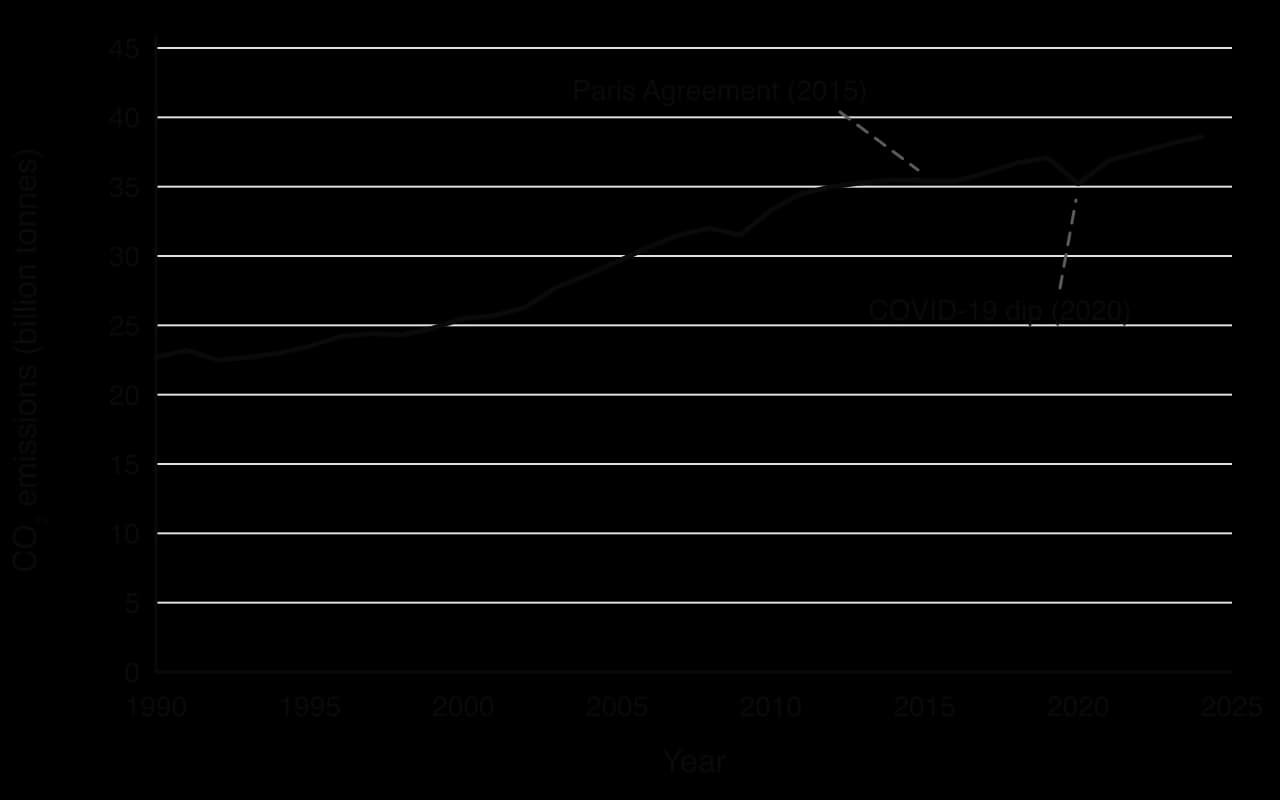
The global picture hides large local differences. Tuvalu, a Pacific island nation of nine islands and atolls, has its highest point only 4.6 metres above sea level, and sea level at its main tide gauge in Funafuti has risen by about 3.9 mm a year, about twice the global average. For Tuvaluans, climate change threatens the land itself, while the country's own emissions are tiny. The same warming brings heatwaves to cities, droughts to farmers and floods to river deltas, and it falls hardest on people with the fewest resources to adapt.
Responses to climate change take two forms. Climate mitigation reduces the causes, mainly by cutting emissions or removing carbon from the atmosphere. Climate adaptation reduces the harm by adjusting to changes that are already happening or cannot be avoided.
Mitigation and adaptation are not alternatives. Without mitigation, the changes become too large to adapt to; without adaptation, people suffer from warming that is already locked in.
Global efforts to address climate change
The main global framework is the Paris Agreement, adopted in 2015 under the United Nations Framework Convention on Climate Change (UNFCCC). Nearly every country is a party. It aims to keep warming well below 2 °C above pre-industrial levels and to pursue efforts to limit it to 1.5 °C, measured over decades rather than single years.
The agreement depends on transparency. Each country sets its own target, called a nationally determined contribution (NDC), and reports its emissions; a global stocktake every five years compares collective progress with the goal. The first stocktake, completed at COP28 in Dubai in 2023, found that the world was not on track. Because no international body can force a country to meet its target, the system relies on accurate data and on pressure from other governments, citizens and investors.
This is where digital systems become central to global climate action. National emissions inventories are compiled from statistics, often with long delays: developed countries report to the UNFCCC more than a year after the year being measured, many developing countries report only every two years, and some report much less often. Independent monitoring using satellites and artificial intelligence aims to close this gap.
Climate TRACE
Climate TRACE (Tracking Real-Time Atmospheric Carbon Emissions) is a coalition of non-profit organisations, technology groups and researchers, including WattTime, Global Energy Monitor, TransitionZero and former US Vice President Al Gore. It launched before the COP26 conference in 2021 and publishes a free inventory of emissions from individual sources: power plants, steel mills, oil and gas fields, ports, farms and more.
The inventory is built by combining several kinds of data, as the flow diagram shows. Satellite images (by 2022, from about 300 satellites operated by NASA, the European Space Agency and private companies) show, for example, the plume of water vapour above a power station's cooling towers or the heat from a steel furnace. Ground sensors and published data, such as company reports and maps, add further evidence. Machine learning models, trained on facilities whose emissions are known, then estimate emissions for facilities that do not report.
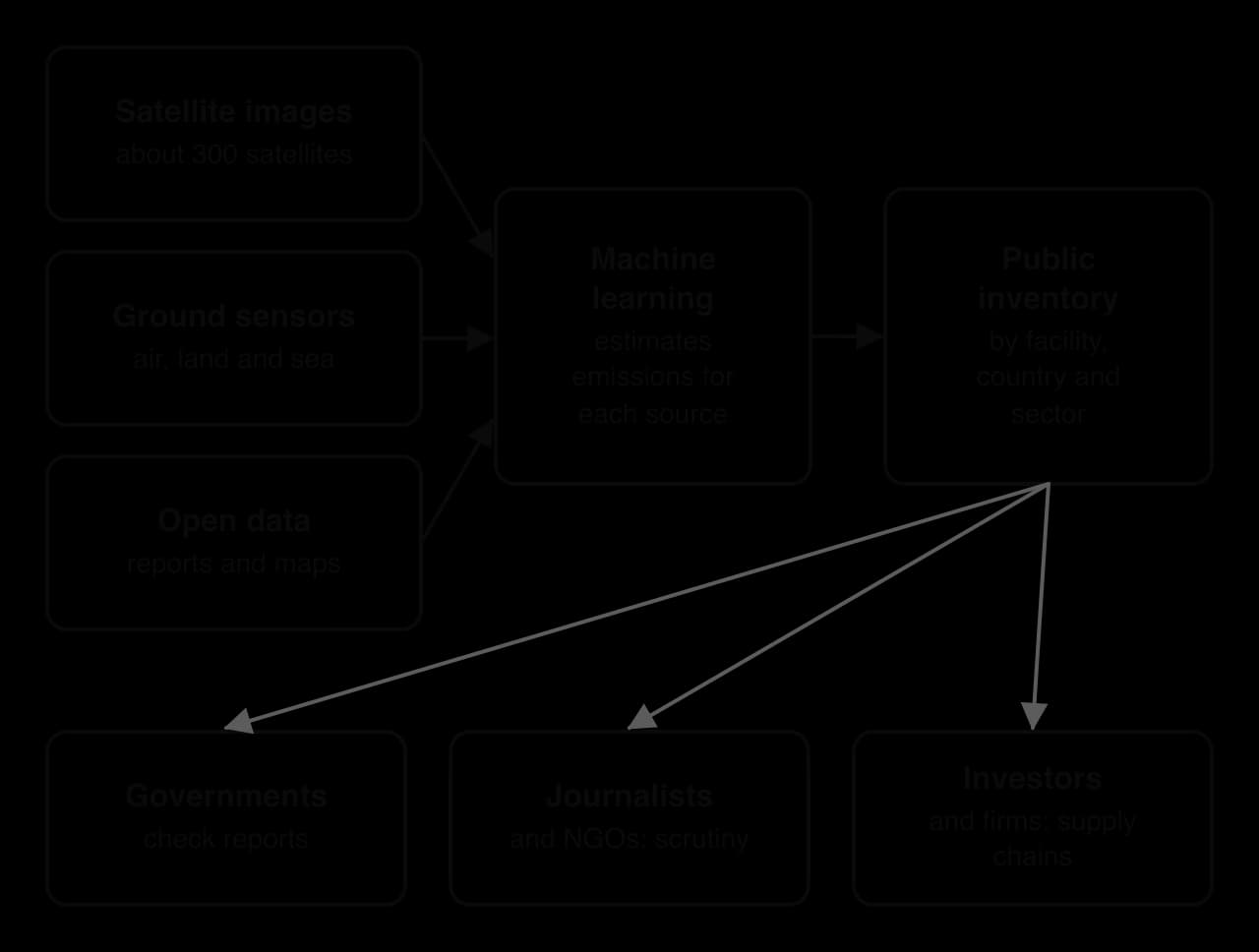
The release presented at COP28 in December 2023 covered more than 350 million assets worldwide, and new data is now released monthly, about two months after the emissions occur.
Other global efforts follow the same pattern of monitoring at planetary scale. Global Forest Watch, run by the World Resources Institute since 2014, publishes near-real-time alerts of tree cover loss from satellite data, since deforestation is a major source of emissions. A study published in Nature Climate Change in 2021 found that forest loss fell in African areas where local users subscribed to the alerts, but found no clear effect in Asia or South America. The finding shows that data alone does not change outcomes; it works where people have the power and resources to act on it.
National, regional and local efforts
Most climate policy is made and carried out by national, regional and local governments, companies and communities, and digital systems appear at each level.
Level | Real-world example | What the digital system does | Type of intervention |
|---|---|---|---|
National (adaptation) | Tuvalu's plan to create a digital replica of the country (announced November 2022) | Records land, culture and heritage in a virtual copy, in case rising seas make the islands uninhabitable | Mitigates the cultural loss of a nation's territory |
National (mitigation) | Great Britain's Demand Flexibility Service (2023) | Uses smart meters to reward households for using less electricity at peak times | Intercedes in the pattern of peak demand |
Regional (mitigation) | The EU's Emissions Trading System | A digital registry tracks every emission allowance held and surrendered by power plants and factories | Intercedes by putting a price on emissions |
Company (mitigation) | Google's carbon-intelligent computing (2020) | Moves flexible computing tasks to hours when the grid has more low-carbon electricity | Mitigates the emissions of data centres |
Tuvalu: a digital nation
On 15 November 2022, Tuvalu's foreign minister Simon Kofe announced that the country would build a digital copy of itself, so that its land, culture and records would be preserved even if the islands were lost to the sea. The announcement was also a political message: it drew international attention to the failure of large emitters to cut emissions fast enough. In 2023 Tuvalu signed the Falepili Union treaty with Australia, which includes a pathway for up to 280 Tuvaluans a year to migrate to Australia, alongside support for coastal adaptation.
Through the concept of identity, the plan raises the question of whether a nation can continue without territory. As an intervention it adapts to climate change rather than mitigating it, and much of its value is symbolic: it gives a small state a louder voice in climate negotiations.
Carbon-aware computing
Data centres can also adapt their own behaviour to reduce emissions. In 2020 Google introduced carbon-aware computing in its data centres. Each day, the system compares a forecast of how carbon-intensive the local electricity grid will be in each hour, supplied by the company Electricity Maps, with Google's forecast of its own power needs. Flexible tasks that do not need to run immediately, such as processing newly uploaded YouTube videos or adding words to Google Translate, are moved to hours when wind and solar power are more plentiful.
Responsible use of resources
The challenge: rising use of materials
Every product and service relies on materials taken from the Earth: metals, minerals, fossil fuels and biomass. According to the UN's 2024 Sustainable Development Goals report, the global material footprint, which counts the raw materials used to meet people's consumption, rose by 71% between 2000 and 2022, from 57.4 to 98.0 billion tonnes. Use is very uneven: people in high-income countries consume far more materials per person than people in low-income countries, while extraction often takes place in lower-income countries.
Digital devices are a small share of this total by weight but a large share of demand for certain critical minerals, such as cobalt, lithium, gallium and rare earth elements. The problem is made worse by short replacement cycles. Smartphones are often replaced after two to three years even when they still work, because of planned obsolescence, the end of software support, batteries that cannot be replaced or marketing that encourages upgrades.
Responsible consumption and production affects every stage of a product's life. Producers decide how durable, repairable and recyclable a product is. Distributors decide how it reaches customers and what happens to unsold stock. Consumers decide how often to buy and what to do with things they no longer want. Digital systems now shape decisions at each stage, sometimes encouraging more consumption and sometimes less.
Responsible consumption, production and distribution
Online shopping often works against responsible consumption: targeted advertising, one-click purchasing, free returns and fast delivery make buying easier. The same platform tools can work the other way. Platforms for refurbished and second-hand goods, such as Back Market for electronics and Vinted for clothing, use search, ratings and secure payment to keep products in use, supporting a circular economy.
Production can be made more responsible through information. A digital product passport is a digital record, usually reached by scanning a QR code, that holds information about a product's materials, origin, repairability and recycling. The EU's Ecodesign for Sustainable Products Regulation (2024) introduces passports product group by product group, and a separate EU law requires a passport for electric-vehicle and industrial batteries from 2027.
The EU's ecodesign and energy label rules for smartphones
A policy can be a digital intervention when it works through digital systems or regulates them. Since 20 June 2025, smartphones and tablets sold in the EU must meet ecodesign rules and carry an energy label. Manufacturers must:
make critical spare parts available to repairers for 7 years after a model stops being sold, and deliver them within 5–10 working days;
provide operating system upgrades for at least 5 years after the last unit of a model is placed on the market;
fit batteries that keep at least 80% of their capacity after 800 charge cycles;
show a repairability class (A to E) and a drop-resistance class on the label, with full details in the EU's EPREL database, reached by scanning the QR code on the label.
These rules intercede in the trend of short device lives by changing what manufacturers must do, rather than asking consumers to behave differently. They also show the concept of power at work: by regulating a market of about 450 million people, the EU changes the design of phones sold worldwide, because few manufacturers want to make separate models for different regions.
Designing for responsible use of shared infrastructures and resources
Shared infrastructure is the physical systems that many people use together: power grids, roads and public transport, water networks and public buildings. Their capacity is limited and costly to expand, so using them responsibly means making better use of the capacity that exists.
Energy: smart grids and demand response
Electricity grids must balance supply and demand every second. Traditionally, supply followed demand: when people switched on kettles and heaters, power stations, often gas-fired, increased output. Wind and solar power cannot be turned up on request, so a grid with more renewable energy works better if demand can follow supply instead. This is the idea behind the smart grid.
The key tool of a smart grid is demand response: paying or asking customers to change when they use electricity. The demand response loop shows how it works. A grid operator forecasts a period of high demand or low renewable supply, sends a signal, and households and businesses respond by delaying flexible uses such as washing, charging electric vehicles or heating water.
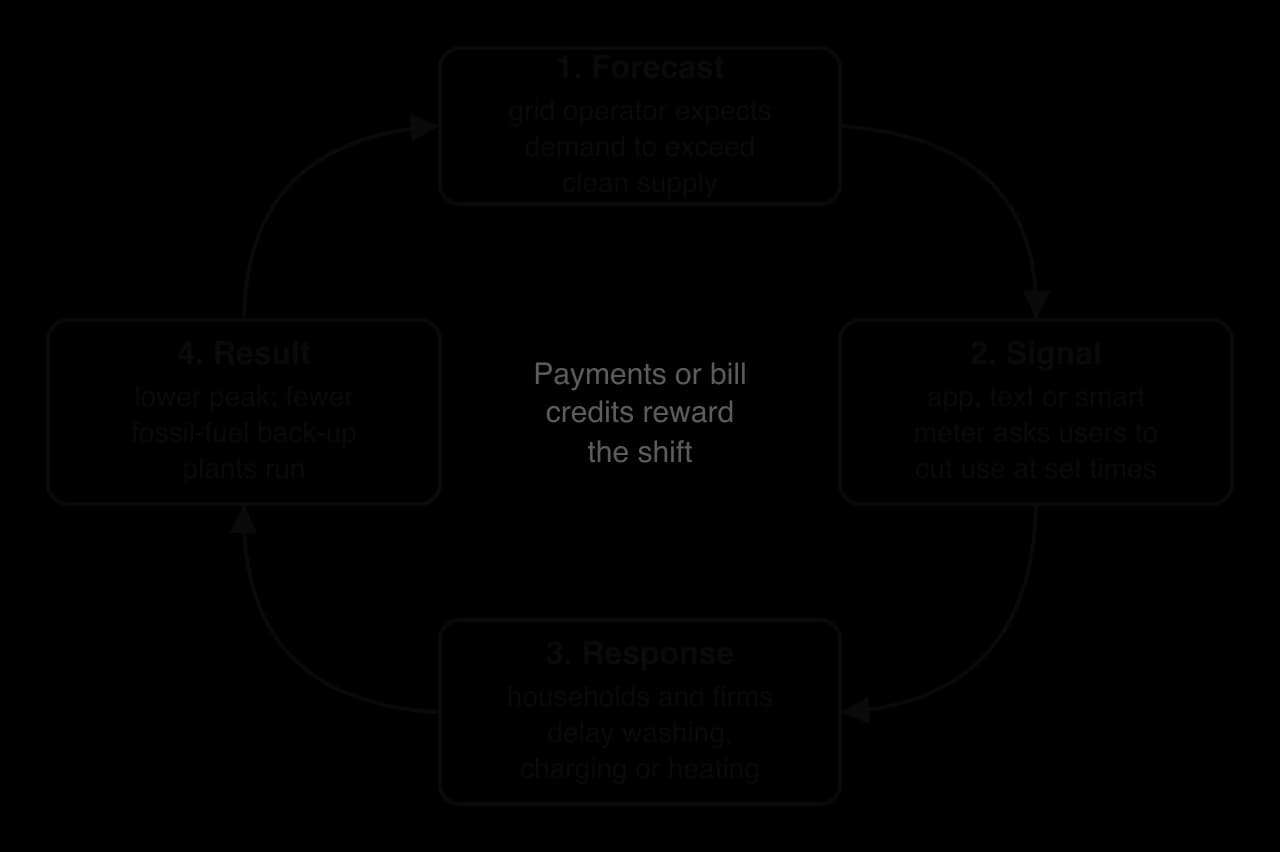
In California, the Emergency Load Reduction Program pays enrolled customers for cutting use during grid emergencies, at $2 per kilowatt-hour saved in 2022, a year in which a September heatwave pushed demand to record levels. In Great Britain, the grid operator launched the Demand Flexibility Service in winter 2022–23, during the energy crisis that followed Russia's invasion of Ukraine. Customers with smart meters, through their electricity suppliers, were offered payments for using less electricity during set one-hour periods on cold evenings, the first national event taking place at 5 p.m. on 23 January 2023.
Transport and built spaces
Transport is the second major shared infrastructure. Platforms for bike sharing, car sharing and ride pooling aim to get more use out of each vehicle and parking space, and results depend on design. Station-based bike sharing in cities such as Paris and Hangzhou has become part of public transport. In contrast, competition between investor-funded dockless bike companies in Chinese cities around 2017 put far more bicycles on the streets than people needed, and many ended up piled in "bike graveyards" when companies failed, the opposite of responsible use of resources.
Built spaces such as offices, schools and homes account for a large share of energy use, mostly for heating, cooling and lighting. Building management systems use sensors to adjust heating, ventilation and lighting to actual occupancy, and smart city platforms try to coordinate these systems across a whole district. A digital twin of a building or city allows planners to test the energy effect of a design before it is built.
Digital payment systems can also widen access to clean energy. M-KOPA, founded in Nairobi in 2011, sold solar home systems to families without a grid connection, paid for in small daily amounts by mobile money, with the system working only while payments continued. Through the concept of power, the remote lock that made the model affordable also gave the company control over customers who fell behind with payments.
 YouTube
Case study: Fairphone
Background
Fairphone is a Dutch company, based in Amsterdam, that designs smartphones intended to be fairer to the people who make them and kinder to the environment. It began as an awareness campaign about conflict minerals in phones and became a social enterprise in January 2013, founded by Bas van Abel, Tessa Wernink and Miquel Ballester. It became a certified B Corporation, a label for companies that meet standards of social and environmental performance, in 2015.
The company's approach targets the challenge of responsible use of resources directly. Most of a smartphone's environmental impact comes from mining and manufacturing, so the most effective action is to make each phone last longer and to make its materials fairer and more recycled. In 2017 van Abel acknowledged that a completely fair phone was impossible to make and that "fairer" was the honest description.
Model | Released | Key change |
|---|---|---|
Fairphone 1 | December 2013 | Conflict-free tin and tantalum from the Democratic Republic of the Congo; not modular |
Fairphone 2 | December 2015 | First modular design: display, battery and cameras can be replaced by the owner |
Fairphone 3 and 3+ | 2019 and 2020 | Modules held by standard screws; Fairphone 3 owners can fit the 3+'s newer camera modules |
Fairphone 4 | September 2021 | Fairtrade-certified gold; five-year warranty |
Fairphone 5 | August 2023 | Chip designed for industrial use, chosen because it is supported for longer; eight years of security updates |
Fairphone 6 | June 2025 | €599 at launch; five-year warranty and eight years of security updates; followed by the Fairphone 6+ in August 2026 |
Source: Fairphone company announcements and reports, compiled by Wikipedia, 2026.
How the digital system works
The Fairphone is an ordinary smartphone running Android, but its hardware is designed around modular design. Parts that most often fail, such as the battery, screen, cameras, charging port and speakers, are separate modules that an owner can remove with a single screwdriver and replace with a spare bought from the company's online shop. The repair guide iFixit has given every Fairphone except the first model a repairability score of 10 out of 10.
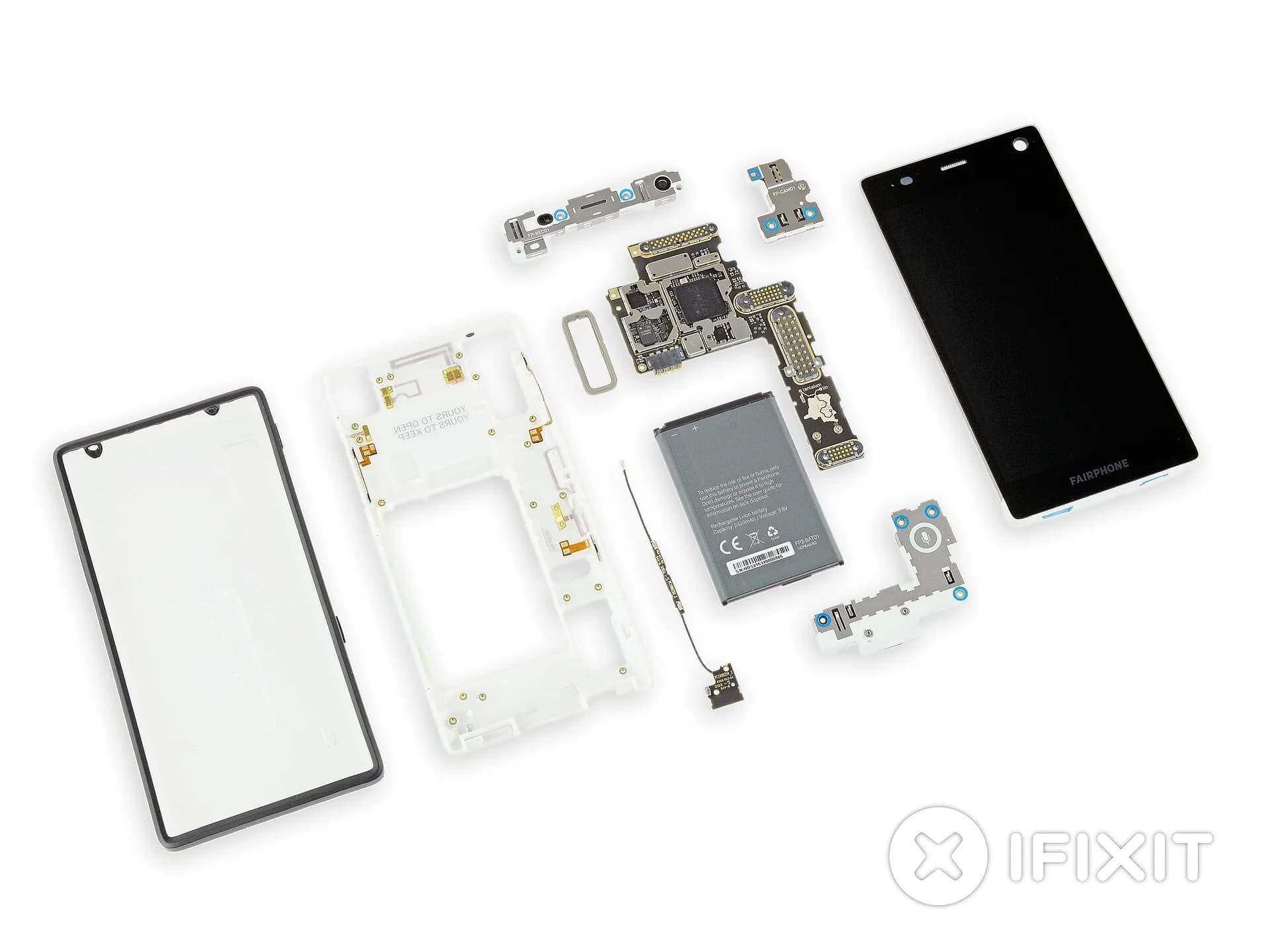
Hardware that can be repaired is only useful if the software keeps working. Phones usually become obsolete when the manufacturer stops sending security updates, because banking and messaging apps eventually refuse to run on an insecure system. Most Android phones depend on the chip manufacturer to support new versions of the operating system, and chip makers usually stop after a few years. For the Fairphone 5, the company chose a Qualcomm chip designed for industrial Internet of Things devices, which has a much longer support period than consumer chips, so that it could promise eight years of security updates.
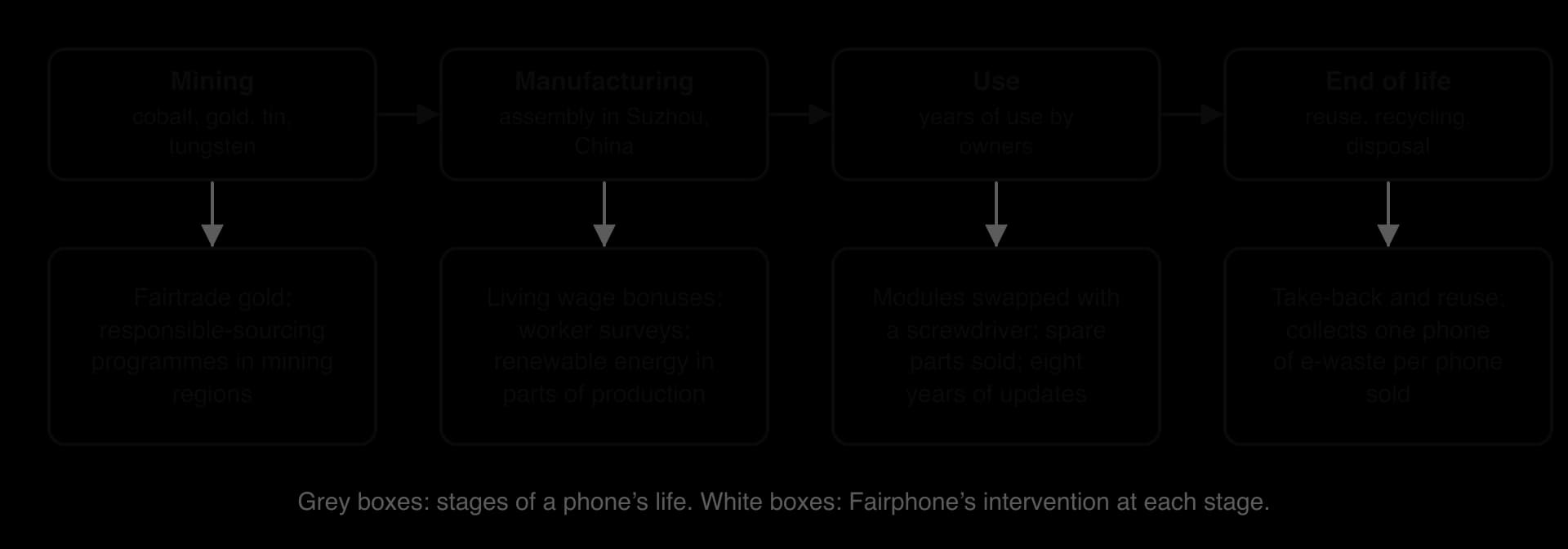
Fairphone's interventions extend along the whole value chain of the phone, as the diagram shows. At the mining stage it buys Fairtrade-certified gold and supports programmes for responsible sourcing of other materials. At the assembly stage, carried out by the contract manufacturer Hi-P in Suzhou, China, it pays living wage bonuses to workers. At the end of a phone's life it runs a take-back programme and pays for the collection of e-waste.
Impacts and implications for people and communities
The company's 2025 impact report gives the following claims, which come from the company itself and have not been independently audited in full:
the Fairphone 6 contains more than 50% fair and recycled materials by weight;
almost every product it sells is "e-waste neutral", meaning it pays for the collection and recycling of an equivalent amount of e-waste, mostly in countries without formal e-waste systems; 30 tonnes of e-waste were collected in 2025;
USD 1.25 million has been paid in living wage bonuses to supplier workers since 2019;
the Fairphone 6 has a life-cycle carbon footprint of 29 kg CO₂e, which the company reports as 30% lower than before;
longer device lives avoided about 2,083 tonnes of CO₂e in 2025, by the company's own estimate.
The affected people and communities differ in what they gain:
Stakeholder | Impacts and implications |
|---|---|
Owners | A phone that can be repaired cheaply and updated for years; but a higher price for the specification than mainstream mid-range phones, and fewer shops that sell it |
Workers in mines and factories | Higher pay for some workers and improved conditions in some supplier factories; but bonuses reach a few thousand people in a global industry employing millions |
Communities near informal e-waste sites | Collection programmes remove some e-waste from informal processing; but 30 tonnes a year is very small against global e-waste of 62 billion kg in 2022 |
Other manufacturers | A working example that repairable, long-supported phones are possible, which weakens industry arguments against regulation |
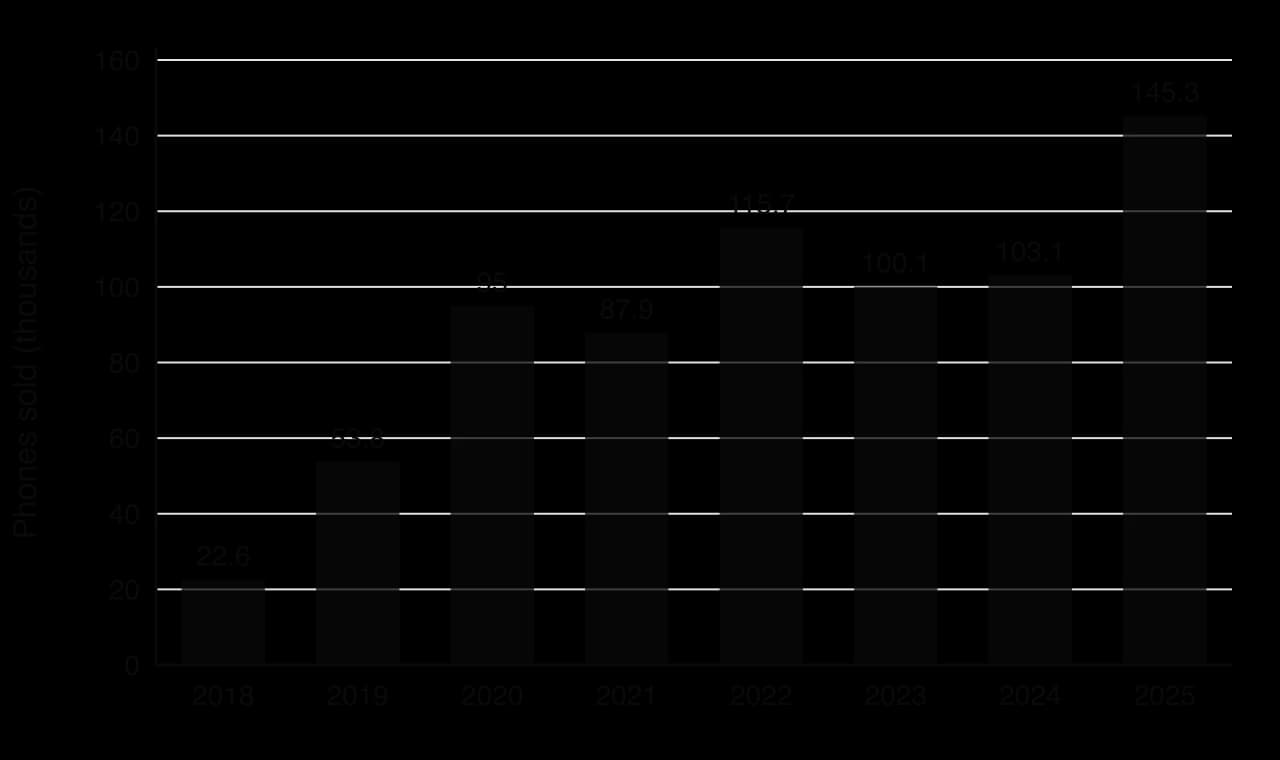
The scale of these impacts depends on sales. The bar chart shows Fairphone's annual sales, which reached a record of about 145,000 phones in 2025. In 2024 about 1.24 billion smartphones were shipped worldwide, so Fairphone's 103,000 phones that year were less than one in ten thousand.
Analysis through concepts
Through the concept of change, Fairphone shows both continuity and discontinuity. Its phones work like any other Android phone, so users do not need to change how they use them. What changes is the relationship between owner and device: from a sealed product replaced every few years to a product maintained, like a bicycle, for as long as possible. Its influence on the wider market is a slower process of change. Features that Fairphone offered first, such as user-replaceable batteries and long software support, now appear in EU law.
Through the concept of power, Fairphone is a small company in a market dominated by Apple, Samsung and large Chinese manufacturers, and it controls very little of its supply chain directly. Its power is mainly the power of example and of advocacy. It has argued for right-to-repair rules in the EU, and its existence makes it harder for larger companies to claim that repairable phones cannot be built. It also depends on more powerful actors, such as chip makers, whose decisions about software support it cannot control.
Evaluation using the HL framework
Managing pollution and waste
The challenge at local and global levels
Pollution and waste are the outputs that natural systems cannot easily absorb. The World Health Organization estimates that air pollution causes millions of early deaths a year, and most of the world's people breathe air that exceeds its guidelines. Methane, released by oil and gas operations, landfills and farming, is a powerful greenhouse gas as well as a pollutant.
Waste follows the same uneven pattern as resource use. According to the Global E-waste Monitor 2024, the world generated 62 billion kg of e-waste in 2022, but only 22.3% was documented as properly collected and recycled. Generation is rising about five times faster than documented recycling, and the share recycled is expected to fall to about 20% by 2030. Recycling of e-waste meets only about 1% of demand for rare earth elements, so most of these materials are still mined.
Food waste is another major stream, and one that digital systems increasingly address. The UN estimates that 1.05 billion tonnes of food, about 19% of food available to consumers, was wasted in 2022, 60% of it in households. Food loss and waste cause an estimated 8–10% of global greenhouse gas emissions, because the land, water and energy used to produce wasted food are lost with it.
At the local level, the effects are felt by specific communities: people living near landfills, informal recycling sites, mines and busy roads. These are often lower-income communities with the least influence over where pollution goes, which makes managing pollution and waste a question of environmental justice as well as of efficiency.
Monitoring, prevention and reduction
The three supporting areas form an order of preference that matches the waste hierarchy from the environmental context. Pollution monitoring provides the evidence. Waste prevention avoids pollution and waste being created at all, and waste reduction cuts the amount or harm of what is still produced.
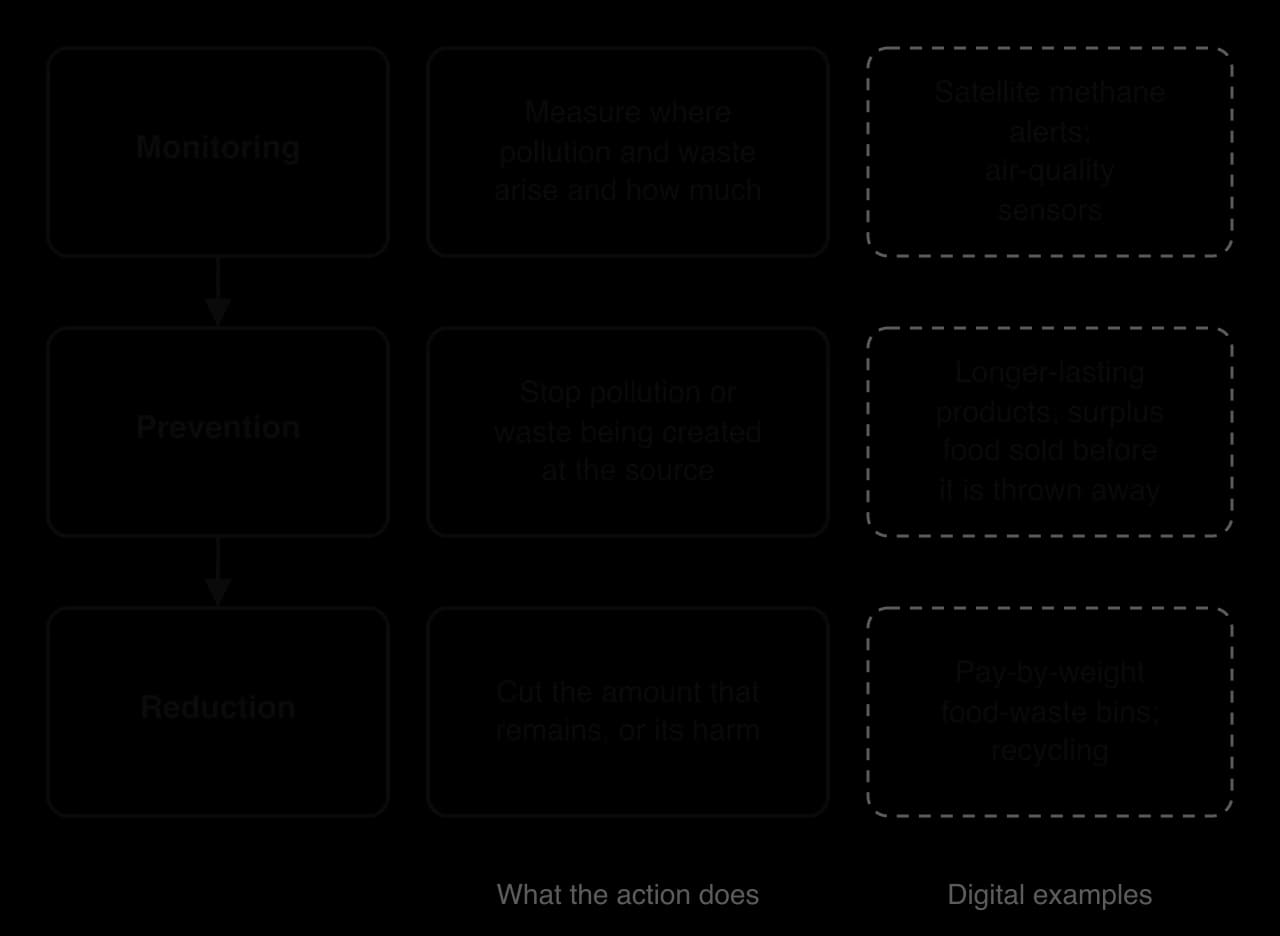
The difference matters for evaluation. An intervention that helps people recycle more phones is useful, but one that keeps each phone in use for twice as long prevents half of the waste altogether, along with the mining and manufacturing behind it.
Monitoring: satellite detection of methane
Methane leaks from oil and gas facilities were long poorly measured, because operators reported estimates rather than measurements. Satellites can now detect large methane plumes from space. In 2021 the UN Environment Programme (UNEP) launched the International Methane Emissions Observatory, and its Methane Alert and Response System (MARS) sends free alerts to governments and companies when satellites detect a major emission event. MARS combines data from more than a dozen satellites, notifies the relevant authorities, and then uses later satellite data to check whether the emission has stopped. UNEP reports that MARS has enabled and confirmed the mitigation of more than 40 major methane sources.
Satellite monitoring shares a limitation with Climate TRACE and Global Forest Watch: data does not act on its own. Early reports from UNEP indicated that only a small share of alerts received a response, which shows that monitoring changes outcomes only when governments and companies have the will and the regulation to respond. At the local level, low-cost air-quality sensors, such as the AirQo network developed at Makerere University in Uganda since 2015, perform a similar role for cities that have few official monitoring stations.
Prevention: Too Good To Go
Too Good To Go is an app, founded in Copenhagen in 2015, that lets shops, bakeries and restaurants sell surplus food at the end of the day at a reduced price. Customers buy a "surprise bag" whose exact contents they cannot choose, and collect it during a set time window. The app uses location data to show nearby offers and handles payment and collection.
The service has grown quickly. According to company figures, it sold about 0.5 million meals in 2016 and about 135 million in 2024, and it operates in 17 European countries as well as the USA, Canada, Australia, New Zealand and Japan. It reported its first net profit in 2023.
Reduction: pay-by-weight food waste in South Korea
South Korea has one of the most developed food waste systems in the world. Since 2005, sending food waste to landfill has been banned, and since 2013 households have paid for food waste according to how much they throw away, most often by buying special prepaid bags. In many apartment blocks, residents use bins with radio-frequency identification (RFID): a resident taps an identification card, the bin weighs the food waste deposited, and the charge is added to the household's bill. About 6,000 of these bins were installed in Seoul, and the city reported that food waste fell by 47,000 tonnes over six years. Collected food waste is turned into animal feed and fertiliser, and the share recycled has been reported at about 95%, compared with 2% in 1995.
The RFID bins work as a feedback system. Each household pays for its own waste, so it has a direct reason to waste less; the data also lets local governments see how much waste comes from each building. Through the concept of systems, the bins are one part of a larger system that includes the landfill ban, mandatory separation and recycling plants, and their success depends on all parts working together.
The pay-by-weight model raises questions of equity and ethics. Charging by weight places higher costs on large households, which may be poorer, and continuous measurement of each household's waste is a form of monitoring that some residents may find intrusive. The system has been widely accepted in South Korea, where it was introduced gradually alongside public campaigns, but the same design might be less acceptable where trust in government data collection is lower.
Smaller, experimental interventions, such as an augmented reality app that shows the waste implications of purchases or open-source designs for small plastic-recycling machines (the Precious Plastic project), suit school inquiries well. They should be judged against the same criteria as large programmes: whom they reach, what they cost and what they actually prevent.
Recommending steps for future action
Recommendations are the final step of the framework, and the step that sustainability questions most often ask for. A strong recommendation is specific (who should do what), justified (which weakness of the intervention it addresses, using evidence) and aware of trade-offs (what it might cost or whom it might exclude).
Weakness found in evaluation | Typical recommendation | Trade-off to consider |
|---|---|---|
Benefits reach only well-off or connected users (equity) | Provide access without smartphones or bank cards; subsidise devices or meters | Higher cost; may need public funding |
Data is not trusted or not acted on (acceptability) | Publish methods and uncertainty; involve affected communities and governments | Slower process; risk of weakening independence |
Efficiency gains outweighed by growth (cost, rebound effect) | Combine efficiency with absolute limits, such as caps or carbon prices | Political resistance; higher prices for users |
Claims cannot be checked (ethics, greenwashing) | Independent audits; standard measures across companies | Cost of auditing for small firms |
Depends on a few powerful suppliers (feasibility) | Regulation that applies to the whole supply chain | Slow to agree; may not reach countries outside the regulating region |
Exam practice
Paper 3 presents an intervention that students have not seen before and asks four questions of rising demand, ending with recommendations for future action.
Self-check
- To do:
I can define sustainable development and the Sustainable Development Goals, and name the SDGs most closely linked to this challenge.
- To do:
I can explain how digital systems both contribute to and help address sustainable development, using real data such as Google's emissions.
- To do:
I can explain the rebound effect and greenwashing, and why life-cycle assessment is needed to judge digital interventions.
- To do:
I can recall the four steps, four types of intervention and six evaluation criteria, and apply them to sustainability interventions.
- To do:
I can distinguish climate mitigation from climate adaptation, and both from the intervention type "mitigates".
- To do:
I can describe the Paris Agreement and explain why transparency makes digital monitoring important to it.
- To do:
I can evaluate Climate TRACE or another global monitoring intervention and recommend a step for future action.
- To do:
I can describe national, regional and local climate efforts that involve digital systems, such as Tuvalu's digital nation plan and carbon-aware computing.
- To do:
I can explain responsible consumption, production and distribution, with examples such as the EU's smartphone ecodesign rules and digital product passports.
- To do:
I can explain how smart grids and demand response support responsible use of shared infrastructure, and evaluate the Demand Flexibility Service.
- To do:
I can evaluate Fairphone with the six criteria and analyse it through at least two concepts.
- To do:
I can distinguish pollution monitoring, waste prevention and waste reduction, with a digital intervention for each.
- To do:
I can evaluate Too Good To Go and South Korea's pay-by-weight food waste bins.
- To do:
I can write a recommendation that says who should act, what they should do, why, and what trade-off it creates.
Carry on with 5.3 in Augment
With a free account, Augment remembers where you stopped and what you have practiced.