Notes on A2.1 Origins of cells
All cells alive today come from pre-existing cells, in an unbroken line of descent stretching back billions of years. At some point, though, the first cells must have formed from non-living matter, and explaining how this happened is one of the largest unsolved problems in biology.
No one observed the origin of life, and the conditions of the early Earth no longer exist. Hypotheses about it are built from evidence in chemistry, geology and the genomes of living organisms, and they are tested with laboratory models. The evidence points to a sequence of stages, from simple molecules to self-replicating RNA, to compartments, to the first cells and eventually to the last common ancestor of all life today.
Conditions on the early Earth
The Earth formed about 4.54 billion years ago. For its first few hundred million years it was very different from the planet today. Evidence from the oldest minerals, from meteorites and from models of planet formation suggests these conditions:
Little or no free oxygen. Oxygen gas (O₂) did not build up in the atmosphere until about 2.4 billion years ago, after photosynthesising organisms had been releasing it for a long time.
A reducing atmosphere (at least in places), possibly containing methane (CH₄), ammonia (NH₃), hydrogen (H₂) and water vapour, together with carbon dioxide (CO₂) and nitrogen (N₂) released by volcanoes. A reducing atmosphere tends to donate electrons or hydrogen to other substances, which favours the building of complex carbon compounds.
No ozone layer, because ozone (O₃) forms from oxygen. Intense ultraviolet (UV) radiation reached the surface.
High temperatures and frequent volcanic activity.
Frequent lightning, providing electrical energy.
Bombardment by asteroids and meteorites, which delivered energy and probably some carbon compounds and water.
Liquid water in oceans by about 4.4 billion years ago, according to evidence from the oldest known zircon crystals.
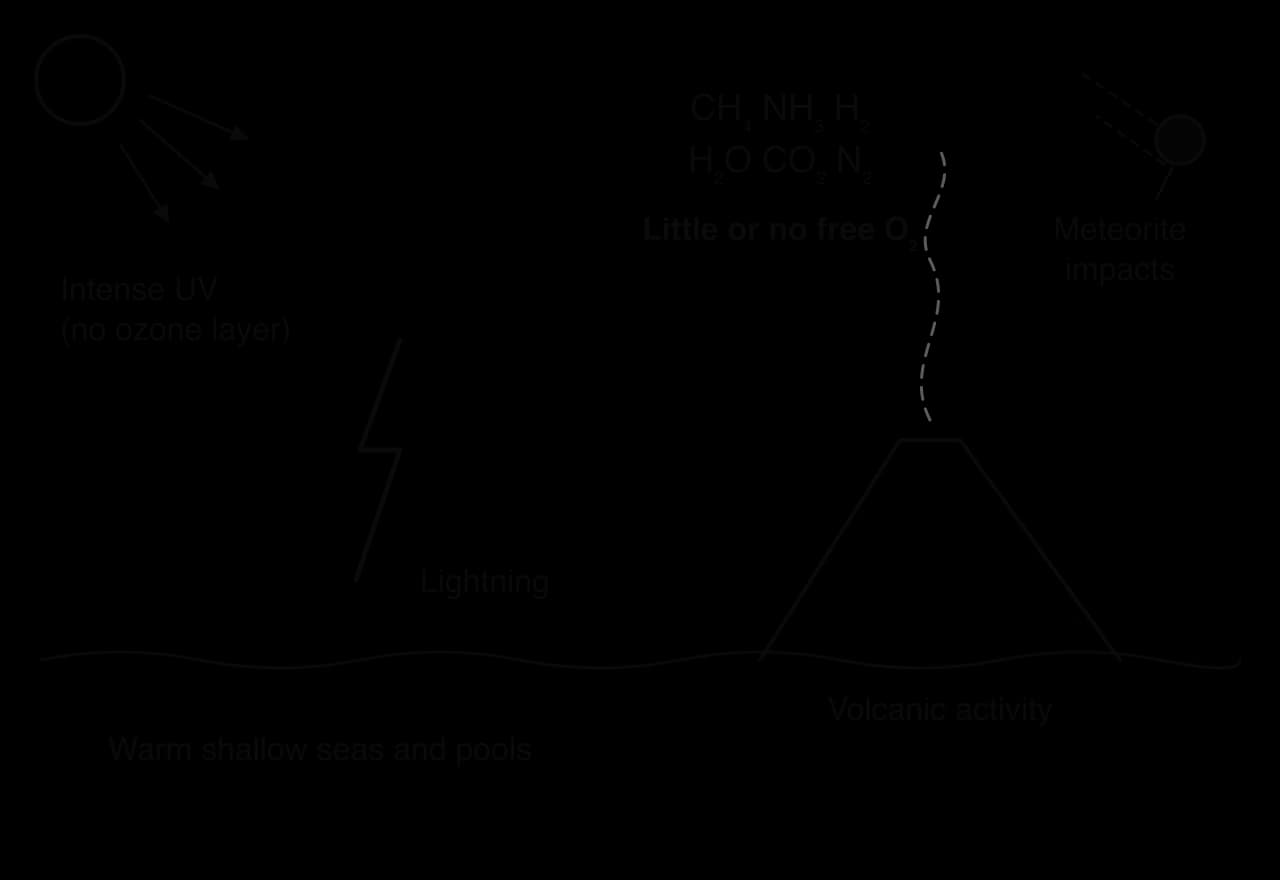
These conditions matter because complex carbon compounds do not form spontaneously from simple gases unless energy is supplied, and they are quickly destroyed again by oxygen. On the early Earth, energy was plentiful and oxygen scarce. Under such conditions, simple molecules such as amino acids, sugars and the bases of nucleic acids could have formed and accumulated in the oceans, in pools or on mineral surfaces. This process, in which simple carbon compounds form and then combine into larger ones without living organisms, is called chemical evolution.
The exact composition of the early atmosphere is still debated. Many geochemists now think it was less strongly reducing than once assumed, with more CO₂ and N₂ and less methane and ammonia. Reducing conditions may have existed locally, for example near volcanoes or hydrothermal vents, even if the atmosphere as a whole was only mildly reducing.
Cells as the smallest units of self-sustaining life
Explaining how life began requires a working definition of "living", but there is no single, simple definition. Instead, living things are recognised by a set of functions that they all carry out:
Function of life | What it involves |
|---|---|
Metabolism | All the chemical reactions in the organism, including cell respiration to release energy |
Nutrition | Obtaining food or making it, to provide energy and materials |
Growth | An irreversible increase in size |
Response | Reacting to changes in the environment |
Excretion | Removing the waste products of metabolism |
Homeostasis | Keeping internal conditions within limits |
Reproduction | Producing offspring, sexually or asexually |
The smallest structure that can carry out all of these functions on its own is the cell. A single bacterium takes in nutrients, carries out thousands of metabolic reactions, grows, responds to its surroundings, controls its internal environment and divides. Parts of cells, such as a ribosome or a mitochondrion, cannot survive and reproduce independently. Cells are therefore described as the smallest units of self-sustaining life.
Why viruses are not considered living
Viruses have genes made of DNA or RNA and can evolve by natural selection, which are features of living things. However, a virus has no metabolism of its own: it makes no ATP, synthesises no proteins and cannot grow. A virus can reproduce only after it has entered a host cell, by using the host's ribosomes, enzymes and energy. Outside a host cell it is an inert particle. Because viruses depend completely on cells and are not self-sustaining, they are not considered living (A2.3 Viruses).
The challenge of explaining the spontaneous origin of cells
Even the simplest cell alive today is extremely complex. It has a membrane, a genome of hundreds of genes, ribosomes and hundreds of enzymes. A structure like this could not have assembled by chance in a single step. The spontaneous origin of cells, or abiogenesis, must instead have happened through a series of intermediate stages, each building on the one before:
Formation of simple carbon compounds such as amino acids, sugars and nucleotide bases from inorganic molecules.
Catalysis. Reactions that join monomers into polymers, such as condensation reactions, are very slow without catalysts. Early catalysts may have been mineral surfaces (clays, iron and nickel sulfides) and later RNA molecules acting as enzymes.
Self-replication. A molecule that can make copies of itself allows information to be passed on and copies to be selected. Heredity of this kind is needed before natural selection can begin.
Self-assembly. Some molecules arrange themselves spontaneously into larger structures without being directed, as fatty acids do when they form membranes.
Compartmentalisation. Enclosing self-replicating molecules inside a membrane keeps them and their products together and separates the inside from the environment, producing a protocell.
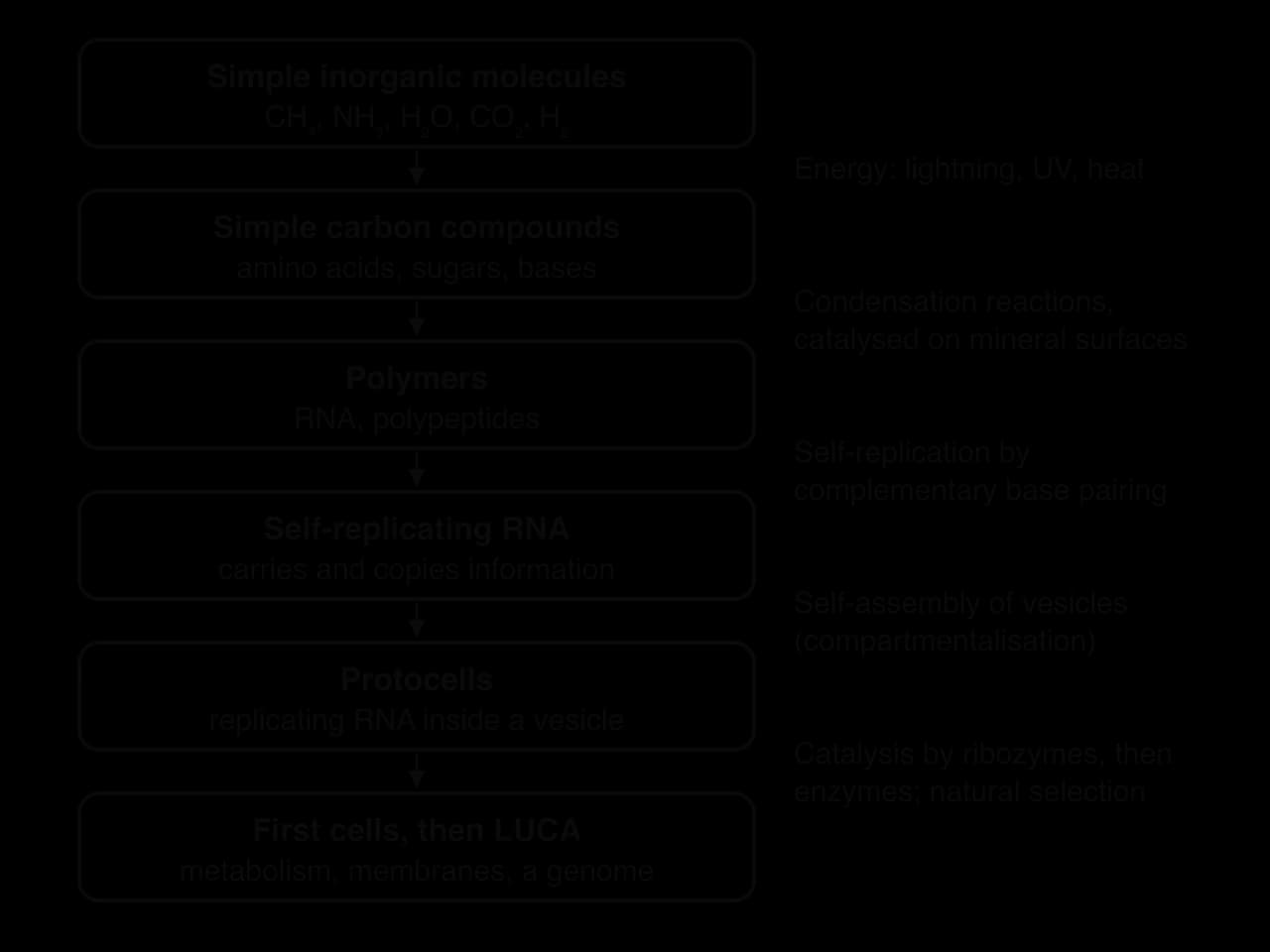
Each stage is a hypothesis that can be investigated, and there is experimental evidence for several of them: carbon compounds form in the Miller–Urey experiment, fatty acids form vesicles spontaneously, and RNA molecules can catalyse reactions. Much less is known about how these separate pieces came together.
Evidence for the origin of carbon compounds: the Miller–Urey experiment
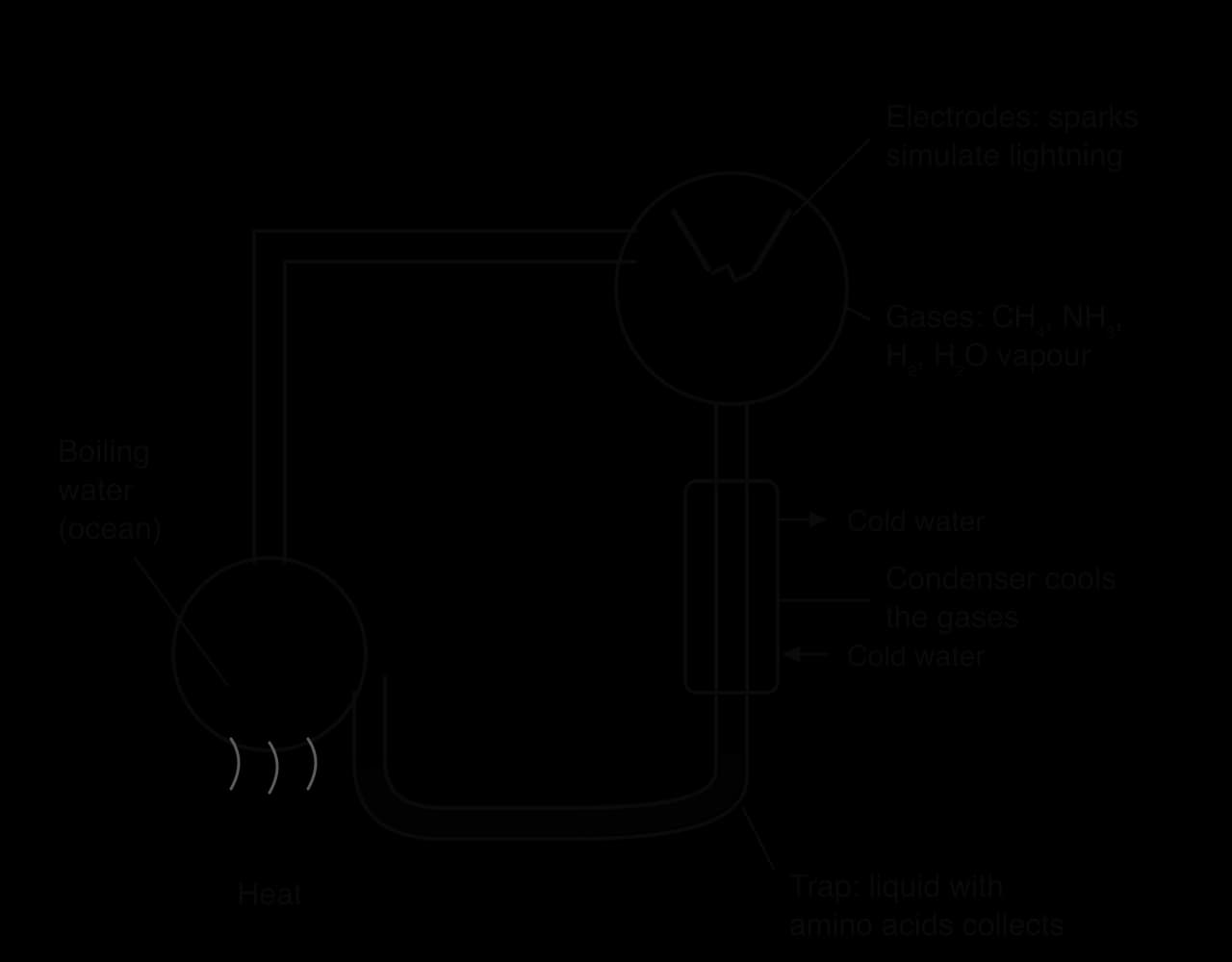
In 1953, Stanley Miller, working with Harold Urey at the University of Chicago, tested whether carbon compounds could form spontaneously under conditions thought to resemble the early Earth. The Miller–Urey experiment used a closed apparatus of glass flasks and tubes.
Method
Water in a flask was boiled, to represent the ocean and to supply water vapour.
The water vapour mixed with methane, ammonia and hydrogen, the gases then thought to form the early atmosphere.
The gases passed through a chamber where electrodes produced continuous electrical sparks, to simulate lightning.
A condenser cooled the gases, so that water and any compounds dissolved in it condensed and collected in a trap, as rain falls into the sea.
The liquid circulated back to the boiling flask, and the apparatus ran continuously for about a week.
Results
Within days, the water turned pink and then deep red-brown. Analysis by chromatography showed that it contained several amino acids, including glycine and alanine, as well as other carbon compounds. The experiment showed for the first time that the building blocks of proteins can form from simple inorganic molecules, without living organisms, when energy is supplied.
After Miller died in 2007, his colleagues found boxes of dried samples from his experiments of the 1950s. Re-analysis with modern, much more sensitive methods found 22 amino acids in samples from a "volcanic" version of the apparatus, in which steam was sprayed into the spark chamber, many more than Miller had originally reported, so the original experiments had produced more than the methods of the 1950s could detect.
Evaluating the experiment as a model
The apparatus is a model: a simplified representation of the natural conditions on the early Earth. Like all models, it has strengths and limitations.
Strengths | Limitations |
|---|---|
It tested a clear hypothesis under controlled conditions, and the results have been repeated many times. | The early atmosphere may not have been as strongly reducing as the gases used; with more CO₂ and N₂, far fewer amino acids form. |
It showed that amino acids can form spontaneously, which supports chemical evolution. | Continuous sparks in a small flask concentrate energy far more than natural lightning did. |
Later versions with other gas mixtures and energy sources (UV, heat) also produced carbon compounds. | It produced monomers only. It did not produce polymers, self-replicating molecules or anything like a cell. |
Other sources of carbon compounds have also been found. Meteorites such as the Murchison meteorite, which fell in Australia in 1969, contain dozens of amino acids, so some of the building blocks of life may have been delivered from space.
Spontaneous formation of vesicles from fatty acids
A cell is separated from its surroundings by a membrane. The first membranes probably formed by self-assembly of simple amphipathic molecules, such as fatty acids. An amphipathic molecule has a hydrophilic part and a hydrophobic part. In a fatty acid, the carboxyl group (–COOH, or –COO⁻ when it loses a hydrogen ion) is hydrophilic and the long hydrocarbon tail is hydrophobic.
When enough fatty acids are present in water, their hydrophobic tails cluster together away from the water, while their hydrophilic heads face the water. No energy input or enzyme is needed, because this arrangement is the most stable one. The fatty acids form a double layer, a bilayer, with the tails in the middle. A flat bilayer has exposed edges where the tails would touch water, so the bilayer curves round and closes up into a hollow sphere, a vesicle, with water inside and outside.
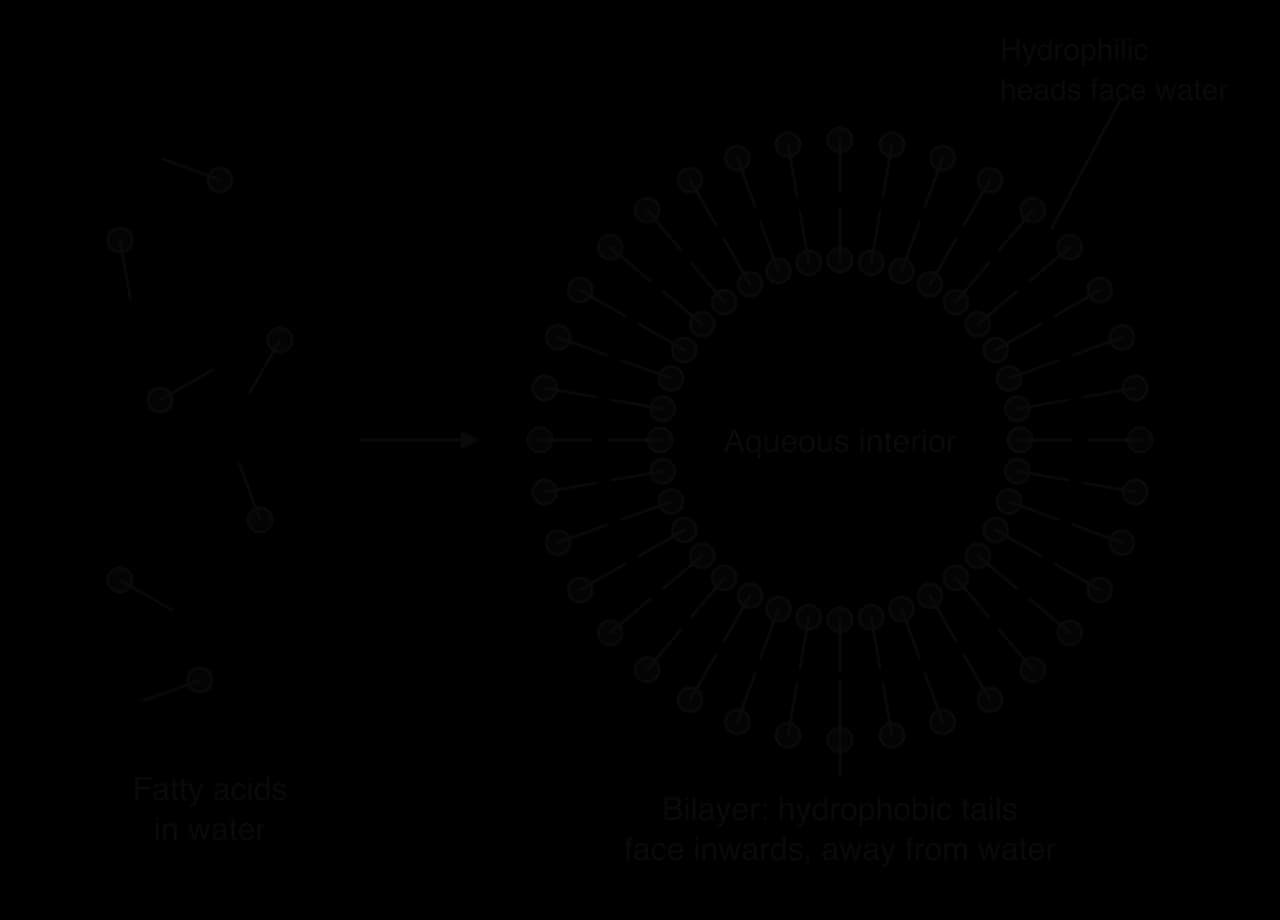
The formation of vesicles was an essential step towards cells, because a vesicle creates a compartment. The interior can hold a different mixture of molecules from the outside. Molecules made inside, such as RNA, stay together instead of drifting apart, so a self-replicating molecule benefits from its own products. Vesicles also provide a unit that can grow and divide, and on which natural selection can act.
Experiments support this step. Martin Hanczyc, Shelly Fujikawa and Jack Szostak showed in 2003 that montmorillonite, a clay mineral that would have been common on the early Earth, speeds up the formation of fatty acid vesicles. The clay particles, often with RNA bound to them, became trapped inside the vesicles, and the vesicles could grow by taking in more fatty acids and divide when forced through small pores. Fatty acid membranes are also more permeable than modern phospholipid membranes, so nucleotides could have entered from outside to supply the RNA inside.
RNA as the presumed first genetic material
In modern cells, DNA stores genetic information and proteins (enzymes) catalyse reactions, including the reactions that copy DNA and make proteins. This creates a "chicken and egg" problem for the origin of life: DNA cannot be copied without enzymes, but enzymes cannot be made without the information in DNA, so neither could have come first on its own.
RNA offers a solution, because it can do both jobs:
RNA stores information. Like DNA, it has a sequence of bases, and it can act as a template: free nucleotides pair with it by complementary base pairing, so a copy (and then a copy of the copy) can be made. RNA viruses show that RNA alone can carry genetic information.
RNA catalyses reactions. Some RNA molecules fold into specific three-dimensional shapes that act as catalysts. These are ribozymes, first discovered in the 1980s by Thomas Cech and Sidney Altman, who shared the 1989 Nobel Prize in Chemistry. Ribozymes made in the laboratory can join nucleotides together, and some can copy short stretches of RNA.
The hypothesis that early life used RNA both as genetic material and as catalyst, before DNA and proteins took over these roles, is the RNA world hypothesis.
The ribosome as a ribozyme
Strong evidence for the RNA world comes from the ribosome, the structure that makes proteins in every cell. In 2000, the structure of the large ribosomal subunit was determined in atomic detail. It showed that the site where peptide bonds are formed is made entirely of ribosomal RNA (rRNA), with no protein close enough to take part in the reaction. The central reaction of protein synthesis is therefore catalysed by RNA. The 2009 Nobel Prize in Chemistry was awarded to Venkatraman Ramakrishnan, Thomas Steitz and Ada Yonath for this work on ribosome structure.
This makes sense if proteins were first made by an RNA machine, in an RNA world, and the ribosome is a surviving relic of that world. Other traces remain too: many coenzymes, such as NAD⁺ and coenzyme A, contain nucleotides, and ATP, the energy currency of every cell, is an RNA nucleotide.
Why DNA later took over
RNA is less stable than DNA. The –OH group on carbon 2′ of ribose makes RNA strands break more easily, and a single strand is more exposed to damage than a double helix. DNA, with deoxyribose and two strands, is a more stable long-term store of information. In addition, because each DNA strand has a complementary partner, damage to one strand can be repaired using the other as a template. Proteins, built from 20 different amino acids, are more versatile catalysts than RNA. Once these molecules appeared, organisms that used DNA for storage and proteins for catalysis would have been at an advantage, and RNA was left with its present roles in between.
The Stated Clearly animation follows chemical evolution from simple molecules to self-replicating RNA.
 YouTube
Evidence for a last universal common ancestor
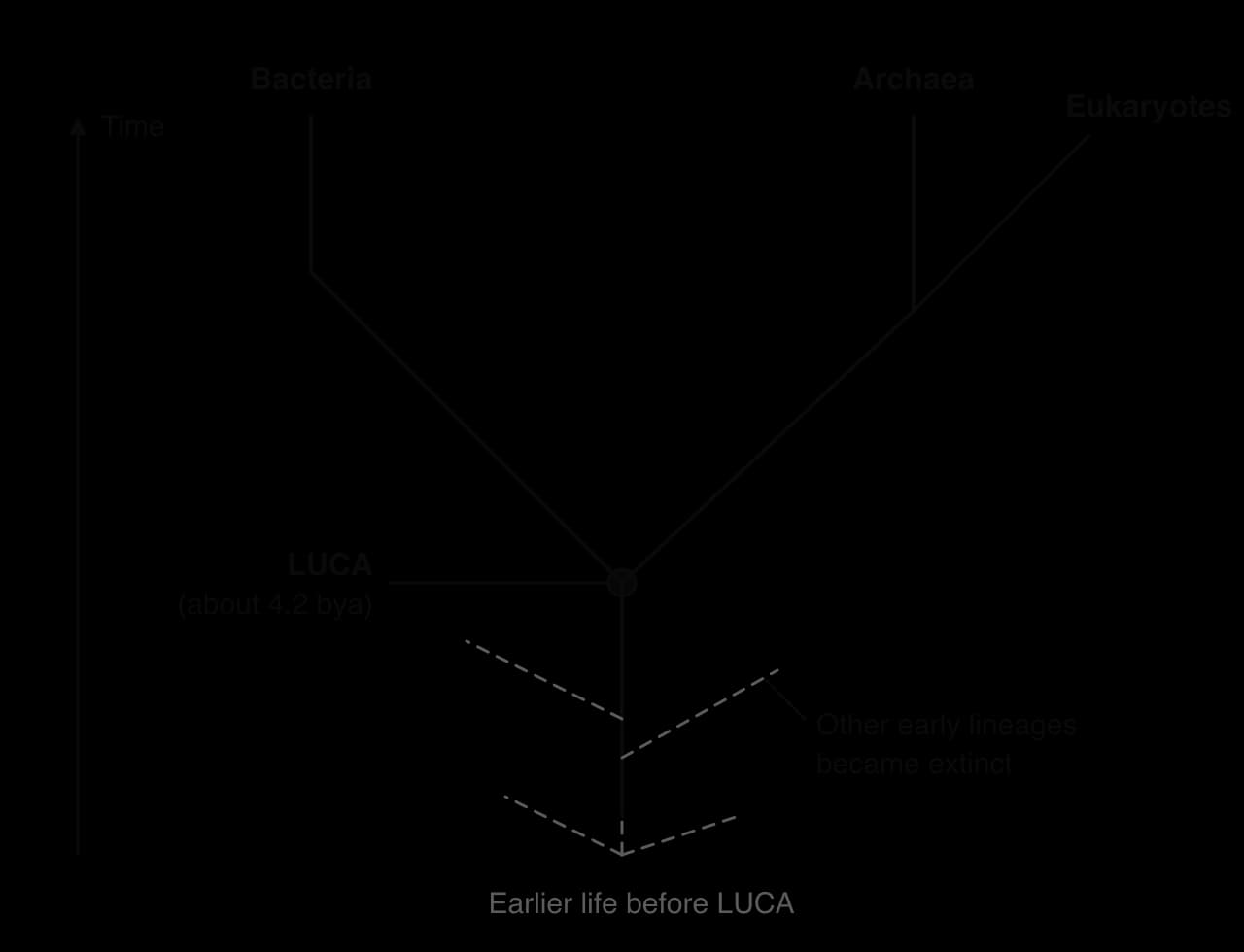
All living organisms share some fundamental features. They are made of cells with a plasma membrane, store genetic information in DNA, use RNA and ribosomes to make proteins, read the same genetic code, use the same 20 amino acids and use ATP as an energy carrier. The simplest explanation is that all of them are descended from a single ancestral population that already had these features. This population is the last universal common ancestor, or LUCA.
LUCA was not the first cell. Life had been evolving for some time before LUCA, so LUCA was already a fairly complex organism. Other lineages of early cells probably existed at the same time, but they left no surviving descendants and became extinct. Some genes from those lineages may survive in modern organisms through horizontal gene transfer, but every living organism traces its ancestry back to LUCA.
Evidence for LUCA
The universal genetic code. The same codons code for the same amino acids in almost all organisms (A1.2 Nucleic acids). An arbitrary code shared by all life is best explained by inheritance from one ancestor.
Shared genes and proteins. Some genes are found in every organism, such as those for ribosomal proteins, rRNA and some enzymes of DNA replication and protein synthesis. Their sequences are similar enough across all life to have come from one ancestral gene.
Shared biochemistry. All organisms use the same nucleotides, the same 20 amino acids (all in the L form), ATP, and similar membrane-bound enzymes such as ATP synthase.
Working out which genes LUCA had is an example of inductive reasoning: a general conclusion is drawn from many specific observations. If a gene is found in the genomes of a very wide range of bacteria and archaea, the most likely explanation is that it was present in their common ancestor. The conclusion is probable rather than certain, because a gene may also have spread between lineages later by horizontal gene transfer.
Case study: reconstructing LUCA from modern genomes
In 2016, William Martin's group (Madeline Weiss and colleagues) used inductive reasoning on a very large scale to reconstruct LUCA. They examined 6.1 million protein-coding genes from the genomes of 1,981 prokaryotes, sorted into 286,514 clusters of related proteins. They kept only the protein families found in both Bacteria and Archaea whose family trees showed that they had not simply been passed between the two groups by horizontal gene transfer. Only 355 protein families passed this test, and these were inferred to have been present in LUCA.
The functions of these 355 proteins suggest what LUCA was like:
Anaerobic: none of the proteins uses oxygen, and some are damaged by it.
Dependent on hydrogen (H₂) as a source of electrons, with enzymes that use H₂.
CO₂-fixing, using the Wood–Ljungdahl pathway, a simple way of making acetyl groups from CO₂ and H₂.
Thermophilic: one of the proteins is reverse gyrase, an enzyme found only in organisms that grow at high temperatures (mostly above about 80 °C), suggesting LUCA lived in a hot environment.
Using many metal-containing proteins with iron, sulfur and nickel at their active sites.
Other researchers have criticised parts of this list, arguing that the strict filter removed many genes that LUCA must have had, such as most of those for making nucleotides. In 2024, Edmund Moody and colleagues used a different approach, combining gene trees with a molecular clock. They estimated that LUCA lived about 4.2 billion years ago (with a range of 4.09–4.33 billion years) and had a genome of at least 2.5 million base pairs coding for about 2,600 proteins, similar to many modern prokaryotes.
Study | Method | Main findings about LUCA |
|---|---|---|
Weiss et al. (2016) | 6.1 million genes in 286,514 clusters; kept families in Bacteria and Archaea not spread by horizontal transfer | 355 protein families; anaerobic, H₂-dependent, CO₂-fixing (Wood–Ljungdahl pathway), thermophilic |
Moody et al. (2024) | Gene trees reconciled with a species tree, dated with a molecular clock | About 4.2 billion years ago (4.09–4.33); genome at least 2.5 Mb, about 2,600 proteins |
Sources: Weiss et al., Nature Microbiology, 2016; Moody et al., Nature Ecology & Evolution 8:1654, 2024.
The two studies agree that LUCA was an anaerobic prokaryote-like cell, but they disagree about how complex it was. The difference comes from their methods: a stricter filter keeps fewer genes and gives a simpler LUCA. This is a good example of how conclusions from inductive reasoning depend on the assumptions used, and of how scientists improve estimates by testing them with new methods.
Estimating the dates of the first cells and LUCA
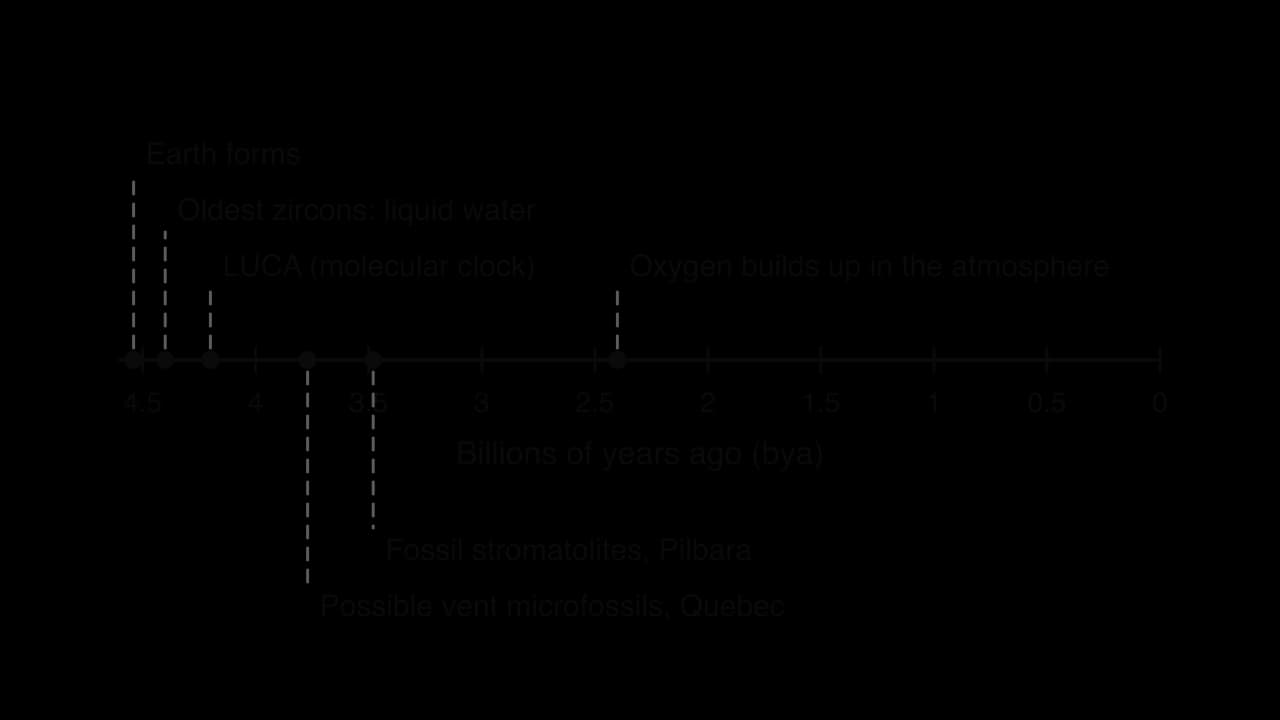
The Earth is about 4.54 billion years old. The first cells probably appeared between about 4.5 and 3.5 billion years ago, and LUCA perhaps around 4 billion years ago, but all of these dates are uncertain. They are estimated with three main approaches: fossils, isotopes and the molecular clock.
Fossil evidence: stromatolites and microfossils
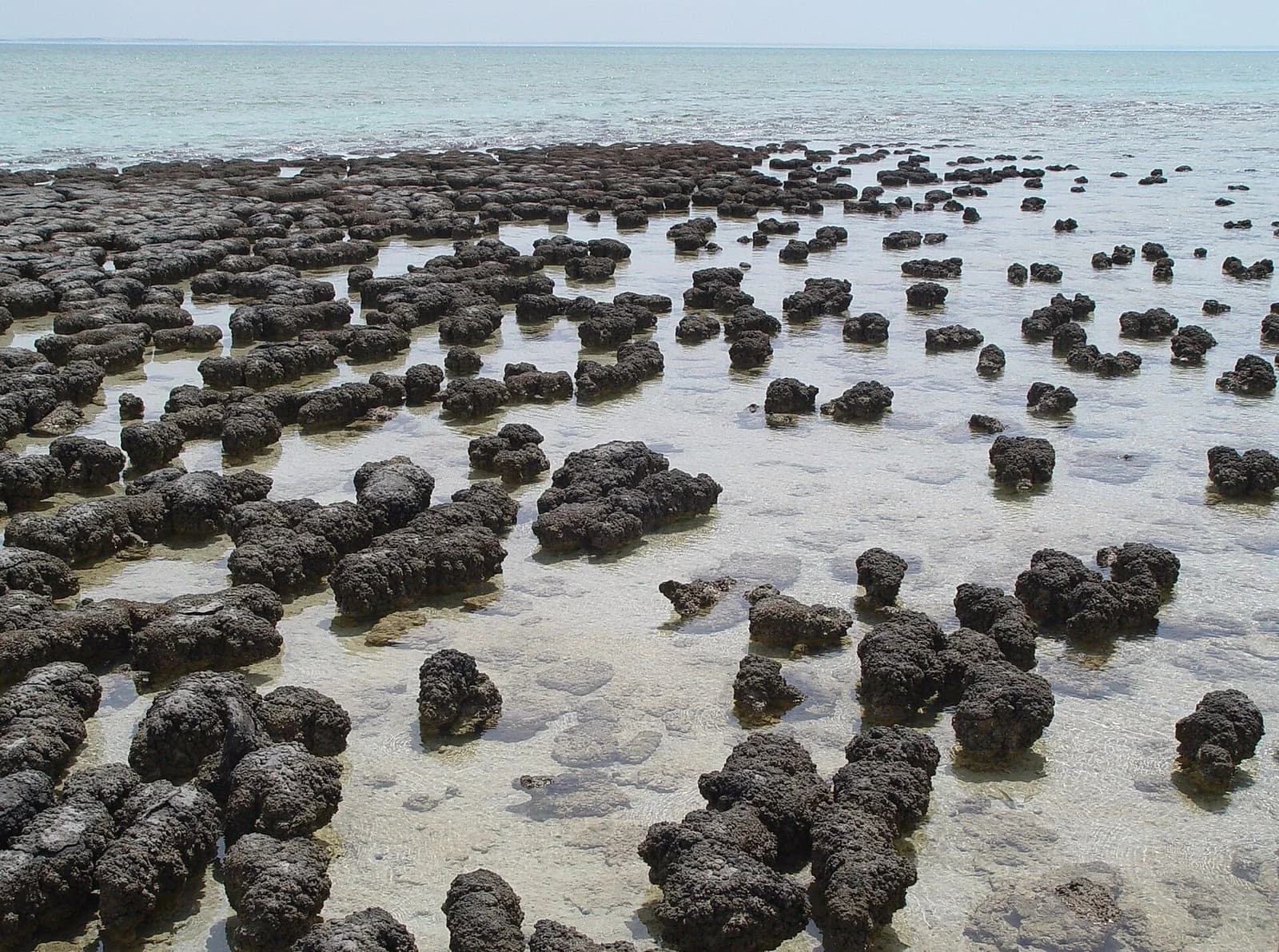
A fossil is the preserved remains or traces of an organism. The oldest widely accepted fossil evidence of life is stromatolites: layered rock structures built up over time by mats of microorganisms, mainly cyanobacteria, which trap sediment and cause minerals to precipitate. Fossil stromatolites about 3.48 billion years old are found in the Dresser Formation of the Pilbara region, Western Australia. Living stromatolites still grow today in a few places with very salty, warm, shallow water, such as Hamelin Pool in Shark Bay, Western Australia, where they allow the structures to be compared with their fossil counterparts.
Fossils give a minimum age for life: life must be at least as old as the oldest rocks that contain undisputed evidence of it. They cannot show when life began, because the first cells were tiny, soft and easily destroyed, and very few rocks older than about 3.8 billion years survive without being heated and deformed.
Isotope evidence
Radiometric dating gives the age of rocks. Radioactive isotopes decay at a constant, known rate, so the proportion of a radioactive isotope (such as uranium-238) to its decay product (lead-206) in a mineral shows how long ago the mineral formed. This is how the ages of zircon crystals, stromatolite-bearing rocks and the Earth itself are known.
Isotopes can also show the presence of life itself. Enzymes that fix carbon, such as those of photosynthesis, take up the lighter isotope carbon-12 slightly faster than carbon-13. Carbon that has passed through living organisms is therefore enriched in carbon-12. Graphite with this "light" carbon signature in very old rocks is interpreted as a chemical trace of life, even where no fossils survive.
The molecular clock
The molecular clock uses differences in DNA or protein sequences between species. Mutations accumulate in a gene at a roughly constant rate over long periods, so the number of differences between two species is roughly proportional to the time since they shared a common ancestor. The clock is calibrated using fossils of known age, then extrapolated back to estimate the dates of much older branching points, including LUCA.
The graph of differences against time shows the principle. A fossil gives the date of one branching point, which fixes the slope of the line. The number of differences between two other species can then be converted into a time. Because mutation rates vary between genes, lineages and periods, molecular clock dates have wide ranges of uncertainty, especially for events as ancient as LUCA.
Comparing the dates
Approach | What it dates | Strength | Limitation |
|---|---|---|---|
Fossils (stromatolites, microfossils) | Oldest direct evidence of life: about 3.48 billion years (stromatolites) | Direct physical evidence | Gives only a minimum age; few very old rocks survive, and some structures may be non-biological |
Isotopes (radiometric dating, carbon-12 enrichment) | Age of the rocks; chemical traces of life | Precise ages for rocks | Light carbon can sometimes form without life; the rocks may have been altered |
Molecular clock | Branching points, including LUCA: about 4.2 billion years | Can reach beyond the fossil record | Mutation rates vary; depends on fossil calibration; wide error ranges |
The estimates, taken together, suggest that life arose surprisingly quickly once the Earth had cooled and had liquid water: perhaps within a few hundred million years. The dates of the earliest cells remain uncertain by hundreds of millions of years, and new evidence regularly changes them.
Evidence that LUCA evolved near hydrothermal vents
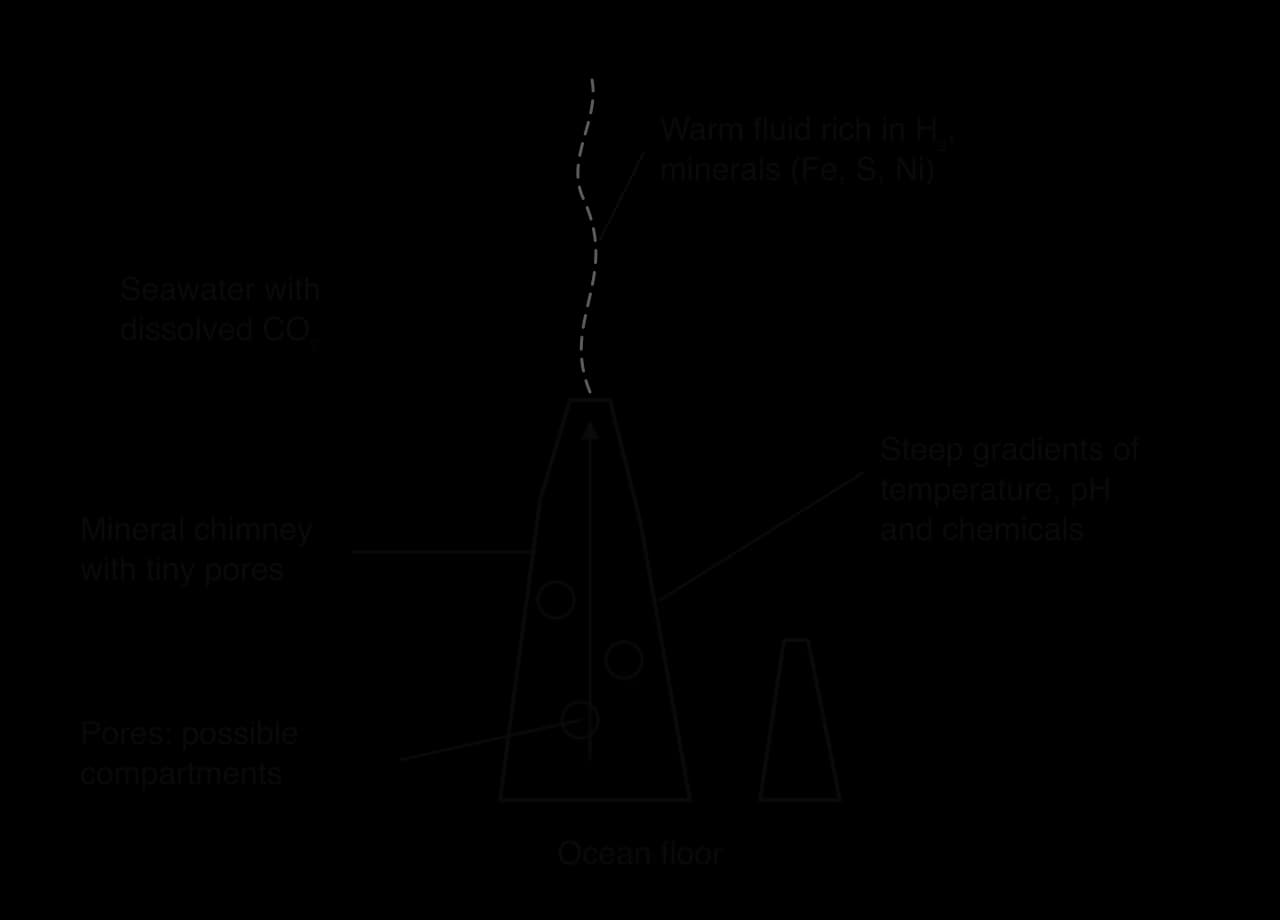
A hydrothermal vent is an opening in the sea floor through which hot, mineral-rich water flows out of the Earth's crust. Seawater seeps into the rock, is heated and chemically changed deep underground, and rises back out. Where the hot fluid meets cold seawater, dissolved minerals precipitate and build chimneys.
Two main types are known. "Black smokers" release very hot (about 350–400 °C), acidic fluid rich in metal sulfides. Alkaline vents, such as the Lost City field in the mid-Atlantic, release warm fluid (about 40–90 °C) rich in hydrogen and build porous chimneys of carbonate minerals.
Why vents fit the evidence
Several lines of evidence point to vents as the environment in which LUCA lived:
LUCA's genes match vent conditions. The proteins traced to LUCA indicate an anaerobic, thermophilic organism that used H₂ and fixed CO₂ by the Wood–Ljungdahl pathway, with metal clusters of iron, sulfur and nickel. Vents provide exactly these conditions: no oxygen, heat, abundant H₂ and CO₂, and iron–sulfur and nickel minerals.
Energy without sunlight. The difference in chemistry between vent fluid and seawater is a natural source of energy, so life there would not depend on light and would be protected from intense UV at the surface and from meteorite impacts.
Natural catalysts and compartments. Iron–sulfur and nickel minerals in vent walls resemble the metal clusters at the active sites of ancient enzymes and can catalyse some of the same reactions. The tiny pores in vent chimneys could have acted as compartments before membranes evolved.
Fossil evidence. In 2017, Matthew Dodd and colleagues described tiny tubes and filaments of haematite (an iron oxide) in rocks of the Nuvvuagittuq belt in Quebec, Canada, that formed as precipitates around ancient hydrothermal vents. The rocks are at least 3.77 and possibly 4.28 billion years old. The structures resemble those made by modern iron-oxidising bacteria at vents and, if they are biological, are among the oldest fossils known.
Deductive reasoning and the vent hypothesis
The vent hypothesis can be tested by deductive reasoning, which works from a general hypothesis to specific predictions. If LUCA lived at hydrothermal vents, then its genome should contain genes for living without oxygen, for using H₂ and CO₂, and for surviving high temperatures, such as reverse gyrase. Reconstructions of LUCA's genes have found these. Each confirmed prediction supports the hypothesis, though it cannot prove it: the same genes might fit other hot, oxygen-free environments, such as hot springs on land.
The evidence is still debated. The Nuvvuagittuq structures might have formed without life, the dating of the rocks is disputed, and some researchers argue that the first cells arose in shallow pools on land, where drying and wetting would have helped to concentrate molecules and form polymers. The vent hypothesis remains one of the leading explanations, supported by both the genes inferred for LUCA and the conditions available at vents.
The second Stated Clearly animation compares the main hypotheses for the origin of life and the kinds of evidence used to test them.
 YouTube
Exam practice
Origins of cells is assessed in HL papers through Paper 1A questions on the conditions of the early Earth, the Miller–Urey experiment, ribozymes and LUCA; through Paper 1B and Paper 2 data questions on experiments such as Miller–Urey yields or dating evidence; and through Paper 2 extended responses that ask students to outline the stages in the origin of cells, explain the RNA world, or evaluate a model or hypothesis. Nature of science is often assessed here: the limits of models, inductive and deductive reasoning, and the uncertainty of untestable events.
Part (e) is a common source of lost marks, because "LUCA" and "first cell" are often used as if they meant the same thing.
Several of these ideas connect to other subtopics.
Self-check
- To do:
I can outline the conditions on the early Earth and how they allowed carbon compounds to form.
- To do:
I can explain why cells are the smallest units of self-sustaining life and why viruses are not living.
- To do:
I can outline the stages needed for the origin of cells and explain why these hypotheses are hard to test.
- To do:
I can describe the Miller–Urey experiment and evaluate it as a model.
- To do:
I can explain how fatty acids form vesicles and why compartments were important.
- To do:
I can explain the evidence that RNA was the first genetic material, including ribozymes and the ribosome.
- To do:
I can distinguish between LUCA and the first cells and outline the evidence for LUCA.
- To do:
I can use inductive reasoning to explain how LUCA's genes are inferred.
- To do:
I can compare fossil, isotope and molecular clock approaches to dating early life and their uncertainties.
- To do:
I can evaluate the evidence that LUCA lived near hydrothermal vents.