Explain how light energy is captured and used to make carbon compounds, analyse pigments, spectra and limiting factors, and at HL follow the light-dependent reactions and the Calvin cycle.
Each is in the Biology glossary, with every other term in the subject.
A graph of the amount of light absorbed by a pigment (absorbance or percentage absorption) against the wavelength of light.
A photosynthetic pigment other than chlorophyll a, such as chlorophyll b or a carotenoid, that absorbs additional wavelengths and passes the energy to chlorophyll a.
A graph of the rate of photosynthesis, measured as oxygen release or carbon dioxide uptake, against the wavelength of light.
A sedimentary rock of alternating iron-oxide and silica-rich layers, mostly deposited 2.5–1.8 billion years ago when oxygen from photosynthesis reacted with dissolved iron.
The conversion of inorganic carbon dioxide into an organic compound; in the Calvin cycle Rubisco combines CO₂ with RuBP to form two molecules of glycerate 3-phosphate.
A yellow, orange or red accessory pigment, such as carotene or a xanthophyll, that absorbs blue and blue-green light and protects chlorophyll from excess light.
The main photosynthetic pigment, a green molecule that absorbs red and blue light and reflects green; plants contain chlorophyll a, the main pigment, and chlorophyll b, an accessory pigment.
A technique that separates the substances in a mixture by the different distances they are carried by a solvent through a stationary phase such as paper or a thin layer of silica.
Photosynthesis is the process in which plants, algae and cyanobacteria use light energy to make carbon compounds from carbon dioxide and water. It supplies almost all the chemical energy used by living things and nearly all the oxygen in the atmosphere.
42 exam-style questions on this subtopic, written in the style of the IB papers. The first has its markscheme open. Counted on
Organisms are adapted to the ecological niches that they occupy.
Explain how natural selection could lead to adaptations in prey species that help them to resist predation.
7 marks
a. there is variation in traits between individuals in the prey population;
b. variation arises from mutation (new alleles) and sexual reproduction (new combinations of alleles);
c. more offspring are produced than can survive;
d. predation is a selection pressure;
e. individuals with traits that resist predation are more likely to survive;
f. such as camouflage / toxins / spines / shells / escape behaviour;
g. survivors reproduce and pass on the alleles for these traits to their offspring;
h. traits must be heritable / acquired characteristics are not passed on;
i. the frequency of the favourable alleles / traits increases in the population over many generations;
j. well-adapted individuals have greater fitness;
k. example, e.g. guppies in streams with many predators evolving fewer / less bright spots;
l. predators may also evolve better adaptations for catching prey, so selection continues;
[7 max]
Outline the differences between obligate anaerobes, facultative anaerobes and obligate aerobes, with reference to cell respiration.
4 marks
One of 1 short multiple-choice questions on C1.3. Pick an answer to see why it's right or wrong.
Which pigment absorbs light for photosynthesis?
The official deck for this part of the syllabus.
Define photosynthesis.
Name the three groups of organisms that carry out photosynthesis.
With a free account, Augment remembers where you stopped and what you have practiced.
ATP production in which excited electrons from photosystem I return to the electron transport chain and then to photosystem I, making ATP but no reduced NADP or oxygen.
An electron raised to a higher energy level by absorbed light energy; when emitted by a reaction centre, it carries that energy to an electron acceptor.
A field experiment (FACE) in which CO₂ is released over a plot of vegetation in the open air to raise its CO₂ concentration while other conditions stay natural.
GP, the three-carbon compound formed when RuBP combines with CO₂; it is reduced to triose phosphate using ATP and reduced NADP.
The rise of free oxygen in Earth's atmosphere about 2.4 billion years ago, caused by oxygen released by photolysis in cyanobacteria.
The reactions of photosynthesis on the thylakoid membranes that use light energy to split water, release oxygen and produce ATP and reduced NADP.
The reactions of photosynthesis in the stroma, also called the Calvin cycle, in which CO₂ is fixed by Rubisco, GP is reduced to triose phosphate using ATP and reduced NADP, and RuBP is regenerated.
A hydrogen carrier in photosynthesis; it is reduced by two electrons from photosystem I and a proton to form reduced NADP, which supplies hydrogen to the Calvin cycle.
ATP production in which electrons flow from water through photosystem II, the electron transport chain and photosystem I to NADP, producing ATP, reduced NADP and oxygen.
The splitting of water molecules using energy from light, which releases electrons, protons (H⁺) and oxygen; in photosynthesis the oxygen released comes from this reaction.
The production of carbon compounds in cells using light energy, with carbon dioxide and water as the raw materials and oxygen released as a by-product.
A coloured molecule, such as chlorophyll or a carotenoid, that absorbs specific wavelengths of light and uses the energy in photosynthesis.
A complex of proteins and an array of pigment molecules in a thylakoid membrane that absorbs light and passes the energy to a reaction centre, which emits an excited electron.
The photosystem (PSI, reaction centre P700) that re-excites electrons arriving from the electron transport chain and passes them to NADP reductase, or back to the chain in cyclic flow.
The photosystem (PSII, reaction centre P680) that emits excited electrons to the electron transport chain and replaces them by the photolysis of water, releasing oxygen.
A lipid-soluble electron carrier in the thylakoid membrane that accepts electrons from photosystem II and carries protons from the stroma into the thylakoid space.
The special pair of chlorophyll a molecules at the centre of a photosystem that receives energy from the surrounding pigments and emits an excited electron.
The distance moved by a substance from the origin divided by the distance moved by the solvent front; a ratio between 0 and 1, with no units, used to identify substances.
Ribulose bisphosphate carboxylase, the enzyme in the stroma that catalyses carbon fixation by combining CO₂ with RuBP; it is slow and is the most abundant protein on Earth.
Ribulose bisphosphate, the five-carbon compound that accepts CO₂ in carbon fixation; it is regenerated from triose phosphate using ATP.
The chemistry of photosynthesis is closely linked to that of cell respiration (C1.2 Cell respiration), and in many ways the two processes run in opposite directions. Photosynthesis builds carbon compounds and releases oxygen; respiration breaks them down and uses oxygen.
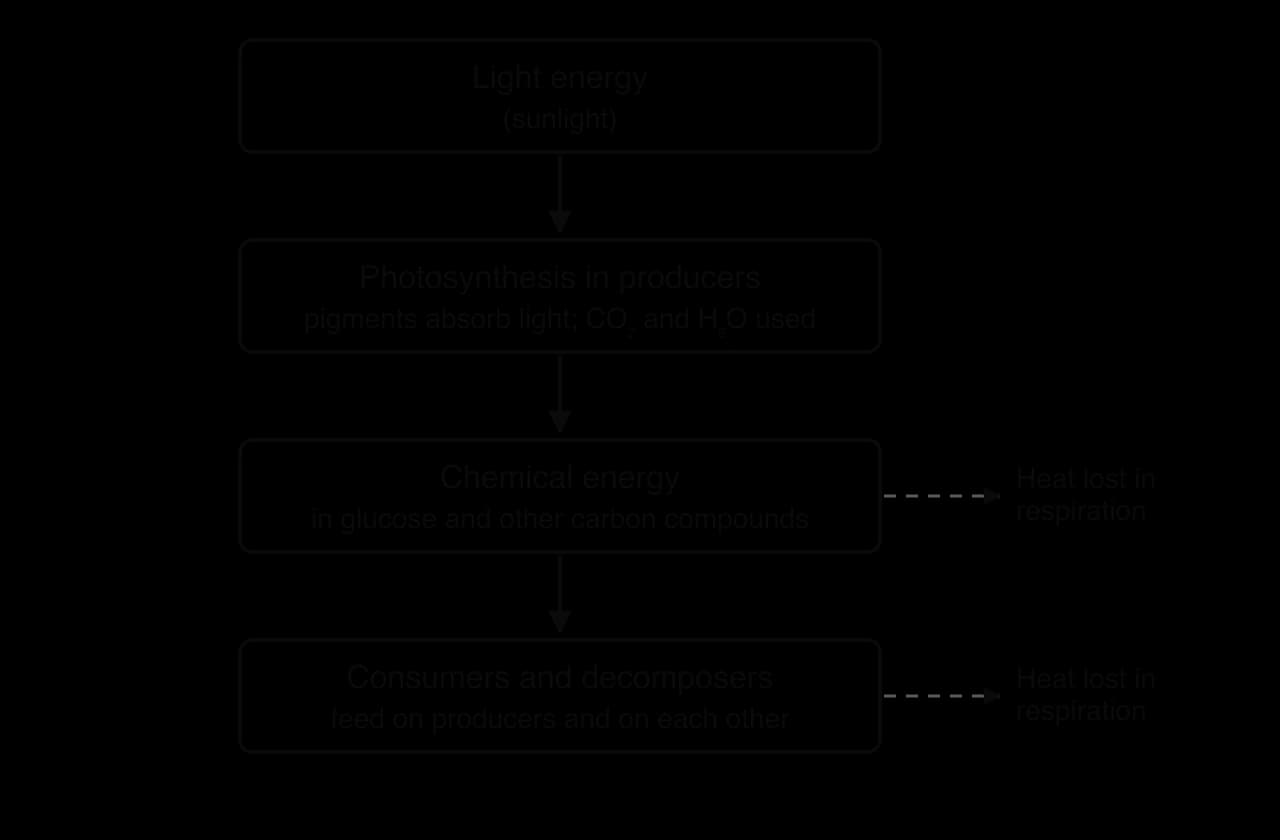
In photosynthesis, light energy is absorbed by pigments and used to drive reactions that build carbon compounds such as glucose. Light energy is therefore transformed into chemical energy, stored in the bonds of the carbon compounds. This chemical energy can be released later by cell respiration, in the same cell or in another organism that eats it.
Organisms that photosynthesise are producers. Almost every food chain starts with a producer, so the energy conversion in photosynthesis supplies most of the chemical energy needed for life processes in ecosystems: the energy in a lion's muscles was captured from sunlight by the grass eaten by the zebra the lion ate. The only exceptions are ecosystems based on chemosynthesis, such as those around deep-sea hydrothermal vents, where bacteria use energy from chemical reactions instead of light. Energy flow through ecosystems is studied further in C4.2 Transfers of energy and matter.
Photosynthesis happens in chloroplasts in plants and algae. Cyanobacteria have no chloroplasts; their photosynthetic pigments are on internal membranes in the cytoplasm. The pigments and the reactions of photosynthesis are the same in both.
Carbon dioxide is a fully oxidised, low-energy molecule. To turn it into a high-energy carbon compound such as glucose, hydrogen must be added to it, which is a reduction. The hydrogen comes from water. Light energy is used to split water molecules, a reaction called photolysis ("splitting by light").
The word equation for photosynthesis, with glucose as the product, is:
The balanced chemical equation shows that six molecules of carbon dioxide are needed to make one glucose molecule:
This equation is the reverse of the equation for aerobic respiration. Photosynthesis needs an input of energy (as light), while respiration releases energy (as ATP and heat). Glucose is rarely the only product. Plants convert the first products of photosynthesis into sucrose for transport, starch for storage, cellulose for cell walls, and many other compounds.
Photosynthesis in plants, algae and cyanobacteria releases oxygen. The oxygen comes from the water split in photolysis, not from the carbon dioxide. When water is split, the hydrogen (as protons and electrons) is used to reduce carbon dioxide, and the oxygen atoms pair up to form O₂, which the cell does not need. Oxygen is therefore a by-product, released into the water or air by diffusion.
The source of the oxygen was shown in 1941 using the alga Chlorella. Researchers supplied it with water containing the heavy oxygen isotope ¹⁸O and normal carbon dioxide; the oxygen released contained ¹⁸O. When the carbon dioxide was labelled with ¹⁸O instead, the oxygen released was not labelled. Tracing atoms with isotopes is a powerful method in biology, and the same approach was later used to work out the pathway by which carbon dioxide is converted into sugars.
Oxygenic photosynthesis evolved in the ancestors of cyanobacteria more than 2.4 billion years ago, and all the oxygen in the atmosphere today has been produced by photosynthesis. Without it there would be no aerobic respiration and no large, active animals.
The Amoeba Sisters video gives an overview of photosynthesis, from pigments in the chloroplast to the products of each set of reactions.
 YouTube
Photosynthesis is often pictured as something that happens in the leaves of plants. Much of it happens in the oceans, carried out by phytoplankton, and one of the most important members is a cyanobacterium that was unknown until 1988.
Prochlorococcus is a single-celled marine cyanobacterium only about 0.5–0.7 µm across, smaller than most bacteria. It was first described in 1988, after flow cytometers (machines that count and measure cells by their fluorescence) were taken to sea and detected huge numbers of tiny cells glowing with chlorophyll. It lives in the warm, nutrient-poor surface waters of tropical and subtropical oceans, roughly between 40° N and 40° S, down to depths of about 200 m.
Measure | Value |
|---|---|
Cell diameter | About 0.5–0.7 µm |
Year first described | 1988 |
Estimated global mean number of Prochlorococcus cells | 2.9 × 10²⁷ |
Estimated global mean number of Synechococcus cells (a related cyanobacterium) | 7.0 × 10²⁶ |
Net primary production by Prochlorococcus | About 4 Gt of carbon per year |
Share of all ocean net primary production | About 8.5% |
Sources: Chisholm et al., Nature, 1988; Flombaum et al., Proceedings of the National Academy of Sciences, 2013.
These numbers show that photosynthesis is not only a plant process. Each Prochlorococcus cell fixes carbon dioxide, releases oxygen from water and builds carbon compounds, exactly as a leaf cell does, but without chloroplasts. Its primary production supplies chemical energy to ocean food chains, through grazing protists and the larger animals that eat them.
Prochlorococcus also shows how photosynthetic organisms adapt to their light environment. Ecotypes living near the surface are adapted to high light, and ecotypes deeper in the water column have more pigment and can photosynthesise in very dim, blue light. Ocean warming is predicted to extend its range towards the poles, which would change how much carbon the oceans fix.
Photosynthetic pigments are coloured molecules that absorb light for photosynthesis. A leaf contains several different pigments. The most important is chlorophyll, which is green and exists in two main forms in plants, chlorophyll a and chlorophyll b. The others are accessory pigments, mainly yellow and orange carotenoids such as carotene and xanthophylls. Their colours are normally hidden by the much larger amount of chlorophyll, but they become visible in autumn leaves when the chlorophyll breaks down.
Chromatography separates the substances in a mixture by the different rates at which they move through a stationary phase (paper, or a thin layer of silica gel in thin-layer chromatography) carried by a moving solvent. Pigments that are more soluble in the solvent and less attracted to the stationary phase move further. Thin-layer chromatography gives sharper, better-separated spots and is faster than paper chromatography.
Grind a few leaves with sand and a small volume of propanone (acetone) to extract the pigments.
Draw a pencil line (the origin) about 1.5 cm from the bottom of a chromatography strip. Pencil is used because ink would dissolve and run.
Use a fine capillary tube to apply a small spot of extract to the origin. Let it dry and repeat many times, to build up a small, concentrated spot.
Stand the strip in a tube containing a shallow layer of solvent, with the origin above the solvent level, and close the tube to stop the solvent evaporating.
Remove the strip when the solvent is near the top. Mark the solvent front in pencil at once, before it evaporates, and draw round each pigment spot.
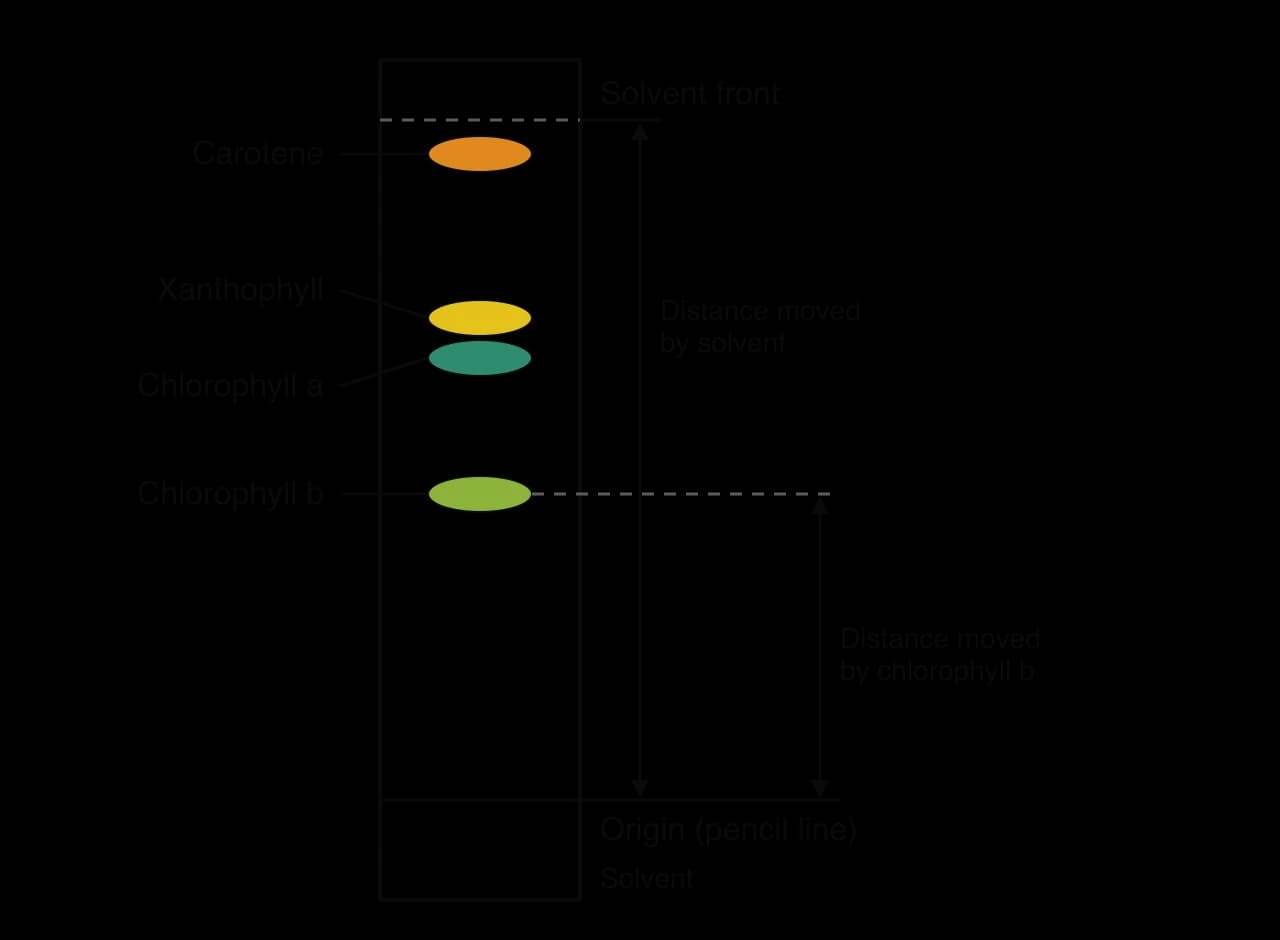
The chromatogram shows four bands. The pigments are identified by two properties: their colour and their Rf value.
An Rf value has no units, because it is a ratio of two distances. For a given solvent and stationary phase, each pigment has a characteristic Rf, so unknown spots can be identified by comparing their Rf values with known ones. Distances are measured from the origin to the centre of each spot.
Pigment | Colour | Typical Rf (paper, non-polar solvent) |
|---|---|---|
Carotene | Orange | 0.95 |
Xanthophyll | Yellow | 0.71 |
Chlorophyll a | Blue-green | 0.65 |
Chlorophyll b | Yellow-green | 0.45 |
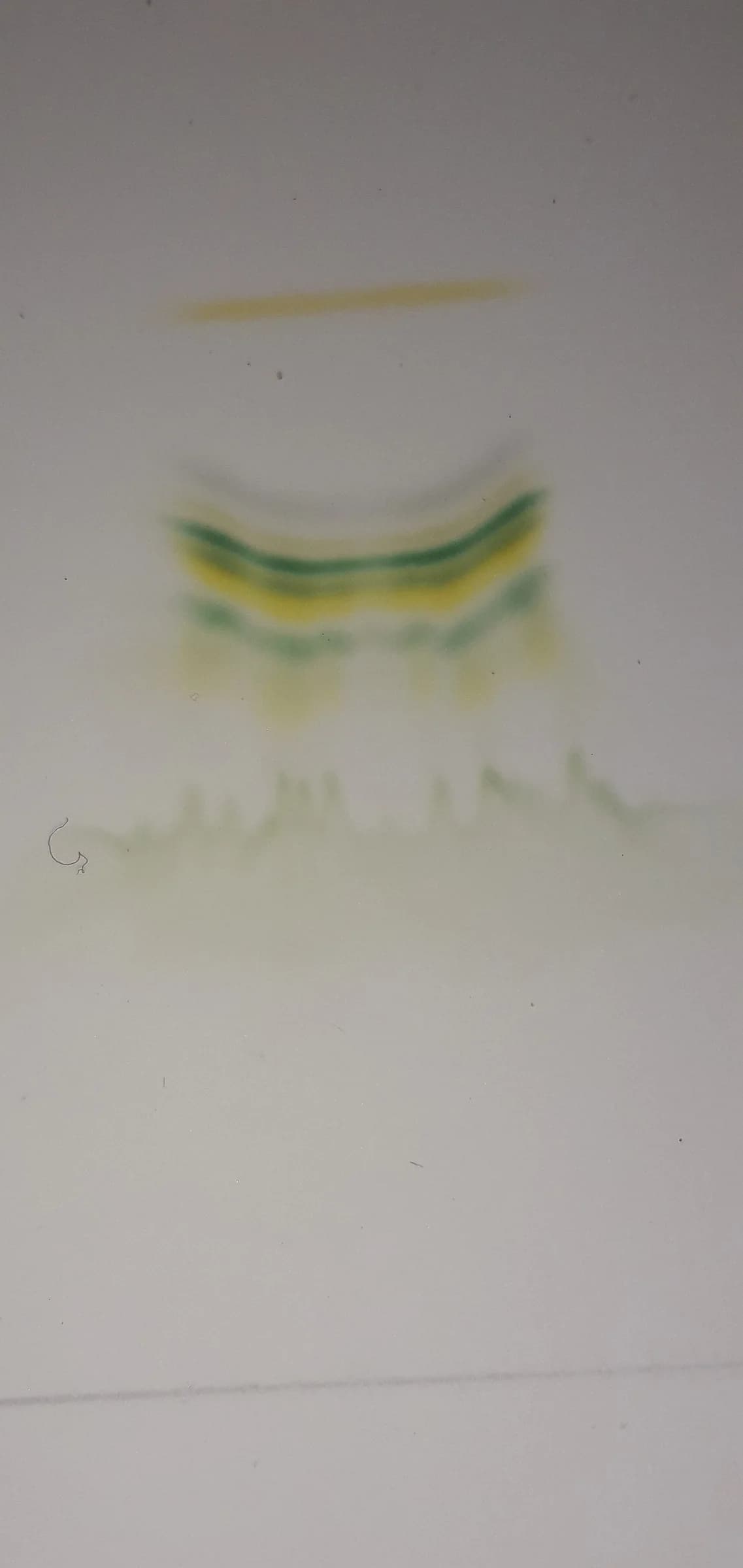
Rf values depend on the solvent and the stationary phase, so the numbers in a different practical may be different; the order of the pigments is the more reliable guide. In the most common solvents, carotene runs close to the solvent front and chlorophyll b stays nearest the origin. The photograph of a thin-layer chromatogram of fresh leaf extract shows these colours on a real plate.
Visible light is the part of the electromagnetic spectrum with wavelengths from about 400 nm (violet) to about 700 nm (red). Sunlight contains all these wavelengths, which is why it looks white. Each pigment absorbs some wavelengths and reflects or transmits the others, and the wavelengths that are not absorbed give the pigment its colour.
When a pigment molecule absorbs a photon of light, the energy of the photon is transferred to an electron in the pigment, which moves to a higher energy level. The electron is said to be excited. This is the moment at which light energy is converted into chemical energy, because the excited electron can be passed to another molecule and used to drive chemical reactions. A pigment absorbs only photons whose energy exactly matches the jump between energy levels of its electrons, which is why each pigment absorbs only certain wavelengths.
Chlorophyll absorbs strongly in the blue-violet (about 430–450 nm) and red (about 640–680 nm) parts of the spectrum, and absorbs very little green or yellow light (about 500–600 nm). The green light is reflected from the leaf or transmitted through it, so chlorophyll, and the leaves that contain it, look green.
An absorption spectrum has wavelength (in nm, often with the colours marked) on the horizontal axis and absorbance or percentage absorption on the vertical axis. It is measured by passing light of each wavelength through a solution of the pigment in a spectrophotometer. The graph of absorption spectra shows that the two chlorophylls absorb in the same regions but with peaks at slightly different wavelengths, and that carotenoids absorb blue and blue-green light, which chlorophyll absorbs less well.
An absorption spectrum shows how much light a pigment absorbs. It does not show how much photosynthesis that light drives. For that, the rate of photosynthesis is measured at each wavelength.
An action spectrum is made by shining light of one wavelength at a time on a plant or alga, with the same light intensity at each wavelength, and measuring the rate of photosynthesis as oxygen production or carbon dioxide uptake per unit time.
The two graphs have a similar shape, with peaks in the blue and red regions and a trough in the green. The similarity is evidence that the light absorbed by these pigments is the light used in photosynthesis. The main similarities and differences are listed here.
Similarity. Both are highest in the blue and red, and both are lowest in the green.
Difference. In the blue-green and green region (about 480–600 nm), the action spectrum is higher than the absorption spectrum of chlorophyll. Accessory pigments (carotenoids) absorb some of this light and pass the energy to chlorophyll, so photosynthesis still happens even though chlorophyll absorbs little light there.
Difference. The absorption spectrum is a property of a pigment and is measured in a solution; the action spectrum is a property of the whole photosynthesising organism and is measured as a rate.
The rate of photosynthesis depends on several external factors. The three most important are light intensity, carbon dioxide concentration and temperature. At any moment, the rate is held back by the one factor that is in shortest supply.
A limiting factor can be identified from a graph. In the part of the curve where the rate rises as the factor on the x-axis increases, that factor is limiting. Where the curve levels off (the plateau), the factor on the x-axis is no longer limiting, and some other factor is.
Light supplies the energy for photosynthesis. At low light intensity the rate of photosynthesis increases roughly in proportion to intensity, because the pigments absorb more light energy and more of it is used to make carbon compounds. At higher intensities the rate levels off because another factor, usually carbon dioxide concentration or temperature, is limiting. Very high light intensity can damage the pigments and reduce the rate.
The two curves on the light-intensity graph are the same at low light, because there light limits both. They separate at higher light, and the high-CO₂ curve reaches a higher plateau. This shows that carbon dioxide concentration was the limiting factor on the plateau of the lower curve.
Carbon dioxide is the raw material from which the carbon compounds of photosynthesis are made. Increasing its concentration increases the rate at which an enzyme in the chloroplast combines CO₂ with an organic molecule, until that enzyme is working at its maximum rate or until light or temperature limits. The concentration of CO₂ in the atmosphere, about 0.04%, is low enough to limit photosynthesis on bright, warm days.
Temperature affects photosynthesis mainly through the enzymes that convert carbon dioxide into carbon compounds. The rate rises with temperature to an optimum, which is about 25–35 °C for many temperate plants, and falls at higher temperatures as enzymes denature and as stomata close to reduce water loss. The absorption of light by pigments is much less sensitive to temperature, because it is a physical process.
Aquatic plants such as the pondweeds Elodea and Cabomba are useful for these experiments, because the oxygen they release is visible as bubbles. The apparatus for the pondweed experiment shows a typical set-up.
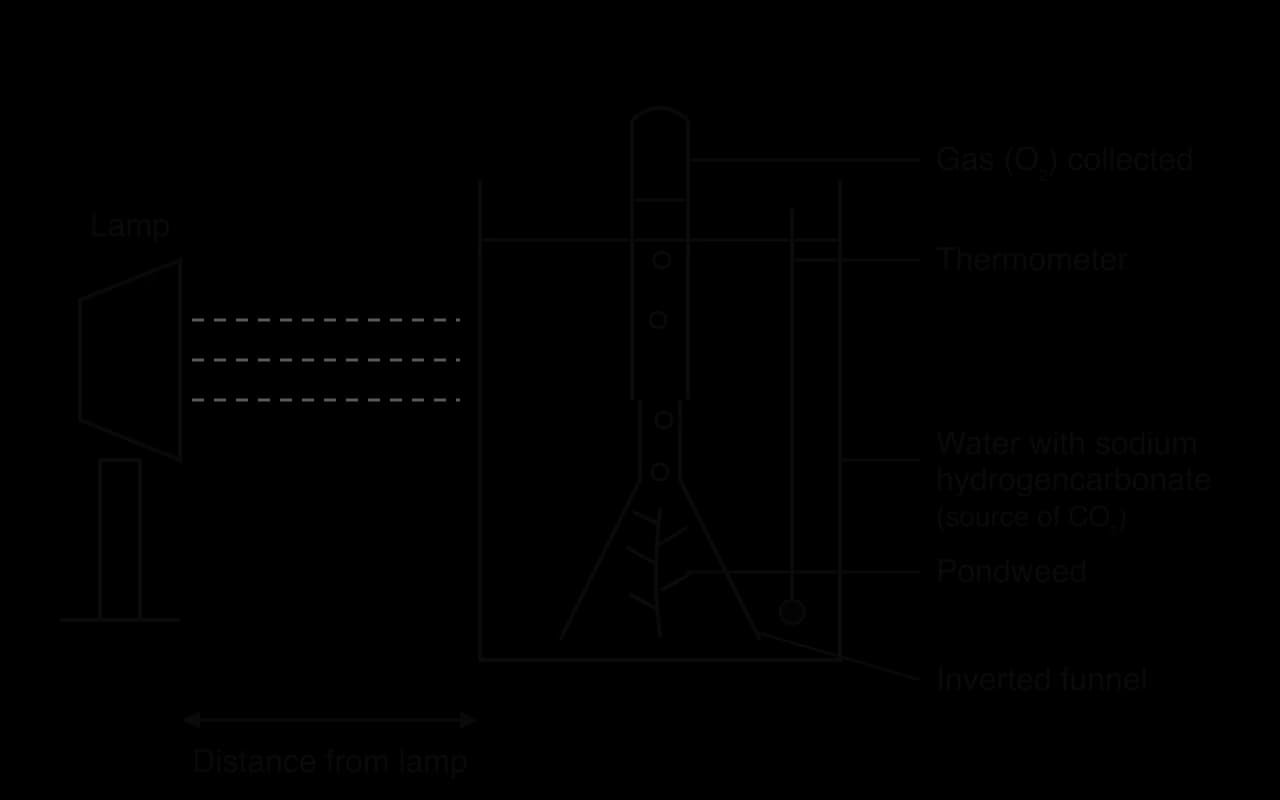
Light intensity is varied by changing the distance between the lamp and the plant. Light intensity is inversely proportional to the square of the distance, so halving the distance increases the intensity four times. An LED lamp, or a heat filter such as a beaker of water, prevents the lamp from warming the plant.
Carbon dioxide concentration is varied by dissolving different amounts of sodium hydrogencarbonate (NaHCO₃) in the water, which releases CO₂.
Temperature is varied by placing the plant in water baths at different temperatures.
The rate of photosynthesis can be measured in several ways: by counting bubbles per minute, by collecting the gas in a syringe or capillary tube and measuring its volume, with an oxygen or CO₂ sensor and data logger, by measuring the rising pH of the water as CO₂ is removed, or by timing how long leaf discs take to float. In the leaf disc method, small discs cut from a leaf are infiltrated with sodium hydrogencarbonate solution so that they sink; as photosynthesis fills their air spaces with oxygen, they float up.
Each experiment tests a hypothesis, a testable explanation that leads to a prediction. For example: "The rate of photosynthesis increases with light intensity, because more light energy is absorbed and used to make carbon compounds." The prediction is that more bubbles will be released per minute as the lamp is moved closer. If the results match the prediction, the hypothesis is supported, but it is not proved, because another experiment could still give results that contradict it. Hypotheses are sometimes formed before an experiment and sometimes after, to explain an unexpected result, but they must be testable either way.
In the light-intensity experiment the independent variable is light intensity (lamp distance); the dependent variable is the rate of oxygen production. Controlled variables include temperature, CO₂ concentration, the species and mass of the plant, the time each plant is left to adjust to a new light intensity, and the wavelength of the light.
The concentration of carbon dioxide in the atmosphere has risen from about 280 ppm before the Industrial Revolution to more than 420 ppm today, mainly because of the burning of fossil fuels. Because CO₂ can be a limiting factor, biologists use two kinds of experiment to predict how future increases will affect photosynthesis and plant growth, in crops and in natural ecosystems.
Plants are grown in greenhouses or closed chambers in which the CO₂ concentration can be set precisely, together with temperature, water and nutrients. Commercial growers already use this effect: glasshouses in the Netherlands and elsewhere routinely enrich the air with CO₂ during the day, to concentrations well above those outdoors, which increases the yield of tomatoes, cucumbers and peppers. Greenhouse experiments are well controlled, so the effect of CO₂ alone can be measured. They are less realistic: the plants grow in pots with unnatural light, wind, pests and root space.
In a FACE experiment, sensors measure the wind direction and CO₂ concentration and computers control release from the upwind pipes, so that the air over the plot stays at a target concentration, often about 550–600 ppm. The plants grow in natural soil, weather and light, with natural competitors and pests. Control plots, surrounded by identical rings that release no CO₂, are compared with them.
Across 12 large FACE experiments with more than 40 species, elevated CO₂ (475–600 ppm) increased light-saturated photosynthesis by about 31% on average. Crop yields increased much less than this, and less than earlier greenhouse and chamber studies had predicted. Plants grown in high CO₂ often had less nitrogen in their leaves, and other factors such as water, nitrogen or temperature became limiting in the field.
Feature | Greenhouse or chamber experiment | FACE experiment |
|---|---|---|
Control of variables | High: temperature, light, water and nutrients can all be set | Low: weather, soil and pests vary naturally |
Realism | Low: pots, sheltered air, artificial light | High: natural field conditions |
Scale | Small numbers of plants | Whole plots of crops or forest |
Cost | Lower | High (large amounts of CO₂ every day) |
What the results predict | Effect of CO₂ alone; often overestimates field gains | Realistic response, including interactions with other factors |
FACE results: Ainsworth and Long, New Phytologist, 2005 (meta-analysis of 12 FACE sites).
The table compares the two approaches, and the comparison illustrates a general trade-off in science. Laboratory experiments allow variables to be controlled, so cause and effect can be shown clearly, but their results may not apply outside the laboratory. In field experiments it is often impractical to control variables, so the results are more realistic but harder to interpret. Using both kinds of evidence gives a more reliable prediction of how plants will respond to rising CO₂.
Photosynthetic pigments are not scattered at random in the membrane. They are held by proteins in large, organised clusters called photosystems, in the thylakoid membranes of chloroplasts and in the internal membranes of cyanobacteria.
Each photosystem contains a few hundred chlorophyll and accessory pigment molecules arranged around a reaction centre. When any pigment in the array absorbs a photon, the energy is passed from pigment to pigment until it reaches a special pair of chlorophyll a molecules at the reaction centre. There the energy raises an electron to such a high energy level that the chlorophyll loses it: the reaction centre emits an excited electron, which is accepted by a nearby electron acceptor. The reaction centre chlorophyll is oxidised, and the acceptor is reduced.
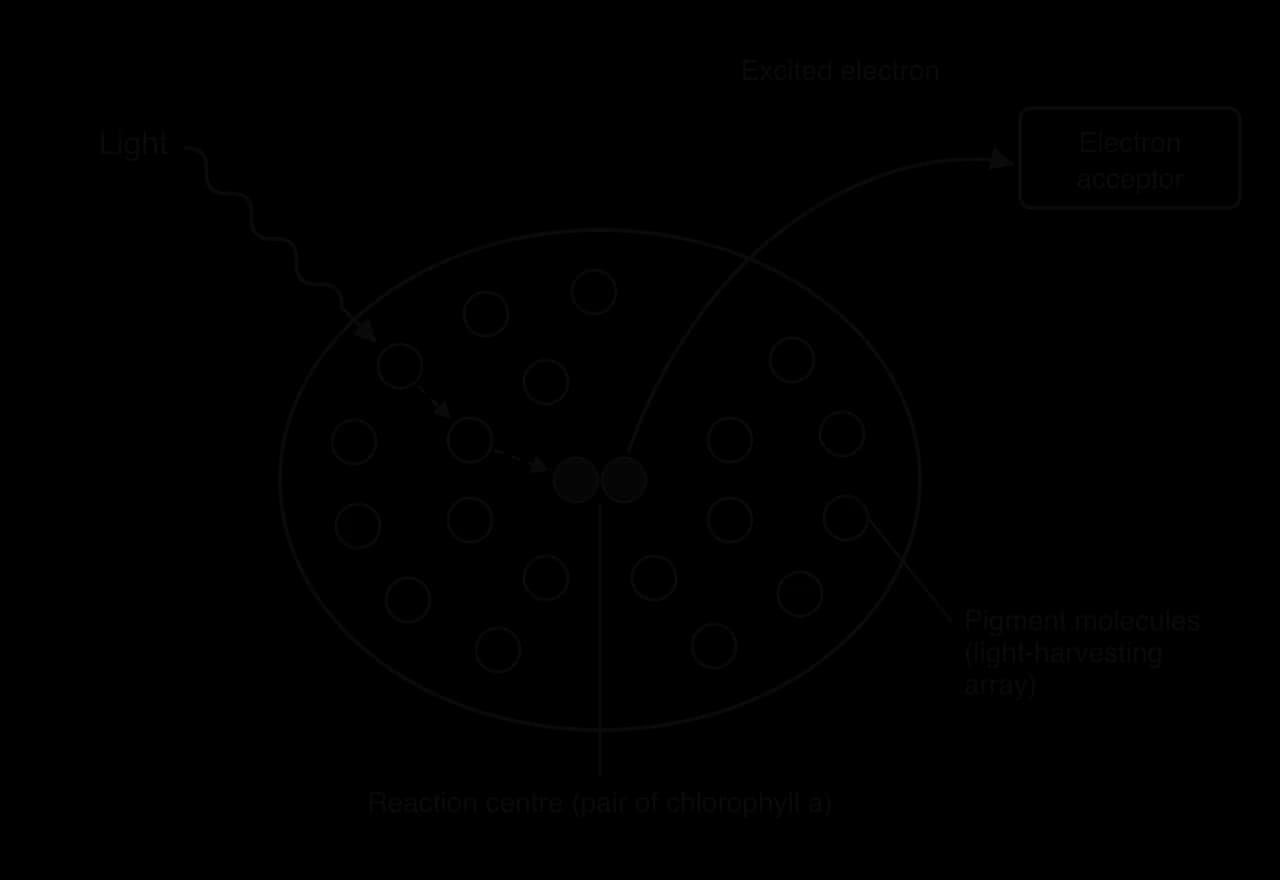
Plants and cyanobacteria have two types of photosystem, which work in series. They were numbered in the order of their discovery, not the order in which they act.
Feature | Photosystem II | Photosystem I |
|---|---|---|
Reaction centre pigment | P680 (absorbs best at 680 nm) | P700 (absorbs best at 700 nm) |
Position in the electron flow | First | Second |
Source of electrons that replace those emitted | Photolysis of water | Electrons arriving from photosystem II via the electron transport chain |
Main role | Photolysis; electrons for the chain that pumps protons | Reduction of NADP; cyclic photophosphorylation |
Photosystem II (PSII) acts first and photosystem I (PSI) second. The reaction centre of each is named after the wavelength it absorbs best: P680 for PSII and P700 for PSI.
A single, isolated pigment molecule cannot carry out any part of photosynthesis. It may absorb a photon, but its excited electron simply falls back, releasing the energy as heat or fluorescence. The arrangement of many pigments in a photosystem has several advantages:
A wider range of wavelengths is absorbed. The array contains chlorophyll a, chlorophyll b and carotenoids, each absorbing different wavelengths, so more of the light spectrum is used.
More light is captured. Hundreds of pigments act like a funnel, collecting energy over a large area and passing it to one reaction centre. Even in dim light, the reaction centre receives energy often enough to keep working.
Energy reaches the right place. The proteins hold each pigment at an exact distance and angle from its neighbours, so energy passes efficiently towards the reaction centre and is not lost.
The excited electron is captured. The electron acceptor sits next to the reaction centre, so the emitted electron is caught before it can return, and its energy is kept in chemical form.
This is a clear example of form and function at the level of molecules: the function of a photosystem depends on the precise arrangement of its parts as well as on the pigments it contains.
When the reaction centre of photosystem II emits an electron, it is left short of one electron and becomes a very strong oxidising agent. It takes electrons from water, using an enzyme complex on the side of PSII facing the thylakoid space. Photolysis of two water molecules releases four electrons, four protons and one oxygen molecule:
Electrons replace those emitted by the reaction centre of PSII, so it can absorb more light and emit more electrons.
Protons stay in the thylakoid space and add to the proton gradient used to make ATP.
Oxygen is a waste product. It diffuses out of the chloroplast and the cell, and leaves the leaf through the stomata.
Before oxygenic photosynthesis evolved, Earth's atmosphere contained almost no free oxygen. Ancient cyanobacteria, some of which built layered mounds called stromatolites, began to release oxygen from water. About 2.4 billion years ago oxygen started to accumulate in the atmosphere, an event called the Great Oxygenation Event.
Much of the early oxygen reacted with iron dissolved in the oceans. Insoluble iron oxides settled on the sea floor in layers, alternating with layers of silica-rich rock. These layered rocks are banded iron formations. Most were deposited between about 2.5 and 1.8 billion years ago, and they are now the main source of iron ore, mined for example in the Hamersley Basin of Western Australia.
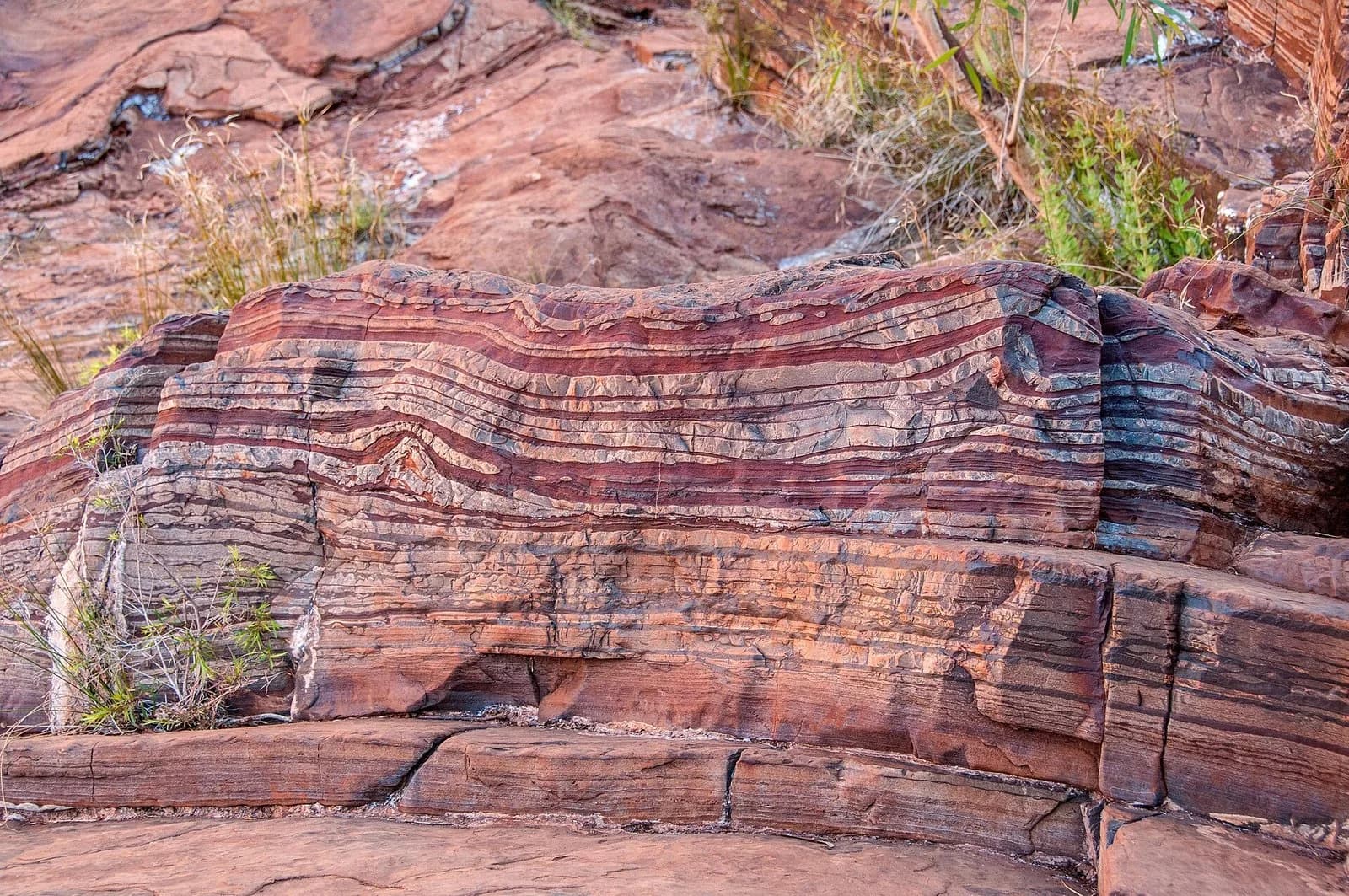
The rise in oxygen had immense consequences for life. Many anaerobic organisms were poisoned and survived only in oxygen-free habitats such as sediments. Organisms able to carry out aerobic respiration, which releases far more energy per glucose than anaerobic respiration, could evolve. Oxygen in the upper atmosphere formed the ozone layer, which absorbs ultraviolet radiation and later allowed life to colonise the land.
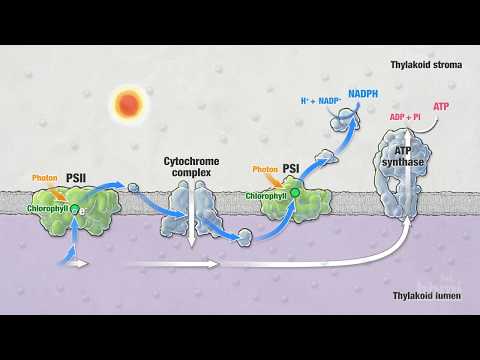
The light-dependent reactions take place on and across the thylakoid membranes. Their products are ATP and reduced NADP, which are used in the light-independent reactions, and oxygen, which is released. The diagram of the thylakoid membrane shows the components in order.

Excited electrons emitted by photosystem II are passed along an electron transport chain in the thylakoid membrane. The first carrier is plastoquinone (PQ), a small, lipid-soluble molecule that moves within the membrane. When plastoquinone accepts electrons it also picks up protons from the stroma; it then carries both across the membrane to the cytochrome complex, where the protons are released into the thylakoid space. Energy from the electrons is therefore used to pump protons into the thylakoid space.
Protons accumulate in the thylakoid space from two sources: pumping by the electron transport chain and photolysis of water. The small volume of the thylakoid space means that their concentration rises quickly, and a steep proton gradient forms across the membrane. Protons diffuse back into the stroma through ATP synthase, and the energy released is used to phosphorylate ADP. This is chemiosmosis, by the same mechanism as in mitochondria. Because the energy came from light, ATP synthesis in chloroplasts is called photophosphorylation.
Electrons can follow two routes, which give two forms of photophosphorylation.
Non-cyclic photophosphorylation. Electrons flow in one direction: from water, through PSII, the electron transport chain and PSI, to NADP. ATP and reduced NADP are both produced, and oxygen is released.
Cyclic photophosphorylation. Excited electrons from PSI are passed back, through ferredoxin, to the cytochrome complex and the electron transport chain, and return to PSI. Protons are pumped and ATP is made, but no reduced NADP is produced, PSII is not involved and no water is split. Cyclic flow allows the chloroplast to make extra ATP when the Calvin cycle needs more ATP than reduced NADP.
Electrons reaching PSI from the chain are re-excited by light absorbed by PSI. The excited electrons are passed via ferredoxin, an iron-containing protein on the stroma side, to the enzyme NADP reductase. This enzyme uses two excited electrons and one proton from the stroma to reduce NADP:
In biology this is usually written NADP + 2e⁻ + H⁺ → reduced NADP. Reduced NADP carries the hydrogen that will reduce carbon compounds in the Calvin cycle. NADP is used in photosynthesis and NAD in respiration; the two molecules differ by one phosphate group.
The removal of one H⁺ from the stroma for each NADP reduced also increases the proton gradient, because it lowers the proton concentration on the stroma side of the membrane.
Each component of the light-dependent reactions is placed on the side of the thylakoid membrane where its function requires it. The thylakoid is therefore an integrated system, in which the arrangement of parts makes the process work.
Process | Where it happens | Why the position matters |
|---|---|---|
Light absorption by photosystems | In the thylakoid membrane | Large membrane area holds many photosystems |
Photolysis of water | PSII, on the side facing the thylakoid space | Protons released add to the gradient inside the thylakoid |
Proton pumping | Plastoquinone and cytochrome complex, from stroma to thylakoid space | Builds a high H⁺ concentration in a small volume |
ATP synthesis | ATP synthase, with its head facing the stroma | ATP is released where the Calvin cycle uses it |
Reduction of NADP | NADP reductase on the stroma side of PSI | Reduced NADP is made where the Calvin cycle uses it |
Thylakoids are stacked in grana (granum in the singular), joined by unstacked stroma lamellae. Stacking packs a large membrane area into a small volume of the chloroplast, and the thylakoid space inside each disc is small, so a steep proton gradient forms quickly.
The HHMI animation shows the light reactions in sequence, from photon absorption to ATP synthase.
 YouTube
The light-independent reactions take place in the stroma of the chloroplast. They form a cycle of enzyme-catalysed reactions called the Calvin cycle, which uses ATP and reduced NADP from the light-dependent reactions to convert carbon dioxide into carbohydrate. They do not use light directly, but they depend on the products of the light-dependent reactions.
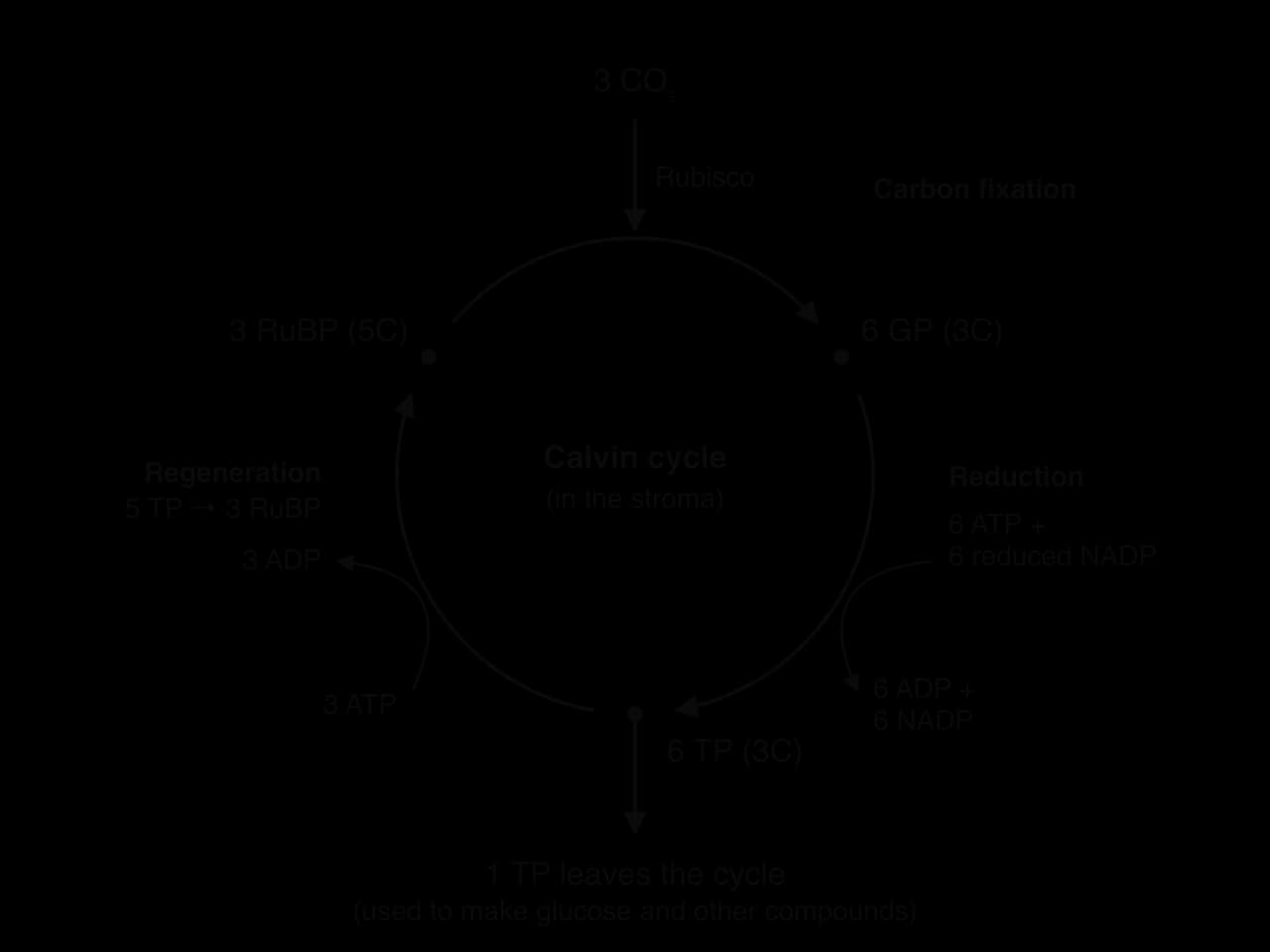
In carbon fixation, carbon dioxide from the air is attached to an organic molecule. The acceptor is RuBP (ribulose bisphosphate), a five-carbon compound. The enzyme Rubisco (ribulose bisphosphate carboxylase) catalyses the reaction. The six-carbon product is unstable and immediately splits into two molecules of glycerate 3-phosphate (GP), a three-carbon compound.
Rubisco is the most abundant protein on Earth, with about 0.7 gigatonnes in all the world's photosynthetic organisms. It is so abundant because it is a slow enzyme: each active site fixes only a few molecules of CO₂ per second, compared with thousands of reactions per second for many other enzymes. Rubisco also binds oxygen in competition with CO₂, which wastes energy. Chloroplasts therefore contain very high concentrations of Rubisco, up to about half of the soluble protein of a leaf, to fix carbon at a useful rate, especially when the CO₂ concentration is low.
Glycerate 3-phosphate is then reduced to triose phosphate (TP). The hydrogen for the reduction comes from reduced NADP, and the energy comes from ATP. Each GP needs one ATP and one reduced NADP. NADP and ADP are released and return to the thylakoid to be used again.
This step is where the energy captured from light is stored in a carbon compound. Triose phosphate has more chemical energy than GP, and it is the product of photosynthesis from which glucose and all other carbon compounds are made.
The Calvin cycle can continue only if RuBP is regenerated. Most of the triose phosphate is converted back to RuBP in a series of reactions that use ATP. Five molecules of TP (5 × 3C = 15 carbons) are converted into three molecules of RuBP (3 × 5C = 15 carbons). For every three CO₂ fixed, one TP is therefore available to the cell, and five TP are recycled.
All the carbon in the compounds of a photosynthesising organism has been fixed in the Calvin cycle. The pathways that make other carbon compounds begin from triose phosphate or other intermediates of the cycle. Each pathway is a series of enzyme-catalysed reactions, and the main products are listed here.
Carbohydrates. Two TP molecules join to form a hexose phosphate, from which glucose and fructose are made. These are joined into sucrose for transport in phloem, into starch for storage and into cellulose for cell walls.
Lipids. TP is converted to glycerol, and to acetyl groups that are built into fatty acids. Triglycerides are stored in many seeds; phospholipids are needed for all membranes.
Amino acids. Intermediates of the Calvin cycle and of respiration provide the carbon skeletons; nitrogen is added from nitrate or ammonium ions absorbed from the soil. Some amino acids also need sulfur, from sulfate ions.
Nucleotides. These need sugars from the Calvin cycle, nitrogen for the bases and phosphorus from phosphate ions, as do ATP and NADP themselves.
Plants therefore need mineral nutrients as well as photosynthesis: nitrate or ammonium supplies nitrogen, phosphate supplies phosphorus and sulfate supplies sulfur. A plant growing in soil low in nitrate photosynthesises well but cannot make enough amino acids, so it grows slowly and its older leaves turn yellow.
The two sets of reactions are linked by the molecules they exchange. The light-dependent reactions supply ATP and reduced NADP to the Calvin cycle. The Calvin cycle uses them and returns ADP, Pi and NADP to the thylakoids. Neither set of reactions can continue for long without the other.
Without light, the light-dependent reactions stop at once, so no ATP or reduced NADP is made. The Calvin cycle continues for a few seconds, using up the ATP and reduced NADP already present, and then stops, because GP cannot be reduced to TP and RuBP cannot be regenerated.
Without carbon dioxide, RuBP is not converted to GP, so ATP and reduced NADP are not used. Without NADP to accept electrons at the end of the chain, electrons back up through PSI and the electron transport chain, and photosystem II can no longer pass on the electrons it emits. Photolysis and oxygen release slow and stop, even in bright light.
The light-independent reactions are sometimes called the "dark reactions", but this name is misleading. They do not use light directly, but they run in the light, when ATP and reduced NADP are being made, and stop soon after dark.
These experiments, first carried out by Calvin and his colleagues, are evidence that RuBP is the CO₂ acceptor and that ATP and reduced NADP are needed to convert GP to TP.
Photosynthesis is assessed in all parts of the papers. Paper 1A questions test the equation, the source of oxygen, pigment colours and, at HL, the locations and products of each stage. Paper 1B data questions often use chromatograms (Rf values), absorption and action spectra, or graphs of rate against light intensity, CO₂ concentration or temperature, and ask candidates to identify limiting factors and variables. Paper 2 includes short answers on spectra and limiting factors and, at HL, extended responses that explain the light-dependent reactions or outline the Calvin cycle. Common command terms are calculate, identify, describe, explain, compare and contrast, suggest and evaluate.
Questions on chromatography often give a diagram with distances in millimetres and ask for Rf values, which must be given without units and between 0 and 1. Questions on spectra usually expect candidates to compare the two graphs point by point and to name accessory pigments as the reason for the difference.
I can outline the transformation of light energy into chemical energy in photosynthesis and explain its importance for food chains.
I can write the word equation for photosynthesis and state that the oxygen comes from the splitting of water.
I can describe how to separate pigments by chromatography and calculate Rf values to identify them.
I can explain why chlorophyll appears green using its absorption spectrum.
I can compare absorption and action spectra and plot an action spectrum from rate data.
I can design an experiment on a limiting factor, identify its variables and state a testable hypothesis.
I can identify the limiting factor on each part of a rate graph.
I can evaluate greenhouse and FACE experiments for predicting the effects of rising CO₂.
I can explain the structure and advantages of a photosystem. (HL)
I can explain photolysis in photosystem II and the consequences of oxygen for life and geology. (HL)
I can explain ATP production by chemiosmosis and the reduction of NADP, including cyclic photophosphorylation. (HL)
I can outline the Calvin cycle and explain how the light-dependent and light-independent reactions depend on each other. (HL)
a. obligate aerobes need oxygen to survive / cannot survive without oxygen;
b. (because) they depend on aerobic respiration (to produce enough ATP);
c. obligate anaerobes cannot survive / are damaged when oxygen is present;
d. obligate anaerobes rely on anaerobic respiration / processes that do not use oxygen;
e. facultative anaerobes can survive with or without oxygen;
f. facultative anaerobes respire aerobically when oxygen is available and anaerobically when it is not;
g. aerobic respiration yields much more ATP per glucose than anaerobic respiration;
h. example: yeast as a facultative anaerobe / Clostridium as an obligate anaerobe / humans as obligate aerobes;
[4 max]
Outline photosynthesis as a mode of nutrition, including the groups of organisms that use it.
4 marks
a. photosynthesis is a form of autotrophic nutrition;
b. light energy is transformed into chemical energy (in carbon compounds);
c. carbon dioxide is converted to glucose / carbon compounds;
d. using hydrogen from the splitting of water;
e. oxygen is released as a by-product;
f. carried out by plants;
g. carried out by algae;
h. carried out by several groups of prokaryotes / cyanobacteria;
i. chlorophyll / photosynthetic pigments absorb the light;
[4 max]
One additional mark is available for the construction of the answer.
Chloroplasts were isolated from spinach (Spinacia oleracea) leaves in a cold isotonic buffer. Half of the suspension was used as intact chloroplasts. The other half was placed in distilled water for one minute and then returned to the isotonic buffer, which broke the outer double membrane (envelope) but left the thylakoids intact. Each preparation was kept in light or dark. In separate tubes, two rates were measured: the rate of reduction of DCPIP, a blue dye that accepts electrons from the light-dependent reactions, and the rate of carbon dioxide fixation, measured with radioactive hydrogencarbonate. Values are means of four replicates ± standard deviation.
Preparation | Condition | Rate of DCPIP reduction / μmol mg-1 chlorophyll h-1 | Rate of CO2 fixation / μmol mg-1 chlorophyll h-1 |
|---|---|---|---|
Intact | light | 21 ± 3 | 84 ± 7 |
Intact | dark | 1 ± 1 | 2 ± 1 |
Broken envelope | light | 63 ± 5 | 4 ± 2 |
Broken envelope | dark | 1 ± 1 | 1 ± 1 |
Explain how placing the chloroplasts in distilled water broke their envelope.
2 marks
Calculate the percentage decrease in the rate of CO2 fixation in light when the envelope was broken.
1 mark
State the purpose of the tubes kept in the dark.
1 mark
Explain why chloroplasts with broken envelopes fixed almost no carbon dioxide.
2 marks
Suggest reasons for the higher rate of DCPIP reduction by chloroplasts with broken envelopes.
2 marks
Evaluate the claim that these results show the light-dependent reactions occur in the thylakoids and carbon fixation occurs in the stroma.
2 marks
Both plants and animals have surfaces specialised for exchanging gases with their environment.
Outline the properties of gas-exchange surfaces.
4 marks
Compare and contrast gas exchange in the lungs of a mammal and in the leaves of a dicotyledonous plant.
7 marks
Outline the conversion of carbon dioxide into glucose in photosynthesis.
4 marks