Define ecological niches, compare modes of nutrition and oxygen tolerance, explain feeding and defence adaptations, and use fundamental and realised niches to explain competition.
Each is in the Biology glossary, with every other term in the subject.
In nutrition, the movement of the small molecules produced by digestion across the wall of the gut into the blood or lymph.
One of the three domains of life: single-celled prokaryotes that differ from bacteria in their membrane lipids and other molecules, and that obtain energy from light, inorganic chemicals or carbon compounds.
The uptake and use of absorbed food molecules by body cells, either to build new cell components or as respiratory substrates.
The upper layer of a forest formed by the crowns of the tallest trees, which absorbs most of the light.
An animal that feeds on other animals; carnivorous mammals typically have long pointed canines and blade-like cheek teeth.
The principle that two species with identical niches cannot coexist indefinitely in the same place, because the better competitor will eventually eliminate the other.
An organism that breaks down dead organic matter and releases carbon dioxide and mineral ions that can be reused; mainly saprotrophic fungi and bacteria.
The number, type, shape and arrangement of the teeth of an animal, which reflect its diet.
An animal that ingests dead organic matter (detritus) and digests it internally in its gut, such as an earthworm or woodlouse.
The breakdown of large, insoluble food molecules into small, soluble molecules that can be absorbed, by mechanical action and by enzyme-catalysed hydrolysis.
The role of a species in an ecosystem, including all its interactions with biotic and abiotic factors that affect its growth, survival and reproduction, including how it obtains food.
The removal from the gut of undigested food that was never absorbed into body cells, as faeces; different from excretion of metabolic waste.
A plant that grows on another plant, such as on a tree branch, for support and access to light, without taking nutrients from it; for example many orchids and bromeliads.
An organism that respires aerobically when oxygen is present and anaerobically when it is absent, so it can survive with or without oxygen, for example yeast.
The potential range of conditions and resources in which a species could survive and reproduce, given its adaptations and tolerance limits, in the absence of competition.
An animal that feeds on plants or parts of plants; herbivorous mammals typically have large, flat molars for grinding.
The eating of plants or parts of plants by animals.
A mode of heterotrophic nutrition in which food is ingested, digested internally, absorbed and assimilated, and undigested material is egested; used by animals.
A member of the family Hominidae, the great apes: humans, chimpanzees, gorillas, orangutans and their extinct relatives such as Paranthropus.
The taking of food into the body, for example through the mouth into the gut, or into a food vacuole by phagocytosis.
Competition between individuals of different species for the same limited resource, such as food, light or space.
A woody climbing plant rooted in the soil that uses trees for support to reach light in the canopy.
An organism that combines autotrophic nutrition (photosynthesis) with heterotrophic nutrition, such as Euglena; mixotrophs may be obligate or facultative.
The way in which an organism obtains its energy and carbon compounds, such as photosynthesis, holozoic, mixotrophic or saprotrophic nutrition.
The division of resources between species with overlapping niches, so that each uses a different part of the resource and both can coexist.
An organism that needs oxygen gas to survive because it can obtain enough energy only by aerobic respiration, for example Mycobacterium tuberculosis.
An organism that cannot survive in the presence of oxygen gas and respires only anaerobically, for example Clostridium botulinum.
An animal that feeds on both plants and animals, such as Homo sapiens.
An interaction in which one animal, the predator, kills and eats another animal, the prey.
An animal that kills and eats other animals (its prey).
The actual range of conditions and resources a species occupies in nature, restricted by competition with other species and other biotic interactions.
An organism, such as many fungi and bacteria, that secretes digestive enzymes onto dead organic matter, digesting it externally, and then absorbs the products of digestion.
A substance made by a plant that is not needed for its basic metabolism but defends it, for example by making its tissues toxic or distasteful to herbivores.
Bright, conspicuous colours or patterns of a toxic or dangerous animal that predators learn to recognise and avoid; also called aposematism.
Every species in an ecosystem has a particular way of life: where it lives, what conditions it can survive, what it eats, what eats it and which other species it competes or cooperates with. Ecologists call this way of life the species' ecological niche. The idea explains why so many species can live together in one place, and why some species exclude others.
The adaptations of a species fit it to its niche. Teeth suited to grinding leaves, mouthparts that pierce plant cells, thorns, toxins, long climbing stems and the ability to survive without oxygen are all examples. Each one connects the form of an organism to its function in the ecosystem.
38 exam-style questions on this subtopic, written in the style of the IB papers. The first has its markscheme open. Counted on
What is meant by the ecological niche of a species?
A niche is the role of a species in its ecosystem: how it obtains food and every biotic and abiotic interaction affecting its growth, survival and reproduction. A confuses niche with habitat, which is only where the species lives. B is just one part of the niche. D describes only the abiotic part of the fundamental niche, not the whole role.
The answer is C.
Three species of bacteria, X, Y and Z, were each grown in a tube of nutrient broth. Oxygen diffuses into the broth from the surface only, so oxygen concentration is highest at the top and zero near the bottom. After 48 hours the growth was as follows.
X: growth only near the bottom of the tube
Y: growth throughout the tube, densest near the top
The official deck for this part of the syllabus.
How do the members of a species exist and interact in an ecosystem?
Define ecological niche.
With a free account, Augment remembers where you stopped and what you have practiced.
The members of a species form populations that interact with each other, with other species and with the physical environment. Each species also has a role in its ecosystem: a hawk is a predator of small mammals, an earthworm breaks down dead leaves, an oak tree captures light energy and supplies food and shelter to hundreds of insect species. The ecological niche is the term for this role together with all the conditions the species needs.
The niche has two groups of components. The abiotic components are the non-living conditions the species tolerates or needs, such as temperature, light intensity, water, salinity, soil pH and oxygen concentration. The biotic components are interactions with other living things: what the species eats, which predators, parasites and pathogens attack it, which species it competes with, and which it depends on for pollination, seed dispersal or shelter. For each abiotic factor a species has a range of tolerance, so its niche can be pictured as the set of all combinations of conditions in which it can survive and reproduce.
The way a species obtains food is one of the most important parts of its niche, because it determines the species' position in food chains and the other species it interacts with most. Much of the study of niches is therefore the study of nutrition and of the adaptations that go with it.
A habitat is the place where a species lives: a rocky shore, a freshwater pond, the leaf litter of a beech wood. The niche includes the habitat but is much wider, because it also includes what the species does there. Two species can share the same habitat but have very different niches. In a pond, the water flea Daphnia filters tiny algae from the open water, while the larvae of dragonflies hunt other animals on the bottom, so the two species share a habitat but occupy different niches.
Oxygen concentration is an abiotic factor that separates organisms into three groups. Oxygen is the final electron acceptor in aerobic respiration, which releases far more energy per glucose molecule than anaerobic respiration. Oxygen can also be harmful: it forms reactive molecules that damage proteins, lipids and DNA, and only organisms with enzymes that destroy these reactive molecules can survive in its presence. Organisms differ in whether they need oxygen, can use it, or are poisoned by it.
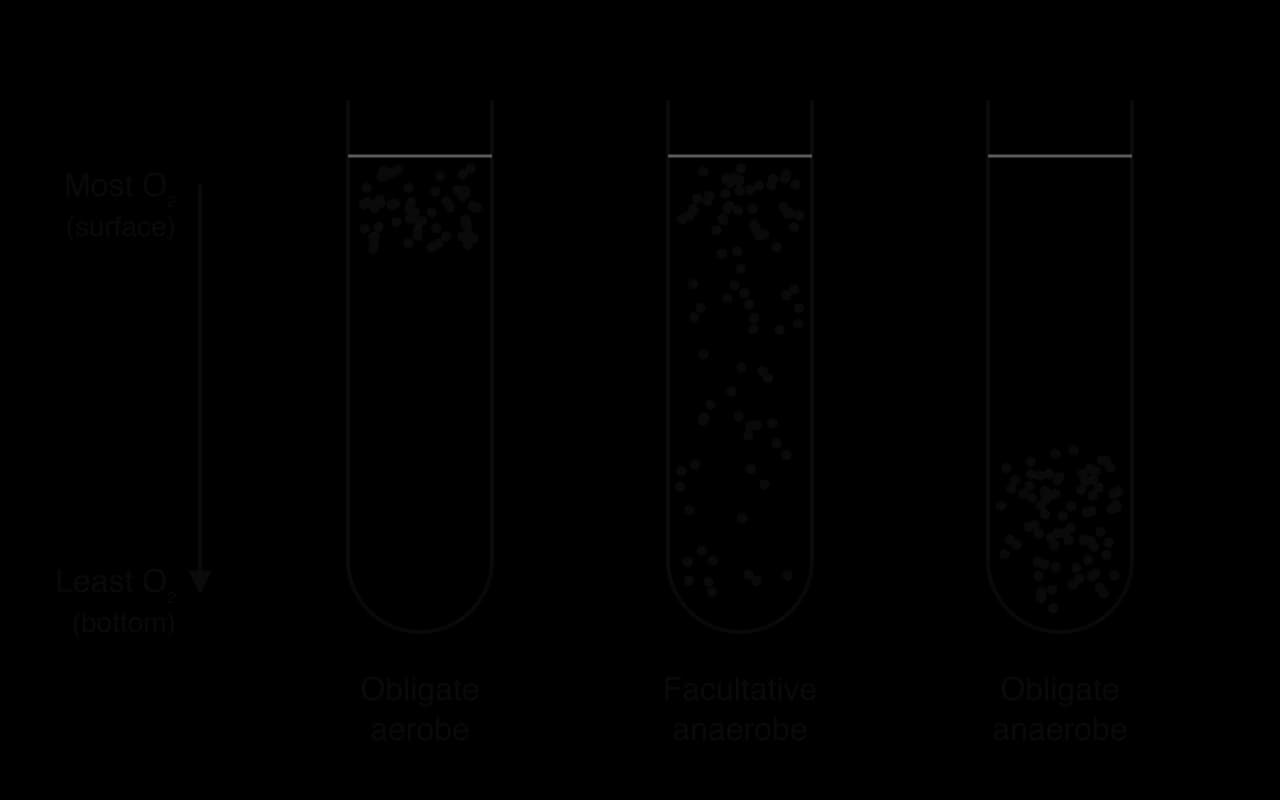
An obligate anaerobe is killed or inhibited by oxygen. It lives only in places where oxygen is absent, such as deep mud, waterlogged soils, the human large intestine and deep wounds. Clostridium botulinum, the bacterium that produces botulinum toxin, is an obligate anaerobe: it grows in badly preserved canned food, where the sealed can contains no oxygen. Methane-producing archaea in the stomachs of cattle are another example.
A facultative anaerobe can live with or without oxygen. It respires aerobically when oxygen is available and switches to anaerobic respiration (fermentation) when it is not. The bacterium Escherichia coli in the human gut and baker's yeast, Saccharomyces cerevisiae, are facultative anaerobes. Yeast in bread dough respires aerobically at first and then anaerobically, producing the ethanol and carbon dioxide that make the dough rise.
An obligate aerobe needs oxygen to survive, because it can only release enough energy by aerobic respiration. Almost all animals and plants are obligate aerobes as whole organisms, although some of their tissues can respire anaerobically for short periods. Mycobacterium tuberculosis, the bacterium that causes tuberculosis, is an obligate aerobe; it infects the lungs, where oxygen is plentiful.
Group | Effect of oxygen | Type of respiration | Examples |
|---|---|---|---|
Obligate anaerobe | Toxic: cannot survive in its presence | Anaerobic only | Clostridium botulinum; methanogenic archaea |
Facultative anaerobe | Tolerated and used when present; not needed | Aerobic when oxygen is present, anaerobic when it is absent | Escherichia coli; Saccharomyces cerevisiae (yeast) |
Obligate aerobe | Needed for survival | Aerobic | Mycobacterium tuberculosis; most animals and plants |
The three groups can be told apart by growing them in tubes of a nutrient medium that is exposed to air only at the surface. Oxygen diffuses slowly into the medium, so its concentration is highest at the top and falls towards the bottom. Each group grows only where the oxygen concentration suits it, as the diagram of the three culture tubes shows.
All organisms need a supply of energy and of carbon compounds to build their cells. The way an organism obtains these is its mode of nutrition. There are two broad groups. An autotroph makes its own carbon compounds from carbon dioxide and other simple inorganic substances, using an external energy source such as light. A heterotroph obtains its carbon compounds from other organisms, living or dead. Within these two groups there are several different modes, and each is linked to a different niche.
Mode of nutrition | Source of energy | Source of carbon | Examples |
|---|---|---|---|
Photosynthesis (photoautotrophic) | Light | Carbon dioxide | Plants, algae, cyanobacteria |
Holozoic | Food ingested from other organisms | Carbon compounds in the food | All animals, such as humans and lions |
Mixotrophic | Light and food from other organisms | Carbon dioxide and carbon compounds in food | Euglena; many oceanic plankton |
Saprotrophic | Dead organic matter, digested outside the organism | Carbon compounds in dead matter | Many fungi and bacteria |
Chemoautotrophic | Oxidation of inorganic chemicals | Carbon dioxide | Some bacteria and archaea |
Photosynthesis is the mode of nutrition of plants, algae and several groups of prokaryotes. Photosynthetic organisms absorb light with pigments and use the energy to make carbohydrates from carbon dioxide and water, releasing oxygen as a by-product. These carbohydrates are then converted into all the other carbon compounds the organism needs, such as proteins, lipids and nucleic acids, using minerals absorbed from the environment.
In plants and algae, photosynthesis takes place in chloroplasts. Algae range from single-celled organisms, such as the diatoms that float in the surface waters of oceans, to large multicellular seaweeds such as kelps. Among prokaryotes, the cyanobacteria carry out the same type of photosynthesis as plants, using chlorophyll and releasing oxygen, but they have no chloroplasts; their photosynthetic membranes lie free in the cytoplasm. Some other groups of bacteria also photosynthesise, using different pigments and without releasing oxygen. Photosynthetic organisms are the producers of almost every ecosystem, so the niches of all other organisms depend on them.
All animals are heterotrophs. Most of them feed by holozoic nutrition, in which pieces of food are taken into a gut or a food vacuole and broken down inside the body. The word comes from the Greek for "whole animal", because the food is taken in as solid pieces of other organisms.
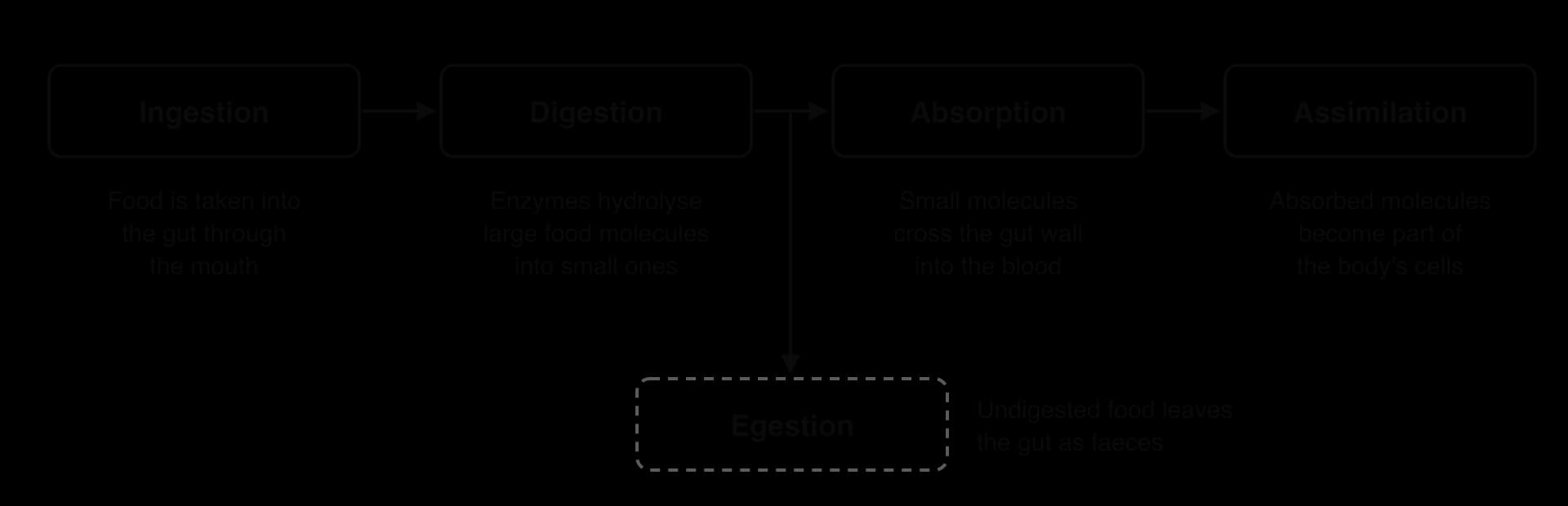
Holozoic nutrition follows the same sequence of stages in a lion, a human and a single-celled Amoeba. In humans, each stage happens in a different part of the digestive system, and the flow diagram of the five stages shows how they follow one another.
Ingestion: food is taken into the body, through the mouth in humans or into a food vacuole by phagocytosis in Amoeba.
Digestion: large insoluble food molecules are broken down into small soluble molecules. Mechanical digestion (chewing, churning by the stomach) breaks food into smaller pieces; chemical digestion uses enzymes to catalyse the hydrolysis of starch to sugars, proteins to amino acids and lipids to fatty acids and glycerol.
Absorption: the small molecules produced by digestion cross the wall of the gut (in humans, mainly the villi of the small intestine) into the blood or lymph.
Assimilation: the absorbed molecules are taken up by cells and used, either to build new parts of the body (for example amino acids built into proteins) or as respiratory substrates.
Egestion: food that was not digested or absorbed, such as cellulose in humans, leaves the gut as faeces.
Some protists can feed in two ways: they photosynthesise and they also take in food from other organisms. An organism that combines autotrophic and heterotrophic nutrition is a mixotroph. Mixotrophs do not fit the traditional division of living things into plants and animals, which is one reason the old two-kingdom classification was abandoned.
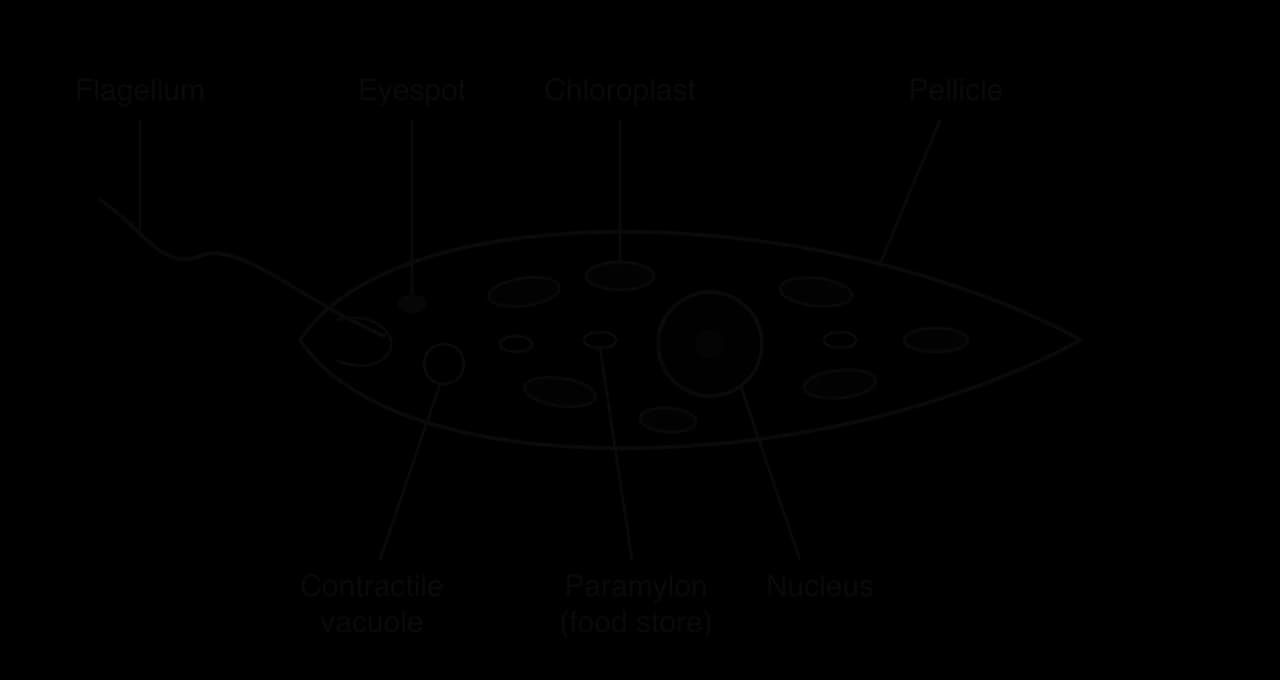
Euglena is a single-celled protist found in fresh water, especially in ponds and puddles rich in organic matter. It has chloroplasts and photosynthesises in the light. It can also absorb dissolved carbon compounds from the water, and some species ingest small particles of food. The labelled diagram of Euglena shows the structures linked to both modes of nutrition: chloroplasts for photosynthesis, an eyespot that detects light, and a flagellum that moves the cell towards it.
Euglena is a facultative mixotroph. Kept in the dark in water containing dissolved nutrients, Euglena gracilis survives as a heterotroph; its chloroplasts shrink and lose their chlorophyll, and they redevelop when the cell is returned to light. Other mixotrophs are obligate: they cannot grow unless they both photosynthesise and feed. Some marine dinoflagellates, for example, need to ingest prey to obtain nutrients such as nitrogen and phosphorus that are scarce in the open ocean, even though most of their energy comes from light.
Mixotrophs are far more common than was once thought. Many species of oceanic plankton, including dinoflagellates, haptophytes and some ciliates, are mixotrophs. Being able to switch between light and prey is an advantage in surface waters where light is plentiful but mineral nutrients are scarce, and in the dark months at high latitudes.
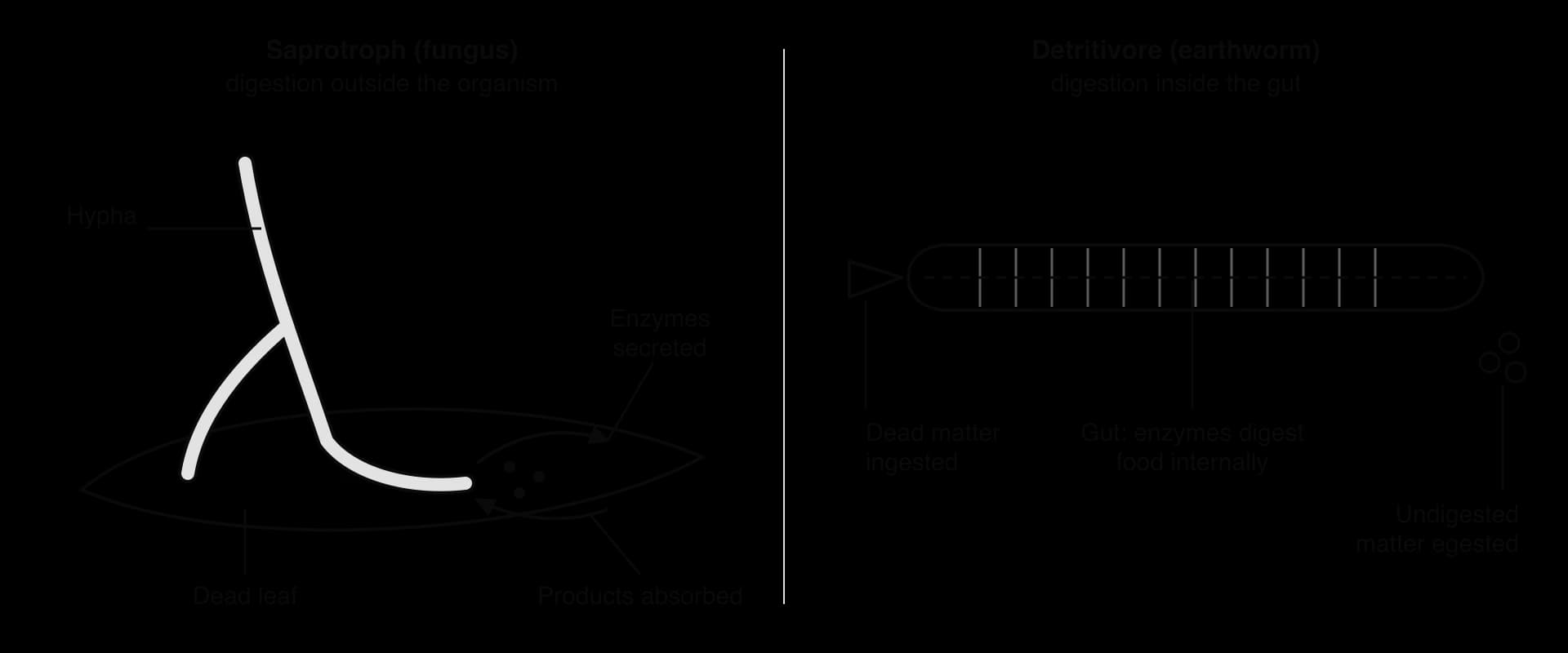
Many fungi and bacteria feed on dead organic matter, such as fallen leaves, dead wood, dead animals and faeces. They are saprotrophs. A saprotroph cannot ingest its food. Instead it secretes digestive enzymes into the dead matter around it, so digestion happens outside its cells. The small soluble molecules produced are then absorbed across its cell walls and plasma membranes.
Fungi are well suited to this mode of nutrition. A fungus grows as a network of thin threads called hyphae, which spread through the dead matter and give a very large surface area for secreting enzymes and absorbing products. Saprotrophic fungi and bacteria are the main decomposers of ecosystems. By breaking down dead matter, they release carbon dioxide and mineral ions such as nitrate and phosphate, which plants can absorb and use again. Without decomposers, nutrients would stay locked in dead organisms and ecosystems would run out of them.
Saprotrophs are different from detritivores, although both feed on dead organic matter (detritus). A detritivore is an animal that ingests dead matter and digests it internally, in its gut. Earthworms, woodlice and dung beetles are detritivores. The comparison of a fungal hypha and an earthworm shows the difference in where digestion happens.
Archaea are single-celled prokaryotes that form one of the three domains of life, alongside bacteria and eukaryotes. They look like bacteria under the microscope, but they differ in many of their molecules, such as the lipids of their membranes and the enzymes that copy and transcribe their DNA. Many archaea live in extreme environments, such as hot springs, very salty lakes and the oxygen-free mud at the bottom of swamps, but they are also abundant in the oceans and in soil.
Archaea are metabolically very diverse. Different species use one of three sources of energy to make ATP:
Light. Some salt-loving archaea, such as Halobacterium salinarum, use a light-driven protein in their membranes, bacteriorhodopsin, to make ATP. This process differs from photosynthesis in plants because it uses no chlorophyll and the light energy is not used to fix carbon dioxide.
Oxidation of inorganic chemicals. Some archaea oxidise substances such as hydrogen, hydrogen sulfide or ammonia. Many of these are chemoautotrophs, using the energy released to fix carbon dioxide. Methanogens, which release methane, are an example; they live in swamps, rice paddies and the guts of cattle.
Oxidation of carbon compounds. Other archaea are heterotrophs that obtain energy by oxidising carbon compounds taken from their surroundings, as many bacteria do.
This range of nutrition allows archaea to occupy niches that few other organisms can, which is an example of unity and diversity: all archaea use ATP as their energy currency, but they produce it in very different ways.
The teeth of a mammal are closely matched to its diet, because different foods need to be cut, pierced, crushed or ground in different ways. The number, shape and arrangement of the teeth is the dentition of a species. Mammals have four types of teeth: incisors at the front for cutting and biting, canines for piercing and gripping, and premolars and molars at the back for crushing and grinding.
Dentition is matched to diet in predictable ways. A herbivore eats plants, which are tough and fibrous because of their cellulose cell walls, so herbivores have large, broad, flat-topped molars and premolars that grind plant material, and they chew for long periods. A carnivore eats other animals, so carnivores have long, pointed canines for piercing and holding prey and blade-like cheek teeth for slicing meat. An omnivore eats both plants and animals and has teeth of intermediate form: moderate incisors and canines and molars with low, rounded cusps that can crush a range of foods.
The Hominidae are the family of great apes, which includes humans, chimpanzees, gorillas and orangutans, together with their extinct relatives. A hominid fossil skull carries strong evidence of diet, both in its teeth and in the bones to which the jaw muscles attach. Three hominids show the range of diets.
Homo sapiens, the modern human, is an omnivore. Humans have small incisors and small canines that barely project beyond the other teeth, and relatively small molars with low, rounded cusps. The jaw is short and the dental arch is curved (parabolic). The skull has no ridge of bone on top for jaw muscles. These features suit a varied diet of softer foods, many of them cooked or processed with tools.
Paranthropus robustus lived in southern Africa roughly 2 million to 1 million years ago; its fossils come from caves such as Swartkrans and Kromdraai in South Africa. It had very large, flat premolars and molars with thick enamel, small incisors and canines, and a deep, heavy jaw. Many skulls, especially those of males, have a sagittal crest, a ridge of bone along the top of the skull where very large temporalis (chewing) muscles attached, and the cheekbones flare widely to make room for these muscles. Together these features point to a herbivorous diet of tough plant foods such as seeds, nuts, roots and tubers that needed powerful grinding.
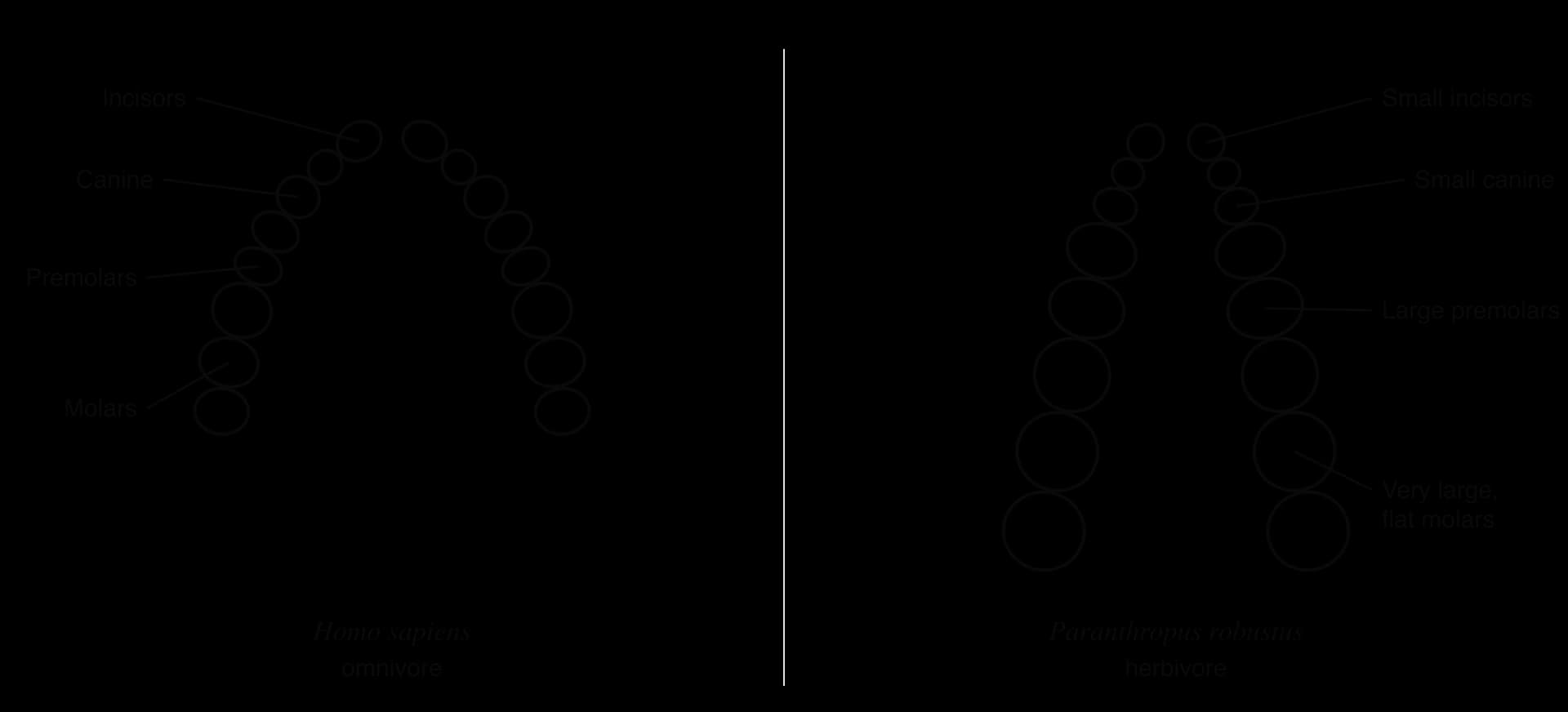
Fossil skulls can be studied directly, in museums or as casts and digital scans. The skull SK 48 from Swartkrans shows the features of Paranthropus robustus that are linked to heavy chewing.

Homo floresiensis was a small hominid, about 1.1 m tall, whose remains were found in 2003 in Liang Bua cave on the island of Flores, Indonesia, and described in 2004. Its molars are small, like those of other species of Homo, with no enlargement for heavy grinding, and it has no sagittal crest. Stone tools and the bones of a dwarf elephant-like animal, Stegodon, with cut marks were found in the same cave layers. Its small, unspecialised teeth and the evidence from the cave suggest an omnivorous diet that included meat as well as plant foods, although the details are still debated.
Herbivory is the eating of plants or parts of plants by animals. Plants are rooted in one place and cannot move away from herbivores, so the relationship between herbivores and the plants they eat has led to adaptations on both sides. Herbivores have evolved structures and chemistry for feeding on plants, and plants have evolved defences that reduce how much of them is eaten. These adaptations arose by natural selection: in each generation, herbivores that fed more successfully, and plants that were eaten less, left more offspring.
Leaf-eating insects show two main types of mouthparts. Chewing mouthparts, found in caterpillars, grasshoppers, locusts and leaf beetles, have hard, toothed mandibles that bite off and grind pieces of leaf. Piercing and sucking mouthparts, found in aphids, cicadas and other true bugs, form a long, thin stylet that pierces the plant and sucks out fluid. An aphid inserts its stylet between plant cells until the tip enters a phloem sieve tube, so it feeds on sugar-rich sap without chewing tissue at all.
Herbivorous mammals have teeth with large grinding surfaces, as in Paranthropus, and many have long guts or extra stomach chambers that hold microorganisms able to digest cellulose. Cattle, sheep and deer have a four-chambered stomach in which bacteria and other microbes break down cellulose, which mammals cannot digest with their own enzymes.
Plants defend themselves physically and chemically. Physical defences include:
Thorns and spines, such as the long thorns of acacia trees in the African savanna and the spines of cacti, which deter large browsing mammals.
Hairs (trichomes) on leaves and stems, which make it difficult for small insects to move and feed; the stinging hairs of nettles (Urtica dioica) inject irritant chemicals.
Tough tissues, such as thick waxy cuticles and grass leaves containing silica, which wear down teeth and are hard to chew and digest.
Chemical defences are secondary compounds: substances that are not needed for the plant's basic metabolism but that make its tissues toxic, bitter or indigestible. Nicotine in tobacco leaves, caffeine in coffee and tea, cyanide-releasing compounds in the seeds of bitter almonds and apples and in cassava roots, and the cardenolides of milkweed are examples. Seeds are often the most heavily defended parts of a plant, because the embryo and its food store are valuable to the plant and rich in nutrients for an animal.
Some herbivores have metabolic adaptations that allow them to detoxify, tolerate or even use these compounds. Koalas (Phascolarctos cinereus) feed almost entirely on eucalyptus leaves, which contain compounds toxic to most mammals; their liver enzymes break the toxins down. Caterpillars of the monarch butterfly (Danaus plexippus) feed on milkweed and store its toxic cardenolides in their tissues instead of breaking them down. The stored toxins pass to the adult butterfly, so a bird that eats a monarch vomits and afterwards avoids the species. In this case a herbivore adaptation also becomes a defence against predators.
Predation is an interaction in which one animal, the predator, kills and eats another animal, the prey. Predators need to find, catch and kill their prey, while prey animals need to avoid being found, caught or eaten, and both show chemical, physical and behavioural adaptations for these tasks.
Finding prey. Many predators have highly developed senses. Owls have forward-facing eyes for judging distance and ears placed asymmetrically on the head to locate prey by sound in darkness; sharks detect the electrical fields of hidden prey; rattlesnakes have pit organs that sense the infrared radiation emitted by warm-blooded prey.
Catching prey. Physical adaptations include speed (the cheetah, Acinonyx jubatus, is the fastest land mammal), camouflage for ambush hunting (the stripes of a tiger in long grass), and traps such as spider webs. Behavioural adaptations include pack hunting by wolves and lions, which allows them to catch prey larger than themselves.
Killing prey. Sharp canines and claws (cats), talons and hooked beaks (birds of prey) and chemical adaptations such as venom (snakes, spiders, scorpions and cone snails) kill or paralyse prey quickly.
Chemical defences. Many prey animals contain or produce toxins. Poison dart frogs such as Phyllobates terribilis have toxic skin secretions, and skunks spray foul-smelling chemicals at attackers.
Physical defences. Porcupine quills, the shells of tortoises and snails, and camouflage (the colour pattern of a stick insect or a moth resting on bark) all reduce the chance of being caught or eaten.
Behavioural defences. Living in groups (herds of wildebeest, shoals of fish) means more eyes to spot predators and a lower chance for each individual of being caught. Meerkats take turns as sentinels and give alarm calls, and some animals, such as the Virginia opossum, play dead.
Toxic prey animals are often brightly coloured. This warning colouration, such as the bright yellow, orange or blue of poison dart frogs and the black-and-yellow stripes of wasps, makes the prey easy for predators to recognise and remember. A predator that has a bad experience with one brightly coloured animal avoids others of the same appearance, so fewer individuals of the prey species are attacked. The relationship between predators and prey is a clear example of interaction and interdependence: each species is part of the other's environment, and each acts as a selection pressure on the other.
 YouTube
Type of adaptation | Predator example | Prey example |
|---|---|---|
Chemical | Venom of snakes and spiders paralyses or kills prey | Toxic skin secretions of poison dart frogs; cardenolides stored by monarch butterflies |
Physical | Speed of the cheetah; talons and hooked beak of an eagle | Quills of a porcupine; shell of a tortoise; camouflage of a stick insect |
Behavioural | Pack hunting by wolves; ambush by a crocodile at a waterhole | Herding; alarm calls of meerkats; playing dead |
Light is the energy source for photosynthesis, so plants compete for it. In a tropical rainforest the competition is intense. The tallest trees form a continuous canopy 30–45 m above the ground, which absorbs most of the light, so only a few per cent of the sunlight reaching the top of the forest arrives at the forest floor. Plants growing in the forest have evolved different forms that allow them to obtain enough light, and each form corresponds to a different niche. The diagram of a rainforest profile shows where each group of plants grows.
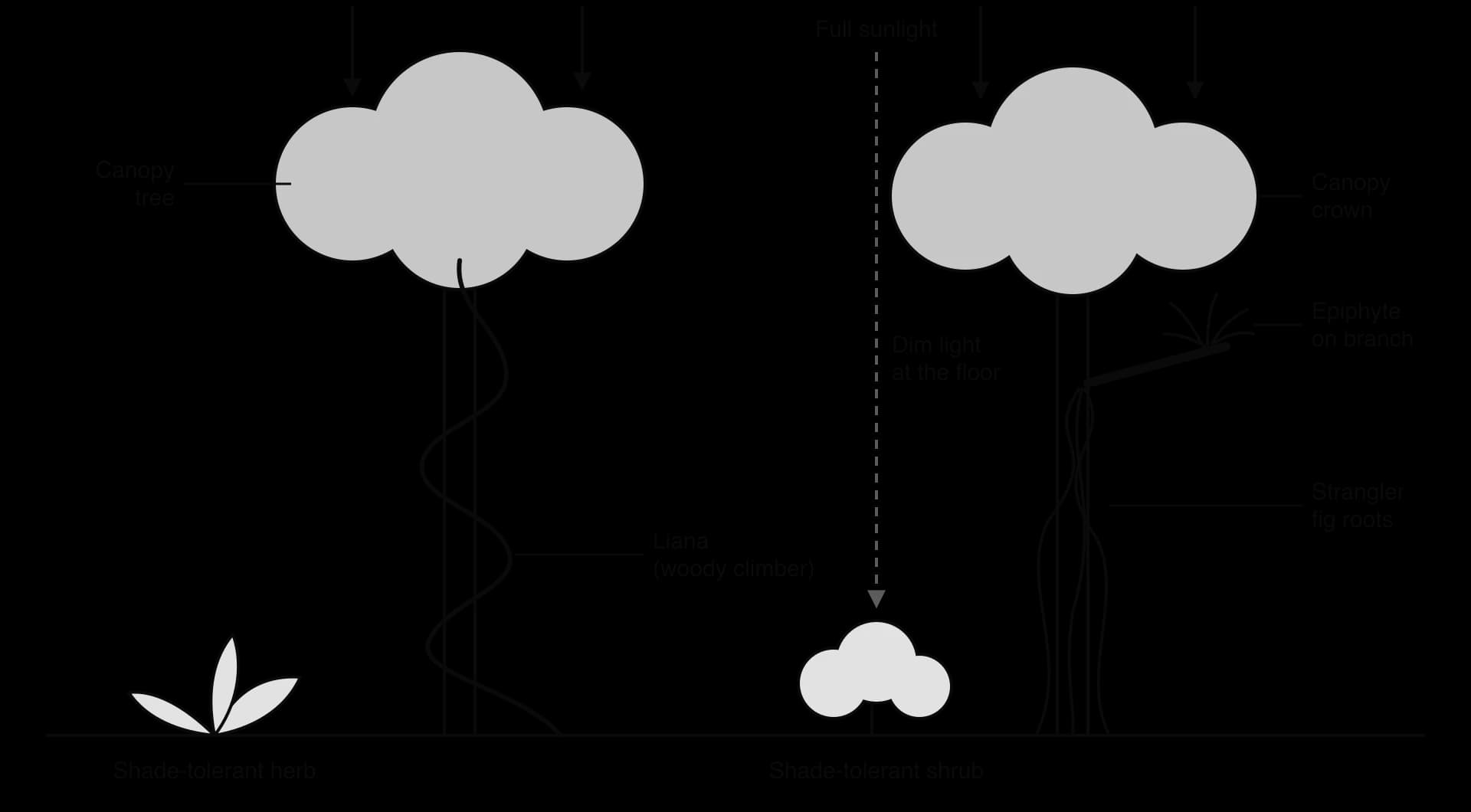
Trees that reach the canopy invest a large amount of energy in a tall, strong trunk. Many rainforest trees have buttress roots that spread from the base of the trunk and support it in the shallow soil. Their crowns spread wide at the top to intercept as much light as possible. A few emergent trees grow above the general canopy; in the forests of Borneo, trees of the genus Shorea can exceed 80 m, and a yellow meranti (Shorea faguetiana) in Sabah was measured at 100.8 m in 2019.
A liana is a woody climbing plant that is rooted in the soil but uses trees for support. It grows up a tree trunk by twining around it or by gripping it with hooks or tendrils, and spreads its leaves in the canopy. Because it does not build a self-supporting trunk, a liana spends less energy on support and more on growing upwards and producing leaves. Lianas are common in tropical forests, where they compete with their host trees for light.
An epiphyte is a plant that grows on the branches or trunk of another plant without taking nutrients from it. Orchids, bromeliads, ferns and mosses are common epiphytes in rainforests. Growing high on branches places them in bright light without the cost of a trunk, but it means they have no access to soil. Many epiphytes collect rainwater and falling debris: bromeliads have a rosette of leaves that forms a central tank of water, and many orchids have aerial roots with a spongy outer layer that absorbs water quickly.
Strangler figs (Ficus species) begin life as epiphytes. A bird or bat drops a seed onto a high branch, and the seedling grows there in the light. It sends long roots down the trunk of the host tree to the ground, where they absorb water and minerals from the soil and thicken. Over many years the roots join to form a lattice that encloses the host's trunk, and the fig's crown shades the host's crown. The host tree often dies and rots away, leaving a hollow fig tree standing in its place. The strangler fig combines the advantages of an epiphyte (starting in bright light) with those of a tree (access to the soil).
Plants of the forest floor are adapted to very low light. Shade-tolerant shrubs and herbs typically have large, thin, dark green leaves with a high concentration of chlorophyll per unit area and a low rate of respiration, so they can photosynthesise faster than they respire even in dim light. Many can also make use of sunflecks, brief patches of direct sunlight that pass through gaps in the canopy. When a large tree falls and opens a gap, faster-growing species that need more light can then grow on the floor.
The niche of a species can be described in two ways. A species has a range of conditions in which it could survive and reproduce, set by its adaptations and tolerance limits. In nature, however, it usually occupies only part of this range, because other species compete with it, prey on it or exclude it in other ways.
The fundamental niche is therefore set by the species itself: its physiology, anatomy and behaviour. It is the niche the species would occupy if no other species interfered. The realised niche is the actual niche the species occupies in a particular community, which is usually narrower because of interspecific competition (competition between different species) and other interactions such as predation.
Barnacles are small marine crustaceans that live cemented to rocks on the shore. As adults they cannot move; they feed by opening their shell plates when the tide covers them and filtering plankton from the water. On the rocky shore at Millport on the Isle of Cumbrae, Scotland, two species of barnacle live in separate bands. Chthamalus stellatus (now named Chthamalus montagui) forms a band high on the shore, near the high-tide line. Balanus balanoides (now Semibalanus balanoides) forms a band lower down, which spends more time under water.
The ecologist Joseph Connell studied why the two species were separated. He found that the larvae of Chthamalus settle on rocks across a wide range of heights, including in the Balanus zone, but that young Chthamalus barnacles low on the shore did not survive long. Balanus grows faster and is larger; as its individuals grow, they smother, undercut and crush the smaller Chthamalus and take the space on the rock. Space on the rock is the limiting resource for barnacles, because each individual needs a patch of bare rock to attach to.
To test this, Connell carried out a field experiment. He attached stones carrying young Chthamalus at different heights on the shore and, on some of them, removed all Balanus individuals, leaving others untouched as a control. Where Balanus had been removed, Chthamalus survived well below its normal zone, far down into the area that Balanus usually occupies. Where Balanus remained, Chthamalus low on the shore was crowded out. The experiment also showed why Balanus does not live higher: high on the shore the rocks are exposed to air for long periods at low tide, and Balanus dies from drying out, while Chthamalus tolerates this desiccation.
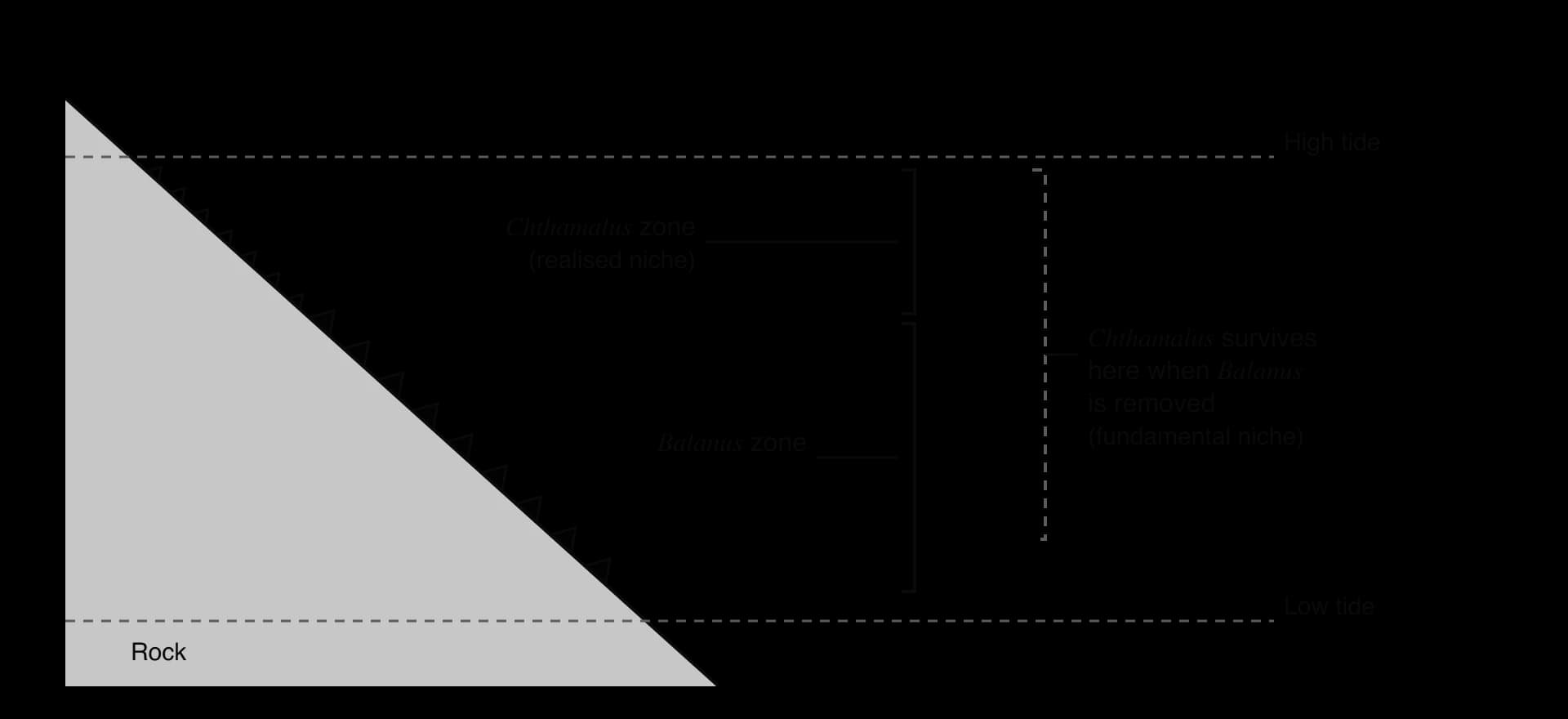
The results separate the two kinds of niche clearly. The fundamental niche of Chthamalus includes both the upper and the middle shore, because it can tolerate the conditions throughout this range. Its realised niche is only the upper shore, because competition with Balanus excludes it from lower down. For Balanus, the upper limit is set by an abiotic factor (desiccation), while for Chthamalus the lower limit is set by a biotic factor (competition). The study was influential because it used a controlled field experiment, rather than observation alone, to test a hypothesis about what limits the distribution of a species.
When two species need the same limited resource, such as food, light, nesting sites or space on a rock, they compete. If the niches of two species overlap completely, one of them is usually better at obtaining the shared resource. Over time it increases in number and the other declines, an outcome described by the competitive exclusion principle.
It follows from competitive exclusion that each species in a stable community has a unique niche. Two species can share some resources, but they cannot have exactly the same requirements for long. Laboratory competition experiments with species of Paramecium support the principle (see C4.1 Populations and communities), and field studies such as Connell's show how it operates in nature.
When two species with overlapping niches meet, there are two possible outcomes:
Elimination of one species. If the overlap is large and one species is clearly the better competitor, the other species is excluded from the area. It may become locally extinct, or survive only in other places where the competitor is absent.
Restriction of both species to part of their fundamental niches. If each species is the better competitor under some conditions, both survive but each is confined to the part of its fundamental niche where it competes best. This division of resources is niche partitioning (also called resource partitioning).
The graph of resource use by two species shows what overlap means. Each curve shows how much a species uses a resource of different sizes, such as seeds. Where the curves overlap, the two species compete. Natural selection tends to favour individuals of each species that use the resources less used by the other, which reduces the overlap over many generations.
In 1958 the ecologist Robert MacArthur studied five closely related species of small insect-eating birds, the wood warblers (Setophaga, formerly Dendroica), in the spruce forests of New England in the USA. The Cape May, yellow-rumped, black-throated green, Blackburnian and bay-breasted warblers all feed on insects in the same spruce trees, which seemed to contradict competitive exclusion. MacArthur recorded where each species fed and found that they used different parts of the trees: some fed mainly at the tips of the upper branches, others in the dense middle of the tree near the trunk, and others in the lower branches. They also differed in how they searched for insects and in the timing of their breeding. By partitioning the trees, the five species reduce competition and coexist.
The warblers show the second outcome of competition. Each species has a realised niche narrower than its fundamental niche, and together they use the resources of the forest more completely than any one species could. Species with partitioned niches often show differences in feeding structures too, such as beak size, which allow them to specialise on different foods.
 YouTube
Questions on ecological niches appear in Paper 1A as definitions and classifications (niche or habitat, modes of nutrition, oxygen tolerance), in Paper 1B as data from growth experiments, field distributions or skull measurements, and in Paper 2 as short explanations of adaptations and longer answers on competition and niches. The command terms most often used are define, distinguish, outline, explain, deduce and suggest.
Data questions often show the distribution of a species with and without a competitor, as in Connell's experiment. To score well, describe the pattern with values from the graph or table, then link it to fundamental and realised niches, and identify whether an abiotic or biotic factor sets each limit.
Sketches of skulls and dental arches are quick to make, and each feature can be annotated with the function it suggests.
I can define an ecological niche and distinguish it from a habitat.
I can distinguish obligate anaerobes, facultative anaerobes and obligate aerobes, and deduce the type from growth in a tube.
I can outline photosynthesis, holozoic, mixotrophic and saprotrophic nutrition with named examples.
I can list the five stages of holozoic nutrition in order and distinguish egestion from excretion.
I can distinguish between saprotrophs and detritivores.
I can describe the three energy sources used by archaea.
I can deduce the diet of a hominid from its skull and teeth.
I can explain adaptations of herbivores, plants, predators and prey, with named examples.
I can describe how canopy trees, lianas, epiphytes, strangler figs and shade-tolerant plants obtain light.
I can compare and contrast fundamental and realised niches, using Connell's barnacles as evidence.
I can explain competitive exclusion and its two possible outcomes, including niche partitioning.
Z: growth only near the top of the tube
Which row identifies the three species?
Row | X | Y | Z |
|---|---|---|---|
A | obligate anaerobe | facultative anaerobe | obligate aerobe |
B | obligate aerobe | facultative anaerobe | obligate anaerobe |
C | facultative anaerobe | obligate anaerobe | obligate aerobe |
D | obligate anaerobe | obligate aerobe | facultative anaerobe |
Which of these organisms obtain their nutrition by photosynthesis?
I. Moss plants
II. Seaweeds (multicellular algae)
III. Cyanobacteria