Explain how organisms are adapted to the abiotic conditions of their habitats, from sand dunes, mangroves and coral reefs to deserts and rainforests, and how climate determines where biomes form.
Each is in the Biology glossary, with every other term in the subject.
A non-living physical or chemical feature of the environment that affects organisms, such as temperature, light intensity, water availability, salinity or pH.
A heritable characteristic that increases the chance of an organism surviving and reproducing in its environment; adaptations arise by natural selection over many generations.
A group of ecosystems with similar communities of organisms, resulting from similar abiotic conditions, especially temperature and rainfall, and from convergent evolution.
An effect of other living organisms on an organism or population, such as competition, predation, parasitism, disease or food supply.
A graph showing climate: either the monthly temperature and precipitation of one place, or the mean annual temperature and precipitation at which each biome occurs.
A marine ecosystem built on a calcium carbonate framework deposited by reef-building corals, found in warm, clear, shallow tropical seas of normal salinity.
A form of photosynthesis in which stomata open at night and CO₂ is stored as organic acids, then released for photosynthesis during the day while the stomata are closed, reducing water loss.
An electronic device that records measurements from one or more sensors at set intervals over a period of time.
Every organism lives in a particular place, and the physical and chemical conditions of that place determine whether it can survive there. Sand dunes, tidal swamps, coral reefs, deserts and rainforests each set different problems of water, salt, temperature, light and oxygen, and the species that live in them have adaptations to these problems.
The same link between conditions and life applies at every scale, from the leaf of a single grass plant on a dune to the distribution of forests, grasslands and deserts across whole continents.
36 exam-style questions on this subtopic, written in the style of the IB papers. The first has its markscheme open. Counted on
Which is a description of the habitat of the Eurasian otter (Lutra lutra)?
A habitat is the place where an organism, population or species lives, described by its geographical and physical location and the type of ecosystem; B does this. A describes part of the otter's ecological niche (its role and how it obtains food), not where it lives. C describes a population and D describes a community.
The answer is B.
Which adaptation of marram grass (Ammophila arenaria) reduces water loss on sand dunes?
The official deck for this part of the syllabus.
What is a habitat?
Give two examples of large habitats and two examples of very small habitats.
With a free account, Augment remembers where you stopped and what you have practiced.
A community of interacting organisms together with the abiotic (non-living) environment with which they interact.
A biome with low to moderate rainfall and a dry season, dominated by grasses, with few trees because of drought, fire and grazing; includes temperate grassland and savanna.
The place in which a community, species, population or organism lives, described by its geographical location, physical location and type of ecosystem.
A plant adapted to grow in soil or water with a high salt concentration, for example by excluding or excreting salt.
A biome with very low, unpredictable rainfall (under about 250 mm a year), very high daytime temperatures and sparse, drought-adapted vegetation.
The environmental factor that is furthest from its optimum value and so restricts the growth, survival, distribution or abundance of a species, or the rate of a process.
Water produced inside an organism by aerobic cell respiration of food, an important water source for desert animals such as kangaroo rats.
A specialised root that grows vertically upwards out of waterlogged mud, allowing gas exchange with the air through lenticels, as in Avicennia mangroves.
The range of values of an abiotic factor between the upper and lower limits within which a species can survive; abundance is highest at the optimum.
A biome with long, very cold winters, short cool summers and low to moderate precipitation, dominated by evergreen coniferous trees.
A biome with warm summers, cool or cold winters and moderate rainfall through the year, dominated by deciduous broadleaved trees.
A line across a habitat along which organisms are sampled at regular intervals, used to study how their distribution changes along an environmental gradient.
A biome with high temperatures (about 25–28 °C) and heavy rainfall (usually over 2,000 mm) all year, dominated by tall, broadleaved evergreen trees.
A treeless biome with very low temperatures for most of the year, low precipitation and permanently frozen subsoil (permafrost), with mosses, lichens and dwarf shrubs.
A plant adapted to survive in dry habitats where water is scarce, by reducing water loss, storing water or obtaining water efficiently.
A habitat is the place where an organism, population, species or community lives. Habitats can be large, such as the open ocean or a tropical rainforest, or very small, such as the underside of a rock or the gut of an animal.
A full description of a habitat includes three things. The geographical location says where on Earth it is (a continent, country, coastline or latitude). The physical location says where within that area the organism is found (on the seaward side of a dune, in the shallow water of a lagoon, under the bark of a tree). The type of ecosystem names the larger system of living things and their environment of which the habitat is part (a coastal dune system, a mangrove swamp, a coral reef).
For example, the habitat of marram grass (Ammophila arenaria) can be described as: coasts of Europe and North Africa (geographical location); the loose, wind-blown sand of young dunes just above the reach of the tides (physical location); a coastal sand dune ecosystem (type of ecosystem).
The conditions of a habitat are of two kinds. Abiotic factors are non-living physical and chemical features, such as temperature, light intensity, water availability, salinity, soil pH, oxygen concentration and wind. Biotic factors are the effects of other living organisms, such as competition, predation, disease and food supply.
An adaptation is a heritable feature that makes an organism better suited to its environment, increasing its chance of surviving and reproducing there. Adaptations can be structural (the shape of a leaf or root), physiological (the way the body works, such as excreting salt) or behavioural (what the organism does, such as burrowing during the heat of the day).
Adaptations arise by natural selection over many generations. In a population, individuals vary, and some of that variation is heritable. Individuals whose heritable features suit the conditions better survive and reproduce more, so they pass on more copies of the alleles for those features. Over many generations the features become common in the population.
Coastal sand dunes are a difficult habitat for plants. Sand drains quickly, so water is scarce near the surface even in wet climates. Strong onshore winds dry out leaves and carry salt spray. Loose sand blows about, so plants are buried, and their roots can be exposed. Sand also holds few mineral nutrients. Marram grass (Ammophila arenaria) is the main species that colonises and builds young dunes on the coasts of Europe.
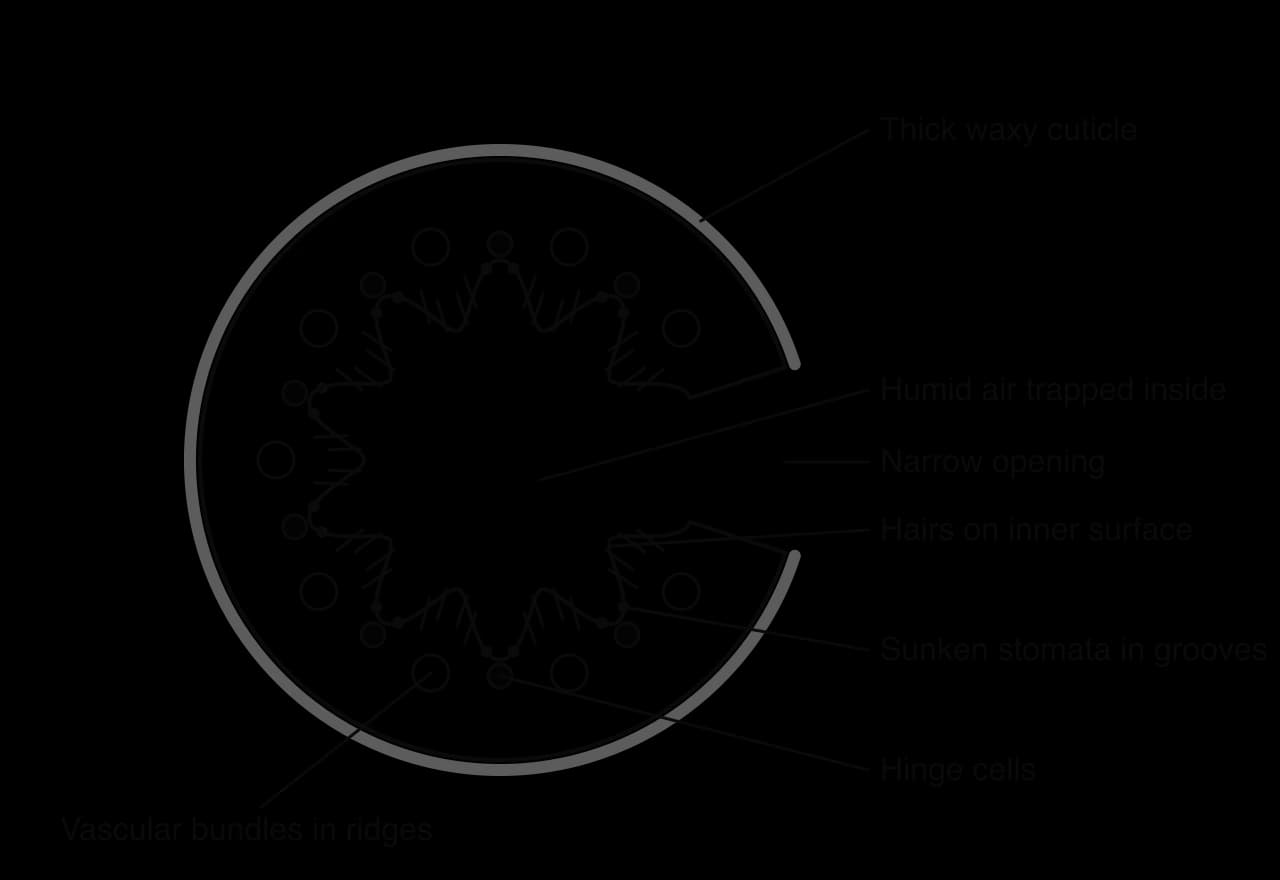
Many of marram grass's adaptations reduce water loss by transpiration, which makes it a xerophyte. The transverse section of a marram leaf shows them.
Rolled leaves. In dry weather, large thin-walled hinge cells at the base of the grooves lose water and shrink, so the leaf rolls into a tube with the upper surface inside. The stomata face a pocket of humid air instead of the wind.
Stomata in grooves. The stomata are only on the inner surface, sunk in deep grooves between ridges, where air is still and humid.
Hairs. Stiff hairs on the inner surface trap a layer of moist air close to the stomata.
Thick waxy cuticle. The outer surface, exposed to the wind, has no stomata and a thick waxy cuticle, so little water evaporates through it.
Long roots and rhizomes. Roots can reach several metres down to damper sand, and horizontal underground stems (rhizomes) spread through the dune and bind the sand.
Growth when buried. When marram is buried by blowing sand, its shoots grow upwards through the new layer. This means the plant survives burial, and it traps more sand and builds the dune higher.
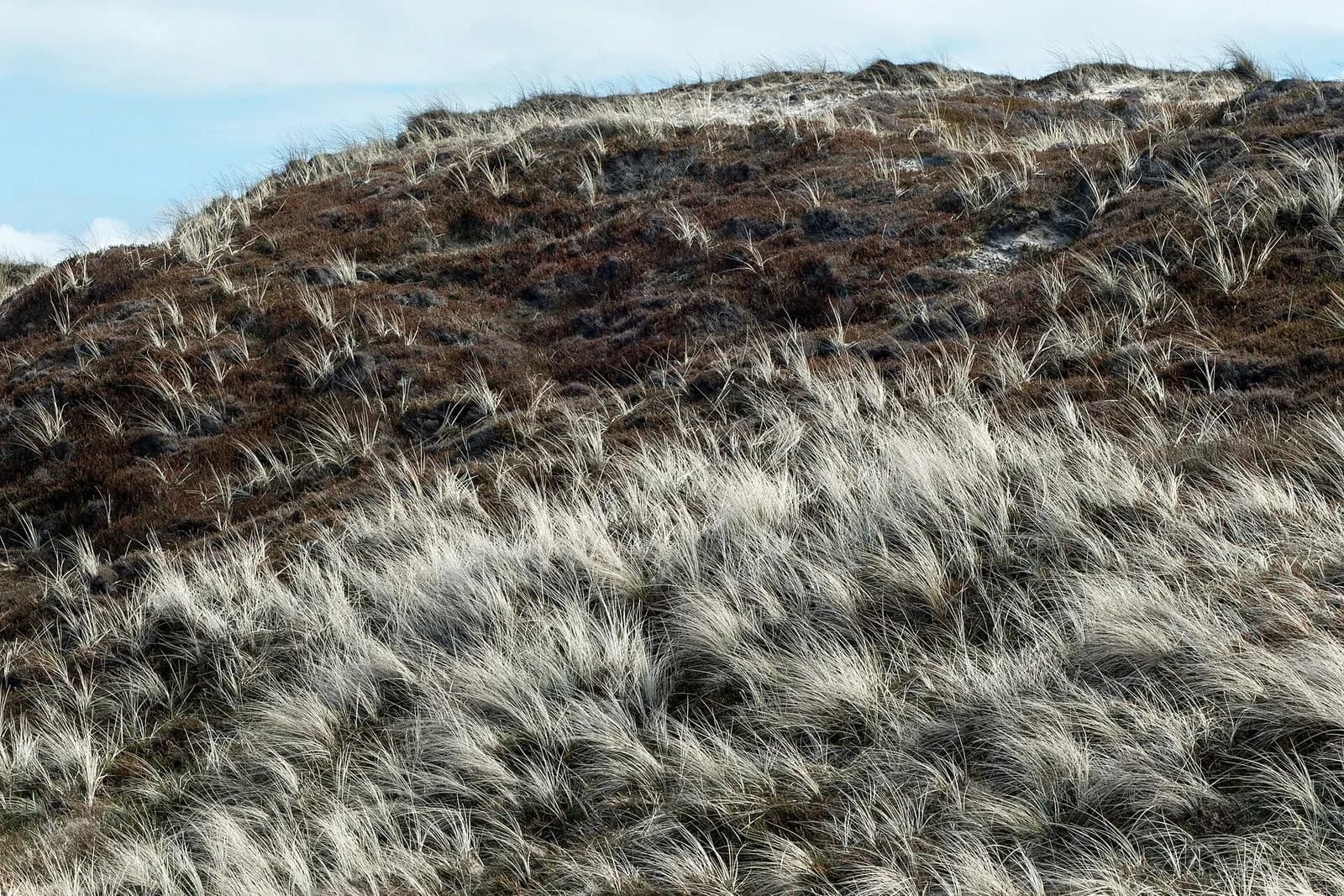
In marram grass almost every feature of the leaf reduces water loss, and every feature of the underground parts deals with mobile, dry sand, so the plant is an example of form matching function at the level of a single organ.
Mangroves are trees and shrubs that grow between the high and low tide marks on sheltered tropical and subtropical coasts, in estuaries and lagoons. Their habitat sets three main problems. The water is salty, so the plants risk losing water by osmosis and taking in toxic amounts of sodium and chloride ions. The mud is waterlogged and anoxic (contains almost no oxygen), so roots buried in it cannot get oxygen for aerobic cell respiration. The mud is also soft and is washed by the tides twice a day, so trees are easily uprooted.
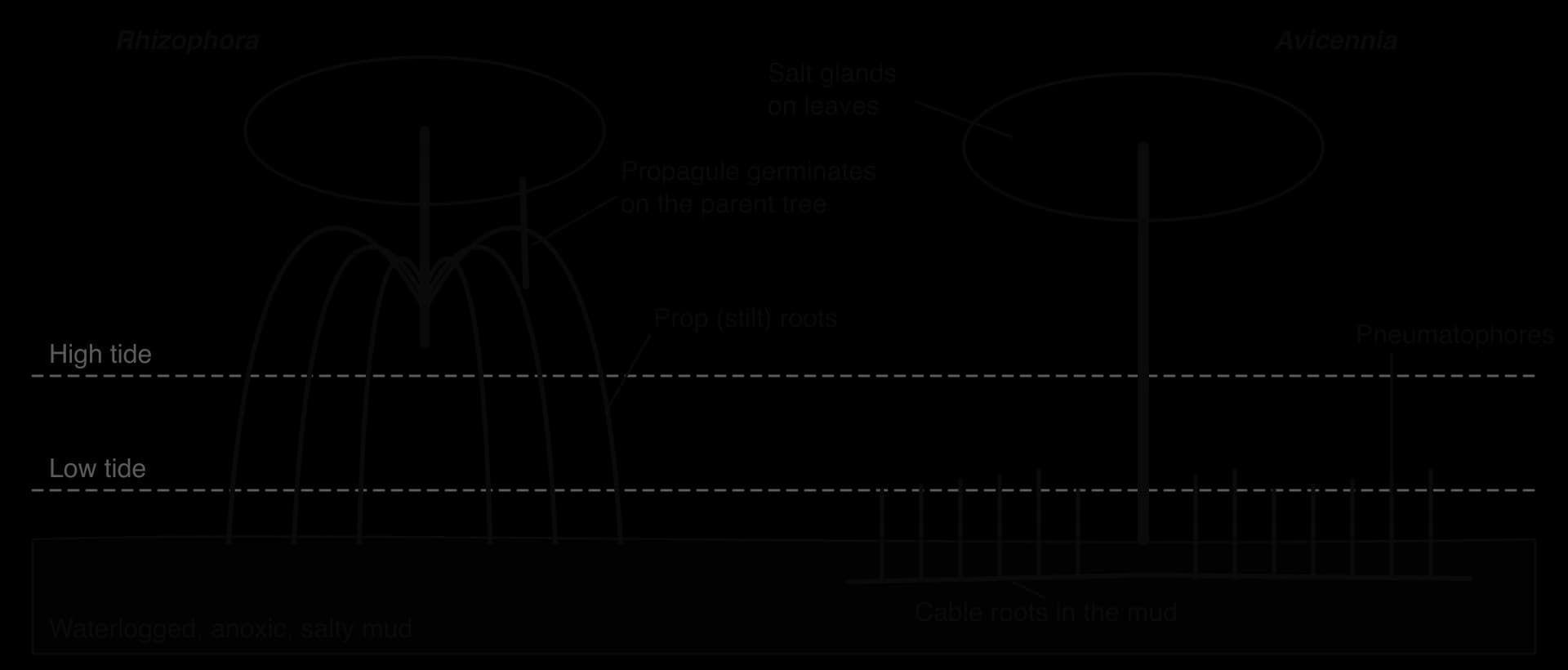
Mangroves are halophytes, plants adapted to salty conditions. Two widespread genera show different solutions to the same problems, as the diagram of Rhizophora and Avicennia shows.
Abiotic problem | Rhizophora (red mangroves) | Avicennia (black and grey mangroves) |
|---|---|---|
Unstable, soft mud | Arching prop (stilt) roots grow down from the trunk and branches, anchoring the tree like a tripod | Shallow cable roots spread widely through the mud |
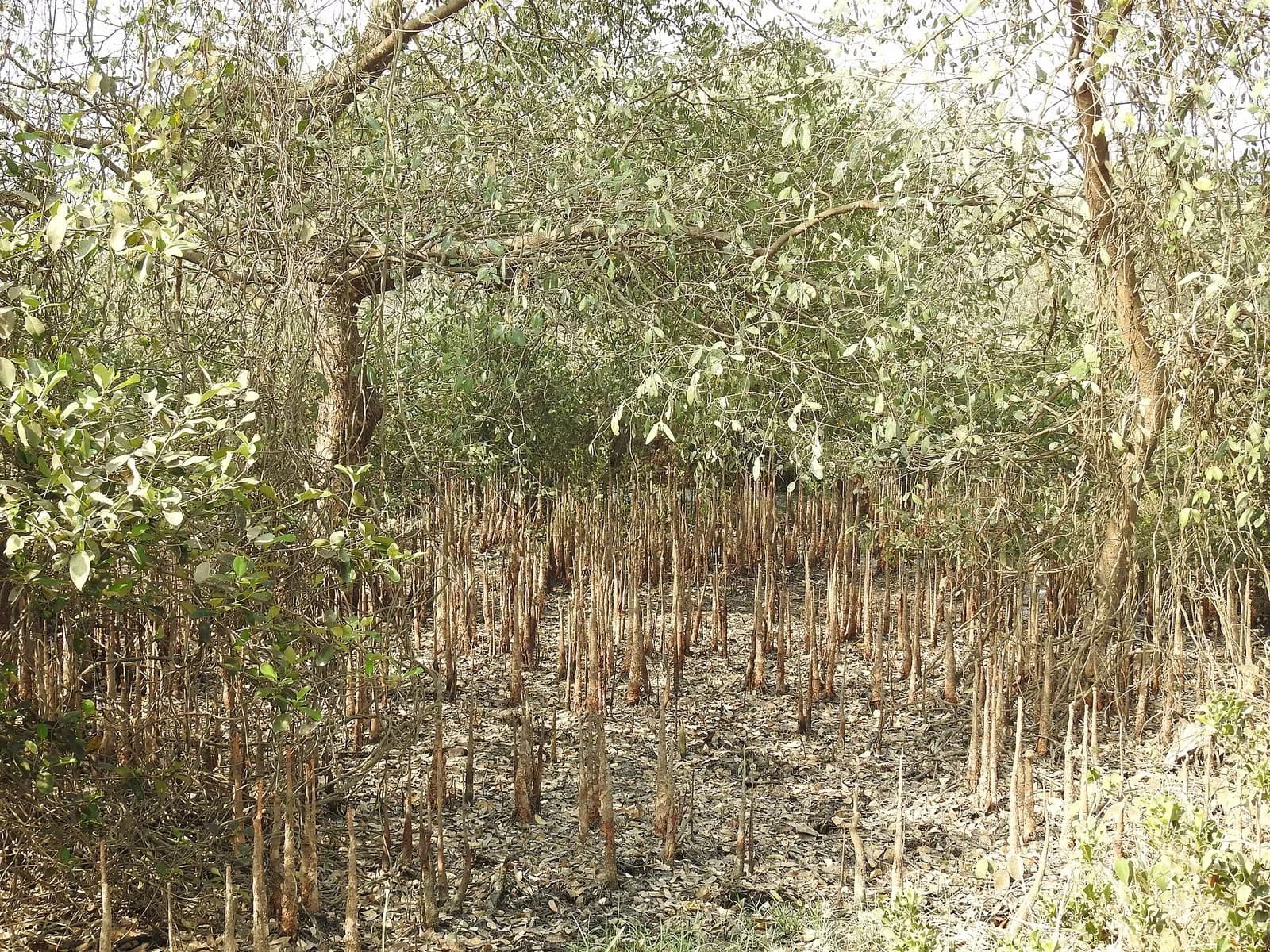
Waterlogged, anoxic mud | Prop roots above the mud have lenticels (pores) through which air reaches the roots | Pneumatophores: vertical roots grow upwards out of the mud and take in air through lenticels at low tide |
High salinity | Roots exclude most salt as water is taken up | Salt glands on the leaves excrete excess salt, which forms crystals on the leaf surface |
Seeds swept away by tides | Seeds germinate while still on the parent tree (vivipary); the long propagule drops and can root quickly in the mud | Seeds also start to germinate on the tree before they fall |
The distribution of a species is where it is found. On every scale, from a single field to a whole continent, distribution depends partly on abiotic variables. Each species can survive and reproduce only where the conditions are within the limits its adaptations allow.
Group | Abiotic variables that commonly limit distribution |
|---|---|
Plants | Light intensity, temperature, water availability, soil pH, soil mineral nutrients, salinity, wind exposure, waterlogging |
Land animals | Temperature, water availability, humidity, shelter, day length |
Aquatic animals | Temperature, dissolved oxygen concentration, salinity, pH, water flow, depth and light |
Heather (Calluna vulgaris) grows on acidic, nutrient-poor soils such as moorland and heathland, and is absent from soils over chalk and limestone, where the soil pH is high. Soil pH affects which mineral ions are available to roots, and heather is adapted to acid soils. Glasswort (Salicornia europaea) grows on the lowest, most often flooded parts of salt marshes, where few other flowering plants tolerate the high salinity; it stores water in succulent stems and accumulates salt in its cells.
The brown trout (Salmo trutta) lives in cool, clear, fast-flowing rivers and lakes. It needs a high concentration of dissolved oxygen, and cold water holds more oxygen than warm water, so trout disappear from stretches of river where the water becomes warm or polluted with organic matter. The common limpet (Patella vulgata) lives on rocky shores but not on the highest rocks, which are uncovered by the sea for so long that limpets dry out and overheat; the upper limit of its distribution on the shore is set mainly by desiccation and temperature.
For any abiotic factor, a species has a range of tolerance: the span of values between the lowest and highest levels it can survive. Within that range there is an optimum, where individuals grow and reproduce best and the population is most abundant.
A tolerance curve is divided into zones on either side of the optimum:
Optimum range. Conditions are best; individuals grow, survive and reproduce well, so the population is largest.
Zones of physiological stress. Individuals survive, but they grow and reproduce less because they use energy to cope with the conditions, so the population is smaller.
Zones of intolerance. Beyond the limits of tolerance no individuals survive, so the species is absent.
A species is limited by whichever factor is furthest from its optimum. That factor is the limiting factor for its distribution in that place. A plant on a shaded woodland floor may have plenty of water and nutrients but grow slowly because light intensity is low. Moving the same plant into the open removes the light limit, but drought may then become limiting.
Adaptations shift and widen a species' range of tolerance. Marram grass tolerates much drier sand than most grasses, and mangroves tolerate salinity that would kill most trees. Species with wide ranges of tolerance for several factors are often widespread, while species with narrow ranges, such as reef-building corals, are restricted to places with very particular conditions.
Abiotic factors often change gradually across a habitat: from the sea inland across sand dunes, down a rocky shore, from the edge of a wood into its interior, or up a mountainside. A transect is a line across such a habitat along which samples are taken, so that changes in the distribution of species can be related to changes in an abiotic variable.
In a line transect, organisms touching the line are recorded at regular intervals. In a belt transect, a quadrat is placed at regular intervals along the line, and the abundance of each species in the quadrat is recorded as a count, a percentage cover or on an abundance scale. At each quadrat the abiotic variables are measured.
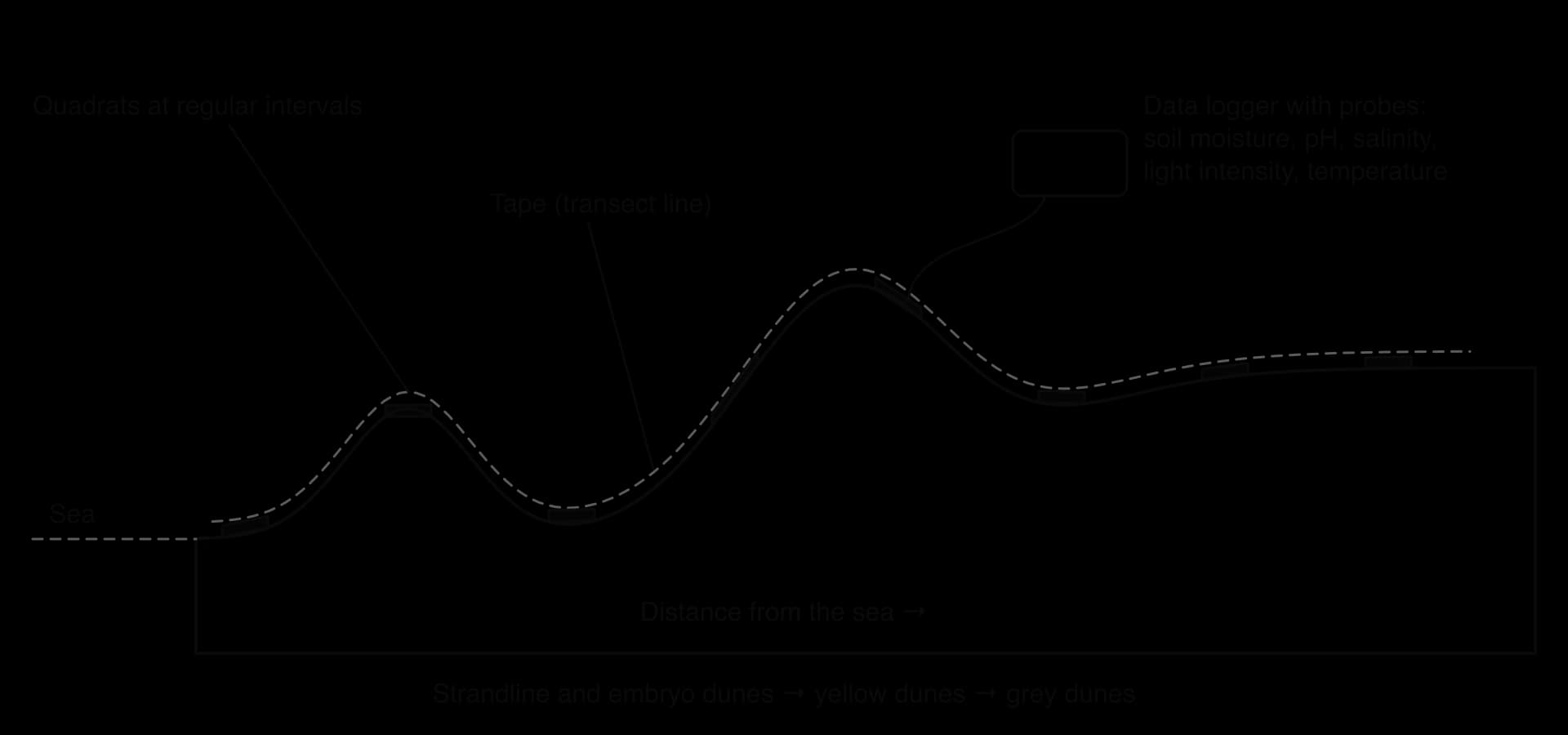
Sensors connected to data loggers measure abiotic variables quickly and precisely, and can record them continuously over hours or days. Light meters, temperature probes, soil moisture probes, pH probes, conductivity (salinity) probes and dissolved-oxygen probes are all used in fieldwork. A data logger left at a site records how a variable changes over time, which a single reading cannot show.
Choose a habitat with a clear environmental gradient, such as sand dunes from the sea inland, and lay a tape measure along the gradient.
Place a quadrat at regular intervals (for example every 10 m) along the tape. Systematic sampling at fixed intervals is used because the aim is to follow a gradient, not to estimate a mean for the whole area.
In each quadrat, record the abundance of the study species, for example as percentage cover.
At each quadrat, measure the abiotic variables with sensors (soil moisture, pH, salinity, light intensity, temperature), taking repeat readings.
Repeat the whole transect along two or more parallel lines to check that the pattern is not unique to one line.
Plot abundance and the abiotic variable against distance, and look for a correlation between them.
Fieldwork should cause as little harm as possible. Trampling destroys dune vegetation and starts erosion, so routes are kept to existing paths where possible, quadrats are placed rather than dragged, organisms are identified in place and not removed, and permission is obtained to work in protected areas.
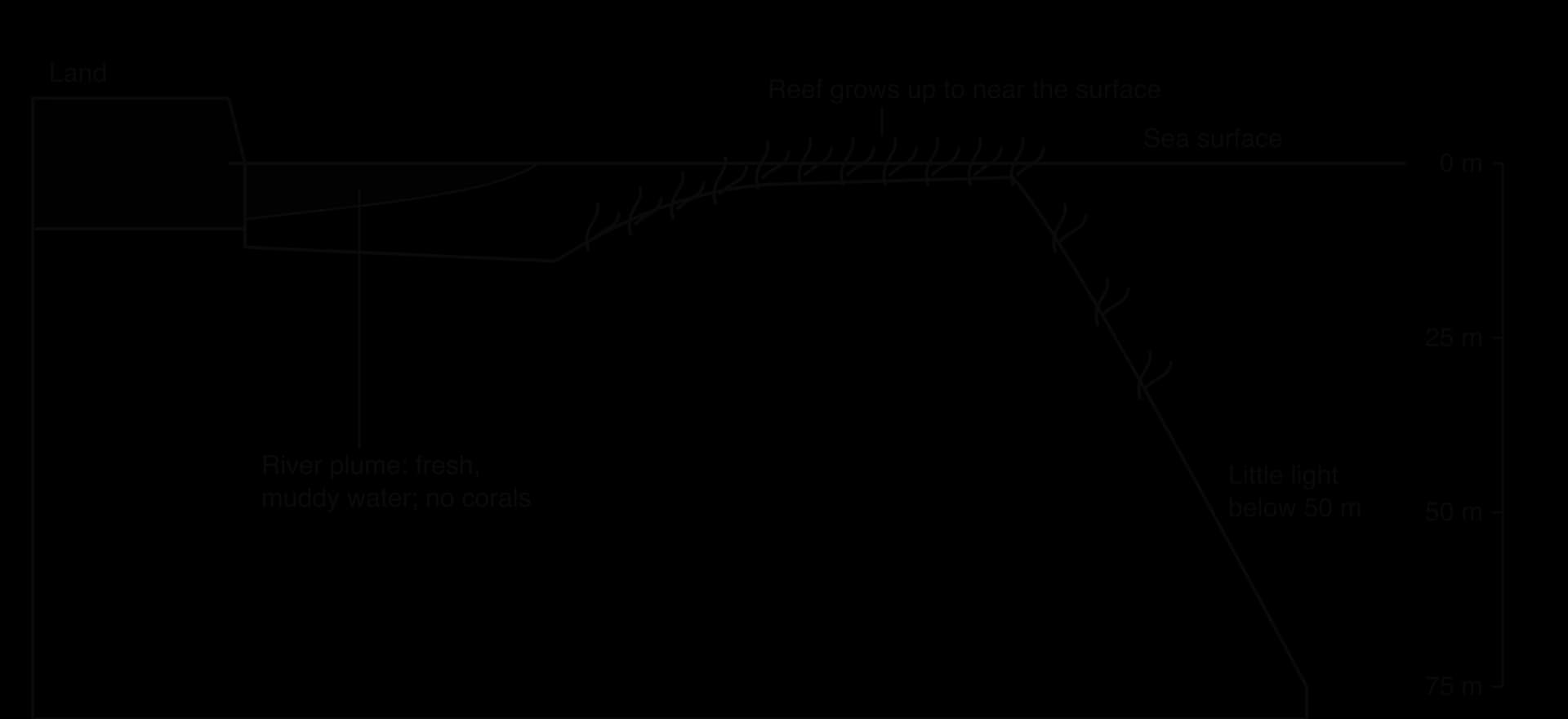
A coral reef is a marine ecosystem built on a framework of calcium carbonate laid down by colonies of reef-building corals. Each coral polyp is a small animal related to sea anemones. Living inside the cells of its tissues are photosynthetic algae, the zooxanthellae, which supply the coral with most of its food in the form of sugars from photosynthesis. In return the coral gives the algae shelter, carbon dioxide and nutrients. Most of the conditions that reefs need, listed in the table of reef conditions, follow from the needs of this partnership.
Condition | What reef-building corals need | Why |
|---|---|---|
Water depth | Shallow: most reef growth is in the top 50 m or so | Light for photosynthesis by zooxanthellae decreases rapidly with depth |
Clarity | Clear water with little suspended sediment | Sediment blocks light and can smother the coral polyps |
Temperature | Warm, generally about 18–29 °C | Below this range coral growth and calcification are too slow; above it corals expel their zooxanthellae (coral bleaching) |
Salinity | Normal sea-water salinity, about 35 g of salts per kg of water | Corals cannot tolerate fresh water, so reefs are absent near the mouths of large rivers |
pH | Slightly alkaline sea water (about pH 8.1) | Lower pH reduces the carbonate ions available for building the calcium carbonate skeleton |
These conditions explain the distribution of reefs. Most coral reefs are found between about 30° N and 30° S, on the eastern sides of continents and around tropical islands, where shallow, clear, warm water is available. The Great Barrier Reef off north-eastern Australia is the largest reef system. Reefs are missing where cold currents flow along tropical coasts, as on the west coast of South America, and at the mouths of large rivers such as the Amazon, which carry fresh water and sediment into the sea. Rising sea temperatures and ocean acidification threaten reefs because they push conditions outside the corals' range of tolerance (see D4.3).
 YouTube
On land, the two abiotic factors with the greatest effect on which ecosystems develop are temperature and rainfall (precipitation). Temperature controls the rates of photosynthesis, growth and decomposition and the length of the growing season. Rainfall controls how much water is available to plants. For a given pattern of temperature and rainfall, one natural type of ecosystem is likely to develop, wherever on Earth that climate occurs.
A climograph shows this relationship. The type used to compare biomes plots mean annual temperature against mean annual precipitation, with an area for each biome. A second type describes the climate of a single place, with mean monthly temperature drawn as a line and mean monthly precipitation as bars.
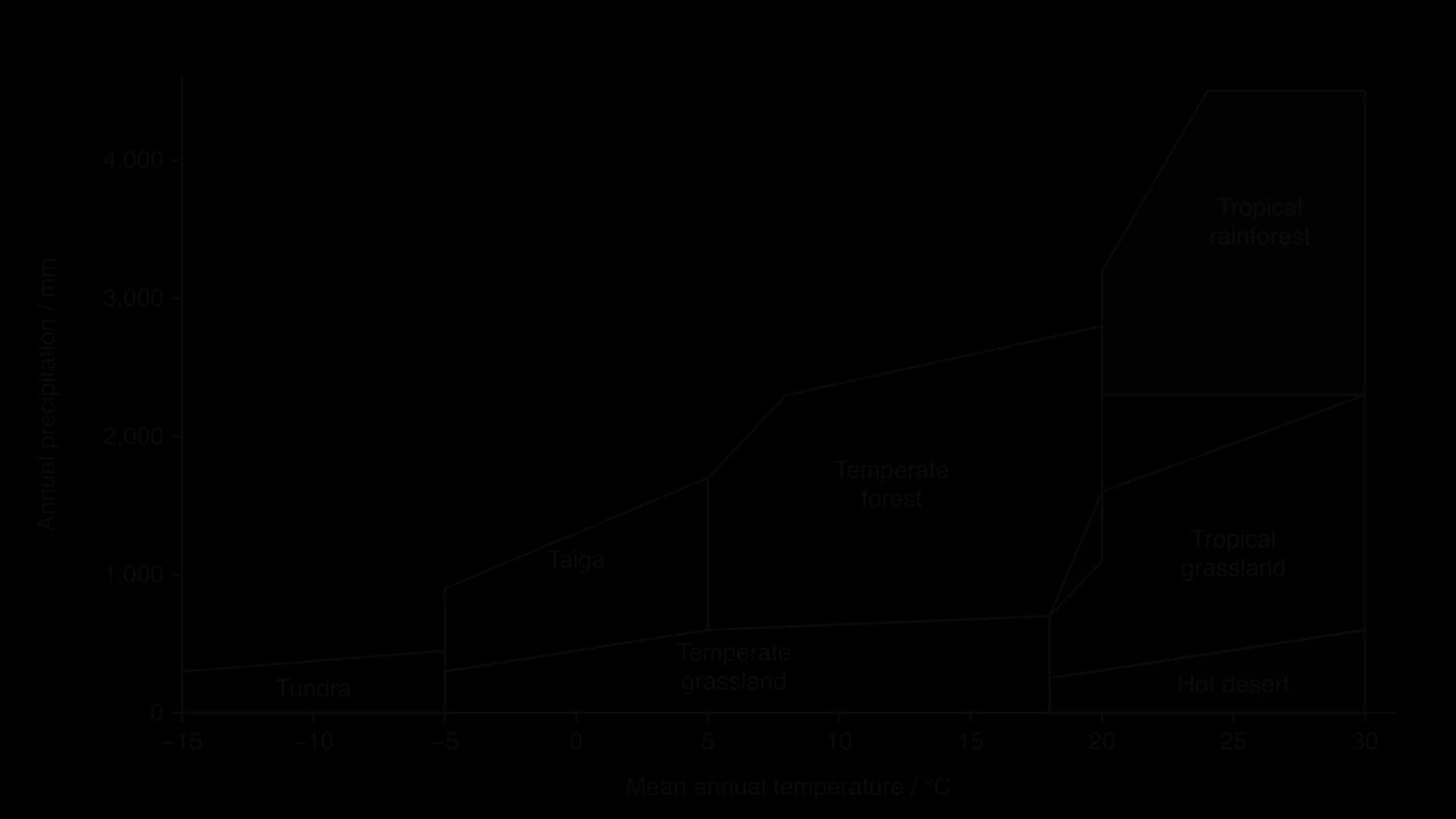
Reading the climograph from left to right, mean annual temperature increases from tundra through taiga and temperate forest to tropical forest. Reading from bottom to top, the same temperature can support desert, grassland or forest depending on rainfall. At low rainfall, there is too little water for trees, so grassland or desert forms; with more rainfall, forest develops. In very cold climates even moderate rainfall supports only tundra, because the growing season is too short and the ground is frozen for most of the year.
A biome is a group of ecosystems that have similar communities because they have similar climates. All tropical rainforests, whether in the Amazon basin, the Congo basin or Borneo, are dominated by tall, broadleaved evergreen trees, even though the species are different on each continent. All hot deserts have sparse, drought-resistant plants and animals that avoid the heat of the day.
Communities in the same biome on different continents look alike because of convergent evolution. Similar abiotic conditions act as similar selection pressures, so unrelated species evolve similar adaptations. American cacti (family Cactaceae) and the succulent spurges (Euphorbia) of African deserts are not closely related, but both have evolved thick, water-storing green stems, spines in place of leaves and a waxy surface. Other features show their separate ancestry. Cacti have clear sap and spines that grow from small cushions (areoles), while Euphorbia produces a toxic white latex.
Biome | Temperature | Precipitation | Typical vegetation |
|---|---|---|---|
Tropical forest | High all year, about 25–28 °C; little seasonal change | Very high, usually over 2,000 mm a year, spread through the year | Tall, dense, broadleaved evergreen trees in several layers; very high biodiversity |
Temperate forest | Warm summers and cool or cold winters | Moderate, about 750–1,500 mm, through the year | Deciduous broadleaved trees (oak, beech) that lose their leaves in winter |
Taiga (boreal forest) | Long, very cold winters; short, cool summers | Low to moderate, about 300–900 mm, much as snow | Evergreen coniferous trees (spruce, pine, fir) with needle leaves |
Grassland | Temperate grasslands: hot summers, cold winters; tropical grasslands (savanna): hot all year | Low to moderate, about 250–1,000 mm in temperate grassland and up to about 1,500 mm in savanna, with a long dry season | Grasses dominate; trees few or scattered, limited by drought, fire and grazing |
Tundra | Very cold; mean temperature below freezing for most of the year | Low, often under 250 mm | No trees; low mosses, lichens, sedges and dwarf shrubs over permafrost |
Hot desert | Very hot days, often cold nights; large daily range | Very low, under 250 mm a year and unpredictable | Sparse; succulents, deep-rooted shrubs and short-lived annual plants |
Approximate values typical of each biome, as given in ecology textbooks; ranges differ between sources and overlap where one biome grades into another.
 YouTube
The main abiotic challenges of a hot desert are a severe shortage of water, very high daytime temperatures with intense sunlight, cold nights, and strong winds carrying sand. Plants must take up water quickly when it rains, store it and lose as little as possible. Animals must avoid overheating while losing little water.
The saguaro cactus (Carnegiea gigantea) of the Sonoran Desert in Arizona and Mexico can grow to more than 12 m tall. Its stem is pleated like an accordion: after rain, the pleats expand as the stem fills with water, and they contract as the water is used. The leaves are reduced to spines, which lose almost no water and shade the stem surface, and photosynthesis takes place in the green stem. A network of shallow roots spreads widely just below the surface and absorbs water quickly after even a light shower.
Photosynthesis in the saguaro follows crassulacean acid metabolism (CAM). Its stomata open at night, when the air is cool and humid, and carbon dioxide is fixed into organic acids that are stored in the vacuoles. During the hot day the stomata close, and the stored CO₂ is released inside the cells for the Calvin cycle. Opening the stomata only at night greatly reduces water loss by transpiration.
Kangaroo rats (Dipodomys) of North American deserts can live without drinking. They eat dry seeds and obtain water from aerobic respiration of the food, called metabolic water. They spend the hot day in burrows, where the air is cooler and more humid, and come out at night. Their kidneys produce very concentrated urine, and their faeces are very dry, so little water is lost in excretion.
The fennec fox (Vulpes zerda) of the Sahara has very large ears with many blood vessels, which lose heat to the air and help keep the body cool, and also help it hear prey moving under the sand at night. Thick fur on the soles of its feet protects them from hot sand. Like the kangaroo rat, it avoids the heat by being active at night and resting in a burrow by day.
The Namib Desert runs along the Atlantic coast of south-western Africa and is one of the driest places on Earth, with almost no rain in many years. On many mornings, however, fog forms over the cold Benguela Current offshore and rolls inland across the dunes. Several animals and plants of the Namib depend on this fog for water.
A tenebrionid beetle, Onymacris unguicularis, collects fog water with its own body. On foggy nights it climbs to the crest of a dune, where the fog-laden wind is strongest. It stands facing into the wind with its head down and its abdomen raised on its long legs, a posture called fog basking. Fog droplets hit the beetle's raised back, merge into larger drops and run down the back to its mouth, where it drinks them.
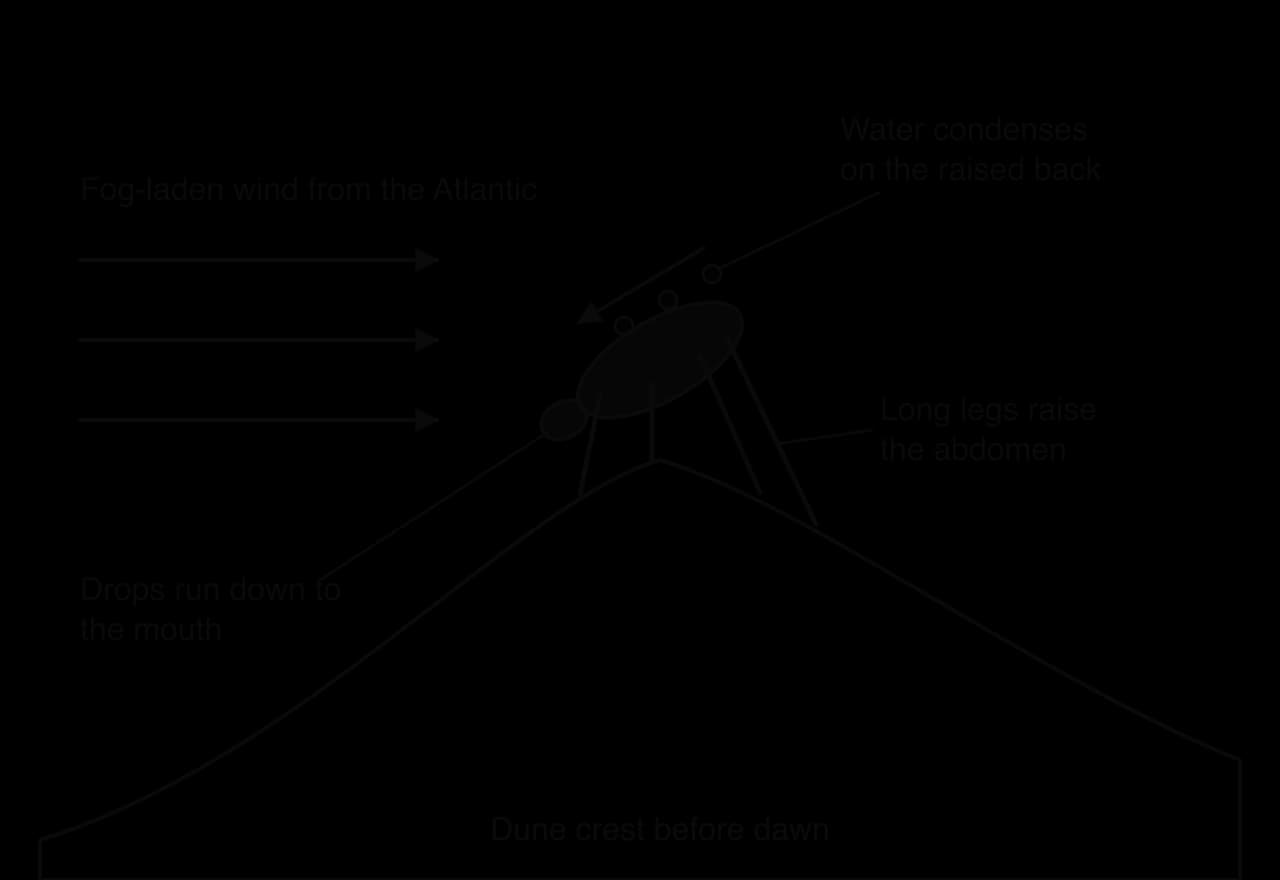
Laboratory experiments show how important the water gained in this way is. Beetles kept without water lose body mass steadily as they lose water by evaporation and excretion. When they are allowed to drink again, their body water returns to normal and they regain part of the lost mass.
Measurement on Onymacris unguicularis | Result |
|---|---|
Loss of body mass after 10 days of dehydration at 27 °C | 14.9% |
Increase in body mass on rehydration (as a percentage of initial mass) | 6.2% |
Sources: Hamilton and Seely, Nature, 1976 (fog-basking behaviour); Naidu, European Journal of Entomology, 2008 (dehydration data).
The beetle shows that adaptations to a hot desert can be behavioural as well as structural. Fog basking on dune crests at night, combined with a body that loses water slowly and a shape that channels condensed water to the mouth, lets the beetle survive where rain almost never falls. These features are the result of natural selection in a population where the individuals that gained most water from fog survived and reproduced best.
A tropical rainforest has high temperatures and heavy rain all year. Water and warmth are rarely limiting, so plant growth is fast and competition is intense. The main abiotic challenges are low light intensity under the dense canopy, very heavy rainfall that can leave leaves covered in water, and shallow, nutrient-poor soils, because dead matter decomposes quickly and heavy rain washes mineral ions out of the soil.
Buttress roots. Tall canopy and emergent trees, such as the kapok tree (Ceiba pentandra), have wide, plank-like buttress roots spreading from the base of the trunk. Rainforest soils are shallow, so roots cannot anchor deeply, and the buttresses support trees up to 60 m tall against wind.
Drip tips. The leaves of many rainforest trees taper to a long point. Water runs off the drip tip quickly, so the leaf surface dries soon after rain. This reduces the growth of algae, fungi and mosses on the leaf, which would block light and could cause disease, and keeps the leaf surface free for gas exchange.
Large, dark green leaves. Shrubs and young trees of the shaded forest floor have large, thin leaves with a high chlorophyll content, which absorb as much as possible of the little light that gets through the canopy.
Shallow root mats. Many rainforest trees have dense mats of fine roots in the top few centimetres of soil, where mineral ions released by decomposition are absorbed before heavy rain washes them away.
Rainforest animals are also adapted to the abiotic environment. The brown-throated three-toed sloth (Bradypus variegatus) of Central and South American rainforests spends almost all its life hanging upside down from branches in the canopy, held by long curved claws. Its long, coarse hair grows from the belly towards the back, the opposite of most mammals, so that rain runs off the hair of an animal hanging upside down. Algae grow in grooves in the hair in the constantly humid air and give the sloth a greenish colour that camouflages it among the leaves.
Biome | Named species | Adaptation | Abiotic factor it deals with |
|---|---|---|---|
Hot desert | Saguaro (Carnegiea gigantea) | Pleated water-storing stem; spines; shallow wide roots; CAM | Scarce, unpredictable water; high temperature |
Hot desert | Kangaroo rat (Dipodomys) | Metabolic water; concentrated urine; nocturnal, lives in burrows | Lack of drinking water; daytime heat |
Hot desert | Fennec fox (Vulpes zerda) | Large ears that lose heat; furred soles; nocturnal | High temperature; hot sand |
Hot desert | Namib beetle (Onymacris unguicularis) | Fog basking on dune crests | Almost no rain; fog the only water source |
Tropical rainforest | Kapok tree (Ceiba pentandra) | Buttress roots | Shallow soils; tall trees exposed to wind |
Tropical rainforest | Many canopy trees | Drip-tip leaves | Very heavy, frequent rain |
Tropical rainforest | Three-toed sloth (Bradypus variegatus) | Hair growing from belly to back; algae in hair | Heavy rain; humid air |
Adaptation to environment is assessed in Paper 1A through questions on habitats, tolerance curves, coral reef conditions and the identification of biomes from climate data. Paper 1B often uses it for data-based questions: transect results, data-logger readings, climographs and tables of measurements, with command terms such as describe, deduce, suggest and evaluate. In Paper 2, short-answer questions ask you to explain the adaptations of named organisms, and extended responses can combine adaptation with natural selection (D4.1) or with niches (B4.2).
I can describe the habitat of a species by its geographical location, physical location and type of ecosystem.
I can explain the adaptations of marram grass to sand dunes and of mangroves to tidal swamps.
I can give examples of abiotic variables that limit the distribution of plants and animals.
I can sketch and annotate a tolerance curve with the optimum, zones of stress and zones of intolerance.
I can describe how to carry out a transect with data loggers and analyse the results, without confusing correlation with causation.
I can outline the conditions for coral reef formation and explain why each is needed.
I can use a climograph to deduce the biome that develops in a given climate.
I can describe the climate and vegetation of the six main biomes and explain why the same biome looks similar on different continents.
I can explain the adaptations of named desert and rainforest species, including the Namib fog-basking beetle.
Stomata are found mainly on the outer surface of the rolled leaf
A thin cuticle on the outer leaf surface allows rapid gas exchange
Short roots spread only through the top few centimetres of sand
What is the function of pneumatophores in mangrove trees such as the grey mangrove (Avicennia marina)?