
Explain how variation, overproduction, competition and inheritance lead to natural selection and evolution, with peppered moths, finches and guppies, and (HL) calculate allele frequencies with Hardy–Weinberg.
Each is in the Biology glossary, with every other term in the subject.
The proportion of all the copies of a gene in a population's gene pool that are a particular allele, expressed as a decimal between 0 and 1.
Natural selection in which individuals at one extreme of the range of a trait have the highest fitness, so the mean value of the trait in the population shifts in that direction over generations.
Natural selection in which individuals at both extremes of the range of a trait have higher fitness than intermediates, so the distribution may split into two groups.
The survival and reproductive potential of a genotype, measured by the number of offspring individuals with that genotype contribute to the next generation, relative to others.
Random change in allele frequencies in a population from one generation to the next, caused by chance differences in which individuals survive and reproduce; its effects are greatest in small populations.
The equations
Natural selection is the process by which individuals with heritable traits that suit their environment survive and reproduce more than others, so that those traits become more common in the population over generations. It is the main mechanism of evolution, and it explains both how organisms come to be adapted to their surroundings and how the great diversity of life arose.
Natural selection needs three things: variation between individuals, a struggle to survive and reproduce, and inheritance of the traits that make a difference. Each can be studied separately, and together they predict changes in populations that biologists have measured in moths, finches, guppies, bacteria and humans.
48 exam-style questions on this subtopic, written in the style of the IB papers. The first has its markscheme open. Counted on
Organisms are adapted to the ecological niches that they occupy.
Explain how natural selection could lead to adaptations in prey species that help them to resist predation.
7 marks
a. there is variation in traits between individuals in the prey population;
b. variation arises from mutation (new alleles) and sexual reproduction (new combinations of alleles);
c. more offspring are produced than can survive;
d. predation is a selection pressure;
e. individuals with traits that resist predation are more likely to survive;
f. such as camouflage / toxins / spines / shells / escape behaviour;
g. survivors reproduce and pass on the alleles for these traits to their offspring;
h. traits must be heritable / acquired characteristics are not passed on;
i. the frequency of the favourable alleles / traits increases in the population over many generations;
j. well-adapted individuals have greater fitness;
k. example, e.g. guppies in streams with many predators evolving fewer / less bright spots;
l. predators may also evolve better adaptations for catching prey, so selection continues;
[7 max]
Outline the differences between obligate anaerobes, facultative anaerobes and obligate aerobes, with reference to cell respiration.
4 marks
The official deck for this part of the syllabus.
Define evolution.
Define natural selection.
With a free account, Augment remembers where you stopped and what you have practiced.
The state of a population in which allele and genotype frequencies stay constant between generations, as the Hardy–Weinberg equation predicts, because there is no selection, mutation, migration or non-random mating and the population is very large.
The process by which individuals with heritable traits that make them better adapted to their environment survive and reproduce more than others, so the alleles for those traits become more common in the population over generations.
The theory that combines Darwin's natural selection with Mendelian and population genetics, so that evolution is described as a change in allele frequencies in a population's gene pool over generations.
The production by organisms of more offspring than the environment can support, so that many die before they reproduce.
A factor in the environment, biotic or abiotic, that affects the survival or reproduction of individuals differently according to their traits, and so causes natural selection.
Selection for physical or behavioural traits that increase an individual's success in attracting or competing for mates, so that the alleles for those traits become more common.
Natural selection in which individuals with intermediate values of a trait have the highest fitness and both extremes are selected against, so variation decreases while the mean stays the same.
Evolution is the change in the heritable characteristics of a population over generations. Natural selection is the main mechanism that drives this change. It acts on the variation between individuals: those whose traits make them better suited to the environment tend to survive longer and produce more offspring, and they pass these traits on, so that the characteristics of the population change over many generations.
Natural selection has been operating continuously since the first cells appeared, more than 3.5 billion years ago. Over this immense length of time, populations repeatedly adapted to new environments and split into new species. The result is the biodiversity of life today, from bacteria in hot springs to whales and flowering plants. The same process that produces small changes within a population, such as a change in the colour of moths, also produces, over far longer periods, the differences between major groups of organisms. This is the central idea of the theme of continuity and change: inheritance gives continuity between generations, and natural selection acting on variation produces change.
Charles Darwin published his theory of evolution by natural selection in On the Origin of Species in 1859. Alfred Russel Wallace had reached the same idea independently. Darwin built the theory from a set of observations of the natural world and the inferences that follow logically from them. Reasoning from many specific observations to a general conclusion is called inductive reasoning.
The flow chart of Darwin's reasoning shows natural selection as the logical consequence of four facts that can be checked in any population. If more offspring are produced than can survive, if individuals differ, and if some of those differences are inherited, then the population must change over time. The strength of the theory is that each of these observations can be tested, and each has been confirmed many times.
Before Darwin, the best-known theory of evolution was that of Jean-Baptiste Lamarck, published in 1809. Lamarckism proposed that organisms change during their lives in response to their needs, by using some organs more and others less, and that these acquired changes are passed on to offspring. The standard illustration is the giraffe: Lamarck's theory says that giraffes stretched their necks to reach leaves high in trees, their necks became slightly longer, and their offspring inherited the longer necks.
Feature | Lamarckism | Darwin's natural selection |
|---|---|---|
Source of variation | Changes acquired during an individual's life | Variation already present in the population, from mutation and sexual reproduction |
What causes change | An organism's needs and its use or disuse of organs | Differences in survival and reproduction between individuals |
What is inherited | Characteristics acquired during life | Only heritable characteristics, encoded in genes |
Giraffe necks | Giraffes stretched their necks and passed the longer necks on | Giraffes with slightly longer necks reached more food, survived and reproduced more, so longer necks became more common |
Who changes | Individuals | Populations, over generations |
Darwin's theory replaced Lamarckism because it provided a convincing mechanism supported by evidence, while the inheritance of acquired characteristics was not supported when it was tested. A mouse whose tail is cut off does not produce offspring with short tails, and the muscles a person builds by exercise are not inherited by their children. The later discovery that characteristics are encoded in genes, which are not altered by use or disuse of the body, explained why Lamarck's mechanism cannot work.
The change from Lamarckism and from the older belief that species are fixed and unchanging to Darwin's theory is an example of a paradigm shift. The term was introduced by the philosopher of science Thomas Kuhn in 1962. A paradigm is the framework of ideas within which the scientists of a field work: the assumptions, theories and methods they share. A paradigm shift happens when a new framework replaces the old one, because evidence accumulates that the old one cannot explain. After 1859, biologists increasingly interpreted every observation, from fossils to the distribution of species, in terms of descent with modification by natural selection.
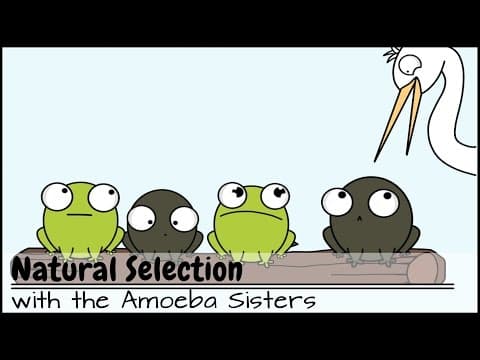 YouTube
Natural selection can only act on differences that already exist between individuals. Two processes generate the heritable variation in a population: mutation, which creates new alleles, and sexual reproduction, which creates new combinations of existing alleles.
A gene mutation is a change in the base sequence of a gene. When it occurs, a new version of the gene, a new allele, is formed. Mutation is the original source of all genetic variation: without it, every individual would carry the same alleles. Most mutations are neutral or harmful, but a small proportion produce an allele that gives an advantage in a particular environment.
Only mutations in cells that give rise to gametes (germ-line cells) can be inherited. A mutation in a skin cell may cause a change in that person, but it is not passed on to their children. Mutations arise at random with respect to the needs of the organism: a mutation that gives resistance to a poison is no more likely to occur when the poison is present than when it is absent.
The Long-Term Evolution Experiment, started by Richard Lenski in 1988, shows mutation creating new variation that selection then acts on. Twelve populations of Escherichia coli have been grown in flasks of a glucose medium that also contains citrate, which E. coli normally cannot use when oxygen is present. After about 31,500 generations, one population evolved the ability to use citrate aerobically, giving it a new food source and a large advantage.
Sexual reproduction does not create new alleles, but it shuffles existing ones into new combinations every generation, so offspring differ from their parents and from each other. Three processes contribute:
Crossing over in prophase I of meiosis exchanges sections of DNA between homologous chromosomes, producing chromosomes with new combinations of alleles.
Random orientation of pairs of homologous chromosomes in metaphase I means that each gamete receives a random mix of maternal and paternal chromosomes. With 23 pairs in humans, random orientation alone can produce , about 8.4 million, different combinations in the gametes of one person.
Random fertilisation: any one of the genetically different male gametes can fuse with any one of the female gametes, which multiplies the number of possible combinations again.
Because of these processes, siblings with the same parents (apart from identical twins) are genetically unique. A population that reproduces sexually therefore has a large amount of variation in each generation, which gives natural selection more to act on and helps populations adapt when the environment changes.
Mutation | Sexual reproduction | |
|---|---|---|
What it produces | New alleles | New combinations of existing alleles |
When it happens | At random, mainly during DNA replication | Every generation, in meiosis and fertilisation |
How often | Rarely for any one gene | In every sexually produced offspring |
Role in evolution | The original source of genetic variation | Increases the variation available to selection |
 YouTube
Most organisms produce far more offspring than can survive to adulthood. A female Atlantic cod releases millions of eggs in a breeding season, an oak tree drops thousands of acorns each year, and even slow-breeding animals can increase rapidly. Darwin calculated that a single pair of elephants, one of the slowest-breeding animals, would have about 19 million descendants after 750 years if all of them survived and bred. This tendency is called overproduction.
In reality, populations do not grow without limit. The numbers of most natural populations stay roughly stable from year to year, because the resources they need are limited. The maximum population size that an environment can support is its carrying capacity. Once a population approaches it, there is competition for resources, and many individuals die or fail to breed.
Food, such as seeds for finches, prey for predators, or nectar for bees.
Water, especially in deserts and dry seasons.
Space and shelter: nesting sites for birds, burrows for rabbits, territories in which to feed and breed.
Light for plants, which compete to grow above their neighbours, and mineral ions in the soil.
Mates: in many animals, individuals compete for the chance to reproduce.
Overproduction and limited resources together mean that only some of the offspring in each generation survive and reproduce. This is the "struggle for existence" that Darwin described. It is the condition that makes natural selection possible: if every individual survived and reproduced equally, differences between individuals would make no difference to the next generation.
A selection pressure is any factor in the environment that causes some individuals to survive or reproduce more than others. Biotic selection pressures come from other organisms: predators, parasites, pathogens and competitors. Abiotic selection pressures come from the physical environment: temperature, water availability, salinity, light, soil pH, wind and fire.
Many abiotic factors are density-independent: they affect individuals regardless of how crowded the population is. A severe frost, a heatwave, a drought or a flood can kill a large proportion of a population whether it is large or small. Such events act as selection pressures when individuals with certain traits are more likely to survive them. In a hard winter, birds with larger body size or thicker plumage lose heat more slowly; in a drought, plants with deeper roots or thicker waxy cuticles survive better.
Peter and Rosemary Grant studied every medium ground finch (Geospiza fortis) on the small Galápagos island of Daphne Major for decades. In 1977, a severe drought meant that very little rain fell during the wet season. Plants produced few seeds, and the small soft seeds were eaten first, leaving mostly large, hard seeds. Most of the finches died of starvation. Birds with deeper, stronger beaks could crack the large seeds and survived better, so the mean beak depth of the survivors was a few per cent greater than that of the population before the drought. Beak depth is strongly heritable, and the offspring of the survivors also had deeper beaks.
The drought is a density-independent abiotic factor, but it acted on the birds through the food supply. Selection pressures often work this way, with an abiotic change altering the biotic environment.
Individuals in a population differ in how well their traits suit the environment. An adaptation is a heritable characteristic that increases an organism's chance of surviving and reproducing in its environment. Because individuals vary, some are better adapted than others, and these differences in adaptation lead to differences in survival and in the number of offspring produced, which are the basis of natural selection.
Biologists describe the success of a genotype with the concept of fitness. Fitness is the survival and reproductive potential of a genotype: how many offspring individuals with that genotype are likely to leave in the next generation, compared with individuals with other genotypes. An individual that lives a long time but never reproduces has a fitness of zero, because it contributes no alleles to the next generation.
The most intense competition is usually between members of the same species, because they need exactly the same resources. This is intraspecific competition. When resources are short, individuals with traits that help them obtain those resources survive and reproduce more. Seedlings of the same species growing densely compete for light, and those that grow taller faster shade the others; the slower-growing seedlings die. Male red deer compete for access to females during the rut, and the males with larger antlers and bodies win more contests and father more offspring.
In the Daphne Major finches, competition during the 1977 drought was intraspecific: the medium ground finches were competing with each other for the few remaining seeds. The birds with the deepest beaks had an advantage in this competition, so the trait was selected.
For natural selection to change a population, the traits that affect survival and reproduction must be heritable: passed from parents to offspring in their genes. If the individuals that survive have an advantage only because of their environment, their offspring will not inherit it, and the next generation will be no different.
Acquired characteristics are changes in an organism during its life caused by environmental factors, such as larger muscles from exercise, a scar from an injury, a tan from sunlight or a stunted shape in a plant growing in poor soil. They are not encoded in the base sequence of the genes in the gametes, so they are not heritable and cannot be acted on by natural selection.
Heritable characteristic (can evolve) | Acquired characteristic (cannot evolve) |
|---|---|
Dark wing colour in peppered moths (allele of the cortex gene) | Soot deposited on a moth's wings |
Beak depth in medium ground finches | A beak chipped by cracking hard seeds |
Resistance to an antibiotic in bacteria (resistance allele) | Survival of a bacterium because the antibiotic did not reach it |
Lactase persistence in humans | Muscle strength built by training |
Biologists distinguish the two by breeding experiments. If offspring raised in the same environment still differ in the way their parents did, the difference is at least partly heritable. In the Daphne Major finches, parents and their offspring had similar beak depths even though the offspring grew up after the drought, which showed that beak depth is heritable.
The peppered moth (Biston betularia) flies at night and rests during the day on tree trunks and branches, where it is hunted by birds. The typical (typica) form has pale wings speckled with black, which camouflage it against tree bark covered with pale lichens. A black (carbonaria) form also exists, caused by a single dominant allele.

The carbonaria form was first recorded in Manchester, England, in 1848. During the Industrial Revolution, smoke from burning coal killed the lichens and covered trees with soot, so pale moths became conspicuous and black moths were camouflaged. Birds ate more of the pale moths, and the frequency of carbonaria rose rapidly. By 1895 about 98% of the peppered moths in Manchester were black. The same increase happened in other industrial regions of Britain and in other countries. The spread of dark forms in polluted areas is called industrial melanism.
Clean-air legislation in the 1950s and the decline of heavy industry reduced smoke pollution. Lichens returned to the trees and the bark became paler. The selection pressure reversed: black moths were now conspicuous and were eaten more often. The frequency of carbonaria fell, in parts of Manchester from about 95% to 13.1% and then 4.3%, and to below 10% in most of England and Wales.
Period | Bark of trees | Form favoured by bird predation | Frequency of carbonaria |
|---|---|---|---|
Before 1848 | Pale, covered with lichens | Typica | Not recorded (rare) |
1848–1895, industrial Manchester | Blackened by soot, lichens killed | Carbonaria | Rose to about 98% by 1895 |
After the clean-air laws of the 1950s | Lichens and pale bark return | Typica | Fell to about 13% and then about 4% in parts of Manchester |
Sources: Cook and Saccheri, Heredity, 2013; Saccheri et al., PNAS, 2008.
Early experiments on bird predation, carried out in the 1950s, were criticised because moths were released in large numbers and placed on trunks in unnatural positions. Michael Majerus answered these criticisms with a large experiment in Cambridge from 2001 to 2007. He released 4,864 moths in natural resting positions on trees and recorded which were eaten by birds. More black moths than pale moths were eaten on the unpolluted trees, with selection against carbonaria of about 0.1 per day, enough to explain its rapid decline.
In 2016, the mutation itself was identified. The carbonaria allele is caused by a transposable element, a section of DNA that can move around the genome, inserted into the cortex gene. Analysis of the DNA indicates that the insertion first happened around 1819, a few decades before the first black moth was recorded and before soot had made the black form advantageous. The mutation therefore arose by chance and was not caused by pollution.
The peppered moth shows every part of natural selection: heritable variation produced by a single mutation, a selection pressure (bird predation), a change in allele frequency over a few decades, and a reversal when the environment changed back. It is also an example of interaction and interdependence, because the evolution of the moth depended on its predators, the lichens and human industry.
Natural selection acts on survival, but in many animals the traits that matter most for reproduction are those that help an individual win a mate. Sexual selection is selection for traits that increase success in attracting or competing for mates. It is a selection pressure in many animal species and can produce traits that seem to reduce survival, such as bright colours that predators can see or long tails that make flight harder.
Sexual selection takes two main forms. In competition between members of one sex, usually males, individuals fight or display to gain access to mates, which selects for large body size, antlers, horns and aggression. In mate choice, usually by females, individuals choose partners according to their appearance or behaviour, which selects for ornaments such as bright plumage, elaborate songs and complex displays. Females usually do the choosing because they invest more in each offspring: eggs are large and few, and in mammals the female also carries the young.
Elaborate ornaments are costly to produce and maintain. Only a male in good condition, well fed, free of parasites and with a strong immune system, can grow bright plumage and perform energetic displays. The ornaments are therefore honest signals of overall fitness. A female that chooses a male with the best ornaments is likely to obtain alleles for good health and survival for her offspring, as well as alleles for the ornaments themselves, so both her choice and the male's ornaments are favoured by selection.
The birds of paradise (family Paradisaeidae) live mainly in the rainforests of New Guinea and nearby islands. In many species the males have spectacular plumage: long, lacy flank plumes, iridescent breast shields, wire-like tail feathers or head plumes. Males perform elaborate courtship displays, often gathering at a display site called a lek, where they spread their plumes, dance and call. Females, which are dull brown and well camouflaged, visit the lek, watch the males and mate with only one or a few of them.
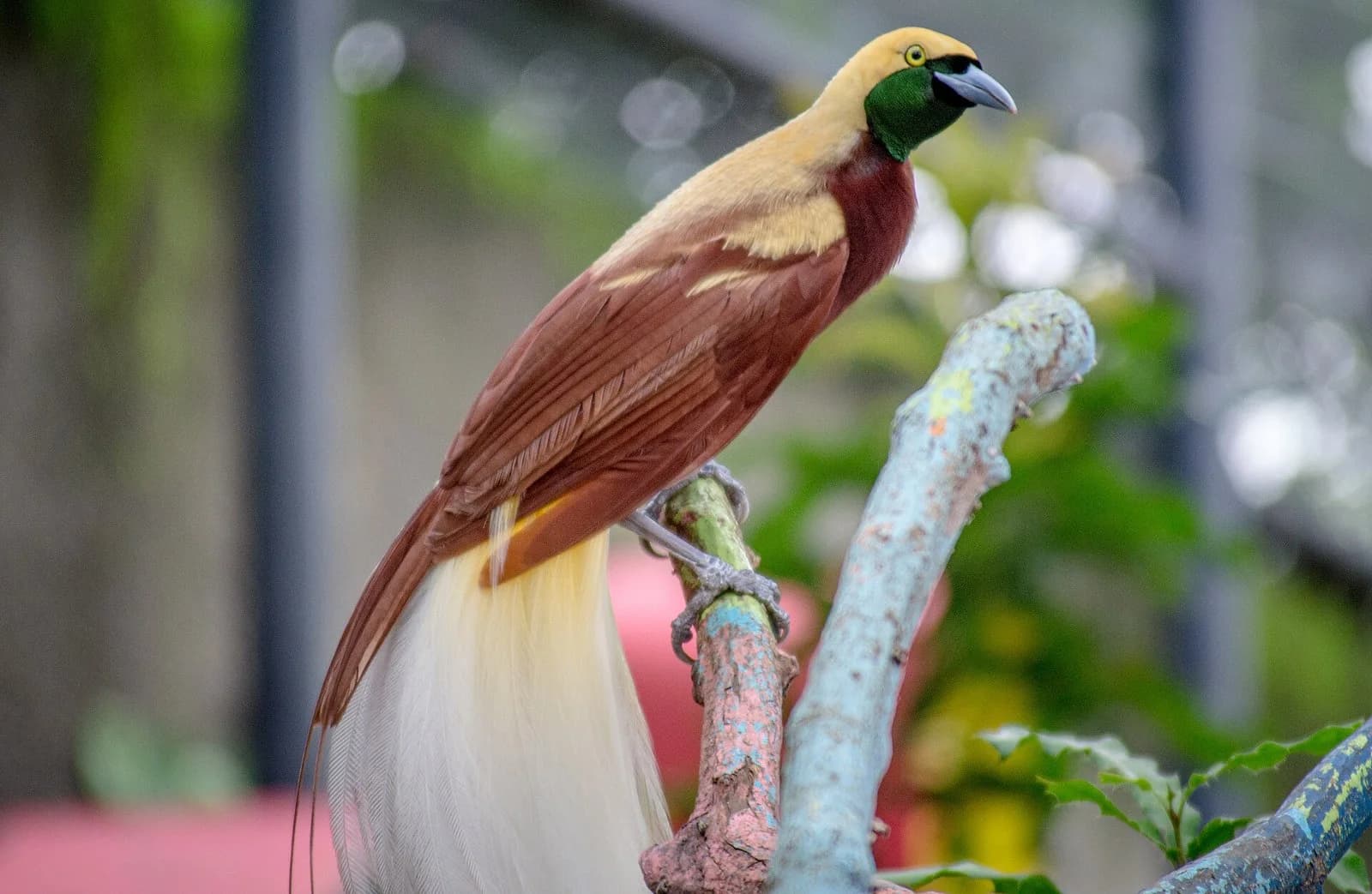
Because a few males with the most attractive plumage and displays father most of the offspring, the alleles for those traits increase in frequency each generation. Over many generations, this has produced plumage far more elaborate than survival alone would favour. New Guinea has few predators of adult birds and abundant fruit, which reduces the cost of such ornaments and is one reason sexual selection has gone so far in this family.
A model in science is a simplified representation of a system that can be used to test ideas and make predictions. Natural selection in the wild is hard to study because many factors change at once. Biologists therefore build experimental models in which one selection pressure is controlled while others are kept the same, so that its effect can be measured.
The guppy (Poecilia reticulata) is a small freshwater fish from the streams of Trinidad. Males have colourful spots of orange, black and iridescent blue, which vary between individuals and are heritable. John Endler noticed that males living in streams with dangerous predators, such as the pike cichlid (Crenicichla alta), had fewer and duller spots than males in streams where the only predator was a small killifish (Rivulus hartii) that rarely eats adult guppies. He suggested that two selection pressures act on the spots in opposite directions:
Sexual selection favours bright, numerous spots, because female guppies prefer to mate with more colourful males.
Natural selection by predation favours dull, fewer spots, because colourful males are more easily seen and eaten by predators.
Endler tested the idea in large artificial ponds in a greenhouse, each with a gravel bottom like a stream. He stocked them with guppies from several localities, so the starting populations were very variable, and allowed them to breed with no predators for six months. He then divided the ponds into three groups: some received one pike cichlid, some received six Rivulus, and some received no predator. He counted the spots on the males at intervals.
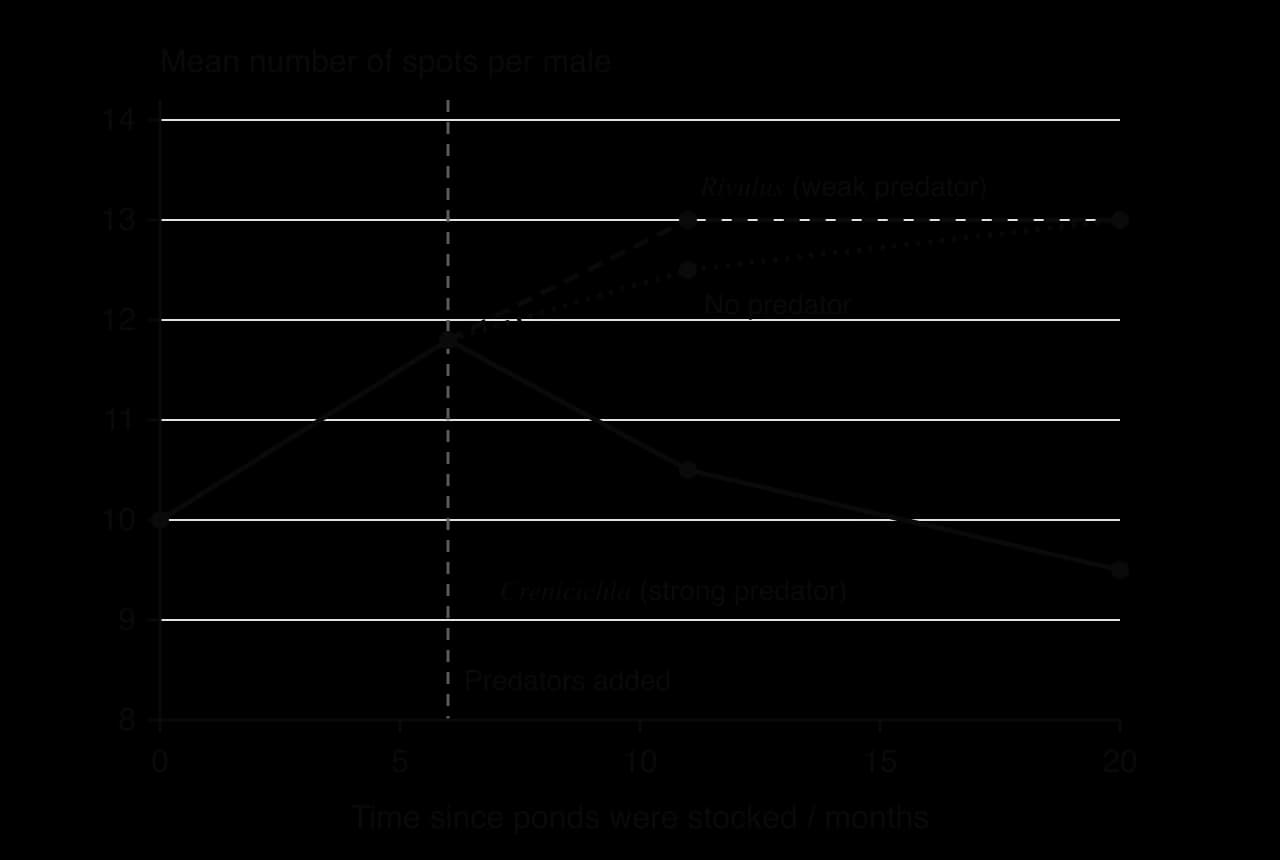
The graph of Endler's results shows the two selection pressures in action. Before predators were added, spot number rose from about 10 to 11.8, as female choice favoured colourful males. In ponds with no predator or with Rivulus, spot number continued to rise, to 13.0 after 20 months. In ponds with the pike cichlid, it fell to 10.5 and then 9.5, because the most colourful males were eaten before they could reproduce. Endler also moved guppies from a stream with pike cichlids to a stream that had Rivulus but no guppies or cichlids. Within about 15 generations, the males there had evolved more and brighter spots.
The experiment is a model because it simplifies the natural situation: one predator species, a controlled environment, and a measurable trait. Controlling the selection pressure allowed Endler to show cause and effect, which observations of wild streams alone could not do. Its predictions were then confirmed in the field.
A gene pool consists of all the genes and their different alleles present in an interbreeding population. Each individual carries only a small sample of the gene pool, two alleles of each gene in a diploid organism, but the population as a whole may hold many alleles of each gene. When individuals reproduce, their gametes carry alleles from the gene pool into the next generation.
The gene pool is defined for an interbreeding population, not for a species. A species split into populations that rarely meet, such as fish in separate lakes, has several gene pools. Movement of individuals or gametes between populations, called gene flow, carries alleles from one gene pool to another and tends to make their allele frequencies more similar. When gene flow stops, the gene pools can change independently, which is the first step towards speciation (A4.1 Evolution and speciation).
The allele frequency of an allele is the proportion of all copies of that gene in the gene pool that are that allele. It is a number between 0 and 1. If a gene has two alleles, their frequencies add up to 1. An allele frequency of 0.25 means that one in four copies of the gene in the population is that allele.
Allele frequency is calculated by counting alleles, not individuals. Each homozygous individual carries two copies of the same allele, and each heterozygous individual carries one copy of each.
Source: classic MN blood group data set for 6,129 people in the USA, widely used in population genetics textbooks (for example Hartl and Clark, Principles of Population Genetics).
Populations separated by distance, mountains or seas have limited gene flow, so their allele frequencies can differ. The differences arise because each population has had its own history of mutations, of selection pressures and of chance events. Allele frequency databases make these differences easy to study. The Allele Frequency Net Database, ALFRED (the Allele Frequency Database) and gnomAD (the Genome Aggregation Database) each allow a user to search for a gene or a particular variant and see its frequency in populations from different parts of the world.
The CCR5 gene codes for a receptor protein on the surface of white blood cells. HIV uses this receptor to enter the cells. The CCR5-Δ32 allele has a deletion of 32 base pairs, so the receptor is not made. People homozygous for CCR5-Δ32 are highly resistant to the most common strains of HIV, and heterozygotes progress more slowly to AIDS if infected. The frequency of the allele differs greatly between populations.
Population | Frequency of the CCR5-Δ32 allele |
|---|---|
Northern Europe (highest, around the Baltic) | About 0.16 |
Italy | About 0.06 |
Greece | About 0.04 |
Sub-Saharan Africa, East Asia, indigenous Americas | Almost 0 |
Source: Novembre, Galvani and Slatkin, PLoS Biology 3:e339, 2005.
The allele occurs mainly in Europe, West Asia and North Africa, with a gradient from north to south. It is almost absent from populations that have been geographically isolated from Europe. Its distribution shows that the allele arose in one region and spread there, by selection by some earlier disease or by chance, with little gene flow to distant populations.
Lactase persistence, the ability to digest lactose in milk as an adult, shows a similar pattern. More than 90% of adults in parts of north-west Europe are lactase persistent, compared with fewer than 10% in much of East Asia. The alleles that keep the lactase gene active in adults became common in populations with a long history of dairy farming, where they gave an advantage, and remained rare where milk was not drunk after weaning.
Darwin developed the theory of evolution by natural selection without knowing how characteristics are inherited. Mendel's work on inheritance was rediscovered in 1900, and during the 1920s–1940s biologists integrated genetics with Darwin's theory. This combined theory is called neo-Darwinism, or the modern synthesis.
In neo-Darwinian terms, natural selection works like this. Individuals differ in their heritable traits because they carry different alleles. Individuals whose alleles make them better adapted survive and reproduce more, so they contribute more copies of their alleles to the gene pool of the next generation. The frequency of the advantageous alleles therefore increases, and the frequency of the disadvantageous alleles decreases. Evolution, defined in this way, is a change in allele frequencies in a gene pool over time.
The peppered moth shows this directly. The rise of carbonaria to 98% in Manchester was a rise in the frequency of the carbonaria allele of the cortex gene, and its later fall was a fall in the same allele frequency. Selection acts on individuals, through their phenotypes, but it is the gene pool of the population that changes.
Many traits, such as body size, beak depth or birth mass, show continuous variation, with most individuals near the mean and fewer at the extremes. When such a trait is plotted as a frequency distribution, it forms a bell-shaped curve. Natural selection can change this curve in three ways, depending on which individuals have the highest fitness.
In directional selection, individuals at one extreme of the range have the highest fitness. The mean of the population shifts in that direction over generations. Directional selection typically happens when the environment changes, so that a trait value that was previously rare becomes advantageous.
The rise of the carbonaria form of the peppered moth in polluted areas and the increase in beak depth of medium ground finches after the 1977 drought are both examples of directional selection. So is the evolution of antibiotic resistance in bacteria.
In stabilising selection, individuals near the mean have the highest fitness and both extremes are selected against. The mean stays the same, but the range of variation becomes narrower over generations. Stabilising selection is the most common pattern in a stable environment, where a population is already well adapted.
Human birth mass is a classic example. Babies of very low birth mass and of very high birth mass have historically had higher death rates than babies of average mass, because very small babies are vulnerable and very large babies cause difficult births. Birth mass therefore stayed close to an average of about 3–4 kg. Modern medical care, including caesarean sections and neonatal intensive care, has greatly weakened this selection.
In disruptive selection, individuals at both extremes have higher fitness than those near the mean. Intermediate individuals are selected against, and the distribution can split into two peaks. Disruptive selection happens when the environment offers two different resources or habitats and intermediate forms are poor at using either.
The black-bellied seedcracker (Pyrenestes ostrinus), a finch of central Africa, has two distinct bill sizes in the same population. Birds with small bills feed efficiently on soft sedge seeds, and birds with large bills crack hard sedge seeds; birds with intermediate bills are poor at both and survive less well, so disruptive selection maintains both bill forms in the population.
Directional | Stabilising | Disruptive | |
|---|---|---|---|
Individuals favoured | One extreme | Intermediate values | Both extremes |
Effect on the mean | Shifts towards the favoured extreme | Unchanged | May stay the same, but few individuals are near it |
Effect on variation | Similar, as the curve moves | Decreases | Increases; may become bimodal |
Typical environment | Changing | Stable | Two different resources or habitats |
Example | Peppered moth in polluted areas; finch beaks after drought | Human birth mass | Black-bellied seedcracker bill size |
All three patterns change allele frequencies. Directional selection increases the frequency of alleles for the favoured extreme. Stabilising selection decreases the frequencies of alleles that produce extreme values. Disruptive selection decreases the frequencies of combinations that produce intermediates, and maintains alleles for both extremes.
In 1908, the mathematician G. H. Hardy and the physician Wilhelm Weinberg independently showed that allele and genotype frequencies in a population stay constant from generation to generation, unless something acts to change them. This makes it possible to predict genotype frequencies from allele frequencies, and to detect evolution as a departure from the prediction.
For a gene with two alleles, A (dominant) and a (recessive), the frequency of A is written and the frequency of a is written . Because every copy of the gene is one or the other:
If mating is random, gametes combine at random. The probability that an offspring receives A from both parents is ; the probability of aa is ; and the probability of a heterozygote is , because Aa can arise in two ways (A from the egg and a from the sperm, or the reverse). The three genotype frequencies add up to 1:
These two expressions together are the Hardy–Weinberg equation. The grid of allele frequencies shows where each term comes from.
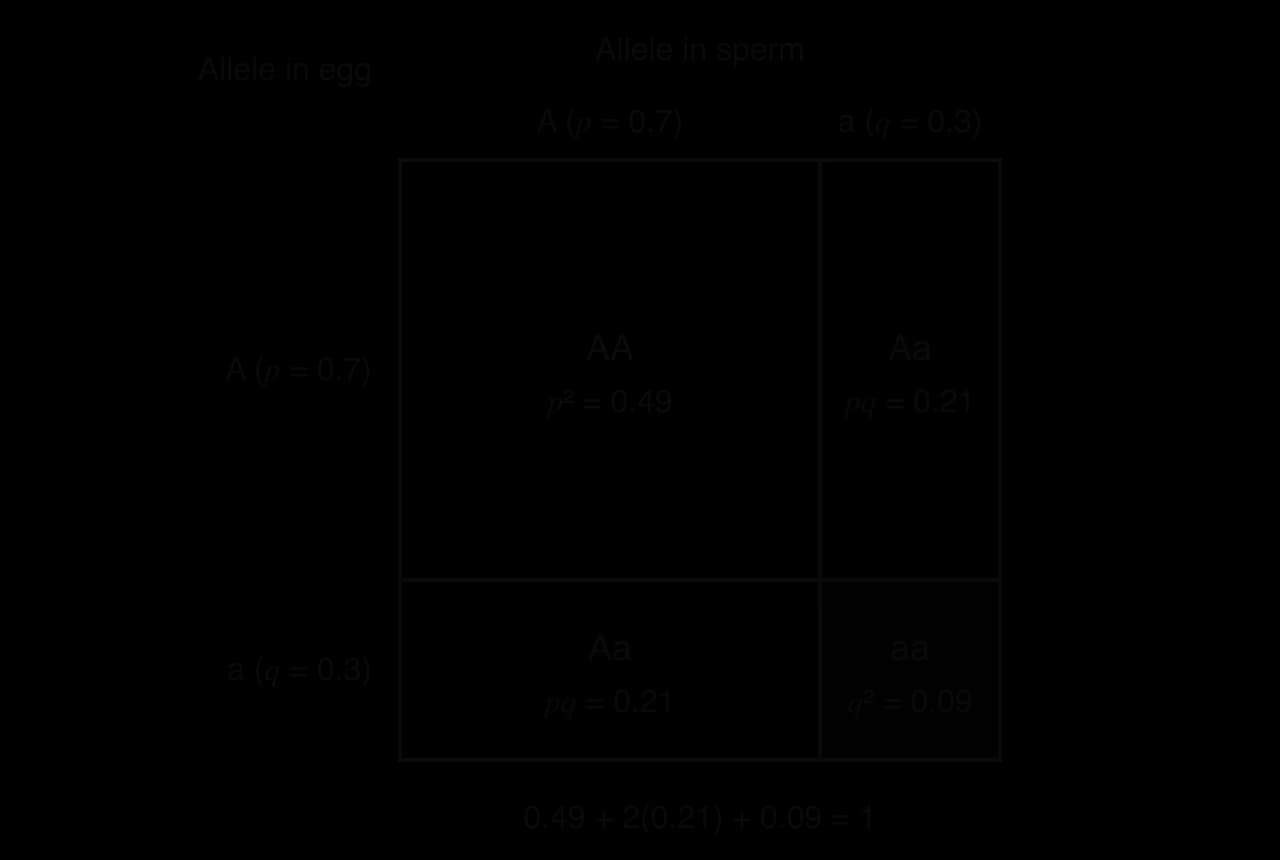
With a dominant and a recessive allele, AA and Aa individuals look the same, so they cannot be counted directly. The homozygous recessive phenotype can be counted, and its frequency is . Taking the square root gives ; then , and the frequencies of the other genotypes follow.
A population whose allele and genotype frequencies stay constant and fit the Hardy–Weinberg equation is in Hardy–Weinberg equilibrium (genetic equilibrium). This is only possible if none of the processes that change allele frequencies is acting. The conditions are:
A very large population, so that chance events do not change allele frequencies. In small populations, random changes in allele frequency, called genetic drift, can be large.
Random mating: individuals mate without regard to genotype or phenotype.
No migration: no gene flow into or out of the population.
No mutation: no new alleles arise and existing alleles are not changed.
No natural selection: all genotypes have the same survival and reproductive rates.
No real population meets all these conditions exactly, but many come close for particular genes, as the MN blood group data show. The value of the Hardy–Weinberg equation is as a null model: if observed genotype frequencies do not fit the prediction, one or more of the conditions is not being met, and the population may be evolving.
Non-random mating. In self-pollinating plants and in populations with a lot of inbreeding, relatives mate with each other, so there are more homozygotes and fewer heterozygotes than predicts. Sexual selection, in which some males father most offspring, is another form of non-random mating.
Different survival rates of genotypes. In regions where malaria is common, people heterozygous for the sickle-cell allele survive malaria better than either homozygote, so heterozygotes are more frequent among adults than among newborns.
Migration. Gene flow from a population with different allele frequencies changes the frequencies in the population receiving the migrants.
Small population size. In a small or isolated population, genetic drift can by chance make an allele common or remove it altogether, whether or not it is advantageous.
In artificial selection, humans choose individuals with desirable traits and breed from them, generation after generation. It is also called selective breeding. The traits chosen are those useful to humans, such as high yield, flavour, tameness or appearance, not those that increase survival in the wild. Over many generations, the frequency of alleles for the chosen traits increases, and the domesticated population can differ greatly from its wild ancestor.
Wild cabbage (Brassica oleracea) grows on sea cliffs in western Europe. Farmers over many centuries selected different plants for different parts, and produced a whole series of vegetables, all still the same species and able to interbreed.
Variety | Part of the plant selected for | Result |
|---|---|---|
Cabbage | Terminal bud | A large, tightly packed head of leaves |
Kale | Leaves | Large, loose leaves |
Brussels sprouts | Lateral buds | Many small heads along the stem |
Kohlrabi | Stem | A swollen stem just above the ground |
Broccoli | Flower buds and stems | Large clusters of green flower buds |
Cauliflower | Flower buds | A dense white head of undeveloped flowers |
The variety of forms from one wild species shows how much heritable variation a gene pool contains, and how quickly selection can change a population when one trait is strongly favoured. It is an example of unity and diversity: one species, one gene pool in origin, but very different forms.
From 1959, the geneticist Dmitry Belyaev and his colleagues in Novosibirsk, Siberia, bred silver foxes (Vulpes vulpes) from fur farms, choosing in each generation only the foxes that were least fearful and least aggressive towards people. Within about ten generations, some foxes wagged their tails, sought human contact and behaved much like dogs. Later generations also developed traits that were never selected directly, such as floppy ears, curly tails and patches of white fur, which are also common in domestic dogs. Selecting for one behaviour changed several characteristics at once, because the genes involved affect development in several ways.
Human activity also causes unintentional evolution. When an antibiotic is used, a few bacteria in a population may already carry an allele that makes them resistant, which arose by chance mutation or was obtained from another bacterium. The antibiotic kills the susceptible bacteria, and the resistant ones survive and reproduce. Within a short time, most of the population is resistant.
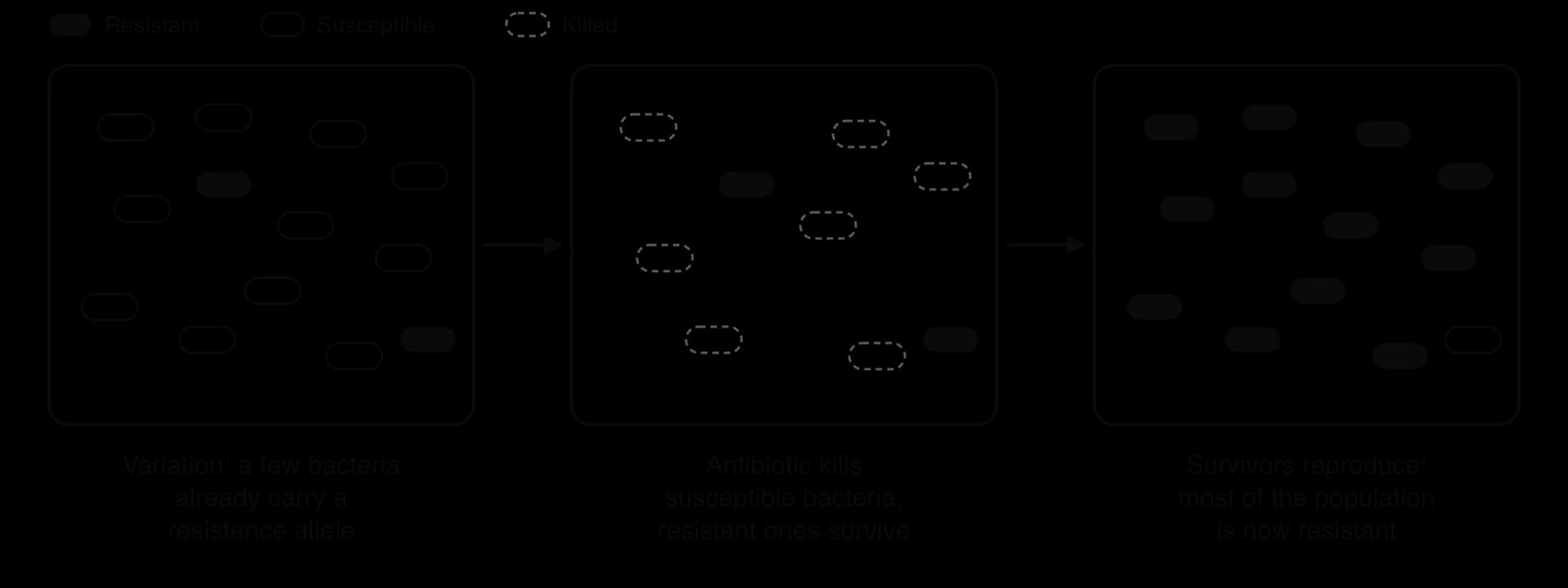
This is natural selection, not artificial selection. Humans apply the selection pressure, but nobody chooses which bacteria will breed. The bacteria that survive are those with heritable variation that suits the new environment, exactly as in any natural population. Artificial selection, in contrast, is a deliberate choice of individuals for traits wanted by humans. Resistance spreads fastest when antibiotics are overused or courses are not completed (C3.2 Defence against disease).
Natural selection | Artificial selection | |
|---|---|---|
What selects | The environment (selection pressures) | Humans, deliberately |
Traits favoured | Those that increase survival and reproduction | Those useful or attractive to humans |
Effect on fitness in the wild | Increases it | Often reduces it (many crops cannot survive without cultivation) |
Speed | Usually slow, but fast with strong pressures | Often fast, because selection is strong and deliberate |
Examples | Peppered moth, finch beaks, antibiotic resistance | Brassica oleracea varieties, Belyaev's foxes, dog breeds |
Natural selection is examined at every level. Paper 1A questions test the meaning of fitness, the sources of variation and the difference between Darwin's and Lamarck's ideas. Paper 1B and Paper 2 Section A use data from investigations such as Endler's guppies, the peppered moth, finch beaks or antibiotic resistance, and at HL allele frequencies, graphs of the patterns of selection and Hardy–Weinberg calculations. Section B extended responses often ask candidates to explain how natural selection leads to evolution, to outline the roles of mutation and sexual reproduction, or to distinguish between natural and artificial selection.
The command terms used most often are explain, outline, distinguish, calculate, deduce and suggest. Marks are lost most often through Lamarckian wording, through describing individuals rather than populations, and in Hardy–Weinberg questions by using the recessive phenotype frequency as .
Data questions on the patterns of selection usually give two frequency distributions, before and after an event. Answers should quote values from the graph, describe the change in both the mean and the spread, and name the pattern.
The ideas connect to many other subtopics: meiosis and fertilisation as sources of variation (D2.1 Cell and nuclear division), mutation (D1.3 Mutations and gene editing), carrying capacity and competition (C4.1 Populations and communities), and adaptation (B4.1 Adaptation to environment).
I can explain natural selection as the mechanism of evolution and outline Darwin's observations and inferences.
I can explain what a paradigm shift is, using Darwin's theory replacing Lamarckism as the example.
I can outline how mutation and sexual reproduction generate variation.
I can explain how overproduction, limited resources and abiotic factors act as selection pressures.
I can define fitness and explain selection due to intraspecific competition.
I can explain why only heritable traits can evolve, and distinguish them from acquired characteristics.
I can explain sexual selection, using the birds of paradise as an example.
I can interpret data from Endler's guppy experiments and explain why such models are used.
I can define a gene pool, calculate allele frequencies and compare them between isolated populations using database data. (HL)
I can distinguish directional, stabilising and disruptive selection from graphs, with an example of each. (HL)
I can use the Hardy–Weinberg equation and state the conditions for Hardy–Weinberg equilibrium. (HL)
I can distinguish artificial selection from natural selection and explain why antibiotic resistance is natural selection. (HL)
a. obligate aerobes need oxygen to survive / cannot survive without oxygen;
b. (because) they depend on aerobic respiration (to produce enough ATP);
c. obligate anaerobes cannot survive / are damaged when oxygen is present;
d. obligate anaerobes rely on anaerobic respiration / processes that do not use oxygen;
e. facultative anaerobes can survive with or without oxygen;
f. facultative anaerobes respire aerobically when oxygen is available and anaerobically when it is not;
g. aerobic respiration yields much more ATP per glucose than anaerobic respiration;
h. example: yeast as a facultative anaerobe / Clostridium as an obligate anaerobe / humans as obligate aerobes;
[4 max]
Outline photosynthesis as a mode of nutrition, including the groups of organisms that use it.
4 marks
a. photosynthesis is a form of autotrophic nutrition;
b. light energy is transformed into chemical energy (in carbon compounds);
c. carbon dioxide is converted to glucose / carbon compounds;
d. using hydrogen from the splitting of water;
e. oxygen is released as a by-product;
f. carried out by plants;
g. carried out by algae;
h. carried out by several groups of prokaryotes / cyanobacteria;
i. chlorophyll / photosynthetic pigments absorb the light;
[4 max]
One additional mark is available for the construction of the answer.
Variation is the raw material on which evolution acts.
Describe how meiosis generates genetic variation.
4 marks
Outline how the selective breeding of crop plants provides evidence for evolution.
4 marks
Explain how natural selection can lead to evolutionary change in a population.
7 marks
Abiotic factors affect where organisms live and how they evolve.
Outline how a species' range of tolerance for an abiotic factor limits its distribution.
4 marks
Outline how abiotic factors determine the distribution of terrestrial biomes.
4 marks
Explain how abiotic factors can act as selection pressures that lead to adaptation to the environment.
7 marks