Notes on A.2.2 Fuelling for health and performance
Learning objectives
Outline the structure, food sources and roles of carbohydrates, proteins and lipids, and calculate the energy they provide.
Explain how body composition, age, sex differences and activity level affect the amount of each macronutrient an individual needs.
Describe how carbohydrate, fat and protein are used as fuels at rest and during exercise of different intensities and durations.
Explain how the availability of carbohydrate affects health and endurance performance, including glycogen depletion.
Evaluate nutritional strategies before and during exercise, including the pre-event meal, carbohydrate loading and carbohydrate intake during exercise, and their effects on gastrointestinal comfort.
Calculate energy availability and explain how prolonged low energy availability leads to relative energy deficiency in sport (REDs).
Outline the roles of iron, calcium, sodium, potassium and vitamins in energy transfer and tissue synthesis (HL).
Discuss how genetics, diet, medications and lifestyle influence the gut microbiome, and how the microbiome affects health and performance (HL).
Introduction
Food provides the energy and the raw materials the body needs to live, grow and move. Three nutrients, carbohydrates, proteins and lipids, are eaten in large amounts and supply almost all of that energy; smaller amounts of vitamins and minerals make it possible to release and use it. What, how much and when a person eats affects how long they can exercise, how well they recover and adapt to training, and their long-term health.
Fuelling is studied through both lenses of the course. For performance, it explains why marathon runners and cyclists now take in large amounts of carbohydrate during races and why a poorly timed meal can cause stomach problems mid-event. For health, it explains why too little energy relative to training harms bones, hormones and mental health, and why the balance of macronutrients in the diet matters for growth in young people and for maintaining muscle in older adults.
Nutrients and the energy in food
A nutrient is a substance in food that the body needs for energy, growth, repair or the regulation of its processes. Nutrients are divided into two groups by the amount needed. Macronutrients are eaten in tens or hundreds of grams per day; micronutrients are needed in milligrams or micrograms. Water and fibre are also essential parts of the diet, although fibre provides little usable energy and water provides none.
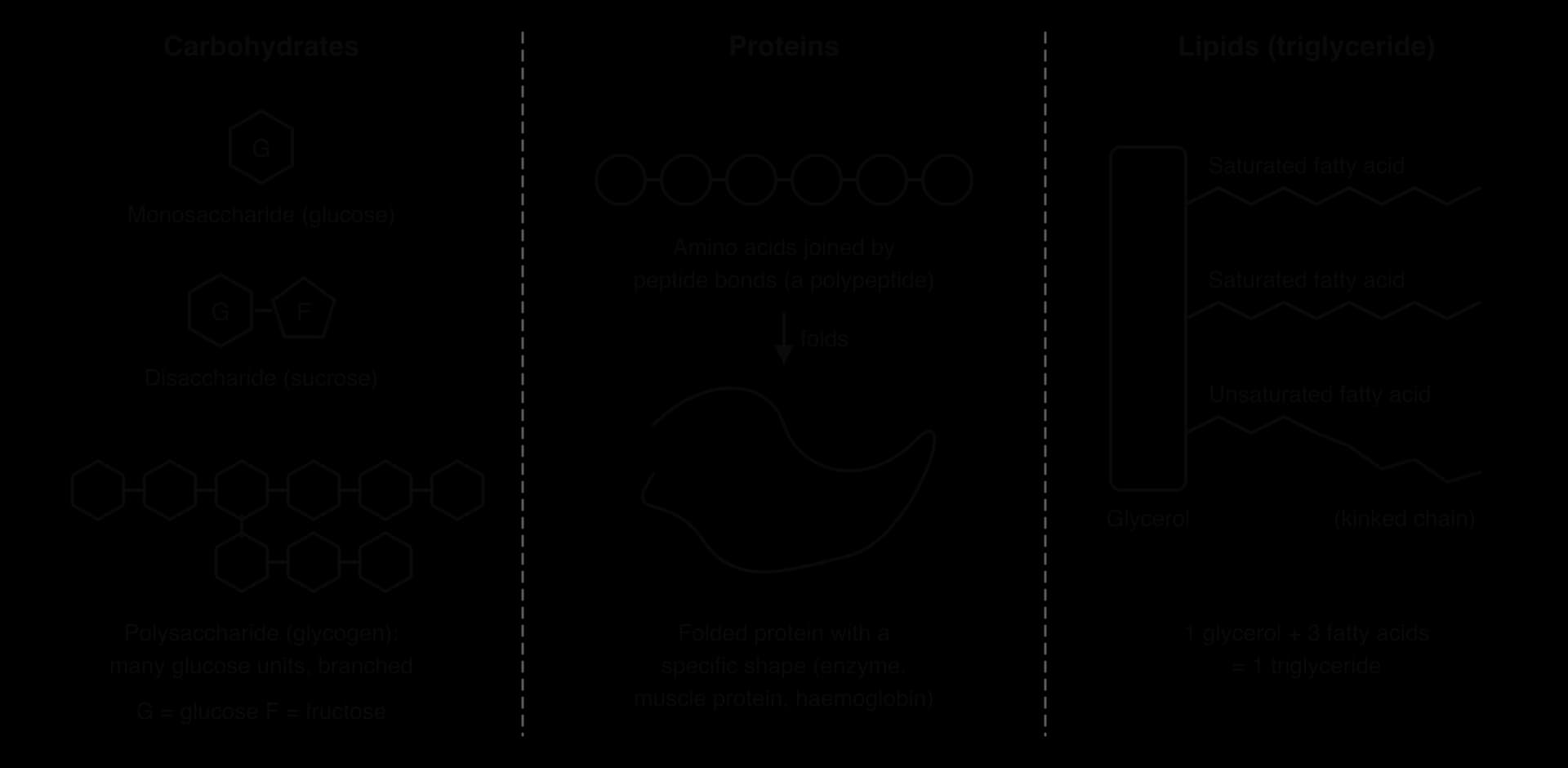
The three macronutrients differ in their chemical structure, which determines how much energy each gram contains, how quickly the body can release that energy and what else the body uses them for. The figure shows each structure in outline: carbohydrates are built from sugar units, proteins from chains of amino acids, and the main dietary lipids from glycerol and fatty acids.
Energy values of the macronutrients
When a macronutrient is broken down in the body, the energy stored in its chemical bonds is released. Part of this energy is used to resynthesise adenosine triphosphate (ATP), the molecule that powers muscle contraction, and the rest is released as heat. The energy content of food is measured in joules (J) or kilojoules (kJ); food labels and many nutrition books also use the kilocalorie (kcal), which is the same as the "Calorie" on many labels.
Macronutrient | Energy per gram (kJ) | Energy per gram (kcal) | Main energy role |
|---|---|---|---|
Carbohydrate | 17 | 4 | The main fuel for moderate and high-intensity exercise and the brain |
Protein | 17 | 4 | A minor fuel; mainly used for growth and repair |
Lipid | 37 | 9 | The largest energy store; the main fuel at rest and in low-intensity exercise |
Lipid provides more than twice as much energy per gram as carbohydrate or protein because its fatty acids contain long chains of carbon and hydrogen with little oxygen, so more of each molecule can be oxidised. This makes fat an efficient way to store energy: an adult with a modest amount of body fat carries enough to run several hundred kilometres, while the body's carbohydrate stores are far smaller.
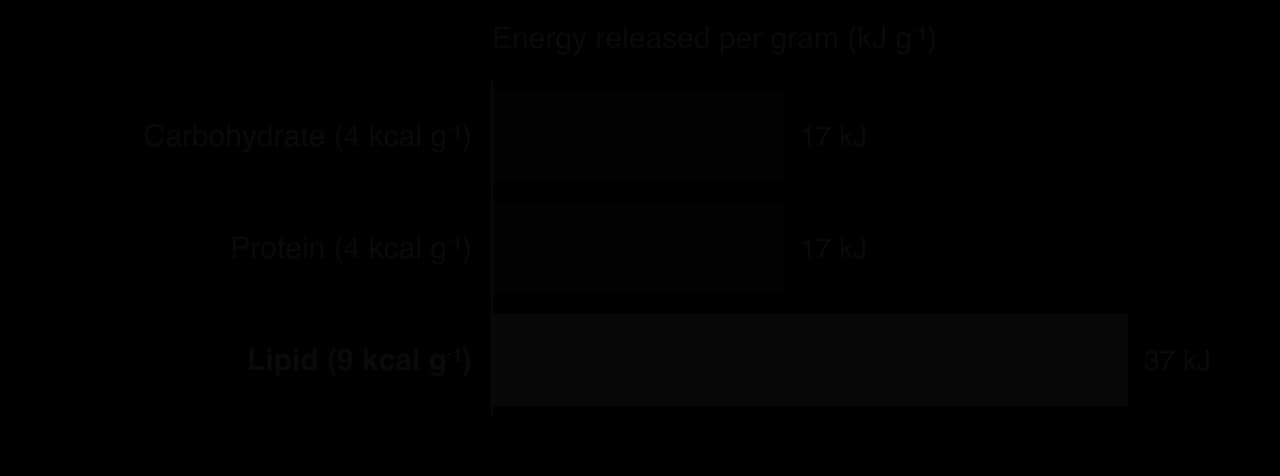
To convert between the units, 1 J = 0.239 cal, so 1 kJ = 0.239 kcal (and 1 kcal = 4.184 kJ).
Carbohydrates
Structure: from single sugars to polysaccharides
The simplest carbohydrates are monosaccharides, single sugar units such as glucose, fructose (fruit sugar) and galactose. Two monosaccharides joined together form a disaccharide: sucrose (table sugar) is glucose + fructose, lactose (milk sugar) is glucose + galactose and maltose is glucose + glucose. Monosaccharides and disaccharides are often called simple sugars.
Many monosaccharides joined into long chains form polysaccharides, often called complex carbohydrates. Plants store glucose as starch (in bread, rice, pasta, potatoes, oats); animals, including humans, store it as glycogen. Plant cell walls also contain fibre, polysaccharides that human enzymes cannot digest; fibre adds bulk to food, slows digestion and feeds the bacteria of the large intestine.
During digestion, starch and disaccharides are broken down to monosaccharides, which are absorbed in the small intestine and carried to the liver. Almost all carbohydrate eventually reaches the cells as glucose. The blood holds only about 4 g of glucose at any moment, and its concentration is kept within a narrow range (about 4–5.5 mmol L⁻¹) by the hormones insulin and glucagon, because the brain depends on a steady supply.
Glycogen: the body's carbohydrate store
Excess glucose is stored as glycogen, mainly in two places. Muscle glycogen, about 500 g in a typical adult (range about 300–700 g), can be used only by the muscle that stores it, as a fuel for its own contractions. Liver glycogen, about 80 g on average, is broken down to glucose and released into the blood to keep blood glucose steady between meals and during exercise. Liver glycogen falls considerably overnight, which is one reason a breakfast or pre-event meal matters before morning competition.
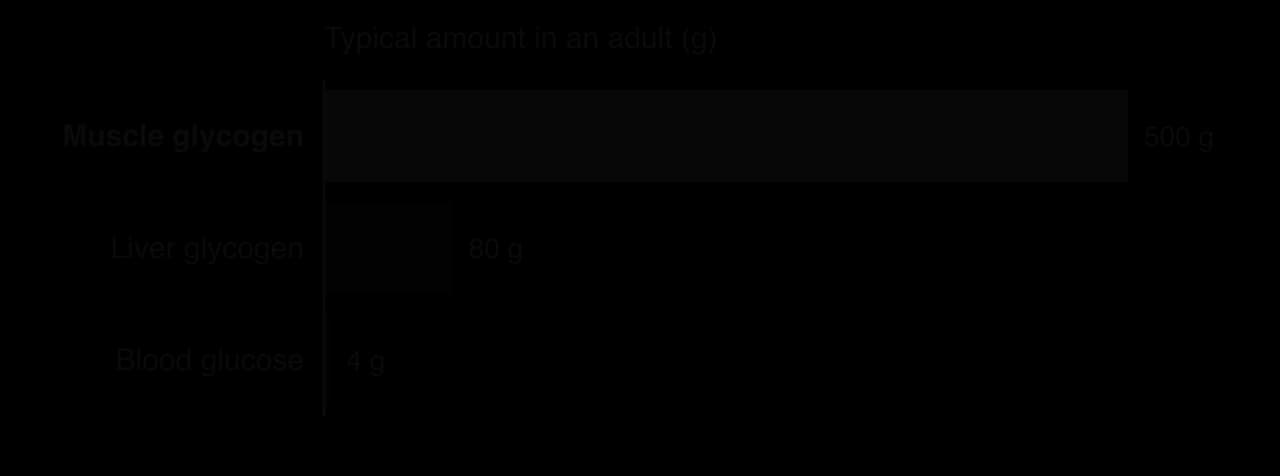
Each gram of glycogen is stored with about 3 g of water. This explains why body mass rises by 1–2 kg when an athlete loads up on carbohydrate before an event, and why rapid weight loss on a very low-carbohydrate diet is largely water. Glycogen stores are limited: at a high endurance intensity they last roughly 90–120 minutes, which is the main reason carbohydrate intake before and during long events affects performance.
Glycaemic index
Carbohydrate foods raise blood glucose at different speeds. The glycaemic index (GI) ranks foods by how much and how quickly 50 g of their available carbohydrate raises blood glucose over two hours, compared with the same amount of pure glucose (GI = 100). Foods are usually grouped as low GI (55 or less), medium GI (56–69) and high GI (70 or more).
A food's GI depends on the type of sugar, how processed it is and how much fibre, fat and protein it contains (all slow digestion). White bread, sports drinks and jelly sweets are high GI; lentils, apples, milk and porridge oats are lower. High-GI foods are useful when fast energy is wanted, such as during a long event or soon after exercise to restore glycogen. Low-GI foods give a steadier supply and are preferred in the everyday diet, because repeated large rises in blood glucose and insulin are linked to a higher risk of type 2 diabetes.
Food sources and roles of carbohydrate
Main energy source for moderate and high-intensity exercise: glucose and glycogen can be broken down both with and without oxygen, so they fuel the glycolytic system as well as the oxidative system.
Fuel for the brain and nervous system, which rely almost entirely on blood glucose.
Protein sparing: when carbohydrate is available, the body does not need to break down protein to make glucose.
Fibre keeps the digestive system healthy and feeds gut bacteria.
Good sources include starchy foods (rice, pasta, bread, potatoes, oats), fruit, vegetables, legumes, milk and yoghurt, plus sports drinks, gels and bars, which are concentrated sources designed for use around exercise.
Proteins
Proteins contain carbon, hydrogen, oxygen and nitrogen. They are built from 20 different amino acids, joined into chains by peptide bonds. The order of amino acids determines how the chain folds, and the folded shape determines the protein's job: the contractile proteins actin and myosin in muscle, collagen in tendons and bone, enzymes that speed up the reactions of the energy systems, antibodies, some hormones such as insulin, and haemoglobin, which carries oxygen in the blood.
The body can make 11 of the 20 amino acids from other molecules. The other nine are essential amino acids: they must come from food. Animal foods (meat, fish, eggs, dairy) and soya contain all nine in useful amounts. Most single plant foods are low in at least one, so vegetarian and vegan diets combine sources, for example beans with rice or lentils with bread. Leucine, an essential amino acid found in high amounts in dairy, meat and eggs, is an important trigger for muscle protein synthesis.
Protein is not stored in the body in the way glycogen and fat are. Every protein in the body is in use, and muscle protein is constantly being broken down and rebuilt. Exercise, especially resistance training, increases both processes; eating protein after training shifts the balance towards building, which is how muscle adapts and grows (hypertrophy). Protein provides only about 2–5% of the energy used in most exercise, rising to around 10% late in very long events when glycogen is low.
Lipids
Most dietary and stored lipid is in the form of triglycerides: one glycerol molecule joined to three fatty acids. Fat stored under the skin and around organs (adipose tissue) and small droplets inside muscle fibres (intramuscular triglyceride) are both triglyceride. Before fat can be used as a fuel, triglycerides are broken down (lipolysis) into glycerol and free fatty acids, which travel in the blood to the muscles and are oxidised in the mitochondria by beta-oxidation.
Saturated and unsaturated fatty acids
In a saturated fatty acid every carbon is joined to its neighbours by single bonds, so the chain is "saturated" with hydrogen and is straight. Straight chains pack tightly, so fats rich in saturated fatty acids (butter, lard, the fat on meat, coconut oil) are solid at room temperature. Unsaturated fatty acids have one double bond (monounsaturated, as in olive oil and avocado) or several (polyunsaturated, as in sunflower oil, nuts and oily fish). Each double bond puts a kink in the chain, so these fats are usually liquid oils.
For health, diets high in saturated fat tend to raise blood LDL cholesterol, a risk factor for cardiovascular disease. Two polyunsaturated fatty acids (omega-3 and omega-6 types) are essential: the body cannot make them, so they must come from food.
Roles of lipids
Energy store and fuel: the main fuel at rest and during low-intensity, long-duration exercise.
Insulation and protection: adipose tissue under the skin reduces heat loss; fat around organs cushions them.
Cell membranes: phospholipids and cholesterol form the membranes of every cell, including muscle fibres and nerves.
Hormones: steroid hormones such as oestrogen and testosterone are made from cholesterol.
Fat-soluble vitamins: vitamins A, D, E and K are absorbed with dietary fat.
Comparing the three macronutrients
Feature | Carbohydrate | Protein | Lipid |
|---|---|---|---|
Building blocks | Monosaccharides (glucose) | Amino acids | Glycerol and fatty acids |
Energy per gram | 17 kJ (4 kcal) | 17 kJ (4 kcal) | 37 kJ (9 kcal) |
Storage in the body | Glycogen in muscle (~500 g) and liver (~80 g) | No store; all protein is functional | Adipose tissue and intramuscular triglyceride; very large |
Main roles | Fuel for moderate and high intensity; brain fuel | Growth, repair, enzymes, hormones, transport | Fuel at rest and low intensity; insulation; membranes; hormones; vitamins A, D, E, K |
Used anaerobically? | Yes (glycolytic system) | No | No |
Typical food sources | Bread, rice, pasta, potatoes, fruit, milk, sports drinks | Meat, fish, eggs, dairy, soya, legumes, nuts | Oils, butter, nuts, seeds, oily fish, avocado, meat |
How much of each macronutrient: what needs depend on
Every person needs all three macronutrients, but the amounts, and the share each contributes to energy intake, differ between individuals. Needs are usually expressed in grams per kilogram of body mass per day (g kg⁻¹ day⁻¹), which scales them to the size of the person, or as a percentage of total energy intake.
Body composition
Body composition describes the proportions of fat mass and fat-free mass (muscle, bone, organs and water). Fat-free mass is metabolically active tissue: it uses energy even at rest, so a person with more muscle has a higher basal metabolic rate and needs more energy than a person of the same body mass with more fat. Protein needs are linked to the amount of muscle to be maintained and repaired. For this reason sports scientists often scale energy needs to fat-free mass, as in the calculation of energy availability.
Age
Children and adolescents need more energy and protein per kilogram of body mass than adults, because they are building new tissue as well as maintaining it. During exercise, children rely relatively more on fat than adults at the same relative intensity. Young athletes who train heavily without eating enough risk delayed growth and puberty and poorer bone development.
Older adults need less total energy, because muscle mass and activity usually decline and basal metabolic rate falls, but their need for protein does not fall in the same way. Ageing muscle responds less to a given dose of protein, so a larger serving of high-quality protein at each meal, with resistance exercise, helps slow the loss of muscle mass and strength (sarcopenia).
Sex differences
On average, males are larger and have more fat-free mass than females, so their absolute energy, carbohydrate and protein needs are higher; per kilogram of fat-free mass the differences are much smaller. At the same relative exercise intensity, females tend to oxidise a slightly greater proportion of fat and a smaller proportion of carbohydrate than males, an effect linked to oestrogen. Female athletes also need to raise total energy intake, and not only the percentage of carbohydrate, to store extra glycogen before an event, because many habitually eat less energy than male athletes. Females who menstruate have higher iron needs because of blood loss.
Activity level
Activity level has the largest effect. The more and the harder a person trains, the more energy and carbohydrate they need, because exercise uses glycogen that must be replaced. Protein needs also rise, but by a much smaller amount.
Nutrient | General population (adults) | Athletes in training |
|---|---|---|
Carbohydrate | About 3–5 g kg⁻¹ day⁻¹ for a lightly active adult; free sugars below 10% of energy | Light, skill-based training: 3–5 g kg⁻¹ day⁻¹ |
Protein | About 0.8 g kg⁻¹ day⁻¹ (recommended dietary allowance) | 1.2–2.0 g kg⁻¹ day⁻¹, spread over the day in servings of about 0.3 g kg⁻¹, including soon after exercise |
Lipid | No more than 30% of energy; saturated fat no more than 10% of energy | 20–35% of energy; below 20% risks low intakes of essential fatty acids and fat-soluble vitamins |
Sources: Thomas, Erdman and Burke, Medicine and Science in Sports and Exercise, 2016 (Academy of Nutrition and Dietetics, Dietitians of Canada and American College of Sports Medicine joint position); Burke et al., Journal of Sports Sciences, 2011; Kerksick et al., Journal of the International Society of Sports Nutrition, 2018; World Health Organization, Healthy diet fact sheet.
The athlete ranges are wide because needs vary from day to day. Modern sports nutrition advises athletes to match carbohydrate intake to the demands of each day's training ("fuel for the work required"), eating more on heavy days and less on light or rest days, rather than following one fixed daily amount.
Evaluation: how useful are the recommended intakes?
Recommendations based on body mass and training load are a clear, practical starting point, drawn from position stands that summarise a large body of research. However, the ranges are wide, much of the research was done on young, trained male cyclists and runners in laboratories, and athletes' food records are unreliable because people tend to under-report what they eat. The guidelines are best used as a framework that a sports dietitian adjusts to the individual, the sport, the phase of training and the person's culture and preferences.
How the body uses macronutrients at rest and during exercise
All three macronutrients can be broken down to resynthesise ATP, but they enter the energy systems at different points. Glucose and glycogen can be broken down without oxygen by the glycolytic system or completely oxidised by the oxidative system. Fatty acids can be used only by the oxidative system, after beta-oxidation in the mitochondria. Amino acids can be converted into intermediates of the oxidative system, but this is a minor source of energy. The phosphagen system uses phosphocreatine stored in the muscle and does not draw directly on the macronutrients at all.
At rest
At rest, energy demand is low and plenty of oxygen is available, so fat supplies most of the energy (often around 60–70%) and carbohydrate most of the rest. After a meal containing carbohydrate, insulin rises and the body uses more carbohydrate and stores the excess as glycogen; during an overnight fast it shifts towards fat.
Effect of exercise intensity
As exercise intensity rises, the share of energy from carbohydrate increases and the share from fat falls. Three reasons explain this. Carbohydrate releases ATP faster than fat; it needs less oxygen per unit of ATP produced (it is more oxygen-efficient); and at high intensities more type II muscle fibres are recruited, which are better suited to using glycogen. Hormones also push in this direction: epinephrine released during hard exercise speeds up glycogen breakdown. Above about 85% of VO₂ max, carbohydrate supplies almost all of the energy.
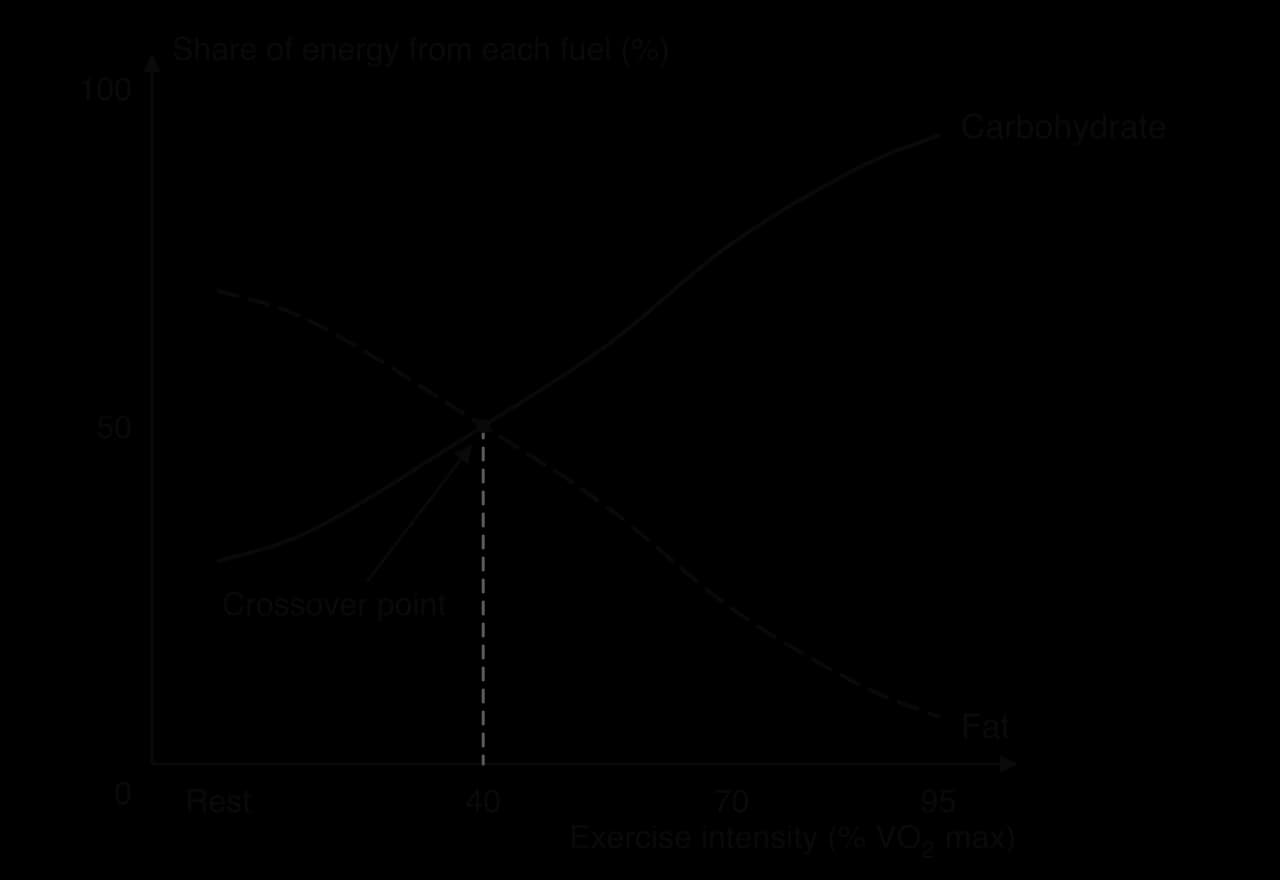
The crossover point is the intensity above which carbohydrate supplies more energy than fat. Endurance training moves it to a higher intensity, because trained muscle has more mitochondria, more capillaries and more of the enzymes of beta-oxidation, so it can oxidise more fat at the same pace and save glycogen. Absolute fat use is greatest at moderate intensities (often around 50–65% of VO₂ max in trained people): at lower intensities total energy use is small, and at higher ones carbohydrate takes over.
Effect of exercise duration
During prolonged exercise at a constant moderate intensity, the share of energy from fat rises gradually as muscle glycogen falls and hormones such as glucagon increase the release of fatty acids from adipose tissue.
Glycogen depletion and "hitting the wall"
In endurance events lasting more than about 90 minutes at a high intensity, muscle glycogen can fall to very low levels. Exhaustion in this type of exercise usually coincides with critically low glycogen in the working muscles, about 25 mmol kg⁻¹ wet muscle compared with typical resting values of about 150 mmol kg⁻¹ in trained endurance athletes. If liver glycogen also runs low, blood glucose falls (hypoglycaemia) and the brain is short of fuel, causing dizziness, poor concentration and a sense of extreme effort.
Marathon runners call the sudden slowing that follows "hitting the wall"; cyclists call it "bonking". The runner can still move, using fat, but only at a much slower pace, because fat oxidation supplies ATP too slowly to maintain race speed. Glycogen depletion is one of the main peripheral causes of fatigue, and the strategies that follow (carbohydrate loading, a pre-event meal and carbohydrate during exercise) all aim to prevent it.
Carbohydrate availability also affects how hard exercise feels. With low glycogen and blood glucose, the rating of perceived exertion (RPE) at a given pace is higher, and mood, concentration and decision-making in team sports can suffer late in a match.
Fat adaptation: can athletes rely on fat instead?
Because fat stores are so large, some athletes have tried low-carbohydrate, high-fat (LCHF) diets, sometimes ketogenic diets with less than 50 g of carbohydrate a day, to train the body to burn more fat and spare glycogen. Within a few weeks such diets greatly increase the rate at which the body oxidises fat during exercise, but a higher rate of fat oxidation does not by itself mean better performance.
A well-controlled study of world-class race walkers tested this during three weeks of intensified training. Athletes were given a high-carbohydrate diet, the same diet with carbohydrate periodised (high on some sessions, low on others), or an LCHF diet. The LCHF group reached very high fat oxidation rates (peak about 1.57 g min⁻¹) and all groups improved their VO₂ peak. However, the LCHF diet increased the oxygen cost of walking at race pace, so the athletes became less economical, and only the two carbohydrate groups improved their 10 km race times.
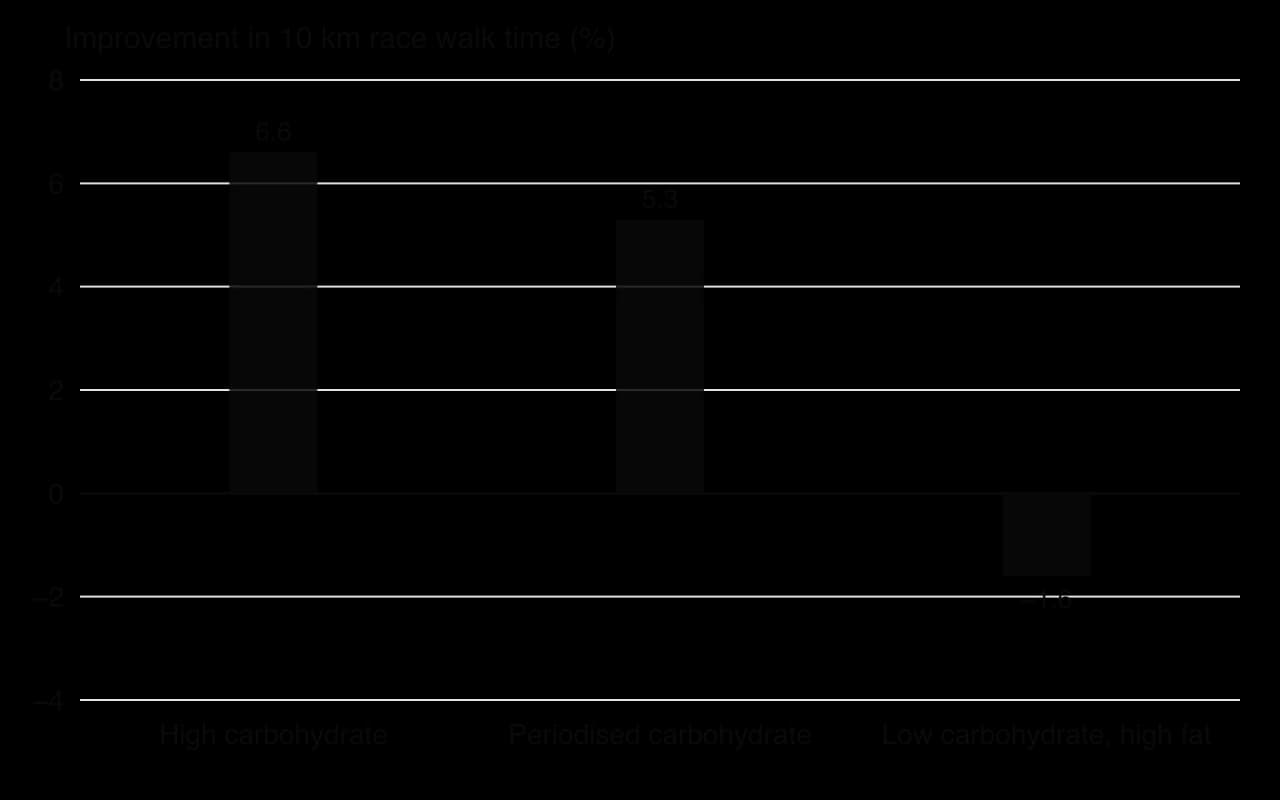
Fat adaptation reduces the ability to use carbohydrate quickly, and burning fat needs more oxygen for each unit of ATP. At the high intensities of most races, oxygen delivery limits the rate of ATP resynthesis, so an athlete relying more on fat has to race at a slower pace. Fat adaptation may suit very long, lower-intensity events such as some ultra-endurance races, but for most endurance sport the evidence favours high carbohydrate availability for competition.
Sources: Burke et al., Journal of Physiology, 2017; Burke et al., PLoS One, 2020.
Health: macronutrient availability and the body
For health, a diet with too little carbohydrate for the training load makes sessions feel harder and can contribute to low energy availability. A diet that regularly provides much more energy than is used, particularly from free sugars and saturated fat, leads to fat gain and raises the risk of obesity, type 2 diabetes and cardiovascular disease; the balance between energy intake and expenditure over time is called energy balance. For inactive people, the priority is usually the quality of carbohydrate and fat (more fibre and unsaturated fat, fewer free sugars), while for athletes it is matching intake to training.
Nutritional strategies before exercise
The pre-event meal
The pre-event meal tops up liver glycogen after the overnight fast, keeps blood glucose steady, prevents hunger and supplies some fluid. Its timing and content are chosen so that the stomach is largely empty by the start of exercise.
Timing: a main meal 3–4 hours before the start; smaller snacks closer to the start (for example a banana or a sports drink about 1 hour before).
Carbohydrate: about 1–4 g kg⁻¹ of body mass in the 1–4 hours before; the closer to the start, the smaller the amount.
Low in fat, fibre and protein, all of which slow the emptying of the stomach.
Familiar foods only: competition day is not the time to try something new.
Fluid with the meal, so the athlete starts well hydrated.
Porridge with banana and honey, toast with jam, or rice with a little lean chicken are typical choices; a fried breakfast is a poor one, because its fat and protein stay in the stomach for hours.
Carbohydrate loading
Carbohydrate loading (also called glycogen loading or supercompensation) increases muscle glycogen above its normal level. It was developed by Scandinavian researchers in the 1960s, who used muscle biopsies to show that endurance time on a cycle ergometer was closely linked to the starting glycogen content of the muscle.
The classic and modified protocols
The classic protocol took a week. About three days of hard training on a very low-carbohydrate diet emptied the glycogen stores, then three days of rest or light training on a high-carbohydrate diet refilled them to a higher level than before. It worked, but the low-carbohydrate phase caused fatigue and irritability and risked illness and injury just before competition.
The modified protocol drops the depletion phase. Athletes taper their training over the final days while eating a high-carbohydrate diet. A 1981 study of trained runners compared three regimens. The classic regimen and a modified regimen (three days of a mixed diet then three days of a high-carbohydrate diet, with tapering) raised muscle glycogen to almost the same level, both well above a mixed diet throughout.
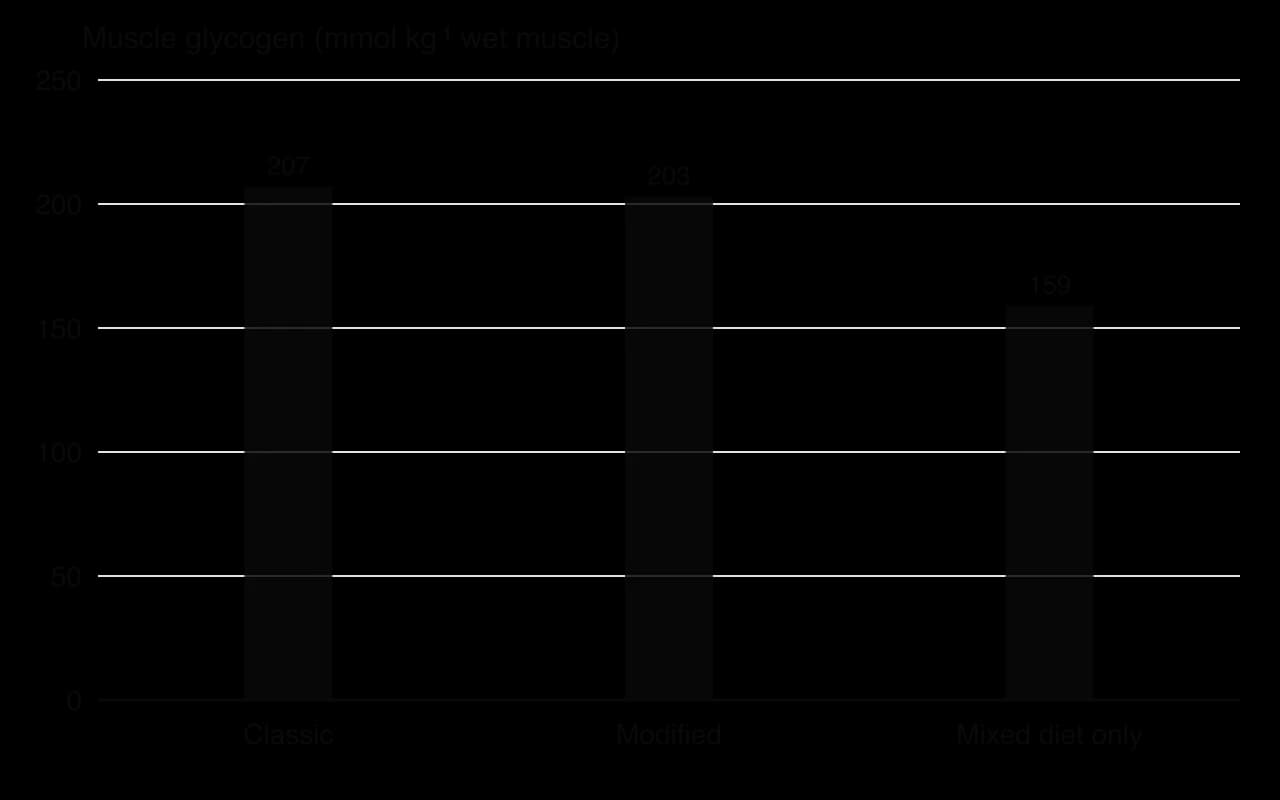
Later research shortened loading further. In 2002, eight endurance-trained men who rested and ate 10 g kg⁻¹ day⁻¹ of high-GI carbohydrate raised their muscle glycogen from 95 to 180 mmol kg⁻¹ wet muscle in just one day, with no further rise over the next two days. Current guidance is therefore about 10–12 g kg⁻¹ day⁻¹ for 36–48 hours before the event, with reduced training.
Evaluation: who benefits from carbohydrate loading?
Loading helps only when glycogen would otherwise run low. A review of the evidence found that raising starting glycogen postpones fatigue by about 20% in exercise to exhaustion lasting more than 90 minutes and improves performance by about 2–3% in events where a set distance is covered as fast as possible. It gives no benefit in high-intensity exercise lasting less than 5 minutes, or in moderate-intensity running and cycling of 60–90 minutes, where plenty of glycogen remains at the end. The 1981 runners, for example, ran no faster over 20.9 km despite their higher glycogen.
Strengths | Limitations |
|---|---|
Strong evidence (biopsy studies since the 1960s) that it raises muscle glycogen | No benefit for events shorter than about 90 minutes or for team sports with a normal diet |
Delays fatigue and improves performance by 2–3% in long endurance events | Body mass rises 1–2 kg (glycogen stored with water): a disadvantage in weight-bearing or weight-class sports and climbing |
Modern protocol takes only 1–2 days and needs no depletion phase | Large food volumes can cause bloating and GI discomfort; must be practised before competition |
Simple, cheap and legal | Females may need to increase total energy, not only the carbohydrate percentage, to load successfully |
Sources: Hawley et al., Sports Medicine, 1997; Sherman et al., International Journal of Sports Medicine, 1981; Bussau et al., European Journal of Applied Physiology, 2002; Murray and Rosenbloom, Nutrition Reviews, 2018.
Carbohydrate loading is therefore worth using for continuous events over about 90 minutes, such as a marathon or a road cycling race. For a 10 km run, a game of football or a gym session, a normal high-carbohydrate diet and a good pre-event meal are enough.
Nutritional strategies during exercise
Eating and drinking carbohydrate during exercise supplies glucose to the blood, which the working muscles can oxidise. This maintains blood glucose, spares liver glycogen (and possibly some muscle glycogen) and allows a high intensity to be held for longer. How much is useful depends mainly on the duration of the event.
Duration of exercise | Recommended carbohydrate intake | Notes |
|---|---|---|
Less than 45 min | Not needed | Glycogen stores are sufficient |
45–75 min (sustained high intensity) | Small amounts, or a carbohydrate mouth rinse | Benefit acts on the brain, not on fuel supply |
1–2.5 h | 30–60 g h⁻¹ | A single type of carbohydrate (glucose or maltodextrin) is enough |
More than 2.5–3 h | Up to 90 g h⁻¹ | Must be a mixture of glucose and fructose ("multiple transportable carbohydrates") |
Sources: Burke et al., Journal of Sports Sciences, 2011; Jeukendrup, Sports Medicine, 2014; Thomas, Erdman and Burke, Medicine and Science in Sports and Exercise, 2016.
The upper limit is set by absorption in the small intestine. Glucose is carried across the intestinal wall by a transporter protein (SGLT1) that becomes saturated at about 60 g of glucose per hour. Fructose uses a different transporter (GLUT5). Drinking a mixture of glucose and fructose therefore uses both routes at once, so more carbohydrate is absorbed and oxidised, and less is left sitting in the gut, where it would cause discomfort. Carbohydrate can come from drinks, gels, bars or ordinary foods such as bananas and rice cakes; drinks have the advantage of supplying fluid at the same time.
Even in shorter events, simply rinsing a carbohydrate drink around the mouth for about 10 seconds and spitting it out can improve performance slightly in high-intensity efforts lasting about an hour. Receptors in the mouth signal the arrival of carbohydrate to brain areas involved in reward and motor control, which appears to reduce the perceived effort.
Gastrointestinal comfort
Gastrointestinal (GI) problems are common in endurance sport, particularly in running and triathlon, and can force athletes to slow down or stop. During hard exercise, blood flow is redirected from the gut to the working muscles and skin, so digestion and absorption slow down. Running adds mechanical jostling. Heat and dehydration reduce gut blood flow further. Food or drink that stays in the stomach or intestine under these conditions causes symptoms.
The rate at which the stomach empties into the small intestine (gastric emptying) is therefore central to gastrointestinal comfort. Several factors slow it down:
Fat and protein, which take longer to digest.
Fibre, which adds bulk and slows the passage of food.
Concentrated, hypertonic drinks (high sugar concentration), which empty slowly and can draw water into the intestine by osmosis, causing cramps and diarrhoea. Isotonic drinks (about 6–8% carbohydrate) empty faster.
High exercise intensity (above about 70–75% of VO₂ max), heat and dehydration.
Large volumes eaten at once, compared with small amounts taken regularly.
Athletes reduce the risk by choosing low-fibre, low-fat foods, taking small amounts often, using glucose–fructose mixtures at high intakes and practising race nutrition in training. The gut is adaptable: regularly eating carbohydrate during training sessions ("training the gut") speeds gastric emptying, reduces feelings of fullness and increases the number of glucose transporters in the intestine, so more carbohydrate can be absorbed with fewer symptoms.
Adjusting strategies to the activity and the individual
Factor | How strategies are adjusted |
|---|---|
The activity | Long continuous events (marathon, road cycling): loading, a pre-event meal and 60–90 g h⁻¹ during. Team sports: a pre-match meal and carbohydrate at half-time. Short events (sprints, 10 km): a normal diet and pre-event meal only. |
Sex differences | Females may need to raise total energy intake to load glycogen; absolute amounts are often smaller because body mass is smaller. |
Age | Young athletes need energy for growth as well as sport; regular meals and snacks matter more than sports products. Older athletes need more protein per meal. |
Activity level | A recreational exerciser doing 30–60 minutes needs only a balanced diet and water; athletes training daily need carbohydrate matched to each session. |
Evaluation: nutritional strategies before and during exercise
The evidence for carbohydrate before and during long exercise is among the strongest in sports nutrition: many controlled laboratory trials, often double-blind with a flavoured placebo drink, show improved endurance capacity and time-trial performance. The limits concern who and what was studied: mostly trained young men cycling in laboratories, which differs from a hilly race in the heat. Individual responses vary widely, especially in GI tolerance, and many recent studies are funded by sports nutrition companies.
The overall judgment is that carbohydrate strategies are worthwhile when the event is long enough for glycogen to become limiting (over about 90 minutes) or intense enough that even a small benefit to the brain matters (around an hour). Their success depends on matching the amount and type of carbohydrate to the duration of the event, on practice in training to build GI tolerance, and on individual adjustment by the athlete and a sports dietitian.
Energy availability and low energy availability
Athletes in heavy training use a great deal of energy, and some do not eat enough to cover it. The concept of energy availability describes how much energy is left over, after the cost of exercise, for everything else the body has to do: maintaining the heart, brain and other organs, making hormones, building bone, repairing tissue, growing and fighting infection.
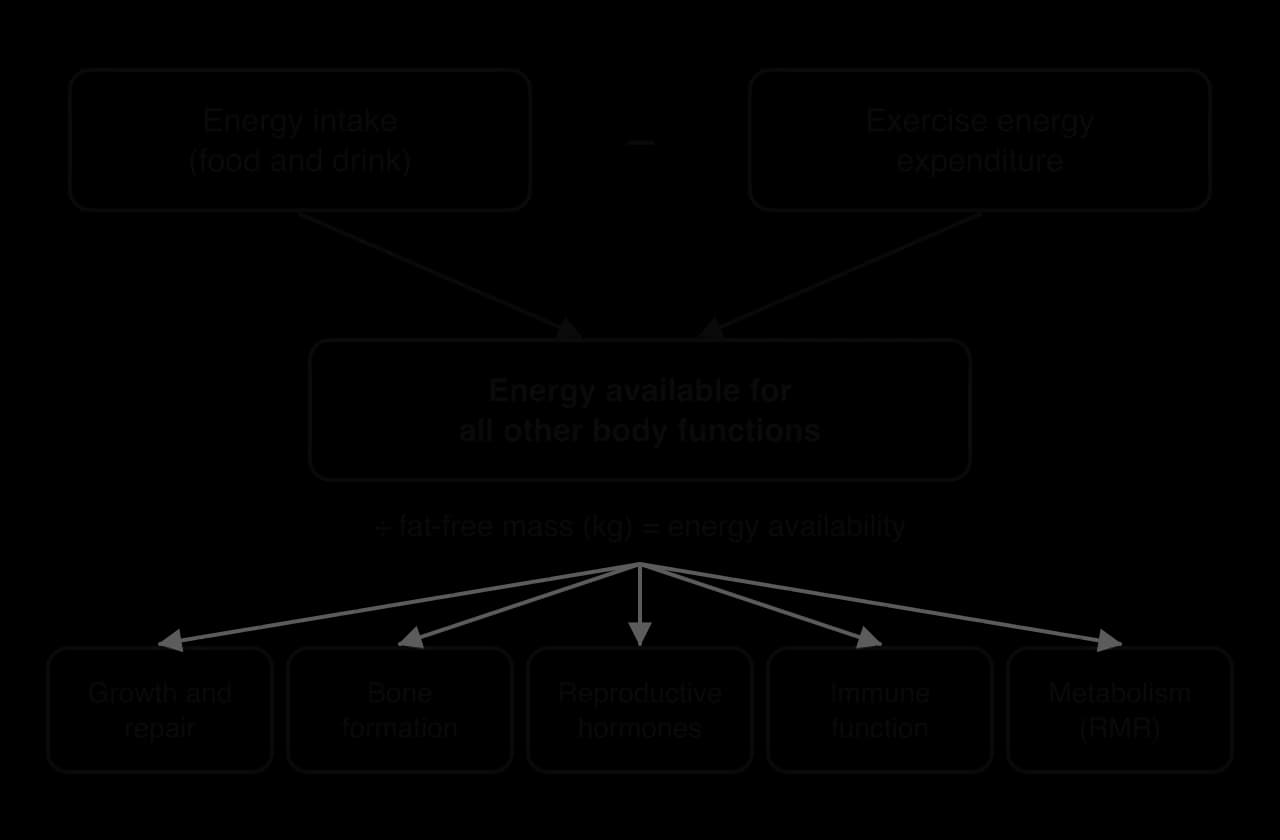
Energy availability is calculated from three quantities: energy intake (EI), exercise energy expenditure (EEE) and fat-free mass (FFM).
With energy in kilocalories and fat-free mass in kilograms, EA has the unit kcal kg FFM⁻¹ day⁻¹. Dividing by fat-free mass scales the result to the amount of metabolically active tissue the energy has to support, so values can be compared between athletes of different sizes.
Reference values
About 45 kcal kg FFM⁻¹ day⁻¹ or more: typically considered adequate for healthy physiological function in active young adults.
Between about 30 and 45 kcal kg FFM⁻¹ day⁻¹: reduced energy availability; some body functions may begin to be affected, and the effects depend on how long it lasts.
Below about 30 kcal kg FFM⁻¹ day⁻¹: commonly used as the threshold for clinically low energy availability.
The 30 kcal kg FFM⁻¹ day⁻¹ value comes from laboratory studies in which young women's diet and exercise were tightly controlled for five days. Below this level, the regular pulses of luteinising hormone, which control the menstrual cycle, were disrupted, and markers of bone formation fell. In other words, the body reduces "non-essential" processes, starting with reproduction and bone building, when energy is scarce.
Adaptable and problematic LEA
Not every period of low energy availability is harmful. A single hard training day, or a few days of a planned reduction in intake, is adaptable LEA: the effects are short-lived and reverse when normal eating resumes. Problematic LEA is more severe or lasts longer, and leads to lasting changes in health and performance. Where the line falls varies between people, which is why the most recent consensus describes LEA in these terms and does not rely on a single number.
Why LEA happens
Unintentional: training load increases but appetite does not; busy schedules leave no time to eat; a lack of knowledge of how much energy training requires; a bulky, high-fibre diet that fills the stomach before enough energy is eaten.
Intentional: deliberate restriction to lose weight or body fat, for weight categories, appearance or a belief that lighter is faster. Pressure from coaches, judges, social media or teammates can contribute.
Disordered eating and eating disorders: in some athletes, restriction becomes a mental health condition that needs specialist treatment.
Low carbohydrate availability can add to the problem. Emerging research suggests that restricting carbohydrate, even when total energy intake is adequate, may affect some of the markers linked to LEA, such as bone turnover, although the evidence so far comes from short studies.
Relative energy deficiency in sport (REDs)
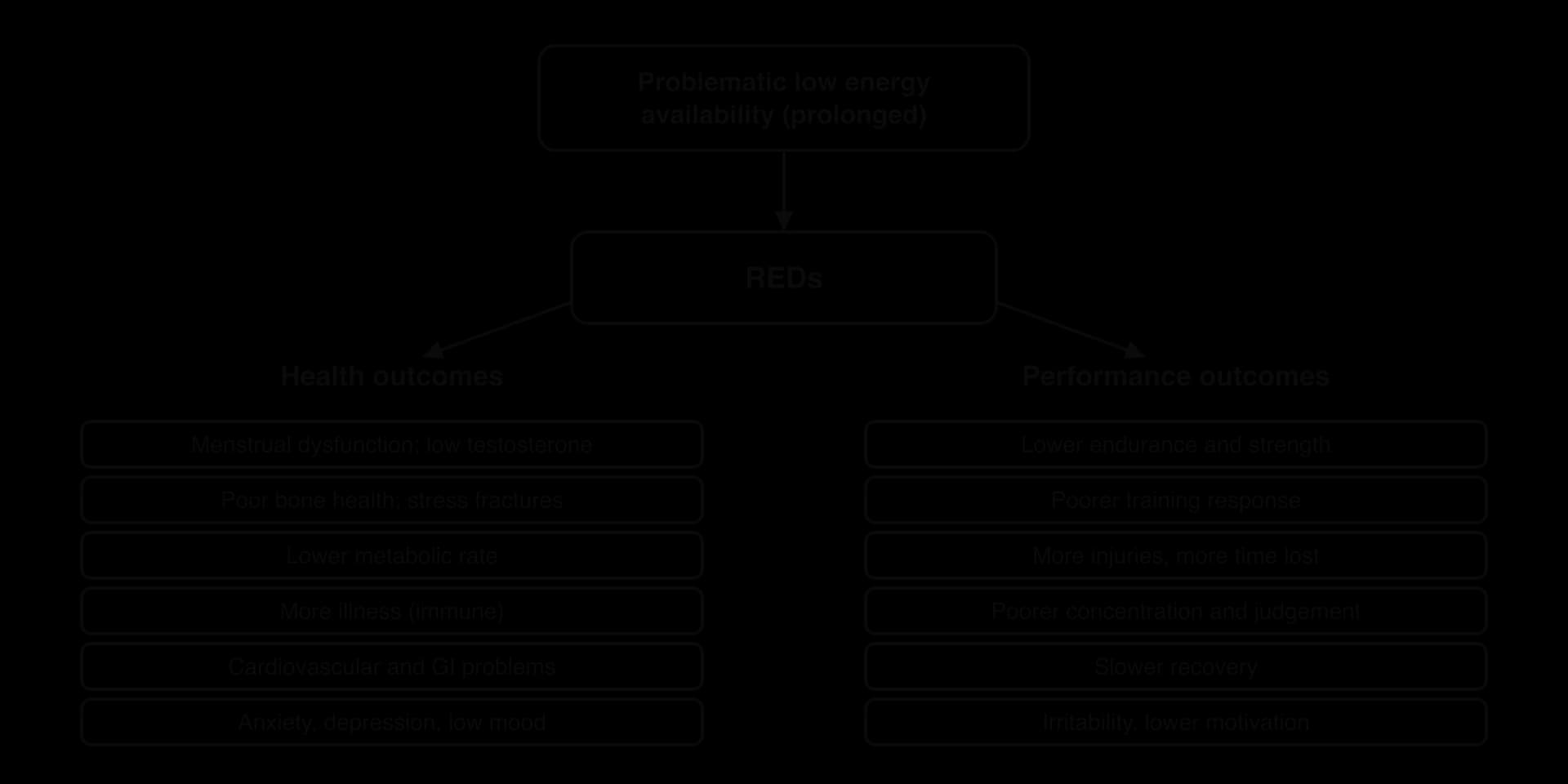
Relative energy deficiency in sport was introduced by an International Olympic Committee (IOC) expert group in 2014 and updated in 2018 and 2023. It is often written RED-S; the 2023 IOC consensus writes REDs. REDs is the consequence of prolonged LEA: it is the set of health and performance problems that follow when the body has had too little energy for too long.
From the female athlete triad to REDs
The female athlete triad was described in the early 1990s, when sports physicians noticed that disordered eating, missed periods (amenorrhoea) and weak bones often occurred together in female athletes. A 2007 position stand made low energy availability the underlying cause of the other two. The triad was an important step, but it described only three outcomes and only females.
REDs widened the picture in two ways. It recognises that LEA affects male athletes too: low energy reduces testosterone, bone density and metabolic rate in men, and male road cyclists, distance runners, jockeys and combat-sport athletes are among those at risk. It also recognises that LEA affects many body systems, not only reproduction and bone, and that it impairs performance as well as health. The triad is now seen as one part of REDs, in female athletes.
Health and performance outcomes
Body system | Health outcome | Why it happens |
|---|---|---|
Reproductive (endocrine) | Irregular or absent periods; low oestrogen; low testosterone and libido in males | The hypothalamus reduces the hormones that control the reproductive system to save energy |
Bone | Low bone mineral density, stress fractures, higher lifetime risk of osteoporosis | Low oestrogen or testosterone and low energy reduce bone formation; adolescents miss the years of peak bone building |
Metabolic | Lower resting metabolic rate; low thyroid hormone | The body lowers energy use to match intake |
Immune | More frequent illness, such as upper respiratory infections | Less energy for immune function |
Cardiovascular | Low heart rate and blood pressure, unfavourable blood lipids | Reduced energy and oestrogen |
Gastrointestinal | Constipation, bloating, slow gastric emptying | Reduced gut function |
Psychological | Anxiety, depression, low mood, irritability; may be a cause or a consequence of LEA | Energy restriction affects brain function; stress and body image concerns can drive restriction |
Performance falls because an athlete with REDs cannot train or recover fully. Reported performance outcomes include lower endurance performance and power, reduced muscle strength, a poorer response to training, more injuries and time lost, slower recovery, lower glycogen stores, and impaired judgement, coordination and concentration. Low motivation and irritability affect training quality and relationships with coaches and teammates.
Who is at risk?
Any athlete can develop REDs, but risk is higher in sports where low body mass or leanness is thought to give an advantage, or where energy expenditure is very high:
Endurance sports: distance running, road cycling, triathlon, cross-country skiing.
Aesthetic and judged sports: gymnastics, figure skating, diving, synchronised swimming, dance and ballet.
Weight-class sports: combat sports (boxing, judo, wrestling), lightweight rowing, horse racing (jockeys).
Gravitational sports: ski jumping, climbing, high jump.
Prevalence is hard to measure, but it is not rare. A 2020 review of studies across different sports found that 22–58% of athletes studied had measured low energy availability, and that 14–63% were estimated to be at risk, depending on the sport, the population and the method. Adolescents are particularly vulnerable because growth adds to their energy needs and because the bone they fail to build in these years cannot easily be regained.
Sources: Mountjoy et al., British Journal of Sports Medicine, 2023 (IOC consensus statement on REDs); Logue et al., Nutrients, 2020; Areta, Taylor and Koehler, European Journal of Applied Physiology, 2021.
Recognition, prevention and treatment
Early recognition matters, because some effects, such as lost bone density in adolescence, may not fully recover. Screening tools such as questionnaires on eating, training and menstrual history are used in sports programmes, followed by clinical assessment by a doctor, which may include blood tests and bone density scans. The IOC's REDs Clinical Assessment Tool (version 2) combines these signs to grade the severity of REDs and guide decisions about training and competition.
Treatment centres on restoring energy availability, by eating more, reducing training, or both, and usually involves a team: a sports physician, a sports dietitian and, where disordered eating or mental health concerns are present, a psychologist or psychiatrist. Prevention includes education for athletes, parents and coaches about energy needs; regular, well-planned meals and snacks around training; avoiding unnecessary emphasis on body mass and appearance; and measuring body composition only when there is a clear reason, in private, by trained staff.
 YouTube
Micronutrients (HL only)
Micronutrients fall into two groups. Minerals are inorganic elements such as iron, calcium, sodium and potassium; they become part of body structures (bone, haemoglobin) or act as charged particles (ions) in body fluids. Vitamins are organic compounds that mostly help enzymes work. Neither group can be broken down for energy, but without them the energy in macronutrients cannot be released or used, and tissues cannot be built or repaired.
Iron
Most of the body's iron is in haemoglobin, the protein in red blood cells that carries oxygen from the lungs to the tissues. Each haemoglobin molecule contains four haem groups, each with one iron atom that binds one oxygen molecule. Iron is also part of myoglobin, a similar protein in muscle fibres that stores oxygen and carries it from the cell membrane to the mitochondria, and of cytochromes, proteins of the electron transport chain in the oxidative system. Iron therefore affects every step from oxygen transport to aerobic ATP production.
The body stores spare iron in a protein called ferritin, mainly in the liver. The concentration of ferritin in the blood (serum ferritin) reflects the size of these stores, so it is the main blood test used to detect iron deficiency early, before haemoglobin falls.
Iron deficiency and anaemia
Iron deficiency develops in stages. First, stores are used up and serum ferritin falls (iron depletion), with no effect on haemoglobin. Next, too little iron reaches the bone marrow to make red blood cells normally, but haemoglobin is still in the normal range (iron deficiency without anaemia). Finally, haemoglobin concentration falls below normal: iron deficiency anaemia.
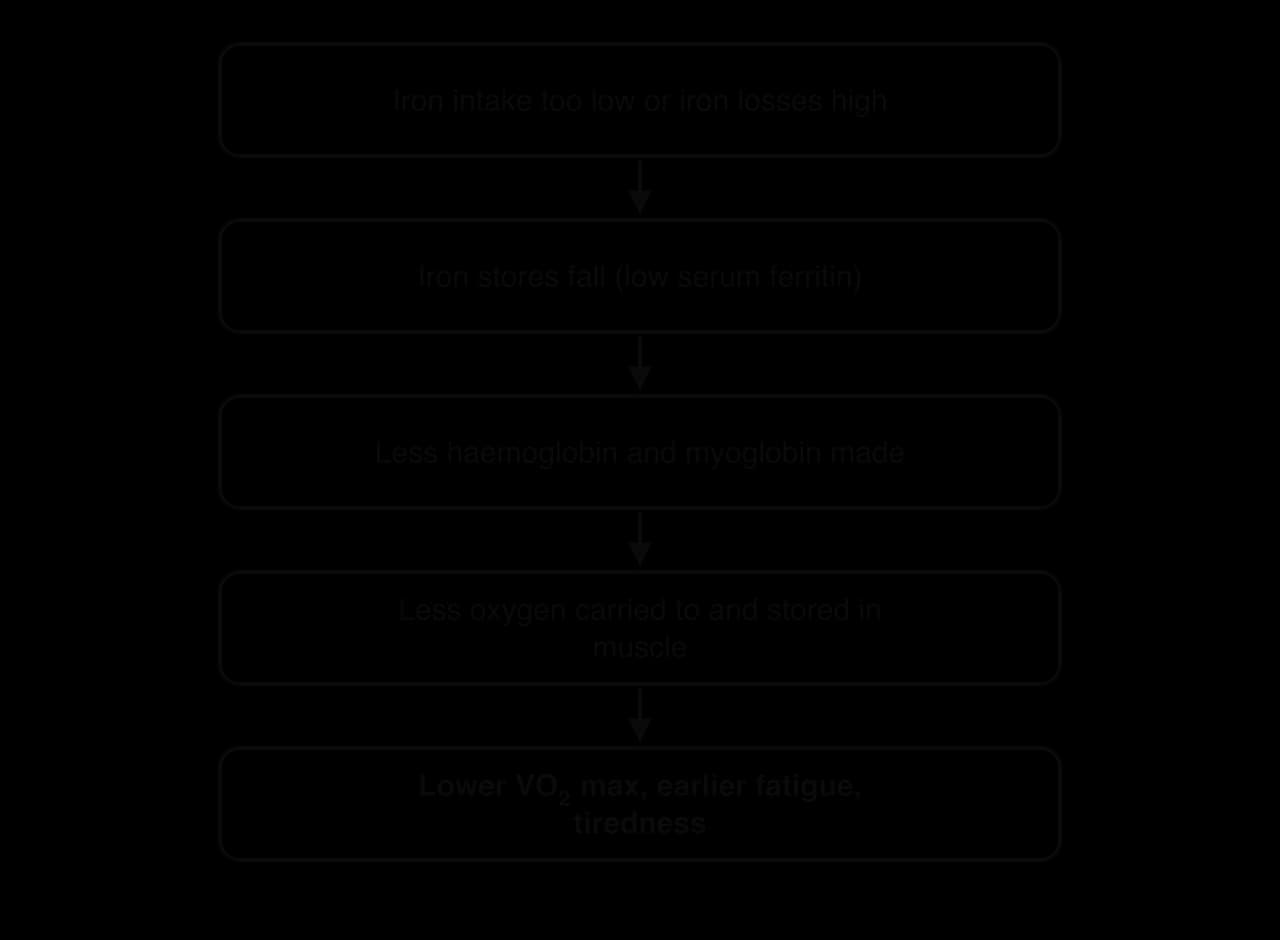
With less haemoglobin, each litre of blood carries less oxygen, so VO₂ max and endurance performance fall; heart rate is higher at any given workload; and the athlete feels tired, short of breath and slow to recover. Even without anaemia, low iron stores are associated with fatigue and poorer training adaptation. Iron deficiency is common in athletes: about 15–35% of female athlete groups studied and about 5–11% of male athlete groups are iron deficient.
Athletes at higher risk include:
Females who menstruate, because of monthly blood loss.
Endurance athletes, especially runners, who lose iron in sweat and through small amounts of bleeding in the gut. Repeated foot strikes can also break red blood cells in the feet (foot-strike haemolysis). Hard exercise raises the hormone hepcidin for a few hours, which reduces iron absorption from the gut.
Vegetarians and vegans: plant foods contain only non-haem iron, which is absorbed less well than the haem iron in meat and fish.
Adolescents, whose growth increases iron needs, athletes with low energy availability, and athletes training at altitude, where extra red blood cells are made.
Haem iron comes from red meat, liver and fish; non-haem iron from legumes, leafy green vegetables and fortified cereals. Vitamin C eaten in the same meal increases absorption of non-haem iron, while tea, coffee and calcium-rich foods reduce it. Iron supplements are used only after a blood test shows deficiency, under medical supervision, because too much iron is toxic and can damage the liver.
Sources: Sim et al., European Journal of Applied Physiology, 2019.
Calcium
About 99% of the body's calcium is in bones and teeth, where it is combined with phosphate in hard mineral crystals laid on a framework of collagen. Calcium makes bone strong enough to bear loads, and bone acts as a calcium reserve for the rest of the body. Calcium is also part of other connective tissues and is needed for blood clotting and the release of neurotransmitters at synapses and at the neuromuscular junction.
Calcium has a direct role in every muscle contraction. When a nerve impulse reaches a muscle fibre, calcium ions are released from the sarcoplasmic reticulum into the sarcoplasm. They bind to troponin, which moves tropomyosin away from the binding sites on actin, so myosin heads can attach and pull the actin filaments: the process described by the sliding filament theory. When stimulation stops, calcium is pumped back into the sarcoplasmic reticulum using ATP, and the muscle relaxes.
The body keeps blood calcium within a narrow range. If dietary calcium is too low, calcium is taken from bone to maintain blood levels, which weakens the skeleton over time. Low calcium intake, especially combined with low energy availability and low oestrogen, increases the risk of low bone mineral density and stress fractures in athletes, and of osteoporosis later in life. Adolescence is the critical period: most adult bone mass is built by the late teens.
Vitamin D is needed to absorb calcium from the gut. Good sources of calcium are milk, yoghurt and cheese, calcium-fortified plant drinks, tofu, sardines and tinned fish eaten with the bones, and some green vegetables.
Sodium and potassium
Sodium and potassium are minerals that dissolve in body fluids as ions (Na⁺ and K⁺), so they are electrolytes. Sodium is the main positive ion outside cells, in plasma and tissue fluid; potassium is the main positive ion inside cells. Their different distribution does two jobs.
Water balance: water moves by osmosis towards the higher concentration of dissolved particles. Sodium largely determines the osmolarity of extracellular fluid and therefore how much water stays in the blood and tissues; potassium does the same inside cells.
Nerve and muscle function: a nerve impulse is a brief flow of Na⁺ into the cell, followed by a flow of K⁺ out. The sodium–potassium pump, a membrane protein that uses ATP, pumps three Na⁺ out for every two K⁺ in, restoring the difference so the next impulse can travel. Muscle fibres conduct impulses in the same way before calcium is released.
Sodium is lost in sweat, and athletes who sweat heavily or have salty sweat lose large amounts in long events in the heat. Replacing water without sodium in very long events can lead to hyponatraemia (low blood sodium).
Most people eat more sodium than they need, mainly as salt in processed foods, and the World Health Organization recommends that adults eat less than 2 g of sodium (5 g of salt) per day to reduce blood pressure; athletes who sweat heavily may need more. Potassium is found in fruit, vegetables, potatoes and milk; low potassium is uncommon but causes muscle weakness and abnormal heart rhythms.
Vitamins
Vitamins are divided into fat-soluble vitamins (A, D, E and K), which are absorbed with dietary fat and stored in the body, and water-soluble vitamins (the B group and C), which are not stored in large amounts and need to be eaten regularly. Many act as coenzymes: small molecules that enzymes need in order to work. The B vitamins, for example, are coenzymes in the reactions of glycolysis, beta-oxidation and the oxidative system, so they are needed to release energy from carbohydrate and fat.
Other vitamins support tissue synthesis: vitamin D works with calcium to build bone (and is made in the skin in sunlight, so indoor athletes and those living far from the equator may be low in winter), and vitamin C is needed to make collagen in tendons, ligaments and skin.
Micronutrient | Main roles in exercise and health | Effects of deficiency | Groups at higher risk |
|---|---|---|---|
Iron | Part of haemoglobin, myoglobin and oxidative enzymes: oxygen transport, storage and use | Fatigue, lower VO₂ max, anaemia | Menstruating females, endurance runners, vegetarians, adolescents |
Calcium | Bone and connective tissue strength; triggers muscle contraction; nerve transmission | Low bone mineral density, stress fractures | Adolescents, athletes with LEA or low oestrogen |
Sodium | Extracellular water balance; nerve impulses; muscle contraction | Hyponatraemia (with overdrinking) | Heavy, salty sweaters in long events |
Potassium | Intracellular fluid balance; nerve impulses; heart and skeletal muscle contraction | Muscle weakness, abnormal heart rhythm | Rare; large losses through illness |
Vitamins (B group, D) | Coenzymes for energy release; bone (D, with calcium) | Fatigue, poor recovery, weak bones (D) | Restricted diets, indoor athletes (D) |
Evaluation: food first or supplements?
Sports nutrition organisations recommend a "food first" approach: athletes who eat enough energy from a varied diet usually meet their micronutrient needs, and extra vitamins or minerals above what the body needs do not improve performance. Supplements have a clear role when a deficiency has been diagnosed by a blood test, as with iron or vitamin D, or when a diet excludes a food group, as with vitamin B12 in a vegan diet.
Their limitations are real: high doses of some micronutrients, including iron and fat-soluble vitamins, are toxic; supplements can be contaminated with substances banned in sport; and the evidence for many products is weak. Testing, targeted use and professional advice are therefore better than taking supplements "just in case".
The gut microbiome (HL only)
Most gut microorganisms live in the large intestine, where food residues that escaped digestion, especially fibre, become their food. Every person's gut microbiome is different, and its make-up, both which species are present and how diverse it is, changes with diet and lifestyle. A diverse microbiome, with many different species, is generally associated with better health.
What influences the gut microbiome
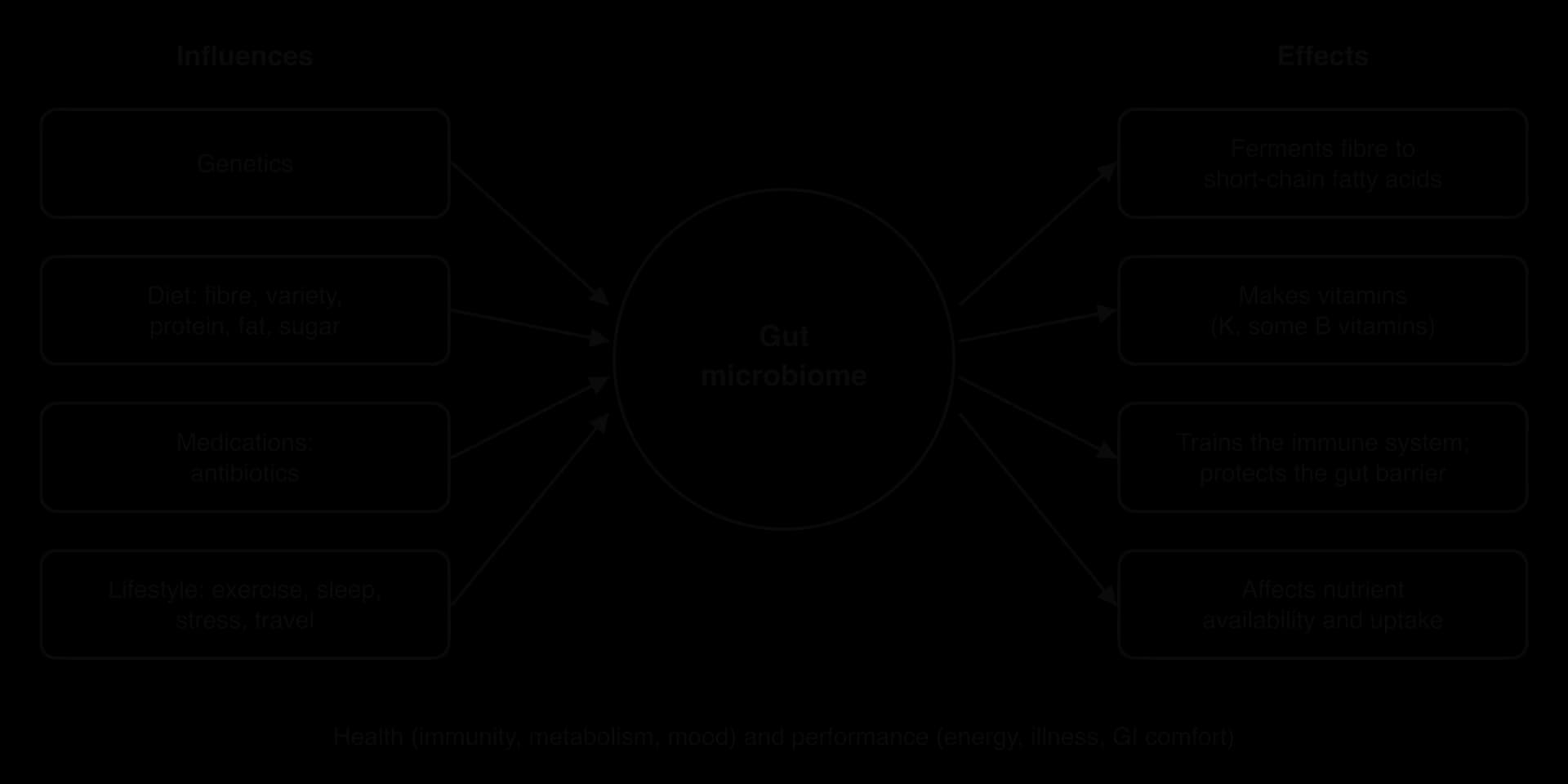
Genetics: some differences in microbiome composition are inherited, because a person's genes affect conditions in the gut, such as the mucus lining and immune responses, that decide which bacteria thrive.
Diet: the most important influence that can be changed. Diets rich in fibre and in a wide variety of plant foods increase diversity; diets high in sugar, saturated fat and processed food and low in fibre reduce it. Protein intake also changes which bacteria thrive.
Medications: antibiotics kill gut bacteria as well as harmful ones and can reduce diversity for weeks or months; some other common medicines also alter the microbiome.
Lifestyle: regular exercise is associated with greater diversity; poor sleep, psychological stress, alcohol and travel (new foods and water, jet lag) can disrupt it. Age and how a baby was born and fed also play a part.
Stress affects the gut in both directions through the gut–brain axis, the two-way communication between the gut and the brain through nerves, hormones and immune signals. Pre-competition anxiety and the sympathetic nervous system response change gut movement and blood flow, which is one reason nervous athletes report stomach upsets before events, and stress hormones can alter the microbiome over time.
How the microbiome affects nutrients, health and performance
Gut bacteria contribute to nutrition in several ways:
Fermenting fibre: human enzymes cannot digest most fibre, but gut bacteria ferment it, producing short-chain fatty acids (SCFAs) such as acetate, propionate and butyrate. Butyrate is the main fuel of the cells lining the colon; SCFAs are also absorbed, supply a small amount of energy and help regulate blood glucose, appetite and inflammation.
Making vitamins: some bacteria synthesise vitamin K and several B vitamins.
Nutrient uptake: the microbiome affects how well some nutrients are absorbed; certain bacterial strains, for example, increase the absorption of amino acids from protein.
Immunity and the gut barrier: a large part of the immune system is located in the gut wall, and gut bacteria help train it and keep the gut lining intact. Prolonged, intense exercise, especially in the heat, can make the gut lining "leakier"; a healthy microbiome may help protect it.
For health, a diverse microbiome is linked to a lower risk of obesity, type 2 diabetes and inflammatory bowel disease, although much of this evidence shows associations rather than cause and effect. For performance, links are newer and less certain: possible effects include fewer upper respiratory infections, better GI comfort, improved recovery and, in one much-discussed study, a microbe that uses lactate.
That study sampled the gut bacteria of 15 runners in the 2015 Boston Marathon and 10 sedentary people, daily for about a week before and after the race. Bacteria of the genus Veillonella, which use lactate as their only carbon source, became more abundant after the marathon. When the researchers gave a strain of Veillonella atypica from a runner to mice, the mice ran about 13% longer on a treadmill, and placing propionate, the product of its lactate metabolism, directly into the mice's intestines had a similar effect.
Sources: Scheiman et al., Nature Medicine, 2019; Clarke et al., Gut, 2014; Jäger et al., Journal of the International Society of Sports Nutrition, 2019 (position stand on probiotics).
A study of an international rugby union squad shows the same difficulty. The players had a more diverse gut microbiome than control participants of similar size, but they also ate far more protein, and diversity correlated with protein intake. Exercise and diet changed together, so this cross-sectional study cannot show which caused the difference; training studies that measure the same people before and after give stronger evidence of cause.
Probiotics and prebiotics
Probiotics contain specific strains of bacteria, usually Lactobacillus or Bifidobacterium. Their effects are strain- and dose-specific: one strain may help and a closely related one may do nothing. In athletes, some strains have reduced the number, length and severity of upper respiratory tract infections, and some may improve gut barrier function during hard exercise in the heat. Claims that probiotics improve performance, strength or body composition rest mostly on animal and early human studies and still need confirmation in well-designed trials with athletes.
Prebiotics feed the bacteria already present rather than adding new ones. A diet with plenty of fibre-rich plant foods supplies prebiotics naturally. Athletes need to balance this with gastrointestinal comfort: high-fibre and fermentable foods are good every day but are usually avoided in the hours before and during competition.
 YouTube
Science or pseudoscience? Evaluating claims about the microbiome
The microbiome is a young, fast-moving field, and "gut health" products and home microbiome tests are sold with confident claims. Scientific claims can be told apart from pseudoscience by a few questions:
Is the claim specific and testable, so that it could be shown to be false?
Has it been tested in randomised, controlled, ideally double-blind trials in humans, and in the population it is aimed at (athletes, older adults)?
Has it been published in a peer-reviewed journal and replicated by independent groups?
Does the evidence show cause and effect, or only an association?
Is there a plausible mechanism, and does the dose and strain in the product match the one tested?
Who funded the research, and does anyone making the claim profit from it?
Case study: from 60 to 120 grams an hour, carbohydrate fuelling in endurance sport
The amount of carbohydrate endurance athletes take in during competition has risen sharply. In the early 2000s, guidance for long events was 30–60 g h⁻¹. Today many professional endurance athletes aim for 90 g h⁻¹ or more, and some report intakes well above 120 g h⁻¹.
The absorption limit and multiple transportable carbohydrates
The old ceiling of about 60 g h⁻¹ came from studies showing that the body could oxidise ingested glucose at no more than about 1 g min⁻¹, however much was drunk, because the glucose transporter in the small intestine (SGLT1) becomes saturated. Extra glucose stayed in the gut, causing discomfort. Researchers then tested whether adding fructose, which is absorbed through a separate transporter (GLUT5), would raise the limit.
In a 2008 study at the University of Birmingham, eight trained male cyclists completed three trials, each of two hours of moderate cycling followed by a time trial of about one hour. They drank water, a glucose drink or a glucose–fructose drink (2:1 ratio), the carbohydrate drinks providing 1.8 g min⁻¹ (108 g h⁻¹). With glucose–fructose they completed the time trial 8% faster than with glucose alone and 19% faster than with water. Total carbohydrate oxidation was similar in the two carbohydrate trials, which suggested that more of the energy came from the drink and less from the body's own glycogen when fructose was added.
Findings like this changed the guidelines. By the mid-2010s, sports nutrition position stands recommended up to 90 g h⁻¹ for events of more than about 2.5–3 hours, provided it was a glucose–fructose mixture, with 30–60 g h⁻¹ for 1–2.5 hours.
Beyond 90 g per hour
Elite athletes then went further, experimenting with higher intakes in training and racing and practising to build gut tolerance. A 2026 review reported field observations of intakes of 120–200 g h⁻¹, while noting that the benefit of such doses has not been shown by research. The same review concluded that current research could justify raising the upper limit from 90 to 120 g h⁻¹, at least for trained athletes.
A 2022 study tested what happens inside the body at these intakes. Eleven highly trained male cyclists rode for three hours at a moderate intensity while taking either 90 g h⁻¹ (fructose to glucose-based carbohydrate 1:2) or 120 g h⁻¹ (0.8:1). Using carbohydrates with naturally different carbon isotopes, the researchers measured how much of the oxidised carbohydrate came from the drinks (exogenous) and how much from the body's glycogen (endogenous).
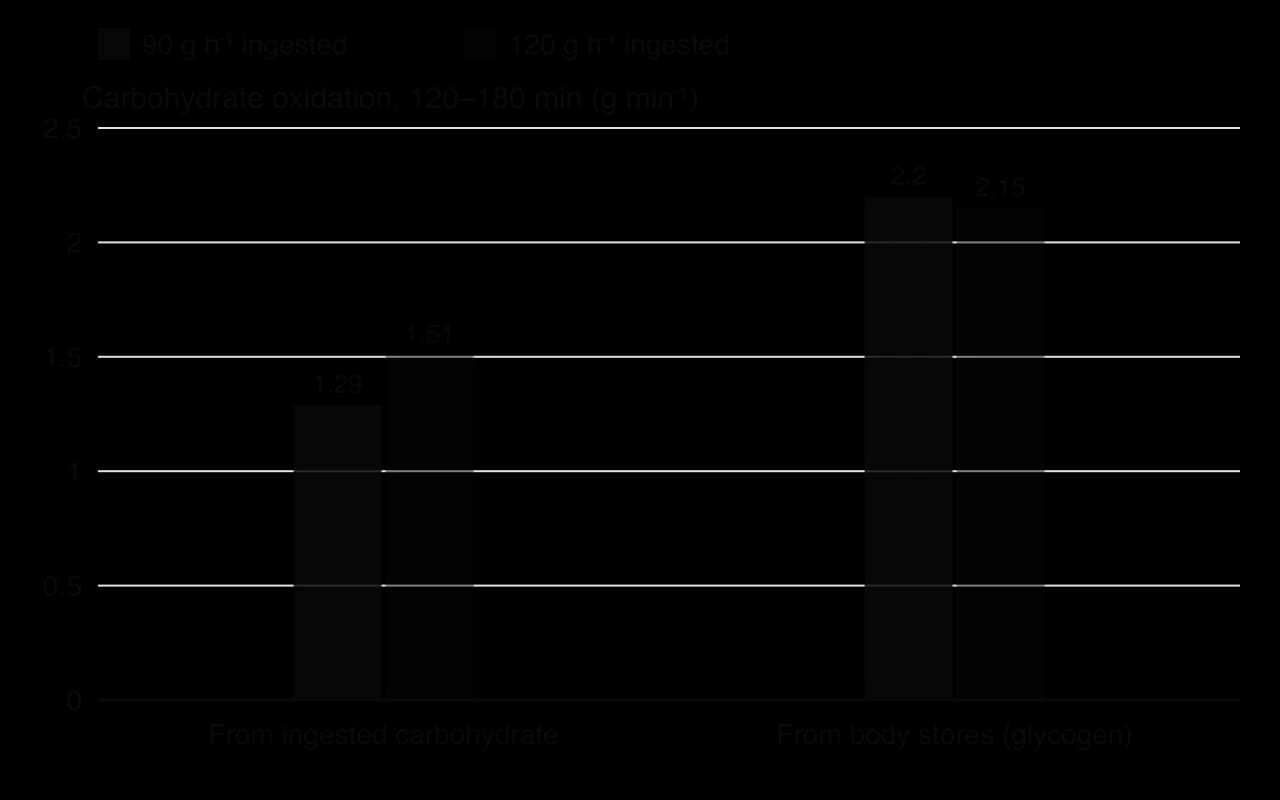
During the final hour, exogenous carbohydrate oxidation was higher with 120 g h⁻¹ (1.51 compared with 1.29 g min⁻¹), but endogenous oxidation was almost identical (2.15 and 2.20 g min⁻¹). In other words, the extra carbohydrate was used, but it did not spare the athletes' own glycogen. At 1.51 g min⁻¹, the cyclists were oxidising about 91 g h⁻¹ of the 120 g h⁻¹ they took in. The study did not measure performance.
Period | Typical guidance or practice for events over 2.5 h | Main evidence |
|---|---|---|
Before about 2010 | 30–60 g h⁻¹ of any carbohydrate | Glucose oxidation ceiling of about 1 g min⁻¹ |
2010s | Up to 90 g h⁻¹ of glucose–fructose mixtures | Multiple transportable carbohydrate studies, e.g. an 8% faster time trial (2008) |
2020s | Up to 120 g h⁻¹ in trained athletes proposed; 120–200 g h⁻¹ reported in the field | Higher exogenous oxidation at 120 g h⁻¹ without extra glycogen sparing (2022); performance benefit above 90 g h⁻¹ not established |
Analysis
Glycogen is the fast fuel for high-intensity endurance exercise and its stores are limited, so carbohydrate from the gut allows a high pace to be held for longer, as long as it can be absorbed. The intestine's transporters set the limit, which is why the type of carbohydrate (glucose with fructose) matters as much as the amount, and why "training the gut" increases the dose an athlete can tolerate. The story also shows the difference between oxidation, glycogen sparing and performance: higher oxidation does not automatically mean less glycogen use, and neither guarantees a faster race.
The evidence has clear limits. The studies used small samples of young, trained male cyclists in laboratories, while races involve hills, heat, running and nerves that all affect the gut. Female athletes are under-represented, and the 2026 review calls for studies of both male and female athletes in realistic race conditions. Several researchers in the field disclose links with sports nutrition companies, which does not make their results wrong but is a reason to look for independent replication.
For health and recreational sport, the lesson is different: a slower runner oxidises carbohydrate at a lower absolute rate, so the amounts should be adjusted downward, and very high intakes increase the risk of GI distress.
Explain why adding fructose to a glucose drink can increase the amount of carbohydrate oxidised during exercise.
The 2022 study found higher exogenous but unchanged endogenous oxidation at 120 g h⁻¹. Suggest what this implies for an athlete's glycogen stores and whether it supports a performance benefit.
How should nutritional periodisation be linked to a training programme, given that athletes need to "train the gut" before using high carbohydrate intakes in competition?
Sources: Currell and Jeukendrup, Medicine and Science in Sports and Exercise, 2008; Jeukendrup, Sports Medicine, 2014; Thomas, Erdman and Burke, Medicine and Science in Sports and Exercise, 2016; Podlogar et al., European Journal of Applied Physiology, 2022; Morton et al., Journal of Nutrition, 2026.
Exam practice
Questions on fuelling appear in all three parts of the written assessment. Paper 1A multiple-choice questions often test energy values, definitions and which strategy suits which event. Paper 1B uses data from nutrition experiments: expect to calculate a percentage difference, compare groups using standard deviations, and evaluate how intake or effort was measured. Paper 2 asks for definitions, calculations of energy and energy availability, explanations of fuel use and fatigue, and extended evaluations of nutritional strategies.
Paper 1A-style questions
Questions on strategies test whether the duration of the event justifies the strategy.
Energy availability questions test the formula and its units.
Paper 1B-style data-based question
Twenty elite male mountain runners, who had previously practised their race nutrition and trained their gut, were randomly assigned to take carbohydrate at 60, 90 or 120 g h⁻¹ during a mountain marathon with about 4,000 m of cumulative climbing. Internal exercise load was calculated from each runner's rating of perceived exertion (RPE) and the duration of exercise, in arbitrary units (AU). Blood markers of muscle damage were measured before and 24 hours after the race.
Carbohydrate intake during the race (g h⁻¹) | Internal exercise load (AU), mean ± SD |
|---|---|
60 | 4,688 ± 705 |
90 | 4,692 ± 716 |
120 | 3,805 ± 281 |
Sources: Viribay et al., Nutrients, 2020. The difference between groups was significant (p = 0.019).
Paper 2-style structured questions
Questions on fuel use often begin with a description and move to an explanation.
Calculations of energy availability are a likely structured question.
Extended-response question
HL questions (HL only)
Structured HL questions often ask for a chain of cause and effect.
Summary
Carbohydrates, proteins and lipids provide energy (about 17, 17 and 37 kJ g⁻¹) and materials for growth and repair; 1 J = 0.239 cal.
Carbohydrate is stored as glycogen in muscle (about 500 g) and liver (about 80 g); it is the fast fuel for moderate and high-intensity exercise. Fat is a large but slow fuel; protein is mainly for growth and repair.
Macronutrient needs depend on body composition, age, sex differences and above all activity level; athletes need 3–12 g kg⁻¹ day⁻¹ of carbohydrate depending on training and 1.2–2.0 g kg⁻¹ day⁻¹ of protein.
As intensity rises, carbohydrate supplies a greater share of energy; when glycogen is depleted in long events, the athlete must slow down ("hitting the wall").
A high-carbohydrate pre-event meal 3–4 hours before, carbohydrate loading for events over 90 minutes and 30–90 g h⁻¹ during long events improve endurance performance; low fat, fibre and protein and practice in training protect gastrointestinal comfort.
Energy availability = (energy intake − exercise energy expenditure) ÷ fat-free mass; below about 30 kcal kg FFM⁻¹ day⁻¹ is clinically low.
Prolonged, problematic LEA causes REDs, which affects athletes of all sexes and harms bone, hormones, metabolism, immunity and mental health as well as performance.
Iron (haemoglobin, myoglobin), calcium (bone, contraction), sodium and potassium (water balance, nerve and muscle function) and vitamins (energy release, tissue synthesis) are essential micronutrients (HL).
The gut microbiome is shaped by genetics, diet, medications and lifestyle and affects nutrient availability, vitamins, immunity and health; claims about probiotics need careful evaluation (HL).
Self-check
- To do:
I can outline the structure, sources and roles of carbohydrates, proteins and lipids and calculate the energy in a food in kJ and kcal.
- To do:
I can explain how body composition, age, sex differences and activity level affect macronutrient needs, and calculate an athlete's daily carbohydrate and protein needs.
- To do:
I can describe how fuel use changes with exercise intensity and duration, and explain glycogen depletion.
- To do:
I can evaluate the pre-event meal, carbohydrate loading and carbohydrate intake during exercise for different events and athletes.
- To do:
I can explain the factors that affect gastrointestinal comfort and how athletes reduce GI problems.
- To do:
I can calculate energy availability and explain how prolonged low energy availability leads to REDs and its health and performance outcomes.
- To do:
I can outline the roles of iron, calcium, sodium, potassium and vitamins, and explain the effects of iron deficiency (HL).
- To do:
I can discuss the influences on the gut microbiome, its effects on health and performance, and the evidence for probiotics and prebiotics (HL).