Analyse how digital systems change medicine, the human body and mental health, evaluate their impacts on specific people and communities, and apply the health context to unseen real-world examples.
Each is in the Digital Society glossary, with every other term in the subject.
The degree to which products, services, environments and digital content can be used by people with the widest possible range of abilities, including people with visual, hearing, motor and cognitive impairments.
Any device, software or system that maintains or improves the functioning and independence of a person with a disability, such as wheelchairs, hearing aids, screen readers, communication apps and prosthetics.
An economic system in which human attention is treated as a scarce resource that platforms compete to capture and sell, usually to advertisers, so that time and engagement become the main measures of success.
Attempts by individuals, often outside medical institutions, to change or enhance their own bodies or biology, for example by implanting devices, self-tracking intensively, taking supplements or experimenting with genetic techniques.
A form of 3D printing that builds living tissue layer by layer from a bioink containing living cells, with the long-term aim of producing tissues and organs for repair, research and transplantation.
A system that records signals from the brain and translates them into commands for an external device, such as a computer cursor, a robotic arm or a speech synthesiser.
A state in which a person's use of digital technology supports, rather than harms, their physical and mental health, relationships and goals; the term is also used for tools and practices that aim to achieve this.
A digital record of a person's health history, such as diagnoses, medicines, test results and vaccinations, that authorised clinicians can access and update, often across different hospitals and clinics.
The design of tools, workplaces and systems to fit the human body and mind, so that people can use them safely, comfortably and efficiently.
A wearable frame, powered by motors or using passive springs, that supports or adds strength to the body's movement, used in rehabilitation, by people with paralysis and by workers doing heavy or repetitive tasks.
A persistent worry that others are having rewarding experiences that one is missing, which can drive people to keep checking social media to stay connected.
The continuous or regular collection of data about a person's body or behaviour, such as heart rate, sleep, steps or blood glucose, by wearable devices, apps or home sensors, usually to inform the person or their clinician.
The use of technology, drugs or genetic methods to improve human abilities beyond what is needed to restore health, such as stronger, faster, longer-lived or more capable bodies and minds.
A device placed inside the body, partly or completely, to replace, support or monitor a biological function or to add a new one, such as a pacemaker, a cochlear implant or a microchip.
Techniques that produce pictures of the inside of the body, such as X-rays, ultrasound, CT and MRI scans and retinal photographs, so that clinicians can diagnose and monitor disease without surgery.
A state of well-being in which a person can cope with the normal stresses of life, realise their abilities, learn and work well, and contribute to their community; it includes emotional, psychological and social well-being, not only the absence of mental illness.
Digital systems deliberately designed to change users' attitudes or behaviour, for example through notifications, streaks, rewards, autoplay and infinite scrolling.
The total time a person spends using devices with screens, such as phones, computers, televisions and games consoles; it is a simple measure that does not show what the person was doing.
The view that people are disabled mainly by barriers in their environment, such as stairs without ramps or inaccessible websites, rather than by their impairments, so that removing those barriers is the responsibility of designers and society.
The delivery of medical care at a distance using digital communication, such as video consultations, remote monitoring of patients and the electronic exchange of images and test results between clinicians.
An approach to design in which products, environments and digital content are made usable by people with the widest possible range of abilities from the start, without the need for later adaptation.
Describe how digital systems are used to design and deliver medical diagnostics and care, including telemedicine and AI-assisted diagnosis.
Explain how digital systems change medical research and development, and how health and wellness records are created, monitored and tracked.
Distinguish between restoring, assisting and enhancing the human body, with examples of implants, biohacking, exoskeletons and organ printing.
Outline accessibility approaches for differently abled people and communities, and the principles of ergonomic design.
Explain the intersections of digital systems with mental health, including attention, addiction and anxiety.
Analyse the impacts and implications of health technologies for specific people and communities through the concepts of power, identity, change, space, and values and ethics.
Evaluate contested claims about digital systems and health, including research on social media and adolescent mental health.
Discuss a real-world example of national telemedicine, eSanjeevani in India, and apply the same method to unseen examples.
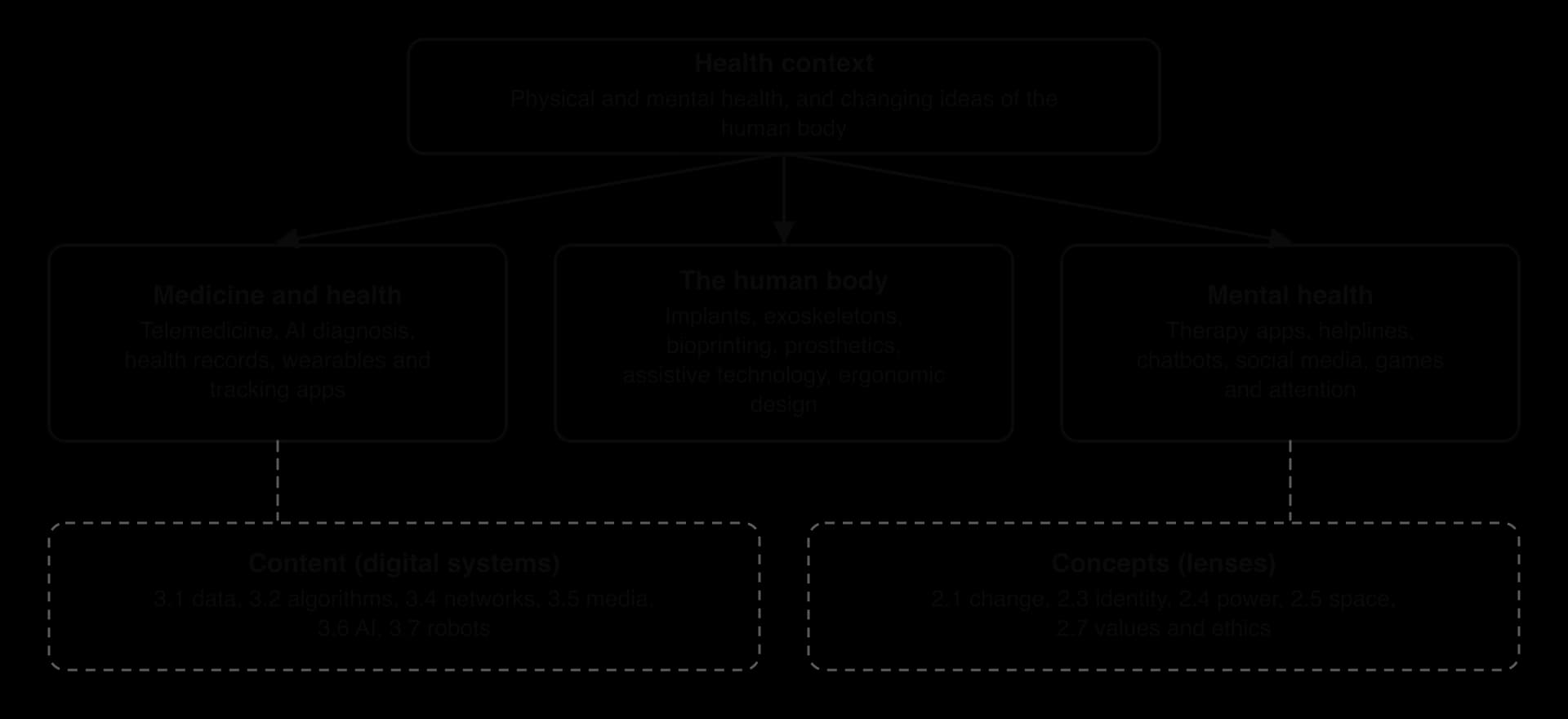
The health context covers the physical and mental health of people and communities, and the ways that digital systems change how the human body is understood, treated and extended. Digital systems now take part in almost every stage of health, from a smartwatch that flags an irregular heartbeat to a video consultation that brings a doctor to a village with no clinic.
The context draws on most of the course content. Health records and wearable trackers are examples of data (3.1); diagnosis increasingly depends on algorithms (3.2) and artificial intelligence (3.6); remote care runs on
With a free account, Augment remembers where you stopped and what you have practiced.
The health context divides into three areas: medicine and health, the human body, and mental health. Each area involves different digital systems, but the same questions apply to all of them. Who benefits, who is put at risk, who decides, and what happens to the data? The context map sets the three areas beside the content and concepts that most often explain them.
Analysis starts by identifying the digital system precisely. "Technology in hospitals" is too vague; "an AI system that grades retinal photographs for signs of diabetic eye disease" names the input, the process, the output and the people involved, so impacts can be traced to specific people and communities.
Medicine and health covers how illness is diagnosed and treated, how new treatments are discovered, and how information about each person's health is recorded and followed over time. Digital systems change all three, often by moving data and expertise to places they could not reach before.
Diagnosis identifies what is wrong with a patient from their history, an examination and tests such as blood samples or images. Digital systems now support each step, from symptom checkers to software that helps interpret test results.
Almost all medical imaging is now digital. Images are stored as files, sent across hospital networks and read on screens, which makes them suitable input for machine learning. A model trained on many thousands of labelled images learns to recognise patterns, such as the small bleeds in the retina that signal diabetic retinopathy, a complication of diabetes that can cause blindness.
In April 2018 the US Food and Drug Administration (FDA) authorised IDx-DR, a system that screens retinal photographs for diabetic retinopathy and gives a result without a specialist reading the image. It was the first AI diagnostic system authorised to work autonomously in this way. The design choice matters: the test can be done in a family doctor's surgery or a pharmacy, so patients no longer need a separate appointment with an eye specialist just to be screened.
A system that performs well in testing can still fail in practice. Google Health tested its own diabetic retinopathy model in 11 clinics in Thailand, working with the Thai Ministry of Public Health. The model was reported as matching specialist accuracy of more than 90% on good images. In the clinics, however, more than a fifth of images were rejected as too poor to grade, often because of dim lighting. Slow internet connections delayed uploads, and patients whose images were rejected were told to visit a specialist at another clinic on another day, which many could not afford to do.
The case shows that a diagnostic system is a sociotechnical system: the algorithm, the camera, the network, the nurses' workflow and the patients' lives all have to fit together. Through the concept of systems, the weakest element (the connection or the lighting) can limit the value of the strongest (an accurate model).
When an autonomous system misses a diagnosis, responsibility could lie with the developer, the regulator that approved it, the clinic that used it or the clinician who trusted it. Automation bias, where people accept a computer's output without checking it, adds to the problem. Through the concept of values and ethics, the question is how to share responsibility fairly between designers, users and regulators.
Care used to require the patient and the clinician to be in the same room, but networks now allow much of it to happen at a distance.
Telemedicine takes three main forms: doctor-to-patient consultations by video or phone, doctor-to-doctor consultations in which a local health worker asks a specialist for advice, and remote monitoring, in which home devices send readings such as blood pressure to a care team. In each, the network replaces travel, which matters most for rural patients, people with limited mobility and people who cannot take time off work.
The COVID-19 pandemic accelerated the change, as many health systems moved routine consultations online within weeks in 2020, and much of it has lasted. India's national service, eSanjeevani, the extended case study for this context, shows telemedicine at the scale of a whole country.
Telemedicine also has clear limits. A video call cannot replace a physical examination, a blood test or an operation. People without a device, a stable connection or digital skills are excluded, so telemedicine can widen the digital divide at the same time as it narrows the distance to care.
Medical research and development (R&D) is the process of discovering how diseases work and creating and testing new treatments, vaccines and devices. It used to depend on small studies, paper records and years of laboratory work. Digital systems change its speed, its scale and who can take part.
Three changes stand out.
Speed of design. When Chinese scientists posted the genetic sequence of the new coronavirus online in January 2020, researchers around the world could start work immediately. Moderna used the published sequence to design its mRNA vaccine candidate within days, without needing a sample of the virus itself.
Scale of trials. The UK's RECOVERY trial used simple online enrolment and existing hospital data systems to recruit tens of thousands of COVID-19 patients across many hospitals. In June 2020 it reported that the cheap steroid dexamethasone reduced deaths among patients on ventilators by about a third, a result that changed treatment worldwide.
Large data resources. Biobanks hold genetic data, health records and samples from very large numbers of volunteers. UK Biobank, with about half a million participants, gives approved researchers access to data that no single laboratory could collect.
These changes depend on big data, cloud storage and analysis tools. Simulation and AI models also predict how molecules behave before they are tested, which reduces the number of failed experiments.
Digital R&D raises questions of consent, privacy and fairness. Participants in a biobank agree to share their data, but they cannot know every future use. Anonymised genetic data can sometimes be linked back to individuals, because a genome is unique. Research data also reflect the people who were studied. Many large genetic databases contain mostly people of European ancestry, so findings and tools built on them may work less well for people of African, Asian or Indigenous ancestry. Through the concept of power, the communities that supply data do not always share the benefits, such as new medicines priced beyond their reach.
Every contact with a health service produces information: symptoms, test results, prescriptions, allergies, vaccinations. Paper records were stored in each clinic and rarely followed the patient. Digital records change this.
The main advantage of an EHR is continuity. A doctor in an emergency department can see a patient's allergies and current medicines, even if the patient is unconscious. Records also allow population-level analysis, such as tracking vaccination rates or spotting outbreaks. India's Ayushman Bharat Digital Mission gives each person who signs up a health ID (ABHA) that links records from different providers, and Estonia has kept nationwide digital health records since 2008.
Records only follow patients if systems from different companies can exchange data in common formats. This interoperability is hard to achieve, so many patients still carry printouts or repeat tests.
Health records are among the most sensitive data that exist, and they are valuable to criminals because they cannot be changed like a password. Breaches and ransomware attacks on hospitals expose records and can stop care altogether. Health data also flows to companies outside the health system. In 2021 the US Federal Trade Commission settled a case against Flo Health, a period-tracking app, which had told users their health data would stay private while sharing information with analytics companies, including Facebook and Google. In 2025 the genetic testing company 23andMe filed for bankruptcy, which raised the question of what happens to millions of customers' DNA data when the company that holds it is sold.
Monitoring once happened only in hospitals, with bedside machines watched by nurses. Small sensors and smartphones now allow it to take place continuously, in everyday life.
Wearable technology such as the Apple Watch and Fitbit trackers uses sensors to measure the body. Optical sensors detect pulse from blood flow under the skin; accelerometers measure movement; some watches record a simple electrocardiogram (ECG). The data passes from the device to a smartphone app, then to the company's servers, where algorithms turn raw readings into scores, trends and alerts. As the data-flow diagram shows, the same data can then travel to clinicians, researchers and, depending on consent and law, other companies.
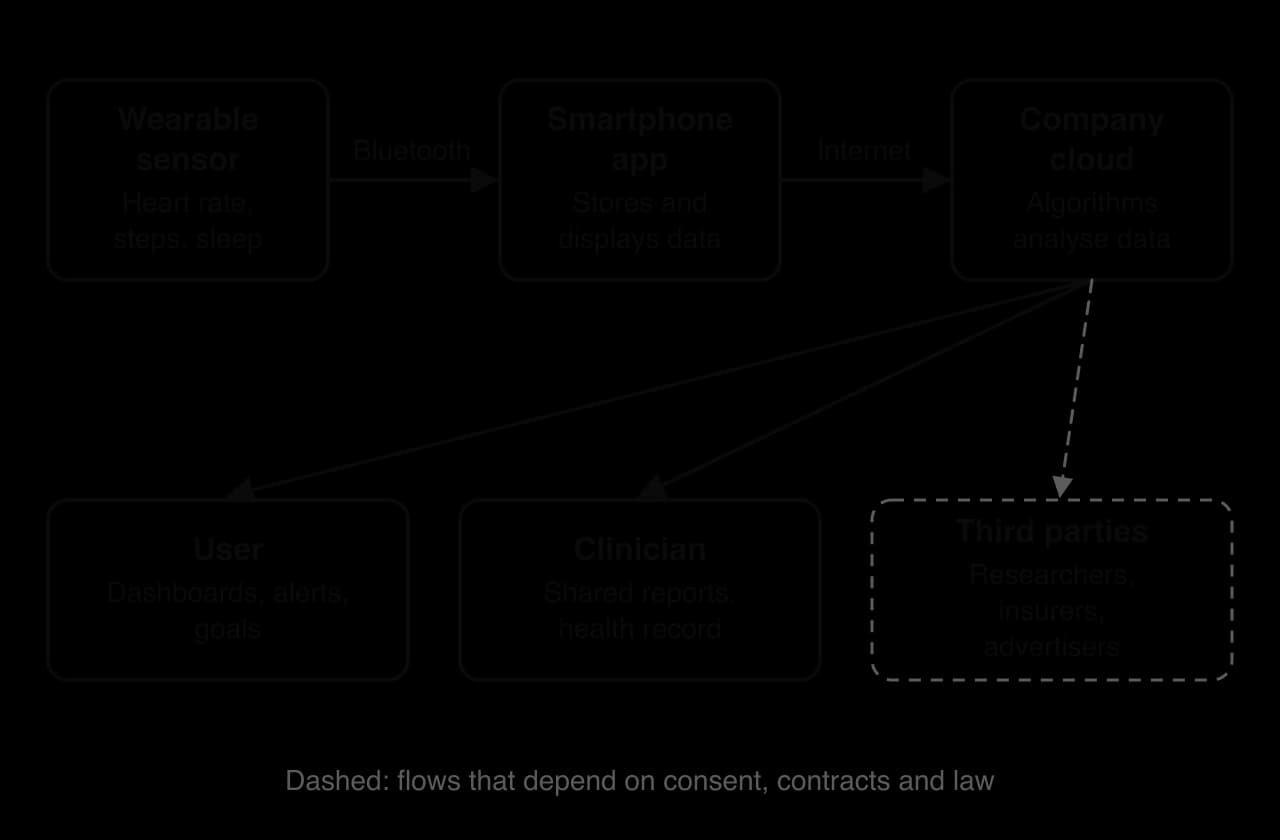
The Apple Heart Study, run by Stanford Medicine and published in 2019, enrolled 419,297 people who used an Apple Watch app that checked for an irregular pulse. Over a median of 117 days, 0.52% of them received an alert. Those alerted were sent an ECG patch to wear; among the patches that could be analysed, atrial fibrillation (an irregular heart rhythm that raises the risk of stroke) was confirmed in about a third. The study showed that a consumer device could screen very large numbers of people cheaply. It also showed limits: many alerts were not confirmed, and only about 6% of participants were aged 65 or over, the group most at risk.
Stakeholder | Claims about consumer health tracking |
|---|---|
Users | Tracking motivates exercise and gives early warning of problems; constant numbers can also cause worry |
Clinicians | Data can support diagnosis; unconfirmed alerts can add workload and unnecessary tests |
Technology companies | Health features add value to devices; health data is a commercial asset |
Insurers and employers | Tracking could reward healthy behaviour; critics see a risk of pressure and discrimination |
Regulators | Must decide which features count as medical devices that need approval |
Control of tracking data is a question of power. To gain EU approval for its purchase of Fitbit, granted in December 2020, Google committed not to use Fitbit health data for advertising in the European Economic Area for at least ten years. Public health tracking raises similar issues: in 2021 Singapore confirmed that police could access data from its TraceTogether contact-tracing app, despite earlier assurances, an example of function creep, where health data is reused for other purposes.
The human body area asks how digital systems change what bodies can do and how people understand them. Some technologies restore a function that was lost; some support or protect the body; others aim to go beyond typical human ability. The boundaries between these purposes are disputed, as the spectrum diagram shows.

The distinction between therapy and enhancement matters because many societies accept therapy as a right but treat enhancement as a choice or a privilege. A prosthetic leg for an amputee is therapy. A running blade that might let an athlete run faster than people with biological legs raises the question of whether therapy has become enhancement. The legal dispute over whether the South African sprinter Oscar Pistorius could race against able-bodied athletes on carbon-fibre blades (he won his case in 2008 and ran at the 2012 Olympics) shows how hard the line is to draw.
Through the concept of identity, enhancement also changes how people see themselves and others. Cochlear implants, which send electrical signals to the auditory nerve, allow many deaf people to perceive sound. Many members of the Deaf community, who share a language (a sign language) and a culture, do not regard deafness as a condition to be fixed. For them, the promotion of implants in young children can feel like pressure to give up a cultural identity. From a medical perspective the implant is therapy, while from this cultural perspective it can threaten a community.
Medical implants have a long history. The first fully implanted pacemaker was fitted in Sweden in 1958. What has changed is that many implants are now networked digital systems. A modern pacemaker can send data wirelessly to a cardiologist, and its software can be updated. This brings benefits (problems are spotted early, without a hospital visit) and new risks. In 2017 the FDA announced a recall of about 465,000 pacemakers made by Abbott (St. Jude Medical) for a firmware update, after researchers showed that their wireless connection could in principle be misused to change settings or drain the battery. Through the concept of systems, an implant connected to a network is exposed to the same security risks as any other connected device.
BCIs read the electrical activity of neurons, either from electrodes on the scalp (non-invasive) or from electrodes placed in or on the brain (invasive). Machine learning maps patterns of activity to intended actions. Research groups such as the BrainGate consortium in the USA have enabled people with paralysis to move cursors and robotic arms since the 2000s.
In January 2024 the company Neuralink implanted its first device in a human volunteer, Noland Arbaugh, who is paralysed from the shoulders down. He has used it to control a computer cursor, play chess and browse the web by thought. Within weeks, some of the device's fine electrode threads retracted from his brain, reducing performance until the company adjusted its software. By late 2025 it had implanted devices in at least a dozen participants in the USA, Canada and the UK. Neuralink's stated long-term aim goes beyond therapy, towards linking healthy human brains with AI, which places the same technology at both ends of the spectrum.
Brain signals may expose intentions, emotions or health conditions that a person has not chosen to share. In 2021 Chile became the first country to protect "neurorights", including mental privacy, in its constitution.
Biohacking ranges from the everyday to the risky. Many people track their sleep and diet in detail to "optimise" their health. A smaller group, sometimes called grinders, implant devices themselves. In Sweden, several thousand people have had small NFC (near-field communication) chips injected into their hands, often at workplaces such as the Stockholm office building Epicenter, which offered them to members as an alternative to key cards. In 2017 the national rail operator SJ allowed passengers with such chips to use them as train tickets.
Supporters see biohacking as personal freedom and a way to make technology part of the body. Critics point to risks: infection, implants that cannot be easily removed, and chips that hold data a person may later want to keep private. Because it often happens outside regulated medicine, no one checks the safety of the procedure.
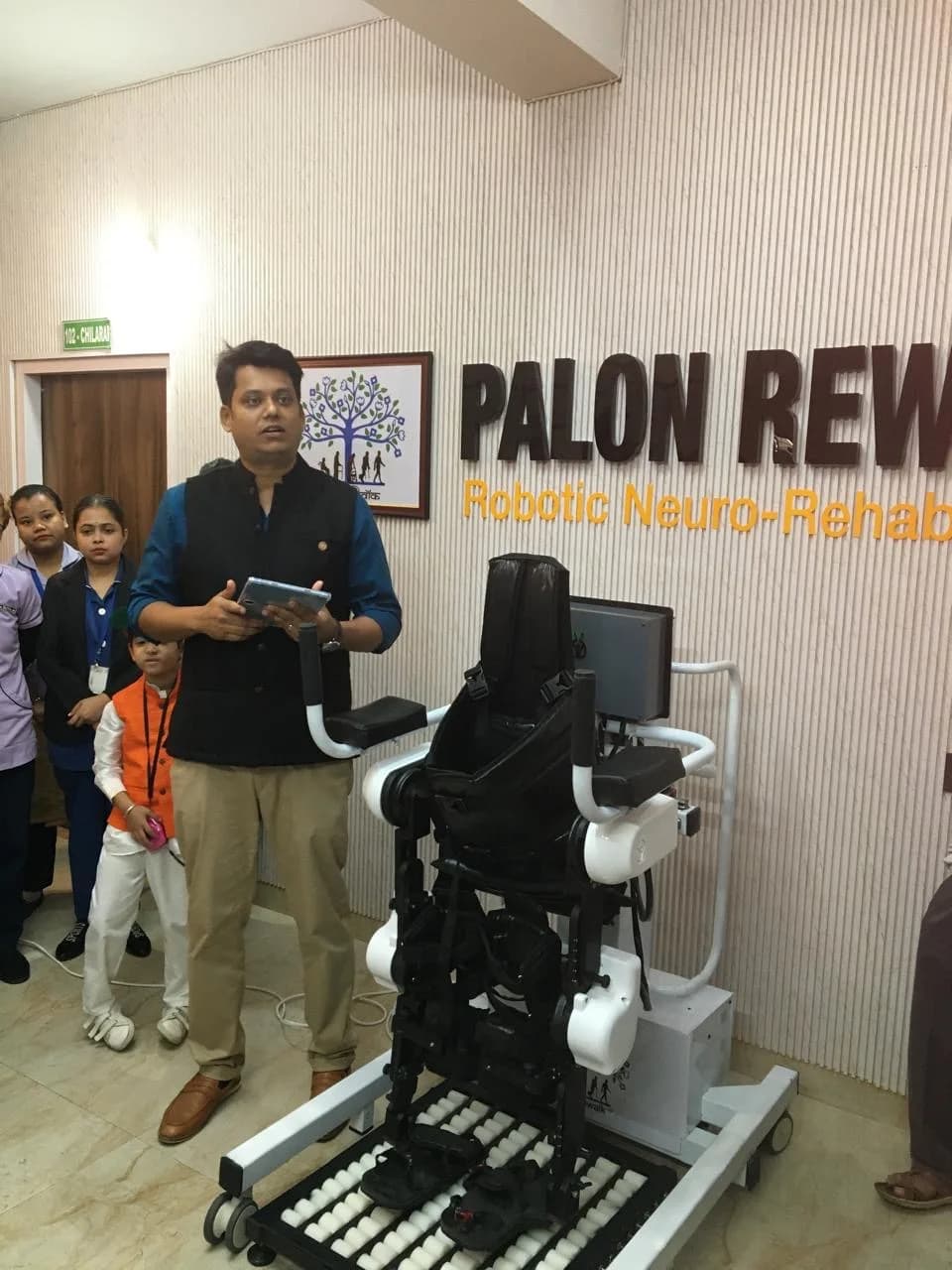
Exoskeletons show how robotics (3.7) moves onto the body. In rehabilitation, powered exoskeletons help people with spinal cord injuries or strokes stand and walk, which supports blood circulation, bone strength and mental health. In 2014 the FDA cleared the ReWalk exoskeleton as the first such device for personal use at home, at a price of about $70,000. Rehabilitation centres now offer robotic gait training in many countries, including India.
In industry, exoskeletons aim to prevent injury rather than treat it. In 2018 Ford introduced the unpowered EksoVest, which supports the arms during overhead work, across 15 plants in seven countries. Here the exoskeleton protects a healthy worker's body, which places it in the middle of the spectrum.
The impacts are mixed. For people with paralysis, an exoskeleton can increase independence, but its cost puts it beyond most families. For workers, it can reduce strain, but it may also justify keeping physically demanding jobs as they are rather than redesigning the work.
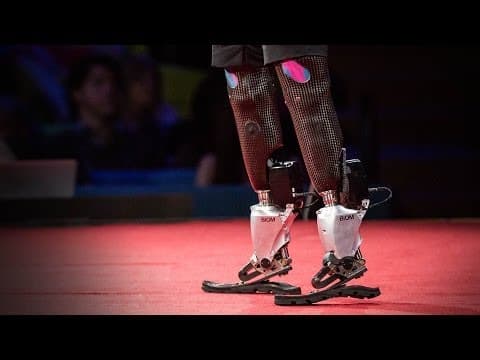
Hugh Herr, who lost both lower legs to frostbite after a climbing accident and leads the Biomechatronics group at the MIT Media Lab, designs bionic limbs that work with the body's own nerves and muscles.
 YouTube
Bioprinting aims to reduce the shortage of donor organs, and tissue printed from a patient's own cells would also reduce the risk of rejection. Progress so far is real but limited. In 2022 the company 3DBio Therapeutics implanted an ear printed from a patient's own cartilage cells in a 20-year-old woman born with a small, underdeveloped ear (microtia), as part of a clinical trial. Simpler tissues such as skin and cartilage are much closer to clinical use than complex organs such as kidneys or hearts, which need networks of blood vessels that cannot yet be printed reliably.
Simpler 3D printing already plays a larger role. Surgeons print models of a patient's anatomy from scans to plan operations, and hospitals print custom implants and surgical guides. The volunteer network e-NABLE shares open designs for 3D-printed prosthetic hands; volunteers in about 100 countries print them at low cost, mostly for children who would quickly outgrow an expensive prosthetic.
The World Health Organization estimates that about 1.3 billion people, or one in six, live with a significant disability. Digital systems can remove barriers for them or create new ones.
Two models of disability shape how accessibility is approached. The medical model sees disability as a problem in a person's body that treatment should fix. The social model of disability sees people as disabled mainly by barriers in their environment, such as stairs without ramps or websites that do not work with screen readers. Under the social model, inaccessible design is the problem, and the responsibility to fix it lies with designers and organisations rather than with disabled people.
Digital accessibility combines tools for individual users with design rules for everyone. The ideal is universal design, where products work for the widest range of people from the start, so fewer adaptations are needed later.
Approach | How it works | Real-world example |
|---|---|---|
Assistive technology | A tool adapts content to the user | Screen readers such as NVDA (free, open source) and Apple's VoiceOver read on-screen text aloud |
Accessible design standards | Designers follow agreed rules so content works with assistive tools | The Web Content Accessibility Guidelines (WCAG) from the W3C, such as text alternatives for images |
Universal design | Products are designed from the start to be usable by everyone, without adaptation | Captions, which help deaf viewers and anyone watching without sound |
Adaptive hardware | Hardware lets users choose their own inputs | Microsoft's Xbox Adaptive Controller (2018), which connects to switches and buttons suited to the player |
Law and policy | Governments set accessibility obligations | The European Accessibility Act, applied from June 2025, covering e-commerce, banking apps and e-books |
These approaches depend on each other. A screen reader reads out a page's headings, links, buttons and the text alternatives of images, but if a developer leaves out alternative text or builds a button that cannot be reached with a keyboard, the user is stuck, however good the software.
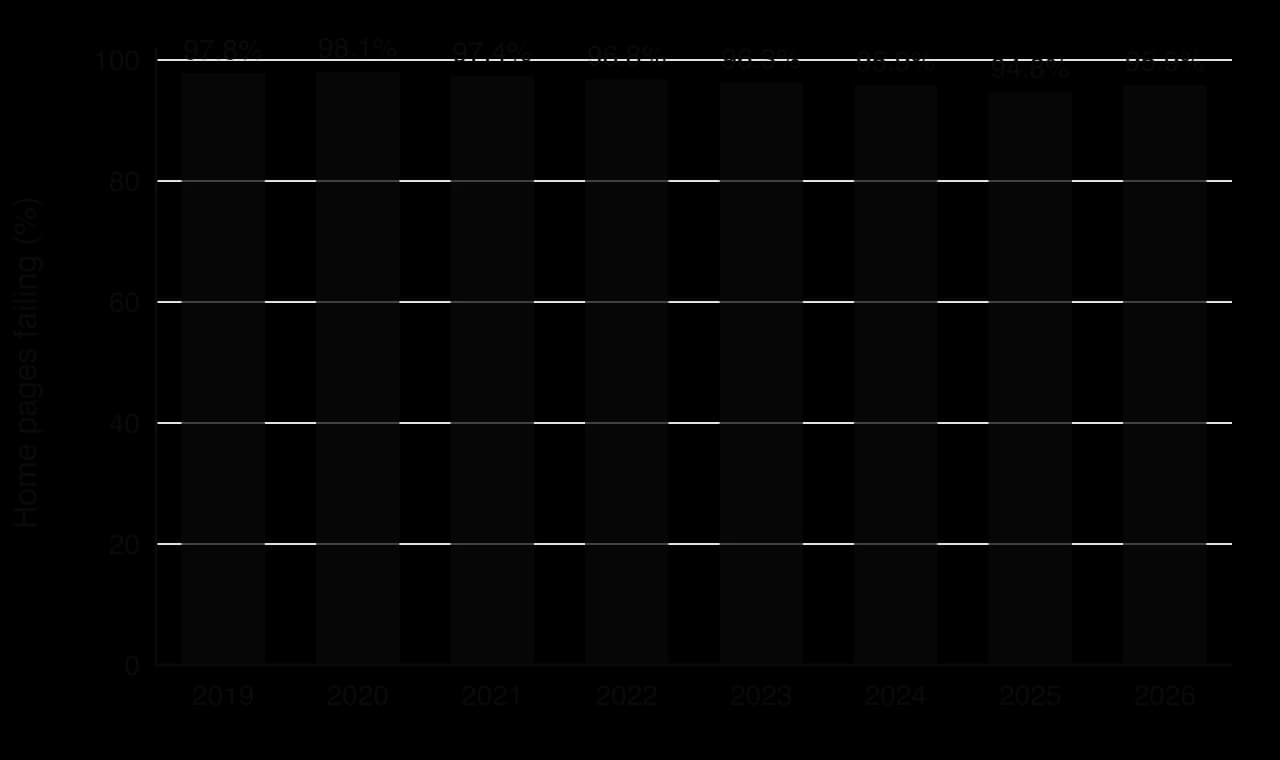
Most of the web still does not follow the standards. Each year the non-profit WebAIM tests the home pages of the top one million websites with automated tools. Every year since 2019, more than 94% have had detectable failures of WCAG, most often low-contrast text and images without alternative text.
Access to assistive technology is also unequal. The WHO and UNICEF Global Report on Assistive Technology (2022) estimated that more than 2.5 billion people need at least one assistive product, and that access ranges from about 3% of need in some poorer countries to 90% in some wealthy ones. Low-cost, open designs such as e-NABLE hands and free screen readers are attempts to reduce this gap, which links accessibility to the HL challenge of global well-being.
Digital devices have created new ergonomic problems. Long hours at keyboards and mice are linked to repetitive strain injuries in the wrists and arms. Looking down at phones for long periods places strain on the neck. Staring at screens reduces blinking, which can cause dry, tired eyes, often called digital eye strain. Rising myopia (short-sightedness) in children, especially in East Asia, is linked to long periods of close-up work and too little time outdoors, of which screens are one part.
Ergonomic design responds at several levels:
Hardware: split and tented keyboards, vertical mice, adjustable monitor arms, sit–stand desks and laptop stands that raise the screen to eye level.
Software: adjustable text size, dark modes, reminders to take breaks, and features such as Apple's Screen Distance (introduced in 2023), which warns users, especially children, when they hold an iPhone or iPad too close to their face.
Workplace policy: rules on breaks, workstation assessments and the right to disconnect from work messages outside working hours.
Ergonomics links the body to the economic context (4.2): remote working after 2020 moved millions of people to kitchen tables, outside the reach of workplace ergonomic rules, and left open who is responsible for a remote worker's workstation.
In 2019, about 970 million people worldwide, or one in eight, were living with a mental disorder, most commonly anxiety or depression, according to the WHO's World Mental Health Report (2022). Most of them received no treatment, especially in low- and middle-income countries, which have very few mental health workers for their populations. Digital systems are part of both the problem and the response.
Mental health has been understood through different approaches, and digital systems change how each is applied.
Approach | Core idea | How digital systems are involved |
|---|---|---|
Biomedical | Mental disorders have biological causes in the brain and body | Brain imaging and genetic databases study causes; BCIs and brain stimulation are researched as treatments |
Psychological | Thoughts, feelings and behaviours can be learned and changed | Online cognitive behavioural therapy (CBT) and apps deliver structured exercises |
Social | Relationships, poverty, discrimination and community shape mental health | Social media, online communities and cyberbullying change social life; helplines connect people to support |
Digital phenotyping (emerging) | Patterns in phone use can signal changes in mental state | Researchers study whether typing speed, sleep, movement and social activity predict relapse or crisis |
Digital phenotyping shows both the promise and the risk. If a phone could detect early signs of a depressive episode from changes in sleep and movement, help could arrive earlier. The same data could also be used by insurers or employers to judge a person's mental state without their knowledge. Through the concept of values and ethics, the balance between early help and surveillance is unresolved.
Digital systems now deliver several kinds of mental health support.
Helplines and tele-mental health. India's Tele MANAS service, launched in October 2022, offers free 24-hour mental health support by phone (14416) in many Indian languages, with calls routed to counsellors in each state and on to specialists when needed. By July 2025 it had handled more than 2.4 million calls.
Online therapy. Therapy by video, and guided internet-based CBT programmes, which trials have shown to be effective for mild to moderate depression and anxiety; the NHS in England offers it.
Self-help apps. Meditation and mood apps such as Headspace and Calm have millions of users, but the evidence for them is weaker, and most mental health apps have never been tested.
Chatbots. AI chatbots offer conversation at any hour. Woebot, a well-known therapy chatbot based on CBT, closed its consumer app in June 2025; its founder pointed to the cost and difficulty of gaining regulatory approval, especially for newer large language models. General-purpose AI chatbots are also used for emotional support, and lawsuits in the USA have claimed that chatbot conversations contributed to teenagers' suicides.
The main opportunity of digital mental health is reach: support that is cheap, private and available at night or in places with no therapists. The main risks are low-quality or untested tools, poor handling of crises, and the sharing of highly sensitive data. In 2023 the US Federal Trade Commission ordered the online therapy company BetterHelp to pay $7.8 million to settle charges that it had shared users' health information with advertisers such as Facebook and Snapchat.
Many digital platforms are free to use because they earn money from advertising. Advertisers pay for people's attention, so the platform's income depends on how much time users spend on it.
Persuasive design uses well-known psychological effects. Variable rewards, where a user does not know whether the next refresh will bring something interesting, keep people checking, like a slot machine. Infinite scroll and autoplay remove stopping points; streaks (as in Snapchat or Duolingo) turn breaking a habit into a loss. Combined with a recommendation algorithm that learns what holds each person's attention, these features form a loop, shown in the diagram.
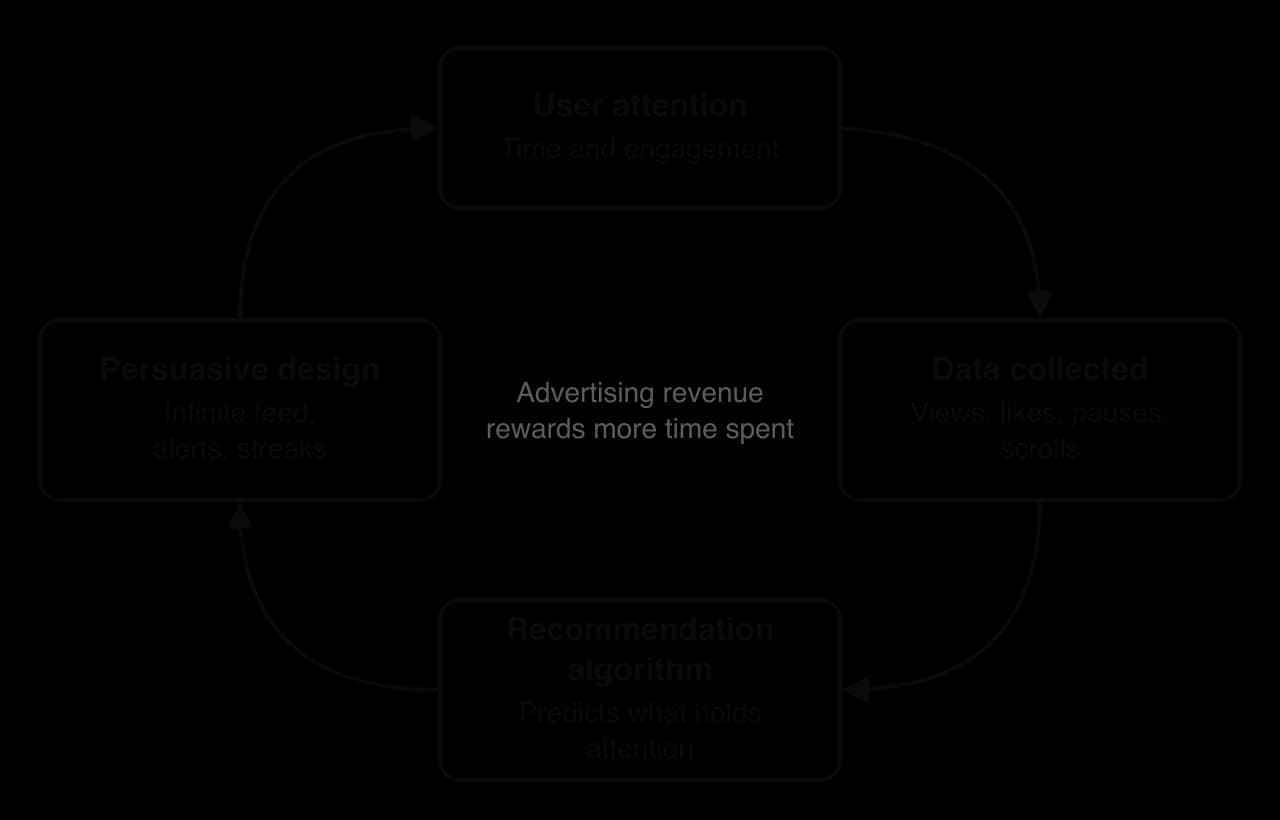
Through the concept of power, the attention economy raises the question of how much choice users really have. A single user decides how long to scroll, but large teams of designers and engineers test every feature to increase that time. Former insiders have made this argument publicly. Tristan Harris, a former design ethicist at Google, argues that platforms compete in a "race to the bottom of the brain stem".
 YouTube
The effects on attention itself are debated. Interruptions from notifications reduce focus while they happen, but claims that digital media have permanently shortened attention spans are much weaker.
The word addiction is used loosely in everyday speech ("I'm addicted to this series"). In medicine it has a narrower meaning: continued behaviour despite clear harm, loss of control and the behaviour taking priority over other parts of life.
In 2019 the WHO added gaming disorder to the International Classification of Diseases (ICD-11, in force from 2022). It is diagnosed only when a pattern of gaming is so severe that it causes significant impairment in personal, family, social, educational or work life, usually for at least 12 months. Only a small share of gamers meet this standard. Whether heavy social media use is a true addiction remains disputed; many researchers prefer the term "problematic use", because they worry that treating ordinary habits as illness could cause unnecessary alarm.
Governments have responded in different ways. In 2021 China limited online gaming for under-18s to one hour on Fridays, weekends and public holidays, enforced through real-name registration and, on some platforms, facial recognition. South Korea abolished its own late-night gaming "shutdown law" for under-16s in 2021, after evidence suggested it had little effect and teenagers used their parents' accounts. Limits can be enforced technically, but at a cost to privacy and autonomy, and their health effects are uncertain.
Anxiety and depression among adolescents rose in several countries, including the USA and the UK, from the early 2010s, around the same time that smartphones and image-based social media spread. Whether social media caused this rise is one of the most contested questions in the health context.
Suggested mechanisms linking social media to anxiety include comparison with edited images of others' lives, FOMO, cyberbullying, harmful content about self-harm or eating disorders, and lost sleep. Social media can also protect mental health by connecting isolated young people, including LGBTQ+ youth, to supportive communities.
Position | Main claims | Evidence used | Limits |
|---|---|---|---|
Social media is a major cause | The rise in adolescent anxiety and depression followed the spread of smartphones; heavy users, especially girls, report worse mental health | Population trends; survey correlations; Meta's internal research | Mostly correlational; trends coincide with other changes, such as school pressure and changes in diagnosis |
Effects are small on average | Links between screen use and well-being are negative but very small | Orben and Przybylski (2019): technology use explained at most 0.4% of the variation in adolescent well-being across three large datasets | Averages can hide large effects for vulnerable groups; "screen time" is too broad a measure |
It depends on who, how and what | Effects depend on the person, the type of content and how the platform is used | Studies comparing passive scrolling with active messaging, and studies of vulnerable groups | Hard to measure what people actually see; platforms rarely share data with researchers |
The debate became public in 2024 with the psychologist Jonathan Haidt's book The Anxious Generation, which argues that the shift to a "phone-based childhood" is a main cause of the rise in youth mental illness. The developmental psychologist Candice Odgers, reviewing it in Nature, argued that the evidence does not support such strong causal claims and that most studies find small or mixed associations. Internal Meta research reported by the Wall Street Journal in 2021 included a slide stating that Instagram made body image issues worse for one in three teenage girls who already had them, which added pressure on the company and on regulators.
Policy has moved faster than the research. In 2023 the US Surgeon General warned that there was not enough evidence to conclude that social media is safe for young people. In December 2025 Australia's ban on social media accounts for under-16s came into force, requiring platforms such as TikTok, Instagram and Snapchat to take reasonable steps to keep them off. Supporters argue that the risk justifies acting before certainty; critics point to privacy problems in age checks, lost support networks and easy workarounds.
Screen time is easy to measure, which is why it dominates public debate, but it is a weak measure on its own. An hour of video-calling grandparents and an hour of scrolling through appearance-focused content count the same. For very young children, the WHO recommends no screen time before the age of two and no more than one hour a day for ages two to four, mainly so that screens do not replace sleep, play and physical activity.
Responses to concerns about digital well-being come from several groups of stakeholders.
Platforms offer tools such as Apple's Screen Time, Google's Digital Wellbeing, "take a break" reminders and teen accounts with stricter defaults.
Users and families set limits, turn off notifications or keep phones out of bedrooms.
Schools and governments restrict phones in classrooms, as in France, the Netherlands and Brazil.
Regulators target design. The EU's Digital Services Act requires very large platforms to assess risks to minors' mental health, and in 2024 TikTok withdrew a feature of TikTok Lite in the EU that rewarded users with points for watching videos, after the European Commission questioned its addictive design.
Critics of platform tools argue that they place responsibility on individuals while the underlying design that keeps users engaged stays the same. Through the concept of power, the question is whether well-being should be achieved by user self-control or by changing the systems that shape behaviour.
India has about 1.4 billion people, and roughly two thirds live in rural areas. Specialists are concentrated in cities, so a rural patient may travel for hours and lose a day's wages to see one. The government launched eSanjeevani in November 2019 to bring consultations to patients instead. It is run by the Ministry of Health and Family Welfare and was developed by the Centre for Development of Advanced Computing (C-DAC) in Mohali, a government research body.
eSanjeevani has two main parts, shown in the diagram.
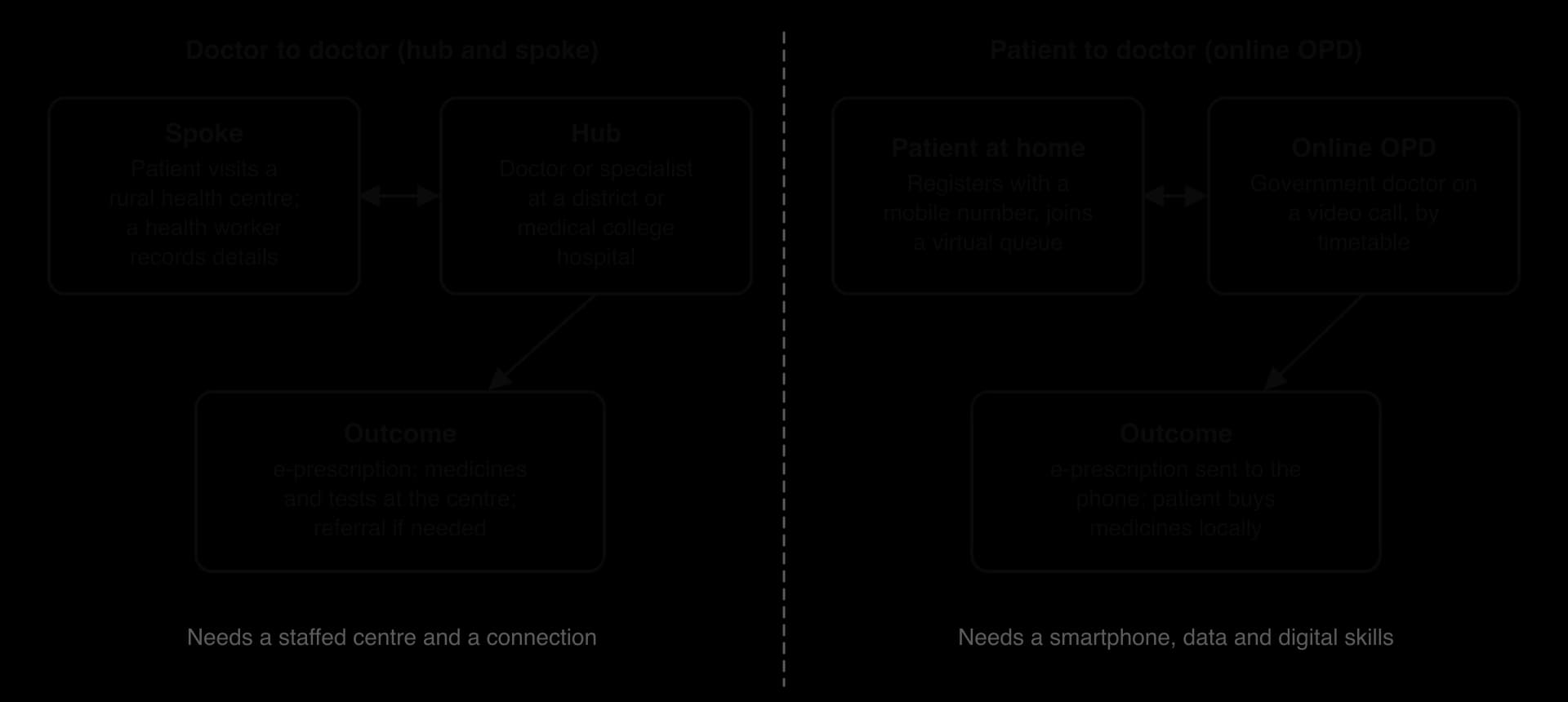
Doctor to doctor (hub and spoke). Launched in November 2019, this model links rural health centres, now called Ayushman Arogya Mandirs (formerly Health and Wellness Centres), to doctors at larger hospitals. At the "spoke", a community health officer records the patient's details and starts a video consultation with a doctor or specialist at a "hub". The doctor issues an electronic prescription, and the patient collects medicines at the centre.
Patient to doctor (eSanjeevani OPD). Launched on 13 April 2020, during India's first COVID-19 lockdown, when many outpatient departments (OPDs) had closed. Patients register on a website or app with a mobile phone number, join a virtual queue and consult a government doctor by video. The prescription is sent to their phone.
The platform is a web and mobile application running on government cloud servers. It handles registration, queues, video calls, digital prescriptions and records. It can link to a patient's ABHA health ID, so that consultations become part of their electronic health record. By 2026 it worked in 15 languages, and an AI-based clinical decision support system suggests possible diagnoses to doctors during consultations.
eSanjeevani grew from an emergency tool to one of the largest telemedicine services in the world. The line chart shows cumulative consultations rising from about 12 million in September 2021 to more than 500 million by mid-September 2026.
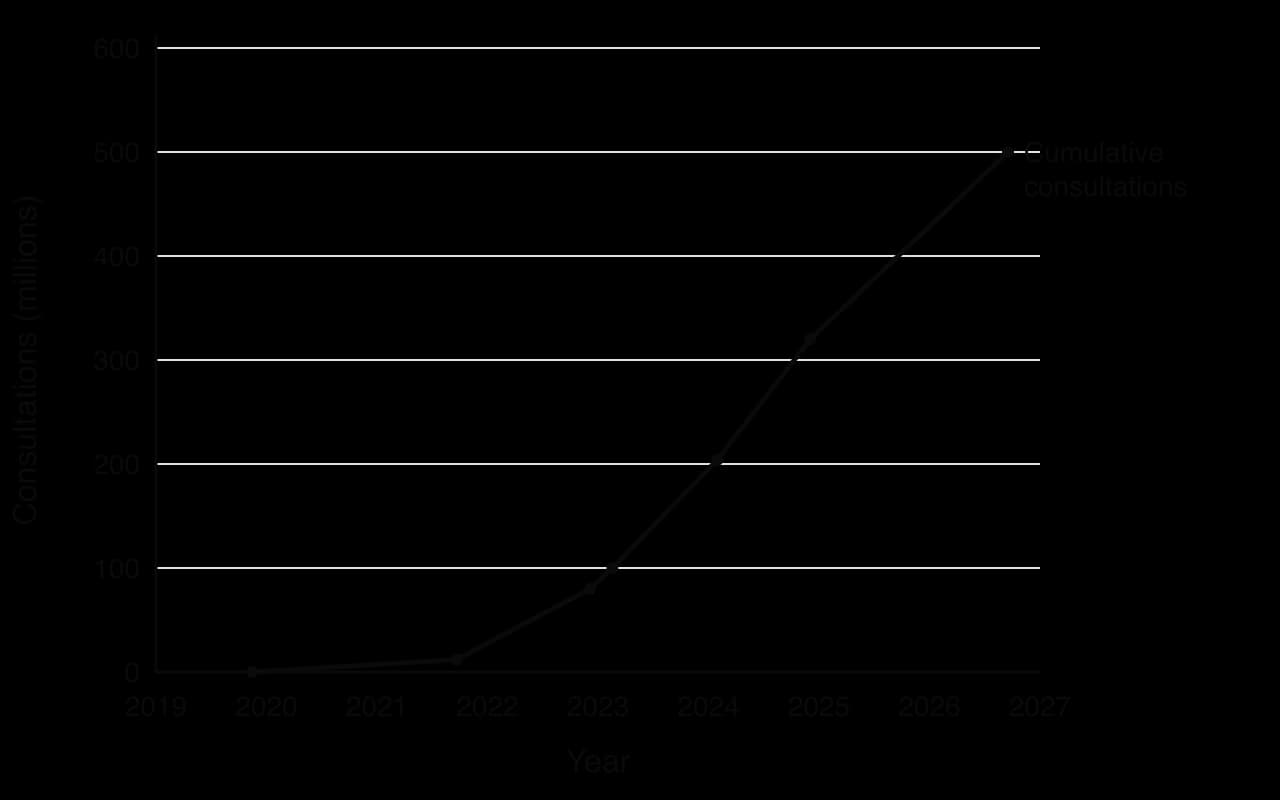
In October 2026 the government reported more than 142,000 spokes, over 19,000 hubs and over 200,000 registered health providers. Women accounted for more than 57% of consultations, and people aged 60 and over for about 16%. Use has been uneven across states, with a few southern states, led by Andhra Pradesh, accounting for a large share of consultations in the early years.
People and communities | Positive impacts and opportunities | Negative impacts and risks |
|---|---|---|
Rural patients | Specialist advice without long journeys; lower travel costs and lost wages; prescriptions issued locally | Video cannot replace physical examinations; referral still needed for tests and surgery |
Women | Consultations near home, avoiding long journeys that can be harder for women to make; privacy for some conditions | The online OPD depends on phone access; in 2019–21 only about a third of Indian women had ever used the internet (NFHS-5) |
Older people | Fewer difficult journeys for routine follow-up | Lower digital skills; reliance on health workers or family members to connect |
Community health officers | New role as the link between patient and doctor; training and support from specialists | Extra workload; a risk that numbers of consultations matter more than quality |
Doctors at hubs | Can reach more patients; work from a central hospital | High volumes may lead to short consultations; harder to build a relationship with patients |
Government and health system | Uses scarce specialists efficiently; data on demand and disease patterns | Cost of hardware, connectivity and staff; data security for millions of records |
Independent studies give a more mixed picture than the official figures. Surveys of rural health centres and of users in individual states have reported problems such as specialists not being available online, long waiting times and poor network connections, even where most users were satisfied with the time saved. Several researchers have pointed out that the published statistics count consultations, not health outcomes: they do not show whether patients recovered, whether follow-up happened, or whether the poorest communities gained most.
Space. Through the concept of space, the network compresses the distance between a village and a city hospital, so the rural spoke becomes part of the same system as a medical college. Physical space still matters: medicines, tests and emergencies need a physical location, and network coverage is uneven.
Power. Through the concept of power, the platform shifts some control towards patients, who no longer depend on being able to travel. The state also gains power, through a national system that collects data on millions of consultations and links them to health IDs. The data is valuable for planning but risky if misused or breached, and patients have little say over the system's design.
Change. The online OPD was a rapid response to the 2020 lockdown, but the doctor-to-doctor model, built into the existing rural health system, has grown into the larger part of the service (more than 142,000 spokes against 901 online OPDs in 2026). This growth suggests that a digital system spreads furthest when it is built into existing health institutions.
eSanjeevani has clearly widened access to basic consultations, especially for women and rural patients, at a scale few countries have matched. Placing a trained health worker at the spoke is its main strength, because patients do not need their own device or digital skills. The service's success is limited in three ways: consultation counts say little about the quality of care or health outcomes; the online OPD reproduces the digital divide; and telemedicine can only be as good as the physical health system behind it, such as the supply of medicines and the availability of specialists. A balanced judgement is that eSanjeevani is an effective way to extend primary care when it is combined with staffed local centres, but it is not a substitute for more doctors and clinics in underserved areas.
The same method works for any unseen example in the health context. The table sets out its six steps and the questions to ask at each one.
Step | Questions to ask |
|---|---|
1. Identify the digital system | What are the inputs, processes and outputs? Which content area does it belong to (data, algorithms, networks, AI, robots)? Who designed it, who runs it, who pays? |
2. Place it in the health context | Is it about diagnosis and care, research, records and tracking, the body, or mental health? Does it restore, assist or enhance? |
3. Map the people and communities | Who uses it directly? Who is affected indirectly? Who is excluded? Who gains from the data? |
4. Trace impacts and implications | What are the positive and negative impacts? Which were intended and which unintended? What are the short-term and long-term implications? |
5. Apply concepts | Which concept gives the most insight: power, identity, space, change, systems, values and ethics? |
6. Evaluate | Under what conditions is the benefit greater than the harm? What evidence would change the judgement? |
Naming the inputs and outputs in step 1 makes it easier to see who controls the data in step 5, and step 6 turns a list of pros and cons into a judgement with conditions.
The second question uses a short source in the style of the source-based paper.
I can describe how digital systems support the design and delivery of diagnostics and care, including medical imaging, AI diagnosis and telemedicine.
I can explain why an accurate diagnostic algorithm may still fail in real clinics, using the Google Health study in Thailand.
I can explain how digital systems have changed medical research and development, and one implication for an under-represented community.
I can define an electronic health record and explain the benefits of continuity and the risks to health data.
I can describe how health tracking works, from sensor to cloud, and evaluate the Apple Heart Study's findings.
I can distinguish between restoring, assisting and enhancing the body, with an example of each.
I can explain the impacts and implications of implants, brain–computer interfaces, biohacking, exoskeletons and bioprinting.
I can distinguish between the medical and social models of disability and outline approaches to digital accessibility.
I can explain the aims of ergonomic design and give hardware, software and policy examples.
I can outline different approaches to understanding and ensuring mental health, and evaluate digital mental health tools.
I can explain the attention economy and persuasive technology, and how they connect to attention, addiction and anxiety.
I can discuss the research on social media and adolescent mental health, separating associations, causes and policy choices.
I can analyse eSanjeevani through at least two concepts and reach a judgement on its success.
I can apply the six-step method to an unseen real-world example in the health context.