Explain how hydrogen bonding gives water its cohesive, adhesive, solvent and thermal properties, and how these shape life in xylem, cells and aquatic habitats.
Each is in the Biology glossary, with every other term in the subject.
The attraction between water molecules and molecules of a different substance, caused by hydrogen bonds or other attractions to polar or charged surfaces.
The scientific study of the origin, evolution and possible distribution of life in the universe, including the search for liquid water beyond Earth.
The liquid part of blood, about 90% water, which carries dissolved substances such as glucose, amino acids, ions, urea, hormones and carbon dioxide.
The upward force on an object in a fluid, equal to the weight of fluid it displaces; water gives far more buoyancy than air because it is much denser.
The movement of water along narrow spaces, even against gravity, caused by adhesion of water to the walls together with cohesion between water molecules.
A type of stony meteorite from water-rich asteroids, containing water in clay minerals and carbon compounds; its D/H ratio is close to that of Earth's oceans.
The attraction between molecules of the same substance; in water it is caused by hydrogen bonds between water molecules.
A chemical bond in which two atoms share a pair of electrons; covalent bonds are strong and hold the atoms of a molecule together.
The ratio of deuterium (heavy hydrogen) to ordinary hydrogen atoms in a sample of water, used to identify where water came from; abbreviated D/H.
The tendency of an atom to attract the shared electrons in a covalent bond towards itself; oxygen is much more electronegative than hydrogen.
The range of distances from a star within which a planet's surface temperature allows water to exist as a liquid; also called the habitable zone.
The attraction between a partially positive hydrogen atom in one polar molecule and a partially negative atom, such as oxygen or nitrogen, in another polar molecule or another part of the same large molecule.
Attracted to water and able to dissolve in it; ions and polar molecules are hydrophilic because their charges attract water molecules.
Not attracted to water and insoluble or poorly soluble in it; non-polar substances such as fats and oils are hydrophobic.
An attraction between separate molecules, such as a hydrogen bond, which is much weaker than the covalent bonds holding atoms together within a molecule.
An atom or group of atoms with an overall electrical charge because it has gained or lost electrons, such as Na⁺ (a cation) or Cl⁻ (an anion).
A charge smaller than that of an electron or proton, written δ+ or δ−, found on atoms at the ends of a polar covalent bond because electrons are shared unequally.
A covalent bond in which the electrons are shared unequally because one atom is more electronegative, giving one end a partial negative charge and the other a partial positive charge.
A molecule with an uneven distribution of electrical charge, so that one part carries a partial negative charge and another part a partial positive charge.
A substance that is dissolved in a solvent to form a solution, for example glucose or sodium ions dissolved in water.
The process in which solvent molecules surround and separate the particles of a solute; in water, a shell of water molecules forms around each ion or polar molecule.
A liquid in which other substances (solutes) dissolve; water is the solvent in which most reactions of life take place.
The amount of energy needed to raise the temperature of 1 g of a substance by 1 °C; for water it is 4.18 J g⁻¹ °C⁻¹.
The tendency of a liquid surface to behave like a stretched elastic film, caused by cohesion pulling surface molecules inwards; it lets small animals such as pond skaters stand on water.
The ability of a substance to transfer heat by conduction; water conducts heat more than 20 times faster than air.
The resistance of a fluid to flowing; water is about 55 times more viscous than air, so it exerts more drag on a moving animal.
Water is the most abundant substance in living organisms and the medium in which almost every process of life takes place. Its unusual properties all come from one feature of its molecules: they are polar, so they attract each other and attract other charged or polar substances.
Those attractions explain how water rises more than 100 m to the top of the tallest trees, why many substances dissolve in it, why lakes freeze from the top down and why animals that swim in cold water face different problems from animals that live in air. The same properties explain why the search for life on other planets begins with the search for liquid water.
39 exam-style questions on this subtopic, written in the style of the IB papers. The first has its markscheme open. Counted on
Why is water described as the medium for life?
The first cells are thought to have arisen in water, and most metabolic processes still take place in aqueous solution, so water is the medium for life. A is wrong because many other molecules (DNA bases, proteins, sugars) form hydrogen bonds. C confuses the medium with an energy source: water releases no usable energy. D is wrong because water is an inorganic molecule.
The answer is B.
What makes a water molecule polar?
One of 2 short multiple-choice questions on A1.1. Pick an answer to see why it's right or wrong.
What is the attraction between two water molecules called?
The official deck for this part of the syllabus.
Where are the first cells thought to have originated, and when?
State two ways in which water made the earliest chemical reactions of life possible.
With a free account, Augment remembers where you stopped and what you have practiced.
The first cells are thought to have originated in water, between about 4.5 and 3.5 billion years ago. Water gave the earliest chemical reactions a liquid in which molecules could dissolve, move about and collide, and it protected those molecules from the strong ultraviolet radiation that reached the surface of the early Earth. The origin of the first cells is studied in A2.1 Origins of cells (HL).
Water is still the medium of life today. About 70% of the mass of a typical cell is water. The cytoplasm is an aqueous solution in which enzymes, substrates and products are dissolved, and nearly all metabolic reactions take place in solution. Water is also a reactant or product in many reactions: it is used up in hydrolysis and released in condensation reactions, two reaction types that build and break down every biological polymer.
Organisms that live on land depend on water just as much. They carry an aqueous internal environment with them and must take in water to replace what they lose. Blood, tissue fluid, xylem sap and phloem sap are all water-based solutions, and the surfaces where gases are exchanged, such as the alveoli of lungs and the spongy mesophyll of leaves, are kept moist so that gases can dissolve before they diffuse into cells.
Water is a liquid over the range of temperatures found on most of the Earth's surface (0–100 °C at sea level), so it can act as a medium for chemical reactions.
Water dissolves more substances than any other common liquid, so reactants can meet in solution.
Water changes temperature slowly, so cells and aquatic habitats are protected from rapid temperature changes.
Water is transparent, so light reaches photosynthesising organisms living below the surface of lakes and seas.
Each of these properties is explained by the structure of the water molecule and the hydrogen bonds between molecules.
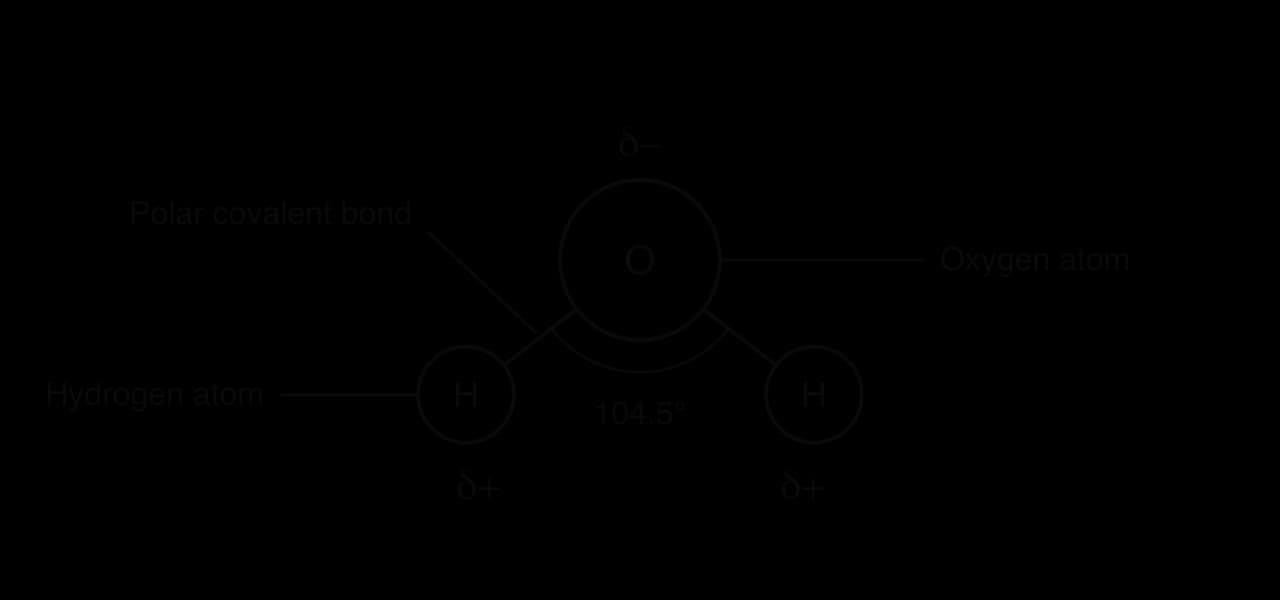
A water molecule (H₂O) is made of one oxygen atom joined to two hydrogen atoms. Each hydrogen atom is joined to the oxygen atom by a covalent bond, in which the two atoms share a pair of electrons. Covalent bonds are strong, so a water molecule does not easily break apart into its atoms.
Atoms differ in how strongly they attract the electrons in a covalent bond. This tendency is called electronegativity. Oxygen is much more electronegative than hydrogen. The oxygen nucleus has eight protons and the hydrogen nucleus only one, so the shared electrons spend more of their time closer to the oxygen atom than to the hydrogen atom.
Because the electrons are shared unequally, the oxygen end of each bond carries a slight negative charge and the hydrogen end a slight positive charge. These are partial charges, written δ− and δ+ (δ is the Greek letter delta, meaning "a small amount"). A covalent bond with partial charges at its two ends is a polar covalent bond. A partial charge is smaller than the full charge of an ion: no electron has been transferred completely.
The water molecule is bent, with an angle of about 104.5° between the two O–H bonds. Because of this shape, both hydrogen atoms sit on one side of the molecule, so the molecule as a whole has a positive side (the two hydrogen atoms) and a negative side (the oxygen atom). A molecule with an uneven distribution of charge like this is a polar molecule. If the molecule were straight, with the hydrogen atoms on opposite sides of the oxygen, the two polar bonds would cancel each other out and the molecule would not be polar.
Methane (CH₄) is a useful contrast. Carbon and hydrogen have similar electronegativities, so the electrons in C–H bonds are shared almost equally and methane is non-polar. Methane molecules attract each other only weakly, which is why methane is a gas at room temperature even though its molecules are about the same size as water molecules.
The δ+ hydrogen atom of one water molecule is attracted to the δ− oxygen atom of a neighbouring water molecule. This attraction is a hydrogen bond. Hydrogen bonds form between molecules, not within them, so they are an example of an intermolecular force. Each water molecule can form up to four hydrogen bonds: two through its hydrogen atoms and two through its oxygen atom.
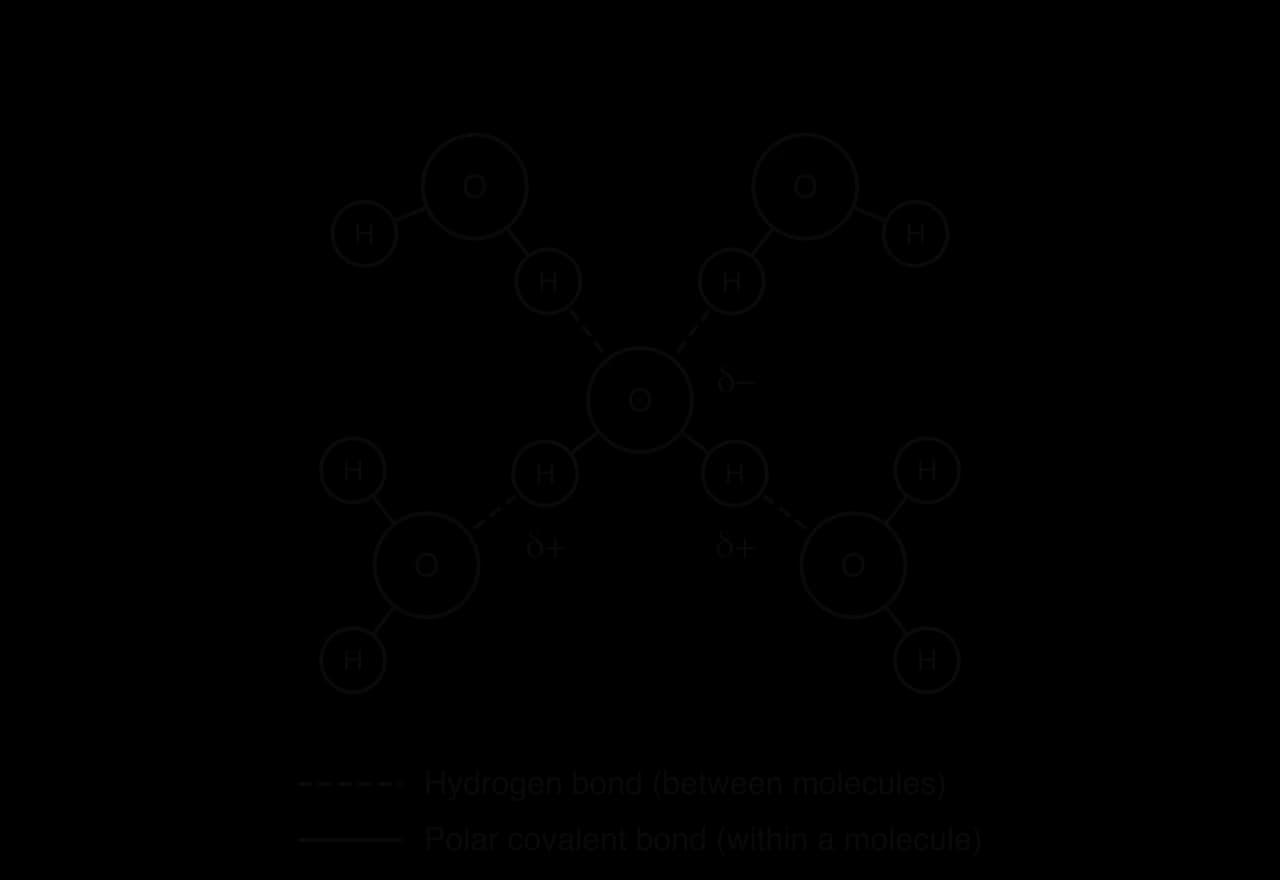
A single hydrogen bond is weak: it has about one-twentieth of the strength of a covalent bond. In liquid water, hydrogen bonds break and re-form continually as the molecules move, each lasting only a tiny fraction of a second. Because there are so many of them, they are collectively strong, and together they explain the cohesion, adhesion, solvent and thermal properties of water.
The same type of bond is important in many other biological molecules. Hydrogen bonds hold the two strands of DNA together (A1.2 Nucleic acids), stabilise the secondary and tertiary structure of proteins (B1.2 Proteins) and link the cellulose molecules in plant cell walls (B1.1 Carbohydrates and lipids). This is one example of unity in biology: a single kind of interaction appears at every level, from water molecules to the structure of whole organisms.
The direction of cause and effect matters here. Water is polar because its covalent bonds are polar and the molecule is bent; hydrogen bonds form as a result of that polarity.
Cohesion is the attraction between molecules of the same substance. In water it is caused by hydrogen bonds between neighbouring water molecules. Cohesion makes water hold together as a continuous body, so it can be pulled without the stream of molecules breaking apart and it forms a surface that resists being stretched.
Plants move water from the roots to the leaves through xylem vessels, narrow tubes made of dead cells joined end to end. Water evaporates from the moist walls of cells inside the leaves and diffuses out through the stomata; this loss of water vapour is transpiration. As water evaporates, more water is drawn out of the xylem in the leaf veins to replace it.
Removing water from the top of a xylem vessel pulls on the water below it. Because water molecules are held together by cohesion, the whole column is pulled up, rather like a rope being pulled from the top. The water in the xylem is therefore under tension (negative pressure), and the column can stay unbroken from roots to leaves. This explanation is the cohesion–tension theory, and it is studied in detail in B3.2 Transport.
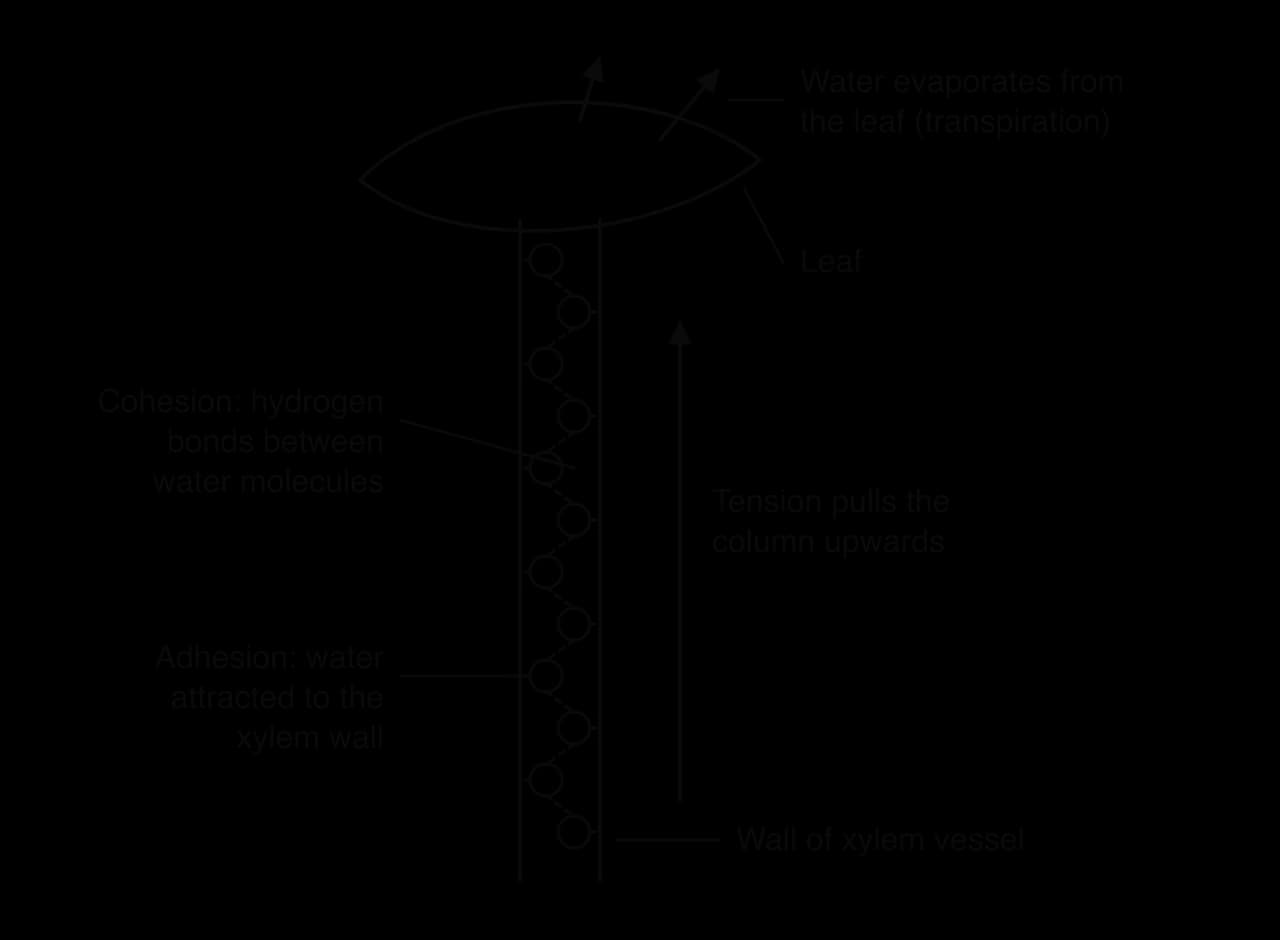
The walls of xylem vessels are strengthened with lignin, so they do not collapse inwards when the water inside them is under tension. If the tension becomes too great, for example during a drought, the column can break and an air bubble forms. This is called cavitation, and an air-filled vessel can no longer carry water.
At the surface of a body of water, the water molecules are hydrogen bonded to neighbours beside and below them, but not to the air above. The inward pull from cohesion makes the surface behave like a stretched elastic film, an effect called surface tension.
Surface tension is strong enough to support small animals. The pond skater (Gerris lacustris) lives on the surface of ponds and slow streams, where it hunts insects that fall onto the water. Its long legs spread its weight over a large area, and water-repellent hairs on its feet stop them breaking through the surface. Other organisms use the underside of the surface film: mosquito larvae hang from it while they breathe air through a tube.
Hydrogen bonding also explains a property of water that is very unusual: the solid form is less dense than the liquid. Liquid water is densest at about 4 °C. When it cools further and freezes, hydrogen bonds hold the molecules in an open, regular lattice in which they are further apart than in liquid water. Ice has a density of about 0.92 g cm⁻³, so it floats. A lake therefore freezes from the top down, and the layer of ice insulates the water underneath, where fish, amphibians and invertebrates survive the winter.
Adhesion is the attraction between water molecules and the molecules of a different substance. Water adheres to any surface that is polar or charged, because its δ+ and δ− regions are attracted to the charges on that surface. Glass, cellulose and the clay particles in soil are all hydrophilic surfaces to which water adheres strongly.
In a narrow space, adhesion and cohesion work together to move water. Water molecules next to the wall of a narrow tube adhere to the wall and creep upwards. Cohesion between water molecules then pulls more water up behind them. This movement of water along narrow spaces, even against gravity, is capillary action. The narrower the space, the larger the area of wall relative to the volume of water, and the higher the water rises.

Soil contains narrow spaces (pores) between its mineral particles and organic matter. Water adheres to the surfaces of the particles and is drawn through these pores by capillary action, including upwards from wetter layers deep in the soil towards drier layers near the surface. Water held in small pores by adhesion stays in the soil after rain has drained away, which gives plant roots a supply of water between rainfalls. Clay soils, with very small pores, hold much more water than sandy soils.
Plant cell walls are made of cellulose fibres, which are hydrophilic because they have many –OH groups that form hydrogen bonds with water. The narrow spaces between the cellulose fibres act like very fine capillary tubes. Water is drawn into these spaces, so cell walls stay wet. In a leaf, this film of water on the walls of the mesophyll cells is where carbon dioxide dissolves before it diffuses into the cells for photosynthesis, and it is also where water evaporates during transpiration. When water evaporates from these walls, capillary action draws more water into the wall from the xylem.
The Amoeba Sisters animation summarises polarity, cohesion, adhesion, capillary action and surface tension.
 YouTube
A solvent is a liquid in which other substances dissolve, and a solute is a substance that dissolves in it. Water is an excellent solvent for substances that are charged or polar, because its partial charges are attracted to them.
When an ionic compound such as sodium chloride is placed in water, the water molecules pull the ions apart. Each positive sodium ion (Na⁺) is surrounded by water molecules with their δ− oxygen atoms facing it. Each negative chloride ion (Cl⁻) is surrounded by water molecules with their δ+ hydrogen atoms facing it. A shell of water molecules forms around each ion, which keeps the ions apart and spreads them through the water. This process is solvation (also called hydration when the solvent is water).
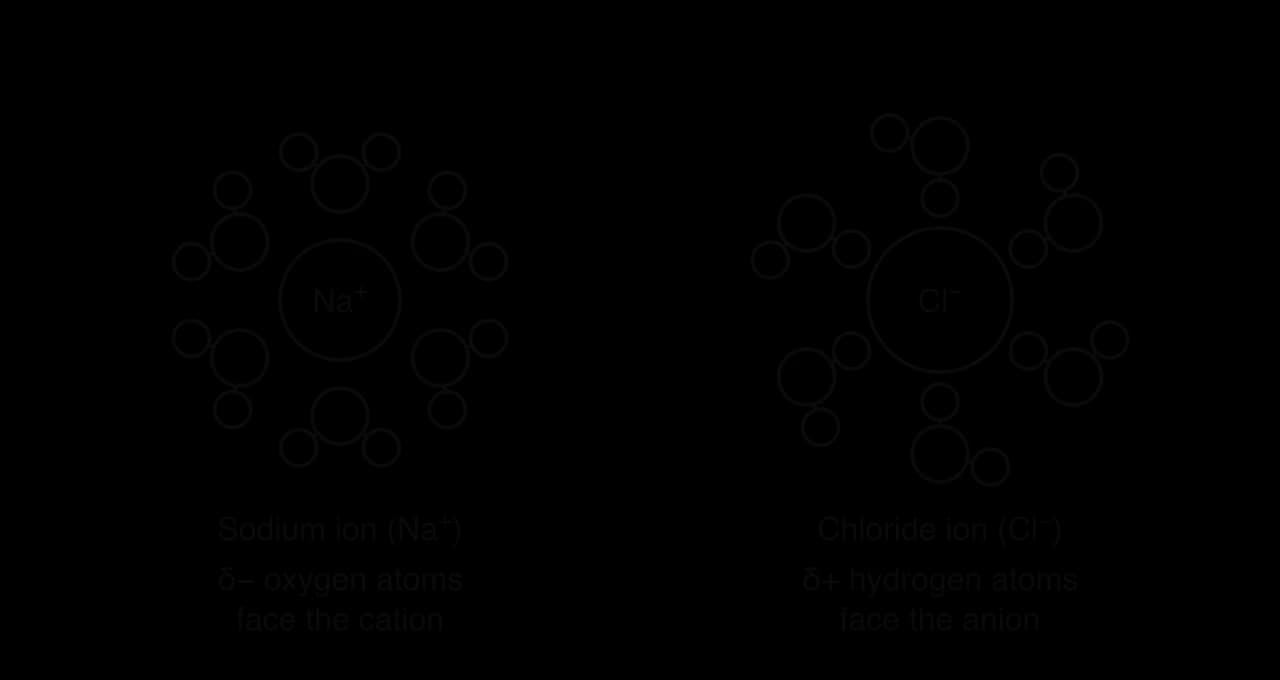
Polar molecules that are not ions, such as glucose, amino acids and urea, also dissolve readily. They have polar groups such as –OH and –NH₂ that form hydrogen bonds with water molecules, so the water molecules cluster around them in the same way.
Substances that dissolve in water or are attracted to it are hydrophilic ("water-loving"). They include all ions and polar molecules. Substances that do not dissolve in water are hydrophobic ("water-fearing"). Hydrophobic substances are non-polar: they have no charges or partial charges to attract water molecules. Fats, oils and the hydrocarbon tails of lipids are hydrophobic.
In water, hydrophobic molecules group together. Water molecules form more hydrogen bonds with each other when the non-polar molecules are kept out of the way, so the non-polar molecules are pushed together into droplets. This is why oil forms drops in water, and it is the reason why the phospholipids of membranes arrange themselves into bilayers with their tails facing inwards (B2.1 Membranes and membrane transport).
Feature | Hydrophilic substances | Hydrophobic substances |
|---|---|---|
Charge or polarity | Charged (ions) or polar | Non-polar |
Attraction to water | Attracted to water; form hydrogen bonds or ion–water attractions | Not attracted; water molecules bond to each other instead |
Solubility in water | Soluble | Insoluble or only slightly soluble |
Biological examples | Glucose, amino acids, Na⁺, K⁺, Cl⁻, urea | Triglycerides, cholesterol, phospholipid tails, waxes |
Because so many substances dissolve in it, water is the medium in which metabolism happens. Enzymes and their substrates are dissolved in the cytoplasm, in the fluid inside organelles such as the mitochondrial matrix and the chloroplast stroma, and in body fluids outside cells. Dissolved molecules move freely and collide with each other and with the active sites of enzymes, which allows reactions to take place. A reaction between two solid substances is extremely slow by comparison, because the molecules cannot move.
Substances are carried around multicellular organisms dissolved in water. In animals, blood plasma is the liquid part of the blood. It is about 90% water and carries dissolved glucose, amino acids, mineral ions, urea, hormones and carbon dioxide (mostly as hydrogencarbonate ions, HCO₃⁻). In plants, xylem sap carries water and dissolved mineral ions such as nitrate and potassium from the roots to the leaves, and phloem sap carries dissolved sucrose and amino acids from the leaves to the roots, fruits and growing regions.
Substances that are not soluble enough in water need another way of being carried:
Oxygen dissolves poorly in plasma, so most of it is carried bound to haemoglobin inside red blood cells.
Cholesterol and triglycerides are hydrophobic and cannot dissolve in plasma. They are carried in lipoproteins, small particles with a coat of phospholipids and proteins whose hydrophilic parts face the water and whose interior holds the lipids.
The function of many biological molecules depends on how soluble they are. Glucose, amino acids and ions are hydrophilic, so they dissolve in plasma and sap and can be transported quickly to wherever they are needed. In contrast, the hydrophobic tails of phospholipids form the core of every membrane, a barrier that ions and polar molecules cannot easily cross. Triglycerides are good energy stores partly because they are insoluble: they can be packed into fat droplets inside cells without drawing water into the cell by osmosis. The relationship between a molecule's solubility and its job is a clear case of form and function.
Air and water are the two media in which animals live, and their physical properties are very different. The four that matter most for animals are buoyancy, viscosity, thermal conductivity and specific heat capacity. Many of the differences follow from the hydrogen bonds that hold water molecules close together; in air, the molecules are far apart and attract each other very little.
Property (at 20 °C) | Water | Air | Approximate ratio, water : air |
|---|---|---|---|
Density / kg m⁻³ | 998 | 1.20 | 830 : 1 |
Viscosity (dynamic) / mPa s | 1.00 | 0.018 | 55 : 1 |
Thermal conductivity / W m⁻¹ K⁻¹ | 0.60 | 0.026 | 23 : 1 |
Specific heat capacity / J g⁻¹ °C⁻¹ | 4.18 | 1.01 | 4 : 1 |
Source: standard values at 20 °C and atmospheric pressure, CRC Handbook of Chemistry and Physics.
Buoyancy is the upward force on an object immersed in a fluid, equal to the weight of the fluid that the object displaces. Water is about 830 times denser than air, and its density is close to that of animal tissues, so water supports most of an aquatic animal's weight. Large aquatic animals such as whales can grow to sizes that would be impossible on land, and they need less skeletal support. In air, buoyancy is negligible, so land animals need strong skeletons and limbs to hold their bodies up, and flying animals need light bodies.
For a diving animal, buoyancy can also be a problem. An animal that is less dense than water floats, so it has to use energy to swim downwards and stay submerged.
Viscosity is the resistance of a fluid to flowing; a viscous fluid is "thick" and exerts a strong drag force on anything moving through it. Water is about 55 times more viscous than air, because hydrogen bonds between water molecules resist the molecules sliding past each other. Swimming animals therefore experience much more drag than flying animals. Fast swimmers have a streamlined (fusiform) body shape, tapered at both ends, which reduces drag.
Thermal conductivity is the ability of a substance to transfer heat by conduction. Water conducts heat more than 20 times faster than air. An animal with a body temperature higher than the surrounding water loses heat rapidly, much faster than in air at the same temperature. Aquatic mammals and birds, which keep their body temperature constant, therefore need good insulation. Fat and trapped air both conduct heat poorly, so blubber and air-filled feathers or fur reduce heat loss.
Specific heat capacity is the amount of energy needed to raise the temperature of 1 g of a substance by 1 °C. Water has a very high specific heat capacity, 4.18 J g⁻¹ °C⁻¹. When water is heated, much of the energy is used to break hydrogen bonds before the molecules can move faster, so its temperature rises slowly. Equally, water releases a lot of energy as it cools, so its temperature falls slowly.
Large bodies of water such as lakes and oceans therefore change temperature slowly, both from day to night and from season to season. Aquatic habitats are thermally stable compared with land, and the temperature of the water an aquatic animal lives in is much more predictable than the temperature of air. Inside organisms, the high water content of cells and blood buffers the body against sudden changes in temperature, and blood can carry heat from warm active organs to the skin.
Animals that live partly in water and partly in air or on land show the consequences of these properties most clearly, because their bodies have to work in both media.
The black-throated loon (called the black-throated diver in Britain) is a diving bird that breeds on large freshwater lakes in northern Europe and Asia and spends the winter on coastal seas. It feeds by diving from the surface and chasing fish underwater, using its feet for propulsion.
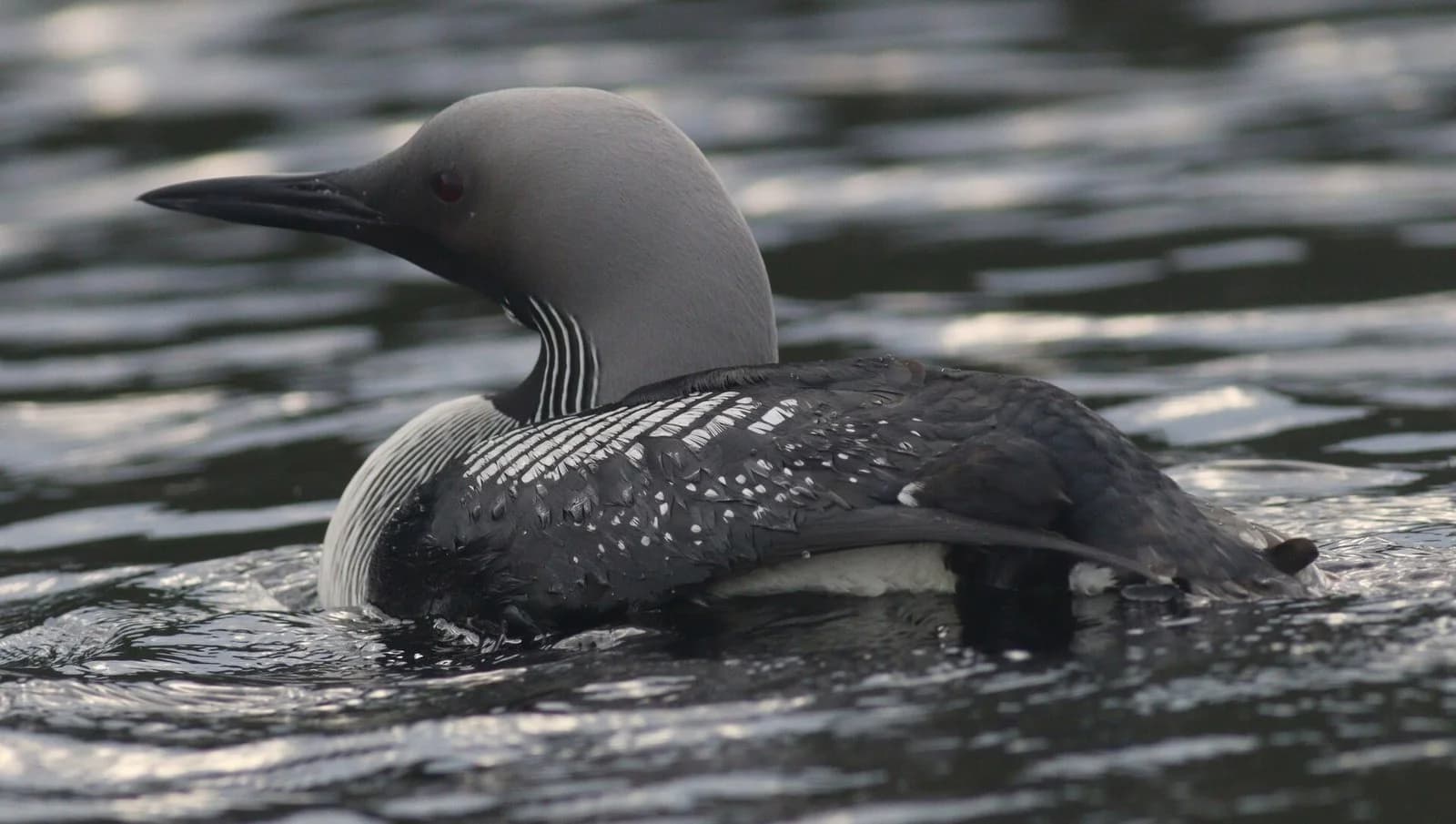
Buoyancy. Most flying birds have hollow, air-filled bones, which make them light in air. Loons have denser, more solid bones, and they can press air out of their feathers and air sacs before a dive. Both features reduce their buoyancy, so less energy is needed to swim downwards and stay underwater.
Viscosity. The loon's body is streamlined and its legs are set far back on the body, like propellers at the stern of a boat. This reduces drag and gives powerful propulsion through viscous water. On land the same legs make it clumsy, so it nests right at the water's edge.
Thermal conductivity. Dense, waterproof plumage traps a layer of air next to the skin. Air conducts heat poorly, so the trapped air insulates the bird in cold water.
Flight in air. Because air gives almost no buoyancy, a heavy bird with relatively small wings needs a long run across the water surface to take off. Its dense bones help it to dive but add to the weight that its wings must lift.
The ringed seal is the smallest and most widespread seal of the Arctic. It lives in seas covered by ice for much of the year, keeps breathing holes open through the ice with the strong claws on its fore flippers, and gives birth in snow caves (lairs) on the sea ice.
Thermal conductivity. A thick layer of blubber (fat) under the skin insulates the seal. Unlike a layer of trapped air, blubber does not get compressed by water pressure during a dive, so it insulates at depth as well as at the surface, and it also serves as an energy store.
Buoyancy. Water supports the seal's weight, so its limbs are short flippers used for swimming, not for holding the body up. Blubber is less dense than water and adds to the seal's buoyancy. On the ice, where air gives no support, the seal moves awkwardly by wriggling on its belly.
Viscosity. The seal's body is fusiform (spindle-shaped), with no external ears and with limbs that lie close to the body, so drag is low. It swims with side-to-side strokes of its hind flippers.
Specific heat capacity. Arctic air temperatures fall below −30 °C in winter, while the sea under the ice stays close to its freezing point of about −1.8 °C all year. The water around the seal is cold but stable, whereas the air above the ice changes temperature rapidly. Snow lairs shelter newborn pups from the coldest air.
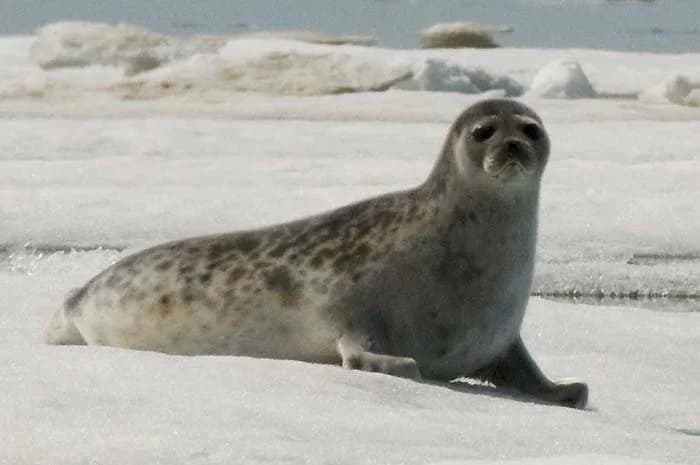
Both animals solve the same physical problems in different ways: the loon insulates with air trapped in feathers, the seal with blubber. This is an example of unity and diversity: the physics of water is the same for every aquatic animal, but different lineages have evolved different structures in response to it.
The tallest known living tree is a coast redwood (Sequoia sempervirens) named Hyperion, in Redwood National Park, California. It was found on 25 August 2006 and measured at 115.55 m that year. Every leaf at the top of Hyperion is supplied with water that has travelled from its roots through xylem, as an unbroken column more than 100 m long.
Water evaporates from the leaves at the top, and the resulting tension pulls the whole column upwards without any pump. The column holds together only because hydrogen bonds give water strong cohesion, and adhesion of water to the hydrophilic xylem walls helps to stop the column pulling away from the sides of the vessels. If cohesion were weaker, the column would break long before it reached the top of a tall tree.
The taller the tree, the harder it is to lift water to the top. Two things increase the tension needed. Gravity pulls down on the column, adding about 0.0098 MPa of tension for every metre of height, and friction between the moving water and the narrow xylem walls adds more. In 2004, a study of the tallest redwoods, up to 112.7 m high, found that the leaves at the top were under the greatest water stress: they were smaller and thicker, and photosynthesised less, than leaves lower down. From the way water stress increased with height, the authors predicted that the maximum possible height of a redwood is 122–130 m.
The graph of tension against height shows only the part of the tension that comes from gravity, which increases in direct proportion to height. At the top of Hyperion, gravity alone accounts for more than 1.1 MPa of tension. The total tension in the leaves is higher still, because the water must also be pulled through the xylem against friction and drawn out of the soil.
Hyperion shows how a property at the level of molecules, the hydrogen bond, sets a limit at the level of the whole organism. The same physics constrains every tree, which is why the tallest species of different continents, such as the coast redwood and the mountain ash (Eucalyptus regnans) of Australia, reach broadly similar maximum heights.
The Earth formed about 4.5 billion years ago from material orbiting the young Sun. Close to the Sun, where the Earth formed, it was too hot for water ice to exist in the dust and rock that came together to build the planet. Much of the water that was present would also have been lost while the young Earth was hot and molten. Yet the oceans today hold about 1.3 billion km³ of water. The leading hypothesis is that most of this water was delivered later, from beyond the Earth.
Further from the Sun, beyond the region where temperatures were low enough for ice to form, asteroids contain water locked inside their minerals. A class of meteorites called carbonaceous chondrites comes from such asteroids. They contain water held in clay minerals, as well as carbon compounds. According to the asteroid hypothesis, impacts from water-rich asteroids during and soon after the Earth's formation delivered most of the water that became the oceans.
The main evidence comes from the deuterium-to-hydrogen (D/H) ratio. Deuterium is a heavier isotope of hydrogen with a neutron in its nucleus as well as a proton. Water from different parts of the solar system formed at different temperatures and so contains different proportions of deuterium. If Earth's water came from a particular source, the D/H ratio of the oceans should match that source.
Source of water | D/H ratio | Match with the oceans |
|---|---|---|
Earth's oceans | 1.56 × 10⁻⁴ | — |
Carbonaceous chondrites (asteroids) | Close to the oceans | Good match |
Comet 67P/Churyumov–Gerasimenko | 5.3 × 10⁻⁴ (about 3 times the oceans) | Poor match |
Sources: Alexander et al., Science, 2012 (chondrites); Altwegg et al., Science, 2015 (Rosetta mission, comet 67P).
Comets, which are rich in ice, were once the favourite explanation. In 2014 the European Space Agency's Rosetta spacecraft measured the water vapour around comet 67P/Churyumov–Gerasimenko and found a D/H ratio about three times that of Earth's oceans. This is evidence against comets of this type being the main source. Samples brought back from the asteroids Ryugu (by the Japanese Hayabusa2 mission, 2020) and Bennu (by NASA's OSIRIS-REx mission, 2023) contain water-bearing clay minerals, which supports the idea that asteroids can carry water to planets.
The hypothesis is still being tested. Some scientists argue that part of Earth's water was present in the rocks from which it formed. Evaluating the hypothesis involves weighing several lines of evidence, and no single measurement settles the question. This is typical of science: hypotheses are supported or weakened by evidence, and a new measurement, such as the Rosetta result, can change which hypothesis is favoured.
A planet must also retain water once it has been delivered. Two conditions allowed Earth to retain its water:
Gravity. The Earth is massive enough for its gravity to hold an atmosphere, including water vapour. Smaller bodies such as the Moon have too little gravity, and gas molecules escape into space. Mars, with about a tenth of Earth's mass, had liquid water on its surface billions of years ago but has since lost most of its atmosphere.
Temperature. As the young Earth cooled, its surface temperature fell below the boiling point of water, so water vapour in the atmosphere condensed and fell as rain, forming oceans. Liquid water on the surface is not easily lost to space. Venus, closer to the Sun, became too hot for liquid water, and its water vapour was lost.
The TED-Ed animation compares the competing explanations for Earth's water and shows how isotope ratios are used to test them.
 YouTube
Every organism known on Earth needs liquid water, for all the reasons described for cells: water is the solvent for metabolism, the medium for transport and a reactant in many reactions. Astrobiology, the scientific study of the origin, evolution and possible distribution of life in the universe, therefore uses liquid water as its main guide. The strategy is often summarised as "follow the water": missions search for places where liquid water exists now or existed in the past.
A planet can have liquid water on its surface only if it is the right distance from its star. Too close, and the surface is too hot, so water boils away. Too far, and the surface is too cold, so water stays frozen. The range of distances between these limits is the Goldilocks zone, or habitable zone, named after the story in which the porridge must be neither too hot nor too cold. The position of the zone depends on the star: around a cool, dim star it lies close in; around a hot, bright star it lies further out.
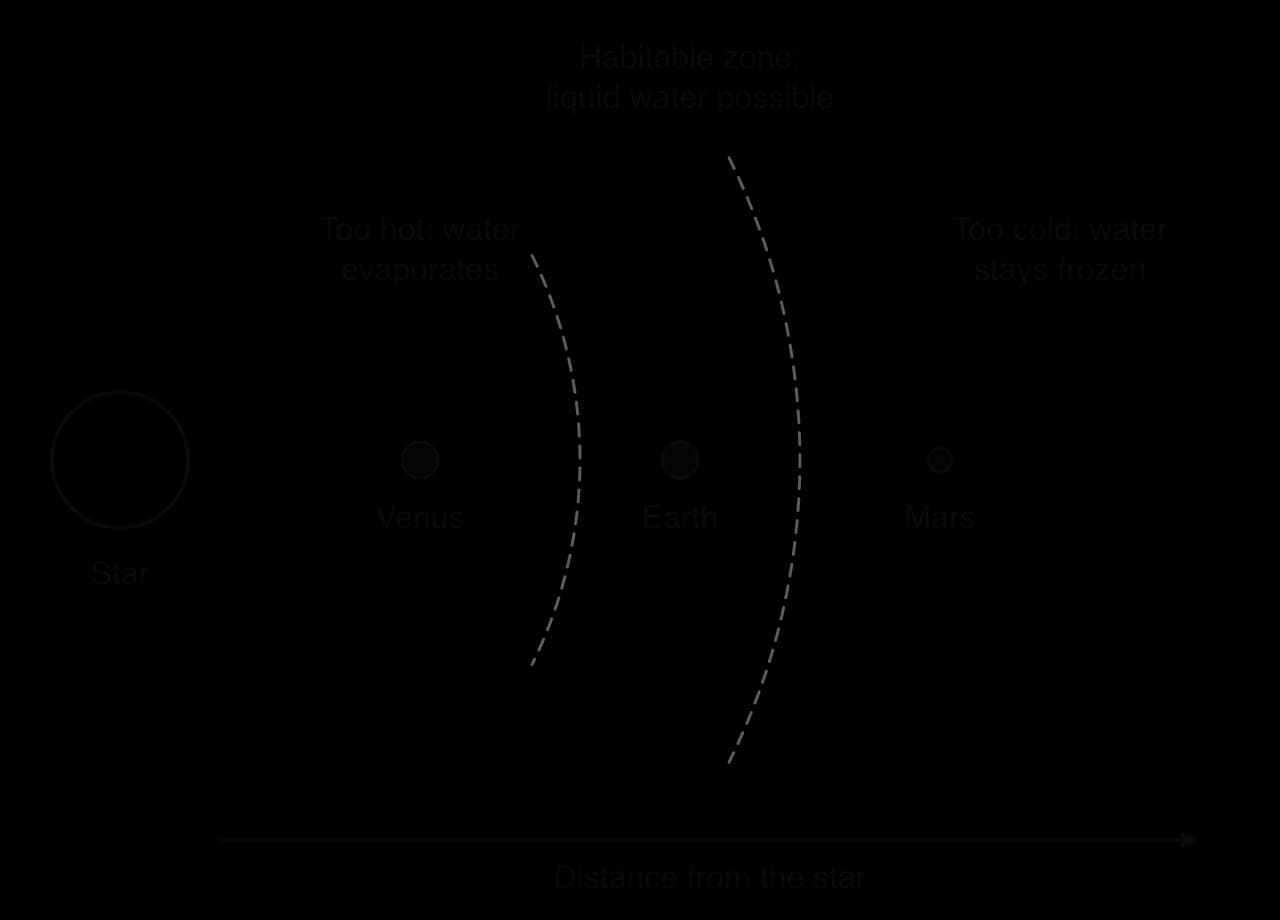
Being in the Goldilocks zone does not guarantee water. A planet also needs enough gravity to hold an atmosphere, as Earth does. In 2017, astronomers reported seven Earth-sized planets orbiting the small, cool star TRAPPIST-1, three of them in its habitable zone; these are among the most closely studied targets in the search for water outside the Solar System.
Liquid water can also exist beneath the surface of icy moons far from the Sun, where it is kept liquid by heat from tides rather than sunlight. In 2005 the Cassini spacecraft detected plumes of water ice and vapour erupting from Saturn's moon Enceladus, coming from an ocean under its icy crust. Jupiter's moon Europa is also thought to hold a subsurface ocean, and NASA's Europa Clipper spacecraft, launched in October 2024, is designed to study it. On Mars, the Perseverance rover has explored Jezero Crater, the site of an ancient lake, looking for signs of past life in rocks laid down in water.
Water is assessed in Paper 1A through questions on hydrogen bonding and its consequences (cohesion, adhesion, solvent and thermal properties), in Paper 1B through data on the physical properties of water and air, and in Paper 2 through drawings of hydrogen-bonded water molecules and explanations linking a property to its biological consequence. The command terms most often used are draw, outline, explain, compare and contrast and, at HL, evaluate.
Notes on marking: drawings must be clear enough to show which atoms the hydrogen bond joins; a hydrogen bond drawn within one molecule scores zero for that mark.
Hydrogen bonds between polar groups also hold together the two strands of DNA and the folded shapes of proteins, so the same drawing conventions apply to those molecules.
I can outline why water is the medium for life.
I can explain why water is polar, using electronegativity and the shape of the molecule.
I can draw and label hydrogen bonds between water molecules, showing partial charges.
I can distinguish between cohesion and adhesion and give a consequence of each for organisms.
I can explain capillary action in soil and in plant cell walls.
I can explain why ions and polar molecules dissolve in water and why hydrophobic substances do not.
I can describe water as a transport medium in blood plasma, xylem and phloem.
I can compare the buoyancy, viscosity, thermal conductivity and specific heat capacity of water and air, using the black-throated loon and the ringed seal.
I can calculate energy changes using specific heat capacity.
I can evaluate the asteroid hypothesis for the origin of Earth's water and explain why the water was retained. (HL)
I can explain the link between liquid water, the Goldilocks zone and the search for extraterrestrial life. (HL)
Hydrogen bonds link the oxygen atom to the hydrogen atoms within the molecule
The hydrogen atoms carry a full positive charge and the oxygen atom a full negative charge
The oxygen atom attracts the shared electrons more strongly than the hydrogen atoms do
Which row describes the charges and bonding in liquid water?
Row | Partial charge on oxygen atom | Partial charge on hydrogen atoms | Bond that forms between neighbouring molecules |
|---|---|---|---|
A | δ− | δ+ | hydrogen bond |
B | δ+ | δ− | hydrogen bond |
C | δ− | δ+ | polar covalent bond |
D | δ+ | δ− | polar covalent bond |