Explain how the structures of sugars, polysaccharides, fats, phospholipids and steroids give each its function, from energy storage to cell walls and membranes.
Each is in the Biology glossary, with every other term in the subject.
A classification of human blood into groups A, B, AB and O according to the A and B carbohydrate antigens on the glycoproteins and glycolipids of red blood cells.
Animal tissue made of cells that store large droplets of triglyceride; it is used for long-term energy storage, thermal insulation and protection of organs.
The ring form of glucose in which the hydroxyl group on carbon 1 lies below the plane of the ring; the monomer of starch and glycogen.
Describes a molecule with both a hydrophilic region and a hydrophobic region, such as a phospholipid with its hydrophilic phosphate head and hydrophobic fatty acid tails.
The branched component of starch: chains of α-glucose joined by 1,4 glycosidic bonds, with 1,6 glycosidic bonds at the branch points.
The unbranched component of starch: a chain of α-glucose units joined by 1,4 glycosidic bonds that coils into a helix.
The ring form of glucose in which the hydroxyl group on carbon 1 lies above the plane of the ring; the monomer of cellulose.
A compound of carbon, hydrogen and oxygen, usually with hydrogen and oxygen in the ratio 2 : 1; carbohydrates include monosaccharides, disaccharides and polysaccharides.
Carbohydrates and lipids are two of the four main classes of carbon compounds in living things. Both are used as stores of energy, and both also build structures: cellulose forms the walls of plant cells, and phospholipids form every cell membrane.
The differences between them come from how their molecules are built. Small changes in form, such as the position of one hydroxyl group or the presence of one double bond, give molecules with very different properties and so very different functions. This link between form and function runs through the whole of biology, starting at the level of molecules.
43 exam-style questions on this subtopic, written in the style of the IB papers. The first has its markscheme open. Counted on
Organisms are adapted to the physical environments in which they live.
Compare and contrast water and air as habitats for animals, with reference to the black-throated loon (Gavia arctica) and the ringed seal (Pusa hispida).
7 marks
a. similarity: in both media, animals must overcome resistance / drag to move;
b. similarity: both conduct heat away from an animal warmer than its surroundings;
c. similarity: both supply oxygen for respiration (although water holds far less oxygen than air);
d. water is much denser than air, so it provides more buoyancy / support;
e. the loon has dense bones / expels air from its feathers to reduce buoyancy when diving;
f. air gives little support, so the loon must generate lift with its wings to fly;
g. water is more viscous than air, so drag is greater in water;
h. the loon and the seal have streamlined bodies to reduce drag when swimming;
i. water has a higher thermal conductivity, so heat is lost faster in water than in air at the same temperature;
j. the seal has a thick layer of blubber / the loon has dense, waterproof plumage that traps air for insulation;
k. water has a higher specific heat capacity, so water temperatures are more stable than air temperatures;
l. the seal hauls out onto the ice, where it loses heat more slowly than in water;
m. legs set far back on the loon's body give propulsion in water but make walking on land difficult;
[7 max]
Answers must include at least one similarity and one difference for full marks.
One of 1 short multiple-choice questions on B1.1. Pick an answer to see why it's right or wrong.
What is the monomer of starch?
The official deck for this part of the syllabus.
What is a covalent bond?
Why are covalent bonds suited to holding biological molecules together?
With a free account, Augment remembers where you stopped and what you have practiced.
The ability of cells to identify other cells, or to distinguish self from non-self, by binding to specific molecules such as the carbohydrate chains of glycoproteins on their surfaces.
A structural polysaccharide of plant cell walls made of β-glucose joined by 1,4 glycosidic bonds, with alternate units inverted, forming straight chains bundled into microfibrils.
A reaction in which two molecules are joined by a covalent bond and a molecule of water is released; used to build polysaccharides, polypeptides, nucleic acids and lipids.
A sugar made of two monosaccharides joined by a glycosidic bond in a condensation reaction, such as maltose, sucrose or lactose.
An animal that maintains a high, constant body temperature using heat generated by its own metabolism, such as a mammal or bird.
The covalent bond formed by a condensation reaction between the carboxyl group of a fatty acid and a hydroxyl group of an alcohol such as glycerol.
A molecule with a carboxyl group at one end of a long hydrocarbon chain; fatty acids combine with glycerol to form triglycerides and phospholipids.
A small three-carbon molecule with a hydroxyl group on each carbon, which forms ester bonds with fatty acids to make triglycerides and phospholipids.
The energy storage polysaccharide of animals and fungi, made of α-glucose with 1,4 and 1,6 glycosidic bonds; more highly branched than amylopectin, stored in liver and muscle.
A protein with one or more carbohydrate chains covalently attached; in the plasma membrane the carbohydrate faces outwards and functions in cell recognition and adhesion.
The covalent bond formed by a condensation reaction between two monosaccharides, linking them through an oxygen atom.
A monosaccharide with six carbon atoms, formula C₆H₁₂O₆, such as glucose, fructose or galactose; usually found as a ring of five carbons and one oxygen.
A reaction in which a covalent bond is broken by the addition of a water molecule, whose –H and –OH become part of the two products; used to digest polymers into monomers.
A member of a diverse group of carbon compounds that dissolve in non-polar solvents but are only sparingly soluble in aqueous solvents; includes fats, oils, waxes and steroids.
A very large molecule made of thousands or more atoms, such as a polysaccharide, protein or nucleic acid; most macromolecules are polymers.
A bundle of parallel cellulose molecules held together by hydrogen bonds; microfibrils give plant cell walls their high tensile strength.
A small molecule that can be joined to other similar molecules by condensation reactions to form a polymer, for example glucose, an amino acid or a nucleotide.
A single sugar unit, such as glucose, fructose or ribose; the monomer from which disaccharides and polysaccharides are built by condensation.
A fatty acid with one carbon–carbon double bond in its hydrocarbon chain, which puts a kink in the chain and lowers its melting point.
The main female sex hormone, a steroid made mainly in the ovaries; being non-polar, it diffuses through plasma membranes to receptors inside target cells.
A compound containing carbon atoms covalently bonded to other atoms, usually including hydrogen, of the kind made by living organisms; carbon dioxide and carbonates are not usually counted as organic.
A lipid made of glycerol linked to two fatty acids and a phosphate group; it is amphipathic, with a hydrophilic phosphate head and two hydrophobic tails.
A double layer of phospholipids in which the hydrophilic heads face the water on each side and the hydrophobic tails form the core; the basis of all cell membranes.
A large molecule made of many similar subunits (monomers) linked together by covalent bonds, such as a polysaccharide, polypeptide or nucleic acid.
A polymer of many monosaccharides joined by glycosidic bonds, such as starch, glycogen or cellulose.
A fatty acid with two or more carbon–carbon double bonds in its hydrocarbon chain, giving several kinks and a low melting point.
A fatty acid with only single bonds between the carbon atoms of its hydrocarbon chain, so the chain is straight and the melting point is relatively high.
The energy storage polysaccharide of plants, a mixture of amylose and amylopectin, both made of α-glucose; it is compact and insoluble.
A lipid whose molecule is based on four fused carbon rings (three of six carbons and one of five); examples are cholesterol, oestradiol and testosterone.
The main male sex hormone, a steroid made mainly in the testes; being non-polar, it diffuses through plasma membranes to receptors inside target cells.
A lipid formed from one glycerol molecule and three fatty acids joined by ester bonds in three condensation reactions; fats and oils are triglycerides.
Atoms in biological molecules are held together mainly by covalent bonds. A covalent bond forms when two atoms share a pair of electrons, one electron coming from each atom. The shared pair holds the two atoms together strongly, so covalent bonds are stable at the temperatures found in living organisms. Two atoms can also share two pairs of electrons, which makes a double bond.
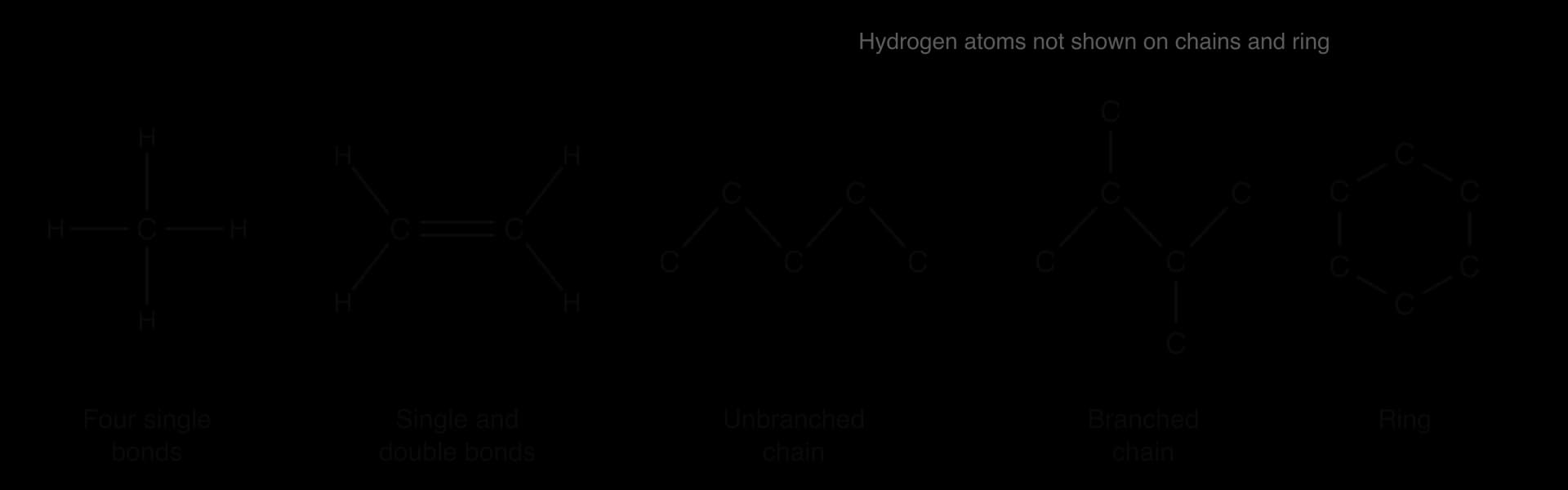
A carbon atom has four electrons in its outer shell, and it needs four more to fill that shell. It therefore forms four covalent bonds. These can be four single bonds, or a mixture of single and double bonds (for example two single bonds and one double bond). Carbon bonds with other carbon atoms and with other non-metals, especially hydrogen, oxygen, nitrogen, phosphorus and sulfur.
Because carbon atoms bond strongly to each other, they can form long chains. The chains can be unbranched or branched, and they can close into rings. Rings can join to other rings, as in the four fused rings of a steroid. Other atoms or groups attach to the carbon skeleton at the positions where carbon still has bonds available. The diagram of carbon structures shows these possibilities: a single carbon with four single bonds, two carbons joined by a double bond, an unbranched chain, a branched chain and a ring.
This flexibility allows an almost unlimited number of different molecules to be built, from glucose with six carbon atoms to DNA molecules with many millions. Life on Earth is based on carbon compounds for this reason.
The chemical behaviour of an organic molecule depends largely on small groups of atoms attached to its carbon skeleton, called functional groups. The hydroxyl group (–OH) makes a molecule more soluble in water, the carboxyl group (–COOH) makes it acidic, the amine group (–NH₂) can accept a hydrogen ion, and the phosphate group (–PO₄²⁻) carries negative charge. These groups also take part in the reactions that link molecules together.
Organic compounds in living things fall into four main classes:
Class | Elements | Monomers (where they exist) | Examples |
|---|---|---|---|
Carbohydrates | C, H, O | Monosaccharides | Glucose, starch, glycogen, cellulose |
Lipids | C, H, O (phospholipids also P) | No single monomer; built from glycerol and fatty acids, or from fused rings | Triglycerides, phospholipids, steroids, waxes |
Proteins | C, H, O, N, usually S | Amino acids | Enzymes, haemoglobin, collagen, insulin |
Nucleic acids | C, H, O, N, P | Nucleotides | DNA, RNA |
Proteins are described in B1.2 Proteins, and nucleic acids in A1.2 Nucleic acids.
 YouTube
Many biological molecules are very large. A macromolecule is a molecule with a large number of atoms, usually thousands or more. Most macromolecules are polymers: long chains of small, similar subunits linked by covalent bonds.
Each subunit of a polymer is called a monomer. Living things build three main types of polymer from monomers:
Polysaccharides, such as starch and cellulose, built from monosaccharides such as glucose.
Polypeptides, built from amino acids. One or more polypeptides make up a protein.
Nucleic acids (DNA and RNA), built from nucleotides.
Lipids such as triglycerides are large molecules too, but they are not polymers, because they are not built from a chain of repeating monomers.
Monomers are joined by condensation reactions. In each condensation reaction, a hydroxyl group (–OH) from one monomer and a hydrogen atom (–H) from the other are removed. These atoms combine to form one molecule of water, and a new covalent bond forms between the two monomers.
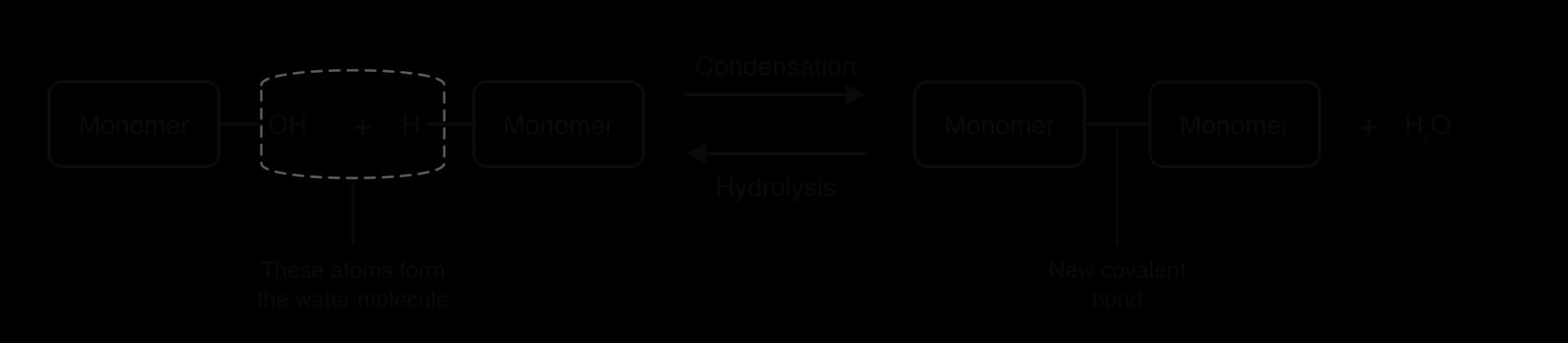
The same type of reaction builds all three types of polymer, although the bond formed has a different name in each:
Polymer | Monomer | Bond formed by condensation |
|---|---|---|
Polysaccharide (e.g. starch) | Monosaccharide (e.g. α-glucose) | Glycosidic bond |
Polypeptide | Amino acid | Peptide bond |
Nucleic acid | Nucleotide | Phosphodiester bond |
Condensation reactions are anabolic: they build larger molecules from smaller ones. They need energy, which is supplied by ATP, and each one is catalysed by an enzyme. In a cell, polysaccharides are made by enzymes in the cytoplasm or Golgi apparatus, polypeptides on ribosomes and nucleic acids by polymerase enzymes.
Polymers are broken down by hydrolysis, the reverse of condensation. A water molecule is split into –H and –OH. These are added to the two monomers on either side of the bond, and the bond between them breaks. One water molecule is used for every bond broken.
Hydrolysis happens during digestion: amylase hydrolyses starch to maltose in the mouth and small intestine, proteases hydrolyse polypeptides to amino acids, and nucleases hydrolyse nucleic acids to nucleotides. Hydrolysis also happens inside cells, for example when glycogen in the liver is broken down to release glucose into the blood. Hydrolysis is catabolic and releases a small amount of energy.
A carbohydrate is a compound of carbon, hydrogen and oxygen, usually with the general formula , in which hydrogen and oxygen are in the ratio 2 : 1 as in water. Carbohydrates are grouped by size into monosaccharides, disaccharides and polysaccharides.
Monosaccharides are classified by the number of carbon atoms they contain. A pentose has five carbon atoms (), and a hexose has six (). Ribose and deoxyribose, the sugars in RNA and DNA, are pentoses, while glucose, fructose and galactose are hexoses.
In water, most pentoses and hexoses exist as rings. One oxygen atom forms part of the ring, and the carbon atoms are numbered from the end nearest the oxygen. A pentose such as ribose usually forms a five-membered ring (four carbons and one oxygen), with the fifth carbon outside the ring as a –CH₂OH group. A hexose such as glucose usually forms a six-membered ring (five carbons and one oxygen), with the sixth carbon outside the ring as –CH₂OH.
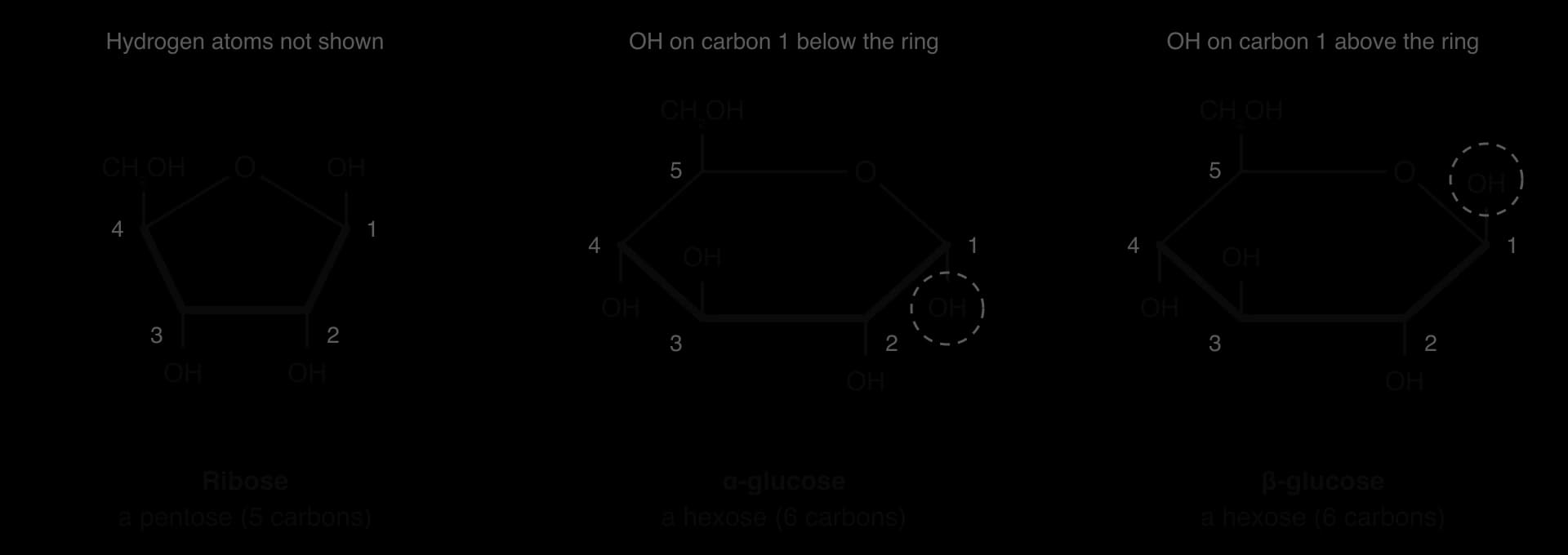
Glucose exists in two ring forms, which differ only in the position of the –OH group on carbon 1. In α-glucose the –OH on carbon 1 is below the plane of the ring, on the opposite side from the –CH₂OH group on carbon 5. In β-glucose the –OH on carbon 1 is above the plane of the ring, on the same side as the –CH₂OH. This small difference has large consequences, because it controls the shape of the polysaccharides that each form builds.
α-glucose is the main respiratory substrate in most organisms and the monomer of starch and glycogen. Four of its properties explain why it is so widely used.
Property | Cause | How it suits glucose to its functions |
|---|---|---|
Soluble in water | Its many hydroxyl groups are polar and form hydrogen bonds with water molecules | Glucose dissolves in cytoplasm and blood plasma, where enzymes can act on it |
Easily transported | It is soluble and small | It is carried dissolved in blood plasma in animals; plants transport it after converting it to sucrose |
Chemically stable | Its covalent bonds and ring structure do not break down without enzymes | It can be kept in cells and blood without reacting unless an enzyme catalyses a reaction |
Yields energy when oxidised | Its C–H and C–C bonds are oxidised to CO₂ and H₂O in cell respiration | Oxidation releases about 16 kJ per gram, used to make ATP |
Solubility comes from the hydroxyl groups, which are hydrophilic. They form hydrogen bonds with water, so glucose dissolves readily and is carried in blood plasma at a concentration of about 5 mmol dm⁻³ in a healthy fasting person. Its chemical stability means that it does not react with other molecules on its way to a cell; it is changed only when an enzyme catalyses a reaction. In cell respiration glucose is oxidised to carbon dioxide and water, and the energy released is used to make ATP.
Two monosaccharides joined by a condensation reaction form a disaccharide. The covalent bond that links them, through an oxygen atom, is a glycosidic bond. Maltose is two α-glucose units, the product of starch digestion. Sucrose (glucose + fructose) is the form in which plants transport carbohydrate in phloem, and lactose (glucose + galactose) is the sugar in milk.
A polysaccharide is a polymer of many monosaccharides joined by glycosidic bonds. Plants store energy as starch and animals and fungi store it as glycogen. All three storage forms are built from α-glucose, but they differ in how the glucose chains are arranged.
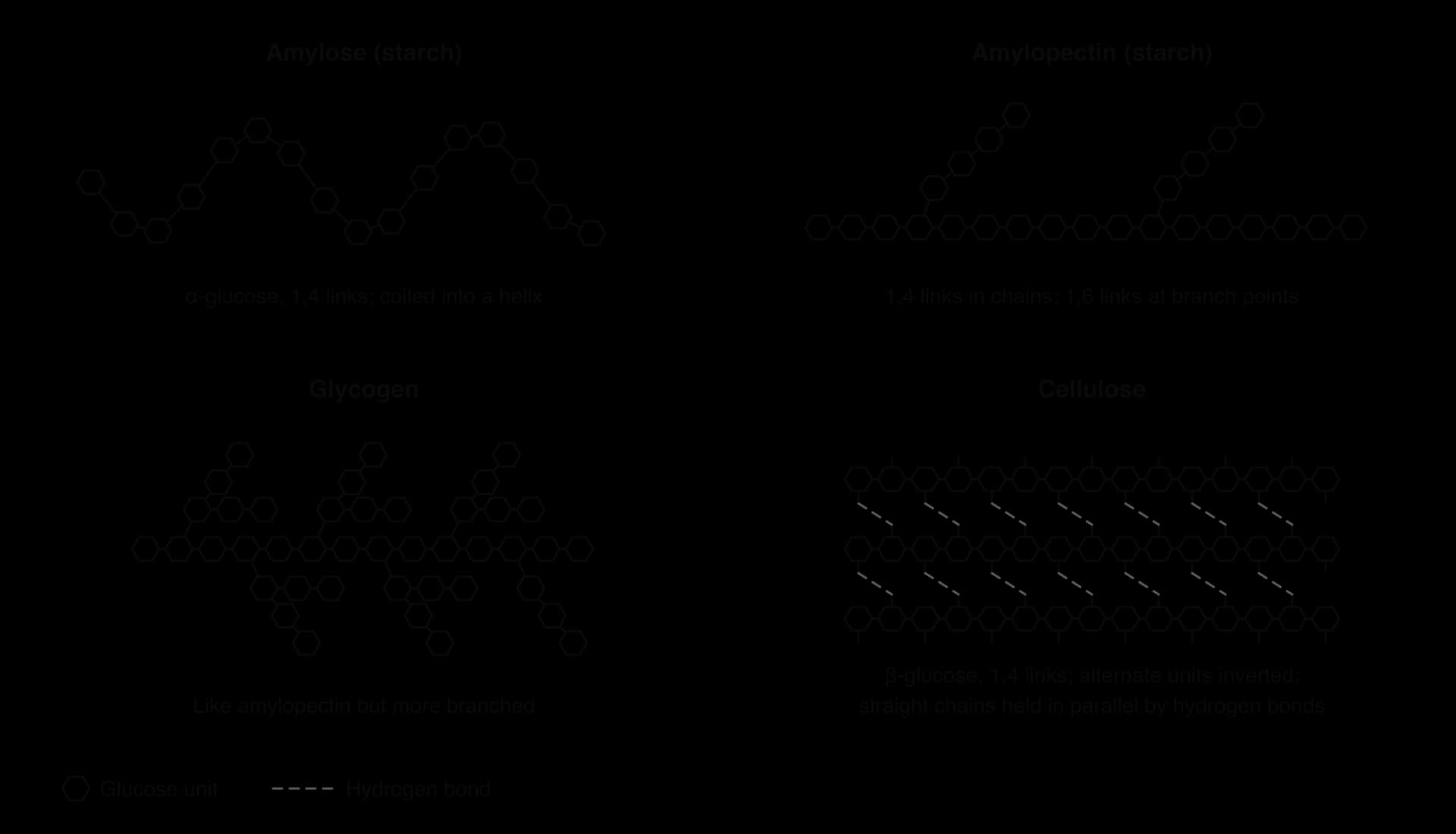
Starch is a mixture of two polysaccharides of α-glucose. Amylose is an unbranched chain in which each glucose is linked to the next by a glycosidic bond between carbon 1 of one glucose and carbon 4 of the next (a 1,4 link). The angle of these bonds makes the chain coil into a helix. Amylopectin has the same 1,4-linked chains, but also branches: about every 20–30 glucose units, a 1,6 link joins carbon 1 of one chain to carbon 6 of another.
Starch is stored in granules in plastids, for example in potato tubers, seeds of cereals such as wheat and rice, and in chloroplasts at the end of a day of photosynthesis.
Glycogen has the same 1,4 and 1,6 links as amylopectin, but it is more branched, with a branch every 8–12 glucose units. It is stored as granules in the cytoplasm of liver and muscle cells. Liver glycogen is broken down to keep the blood glucose concentration steady between meals, and muscle glycogen supplies glucose for the muscle's own respiration during exercise.
The structures of starch and glycogen suit them to storing energy in three ways:
They are compact. Coiling (amylose) and branching (amylopectin and glycogen) pack a very large number of glucose units into a small volume, so a lot of energy is stored in a small space inside the cell.
They are relatively insoluble. The molecules are so large that they do not dissolve readily. They therefore have almost no effect on the solute concentration of the cytoplasm, so storing them does not draw water into the cell by osmosis. Storing the same glucose as free glucose would raise the solute concentration enormously.
Glucose is easily added or removed. Enzymes add glucose to the ends of chains by condensation when glucose is plentiful, and remove it by hydrolysis when it is needed. Branched molecules have many ends, so many enzyme molecules can work at once, and glucose can be released quickly. This is why glycogen, the most branched, can be mobilised fastest.
Cellulose is the main component of plant cell walls. It is a polymer of β-glucose joined by 1,4 glycosidic bonds, but the chain has a completely different shape from amylose.
In β-glucose the –OH on carbon 1 points up, while the –OH on carbon 4 points down. For a 1,4 glycosidic bond to form between two β-glucose molecules, each glucose must be turned over (rotated by 180°) relative to its neighbour. Alternate glucose units in the chain are therefore inverted. This alternating arrangement produces a straight, unbranched chain rather than a coil.
Because the chains are straight, they can lie side by side, parallel to each other. The –OH groups that project from each chain form many hydrogen bonds with the –OH groups of neighbouring chains. Groups of dozens of chains held together in this way form a microfibril. Each individual hydrogen bond is weak, but there are so many of them that microfibrils have very high tensile strength, which is resistance to being pulled apart.
Microfibrils are laid down in layers in the cell wall, with the layers at different angles. The wall can resist the pressure of water pushing outwards from inside the cell, so plant cells become turgid without bursting. This allows non-woody plants to stay upright. Cellulose is the most abundant organic polymer on Earth: plants make an estimated 1.5 × 10¹² tonnes of it each year.
Feature | Amylose | Amylopectin | Glycogen | Cellulose |
|---|---|---|---|---|
Monomer | α-glucose | α-glucose | α-glucose | β-glucose |
Glycosidic bonds | 1,4 only | 1,4 and 1,6 | 1,4 and 1,6 | 1,4 only |
Branching | Unbranched | Branched | Highly branched | Unbranched |
Shape | Helix | Branched, compact | Branched, very compact | Straight chains in parallel |
Organisms | Plants | Plants | Animals and fungi | Plants |
Function | Energy store | Energy store | Energy store | Structural: cell walls |
The table of polysaccharides shows a theme of unity and diversity at the level of molecules: plants and animals use the same monomer, α-glucose, to store energy, but each builds a different polymer from it, and the plant uses a different form of glucose to build its cell walls.
 YouTube
Carbohydrates are also attached to proteins and lipids in the plasma membrane. A glycoprotein is a protein with one or more carbohydrate chains attached. In the plasma membrane these chains always face outwards, into the fluid around the cell.
The carbohydrate chains vary in the sugars they contain and in the order and branching of those sugars, so they can form a great many different shapes. Other cells, and proteins such as antibodies, recognise these shapes. This allows cell–cell recognition: cells identify each other as belonging to the same tissue, or as "self" or "non-self" in the immune system.
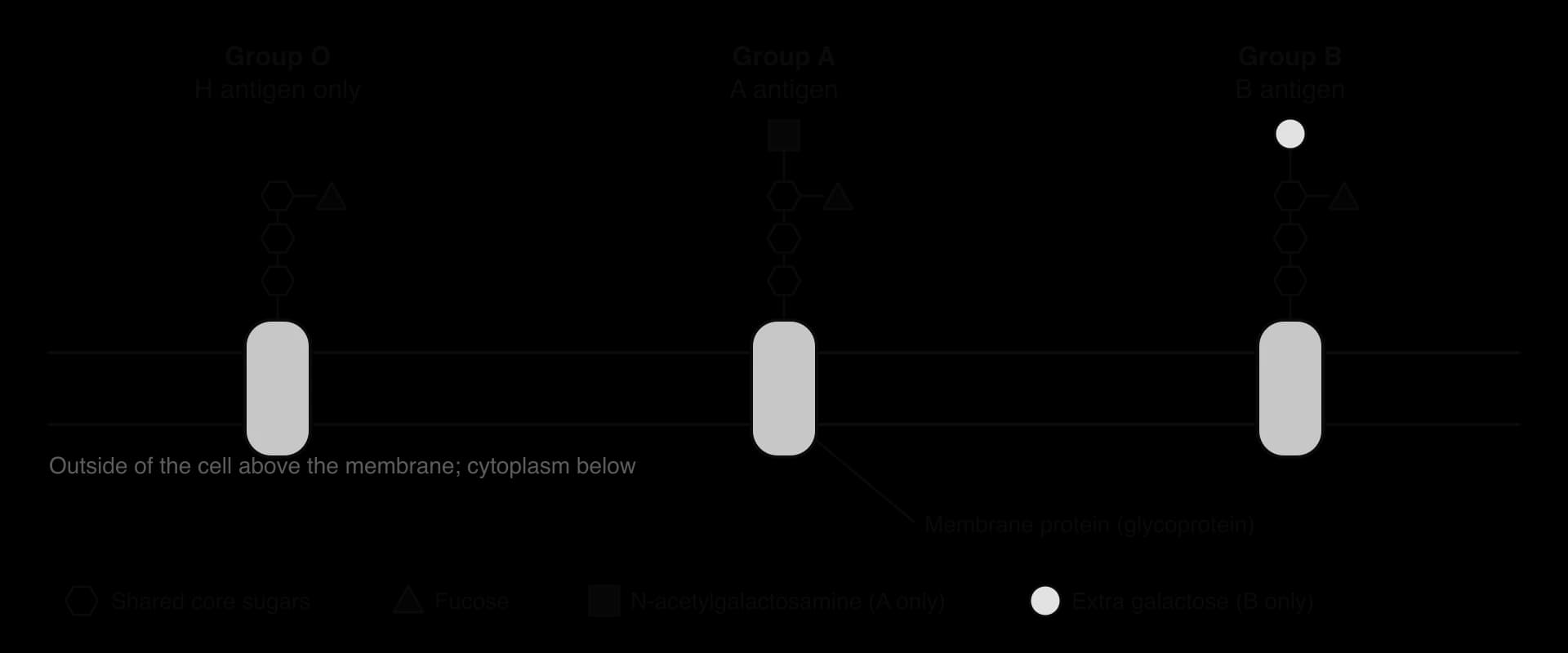
The ABO blood group system is based on glycoproteins (and glycolipids) on the surface of red blood cells. Almost every person has a shared core chain of sugars called the H antigen. What differs is the sugar at the end of the chain:
Group A: an enzyme adds N-acetylgalactosamine to the end of the chain, forming the A antigen.
Group B: a slightly different enzyme adds an extra galactose instead, forming the B antigen.
Group AB: both enzymes are present, so both A and B antigens are on the red blood cells.
Group O: neither enzyme works, so the chain ends with the H antigen and there is neither A nor B antigen.
The immune system recognises an antigen that is not part of the body's own cells. A person with group A blood has antibodies in the plasma against the B antigen, and a person with group B has antibodies against A. If red blood cells carrying a foreign antigen are transfused, the antibodies bind to them and make them clump, which can be fatal. Group O red blood cells carry neither A nor B antigen, so they are given in emergencies when the recipient's blood group is unknown. Karl Landsteiner discovered the ABO groups in 1901, which made safe blood transfusion possible.
The ABO groups show how one small difference in molecular form, a single sugar at the end of a chain, changes the way a cell interacts with the immune system. The antibodies and the clumping reaction are studied in C3.2 Defence against disease, and the inheritance of the ABO alleles in D3.2 Inheritance.
Lipids are defined by their solubility rather than by a shared structure. They dissolve readily in non-polar solvents such as ethanol, propanone or hexane, but only sparingly in water. The reason is that most of each lipid molecule is made of carbon and hydrogen atoms. C–H bonds are almost non-polar, so these regions cannot form hydrogen bonds with water; they are hydrophobic. Water molecules hydrogen bond to each other instead, and the lipid molecules are pushed together.
The main groups of lipids are:
Fats: triglycerides that are solid at room temperature (about 20 °C), such as butter and lard.
Oils: triglycerides that are liquid at room temperature, such as olive oil and sunflower oil.
Waxes: long-chain fatty acids joined to long-chain alcohols, such as the waxy cuticle on leaves and beeswax. They are very hydrophobic and make waterproof coatings.
Phospholipids: the main lipids of membranes.
Steroids: lipids built from four fused carbon rings, such as cholesterol, oestradiol and testosterone.
Triglycerides and phospholipids are built from two kinds of smaller molecule. Glycerol is a small molecule with three carbon atoms, each carrying a hydroxyl group (–OH). A fatty acid has a carboxyl group (–COOH) at one end and a long hydrocarbon chain, usually 14–22 carbons long, called the hydrocarbon tail. The carboxyl group makes the head of the fatty acid slightly polar, but the long tail is hydrophobic.
A triglyceride forms when three fatty acids are joined to one glycerol molecule by three condensation reactions. In each reaction, the –OH of the fatty acid's carboxyl group and the –H of one of glycerol's hydroxyl groups are removed as water. The bond that forms is an ester bond. Making one triglyceride therefore releases three molecules of water.
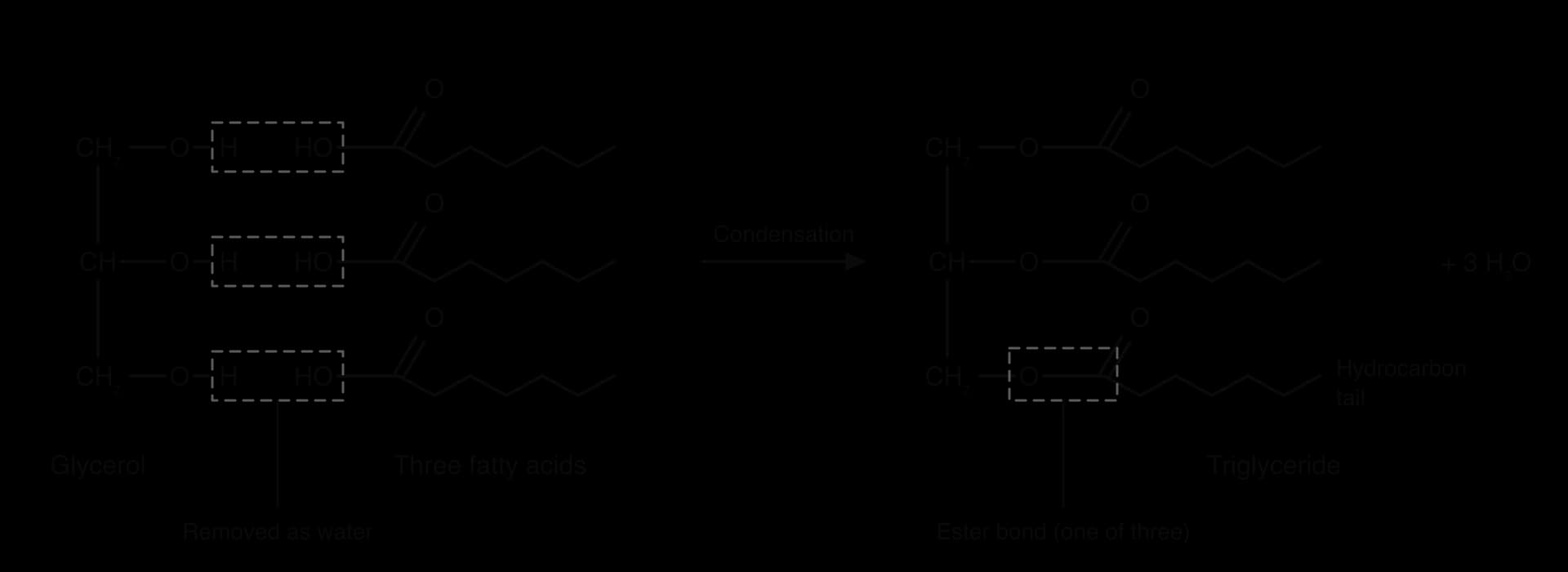
A phospholipid is built in the same way, except that only two fatty acids are attached to glycerol by condensation (two ester bonds). The third hydroxyl group of glycerol is linked to a phosphate group instead. The phosphate is usually joined to a further small polar or charged group, such as choline. The phosphate end of the molecule is charged and therefore hydrophilic, while the two fatty acid tails are hydrophobic.
Triglyceride | Phospholipid | |
|---|---|---|
Glycerol | One | One |
Fatty acids | Three | Two |
Phosphate group | None | One, attached to glycerol |
Ester bonds and water released | Three | Two (plus the bond to phosphate) |
Interaction with water | Hydrophobic throughout | Hydrophilic head, hydrophobic tails |
Main function | Energy storage, insulation | Forming membranes |
Fatty acids differ in the length of the hydrocarbon chain and in the number of carbon–carbon double bonds (C=C) it contains. A saturated fatty acid has only single bonds between its carbon atoms, so every carbon in the chain carries as many hydrogen atoms as possible: it is "saturated" with hydrogen. A monounsaturated fatty acid has one C=C double bond, and a polyunsaturated fatty acid has two or more.
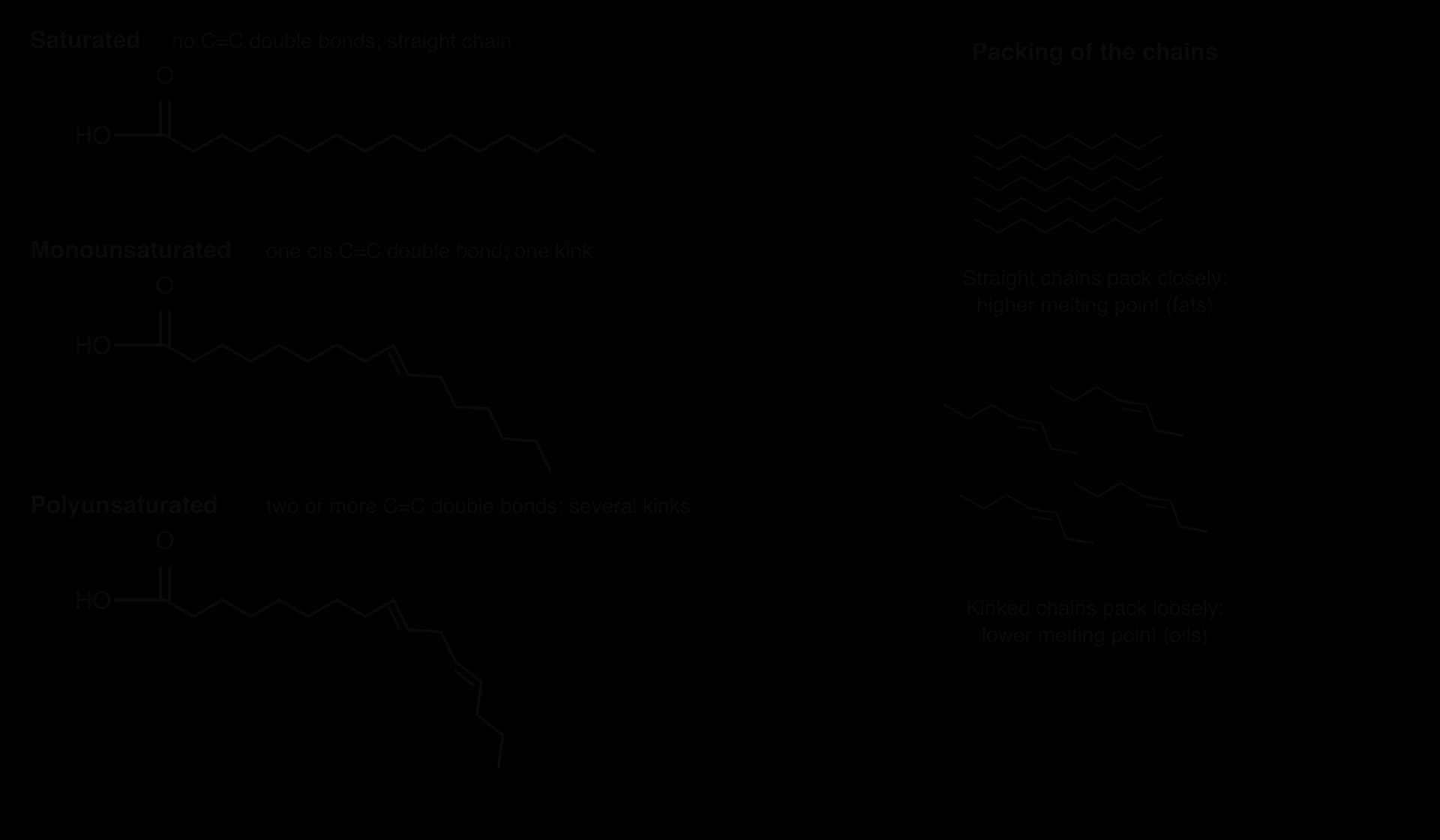
In most natural unsaturated fatty acids the double bonds are in the cis form, where the hydrogen atoms on the two carbons of the double bond are on the same side. A cis double bond puts a bend, or kink, in the chain, whereas saturated chains are straight.
Neighbouring fatty acid chains are held together by weak intermolecular forces. Straight saturated chains can pack tightly together, so there are many of these attractions between them, and more energy is needed to separate the molecules. Saturated fatty acids therefore have high melting points. Kinks in unsaturated chains stop them packing closely, so there are fewer attractions and the melting point is lower. The more double bonds, the more kinks and the lower the melting point.
Fatty acid (18 carbons) | Number of C=C double bonds | Type | Melting point / °C |
|---|---|---|---|
Stearic acid | 0 | Saturated | 69.6 |
Oleic acid | 1 | Monounsaturated | 13.4 |
Linoleic acid | 2 | Polyunsaturated | −5.0 |
α-linolenic acid | 3 | Polyunsaturated | −11.0 |
Source: Oilseeds and fats, Crops and Lipids (OCL) 19(2), 2012.
The melting point of a triglyceride depends on the fatty acids it contains, and the triglycerides that organisms store match the temperatures at which they live. Plants store energy in seeds and fruits as oils, rich in unsaturated fatty acids. Olive oil, for example, is mostly the monounsaturated oleic acid, and it is liquid at room temperature. A seed may experience low temperatures, and an oil stays liquid, so enzymes can still hydrolyse it when the seed germinates.
Mammals and birds are endotherms: they keep their body temperature high and constant using heat from their own metabolism. Their stored triglycerides contain a higher proportion of saturated fatty acids, so they are fats, solid at room temperature, as butter and lard are. At body temperature (about 37 °C in mammals and up to about 40–42 °C in birds) these fats are soft, but they stay in place in the body as a stable store.
In animals, triglycerides are stored in adipose tissue: tissue made of cells (adipocytes) that each contain a large droplet of fat. Adipose tissue lies under the skin and around organs such as the kidneys and heart. It acts as a long-term energy store, because triglycerides have several properties that suit this role:
More energy per gram. Oxidising 1 g of triglyceride releases about 37 kJ, compared with about 17 kJ for 1 g of carbohydrate. Triglycerides contain a higher proportion of C–H bonds and less oxygen, so more of each molecule can be oxidised in cell respiration.
No water stored with them. Triglycerides are hydrophobic, so they are stored as pure droplets. Glycogen is hydrophilic and is stored with water bound to it, which adds to its mass. Gram for gram of stored tissue, the advantage of fat is larger than the 37 : 17 ratio suggests.
Insoluble. Fat droplets do not affect the solute concentration of the cytoplasm, so they have no osmotic effect.
Chemically stable. Triglycerides do not react easily, so they can be kept for months without breaking down.
A smaller mass of stored fat gives the same energy as a larger mass of glycogen, which matters most for animals that must carry their stores, such as flying birds and animals that migrate. Fat has disadvantages too, which is why animals store glycogen as well. Glycogen is hydrolysed to glucose much more quickly than fat can be broken down, so it supplies energy fast at the start of exercise. Glucose can also be respired anaerobically, while fatty acids can be respired only aerobically.
Fat conducts heat slowly: it has a low thermal conductivity. A layer of adipose tissue under the skin therefore reduces the rate at which heat is lost from the body core to the surroundings. This matters most for endotherms in cold habitats, which must keep their body temperature far above that of their surroundings.
Marine mammals in polar seas have a thick layer of adipose tissue called blubber. The bowhead whale (Balaena mysticetus), which lives all year in icy Arctic and subarctic waters, has blubber up to about 50 cm thick, the thickest of any whale. Water conducts heat away from the body more than 20 times faster than air, so insulation is even more important in the sea than on land. Adipose tissue around organs such as the kidneys also cushions them against mechanical damage.
The bar-tailed godwit (Limosa lapponica baueri) is a wading bird that breeds in Alaska and spends the northern winter in New Zealand and eastern Australia. Each autumn it flies across the Pacific Ocean without stopping to feed, drink or rest. Its journey is one of the clearest examples of triglycerides used as a long-term energy store.

In 2006 and 2007, satellite transmitters were fitted to godwits, and their southward flights were followed. Seven females flew non-stop from Alaska to New Zealand or eastern Australia, covering between 8,117 km and 11,680 km in 6.0 to 9.4 days. One female, known as E7, flew 11,680 km in about 8 days, the longest non-stop flight then recorded for any bird. In 2022, satellite tracking showed a juvenile godwit flying at least 13,560 km from Alaska to Tasmania in about 11 days.
Flight | Distance / km | Time / days |
|---|---|---|
Seven tracked females (range) | 8,117 – 11,680 | 6.0 – 9.4 |
Female E7, Alaska to New Zealand, 2007 | 11,680 | about 8 |
Juvenile 234684, Alaska to Tasmania, 2022 | at least 13,560 | about 11 |
Source: Gill et al., Proceedings of the Royal Society B 276: 447, 2009; satellite tracking data for 2022.
Before departure, godwits feed intensively on the mudflats of Alaska and lay down large stores of fat. At departure, fat makes up about 55% of a godwit's body mass. At the same time, organs that are not needed during the flight, including the gizzard, liver, kidneys and gut, shrink, which reduces the mass the bird must carry. The flight muscles and heart, which work throughout the flight, stay large.
Several properties of triglycerides explain why the energy for the flight is stored as fat rather than as glycogen:
Fat releases about twice as much energy per gram as carbohydrate when oxidised, so the same energy is carried in about half the mass. For a flying animal, every extra gram increases the energy needed to stay in the air.
Fat is stored without water. A store of glycogen large enough to power the flight would be several times heavier than the fat store, and the bird could not take off.
Fat is insoluble and chemically stable, so a store more than half the body mass does not disturb the water balance of the cells.
Oxidising fat in aerobic respiration also produces metabolic water, which helps a bird that cannot drink for over a week.
Glycogen still has a role. Small glycogen stores in the muscles and liver supply glucose quickly when it is needed, for example at take-off. The godwit therefore uses both energy stores, each for the job that its properties suit. Its migration is an example of form and function at the level of molecules shaping what a whole organism can do, and of interaction between an organism and its environment: the birds depart with favourable winds that assist them across the ocean.
A phospholipid molecule has two regions with opposite properties. The phosphate head is charged and polar, so it is hydrophilic: it attracts water and forms hydrogen bonds with it. The two fatty acid tails are non-polar and hydrophobic. A molecule with both a hydrophilic and a hydrophobic region is amphipathic.
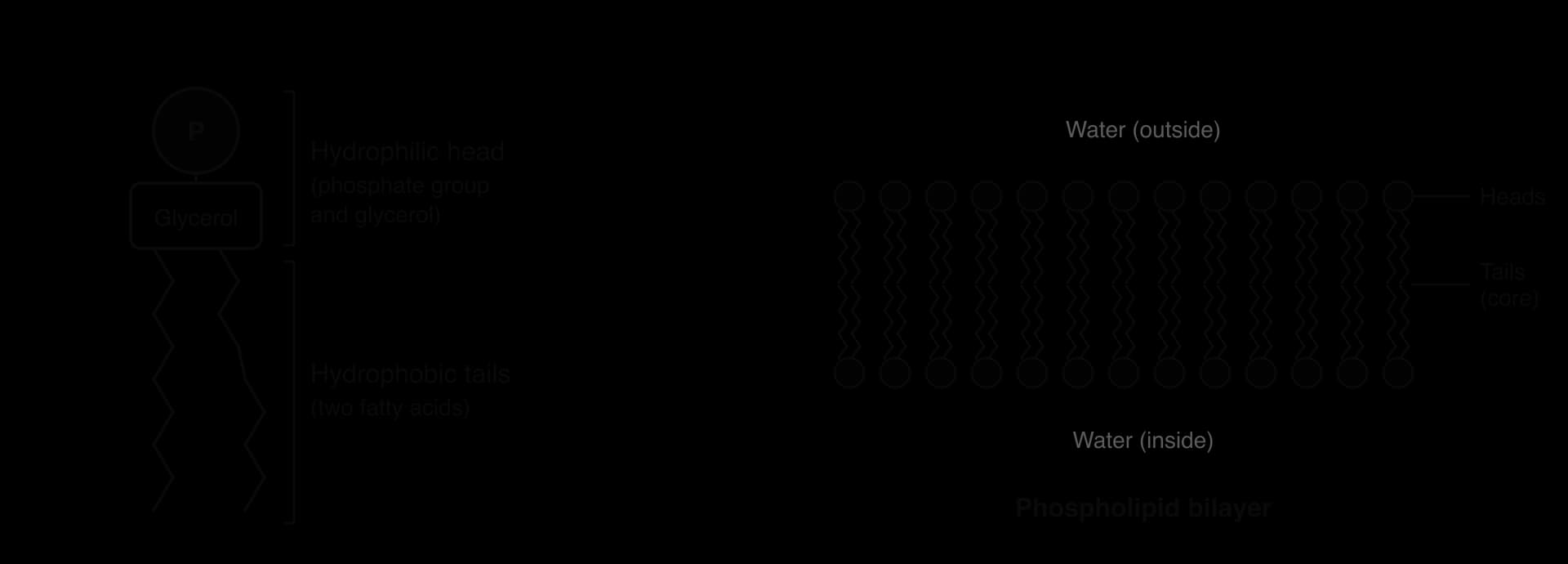
When phospholipids are mixed with water, they arrange themselves so that the hydrophilic heads are in contact with water and the hydrophobic tails are kept away from it. The most stable arrangement is a double layer, the phospholipid bilayer. The heads of one layer face the water outside, the heads of the other layer face the water inside, and the tails of both layers point inwards to form a hydrophobic core.
This arrangement forms by itself, without any input of energy, because it is the lowest-energy arrangement of the molecules: water molecules hydrogen bond to each other and to the heads, and the tails are packed together away from water. A bilayer also tends to close up into a sphere, because a sheet with open edges would expose tails to water. This is why bilayers form continuous sheets around cells and organelles. The plasma membrane of every cell is built on a phospholipid bilayer, as described in B2.1 Membranes and membrane transport.
A steroid is a lipid whose molecule is based on four fused carbon rings: three rings of six carbon atoms and one ring of five, arranged in the same pattern in every steroid. Different steroids are made by attaching different small groups to this skeleton. Cholesterol, a component of animal plasma membranes, is a steroid, and several hormones are made from it.
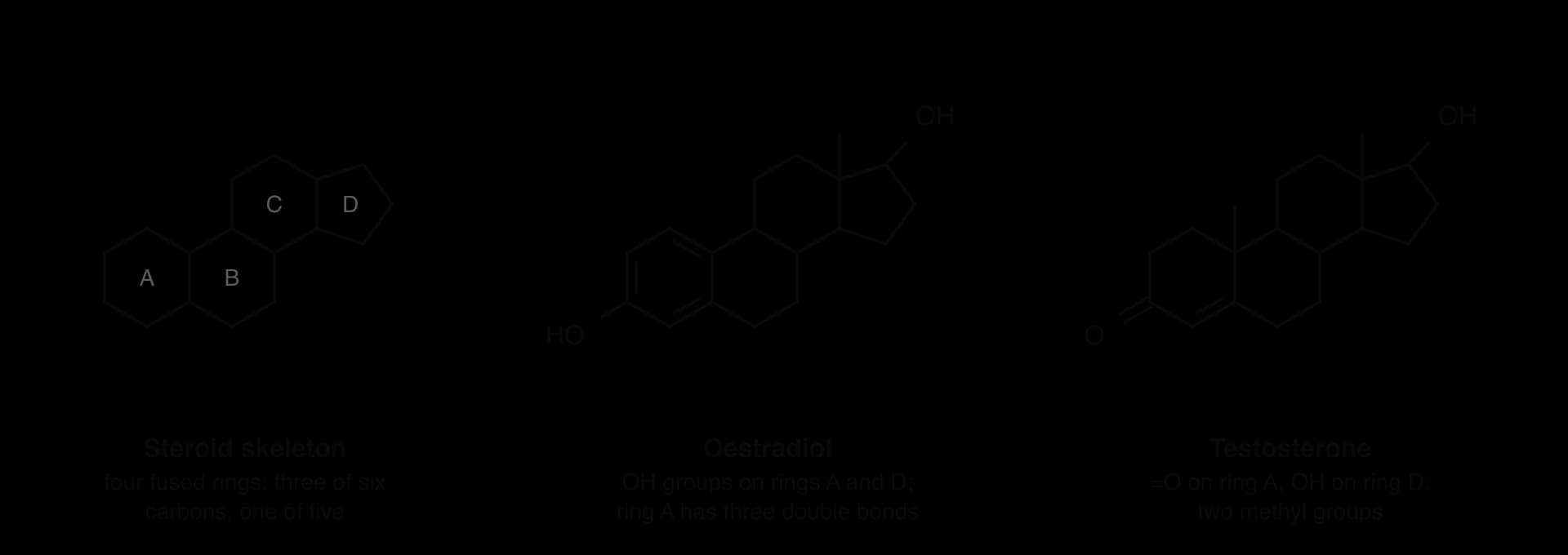
A steroid is identified in a molecular diagram by its four fused rings: three hexagons and one pentagon joined in a row with a step. Oestradiol has a hydroxyl group on ring A and another on ring D, and ring A has three double bonds. Testosterone has a double-bonded oxygen (=O) on ring A, one double bond in ring A, a hydroxyl group on ring D and two methyl (–CH₃) groups.
Steroid molecules are almost entirely carbon and hydrogen, so they are non-polar and hydrophobic, with only one or two small polar groups. They dissolve in the hydrophobic core of the phospholipid bilayer, so they can diffuse straight through the membrane between the phospholipid molecules. No channel or carrier protein is needed. Hydrophilic molecules and ions, by contrast, are repelled by the hydrophobic core and cannot cross it easily.
Oestradiol and testosterone are sex hormones. Oestradiol is made mainly in the ovaries and testosterone mainly in the testes. Because they cross the plasma membrane, these hormones act on receptors inside their target cells, in the cytoplasm or nucleus, rather than on receptors at the cell surface. Anabolic steroids, synthetic molecules similar to testosterone that increase muscle growth, enter cells in the same way; their misuse in sport is tested for by anti-doping agencies. How steroid hormones then change gene expression is studied in C2.1 Chemical signalling.
Carbohydrates and lipids appear in Paper 1A as identification questions (pentose or hexose, α or β, steroid or not, from a diagram), in Paper 1B as data on melting points or energy content, and in Paper 2 as short drawings and as extended responses. Common Paper 2 questions ask you to draw a triglyceride, phospholipid or α-glucose, explain how the structure of a polysaccharide suits its function, compare and contrast starch, glycogen and cellulose, and evaluate lipids and carbohydrates as energy stores.
Extended responses reward precise terms. Use "condensation" and "hydrolysis" rather than "joining" and "breaking", "per gram" whenever energy content is compared, "amphipathic" for phospholipids and "osmotically inactive" or "does not affect osmosis" for insoluble stores. Annotated diagrams are accepted in place of written points if every label is clear.
I can outline why carbon can form a great diversity of compounds, including chains, branches and rings.
I can explain condensation and hydrolysis reactions and work out the number of water molecules involved.
I can identify pentoses, hexoses, α-glucose and β-glucose from ring diagrams.
I can relate the solubility, transportability, stability and energy yield of α-glucose to its functions.
I can explain how the structures of starch, glycogen and cellulose suit their functions.
I can describe how ABO blood group antigens act in cell–cell recognition.
I can define a lipid and draw how triglycerides and phospholipids form by condensation.
I can distinguish saturated, monounsaturated and polyunsaturated fatty acids and explain their melting points.
I can evaluate triglycerides and glycogen as energy stores and explain the insulating role of adipose tissue.
I can explain why amphipathic phospholipids form bilayers and why steroids such as oestradiol and testosterone pass through them.
Describe the properties of gas-exchange surfaces.
4 marks
a. permeable to oxygen and carbon dioxide;
b. thin (tissue layer) / short diffusion distance;
c. moist, so gases can dissolve before diffusing across;
d. large surface area (relative to the volume of the organism);
e. dense network of blood vessels / good blood supply;
f. ventilated with air or water, which maintains concentration gradients;
[4 max]
Outline how the hydrophobic properties of lipids are used by organisms.
4 marks
a. lipids are non-polar / hydrophobic, so they are insoluble in water;
b. waxy cuticle on leaves reduces water loss;
c. oils / waxes on feathers or fur make them waterproof;
d. hydrophobic tails of phospholipids form a barrier in membranes;
e. fat / blubber forms an insulating layer;
f. fats can be stored without affecting the water potential of cells / without drawing in water by osmosis;
[4 max]
One additional mark is available for the construction of the answer.
Water is essential for life as we know it.
Outline how Earth is thought to have gained and retained its water.
4 marks
Describe the roles of water in condensation and hydrolysis reactions.
4 marks
Explain why the search for extraterrestrial life focuses on places where liquid water may exist.
7 marks
Biological molecules and structures are held together both by covalent bonds and by weaker interactions.
Outline how condensation reactions produce polymers, using nucleic acids and one other type of macromolecule as examples.
4 marks
Explain how the structure of DNA is related to its functions.
7 marks
Outline how hydrophobic and hydrophilic interactions lead to the formation of lipid bilayers in cell membranes.
4 marks